Bari Vecchia: The Old Town Of Bari On Foot
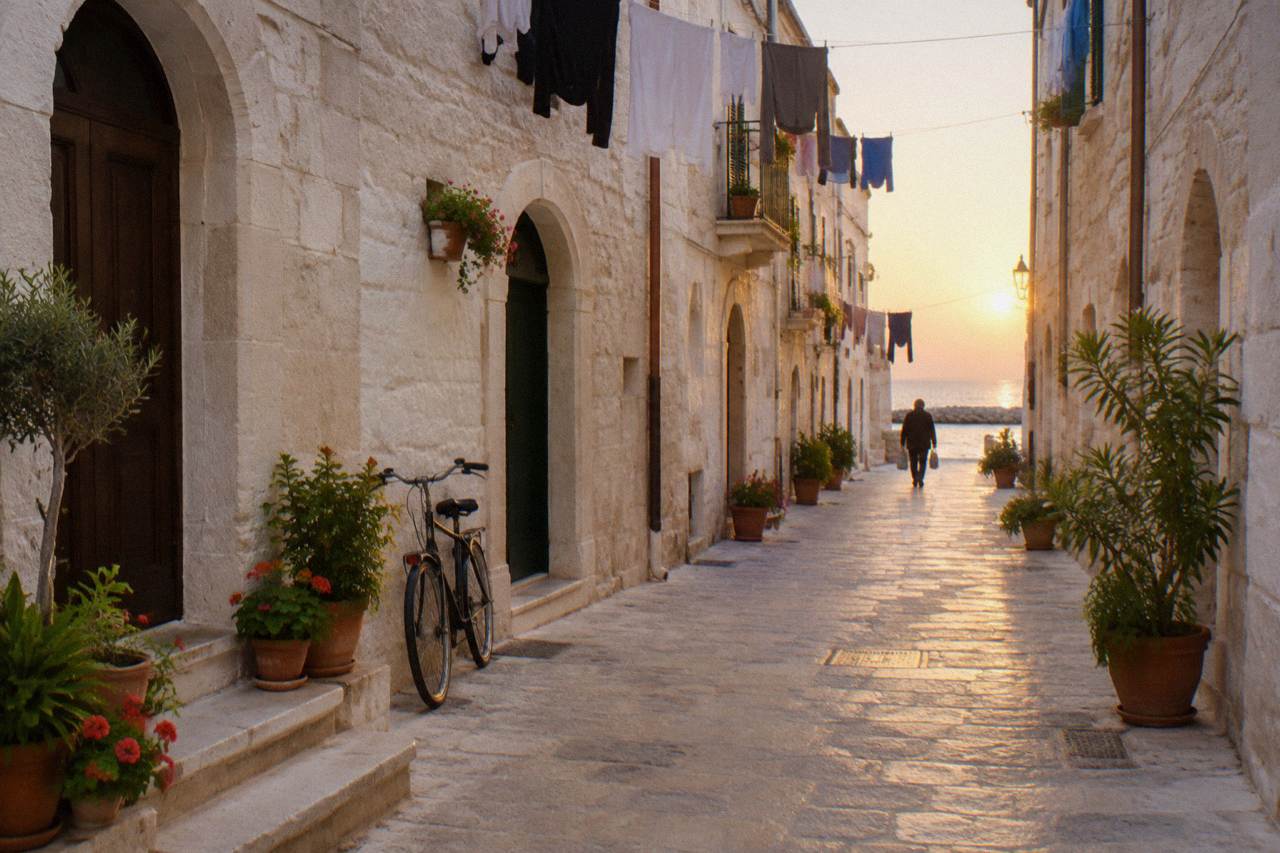
Bari Vecchia is the walled old town of Bari, the capital of Puglia on the Adriatic coast of southern Italy, and it holds the Basilica di San Nicola, the Swabian castle, two old squares and a working port quay inside a rectangle you can cross on foot.
Short answer
Bari Vecchia is Bari's old town, a headland of lanes between Bari Centrale and the Adriatic. The Basilica di San Nicola is open daily and the Swabian castle costs 10 EUR full.
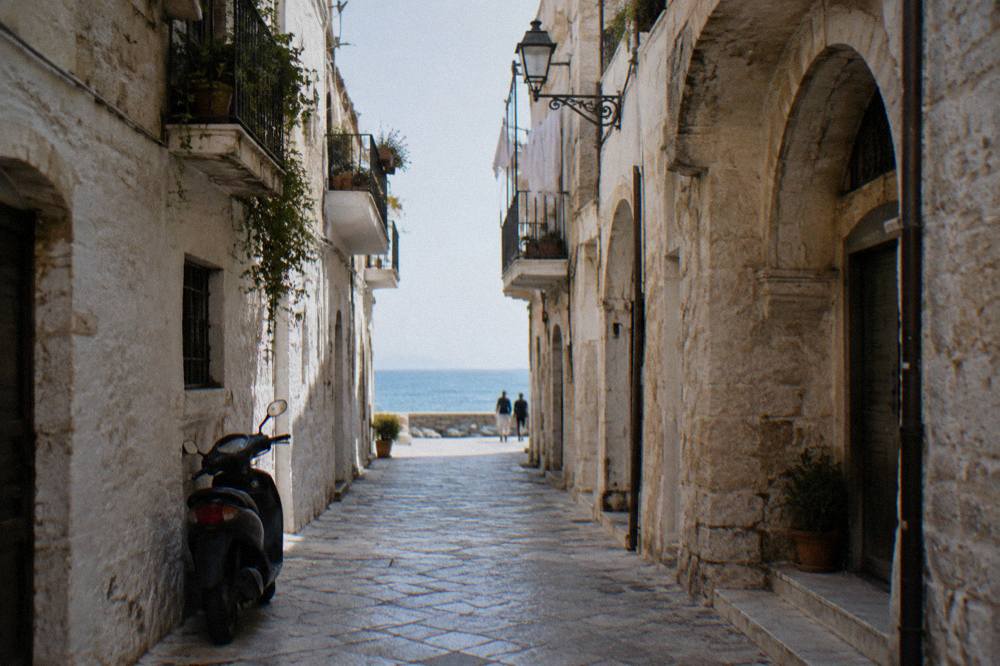
Bari Vecchia is the old town of Bari, the capital of the Puglia region on the Adriatic coast of southern Italy, and almost everything a visitor pictures when they picture this city sits inside it: the Basilica di San Nicola, the Cattedrale di San Sabino, the Swabian castle, Piazza Mercantile and the Muraglia sea wall. The district occupies the headland between the old port and the modern city, a compact grid of pale stone lanes that runs from Piazza del Ferrarese down to the water. Polignano a Mare, Monopoli, Alberobello and Matera are day trips from here, but the old town itself is the reason to base in Bari at all.
This page walks the district end to end: what the sights cost and when they open, where the lanes lead, how the limited traffic zone works, and which tours cover the ground when a map is not enough.
What Is Bari Vecchia And Where Does It Sit?
Bari Vecchia is the historic old town of Bari, a peninsula of stone lanes bounded by the old port on two sides and by the Murat district to the south, holding about a dozen named squares and lanes including Piazza Mercantile, Piazza del Ferrarese and Strada Arco Basso. The Basilica di San Nicola opens Monday to Saturday 06:30 to 20:30 and Sunday 06:30 to 22:00, with no admission fee mentioned on its page, so the district is genuinely walkable from early morning to late evening. Bari Centrale station sits south of the Murat grid, and the walk from the station to the old town crosses Via Sparano and Corso Vittorio Emanuele II before the lanes begin.
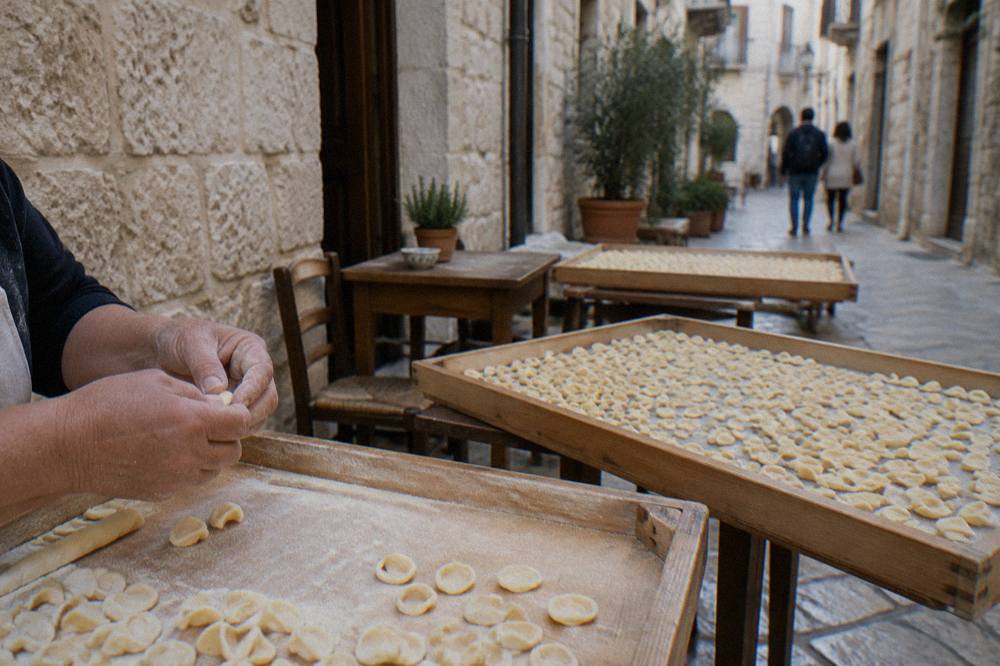
The headland was the whole city until the Murat grid was laid out south of the old walls, and the contrast is still sharp: the grid is regular streets and shopfronts, while Bari Vecchia is lanes that bend, widen into tiny squares and close again. Strada Arco Basso is one of those lanes, known for its pasta makers; orecchiette is the pasta shape of Puglia. The Muraglia, the sea wall on the north side, looks across to the Teatro Margherita, a theatre standing over the water, and the old port quay at Molo San Nicola runs below it.
For orientation, the two anchor points are Piazza Mercantile, the old market square, and the Swabian castle at the southern edge of the district where the old town meets the modern city. The full details of the squares are on the Piazza Mercantile guide and the Piazza del Ferrarese guide, and the port side is covered in the old port at Molo San Nicola. If you are fitting the old town into a single day, the one day in Bari itinerary sequences it stop by stop.
What Are The Main Sights Inside Bari Vecchia?
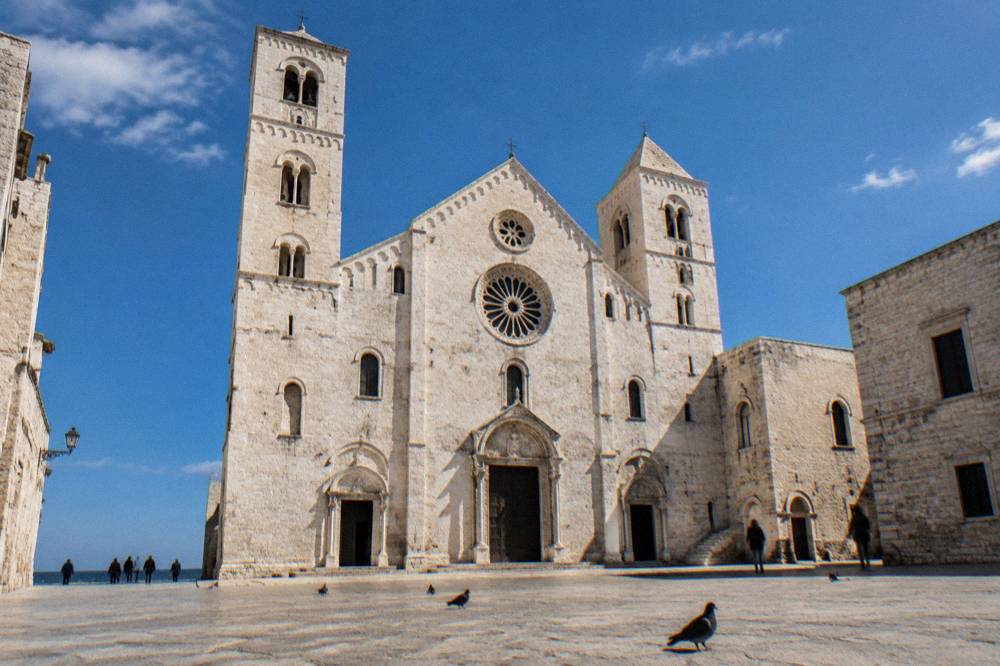
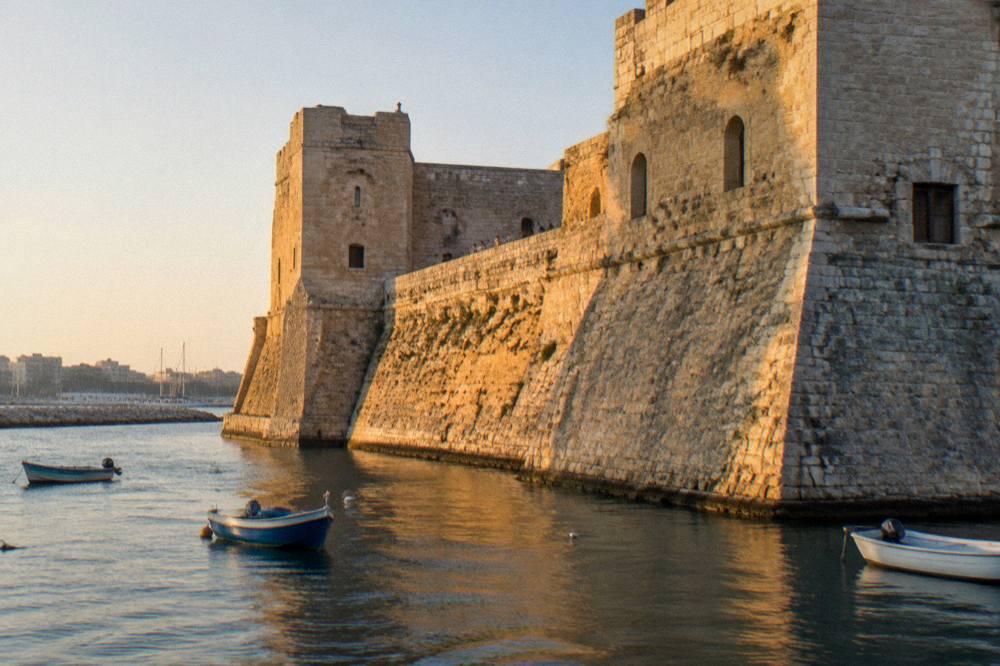
The four anchor sights of Bari Vecchia are the Basilica di San Nicola, the Cattedrale di San Sabino, the Swabian castle and Piazza Mercantile, plus the Muraglia sea wall and the pasta lane of Strada Arco Basso between them, all inside a headland you can cross on foot in under an hour. The castle charges 10 EUR full and 2 EUR reduced, per the Musei Puglia ticket page, while the basilica's page lists no admission fee. The castle is open Tuesday to Sunday 09:00 to 19:00, and from October to March the Sunday opening shortens to 09:00 to 13:30, except the first Sunday of the month. A morning loop from the castle to the basilica to the sea wall covers all of them.
| Sight | Admission | Hours per the official pages |
|---|---|---|
| Basilica di San Nicola | No fee mentioned | Mon to Sat 06:30 to 20:30, Sun 06:30 to 22:00 |
| Castello Normanno-Svevo | 10 EUR full, 2 EUR reduced | Tue to Sun 09:00 to 19:00; Oct to Mar Sundays 09:00 to 13:30, first Sunday 09:00 to 19:00 |
| Cattedrale di San Sabino | Check the current price on the official ticket page before booking | Check locally before visiting |
The basilica is the district's fixed point. Saint Nicholas's relics rested at Myra for about 750 years, from 337 to 1087, were brought to Bari by sailors in 1087 and placed in the crypt in 1089, and the church has drawn pilgrims to the headland ever since; the full story, crypt included, is in the Basilica di San Nicola guide and the crypt of San Nicola guide. The Cattedrale di San Sabino stands a few lanes east, and its page carries what is known. The castle, at the south gate of the district, is a museum today, and the Castello Normanno-Svevo guide prints the full ticket and seasonal detail.
A guided walk adds the layer the lanes do not explain on their own, from the pilgrim routes to what the Muraglia was defending. Two walks that start in Bari and cover the old town:
How Much Does A Visit To The Old Town Cost?
Entry to the lanes, the squares and the sea wall of Bari Vecchia costs nothing; the only set admission inside the district is the Swabian castle at 10 EUR full and 2 EUR reduced, while the Pinacoteca Metropolitana di Bari outside it charges 5 EUR full, 2 EUR reduced and 8 EUR combined with the Museo Archeologico di Santa Scolastica. A Puglia Musei Card at 20 EUR covers all the regional Musei Puglia sites, including the castle, for six months, which pays off on a longer Puglia itinerary that also takes in Castel del Monte or Trani. The basilica lists no fee.
For a sense of scale: the castle ticket page gives the castle's hours and both prices, and the same Musei Puglia site covers Castel del Monte, which charges the same 10 EUR and 2 EUR and opens daily 10:00 to 18:45 from 1 April to 30 September and 09:00 to 17:45 from 1 October to 31 March. If the old town is day one of a week that also reaches the hill towns, the card is the arithmetic to run before buying singles.
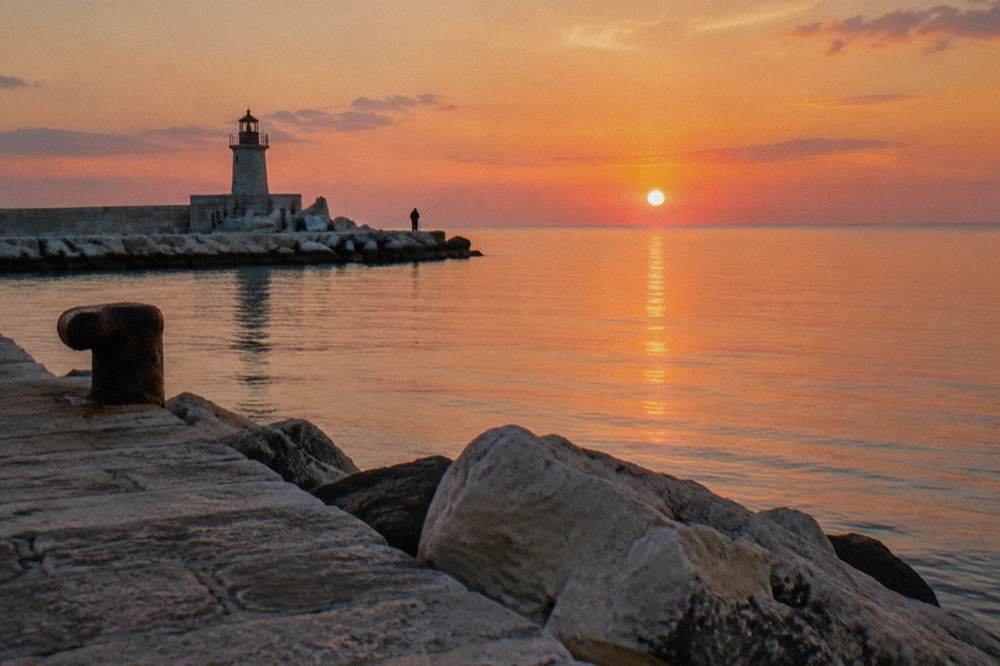
The guided visit adds the underground layer: Bari Vecchia sits on excavations that a normal walk past. The listing for the archaeologist-led underground tour covers the layers below the lanes:
Where Do You Eat And Drink In The Lanes?
The food of Bari Vecchia is street food eaten while walking: panzerotti are fried stuffed pockets, focaccia barese is the local flatbread baked with tomatoes, sgagliozze are fried polenta squares, and raw seafood such as ricci is served at the old port, with orecchiette the pasta shape of Puglia. A street food walk with a local guide pairs the lanes with the food stops without you reading a map between bites.
The food culture of the old town is real work, not theatre: pasta is made by hand on Strada Arco Basso, and the fish trade runs at Molo San Nicola. Whether the pasta makers are at their doors on any given day, and when the fish market trades, are things to confirm locally rather than plan around, because no official schedule is in the record. What is safe to plan is the geography: Strada Arco Basso is a lane in the heart of the district, and Molo San Nicola is the quay below the Muraglia, so the two sit a few minutes' walk apart.
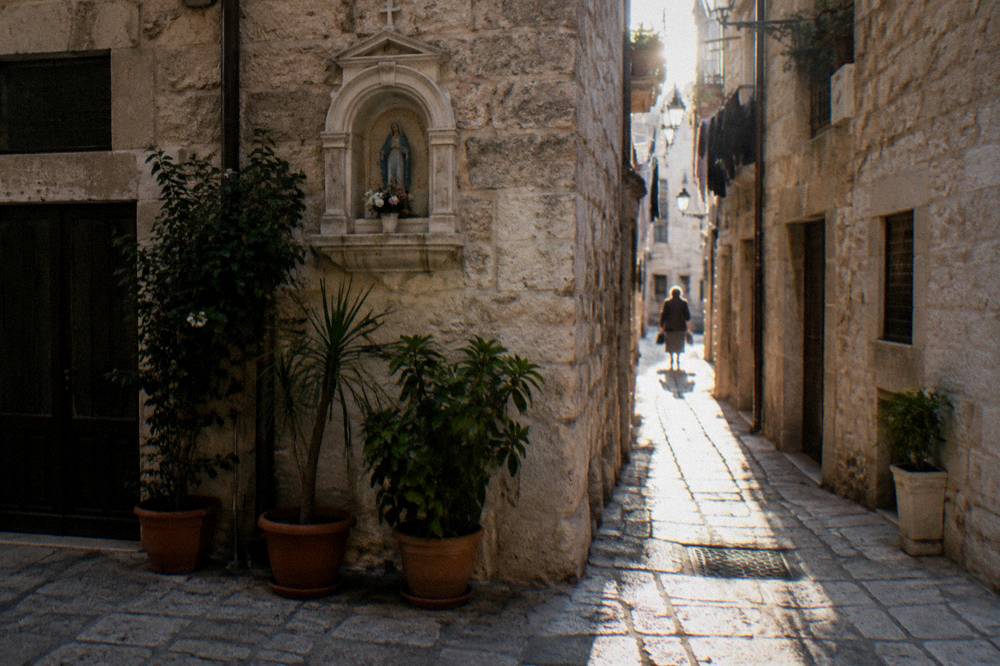
The dedicated food pages go deeper: Bari street food, orecchiette in Bari, focaccia barese and Bari seafood and raw fish. The pasta lane itself has its own page, Strada delle Orecchiette. Two guided options that eat their way through the district:
Between the two, the difference is coverage: a plain walking tour covers the history and the landmarks, while the street food versions add the stalls. Both leave from Bari, so neither needs a transfer.
How Do You Get Into Bari Vecchia?
Bari Vecchia is a limited traffic zone: since 1 July 2026 a camera gate at the Castello, at piazza Federico II di Svevia by piazza Massari, controls vehicle entry, with weekday windows of 09:00 to 11:00 for authorised vehicles and a reported afternoon window of 16:00 to 18:00, so a rental car should never be driven into the lanes. On foot you enter from Piazza del Ferrarese or the castle side in minutes. An AMTAB bus costs 1.00 EUR for a single ride, 1.20 EUR for 90 minutes or 2.50 EUR for a day ticket, per the operator's fares page, and the whole old town sits within walking distance of Piazza Mercantile once you are inside.
| Way in | Cost | What the rules say |
|---|---|---|
| On foot from the Murat side | Free | No gate, no restriction |
| AMTAB bus | 1.00 EUR single, 1.20 EUR for 90 minutes, 2.50 EUR day | Tickets before boarding, per the operator's page |
| Car into the lanes | Do not | ZTL with camera gate since 1 July 2026; weekday windows 09:00 to 11:00, afternoon 16:00 to 18:00 reported |
| Perimeter parking | Paid on working days 08:30 to 20:30 | Tariffs posted at the meter, check locally |
The practical rule for drivers is simple: park outside and walk in. The perimeter parking near the old town is paid on working days 08:30 to 20:30, and the tariff is posted where you park. The ZTL rules and what they mean for a visitor are laid out in Bari parking and driving, the wider transport picture is in getting around Bari, and the station approach is covered in around Bari Centrale. The neighbouring districts, Murat and Lungomare and Madonnella, are the two you cross to reach the headland.
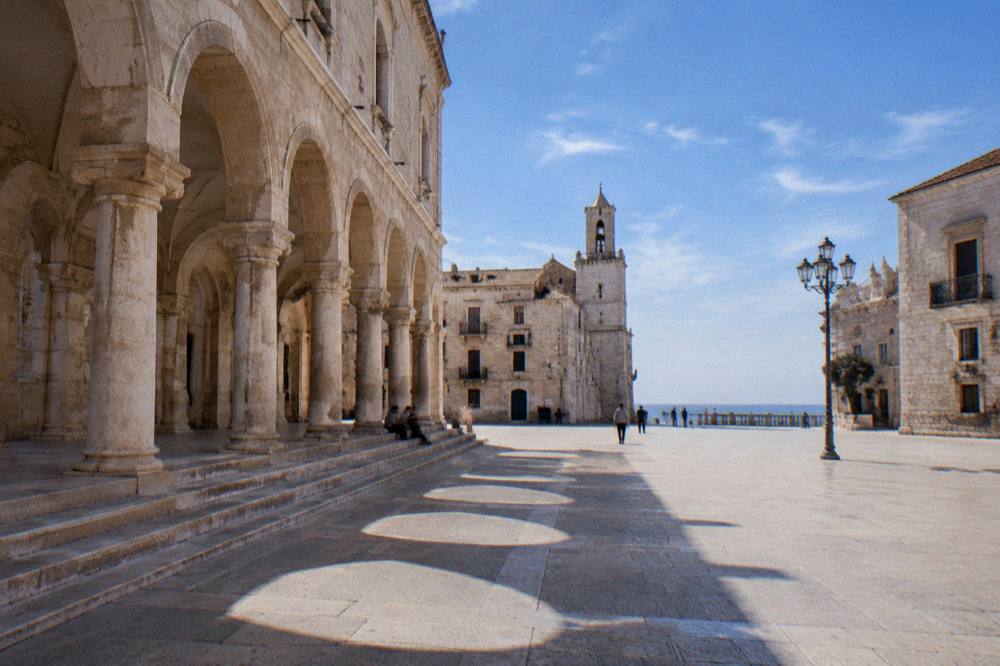
When Is The Best Time Of Day To Walk The Old Town?
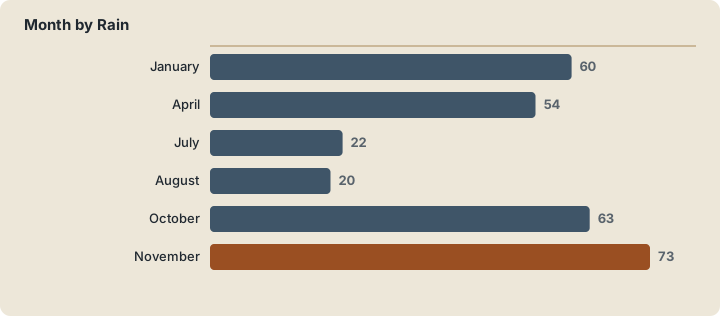
The climate table gives the frame: August has the highest mean daily high at 29.1 C and July 28.6 C, with about 4 rain days in each, while January and February sit near 12 C in the daytime, so early morning and evening are the sane walking hours from June to September and midday works from October to April. These are typical values from modelled ERA5 data, 1991 to 2020. The basilica opens at 06:30 every day, and its Sunday closing at 22:00 makes the late evening an option the whole year round.
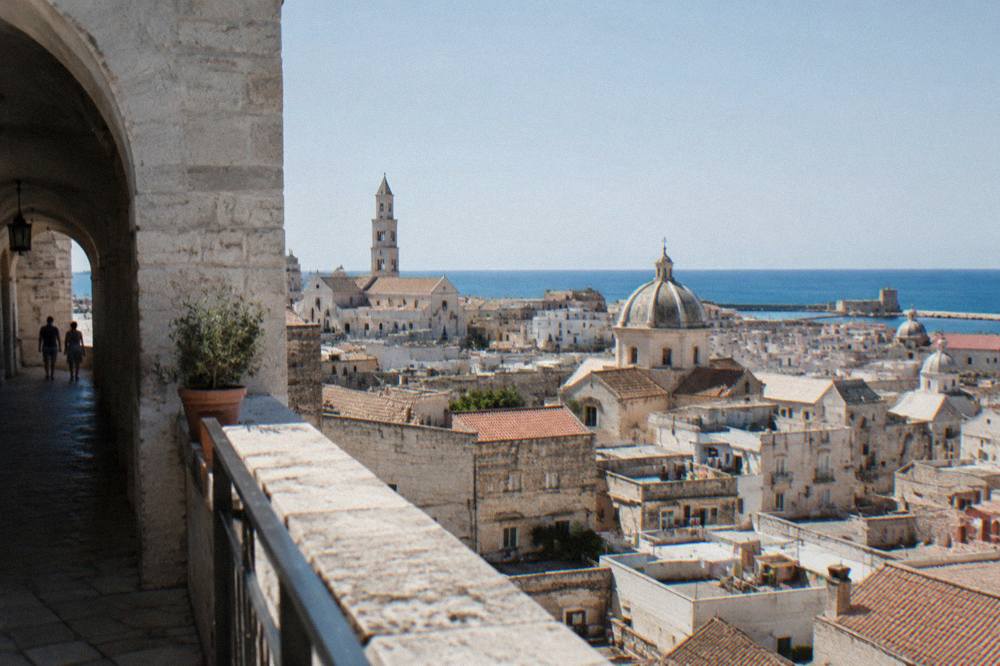
| Month | Mean daily high | Mean daily low | Rain |
|---|---|---|---|
| January | 12.1 C | 7.3 C | 60 mm |
| April | 17.5 C | 11.2 C | 54 mm |
| July | 28.6 C | 22.0 C | 22 mm |
| August | 29.1 C | 22.4 C | 20 mm |
| October | 21.1 C | 15.6 C | 63 mm |
| November | 16.9 C | 12.0 C | 73 mm |
Rain is not a Bari problem in summer: July and August average about 4 rain days each and 20 to 22 mm. November carries 73 mm and about 9 rain days, so an umbrella is a winter accessory here, and the Bari in winter page handles that season in full. For choosing a month, see the best time to visit Bari.
Can You Visit Bari Vecchia On A Cruise Day Or A Short Stop?
Yes: the cruise terminal at the Stazione Marittima, Molo San Vito, is about 0.5 km from Piazza Mercantile, so a cruise day in Bari starts inside the old town within a short walk of the ship, and the basilica, the castle and the sea wall fit a half day at an unhurried pace. The castle's 09:00 opening and the basilica's 06:30 opening mean the sights are ready before most shore time ends. The Bari cruise port day guide sequences exactly this, and how many days in Bari answers the longer question.
For a day with a hard return time, the choice is between depth in the old town and a dash to Polignano a Mare, 37.4 km away by road. Staying on the headland loses nothing: the lanes, the crypt and the Muraglia are the city's core, and the two days in Bari itinerary splits the old town from the wider city sensibly.
If the question is simply whether the old town deserves the time, the direct answer sits in is Bari old town worth visiting, and the wider case for the city is in is Bari Italy worth visiting. More on this site, Bari Italy Travel Guide, covers every district, day trip and dish the city offers.
Which Guided Tours Cover The Old Town Best?
**The old town is covered by three kinds of guided product: history walks that take in the basilica quarter and the castle, food walks that eat through the lanes, and the archaeologist-led underground tour that goes below street level, all departing from Bari itself. A plain two-hour guided walking tour is the budget entry point, and the food walks add tastings to the same streets. Every button below reads current availability.
The underground option is the one that does something a self-guided walk cannot, because the excavations under the old town are not open to wander freely. The street food walk pairs the lanes with the frying pans. Both are Bari departures:
A self-guided day works too, and costs nothing beyond the castle ticket: start at the castle gate, walk north through Piazza Mercantile and Piazza del Ferrarese to the basilica, drop down Strada Arco Basso for the pasta lane, then come back along the Muraglia to the Teatro Margherita and Molo San Nicola. That loop is the spine of the three days in Bari itinerary on day one, and it compresses into the rainy day in Bari guide when the sky turns.
One last pair of basics: the emergency number in Italy is 112, and the tourist information point is reported at Piazza del Ferrarese 29, at the gate of the old town. Leave the car outside the ZTL, take water in August, and give the headland a full day if you have it.
Common Questions About Bari Vecchia
Is Bari Vecchia worth visiting?
Yes. The old town holds the Basilica di San Nicola, the Swabian castle, Piazza Mercantile and the Muraglia sea wall inside a walkable headland, and the basilica lists no admission fee. It is the core of any visit to Bari, and the fuller argument is on the old town page.
Can You Drive Into Bari Vecchia?
No. It is a limited traffic zone with a camera gate at the Castello since 1 July 2026, with weekday windows only for authorised vehicles. Park in the perimeter car parks, paid on working days 08:30 to 20:30, and walk in.
How much time do you need in Bari Vecchia?
A half day covers the castle, the basilica, both squares and the sea wall at a steady pace. A full day lets you add the lanes of Strada Arco Basso, the old port and long food stops, which is how the one day itinerary spends it.
What does the Castello Normanno-Svevo cost?
10 EUR full and 2 EUR reduced, per the Musei Puglia ticket page. It is open Tuesday to Sunday 09:00 to 19:00, with Sunday hours of 09:00 to 13:30 from October to March except the first Sunday of the month.
Is Bari Vecchia safe at night?
The calm checks are the usual ones anywhere in a southern Italian city: keep valuables out of back pockets, zip bags on crowded streets and buses, and check posted prices and the itemised bill before paying. The emergency number is 112.
Where is the tourist information point in Bari Vecchia?
Reported at Piazza del Ferrarese 29, at the southern gate of the old town. Confirm hours before relying on it, and use it for maps and event listings on arrival.
