Getting Around Bari: Buses, Trains, Taxis And On Foot
Bari runs on AMTAB city buses, Ferrotramviaria and Trenitalia trains, a fixed-fare airport taxi and a pair of feet: here is what each option costs and where it takes you.
Short answer
Bari is a compact coastal city and the central districts are best handled on foot or by AMTAB bus, with a 1.00 euro single ticket. The airport is 17 minutes from Bari Centrale by the Ferrotramviaria train at 5.30 euro. Bari Vecchia is a limited traffic zone with camera control since 1 July 2026, so a rental car belongs outside the old town.
Bari, the capital of Puglia on the Adriatic coast of southern Italy, is a city you can cross in an afternoon and a region you cannot. The old town of Bari Vecchia, the Murat grid and the seafront all sit close together around Piazza Mercantile, while Polignano a Mare, Alberobello, Matera and Lecce spread out across three transport networks: Trenitalia, FSE and FAL. Getting around Bari well is mostly a matter of knowing which layer you are on, what each ticket costs on the operator's own tariff, and where the car has to stop. This guide lays out the city layer first, then the airport, the ZTL rules and the day-trip railways, with the figures the operators themselves publish. More on the whole region sits in the Bari Italy Travel Guide root pages, including the full things to do in and around Bari roundup.
How Do You Get Around Bari Without A Car?
You get around central Bari on foot and by AMTAB city bus, and the bus layer costs very little: the AMTAB tariff page lists the single ticket at 1.00 euro, the 90-minute ticket at 1.20 euro and the day ticket at 2.50 euro. Bari Vecchia, the Murat district and the Lungomare Nazario Sauro all lie within a short walk of Piazza Mercantile, so the bus earns its keep on longer hops out to the beaches.
The geometry of the city does half the work. Bari Vecchia occupies the headland between the old port and the Murat grid, and the two districts meet at Piazza del Ferrarese and Piazza Mercantile. From there the Murat streets run inland to Bari Centrale in a straight grid, while the Lungomare Nazario Sauro follows the sea south past Madonnella toward Japigia and the beaches. The Pane e Pomodoro beach sits about 2.1 km from Piazza Mercantile, Torre Quetta about 3.9 km and San Girolamo about 4.3 km to the north-west, all computed from map data, so the beach is the one trip where the bus genuinely helps.
AMTAB is the operator, and its ticket page is short: 1.00 euro for a single ride, 1.20 euro for 90 minutes of transfers and 2.50 euro for a day ticket valid until the end of service. Buy before boarding where you can, and keep the ticket until the ride is over. AMTAB also runs line 16 between Bari Centrale and the airport as a route, though the operator publishes no line-specific fare, so the city tickets above cannot be assumed to cover it: check what applies at the time. Service changes during works are posted by the operator.
| AMTAB ticket | Price | Validity |
|---|---|---|
| Single | 1.00 EUR | One ride |
| 90-minute | 1.20 EUR | 90 minutes |
| Day ticket | 2.50 EUR | Until end of service |
For the streets themselves, the walking guide to Bari Vecchia covers the lanes around the Basilica di San Nicola, and the station district overview explains the blocks between Bari Centrale and the old town.
How Do You Get From Bari Airport To The City Centre?
The Ferrotramviaria airport train takes 17 minutes from the terminal to Bari Centrale and costs 5.30 euro for a single under the 2026 tariff, with a contactless card tappable at the gate under the "Paga e Via" scheme. The Tempesta shuttle coach costs 5 euro and runs on Sundays too, AMTAB line 16 links the station and the airport, and the predetermined taxi fare to a city-centre hotel is 25 euro.
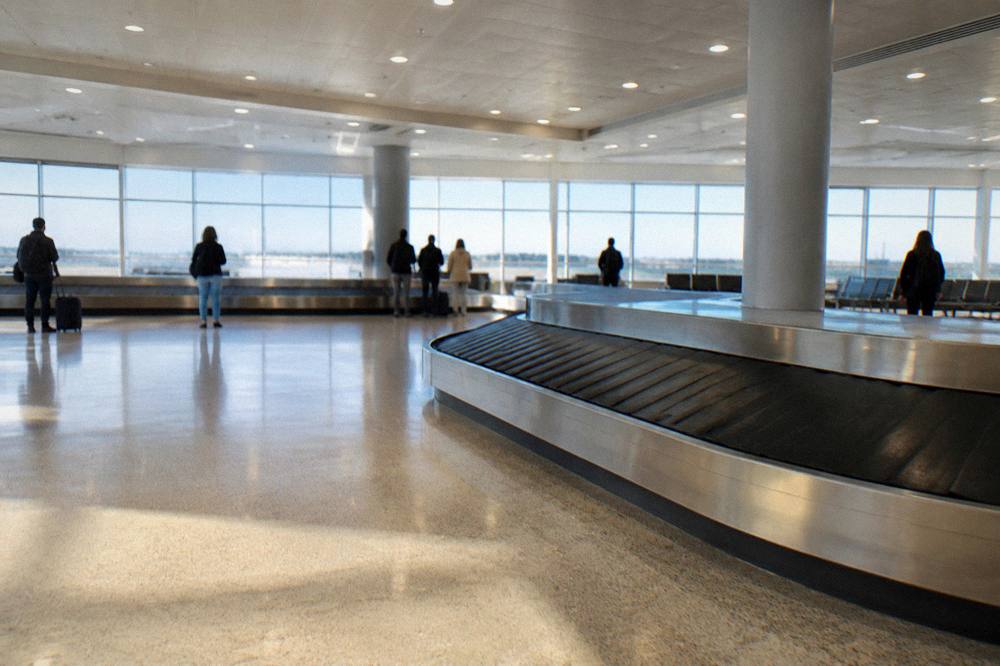
Karol Wojtyla airport (BRI) sits at Palese, 12.0 km and about 21 minutes by road from Piazza Mercantile. The train is the layer that surprises people who read older guides: the Ferrotramviaria station is inside the terminal, the run to Bari Centrale takes 17 minutes, and the single fare is 5.30 euro with daily validity for one trip. Reported figures from the operator's service charter put the frequency at about 68 trains a day Monday to Saturday and 46 on Sundays and holidays: confirm the timetable before you travel.
The Tempesta coach is the road alternative at 5 euro, bought on board or in the Cotrap app, with a reported journey time of about 30 minutes. The taxi rank works on a predetermined fare: the comune di Bari's own enforcement notice sets 25 euro from the airport to a city-centre hotel, and the same notice records a driver who charged 50 euro losing his licence for 15 days, which tells you how firmly the tariff is applied. The licensed taxi from a rank or by phone is the regulated option in the city; app availability changes, so treat the rank and the phone as the plan.
| Airport option | Price | Notes |
|---|---|---|
| Ferrotramviaria train | 5.30 EUR single | 17 minutes, station inside the terminal |
| Tempesta coach | 5 EUR | On board or in the Cotrap app, runs Sundays |
| AMTAB line 16 | Pay the standard city ticket | Route runs Bari Centrale to airport |
| Taxi to city-centre hotel | 25 EUR predetermined | Per the comune di Bari tariff |
The full comparison, including what each option means with luggage, sits in the airport to city centre guide, with the wider Bari airport overview beside it.
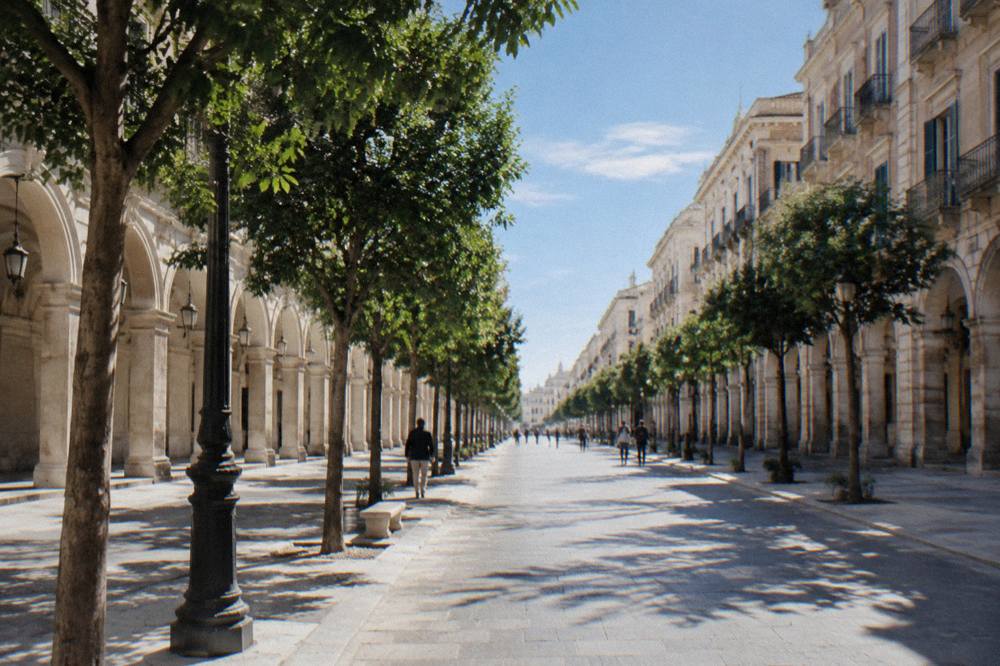
Once the bags are dropped, the city layer takes over quickly. The Bari Vecchia lanes and the Murat grid are both within a straight walk of the station, and the Lungomare stretches south for the runners and the evening stroll.
Is Central Bari Walkable?
Central Bari is walkable in the plain sense that Bari Vecchia, the Murat district, the seafront and the main squares all lie close to Piazza Mercantile, with Pane e Pomodoro beach about 2.1 km away on foot and the station a short grid walk inland. There is no measured "walkability" figure for the city, so the honest answer is a map answer: the headland, the grid and the Lungomare form one connected walking area, and only the beaches and the airport sit beyond it.
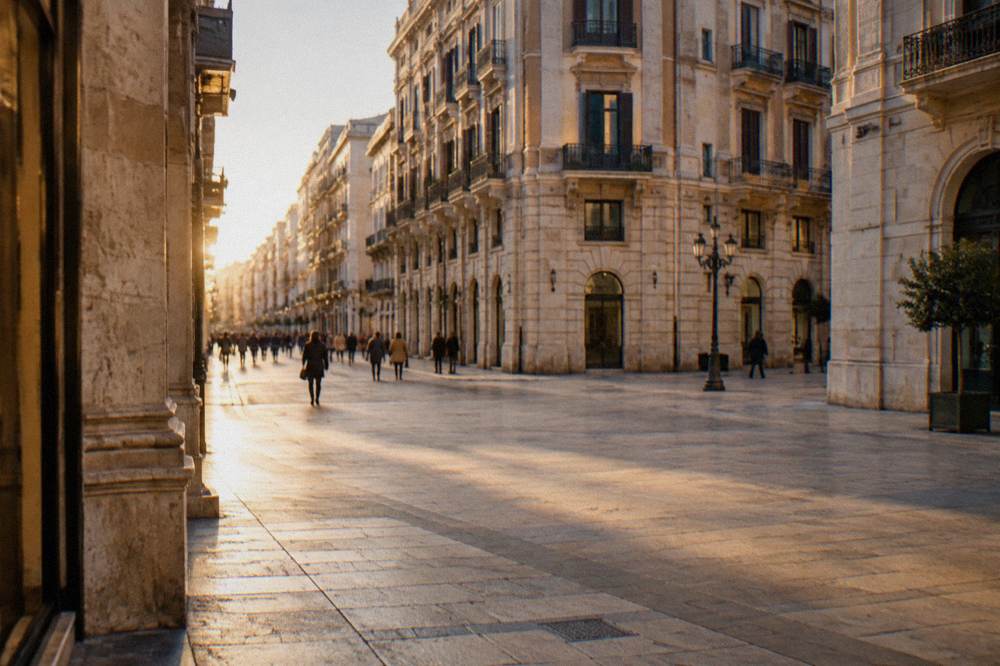
Bari Vecchia is a knot of narrow lanes around the Basilica di San Nicola, the Cattedrale di San Sabino, the Castello Normanno-Svevo, Piazza Mercantile and Piazza del Ferrarese, and cars are largely excluded from it anyway, as the ZTL section below explains. Walking is not a lifestyle choice there, it is the only serious option. The Murat district, by contrast, is a rational grid of straight streets around Via Sparano, easy to cross in any direction and well served by buses when the heat or the shopping bags argue against it.
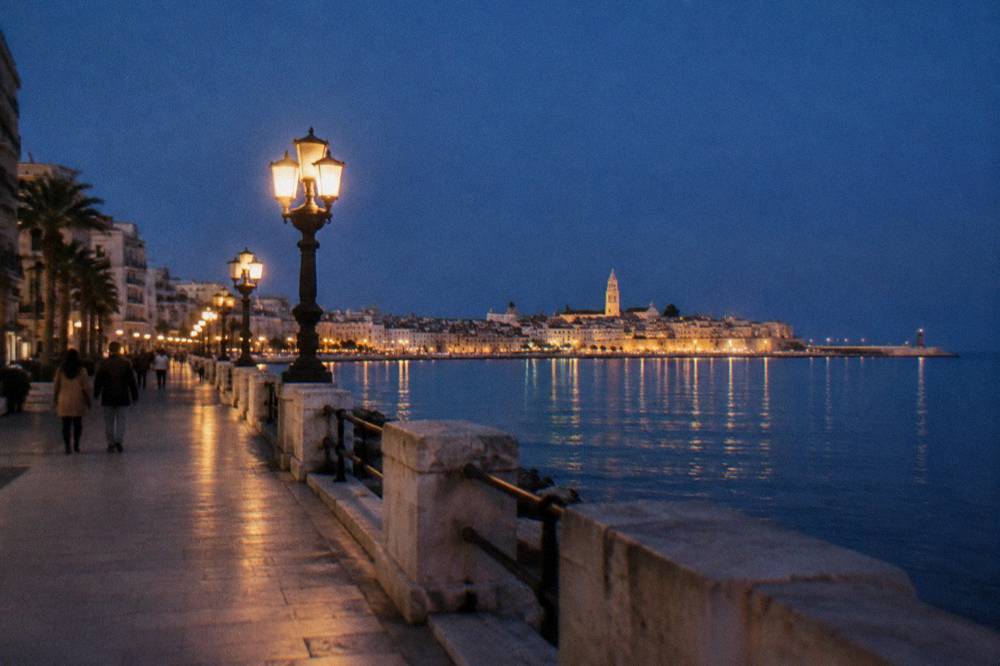
The seafront ties the two together. The Lungomare Nazario Sauro runs along the water from the old port past the Teatro Margherita and Madonnella, and it is the natural walking route toward Japigia and Pane e Pomodoro. In July and August the typical mean daily maximum runs 28.6 C and 29.1 C respectively, typical values from modelled ERA5 data, 1991 to 2020, so the sensible plan is the walk early, the museum or the lunch at midday, and the seafront again in the evening. November averages 73 mm of rain against August's 20 mm on the same modelled series, which is the difference between a walking month and an umbrella month.
A guided walk also does the route-finding for you. The Matera Sassi tour with rock-cut church entry, which departs from Matera rather than from Bari, is one example of a tour that replaces a transport decision with a meeting point, and you can Check availability alongside the day-trip planning below. Within Bari itself, the archaeologist-led underground tour covers the layers under the old town on foot.
What Is The ZTL In Bari Vecchia And Where Can You Not Drive?
Bari Vecchia is a limited traffic zone, and since 1 July 2026 a camera gate at the Castello, where piazza Federico II di Svevia meets piazza Massari, controls vehicle entry, with weekday windows of 09:00 to 11:00 for authorised vehicles and an afternoon window of 16:00 to 18:00 that is reported rather than confirmed. Perimeter parking nearby is paid on working days from 08:30 to 20:30, and the short advice to rental-car drivers is: do not drive into Bari Vecchia at all.
The comune di Bari introduced the camera gate as part of the July 2026 changes, and the entry windows apply to authorised vehicles, meaning residents and permit holders with loading and unloading to do. A visitor in a rental car does not qualify, and the plate-reading camera does not negotiate. The rules and any permit details sit on the comune's ZTL page, which is the page to check before you drive anywhere near the old town, since a single wrong turn at the castle gate is the expensive kind.
The practical layout for a driver is this: park outside, walk in. The car rental guide for Bari airport covers what a car is actually for in this region, which is the day trips, not the city.
| Bari Vecchia ZTL rule | Detail |
|---|---|
| Camera gate | Piazza Federico II di Svevia at piazza Massari, from 1 July 2026 |
| Weekday entry window | 09:00 to 11:00, authorised vehicles |
| Afternoon window | 16:00 to 18:00, reported |
| Perimeter parking | Paid on working days 08:30 to 20:30 |
The blanket rule stands regardless. Bari Vecchia is for feet, and the ZTL camera is the enforcement.
How Do Trains From Bari Reach The Day-Trip Towns?
Trenitalia regional trains on the Bari-Lecce line serve Polignano a Mare at 33 km, Monopoli at 41 km, Ostuni at 75 km and Lecce at 150 km along the line, with Polignano typically 25 to 35 minutes from Bari. The Trulli Link service joins Trenitalia and FSE to Locorotondo, Alberobello and Martina Franca, and FAL runs its own line from Bari through Altamura and Gravina to Matera. Fares sit on the operators' timetables, and the FSE leg is reported at 5.90 euro on top of the rail fare.
Bari Centrale is the hub for all of it, and the station deserves its own reading: the Bari train station guide covers the layout, the operators and the connections. Southbound, the Trenitalia Bari-Lecce regional line hugs the coast: Polignano a Mare, then Monopoli, then Ostuni further on, then Lecce at the end of the line. The Polignano run is typically 25 to 35 minutes on secondary timetables, and it is the day trip people make often, so the Polignano pairing with Monopoli and Ostuni sets out how the three combine.
Inland, the Valle d'Itria towns run on the Trulli Link, an intermodal service that joins a Trenitalia leg to an FSE leg to reach Locorotondo, Alberobello and Martina Franca. The FSE portion is reported at 5.90 euro added to the rail fare for the connecting leg, a figure worth confirming before you travel. FSE also runs its own bus lines in the same corridor. Matera is different again: FAL, Ferrovie Appulo Lucane, runs the Bari, Modugno, Palo, Binetto, Grumo, Toritto, Altamura, Gravina, Matera route from its own central station, and Matera lies in Basilicata, not Puglia, so the trip crosses a regional border. Journey times and fares for the FAL and FSE legs sit on the operators' timetable pages.
| Day-trip town | Rail route | Distance on the line |
|---|---|---|
| Polignano a Mare | Trenitalia Bari-Lecce | 33 km |
| Monopoli | Trenitalia Bari-Lecce | 41 km |
| Ostuni | Trenitalia Bari-Lecce | 75 km |
| Lecce | Trenitalia Bari-Lecce | 150 km |
| Alberobello | Trulli Link, Trenitalia plus FSE | Route service |
| Matera | FAL line via Altamura and Gravina | Route service |
Do You Need A Car In Bari And Puglia?
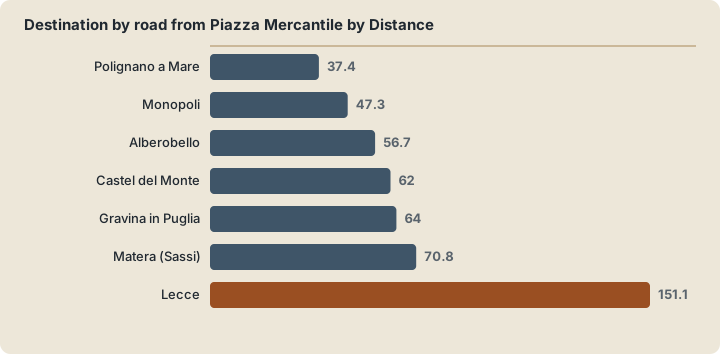
You do not need a car in Bari itself, where the buses cost 1.00 to 2.50 euro and the centre is walkable, but a car earns its keep for the inland day trips: Castel del Monte is about 62 km and 59 minutes by road from Piazza Mercantile, Matera about 71 km and 69 minutes, Gravina in Puglia about 64 km and 64 minutes and Lecce about 151 km and 115 minutes, all free-flow road figures.
The honest split is city on foot and rail, inland by car or coach tour.
The road distances tell the story plainly. The coastal towns cluster near the rail line, so Polignano a Mare and Monopoli double as two of the easiest train runs on the Bari-Lecce line. The inland sights spread out: Castel del Monte stands alone on its hill with roughly an hour of driving each way, and the chain of Altamura, Gravina and Matera runs deep toward the border with Basilicata. None of that means driving in the city: the ZTL gate at the Castello and the paid perimeter parking make the old town a no-go for a rental, and the airport-to-centre train means a car hired on arrival can wait a day or two if the plan is Bari first, region after.
| Destination by road from Piazza Mercantile | Distance | Free-flow time |
|---|---|---|
| Polignano a Mare | 37.4 km | about 36 min |
| Monopoli | 47.3 km | about 43 min |
| Alberobello | 56.7 km | about 61 min |
| Castel del Monte | 62.0 km | about 59 min |
| Gravina in Puglia | 64.0 km | about 64 min |
| Matera (Sassi) | 70.8 km | about 69 min |
| Lecce | 151.1 km | about 115 min |
The car rental decisions at Bari airport page goes deeper on when the car pays for itself.
An alternative that removes the driving question entirely is the organised day trip. The Matera Sassi tour style of product departs from Matera itself rather than from Bari, so the drive to the meeting point is the only leg you own. For travellers who would rather not own any leg, coach tours from Bari cover the same corridor.
How Do Taxis Work In Bari?
Taxis in Bari are licensed and rank-based, with one printed figure attached to them: the predetermined fare of 25 euro from the airport to a city-centre hotel, set by the comune's service regulation. No city taxi fare, night supplement or luggage supplement appears on any official page, so the rank and the phone are the reliable channels, and the ride-hailing question has no printed answer either way: the licensed taxi is the regulated option, and app availability changes.
The enforcement story behind that 25 euro figure is worth knowing because it shows the tariff is real. The comune's own notice records the licence suspension, 15 days, imposed on a driver who charged a visiting passenger 50 euro for the airport run, double the predetermined fare. The lesson for the traveller is not paranoia, it is arithmetic: the airport fare is fixed, so a number other than 25 euro at the rank is a question to ask before the door closes. Inside the city, no official fare table is published on the pages gathered here, so agree the destination and let the meter run.
For the ride-hailing question, there is nothing to state either way about whether any particular app operates in Bari, and nothing here does. The licensed taxi from a rank, or booked by phone through your hotel, is the channel the municipality regulates. The fuller treatment, including the airport scenarios, sits in the Bari taxis and ride-hailing guide.
What About Ferries, Boats And The Port?
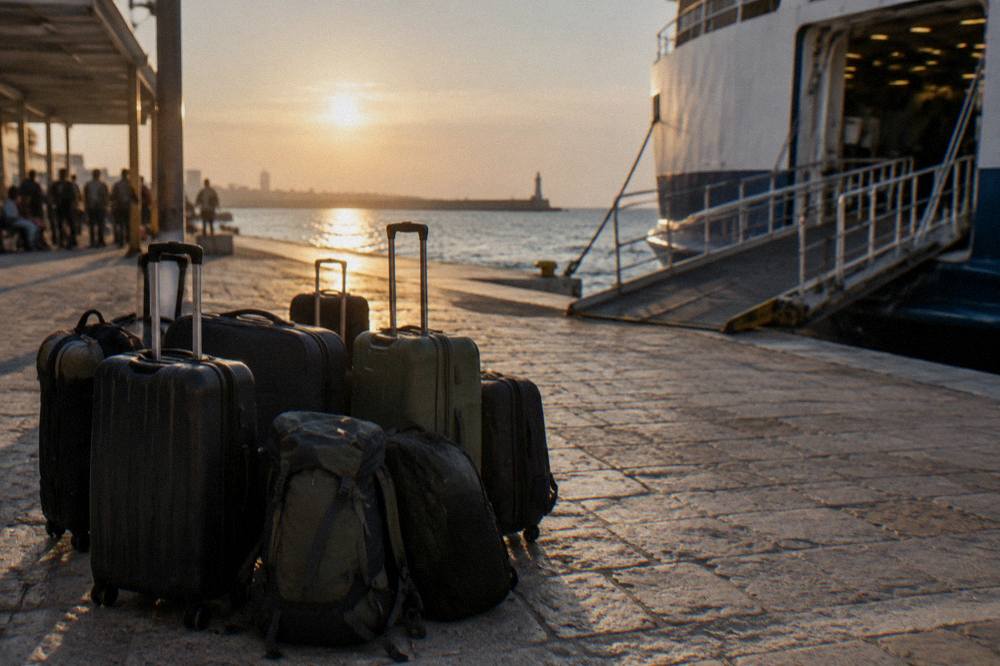
Bari's Stazione Marittima at Molo San Vito sits about 0.5 km from Piazza Mercantile, so the ferry terminal is inside the walkable centre. Adria Ferries sails Bari to Durres every day all year in about 8 hours, GNV sells the same route with a reported crossing of 10 hours 45 minutes, and Superfast's 2026 brochure lists the Bari, Corfu, Igoumenitsa, Patras route. Jadrolinija's Dubrovnik line 54 was reported interrupted in autumn 2026: confirm it is running before planning around it.
The ferry detail matters for one specific traveller: the one continuing to Albania or Greece. For everyone else, the port is simply the eastern edge of the old town, and cruise passengers step off within a short walk of Piazza Mercantile and the lanes of Bari Vecchia. The Bari ferries guide carries the full routes and terminals.
Boat trips on the coast are a different thing again and a common point of confusion. The cave boats of the Polignano coast depart from Polignano a Mare, and some from San Vito, never from the Bari waterfront. From Bari's own seafront the offer is the city cruise layer: small sightseeing runs along the coast with a drink, departing from the Bari port area. Both are covered by the picks below, with their departure points stated.
When Does A Tour Beat A Timetable?
A tour beats a timetable in Bari when the destination is awkward by public transport or the point of the day is the explanation, not the movement: Castel del Monte and Matera are the two clearest cases, both reachable by rail-and-bus chains but both served by coach and guide products, while inside the city the guided layers are the walking, food and underground tours, and on the water the scenic cruise along the Bari coast departs from the Bari side.
The arithmetic is not ideological, it is geometrical. A day that pairs Alberobello and Matera by public transport involves the Trulli Link, an FSE connection and the FAL line to Matera from a different station, and the timetables do not necessarily line up into one clean day. A coach product that leaves from Bari folds the whole chain into one vehicle. Inside the city the calculation reverses: the old town is walkable, the buses are 1.00 euro, and a tour earns its price through what it explains rather than where it carries you, which is the case for the archaeologist-led underground visit under Bari Vecchia. On the water, the scenic cruise departs from the Bari side and shows the city from the sea, while the cave boats are Polignano products through and through.
The related pick on this page is the Matera Sassi tour with entry to the rock-cut churches, which departs from Matera: you make your own way to the town, by FAL train, by car or with a coach transfer, and the tour takes over from the Sassi onward. It pairs naturally with a day that treats Matera as the destination rather than a stop on a loop. Whatever the choice, the operator's live listing holds the current dates, meeting points and terms, and free cancellation is standard on this category, so booking ahead costs little flexibility.
Common Questions About Getting Around Bari
Can you get around Bari without a car?
Yes. The centre is compact around Piazza Mercantile, AMTAB buses cost 1.00 euro for a single or 2.50 euro for a day ticket, and the airport links to Bari Centrale by a 17-minute train at 5.30 euro. A car matters for inland day trips such as Castel del Monte and Matera.
How much is the bus in Bari?
The AMTAB tariff page lists the single ticket at 1.00 euro for one ride, the 90-minute ticket at 1.20 euro and the day ticket at 2.50 euro valid until the end of service.
Is there a train from Bari airport to the city centre?
Yes. The Ferrotramviaria station is inside the terminal, the train takes 17 minutes to Bari Centrale and the single costs 5.30 euro under the 2026 tariff, with a contactless card tappable at the gate.
Can you drive into Bari Vecchia?
No. Bari Vecchia is a limited traffic zone with a camera gate at the Castello since 1 July 2026, and the entry windows apply to authorised vehicles only. Park outside and walk in.
How do you get from Bari to Polignano a Mare?
Trenitalia regional trains on the Bari-Lecce line cover the 33 km, typically in 25 to 35 minutes. Check the operator's timetable for times and the current fare.
Does Uber work in Bari?
There is no printed answer either way, and none is offered here. The licensed taxi from a rank or by phone is the regulated option, and the airport run carries a predetermined fare of 25 euro to a city-centre hotel.
The layers stack cleanly once you see them: feet for the headland and the grid, AMTAB for the beaches and the station, the Ferrotramviaria train for the airport, Trenitalia and Trulli Link and FAL for the region, and a car or a coach only for the inland hills and the border with Basilicata. Check the operator's live timetable before each leg, and the city does the rest.