Orecchiette In Bari: Where To Eat It And What Goes With It
Orecchiette is the pasta shape of Puglia, and Bari is the city where you will see it made, eat it in every trattoria and learn to shape it by hand. Here is what goes with it, where to find it and how to turn it into a day out.
Short answer
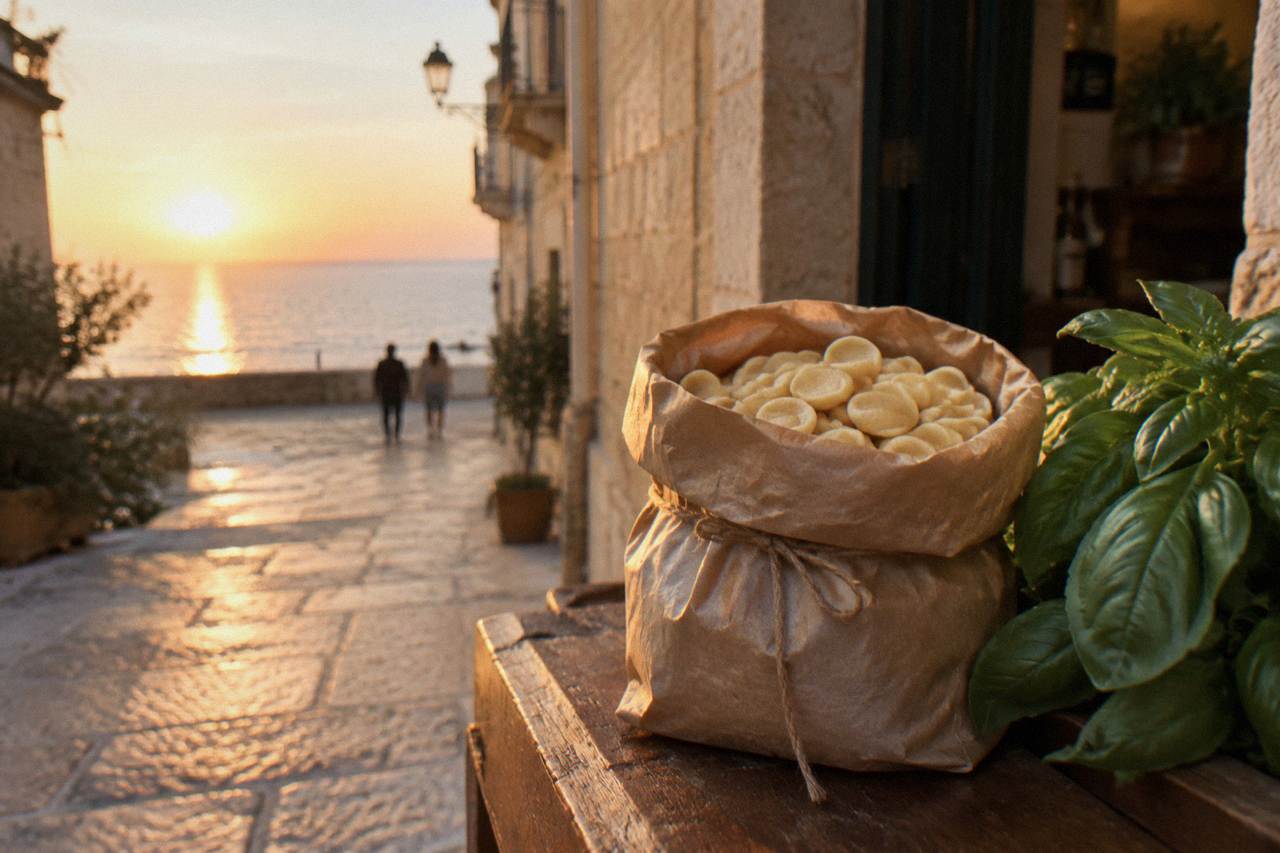
Orecchiette are small hand-shaped pasta ears, the signature pasta of Bari and Puglia, served with turnip tops, tomato or ricotta. Bari Vecchia is the place to eat them, Strada Arco Basso is the street linked with the makers, and several classes teach the shaping.
Orecchiette is the pasta shape of Bari, the capital of Puglia on the Adriatic coast of southern Italy, and it is the one dish that follows you from the old town streets to every trattoria menu in the Murat district. The name means little ears, and the shape is pressed and dragged by hand from a piece of dough, one at a time, in a motion that cooks here learn young. This guide covers what the pasta is, where in Bari you find it fresh, what sauces and side dishes belong beside it, and the classes where you can learn the shaping yourself, with day-trip options in the Valle d'Itria and beyond for anyone who wants the full Puglia food loop.
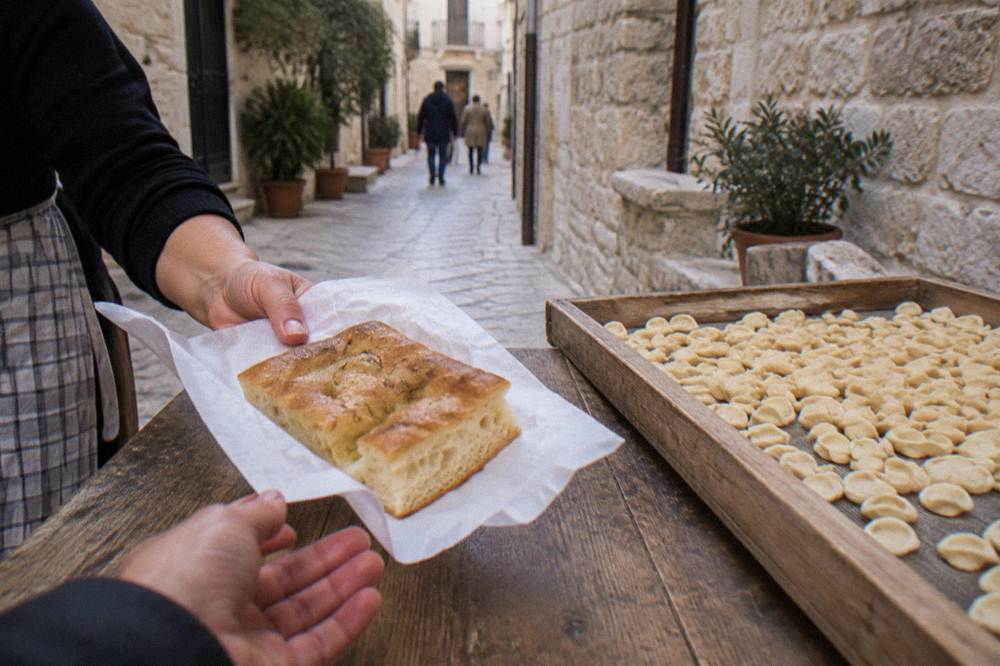
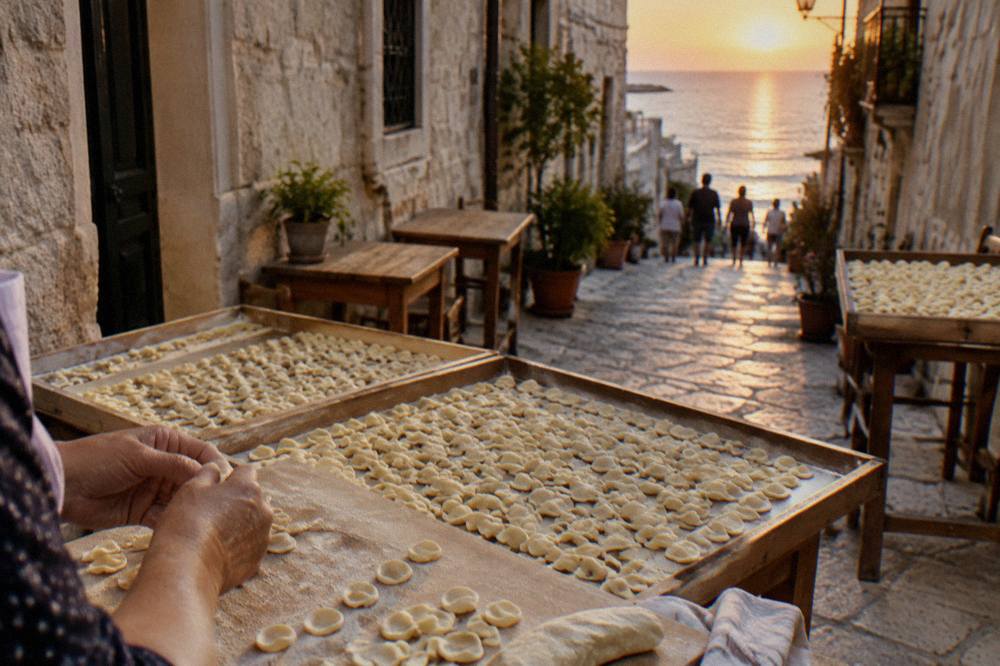
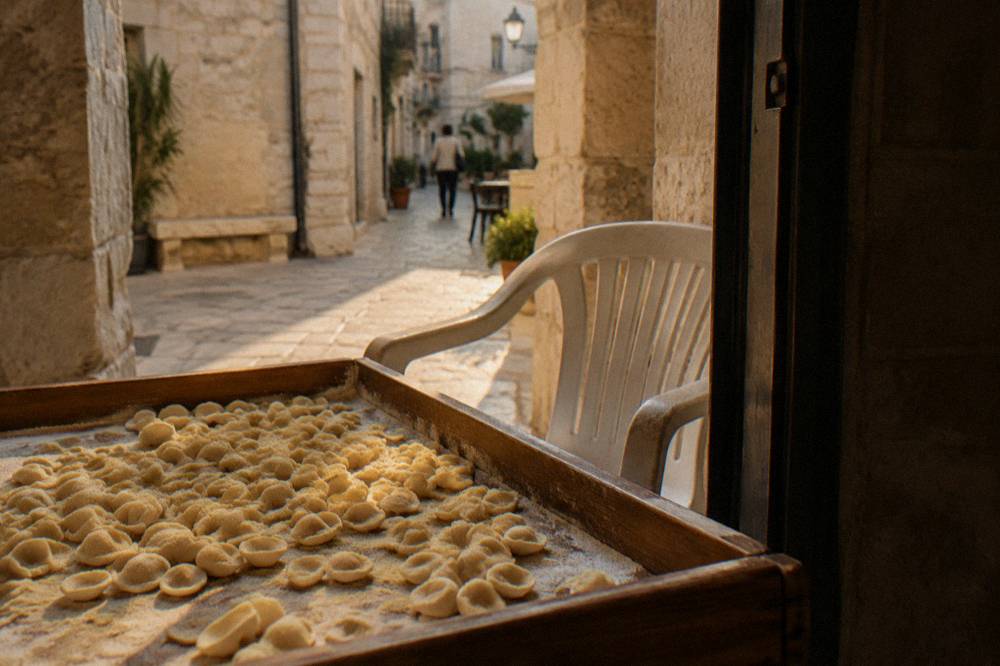
Orecchiette are small, dome-shaped pasta pieces with a thinner centre and a rough outer edge, pressed by hand one at a time, and they are the pasta shape of Puglia, with Bari as the city where the tradition is on show daily. In Bari Vecchia the pasta is made by hand on Strada Arco Basso, the street known for its pasta makers, and the shape holds thick vegetable sauces well because of its cupped form.
What Is Orecchiette In Bari?
The shape does the work. Because each piece is dragged across the board, the outside stays rough and the inside stays smooth, so a sauce of greens or tomato clings where a smooth factory shape would shed it. That single practical detail explains why the shape survived: it is built for the vegetables that grow around the city, not for cream or delicate fish sauces. Orecchiette is the pasta shape of Puglia, and one plain sentence is really all any honest guide can add to the folklore, because the origin stories you read elsewhere are exactly the kind of detail nobody can source.
The dish names that surround it are worth knowing before you order anything. Here are the ones that share the plate, and the one sentence each deserves.
| Dish | What it is, in one sentence |
|---|---|
| Orecchiette | The hand-shaped little-ear pasta of Puglia, served with vegetable or tomato sauces. |
| Panzerotti | Small filled turnovers, fried, with a soft mozzarella and tomato filling. |
| Focaccia barese | A tall, soft, olive-oil-rich flatbread baked with tomatoes and olives on top. |
| Sgagliozze | Fried squares of leftover polenta, sold as street food in the old town. |
| Ricci and frutti di mare | Raw sea urchin and raw shellfish, eaten plain at the fish stalls by the old port. |
Each of these has its own page on this site, including a full guide to focaccia barese and a broader walk through street food in Bari, so this page stays on the pasta and what belongs beside it.
Where Do You Eat Orecchiette In Bari Vecchia?
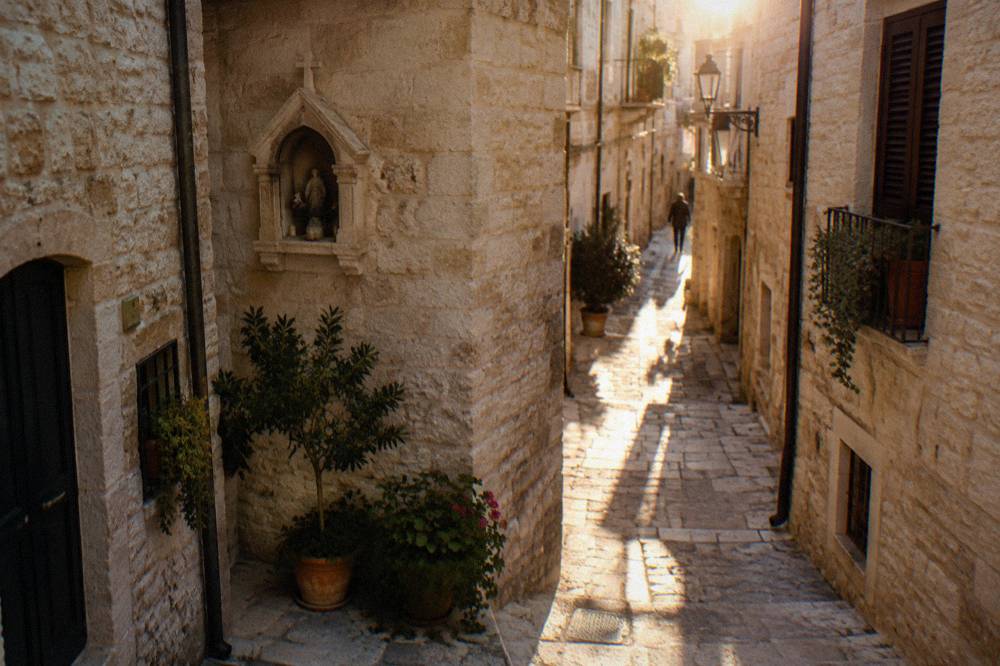
Bari Vecchia, the old town on the headland between the old port and the Murat district, is where the fresh pasta is made and eaten, and Strada Arco Basso is the street long linked with the hand makers, running south from the Basilica di San Nicola towards Piazza del Ferrarese. No bakery, shop or trattoria name can be honestly recommended here, because none has a source behind it. The honest method is to walk the street, look at the pasta drying, and eat close to where it is made.
The old town is small and walkable, which makes the pasta hunt easy. You come down from the Basilica di San Nicola, past the Cattedrale di San Sabino, and the streets narrow into the area where pasta boards sit outside doorways. This is the street this site covers in detail on its own page about Strada delle Orecchiette, so here it is enough to say that the street is real, the makers are real, and the claim you should not believe is the one about set hours: no timetable of the makers exists that anyone can stand behind, so go in daytime and see what you see. For restaurant picks, this site keeps a separate answer page on where locals eat in Bari, built the same way, without invented names.
What you can plan around are the fixed sights of the old town, because their hours and prices are published. The basilica keeps long hours, Monday to Saturday 06:30 to 20:30 and Sunday 06:30 to 22:00, with no admission fee mentioned on its page. The Swabian castle, the Castello Normanno-Svevo, costs 10 euro full and 2 euro reduced, open Tuesday to Sunday 09:00 to 19:00, with Sunday openings of 09:00 to 13:30 from October to March except the first Sunday of the month. Both sit within ten minutes of the pasta street, so a morning loop of basilica, cathedral, castle and pasta works without any transport at all.
If you would rather have someone walk you through the old town and the food at the same time, there are tours that do exactly that, and the three below are the picks for this page.
Which Classes Teach You To Make Orecchiette In Bari?
The most direct option is a walking tour of Bari Vecchia combined with an orecchiette-making class, where you shape the pasta with a local cook after seeing the old town, and it can be booked through the operator's live listing. Beyond it, Bari has a wide band of cooking classes covering focaccia, pasta and tiramisu, and an orecchiette class on a farm near Ostuni is the day-trip version for anyone based in the city.
The combined walk-and-class product is the natural fit for this page, and the listing carries its own current price and availability: Check availability. What the class covers is the shaping itself, the drag-and-turn motion that gives orecchiette their shape, done with your own hands. More detail is available at the orecchiette class listing.
For comparison, two other formats exist. A general street food walk covers the old town dishes, panzerotti included, without the hands-on pasta hour. And a pure history walk covers the old town without any food stops, which suits travellers who want the pasta on a plate rather than on a board. Prices, ratings and durations for all of these live on their listings and render with the cards, so compare them there rather than on any page that types the numbers.
One practical note for anyone driving to a class in the old town: Bari Vecchia has been a limited traffic zone with a camera gate at the Castello since 1 July 2026, so do not drive into it. Park outside and walk in, or arrive by bus or train. The whole class-and-walk loop is on foot anyway, and the old town is compact enough that footwear matters more than transport.
What Sauces And Side Dishes Go With Orecchiette In Bari?
The classic pairing in Bari and across Puglia is orecchiette with cime di rapa, bitter turnip tops cooked with garlic, chilli and oil, and the other standards are a fresh tomato sauce, ricotta forte folded through the hot pasta, and meat ragu on feast days. The side dishes that belong to the same table are focaccia barese and fried sgagliozze, and the raw seafood at the old port is the other half of the city's food identity.
Turnip tops and orecchiette is the pairing that travels, but the tomato version and the ricotta version are just as local, and every trattoria menu in the city carries at least two of the three. The one rule worth stating plainly is that the sauce chooses the shape: thick, chunky, vegetable-heavy sauces are what the cupped ear is built for, and smooth or creamy sauces slide off it. That is a fact of physics rather than folklore, and it is the reason the same shape appears across Puglia with whatever greens the season gives.
| Sauce or pairing | One plain sentence |
|---|---|
| Cime di rapa | Turnip tops, the classic green sauce, cooked with garlic, chilli and olive oil. |
| Pomodoro e ricotta | A fresh tomato sauce with grated ricotta salata or soft ricotta folded through. |
| Ragu | A slow meat sauce, served on Sundays and feast days in homes across the city. |
| Focaccia barese | The soft olive-oil flatbread with tomatoes, the standard bread beside the plate. |
| Sgagliozze | Fried polenta squares, the old town street snack eaten before or after the meal. |
No restaurant, bakery or "original" shop name belongs on this page, and neither does a price for any plate. What you can do is check the posted menu before you sit down and read the itemised bill at the end, the same two habits that serve you anywhere in Italy. If you want the full picture of the city's raw-fish culture at the old port, the site covers it in the street food guide linked above, and the answer page on local eating spots handles the where.
Can You Make Orecchiette At Home After The Class?
Yes, and that is the point of taking one: the dough is just flour and water, the shaping needs a blunt knife or the tip of your thumb, and the motion is a drag, a flip and a pull that a class teaches in one session and your hands remember after that. The hard part is not the recipe, which is short, it is the rhythm, which is why watching a cook who makes hundreds a day is worth the hour.
Recipe quantities are not something this page prints, because no sourced version exists in the site's material and every family varies the hydration anyway. What can be said is structural: the dough is flour and water, sometimes with a little oil, and it is worked until smooth, rested, then cut into small pieces and shaped one at a time. Dry the finished pieces on a board for a few hours before cooking, or freeze them flat, and cook them in well-salted boiling water until they float and a minute more. The sauce, as above, should be ready before the pasta goes in the water, because fresh orecchiette cook quickly and wait for nobody.
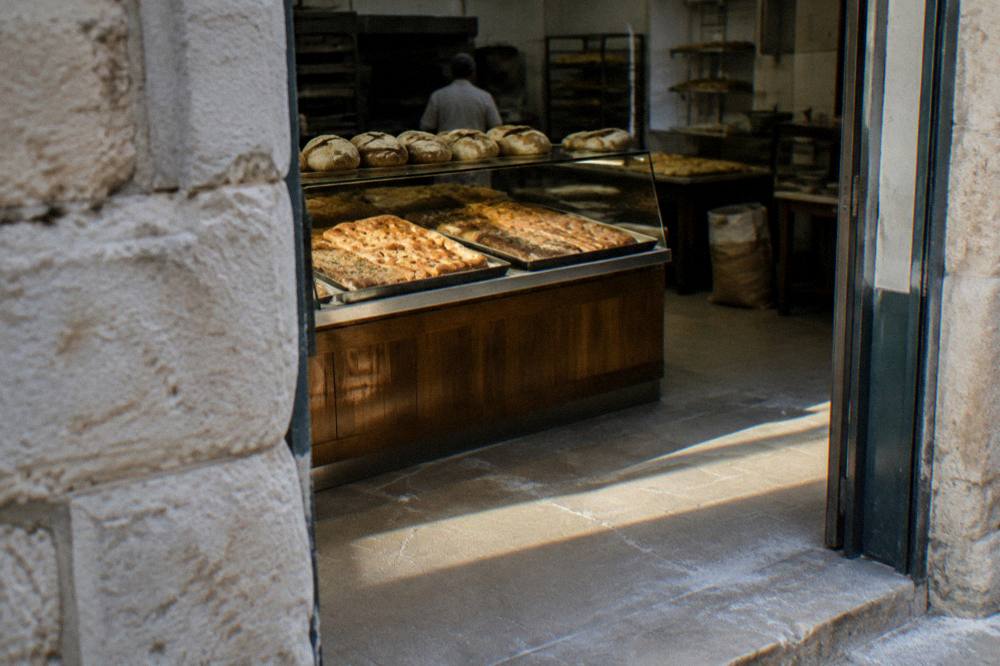
The classes in the city teach exactly this, and the formats differ mainly in what surrounds the pasta hour. Some add a market or old town walk first, some add a second dish such as focaccia or tiramisu, and the farm version near Ostuni adds the countryside of ancient olive trees around it. The one that pairs the old town walk with the pasta hour remains the featured pick for this page, and the full trio of food-and-history walks appears again at the end of this guide for anyone comparing.
Can You Day-Trip From Bari For Orecchiette And Puglia Food?
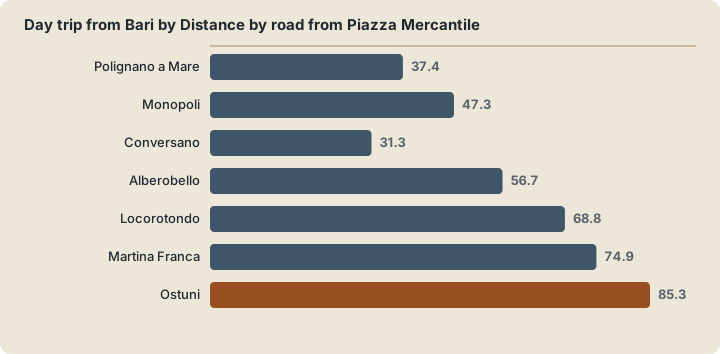
Yes, and the loop runs through the Valle d'Itria, where Locorotondo, Alberobello and Martina Franca are reached by the Trulli Link rail-and-bus service from Bari, while Polignano a Mare and Monopoli sit on the Trenitalia Bari-Lecce line at 33 km and 41 km, and a farm orecchiette class near Ostuni, 85.3 km by road from Piazza Mercantile, is the food-focused option.
The Valle d'Itria is the inland half of the orecchiette story: the same pasta appears on menus in Locorotondo and Martina Franca, and Alberobello, the trulli town and a UNESCO World Heritage site, is on the same route. The Trulli Link is the intermodal service that ties Trenitalia to FSE lines for Locorotondo, Alberobello and Martina Franca, with the FSE leg reported at 5.90 euro on top of the rail fare, so confirm the current combination before you travel. For the coast, Trenitalia regional trains on the Bari-Lecce line serve Polignano a Mare at 33 km and Monopoli at 41 km, with the Polignano run typically reported at 25 to 35 minutes. Full guides cover Alberobello and the valley towns, plus a roundup of how many days to spend in Bari for when the food day trips start stacking up.
| Day trip from Bari | Distance by road from Piazza Mercantile | Drive time, free-flow |
|---|---|---|
| Polignano a Mare | 37.4 km | about 36 min |
| Monopoli | 47.3 km | about 43 min |
| Conversano | 31.3 km | about 36 min |
| Alberobello | 56.7 km | about 61 min |
| Locorotondo | 68.8 km | about 58 min |
| Martina Franca | 74.9 km | about 68 min |
| Ostuni | 85.3 km | about 73 min |
The farm class near Ostuni is the one day trip built entirely around the pasta: an orecchiette class on a working farm, with a wine tasting, in the olive country that fills the province of Brindisi.
When Should You Plan An Orecchiette Trip To Bari?
May and September are the comfortable months for a food trip to Bari, with typical daily highs of 21.6 C in May and 25.1 C in September and rain of 35 mm and 53 mm respectively, according to typical values from modelled ERA5 data, 1991 to 2020. July and August bring highs of 28.6 C and 29.1 C with only about 4 rain days each, which suits a sea-and-pasta day but makes the midday old town walk a hot one.
The full picture is in the site's Bari weather and best time to visit guides; the figures below are the months that matter for eating your way around the old town on foot.
| Month | Mean daily high | Mean daily low | Rain |
|---|---|---|---|
| April | 17.5 C | 11.2 C | 54 mm |
| May | 21.6 C | 15.3 C | 35 mm |
| June | 25.9 C | 19.5 C | 28 mm |
| July | 28.6 C | 22.0 C | 22 mm |
| August | 29.1 C | 22.4 C | 20 mm |
| September | 25.1 C | 19.1 C | 53 mm |
| October | 21.1 C | 15.6 C | 63 mm |
Two calendar notes sharpen the choice. Early May, the 7 to 9 May window by tradition, is the Festa di San Nicola, when the old town fills with the feast of the city's patron saint and the pasta streets sit inside the celebrations. And the Bif&st film festival ran from 21 March 2026 in late March, for anyone who wants a reason beyond the table. Winter is mild, with January and February highs of about 12 C, and the pasta is made year-round, so a cool-season trip trades beach weather for quiet streets.
How Much Does A Pasta Day In Bari Cost To Get Around?
City transport in Bari is inexpensive: an AMTAB single bus ticket costs 1.00 euro, a 90-minute ticket 1.20 euro and a day ticket 2.50 euro, the airport train from Karol Wojtyla airport to Bari Centrale costs 5.30 euro and takes 17 minutes, and the fixed airport taxi fare to a city-centre hotel is 25 euro. With the old town walkable end to end, the honest answer is that a pasta day can run on a single bus fare or on foot alone.
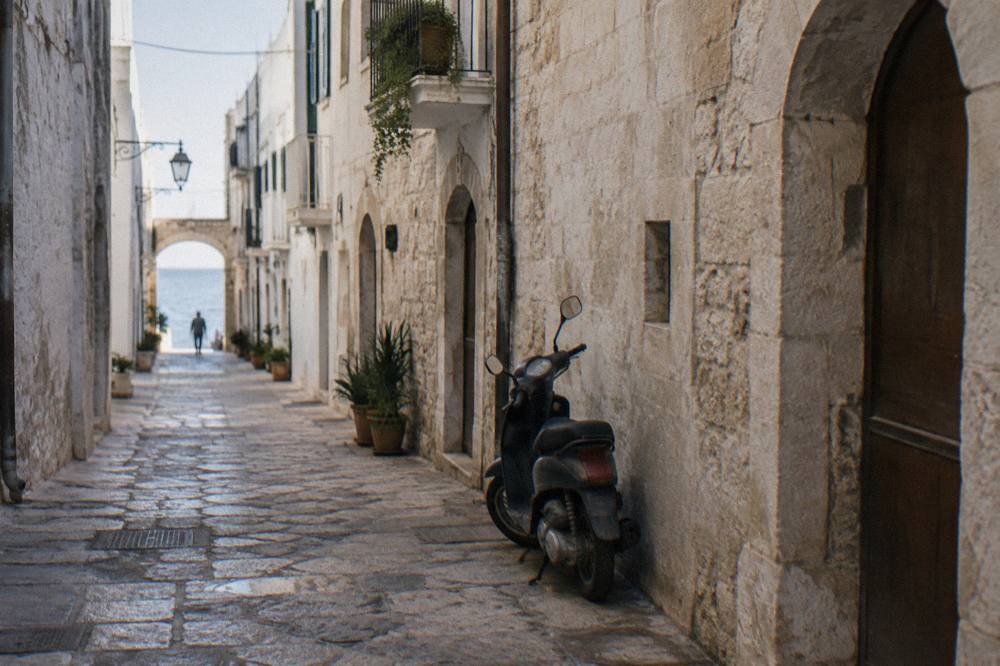
The airport figures matter because a food-focused weekend usually starts there. The Ferrotramviaria station is inside the terminal, the single fare is 5.30 euro on the 2026 tariff, and you can tap a contactless card at the gate under the Paga e Via system. The Tempesta shuttle coach is the 5 euro alternative, bought on board or in its app. Full detail sits on the site's Bari airport and airport to city centre pages.
| Ticket or fare | Price |
|---|---|
| AMTAB single bus ticket | 1.00 EUR |
| AMTAB 90-minute ticket | 1.20 EUR |
| AMTAB day ticket | 2.50 EUR |
| Airport train single to Bari Centrale | 5.30 EUR |
| Tempesta airport coach | 5 EUR |
| Fixed airport taxi to a city-centre hotel | 25 EUR |
One cost travellers forget is the tourist tax, which is set by the comune: 1.50 to 4.00 euro per person per night by accommodation category, for a maximum of 4 consecutive nights per calendar year, collected by your host. Each other town on the food loop, from Monopoli to Alberobello, sets its own rate, so ask the host what applies rather than assuming the Bari figures travel with you. For everything bookable, from the classes above to the walks below, prices sit on the operator's live listing and not on this page.
Common Questions About Orecchiette In Bari
What is orecchiette in Bari?
Orecchiette are small hand-shaped pasta ears, the pasta shape of Puglia, pressed one at a time from a flour-and-water dough and served with vegetable or tomato sauces. In Bari they are made by hand in the old town and eaten across the city.
Where can I eat orecchiette in Bari?
Bari Vecchia is the place: the old town holds the pasta street, Strada Arco Basso, and the trattorias around Piazza Mercantile and Piazza del Ferrarese.
What sauce goes with orecchiette in Bari?
The classic is cime di rapa, turnip tops cooked with garlic, chilli and olive oil. Fresh tomato with ricotta and a slow meat ragu are the other standards, and the cupped shape is built for thick vegetable sauces rather than smooth ones.
Can I learn to make orecchiette in Bari?
Yes. A walking tour of Bari Vecchia combined with an orecchiette-making class runs as a bookable product, and other cooking classes in the city cover pasta alongside focaccia or tiramisu. A farm class near Ostuni is the day-trip version.
Is Bari the best place in Puglia for orecchiette?
Bari is the city where the hand-made pasta is on public show, in the streets of Bari Vecchia, and where the classes are. The same shape is eaten across the region, including the Valle d'Itria towns, so Bari is the hub rather than the only stop.
When should I go to Bari for food?
May and September combine comfortable walking weather, 21.6 C and 25.1 C typical daily highs from modelled 1991 to 2020 data, with the full food calendar. Early May, 7 to 9 May by tradition, brings the Festa di San Nicola to the old town.
Before the final picks, a note on how to use them: each card renders its own current price, rating and availability from the operator's live listing, and every booking button reads the same. The three below are the featured walk, the food walk and the history walk, the trio this page has referenced throughout.
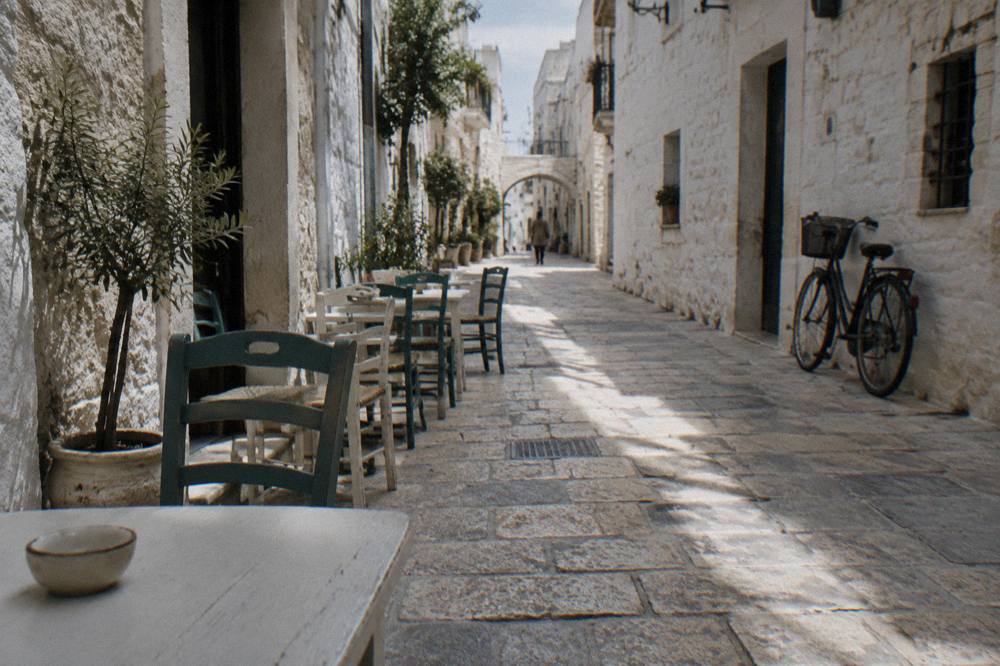
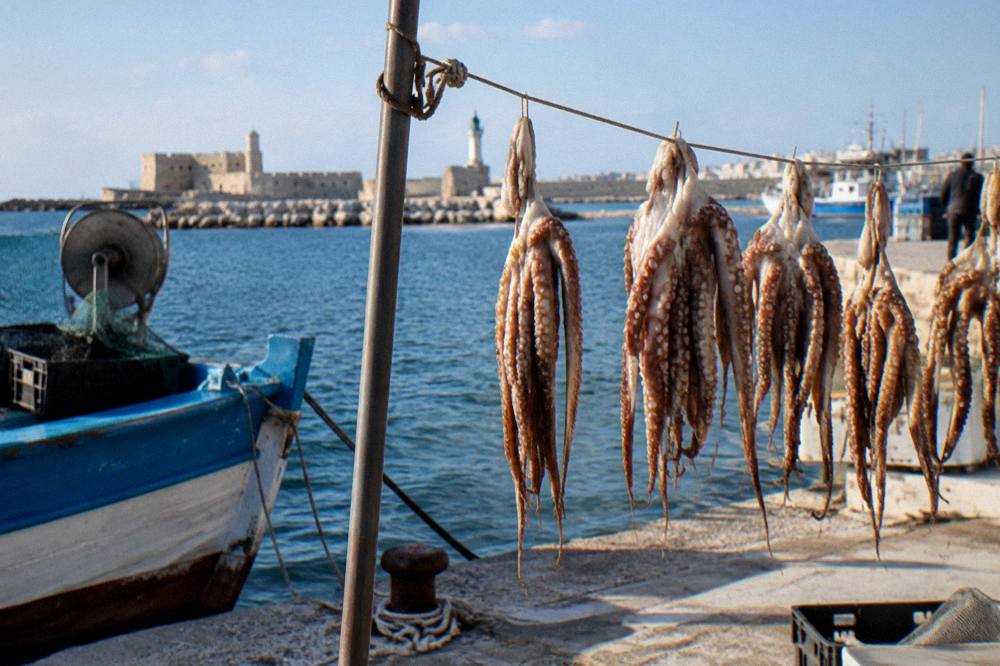
Orecchiette in Bari is less a dish than a small geography lesson: the flour and water of the board, the turnip tops of the fields around the city, the fish stalls at the old port beside the pasta street, and the Valle d'Itria towns an hour south where the same ears turn up again. Plan a day in Bari Vecchia on foot, take a class if you want the motion in your own hands, and let the day trips fill whatever comes after. More on the city's food and sights sits on the Bari Italy Travel Guide homepage, and the class listing above is where the booking starts.