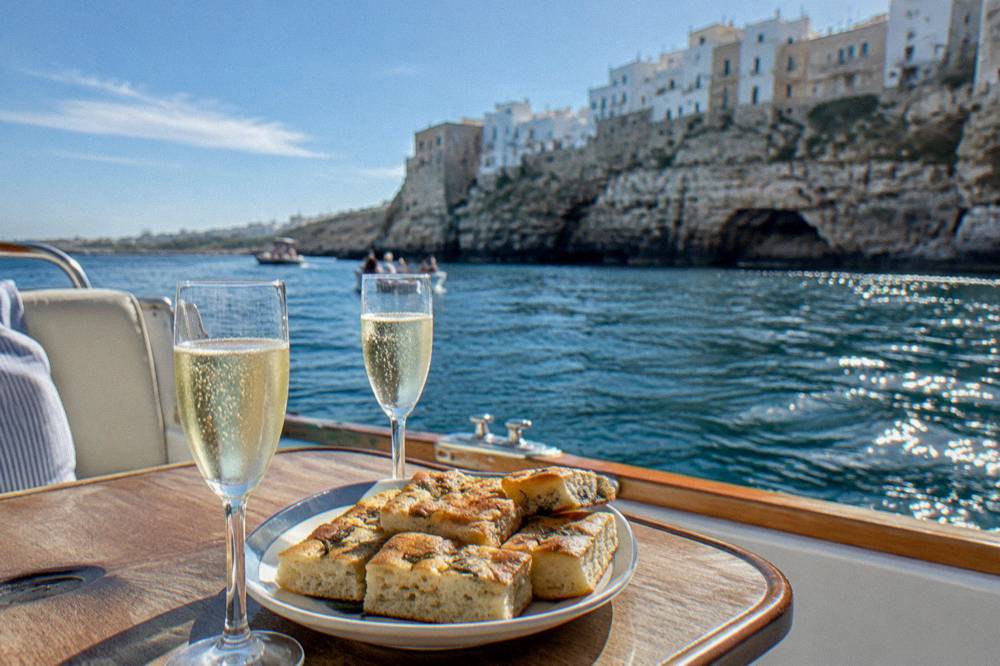
Polignano A Mare From Bari: Train, Cliffs And The Cave Restaurant
Polignano a Mare sits on limestone cliffs about 37 km south of Bari on the Adriatic, a short regional train ride from Bari Centrale, and this page sets out the train, the road, the cove and the cave boat trips with the figures the operators and timetables give.
Short answer
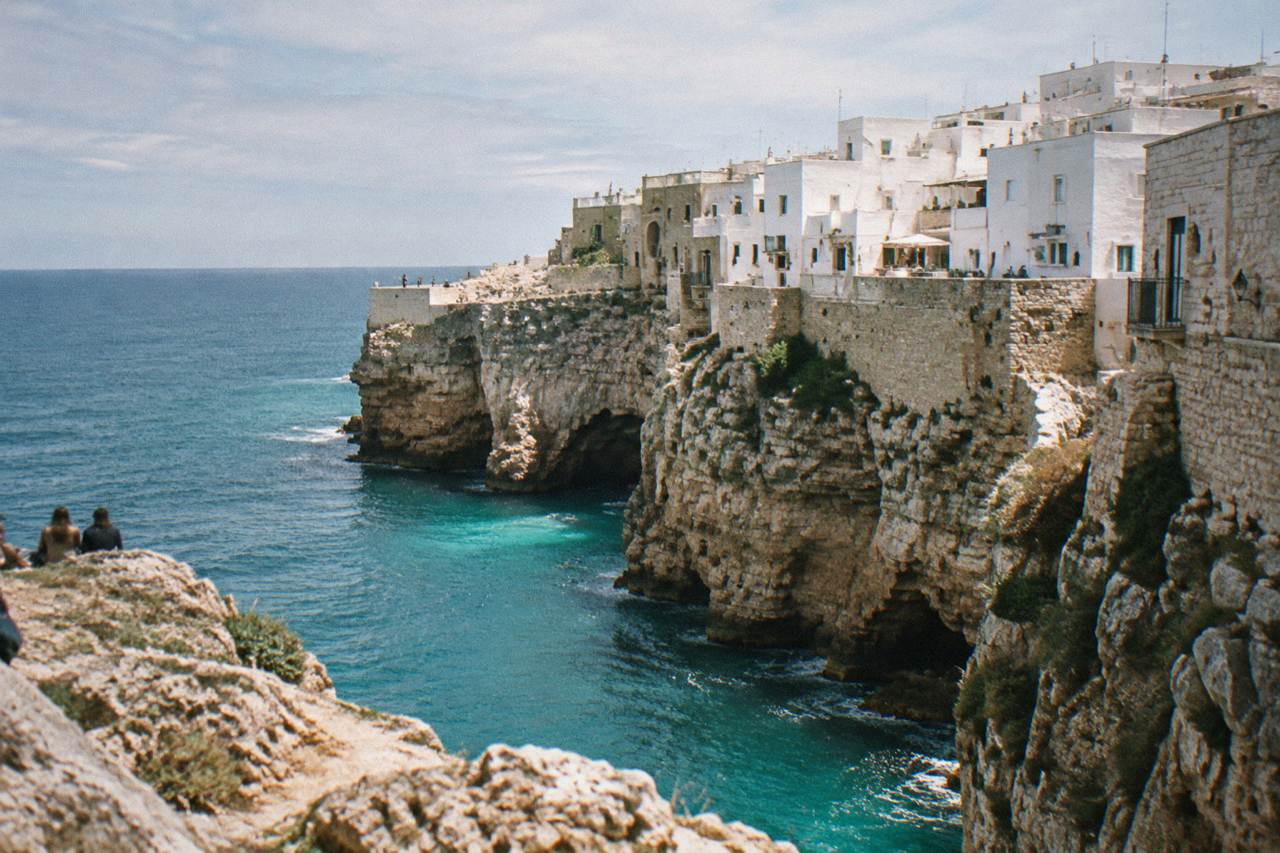
Polignano a Mare is about 37 km and 36 minutes by road from Piazza Mercantile in Bari, or 33 km by Trenitalia regional train on the Bari-Lecce line, a trip typically reported at 25 to 35 minutes. The town holds a 2026 Blue Flag, sits on cliffs above the Lama Monachile cove, and cave boat trips leave from Polignano itself.
Polignano a Mare is the cliff town on the Adriatic coast south of Bari, the capital of the Puglia region in southern Italy, and it is the day trip Bari visitors ask about first. The old town stands on limestone walls above the sea, the Lama Monachile cove sits underneath it, and the regional railway that leaves from Bari Centrale reaches the town in well under an hour. Boats for the sea caves leave from Polignano's own coast, not from the Bari waterfront, and the town pairs naturally with Monopoli a few kilometres further south. This page gathers what the timetables, the operators and the municipal sources actually say, in the order a planner needs it: getting there, the cliffs and the cove, the boats, the combinations, and the season. It is one chapter of a wider plan covered in things to do in Bari and across the day-trip guides on Bari Italy Travel Guide.
Where Is Polignano A Mare And How Far Is It From Bari?
Polignano a Mare sits on the Adriatic coast about 37 km south-east of Bari by road, and 33 km along the Trenitalia Bari-Lecce regional rail line. The town sits in the Province of Bari on limestone cliffs above the Lama Monachile cove, between the coastal plain of Bari and the towns of the Valle d'Itria further south.
Those two figures, road and rail, come from different measures and both are rounded: the road figure is a computed free-flow drive from Piazza Mercantile, and the rail figure is the kilometre marker on the regional timetable. In practice the choice between them is a choice between a station-to-station ride and the flexibility of a car. The town is compact once you arrive, built above and behind the cliff edge, so the driving question is less about Polignano itself than about where the car sits while you are there; parking rules for the town are not in the published sources, so confirm locally on arrival.
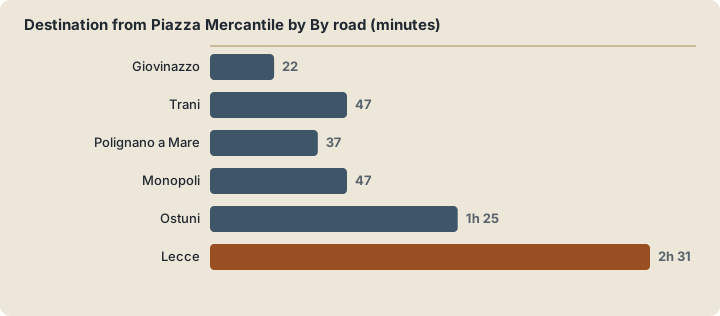
For scale, here is where Polignano sits among the coastal day trips from Bari, with the same computed road figures and the rail distances where the Bari-Lecce line serves the town.
| Destination from Piazza Mercantile | By road | By rail on the Bari-Lecce line |
|---|---|---|
| Giovinazzo | about 22 km, about 23 minutes | not on this line |
| Trani | about 47 km, about 45 minutes | not on this line |
| Polignano a Mare | about 37 km, about 36 minutes | 33 km |
| Monopoli | about 47 km, about 43 minutes | 41 km |
| Ostuni | about 85 km, about 73 minutes | 75 km |
| Lecce | about 151 km, about 115 minutes | 150 km |
The pattern is plain: the railway hugs the coast and the road times assume free flow. Polignano and Monopoli are the two close-in trips, and the Monopoli day-trip guide covers the second of them.
How Do You Get From Bari To Polignano A Mare By Train?
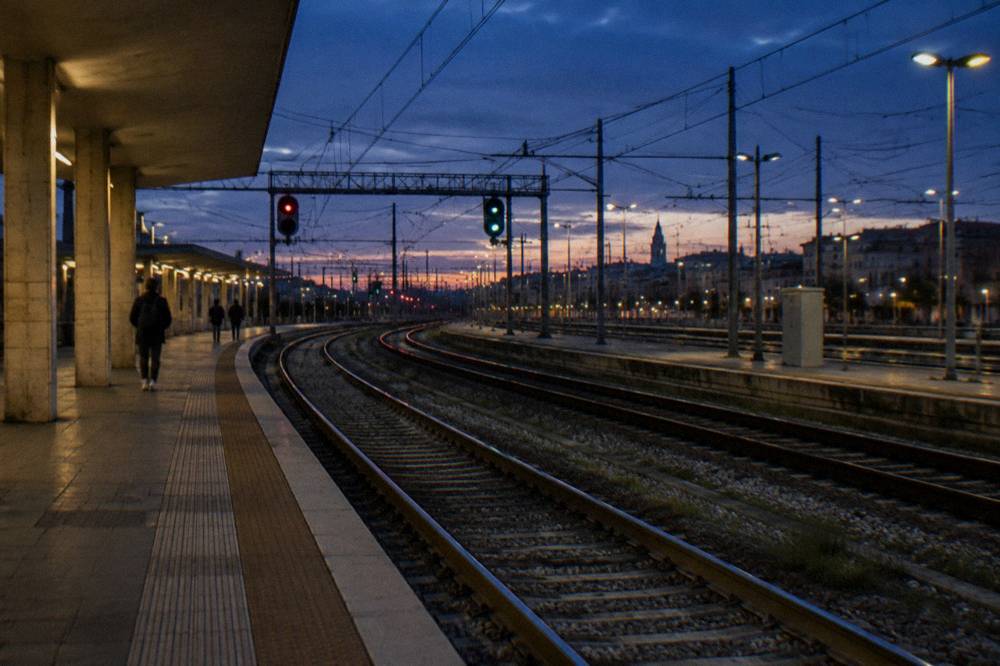
Trenitalia regional trains on the Bari-Lecce line serve Polignano a Mare directly from Bari Centrale, a distance of 33 km along the line, with the journey typically reported at 25 to 35 minutes. No point-to-point fare is published in the official tariff pages reviewed, so the price of the regional ticket must be checked on the operator's timetable and booking pages before you travel.
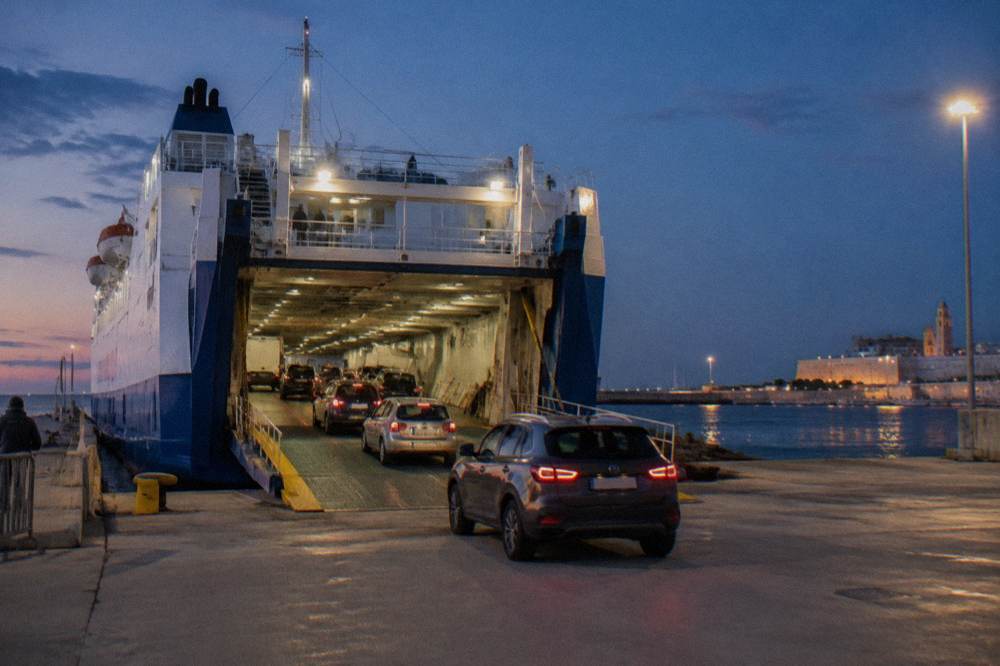
The service is the ordinary regional network of Puglia, not a dedicated tourist line, so it also carries commuters and school traffic. That matters for timing: the same reported 25 to 35 minute band applies across the day, but seat availability and platform crowding vary, and the guaranteed-service bands that apply on strike days are a separate matter covered on rail pages. The practical advice is simple. Check the Trenitalia regional timetable for the specific departure, buy the regional ticket before boarding in the usual way, and allow time at Bari Centrale, where the forecourt is a building site for the station's renovation with traffic changes running to the end of 2026.
If your day starts at the airport rather than in the city, the sequence is the Ferrotramviaria airport train to Bari Centrale, a 17 minute ride from the station inside the terminal at 5.30 euro for a single under the 2026 tariff, and then the regional train south; the airport to city centre guide breaks down that first leg. Coming from further afield, the Rome to Bari train and Naples to Bari pages cover the long legs, though the published sources carry no journey time or fare for those routes, so those pages send you to the operator for the specifics.
By car, the drive is about 37 km and about 36 minutes from Piazza Mercantile in free-flow conditions, and the same road continues down the coast. One caution applies to the whole region: Bari Vecchia is a limited traffic zone with a camera gate at the Castello, so a rental car should never be driven into the old town, and the same discipline of parking outside and walking in serves the cliff towns well. For the wider picture of driving in Puglia, the Alberobello guide and the Valle d'Itria pages apply the same rule.
Once the train has delivered you, the day divides neatly into three parts: the old town on the cliff top, the cove below it, and the water. The picks below are the bookable versions of the water and wheels part of that day; all three depart from Polignano itself, not from Bari, and the cards carry the live prices and ratings.
What Is There To See In Polignano A Mare On Foot?
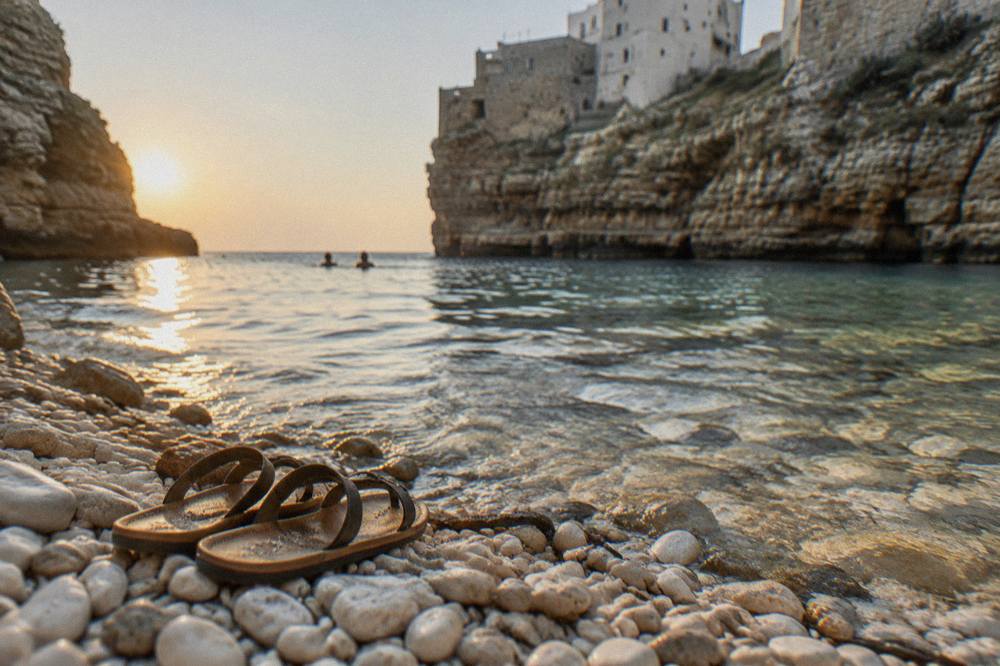
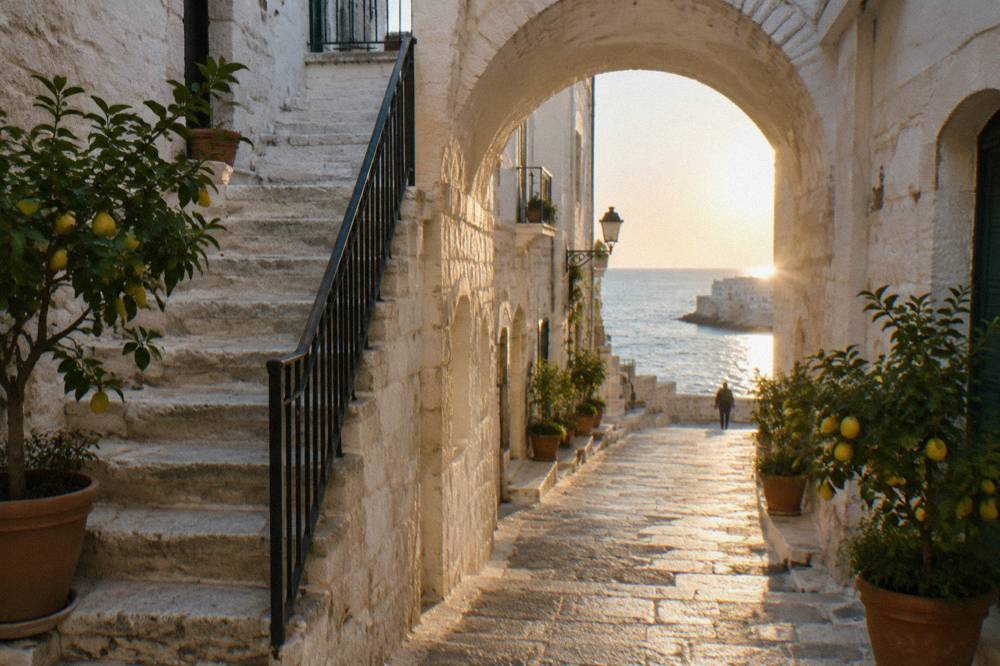
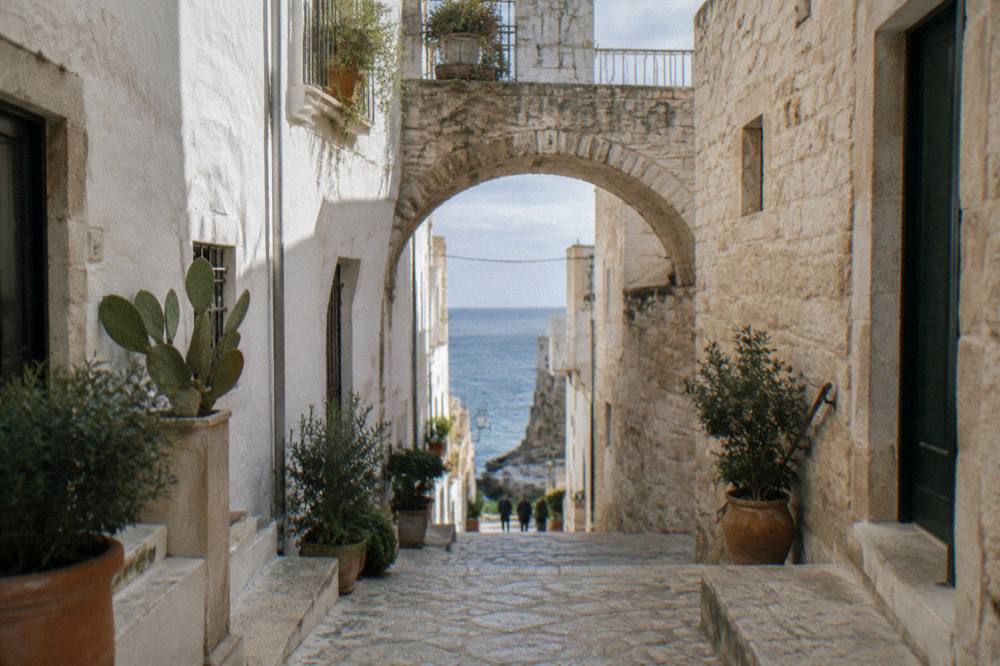
The essentials are the historic centre on the clifftop, the Lama Monachile cove at the foot of the cliffs, the terraces over the Adriatic, and the sea caves visible from the water. The old town is a network of narrow lanes a short walk from the station, and the published sources record no entry fee or access limit for the cove, so the walk itself is the main event and costs nothing.
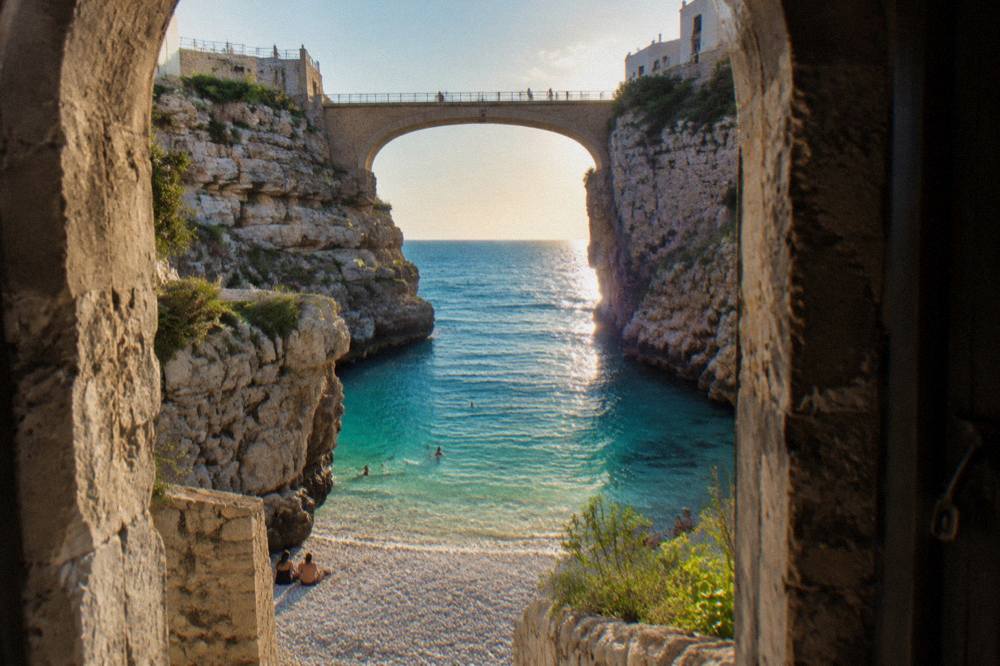
The old town works as a loop. Lanes run back from the cliff edge, open onto small squares, and return to the water at viewpoints above the cove; the drop is vertical in places, which is the whole point of the place. Lama Monachile, the pebble cove between the cliff walls, sits below the road bridge and is the image the town is known by. In summer it is a swimming spot as much as a viewpoint, and the sea temperature is a modelled mean of about 27 C in July and August against about 22 C in October, figures from modelled data rather than a single reading, so shoulder-season swimming is real but cooler.
The town's Blue Flag matters here. Polignano a Mare and Monopoli are the two 2026 Blue Flag holders in the Province of Bari per the Regione Puglia announcement, and Bari's own city beaches are not on that list. The flag is an award for water quality and services at the municipality's bathing waters, and it is one reason the two towns anchor the southern coast day-trip circuit. Water quality in the province is strong across the board: ARPA Puglia reports 99.9 percent of the region's bathing waters rated excellent, first in Italy for the sixth year, with 78 bathing waters monitored in the province of Bari.
Timing the day around the walk is easy. The train ride is short, the old town is walkable in a morning, and the afternoon is the natural slot for the water. If the water part of the plan appeals, the related pick on this page is the Polignano speedboat cave cruise with aperitif, which departs from Polignano and covers the caves from sea level; you can also Check availability at the operator's live listing. Free cancellation terms and a pay-later option are standard on this product, so booking ahead does not lock the weather in.
Can You Take A Boat Into The Sea Caves At Polignano A Mare?
Yes, and the boats leave from Polignano's own harbour and coast, not from Bari. Cave boats run along the cliff base into the sea grottoes under the old town, with small-group and shared options, aperitif versions, and departures from San Vito on the edge of town as well as from the central landing points. The listing for each product states its own departure point and route.
The cave district is the stretch of cliffs south and north of the cove, hollowed into grottoes at the waterline, and the only way into the cavities themselves is by sea. Three practical distinctions sort the options. The first is vessel size: a small-group boat carries fewer people and can enter lower passages. The second is departure point: Polignano departures are in the town itself, while a San Vito departure is at the small harbour on the northern edge, still Polignano, not Bari. The third is what is included: several products bundle a drink or an aperitif, which suits a late-afternoon slot after the walk.
The speedboat cruise above is the featured pick on this page, and it is worth saying plainly why: the listing carries the current price, rating and review count, all of which render in the card rather than in this text, and the product is one of the highest-rated cave options on the roster. The solo card below places it again at the decision point.
Two cautions keep the plan honest. The sea decides: cave entries close in rough conditions, and the operator's confirmation on the day is the final word, so a morning booking with a free-cancellation term is the safer shape than a tight afternoon slot before a train home. And the restaurant built into the cliff face, the one the title of this page nods to, is a real place with its own reservation system; no price or booking detail is in the published sources here, so check the current arrangements directly with the venue before building a day around a table.
Is It Worth Seeing Polignano By Vespa Or Bike?
Yes, if the plan is the countryside around the town rather than the lanes inside it, and the Vespa option covers exactly that: a loop from Polignano taking in Conversano and Monopoli on inland and coastal roads. The product departs from Polignano, so the train from Bari comes first and the ride starts at the town, not at a Bari meeting point.
The logic is geographical. Polignano's old town is a walking place; the reward for wheels is the tract of countryside immediately inland, where the Valle d'Itria begins to roll and towns like Conversano sit a short ride away. A Vespa loop stitches the coast at Monopoli to the inland hill town and back, which is a shape a walking day cannot reproduce. The card below carries the live price, the rating and the review count.
For a self-powered version, the flat coastal road south towards Monopoli is the obvious route, and bikes can be found in Polignano itself; no hire price is in the published sources, so confirm locally. The same caveat as the boats applies to the weather: the midday heat in July and August, when the typical mean daily maximum at Bari is 28.6 C and 29.1 C respectively from modelled ERA5 data for 1991 to 2020, argues for a morning ride and an afternoon in the water.
How Does Polignano Combine With Monopoli, Castellana Or The Valle D'Itria?
Polignano pairs naturally with Monopoli, 41 km from Bari on the same rail line and about 43 minutes by road, and with the Grotte di Castellana inland, about 47 minutes by road from Piazza Mercantile. The Grotte di Castellana charge 25 euro for the full 3 km route of about 100 minutes for ages 15 and over and 22 euro for the 1 km partial route of about 50 minutes, per the official price page.
That caves price is one of the few day-trip admission figures the official sources publish, and it anchors the inland half of the combination. The Grotte di Castellana are deep limestone caverns inland from Polignano, visited on guided routes only, and the tour product below bundles the caves with free time back on the Polignano coast, departing from Polignano.
| Combination from Bari | Road time from Piazza Mercantile | Rail distance on the Bari-Lecce line |
|---|---|---|
| Polignano a Mare only | about 36 minutes, 37 km | 33 km |
| Polignano a Mare plus Monopoli | about 43 minutes to Monopoli, 47 km | Monopoli at 41 km |
| Polignano a Mare plus Grotte di Castellana | about 47 minutes to the caves, 43 km | not on the rail line |
| Polignano plus Alberobello (Valle d'Itria) | about 61 minutes to Alberobello, 57 km | via the Trulli Link intermodal service |
| Polignano plus Matera | about 69 minutes to Matera, 71 km | FAL line via Altamura |
Two structural notes on that table. The Trulli Link service joins Trenitalia and FSE, the Ferrovie del Sud Est, to Locorotondo, Alberobello and Martina Franca in the Valle d'Itria, with the FSE leg reported at 5.90 euro on top of the rail fare, a reported figure to confirm before you go; the Bari to Alberobello guide covers the detail. And Matera, reached on the FAL line through Altamura, is in Basilicata, not Puglia, so that combination crosses a regional border; the Matera day-trip guide and Bari to Matera page handle it. Further south, Ostuni at 75 km by rail and Lecce at 150 km are the longer same-line options, with the Monopoli and Ostuni rail guide covering the pair.
When Is The Best Month To Visit Polignano From Bari?
Late May, June, September and early October hit the overlap of warm sea and thin crowds implied by the climate record: the typical mean daily maximum rises from 21.6 C in May to 28.6 C in July and 29.1 C in August, and rain stays near 20 to 22 mm in the two midsummer months against 73 mm in November, all typical values from modelled ERA5 data, 1991 to 2020.
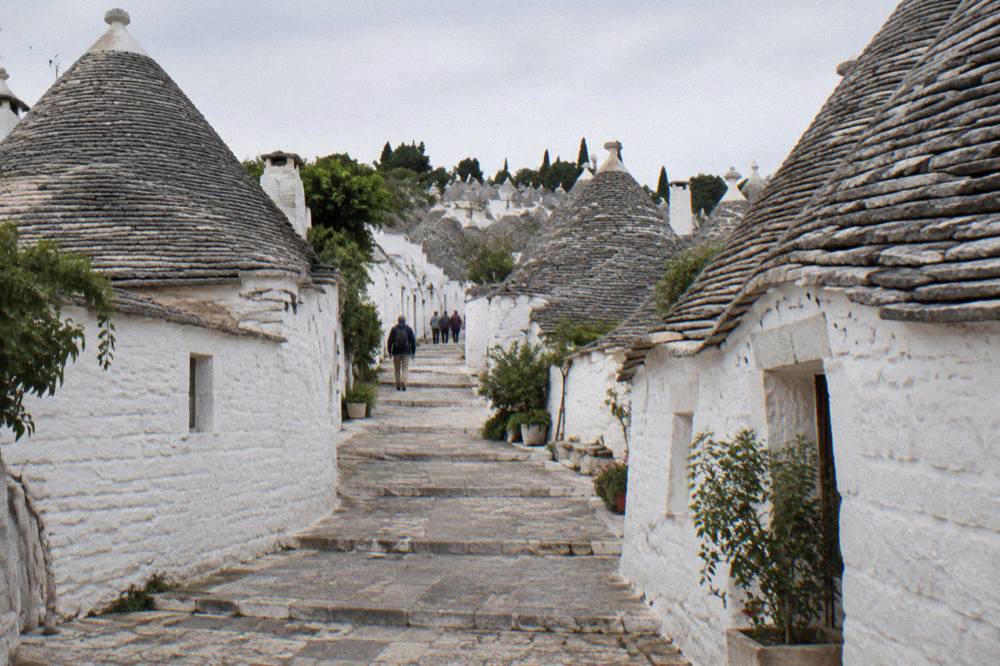
The climate figures are modelled for the Bari grid point and apply to the coast either side of it, Polignano included. What they show is a Mediterranean pattern with a dry core in summer and a November peak in rainfall. The sea follows with a lag: modelled 2023 to 2025 means put the water at about 27 C in July and August and about 22 C in October, so October swimming is cool rather than out of the question. The table below gives the months a planner actually weighs.
| Month | Typical mean daily high | Typical mean daily low | Typical rain | Rain days of at least 1 mm |
|---|---|---|---|---|
| May | 21.6 C | 15.3 C | 35 mm | 6.9 |
| June | 25.9 C | 19.5 C | 28 mm | 4.8 |
| July | 28.6 C | 22.0 C | 22 mm | 4.1 |
| August | 29.1 C | 22.4 C | 20 mm | 4.3 |
| September | 25.1 C | 19.1 C | 53 mm | 7.6 |
| October | 21.1 C | 15.6 C | 63 mm | 7.9 |
Crowds are a different variable from weather, and no visitor-count figure is published, so the honest version is the indirect one: the Blue Flag season, the boat schedules and the towns' own rhythms all peak in July and August, and the sea temperature table above shows why. A June or September trip trades a degree or two of heat for calmer lanes and easier cave bookings. The best time to visit Bari page extends the same analysis across the year.
One fixed date belongs to the calendar rather than the climate. The Festa di San Nicola runs in Bari from 7 to 9 May every year by tradition, with the 2026 edition's historical procession on the evening of 7 May; it is a Bari event, not a Polignano one, but a visitor in early May can pair the festival days in the city with an uncrowded coast trip before the season fills.
How Does A Polignano Day Fit Into A Longer Puglia Trip?
A single day from Bari covers the old town, the cove and a cave boat; two to three days let the town serve as a base for Monopoli, the Grotte di Castellana and the Valle d'Itria towns of Alberobello and Locorotondo; and four to five days stretch the same arc to Matera in Basilicata and Lecce at the heel's tip, per the itinerary guides on this site.
The single-day shape is the train-out, walk, boat, train-home version, and it works because the rail distance is only 33 km. The two-day version adds Castellana inland and Monopoli south on separate mornings. The longer versions are a question of bases: staying in Bari versus staying on the coast between Polignano and Monopoli is the choice the Monopoli or Polignano comparison walks through, and the four to five days in Bari itinerary sequences the whole arc from a Bari base. Wherever you sleep, the tourist tax rules differ by comune: Bari's runs 1.50 to 4.00 euro per person per night by accommodation category for a maximum of 4 consecutive nights per calendar year, and each other town sets its own, so the host will say what applies.
Food is the other thread of a longer stay. Polignano's raw-fish and seafood culture belongs to the same coastal tradition as Bari's own, which the Bari seafood and raw fish guide describes; orecchiette is the pasta shape of Puglia, and focaccia barese is the flat bread of the region, one plain sentence each and no more. A street food walk in Polignano is a bookable product rather than a list of stops, and its card carries its own price and rating.
What Should You Know Before Booking The Boat Or The Tour?
**Three things. The cave boats and the Vespa and Castellana tours all depart from Polignano, so the train from Bari comes first. Free cancellation and pay-later terms are the standard booking shape on these products, so reserving ahead costs nothing if the sea turns.
The sea-entry question is the one that decides the day. Cave entries close in swell, the operator confirms on the morning, and a booking made with a cancellation term absorbs the risk. Departure points are stated on each listing and are all in or beside Polignano, never in Bari, which is the single most common planning error on this coast. The trio below gathers the three Polignano-based picks one last time for comparison.
Common Questions About Polignano A Mare From Bari
How far is Polignano a Mare from Bari?
About 37 km by road from Piazza Mercantile, or 33 km along the Trenitalia Bari-Lecce regional rail line.
How long is the train from Bari to Polignano a Mare?
Trenitalia regional trains cover the 33 km on the Bari-Lecce line in a trip typically reported at 25 to 35 minutes. Check the operator's timetable for the specific departure; no point-to-point fare is published in the official tariff pages reviewed.
Do the Polignano cave boats leave from Bari?
No. Boats for the Polignano coast and caves leave from Polignano itself, from the town's landing points or from San Vito on its northern edge. Some boat products in the area leave from Monopoli or from the Bari port area, and each listing states its own departure point.
Is Polignano a Mare worth visiting?
The town holds a 2026 Blue Flag, one of only two in the Province of Bari alongside Monopoli, sits on cliffs above the Lama Monachile cove, and is under an hour from Bari by train. The fuller argument sits in the is it worth going to Polignano a Mare answer page.
Can you combine Polignano a Mare and Monopoli in one day?
Yes. The two towns are 41 km and 47 km from Bari respectively on the same rail line, and about 43 minutes apart by road from Piazza Mercantile, so a morning in one and an afternoon in the other is a standard pairing.
When is the sea warm enough to swim at Polignano a Mare?
Modelled 2023 to 2025 means put the sea at about 27 C in July and August and about 22 C in October, so midsummer is the warm-water window and October is cooler but swimmable for some.
A day in Polignano a Mare from Bari is the easiest good decision on the Puglian coast: a 33 km train ride, a clifftop old town that needs no ticket, a Blue Flag cove below it, and caves you enter by boat from the town's own shore. Book the water part ahead with its cancellation term, let the operator confirm the sea on the morning, and the rest of the day takes care of itself.