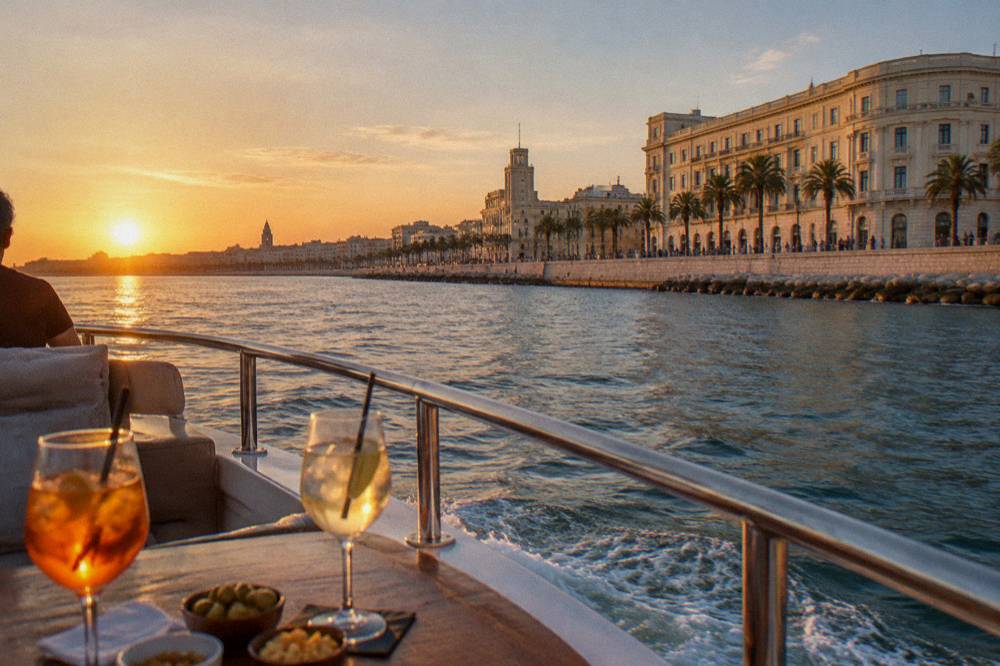
Bari Old Port: Molo San Nicola, The Fish Market And The Boats
Molo San Nicola is the old-port quay of Bari Vecchia, the historic headland of Bari, the capital of Puglia on the Adriatic Sea. This guide covers the quay, the sea wall, the fish market, the working boats and the trips that leave from the water nearby.
Short answer
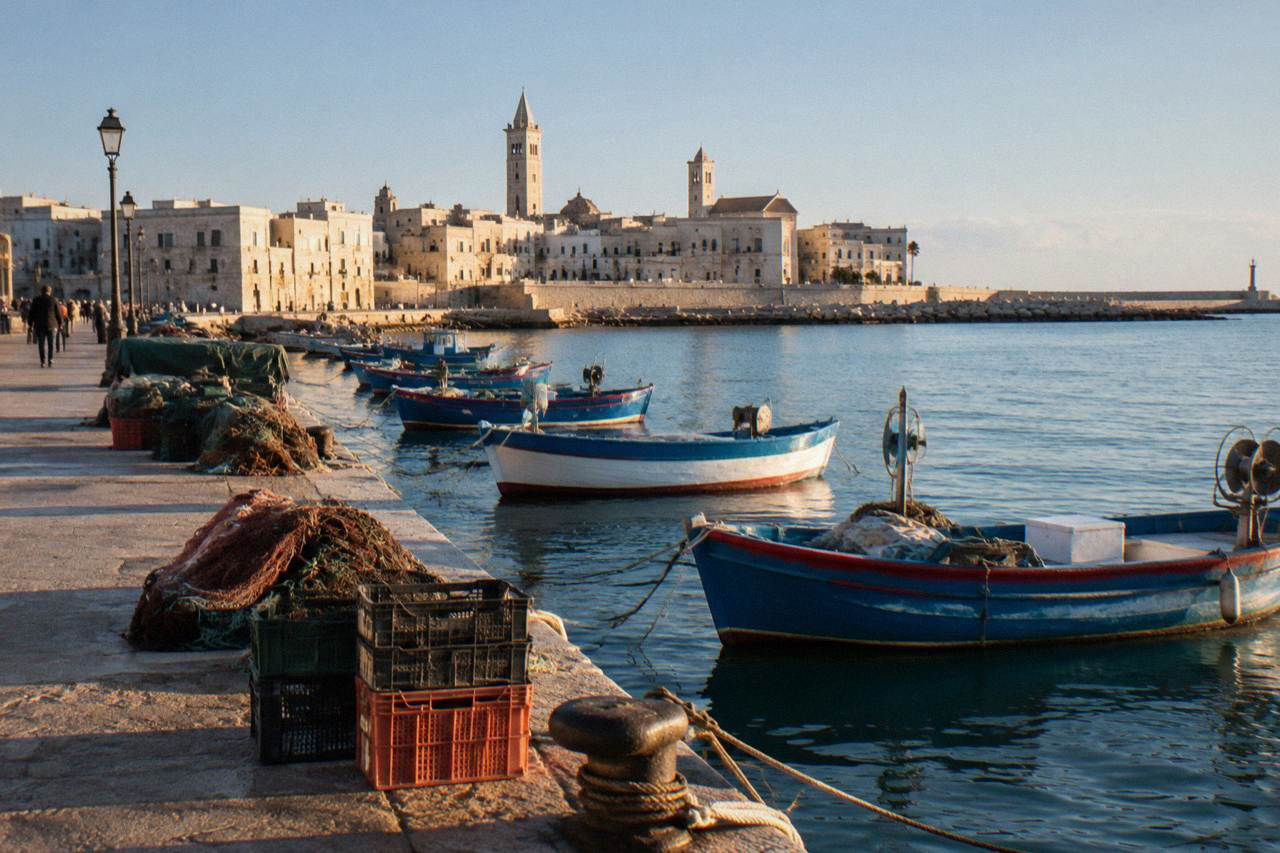
Molo San Nicola is the old-port quay of Bari Vecchia, about 0.5 km from the Stazione Marittima ferry terminal and steps from Piazza Mercantile. Fishing boats moor along it, the Muraglia sea wall runs beside it, and the Basilica di San Nicola stands a few minutes away on foot.
Bari, the capital of the Puglia region on the Adriatic coast of southern Italy, wraps its old town around a headland, and along the base of that headland runs the old port. The quay is called Molo San Nicola, and it is the working edge of Bari Vecchia: fishing boats tied up against the stone, the Muraglia sea wall above it, and the lanes of the old town rising behind. The Bari Italy Travel Guide covers the whole city, but this page stays on the water, on the quay, the market that sits beside it, the ferries that sail from the modern port just south, and the boat trips you can book along this coast.
What Is The Bari Old Port And Where Exactly Is It?
The Bari old port is the stretch of water and quay at the foot of Bari Vecchia, the old town on the headland of Bari, and its quay is named Molo San Nicola. The old town sits beside it, Piazza Mercantile and Piazza del Ferrarese lie a short walk up the slope, and the modern ferry and cruise port begins just to the south around the Stazione Marittima at Molo San Vito, about 0.5 km away.
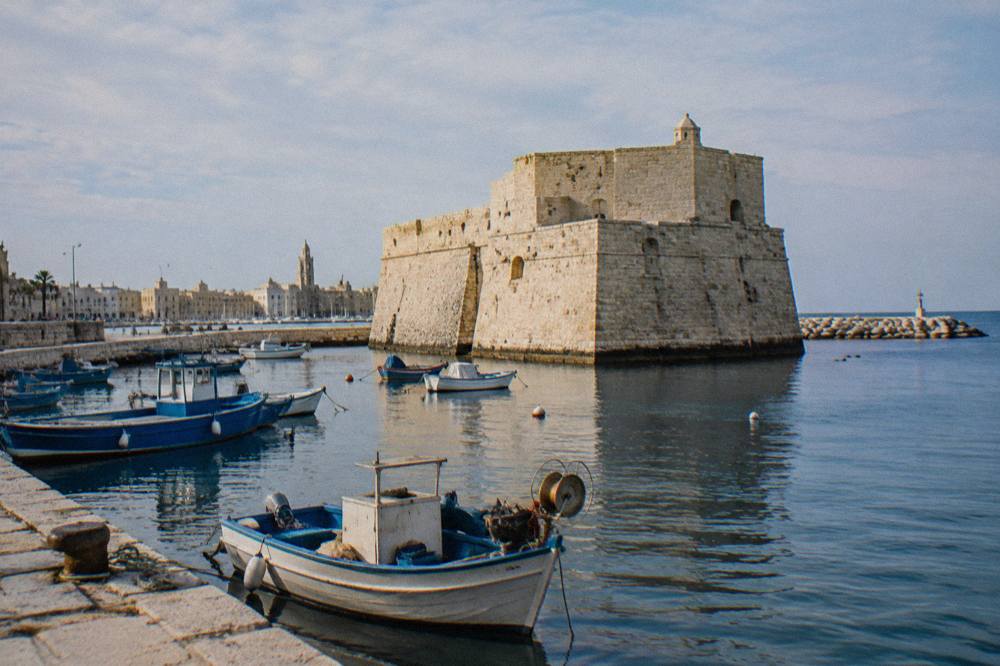
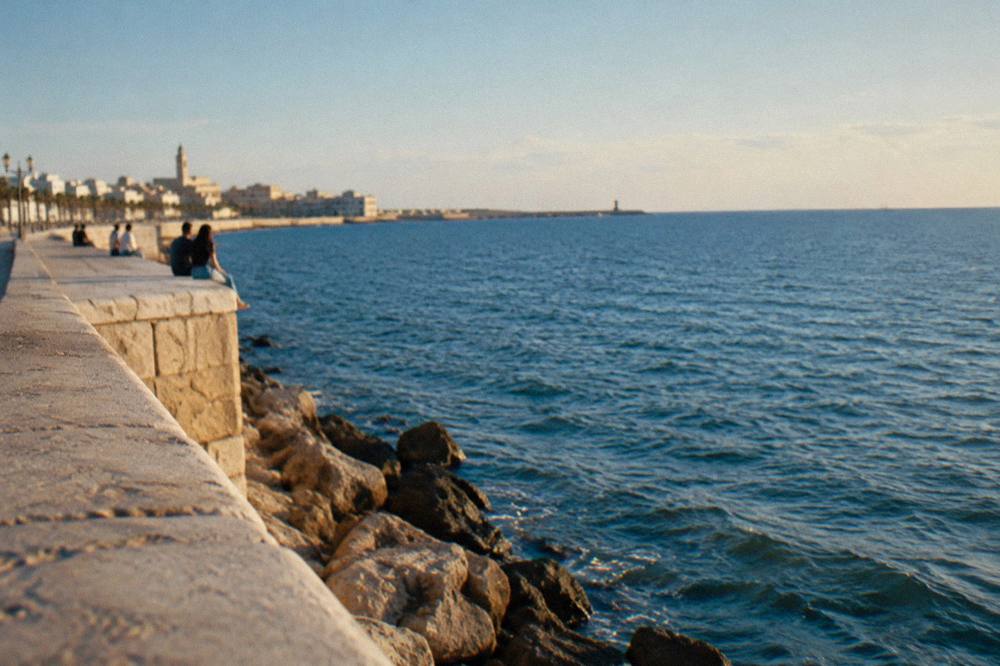
The geography is simple once you see it once. Bari Vecchia is a peninsula. On the north side the Adriatic opens straight ahead; on the south side the sheltered water of the old port sits between the headland and the newer city. The Muraglia, the old sea wall, runs along the edge of the old town above the quay, and the Fortino di Sant'Antonio Abate, the little fort on the sea, marks the seaward end of the promontory. From the wall you look down on the water, the boats and the quay.
The old port is not a marina of pleasure craft. It is a working corner of a working city, and its character comes from that. The Basilica di San Nicola, the great church of the old town that holds the relics of Saint Nicholas in its crypt, stands a few hundred metres up the slope, and the mix of church, fishing boats and sea wall is what makes this part of Bari feel different from the grid streets of the Murat district south of the old town. If you are planning a wider stay, start with the overview of the old town and a two-day itinerary for Bari.
What Can You See And Do Around Molo San Nicola?
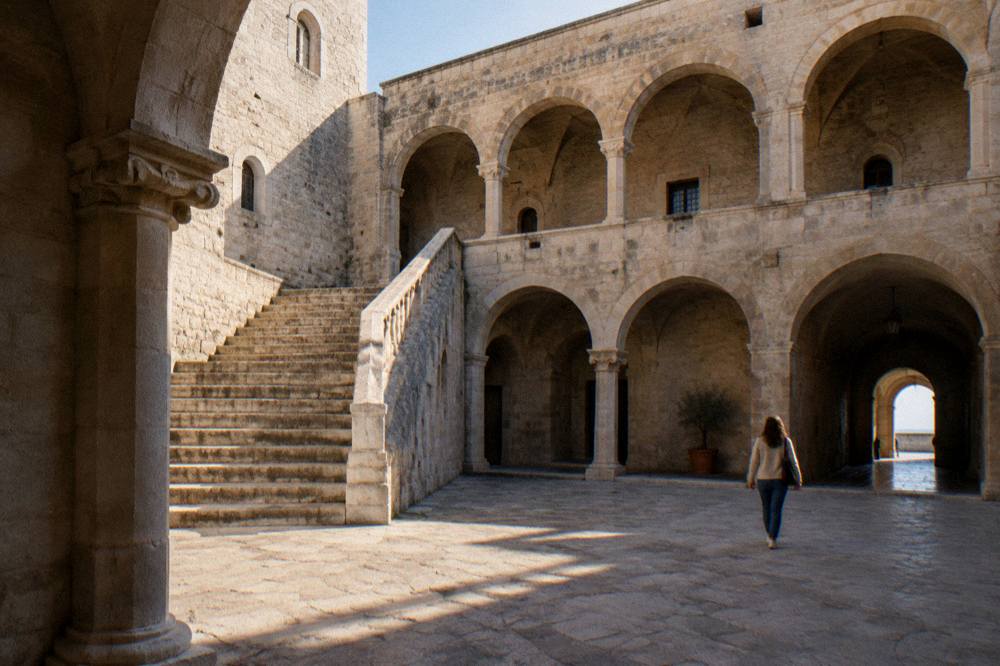
Around Molo San Nicola you can walk the Muraglia sea wall, watch the fishing boats in the old port, see the Fortino di Sant'Antonio Abate at the tip of the headland, browse the fish market area beside the quay and step up into Bari Vecchia to the Basilica di San Nicola, the Cattedrale di San Sabino and the Castello Normanno-Svevo, all within a short walk.
The walk itself is the main attraction. Start at Piazza del Ferrarese, where the tourist information point is reported at number 29, and drop down toward the water. The Muraglia carries you along the south side of the headland with the old port below; lanes break off uphill into Bari Vecchia, including Strada Arco Basso, the lane known for its pasta makers. Orecchiette is the pasta shape of Puglia, and that single sentence is all any guide should claim about the lane: whether makers are working at the street door on a given morning is a matter of chance and season, not a timetable.
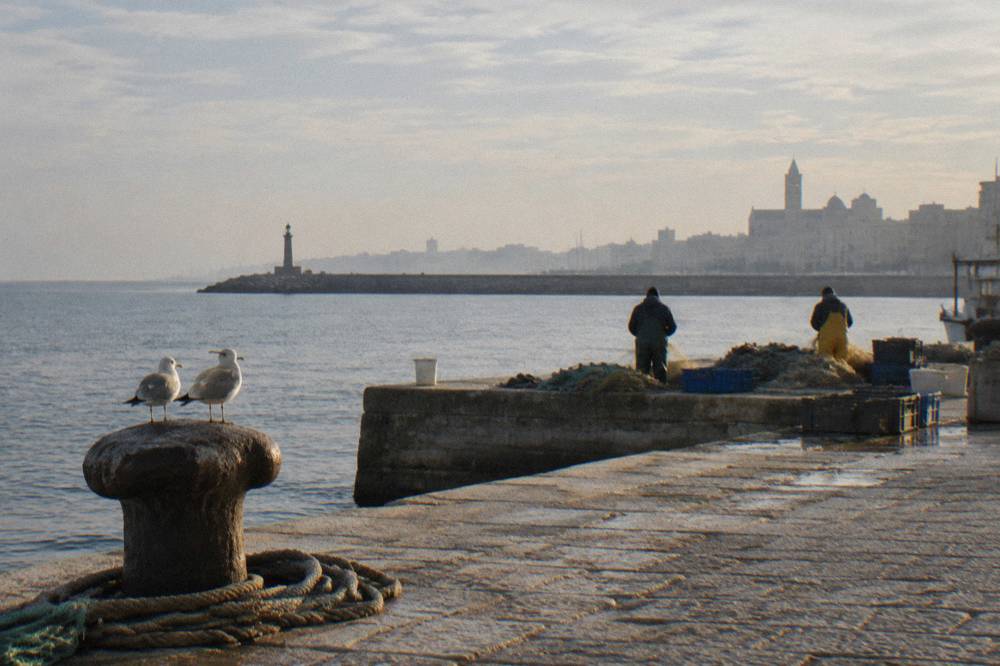
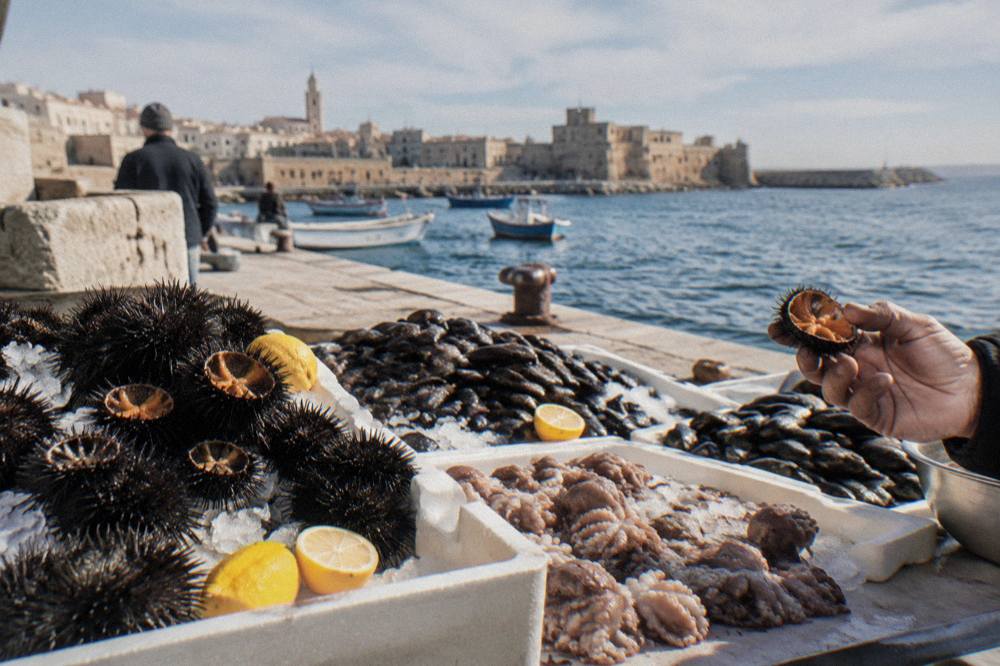
The fish market beside the quay sells the catch of the Adriatic, and raw seafood such as ricci and frutti di mare is part of the food culture of the Bari seafront in one plain sentence: sea urchins and raw shellfish are eaten fresh along this coast. For a fuller picture of the church at the top of the slope, see the Basilica di San Nicola guide and the page on the crypt of Saint Nicholas; for the cathedral, the Cattedrale di San Sabino page keeps to what is on the record.
A guided walk puts the quay, the wall and the lanes in context, and a food walk covers the street-food side of the old town. The picks below mix the cave boats of this coast with the big inland day trip.
The first and third of those depart from the coast south of the city, at San Vito and at Polignano a Mare respectively, and the middle one is a bus day trip from Bari itself. None of them leaves from the old-port quay, and that distinction matters when you plan a day.
How Far Is The Old Port From Bari's Main Sights And Transport?
The old port sits at the foot of Bari Vecchia, steps from Piazza Mercantile and Piazza del Ferrarese, a few minutes on foot from the Basilica di San Nicola and the Castello Normanno-Svevo, about 0.5 km from the Stazione Marittima ferry terminal, and roughly 12 km by road from Karol Wojtyla airport (BRI), whose train reaches Bari Centrale in 17 minutes.
Everything inside Bari Vecchia is walkable. The distances that matter are the ones out of the centre, and the table below gives road distances from Piazza Mercantile, the square at the edge of the old town, computed over free-flow routes. The airport is 12.0 km and about 21 minutes by road from Piazza Mercantile; the Ferrotramviaria airport train, with its station inside the terminal, takes 17 minutes to Bari Centrale and the single fare is 5.30 euro per the 2026 tariff.
| From Piazza Mercantile | Road distance | Drive time, free-flow |
|---|---|---|
| Karol Wojtyla airport (BRI) | 12.0 km | about 21 min |
| Giovinazzo | 21.7 km | about 23 min |
| Polignano a Mare | 37.4 km | about 36 min |
| Conversano | 31.3 km | about 36 min |
| Monopoli | 47.3 km | about 43 min |
| Trani | 47.2 km | about 45 min |
| Grotte di Castellana | 43.1 km | about 47 min |
| Castel del Monte | 62.0 km | about 59 min |
| Matera (Sassi) | 70.8 km | about 69 min |
| Lecce | 151.1 km | about 115 min |
Inside the city, three fixed figures are worth knowing. The airport taxi to a city-centre hotel is a predetermined 25 euro fare under the municipal regulation. AMTAB city buses charge 1.00 euro for a single ride, 1.20 euro for a 90-minute ticket and 2.50 euro for a day ticket. And one firm rule for drivers: Bari Vecchia is a limited traffic zone, with a camera gate at the Castello since 1 July 2026, so do not drive into the old town; leave the car outside and walk down to the quay.
If your visit starts from a ship, the Bari cruise port day itinerary sequences the old port, the basilica and the old town for a single day ashore. And if you are carrying bags before or after the walk, the luggage storage guide for Bari lists the options near the station.
Which Boat Trips Can You Take From The Bari Waterfront?
From the Bari waterfront itself, city cruises sail along the coast with aperitivo service, while the famous cave boats of this region leave from Polignano a Mare and from San Vito, south of the city, not from Molo San Nicola. The Polignano caves, the swim-stop cruises and the speedboat trips all depart from those coastal bases, so plan a train or bus leg first.
This is the single most useful thing to understand about boats in Bari. The old port is a place to look at boats, and mostly working boats. The cave trips people picture when they think of this coast, the ones that glide into the sea caves below Polignano a Mare, leave from Polignano itself or from San Vito. A reader who turns up at Molo San Nicola expecting to board a cave cruise will be disappointed, and a reader who books a Polignano boat thinking it leaves from the Bari seafront will miss it.
The practical sequence is simple. Take a Trenitalia regional train on the Bari-Lecce line from Bari Centrale toward Polignano a Mare, 33 km along the line, typically a ride of 25 to 35 minutes, then walk down to the Polignano waterfront. The cave boats leave from there. The alternative is a departure from San Vito, the port area south of the city centre, closer to Bari itself. Both options appear in the trio band above; the swim-stop cruise leaves from San Vito and the speedboat cruise from Polignano.
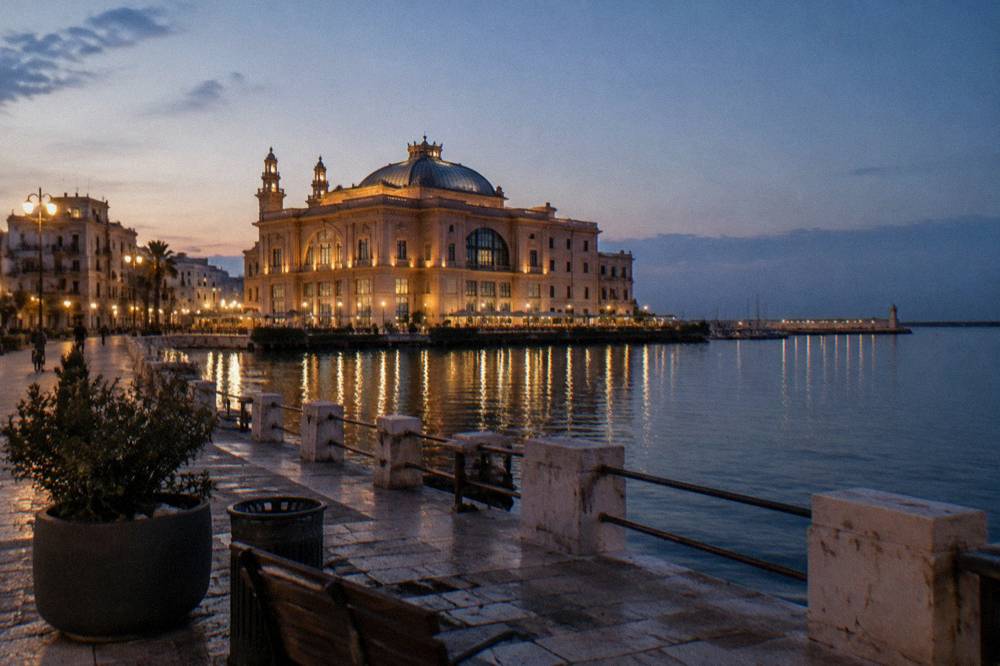
Two city options run from the Bari sea itself: a short cruise along the city coast with an aperitivo, and a scenic version of the same idea. They give you the skyline of Bari Vecchia, the Fortino and the modern port from the water, which is a genuinely different view from the Muraglia. Details, ratings and live prices render on the cards below.
For a fuller treatment of the town most of these boats serve, see the Polignano a Mare day-trip guide neighbouring coast towns: the guide to Monopoli covers the other Blue Flag town of the province, and both are easy rail stops from Bari Centrale.
Where Do The Ferries And Cruise Ships Dock In Bari?
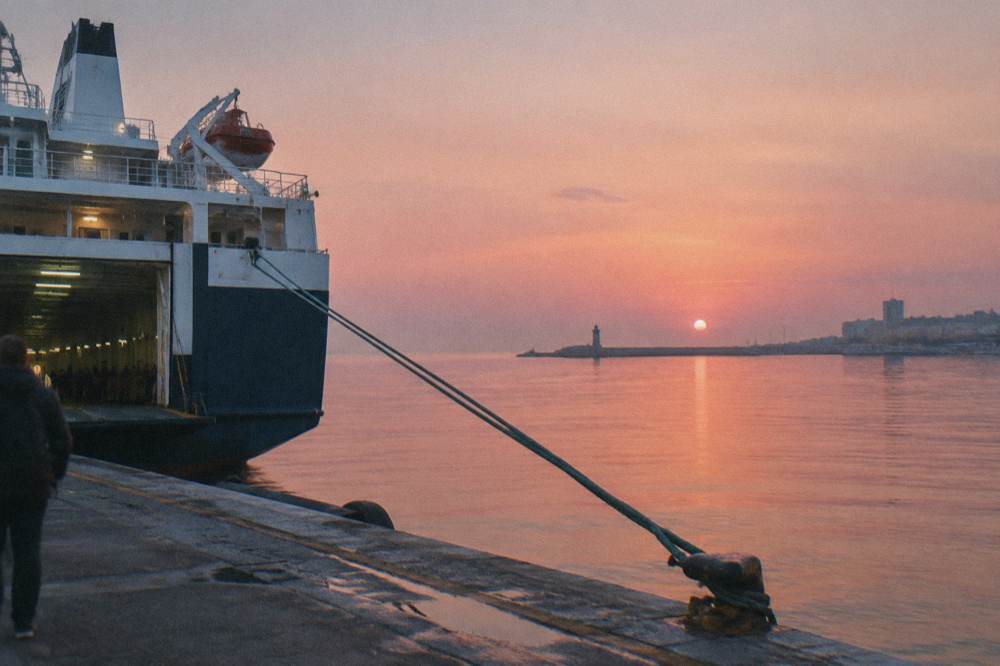
The international ferries and cruise ships of Bari dock in the modern port south and east of the old town, not at Molo San Nicola: the Stazione Marittima at Molo San Vito is about 0.5 km from Piazza Mercantile, and GNV's port address is Varco della Vittoria, Lungomare Starita 6, with its ticket office on the Colmata di Marisabella. Adria Ferries sails Bari to Durres every day, all year, in about 8 hours.
The port authority is the Autorita di Sistema Portuale del Mare Adriatico Meridionale, and the routes on the record are these. Adria Ferries runs Bari to Durres daily year-round, about 8 hours. GNV also sells Bari to Durres, reported at 10 hours 45 minutes, so confirm the sailing time on the operator's page before booking. Superfast's 2026 brochure lists the route Bari, Corfu, Igoumenitsa, Patras, with Corfu calls reported as seasonal. Jadrolinija's Dubrovnik to Bari line is seasonal and was reported interrupted for technical reasons in autumn 2026, so anyone planning that crossing must confirm on the operator's own site that the line is running, with no assumed end date for the interruption.
| Route from Bari | Operator | What the sources say |
|---|---|---|
| Bari to Durres | Adria Ferries | Every day, all year round, about 8 hours |
| Bari to Durres | GNV | Route sold by GNV; 10 h 45 min reported, confirm before you go |
| Bari, Corfu, Igoumenitsa, Patras | Superfast | Route listed in the 2026 brochure; Corfu calls reported seasonal |
| Dubrovnik to Bari | Jadrolinija | Seasonal line; reported interrupted in autumn 2026, confirm before planning |
Cruise traffic is substantial: the port authority reported about 430,000 cruise passengers and 152 calls in the first nine months of 2025, up 21 percent, and it publishes the 2026 cruise calendar as a PDF on its own site, which is the right place to check specific calls. For the full treatment of the routes, see the Bari ferries guide.
When Is The Best Time To Visit The Bari Old Port?
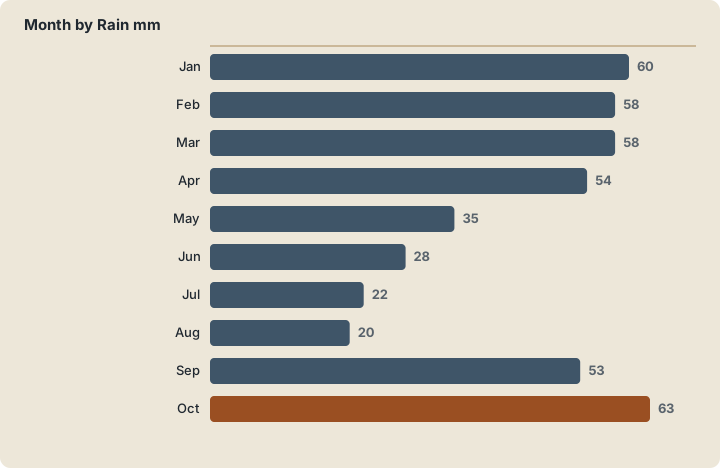
The Bari old port is at its calmest and warmest from late May to September, when typical values from modelled ERA5 data (1991 to 2020) show July and August mean daily maxima of 28.6 and 29.1 C and only about 4 rain days a month, while November carries the highest monthly rainfall at 73 mm, so spring and early autumn balance warmth against rain better than late autumn.
The climate table gives the full picture. August has the highest mean daily high of the year at 29.1 C and the lowest monthly rainfall at 20 mm; November peaks at 73 mm of rain; the year totals about 587 mm. The sea adds its own calendar: modelled sea temperatures run about 27 C in July and August, about 22 C in October and about 14 C in February. Those are modelled means, not a swimming guarantee for any given week.
| Month | Mean daily high C | Mean daily low C | Rain mm | Rain days |
|---|---|---|---|---|
| Jan | 12.1 | 7.3 | 60.0 | 9.5 |
| Feb | 12.5 | 7.2 | 58.0 | 9.4 |
| Mar | 14.7 | 8.8 | 58.0 | 9.4 |
| Apr | 17.5 | 11.2 | 54.0 | 9.0 |
| May | 21.6 | 15.3 | 35.0 | 6.9 |
| Jun | 25.9 | 19.5 | 28.0 | 4.8 |
| Jul | 28.6 | 22.0 | 22.0 | 4.1 |
| Aug | 29.1 | 22.4 | 20.0 | 4.3 |
| Sep | 25.1 | 19.1 | 53.0 | 7.6 |
| Oct | 21.1 | 15.6 | 63.0 | 7.9 |
| Nov | 16.9 | 12.0 | 73.0 | 8.9 |
| Dec | 13.2 | 8.7 | 63.0 | 9.6 |
The feast calendar matters more than the rain chart for one week of the year. The Festa di San Nicola runs 7 to 9 May by tradition, with the 2026 edition's historical procession setting off at 20:00 on Thursday 7 May from piazza Federico II di Svevia, beside the castle; a sea procession on 8 May and the manna ceremony on 9 May are part of the reported traditional programme. The old port and the sea are at the centre of the sea procession, so early May is the one period when the quay is anything but calm. The festival guide covers it in full, and the history of Bari and Saint Nicholas explains why the relics, brought by sailors in 1087 and placed in the crypt in 1089, tie this city to the sea.
What Should You Eat Near The Bari Old Port?
Near the Bari old port the food is the food of the Bari seafront and old town: orecchiette is the pasta shape of Puglia, panzerotti are fried filled pockets, focaccia barese is the local flatbread, sgagliozze are fried polenta squares, and raw seafood such as sea urchins and shellfish is served fresh from the Adriatic, all described plainly and all best checked on posted menus before you order.
The discipline of an honest guide is to stop where the record stops. What can be said is that the streets rising from the quay toward Piazza Mercantile and Piazza del Ferrarese carry the old town's food culture, and that checking the posted prices and the itemised bill is the right habit anywhere on this coast. The Bari street food guide root page and the dedicated food pages of this site carry the detail.
If eating your way through the lanes appeals more than reading about them, a guided food walk of the old town is the product that matches, and the card below renders the live details. The tour below departs from central Bari.
For the dishes one street back from the water, the page on Strada Arco Basso and the Piazza Mercantile guide cover the lanes and squares around the quay.
How Does The Old Port Fit Into A Day Trip From Bari?
The old port fits into any Bari day as the waterfront anchor: combine the Muraglia walk, the Basilica di San Nicola and the Castello Normanno-Svevo (10 euro full, 2 euro reduced, Tuesday to Sunday 09:00 to 19:00) in the morning, then head out by train or bus to Polignano a Mare (33 km by rail), Monopoli (41 km) or, on the inland side, Alberobello, Matera or Castel del Monte (62 km by road).
The city sights that pair naturally with the quay all sit within one walk. The basilica, open Monday to Saturday 06:30 to 20:30 and Sunday 06:30 to 22:00 with no admission fee mentioned on its page, is the closest. The Swabian castle, the Castello Normanno-Svevo, guards the landward edge of the old town, and the castle guide covers its hours and tickets. The Lungomare Nazario Sauro carries the seafront promenade south from the old port toward the city beaches at Pane e Pomodoro, about 2.1 km from Piazza Mercantile.
For the day trips, the admission figures on the record let you budget the inland options precisely:
| Day-trip site | Full ticket | Reduced | Hours on the record |
|---|---|---|---|
| Castel del Monte | 10 EUR | 2 EUR | Daily 10:00 to 18:45 (1 Apr to 30 Sep); 09:00 to 17:45 (1 Oct to 31 Mar) |
| Grotte di Castellana, full route (3 km, about 100 min) | 25 EUR | 22 EUR (ages 6 to 14) | On the operator's calendar |
| Swabian castle of Trani | 8 EUR | 2 EUR | Mon to Sat 08:30 to 19:30; Sun 08:30 to 13:30 |
| Egnazia museum and park | 10 EUR | 2 EUR | Mon to Sat and first Sunday 08:30 to 19:30 |
| Altamura National Archaeological Museum | 5 EUR | 2 EUR | Mon to Fri 08:30 to 19:00; Sat, Sun and holidays 08:30 to 13:30 |
Matera, the Sassi city, is about 71 km and 69 minutes by road from Piazza Mercantile, and it is in Basilicata, not Puglia: the day trip crosses a regional border. The FAL railway line reaches it from Bari, and the operator posts its own timetables and notices. Alberobello and Locorotondo sit in the Valle d'Itria and are served by the Trulli Link connection between Trenitalia and FSE, with the FSE leg reported at 5.90 euro on top of the rail fare, so confirm current conditions with the operator. A guided bus day combines the two inland anchors in one booking, which is why it earns its place in the trio.
For a single-decision version of the same logic: if your day in Bari is short, walk the old port and the old town in the morning and take the coastal train to Polignano after lunch; if your day is long, book the Alberobello and Matera bus trip and save the quay for the evening, when the wall and the water are the whole show.
What Should You Know Before You Walk Down To The Quay?
Before you walk down to Molo San Nicola, know three things: Bari Vecchia is a limited traffic zone with a camera gate at the Castello since 1 July 2026, so arrive on foot or by bus and never by rental car; the fish market keeps no published hours, so treat it as a sight of chance rather than a scheduled stop; and the cave boats of this coast leave from Polignano a Mare or San Vito, not from the old-port quay.
Practical habits carry the rest. Keep valuables out of back pockets and zip bags on crowded buses, the ordinary caution of any port city, with no drama attached: emergency number 112 covers police, medical and fire across Italy. If you are staying overnight, the city's tourist tax runs 1.50 to 4.00 euro per person per night by accommodation category, for a maximum of four consecutive nights, collected by your host.
The last decision is which water you want. The old port gives you the working harbour and the wall; the city cruises give you the skyline from the sea; the Polignano boats give you the caves. The pick below is the swim-stop version from San Vito, and the live listing carries the meeting point, the calendar and the cancellation terms.
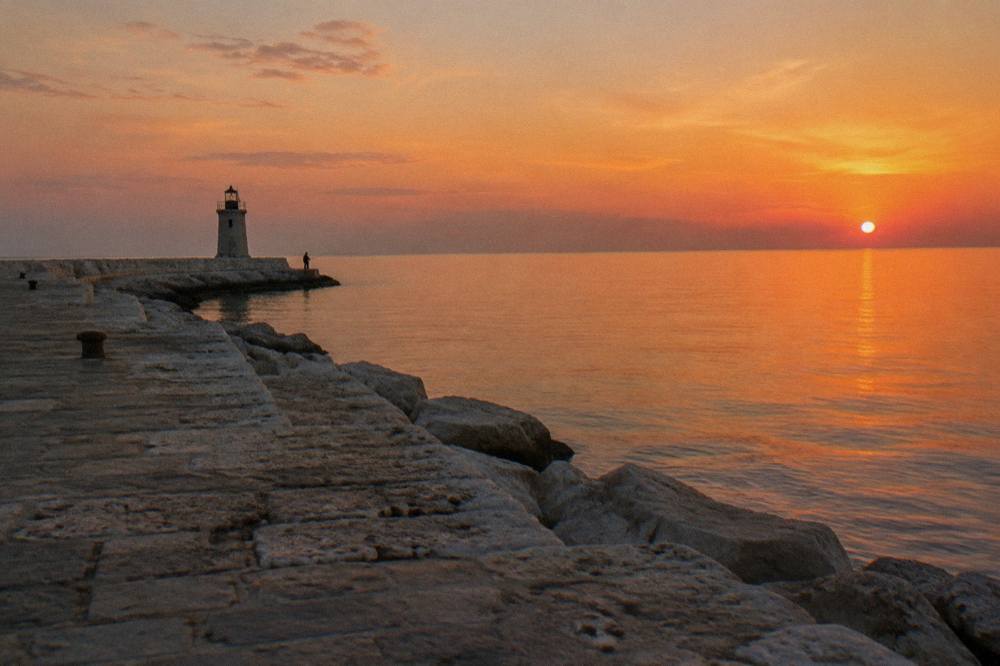
However you sequence it, give the quay an unhurried loop at some point in the trip: the Muraglia at the end of the day, with the boats in the water below and the old town behind you, is the view that holds this city together. For everything else within walking distance, the answers page on whether Bari's old town is worth visiting makes the case in one place.
Common Questions About The Bari Old Port
Is the Bari old port the same place as the fish market?
No, they are neighbours. Molo San Nicola is the old-port quay at the foot of Bari Vecchia; the fish market sits beside it in the old-port area. The market keeps no published hours or prices, so treat it as a sight of chance and confirm locally on the day.
Do the Polignano cave boats leave from the Bari old port?
No. The cave boats of this coast depart from Polignano a Mare itself and from San Vito, the port area south of the city. None leaves from Molo San Nicola. Polignano a Mare is 33 km from Bari Centrale by rail on the Bari-Lecce line, typically a ride of 25 to 35 minutes.
How far is the old port from the Bari ferry terminal?
The Stazione Marittima at Molo San Vito is about 0.5 km from Piazza Mercantile, the square at the edge of the old town, so the ferry terminal and the old port are within one short walk of each other.
Can you see the Basilica di San Nicola from the old port?
The basilica stands a few hundred metres up the slope from the quay, and the walk between them passes through the lanes of Bari Vecchia. The basilica is open Monday to Saturday 06:30 to 20:30 and Sunday 06:30 to 22:00, with no admission fee mentioned on its page.
When is the Festa di San Nicola held at the old port?
The Festa di San Nicola runs 7 to 9 May by tradition. The 2026 edition opened with the historical procession at 20:00 on 7 May from piazza Federico II di Svevia, and the sea procession on 8 May is part of the reported traditional programme. Early May is the busiest week of the year on the waterfront.
Can you drive to the Bari old port?
No. Bari Vecchia is a limited traffic zone, with a camera gate at the Castello since 1 July 2026, and the advice to rental-car drivers is simple: do not drive into the old town. Park outside the old town, where perimeter parking is paid on working days from 08:30 to 20:30, and walk down to the quay.