Piazza Del Ferrarese Bari: The Square By The Old Port
Piazza del Ferrarese sits where Bari Vecchia meets the modern city, a stone square by the old port that links the Basilica di San Nicola, Piazza Mercantile and the Murat shopping streets. This guide covers what the square is, how to reach it, the limited traffic zone rules that now apply around it, and how to plan a day around it.
Short answer
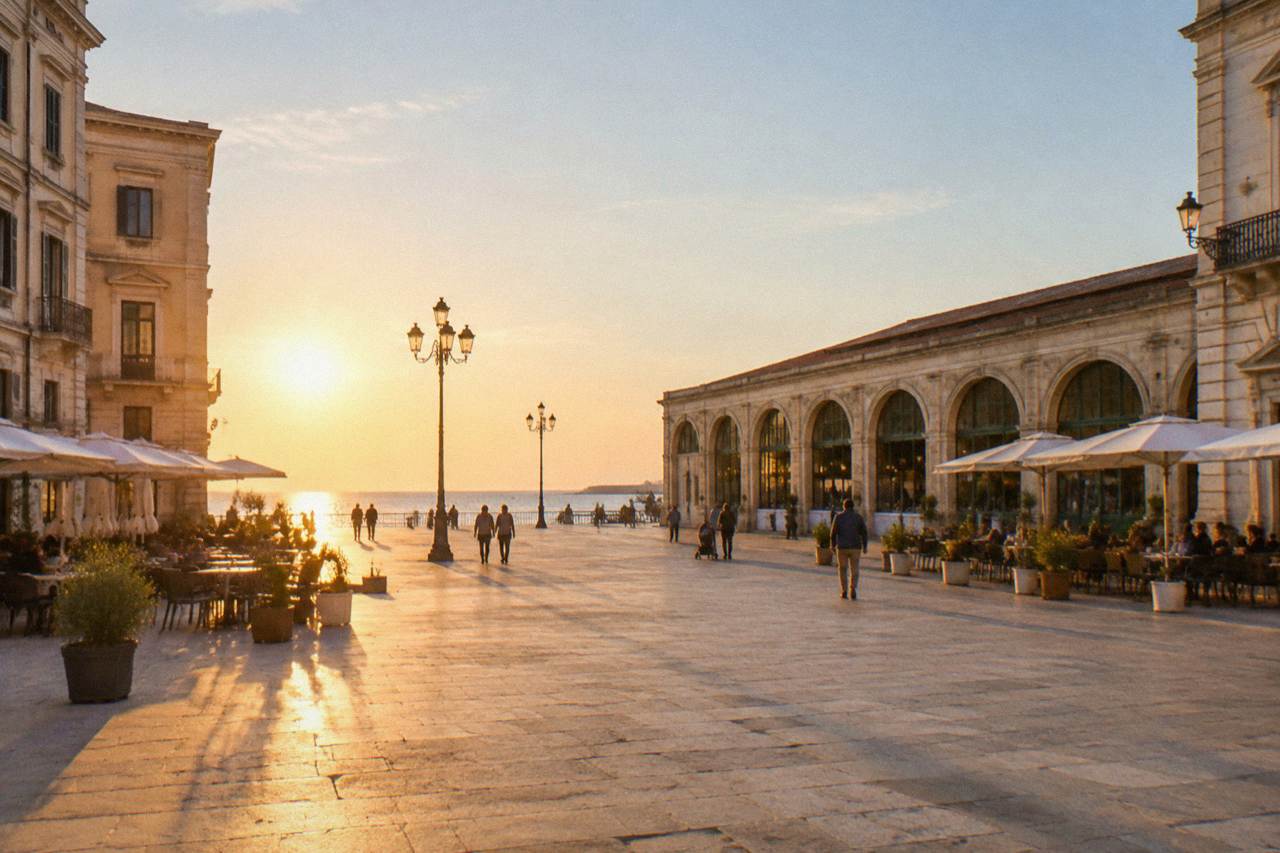
Piazza del Ferrarese is a stone square at the southern edge of Bari Vecchia, the old town of Bari on the Adriatic coast of Puglia, where the historic lanes meet the modern Murat district and the old port is a short walk away.
Bari is the capital of the Puglia region in southern Italy, a coastal city on the Adriatic Sea whose old town, Bari Vecchia, spreads across a headland beside the old port. Piazza del Ferrarese is the square at the southern edge of that old town, the point where the historic lanes open out toward the grid of the Murat district and the sea beyond. The tourist information point is reported at Piazza del Ferrarese 29, so for many arrivals this square is the first piece of Bari they actually stand in. Ferries for Albania and Greece sail from the port a short walk away, cruise passengers come ashore nearby, and the Basilica di San Nicola rises a few minutes' walk to the north. This guide from the Bari Italy Travel Guide covers the square itself, the streets and sights around it, the limited traffic zone that now covers it, and how to use it as a base for exploring Bari and the towns beyond.
Where Is Piazza Del Ferrarese In Bari?
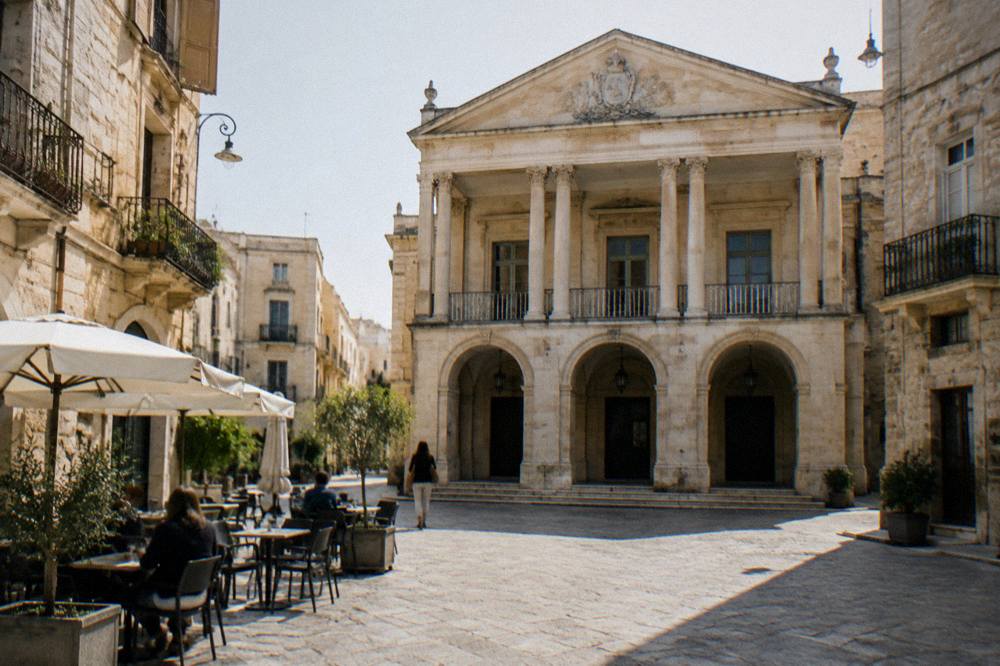
Piazza del Ferrarese is a stone square at the southern edge of Bari Vecchia, the old town of Bari on the Adriatic coast of Puglia, where the historic lanes meet the grid streets of the Murat district. It sits beside the larger Piazza Mercantile and a short walk from the old port quay of Molo San Nicola, and it is part of the city's limited traffic zone, so cars are restricted around it.
The geography matters more here than in many squares, because Piazza del Ferrarese is a hinge between two halves of the city. To the north and west lie the lanes of Bari Vecchia: the Basilica di San Nicola, the Cattedrale di San Sabino and the Swabian castle are all within a few minutes on foot. To the south and east lies the Murat district, the grid whose shopping streets converge on Via Sparano. A visitor standing in the square can see both worlds in one glance, the rough stone of the old town behind and the regular facades of the modern city ahead.
The square is also the old town's front door for anyone arriving from the station side. Bari Centrale sits about a kilometre inland in the Murat grid, and the walk from there runs down the commercial streets and delivers you more or less here, at the point where the modern city ends and the historic one begins. From the square, Strada Palazzo di Citta leads north into the lanes, and the sea wall, the Muraglia, runs along the old port to the east.
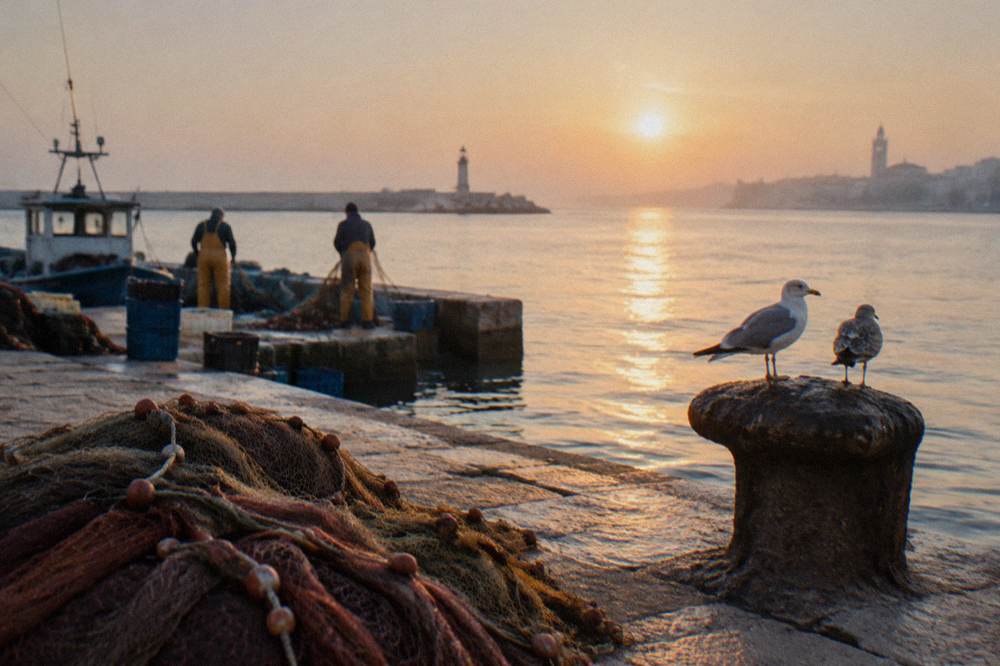
The old port at Molo San Nicola is the closest stretch of working waterfront. Fishing boats tie up along the quay, and the fish market there operates on its own schedule, which is posted at the port rather than in city guides. The Muraglia, the sea wall itself, is the promenade above it, and it carries walkers north toward the Fortino di Sant'Antonio Abate, the small fort on the water at the tip of the headland.
What Can You See Within A Short Walk Of Piazza Del Ferrarese?
Within a ten-minute walk of Piazza del Ferrarese you can reach the Basilica di San Nicola, the Cattedrale di San Sabino, the Castello Normanno-Svevo, the Piazza Mercantile, the Teatro Petruzzelli and the start of the Lungomare Nazario Sauro, Bari's seafront promenade. The Basilica di San Nicola is open Monday to Saturday 06:30 to 20:30 and Sunday 06:30 to 22:00, with no admission fee mentioned on its page.
That list is the reason the square works so well as a base. The Piazza Mercantile adjoins it directly to the north, the two squares reading as one long open space in practice. The basilica, with the relics of Saint Nicholas in its crypt since 1089, lies a few lanes further on. The relics rested at Myra for about 750 years, from 337 to 1087, before sailors brought them to Bari, and the crypt received them in 1089, a story told in more detail in the history of Bari and Saint Nicholas.
| Sight | Direction from Piazza del Ferrarese | Ticket figure |
|---|---|---|
| Piazza Mercantile | Adjoining, to the north | No ticket |
| Basilica di San Nicola | North, inside Bari Vecchia | No fee mentioned on its page |
| Castello Normanno-Svevo | West edge of the old town | 10 EUR full, 2 EUR reduced |
| Teatro Petruzzelli | South, in the Murat district | Guided tours 7 EUR full, 2 EUR reduced |
| Lungomare Nazario Sauro | East, along the waterfront | No ticket |
| Fortino di Sant'Antonio Abate | North, on the sea wall | No ticket |
The Castello Normanno-Svevo stands at the western edge of the old town and holds the camera gate of the limited traffic zone on its piazza. The Musei Puglia ticket page lists it at 10 EUR full and 2 EUR reduced, open Tuesday to Sunday 09:00 to 19:00, with shorter Sunday openings from October to March except the first Sunday of each month. A Puglia Musei Card at 20 EUR covers all the regional Musei Puglia sites for six months, which is worth comparing if the castle sits alongside Castel del Monte and Trani on your itinerary.
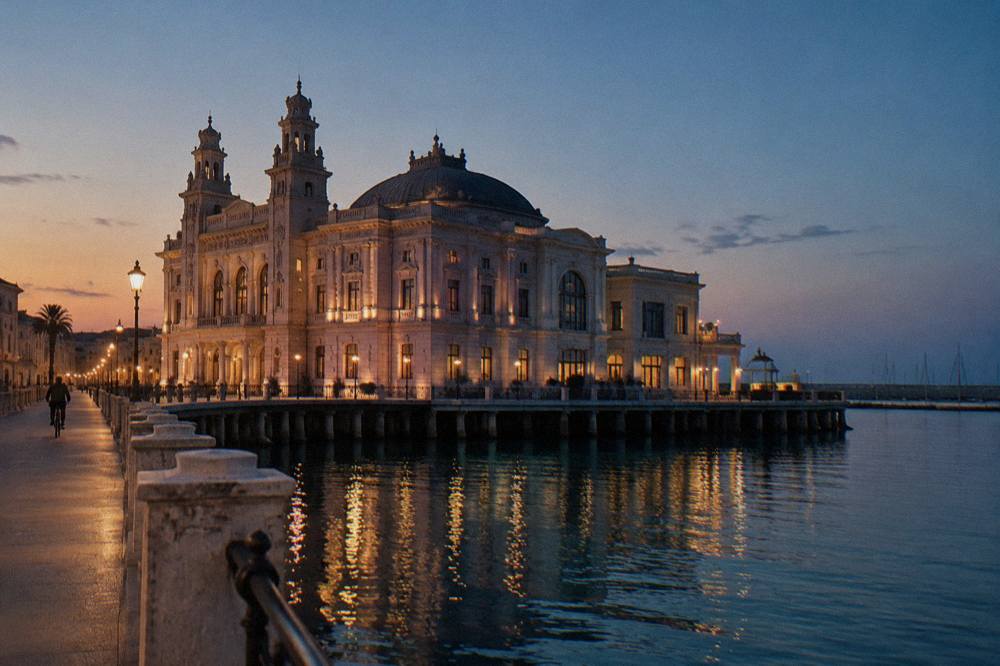
South of the square, the Murat district holds the Teatro Petruzzelli and the Teatro Margherita. The Petruzzelli offers guided tours at 7 EUR full and 2 EUR reduced, with dated slots published monthly by the foundation, and its story includes the fire on the night of 26 to 27 October 1991 and the reopening on 4 October 2009, both reported. The Teatro Margherita, the theatre standing over the water off the seafront, is a landmark on the Lungomare Nazario Sauro, described in general terms only since its current programme is not in the city sources.
Walking tours are the easiest way to absorb the lanes around the square, and the site's Bari walking tours overview compares the options. For a different pace, an eco-friendly rickshaw tour of the old town departs from Bari itself.
The rickshaw tour covers the old town lanes around the square and the wider Bari Vecchia loop, with a local guide at the handlebars. It suits travellers with limited mobility in the group or anyone who wants the layout of the old town explained before exploring on foot.
Is Piazza Del Ferrarese Different From Piazza Mercantile?
Piazza Mercantile and Piazza del Ferrarese are two adjoining squares at the southern edge of Bari Vecchia that function as one continuous space in practice: Piazza Mercantile is the larger civic square to the north, and Piazza del Ferrarese is the smaller southern square that meets the modern city and carries the tourist information point, reported at number 29.
The distinction matters mainly for orientation. Coming from the station, you reach Piazza del Ferrarese first, at the point where Corso Vittorio Emanuele II and the Murat streets arrive at the old town. Crossing it northward brings you into Piazza Mercantile, historically the city's commercial and administrative centre, and from there the lanes climb toward the two churches. Visitors comparing the old town's value before booking can read the site's assessment of whether Bari's old town is worth visiting.
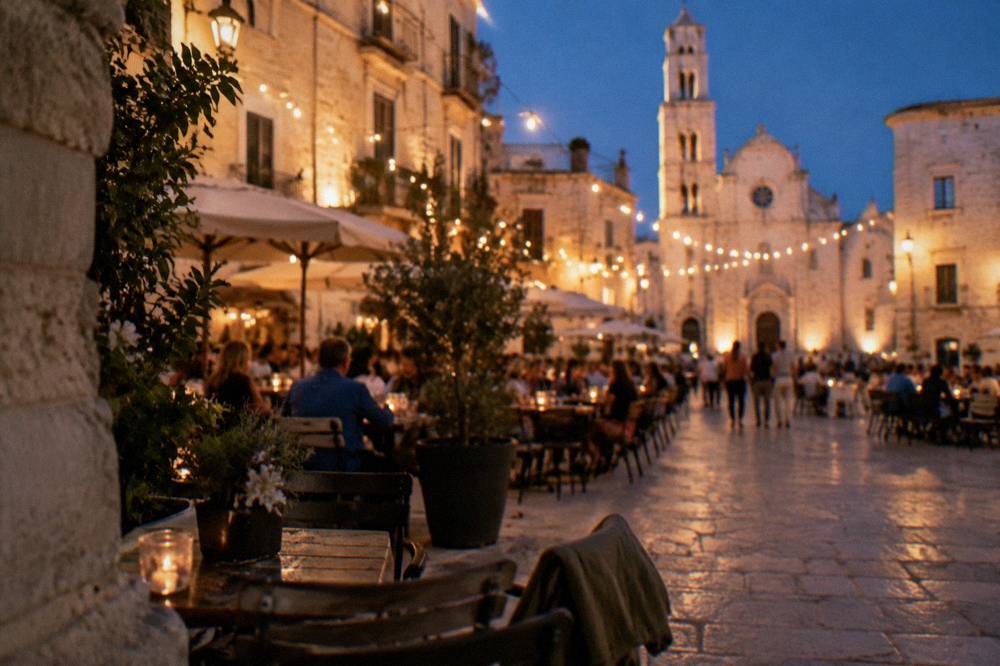
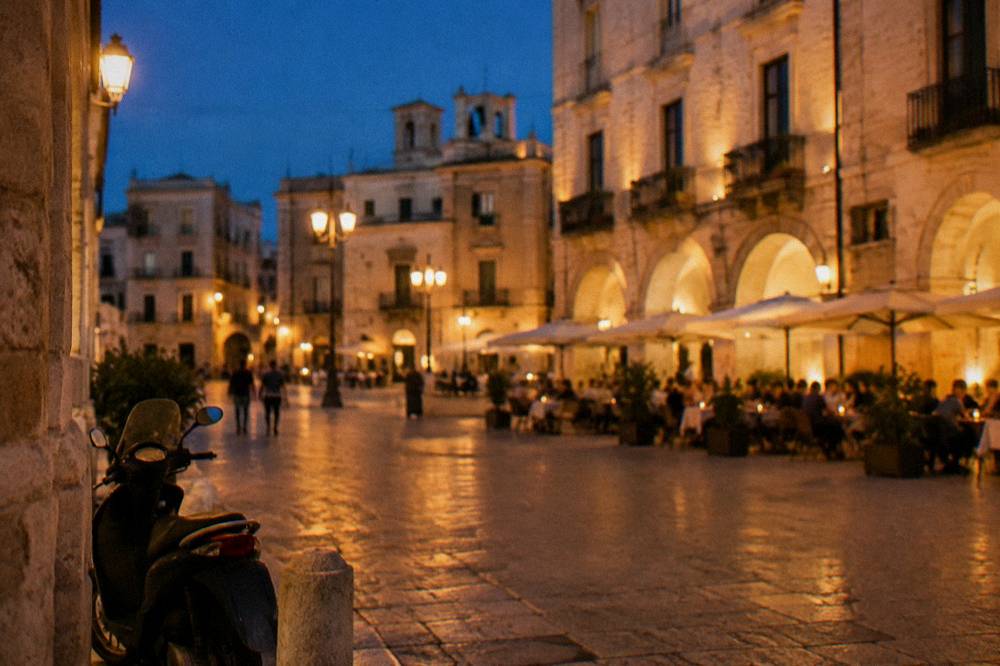
Both squares sit inside the pedestrian flow of the old town, which means the practical answer to "which one" is: neither requires a choice. They are seconds apart. Evening life gathers across both, with tables spilling out in the warmer months, and the July and August evenings that drive it are warm: typical values from modelled ERA5 data, 1991 to 2020, give July a mean daily maximum of 28.6 C and August 29.1 C.
How Do You Reach Piazza Del Ferrarese From Bari Airport And Bari Centrale?
From Karol Wojtyla airport (BRI) at Palese, 12.0 km and about 21 minutes by road from Piazza Mercantile, the Ferrotramviaria train takes 17 minutes to Bari Centrale and costs 5.30 EUR single, the Tempesta coach costs 5 EUR, and a taxi to a city-centre hotel is a predetermined 25 EUR; from Bari Centrale the square is a walk of roughly a kilometre through the Murat district, or an AMTAB bus at 1.00 EUR a ride.
The airport train is the detail worth getting right. Ferrotramviaria's own pages give the 17-minute timing, the station inside the terminal, and the 5.30 EUR single fare from the 2026 tariff, with a contactless card tap, the "Paga e Via" option, accepted at the gate. Reports put the service at about 68 trains a day Monday to Saturday and 46 on Sundays and holidays, so confirm the timetable before you fly. The Tempesta shuttle coach costs 5 EUR, bought on board or in the Cotrap app, and is reported to take about 30 minutes.
| Airport transfer | Fare | Journey figure | Source basis |
|---|---|---|---|
| Ferrotramviaria train to Bari Centrale | 5.30 EUR single | 17 minutes | Operator tariff and pages |
| Tempesta shuttle coach | 5 EUR | Reported about 30 minutes | Operator timetable |
| AMTAB line 16 bus | Pay the standard city ticket | Route runs station to airport | AMTAB route news |
| Taxi to a city-centre hotel | 25 EUR predetermined | About 21 minutes by road | Comune di Bari tariff |
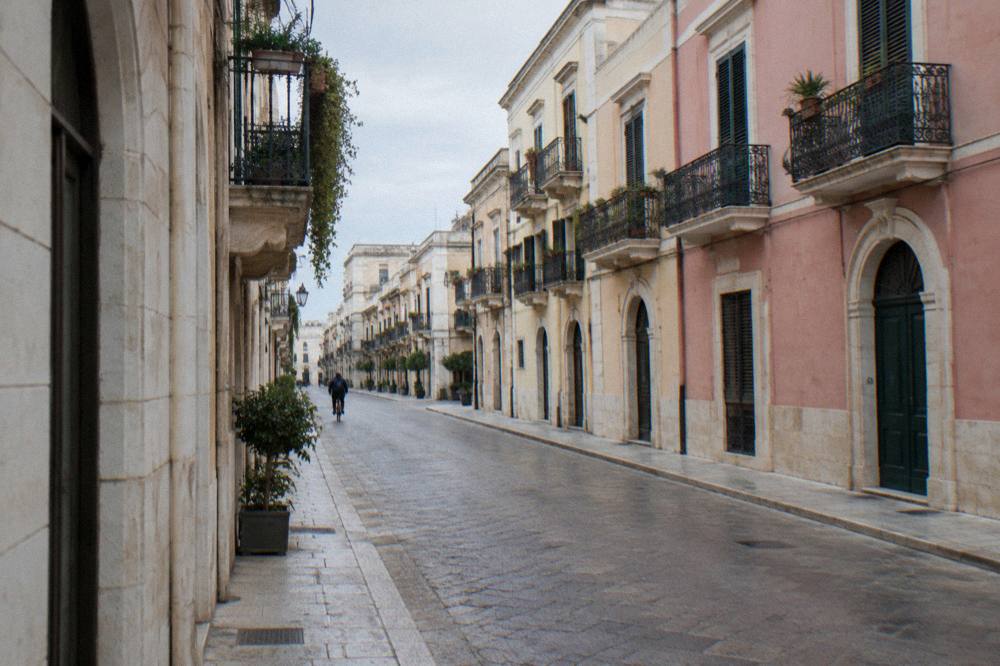
City buses are run by AMTAB, with a single ticket at 1.00 EUR, a 90-minute ticket at 1.20 EUR and a day ticket at 2.50 EUR. Line 16 links Bari Centrale and the airport, though the airport stop has moved inside the new road layout, so check the stop location on arrival. Service changes during works are posted by the operator, and the areas around the station and the seafront have seen several in 2026.
From Bari Centrale the simplest route is on foot: head toward the sea through the Murat grid and the old town appears at the far end. Anyone planning a stay around the station rather than the old town can start with the site's two days in Bari itinerary, which sequences both districts. Cruise passengers have it even easier, since the Stazione Marittima at Molo San Vito sits about 0.5 km from Piazza Mercantile, and the Bari cruise port day guide lays out a walk from the terminal through exactly these squares.
Once the arrival is sorted, the sea is the next thing worth booking. A boat cruise along the Polignano a Mare cliffs and sea caves, with prosecco on board, runs from Polignano's own harbour, south down the coast from Bari, and it pairs naturally with a morning in the old town followed by an afternoon on the water.
Is Piazza Del Ferrarese Inside The ZTL Of Bari Vecchia?
Yes: from 1 July 2026 Bari Vecchia's limited traffic zone includes a camera gate at the Castello, on piazza Federico II di Svevia at piazza Massari, with weekday entry windows of 09:00 to 11:00 for authorised vehicles and a second afternoon window reported at 16:00 to 18:00; Piazza del Ferrarese sits inside the restricted old-town edge, so drivers without authorisation should not bring a car into it.
The zone works by number-plate cameras, with the monitoring system in an experimental phase since late June 2026. Perimeter parking near Bari Vecchia is paid on working days from 08:30 to 20:30, and the comune sets the passes and rules on its own ZTL pages, so a rental-car driver should park outside the zone and walk in. The advice is simple and applies to every visitor: do not drive into Bari Vecchia. The rules and any exceptions are stated on the comune's ZTL page, and fines and permit prices are set there rather than in travel guides.
| ZTL rule | Figure or window | Basis |
|---|---|---|
| New camera gate at the Castello | From 1 July 2026 | Comune di Bari |
| Morning entry window, authorised vehicles | Weekdays 09:00 to 11:00 | Comune di Bari |
| Afternoon entry window | Reported 16:00 to 18:00 | Reported, confirm on the comune page |
| Perimeter parking | Paid, working days 08:30 to 20:30 | Comune di Bari |
| Advice to rental drivers | Do not drive into Bari Vecchia | Site guidance |
On foot and by bike the zone is not an obstacle, and the lanes around the square are the point of the visit. The practicalities of parking outside the old town are covered in the site's parking and driving guidance for Bari, and luggage can be handled with a storage service near the station, described in the Bari luggage storage guide.
Where Do You Eat Around Piazza Del Ferrarese In Bari?
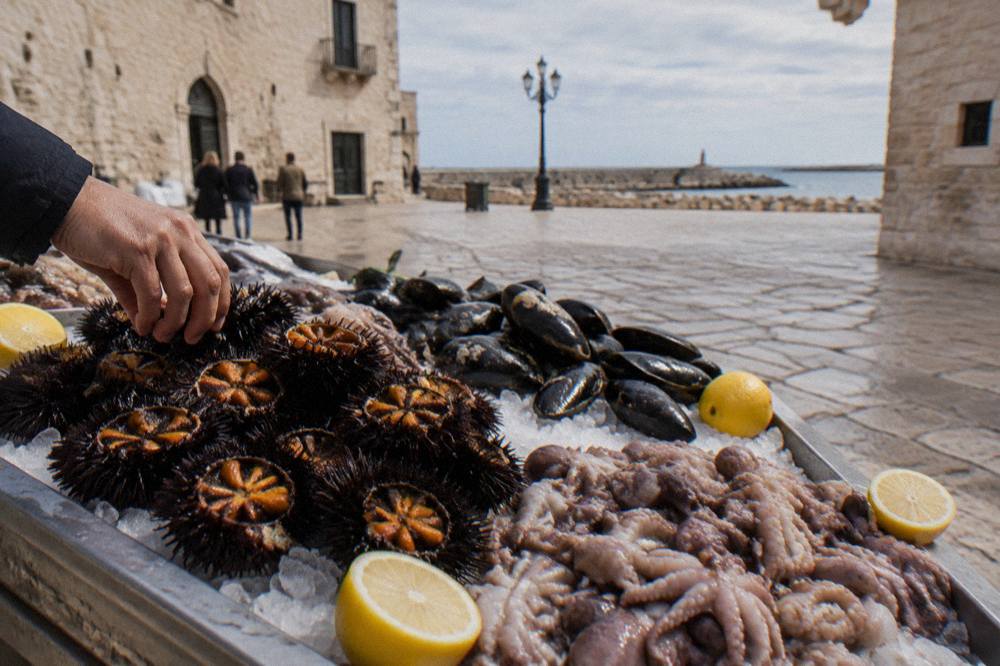
Around Piazza del Ferrarese the eating is Bari's street-food kitchen at street level: orecchiette is the pasta shape of Puglia, panzerotti are fried filled pockets, focaccia barese is the local flatbread, and raw seafood such as ricci and frutti di mare is served along the old port, with tables across the two squares and the lanes opening off them. No single address is endorsed here, and prices should be checked on the posted menu and the itemised bill.
That is deliberately general, because the square's food identity is the city's food identity. Orecchiette gets one plain sentence, the pasta shape of Puglia, and the lane most associated with it, Strada Arco Basso, runs through the old town a short walk north: the site's Strada delle Orecchiette page describes it. Whether pasta makers are working at their street doors on any given day is not something the city publishes, so walk the lane and see.
A guided version of the same kitchen exists as a bookable product. The Bari street food overview compares the walking food tours that start from the old town, several of them beginning within a few minutes of this square, and the food tours and cooking classes guide covers the pasta-making sessions for travellers who want to learn the shape rather than only eat it.
A few plain checks keep any meal straightforward. Posted prices are the contract in Italy, and the itemised bill should match what arrived. These are habits that work anywhere in the city, not warnings about any district, and the emergency number in Italy is 112.
When Is The Best Time Of Year To Visit Piazza Del Ferrarese In Bari?
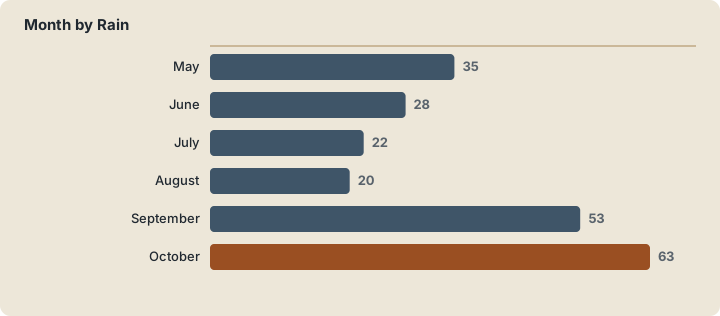
Bari's climate, from typical values of modelled ERA5 data 1991 to 2020, gives May a mean daily maximum of 21.6 C with 35 mm of rain and October 21.1 C with 63 mm, while July and August reach 28.6 C and 29.1 C with only about 4 rain days each; the square is busiest and its tables fullest in those two summer months, so May, June and September trade a little warmth for thinner crowds.
The rain numbers matter less than visitors expect: the year totals about 587 mm, spread so that November carries 73 mm and August only 20 mm. Winter is mild rather than harsh, with January and February mean daily maxima of 12.1 C and 12.5 C. For a visit timed to an event, early May (7 to 9 May) brings the Festa di San Nicola, with the 2026 corteo storico departing piazza Federico II di Svevia at 20:00 on 7 May, and the sea procession on 8 May and the manna on 9 May are reported traditions. The 2027 programme is not announced, so hold travel plans loosely until the comune publishes it.
| Month | Mean daily maximum | Rain | Rain days |
|---|---|---|---|
| May | 21.6 C | 35 mm | 6.9 |
| June | 25.9 C | 28 mm | 4.8 |
| July | 28.6 C | 22 mm | 4.1 |
| August | 29.1 C | 20 mm | 4.3 |
| September | 25.1 C | 53 mm | 7.6 |
| October | 21.1 C | 63 mm | 7.9 |
Typical values from modelled ERA5 data, 1991 to 2020; no weather station is named and no sunshine figure is implied. The sea adds its own calendar: modelled 2023 to 2025 means put the water at about 27 C in July and August, about 22 C in October and about 14 C in February.
Which Day Trips Start Close To Piazza Del Ferrarese?
From Piazza del Ferrarese the whole day-trip belt of Puglia opens up by road: Polignano a Mare is 37.4 km and about 36 minutes, Alberobello 56.7 km and about 61 minutes, Castel del Monte 62.0 km and about 59 minutes, and Matera, across the regional border in Basilicata, 70.8 km and about 69 minutes, all computed as free-flow times from Piazza Mercantile.
Two corrections keep these figures honest. Matera is in Basilicata, not Puglia, so the trip crosses a regional border even though the road time is short. And the trains have their own map: Trenitalia regional trains on the Bari-Lecce line serve Polignano a Mare at 33 km, Monopoli at 41 km, Ostuni at 75 km and Lecce at 150 km, with the Polignano run typically 25 to 35 minutes; the Trulli Link service links Trenitalia and FSE trains toward Locorotondo, Alberobello and Martina Franca, with the FSE leg reported at 5.90 EUR on top of the rail fare. Check the operator's timetable for everything else.
| Destination | Road distance from Piazza Mercantile | Free-flow time | Rail figure |
|---|---|---|---|
| Polignano a Mare | 37.4 km | About 36 min | 33 km on the Bari-Lecce line |
| Monopoli | 47.3 km | About 43 min | 41 km on the Bari-Lecce line |
| Alberobello | 56.7 km | About 61 min | Trulli Link via FSE, reported 5.90 EUR leg |
| Castel del Monte | 62.0 km | About 59 min | Served from Andria, check operators |
| Matera (Basilicata) | 70.8 km | About 69 min | FAL line, check timetable |
| Trani | 47.2 km | About 45 min | Check the operator's timetable |
Admissions are worth knowing before you choose. Castel del Monte, an octagonal castle inscribed by UNESCO in 1996, costs 10 EUR full and 2 EUR reduced, open daily 10:00 to 18:45 from 1 April to 30 September and 09:00 to 17:45 from 1 October to 31 March, with last entry 45 minutes before closing. The Grotte di Castellana charge 25 EUR for the 3 km full route, about 100 minutes, and 22 EUR for the 1 km partial route, about 50 minutes, for ages 15 and over. The Trani Swabian castle is 8 EUR and 2 EUR, and the Altamura archaeological museum 5 EUR and 2 EUR. Whether the trip justifies the drive is weighed in the site's Castel del Monte worth-a-visit assessment.
A skip-the-line entry ticket for Castel del Monte is sold through the site's listing, collected at Andria, the town that administers the castle, not in Bari itself.
Andria is the base for the castle, reached by road in about 59 minutes from central Bari; pairing the ticket with your own transport or a guided day tour that calls there is the usual pattern. The site's Castel del Monte day-trip guide covers the options.
The coast completes the set. Polignano a Mare's cliffs and caves are the region's signature water trip, and the cruises leave from Polignano's own harbour, never from Bari. The prosecco cruise below is the listing this site features for that coast, with the price, rating and schedule rendering on the operator's live listing.
For the northern coast instead, Giovinazzo lies 21.7 km and about 23 minutes up the Adriatic, one of the closest old fishing towns to the square. Ferries add a different scale of trip: Adria Ferries sails Bari to Durres every day all year, about 8 hours, and the details sit in the Bari ferries guide.
Can You Visit Piazza Del Ferrarese On A Bari Stopover?
Yes, and it is one of the easiest squares in southern Italy to reach on a stopover: the Stazione Marittima cruise terminal is about 0.5 km from Piazza Mercantile, Bari Centrale is roughly a kilometre inland, and the basilica, castle and seafront all sit within a short walk, so a single afternoon covers the two squares, the old port and the sea wall.
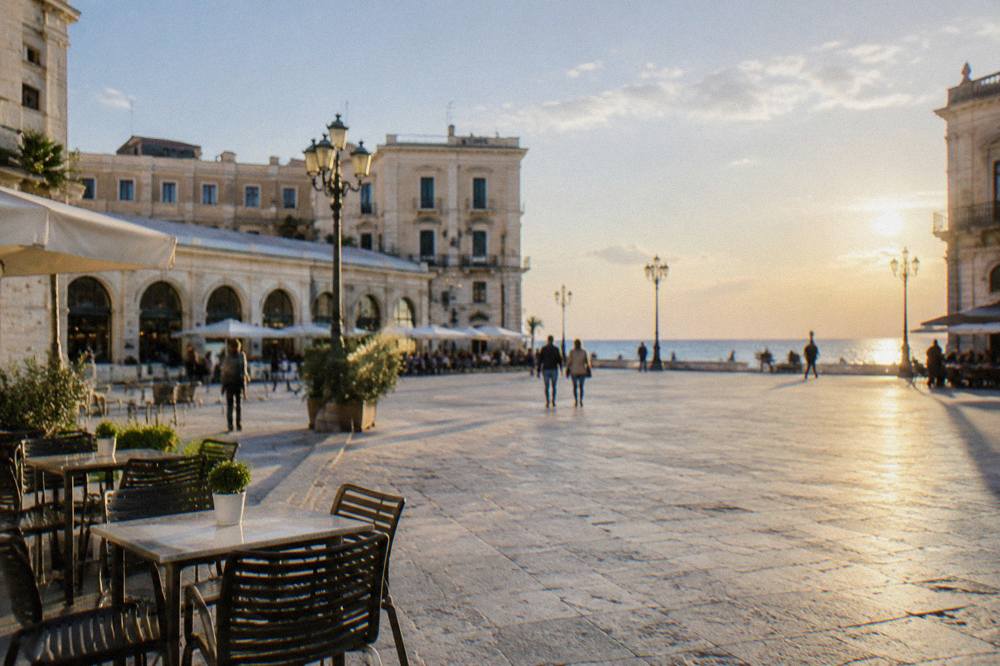
Stopover time is best spent in a loop. Start in Piazza del Ferrarese, walk north through Piazza Mercantile into the lanes, reach the Basilica di San Nicola with its long opening hours, then cut west to the Swabian castle or east to the Muraglia and the old port, and finish along the Lungomare Nazario Sauro. The full sequence, with timings and food stops, is laid out in the site's two days in Bari itinerary pages and the cruise-port day walkthrough.
Luggage is the one friction point on a stopover, and it has a clean solution: storage services near Bari Centrale are described in the site's luggage storage guide, and the airport train back to BRI takes 17 minutes at 5.30 EUR, with the timetable worth confirming against your departure. Emergency cover anywhere in Italy is 112.
Common Questions About Piazza Del Ferrarese In Bari
Where exactly is Piazza del Ferrarese in Bari?
It is the stone square at the southern edge of Bari Vecchia, the old town of Bari, where the historic lanes meet the Murat district and the old port. The tourist information point is reported at Piazza del Ferrarese 29.
Is Piazza del Ferrarese the same as Piazza Mercantile?
No, but they adjoin and read as one space. Piazza Mercantile is the larger civic square to the north; Piazza del Ferrarese is the smaller southern square that meets the modern city and the station-side streets.
Can you drive to Piazza del Ferrarese?
Not advised. From 1 July 2026 Bari Vecchia's limited traffic zone includes a camera gate at the Castello with weekday windows of 09:00 to 11:00 for authorised vehicles and an afternoon window reported at 16:00 to 18:00. Park outside the zone and walk in; the rules sit on the comune's ZTL page.
How far is Piazza del Ferrarese from the cruise terminal?
The Stazione Marittima at Molo San Vito is about 0.5 km from Piazza Mercantile, so the square is a few minutes on foot from the ferry and cruise berths.
What food is the area around Piazza del Ferrarese known for?
The Bari street-food kitchen: orecchiette, the pasta shape of Puglia, panzerotti, focaccia barese and raw seafood along the old port. Check posted menus and the itemised bill, and no single address is endorsed here.
What is the best month to visit Piazza del Ferrarese?
May and October balance warmth and crowds: typical values from modelled ERA5 data, 1991 to 2020, give May a mean daily maximum of 21.6 C with 35 mm of rain and October 21.1 C with 63 mm. July and August are warmer, 28.6 C and 29.1 C, with about 4 rain days each.
The square is small, but its position is not: every road, rail and ferry route into Bari passes close to it, and the basilica, the castle and the sea wall all radiate from it. Plan the old town on foot, keep the car outside the ZTL, and let Piazza del Ferrarese be the fixed point from which the rest of Bari and its coast unfold.
