Bari Cathedral: Cattedrale Di San Sabino And Its Romanesque Facade
The Cattedrale di San Sabino stands at the heart of Bari Vecchia, the old town of Bari on the Adriatic coast of Puglia, a short walk from the Basilica di San Nicola, Piazza Mercantile and the Swabian castle. This guide sets out how to fit the cathedral into a day in the city.
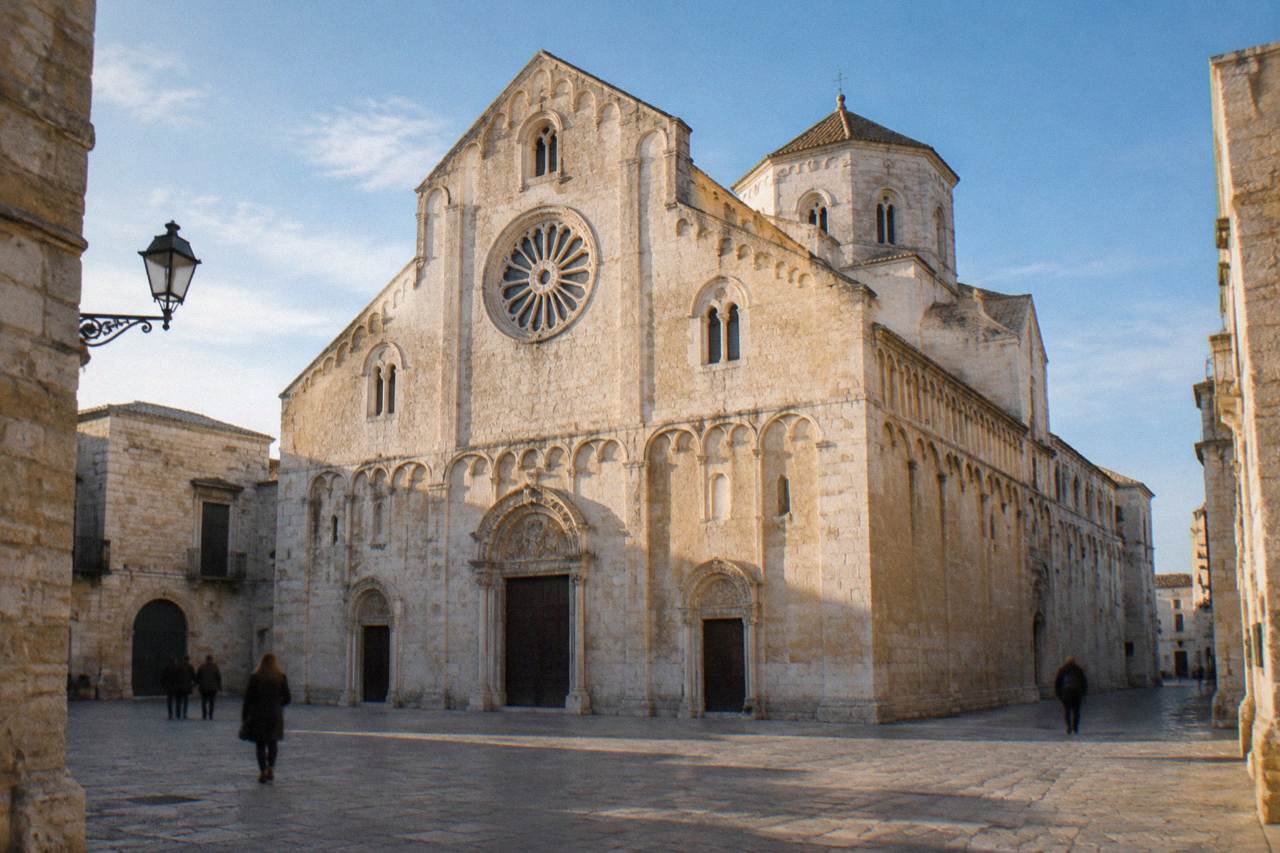
Short answer
The Cattedrale di San Sabino is the cathedral of Bari, the capital of Puglia in southern Italy, standing in Bari Vecchia between the Basilica di San Nicola and Piazza Mercantile. Check the current opening details on the official diocesan page before you go; everything around it, from the basilica's opening hours to the castle's 10 EUR ticket, is set out below.
The Cattedrale di San Sabino is the cathedral of Bari, and it stands at the centre of Bari Vecchia, the walled old town on the headland beside the old port. The cathedral is one of the two great churches of the old town, the other being the Basilica di San Nicola a few lanes to the west, and the two are usually visited together in a single loop that also takes in Piazza Mercantile, Piazza del Ferrarese and the Castello Normanno-Svevo. Bari is a coastal city on the southern Italian heel, with Polignano a Mare, Monopoli, Alberobello, Matera and Lecce all reachable as day trips, and it is not on the Amalfi Coast and not in Sicily.
What this page does is report what the sources hold. Where a figure exists, such as the basilica's published hours or the castle's ticket price, it is printed with the source named. For the wider picture of the city, the Bari Italy Travel Guide homepage collects the main planning pages in one place.
What Is The Cattedrale Di San Sabino In Bari?
The Cattedrale di San Sabino is the cathedral church of the Archdiocese of Bari, standing in Bari Vecchia, the old town of Bari, the capital of Puglia in southern Italy, on the Adriatic Sea. It is named after San Sabino, and it sits a few minutes on foot from the Basilica di San Nicola, the Piazza Mercantile and the Castello Normanno-Svevo, forming the religious heart of the old town together with the basilica.
The sources used for this guide name the cathedral as a landmark of Bari Vecchia and place it precisely on the map, beside the basilica and within the ring of the old walls. A reader who wants the current opening situation should check the official diocesan page before setting out, and the same goes for any scheduled service times that might close the nave to sightseers on a given morning.
That gap does not make the cathedral a thin visit. The building anchors the widest religious complex in the old town, it faces onto one of the few open breathing spaces inside the medieval street plan, and it sits on the standard walking route that every visitor to Bari Vecchia follows, from the Swabian castle at the south gate to the basilica and the Lungomare Nazario Sauro at the north.
Where Is The Bari Cathedral Inside Bari Vecchia?
The Cattedrale di San Sabino stands in the eastern half of Bari Vecchia, Bari's old town on the headland between the old port and the Murat grid district, roughly between the Piazza Mercantile and the Basilica di San Nicola, both of which are a few minutes away on foot. The whole old town is compact and pedestrian in character, and the cathedral square connects the castle end of Bari Vecchia with the seafront at the Lungomare Nazario Sauro.
Bari Vecchia is the headland district of Bari, bounded by the water on two sides, with the old port and the Molo San Nicola to the west and the Lungomare Nazario Sauro curving round to the north and east. The Piazza Mercantile and the Piazza del Ferrarese sit at the southern edge of the old town, closest to the Castello Normanno-Svevo and the modern city beyond it, and from there the lanes run north towards the cathedral and the basilica. The whole loop, castle to basilica to seafront, is the standard first walk in Bari.
The wider geography matters for planning. The Stazione Marittima ferry terminal at Molo San Vito is about 0.5 km from Piazza Mercantile, so ferry and cruise passengers land almost directly below the old town. The city beaches of Pane e Pomodoro, Torre Quetta and San Girolamo lie 2.1 km, 3.9 km and 4.3 km from Piazza Mercantile respectively, and the Murat district with its shopping streets begins immediately east of the old walls, so a morning in Bari Vecchia and an afternoon on Via Sparano combine without any transport at all.
What Can You See Inside And Around The Bari Cathedral?
The reliable plan at the Cattedrale di San Sabino is the building's setting: the cathedral square itself, the lanes of Strada Arco Basso and the orecchiette makers associated with them, the Piazza Mercantile to the south, and the Basilica di San Nicola, the Castello Normanno-Svevo and the seafront all within the same quarter of Bari Vecchia.
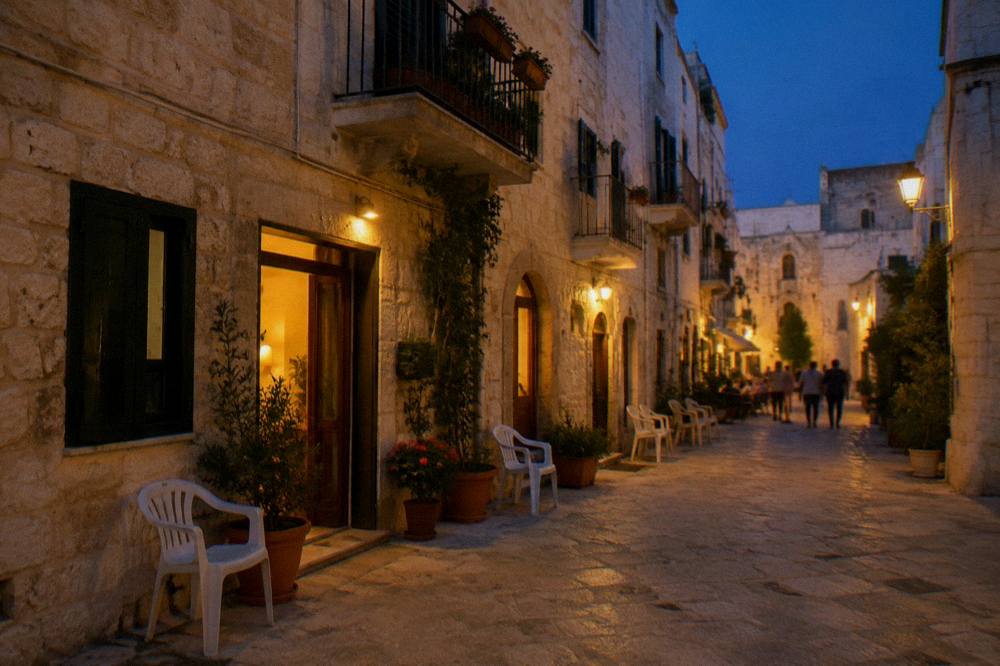
Start with the square. The cathedral square makes the natural orientation point: from it, the basilica lies a few lanes west, the castle south, and the sea visible down the streets that run east to the Lungomare Nazario Sauro. The old town's street plan rewards aimless walking, but every aimless walk in Bari Vecchia crosses the cathedral square sooner or later, and the benches and café tables there make it the resting point of the loop.
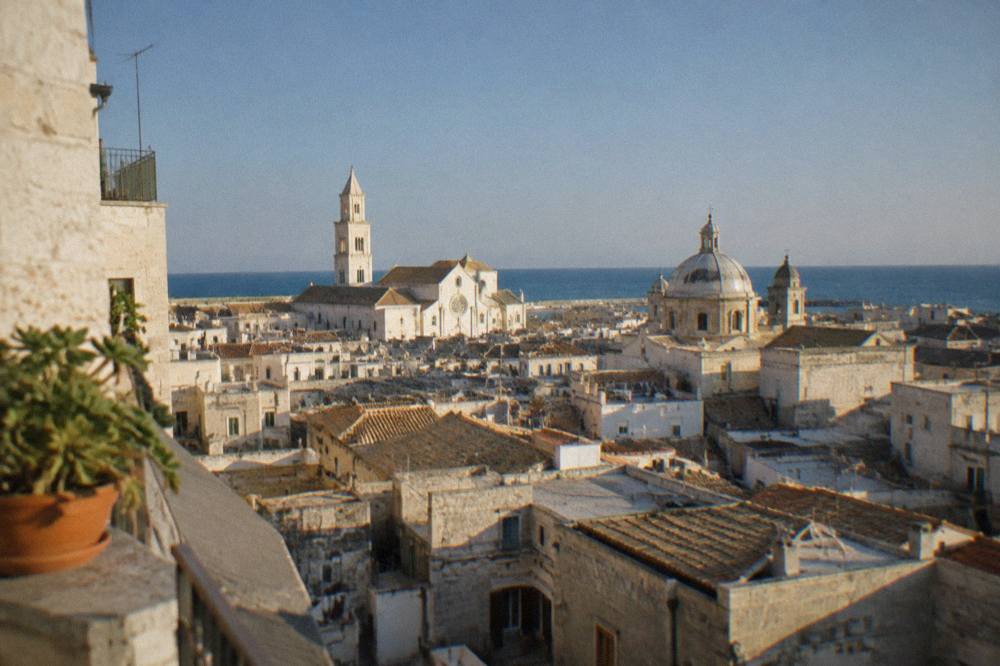
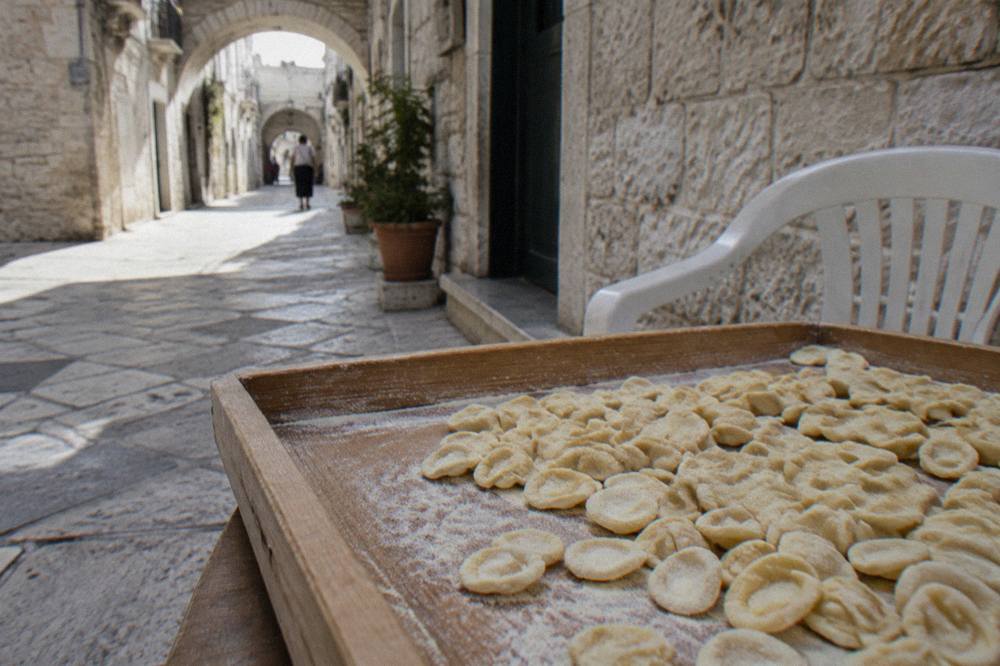
From the square, three short walks cover the quarter. South and downhill lie the Piazza Mercantile and the Piazza del Ferrarese, the old commercial squares, with the Swabian castle just beyond them at the south gate of the old town. West is the Basilica di San Nicola and, beyond it, the old port at Molo San Nicola with its fish market. East and north the streets drop towards the seafront promenade and the Teatro Margherita by the water, and along the way runs Strada Arco Basso, the street associated with the pasta makers who shape orecchiette, the pasta shape of Puglia; the Strada delle Orecchiette page covers what is known about it.
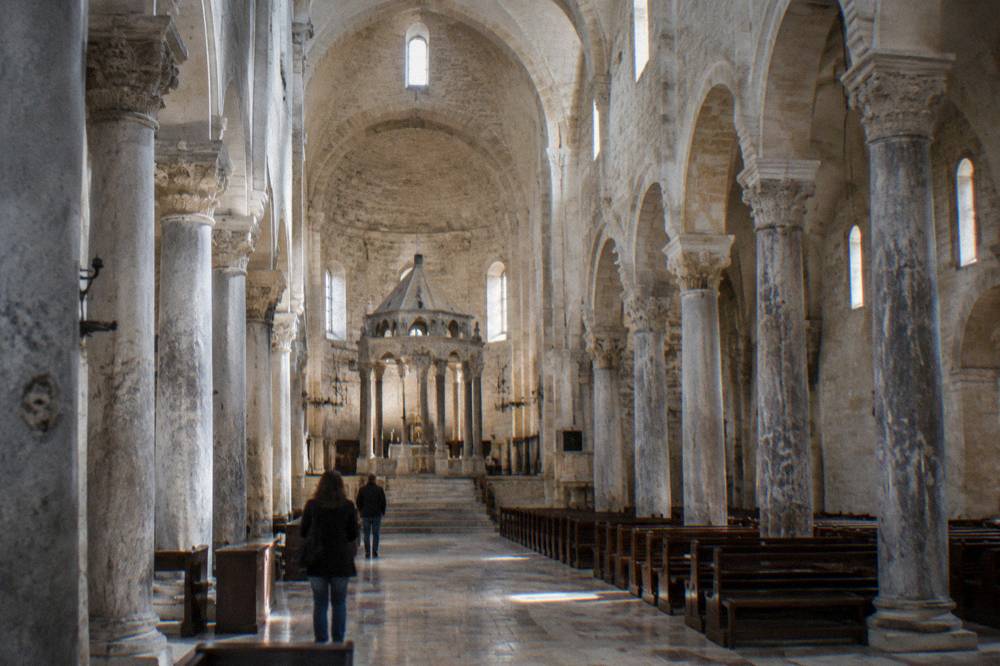
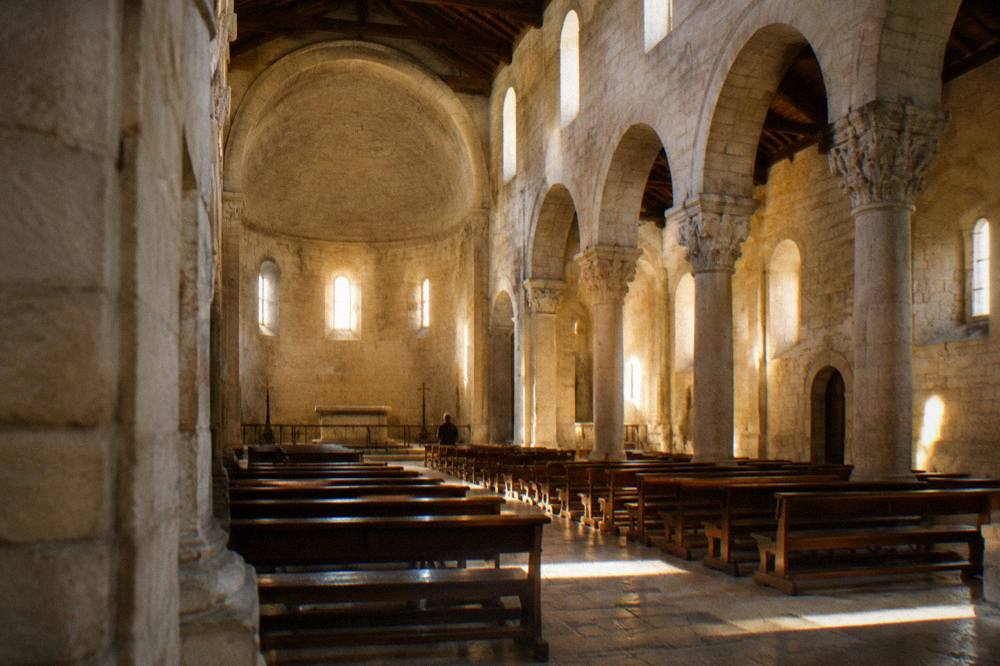
One practical note for the crypt, known as the Succorpo: check the current details on the official page before you go, and treat anything older you read elsewhere with caution. The same applies to any claim about a founding year or a named architect for the building. The sights with published, checkable figures are the ones around the cathedral, and the next two sections set those out in full.
How Does The Bari Cathedral Compare With The Basilica Di San Nicola?
The Basilica di San Nicola, a few lanes west of the cathedral in Bari Vecchia, holds the relics of Saint Nicholas, brought to Bari by sailors in 1087 and placed in the crypt in 1089. The Cattedrale di San Sabino, by contrast, is the seat of the archdiocese.
The two buildings are usually visited together and the comparison is a fair one for planning. The basilica's published timetable makes it the anchor of any morning in the old town: it opens at 06:30, seven days a week, and stays open until 20:30 on weekdays and 22:00 on Sundays, per its own information page. The Basilica di San Nicola page on this site sets out the full detail, including the crypt of San Nicola, where the relics rest, and the Museo Nicolaiano, reported at about 10:30 to 18:00 with one bulletin listing a Wednesday closure; confirm that locally before you go.
| Sight in Bari Vecchia | Published hours | Admission |
|---|---|---|
| Basilica di San Nicola | Mon to Sat 06:30 to 20:30, Sun 06:30 to 22:00 | No fee mentioned on its page |
| Museo Nicolaiano | Reported about 10:30 to 18:00, one bulletin lists a Wednesday closure | Confirm locally |
| Cattedrale di San Sabino | Check the official diocesan page before you go | Check the official diocesan page before you go |
| Castello Normanno-Svevo | Tue to Sun 09:00 to 19:00, Oct to Mar Sundays 09:00 to 13:30 except first Sunday | 10 EUR full, 2 EUR reduced |
| Pinacoteca Metropolitana Corrado Giaquinto | Tue to Sat 09:00 to 19:00, Sun 09:00 to 13:00, closed Monday | 5 EUR full, 2 EUR reduced, 8 EUR combined |
| Museo Archeologico di Santa Scolastica | Tue to Sat 09:00 to 19:00, Sun and holidays from 09:00 | 5 EUR full, 2 EUR reduced ages 18 to 25, combined ticket with the Pinacoteca |
The castle deserves its own word, because it is the one sight in the quarter where an out-of-date figure circulates widely. The Musei Puglia ticket page lists the Swabian castle at 10 EUR full and 2 EUR reduced, open Tuesday to Sunday 09:00 to 19:00, with the shorter Sunday opening from October to March except on the first Sunday of the month, when the full hours apply. The same page lists the Puglia Musei Card at 20 EUR, covering all the regional Musei Puglia sites for six months, which suits anyone planning the castle plus Castel del Monte in one trip. The Castello Normanno-Svevo page has the detail.
For the relics themselves, the basilica's own history page gives the timeline in plain terms: the relics of Saint Nicholas rested at Myra for about 750 years, from 337 to 1087, were brought to Bari by sailors in 1087, and were placed in the crypt in 1089. That story, and the feast that replays it every early May, is the reason the basilica rather than the cathedral draws the pilgrimage traffic, and it is the single most useful fact for a visitor deciding how to split time between the two buildings.
What Hours And Tickets Should You Confirm Before Visiting The Bari Cathedral?
The pattern that holds across the sights of Bari Vecchia is free entry to the working churches, including the basilica with its 06:30 opening, and paid entry to the state and municipal monuments, from the 10 EUR castle ticket to the 5 EUR Pinacoteca and the 7 EUR guided tours of the Teatro Petruzzelli.
That pattern gives a planning frame even where an individual figure is missing. The cathedral, as a working cathedral of the same archdiocese, is likelier to follow the basilica's timetable than the museum pattern of 09:00 openings and Monday closures. But likelier is not a figure, and the one-line rule stands: check the current details on the official page before you go.
The museums around the old town do publish their figures, and they reward a little arithmetic. The Pinacoteca Metropolitana Corrado Giaquinto and the Museo Archeologico di Santa Scolastica sell an 8 EUR combined ticket against 5 EUR each individually, the Santa Scolastica museum is free on the first Sunday of the month, and the castle has been listed among the state sites free on the first Sunday in press reports for October 2026, so a first-Sunday visit saves the price of two tickets if the pattern holds. The Pinacoteca Metropolitana page carries the full hours, including the closure on 1 January and 8 May.
| Ticketed sight in central Bari | Full price | Reduced | Hours summary |
|---|---|---|---|
| Castello Normanno-Svevo | 10 EUR | 2 EUR | Tue to Sun 09:00 to 19:00, seasonal Sunday variation |
| Puglia Musei Card | 20 EUR | All Musei Puglia sites, 6 months | |
| Pinacoteca Metropolitana Corrado Giaquinto | 5 EUR | 2 EUR | Tue to Sat 09:00 to 19:00, Sun 09:00 to 13:00 |
| Museo Archeologico di Santa Scolastica | 5 EUR | 2 EUR ages 18 to 25 | Tue to Sat 09:00 to 19:00, Sun from 09:00 |
| Combined Pinacoteca and Santa Scolastica | 8 EUR | 2 sites | |
| Teatro Petruzzelli guided tours | 7 EUR | 2 EUR students and children | Dated slots published monthly |
Two more figures complete the practical picture for anyone arriving from outside the city. The Ferrotramviaria airport train runs from inside Karol Wojtyla airport to Bari Centrale in 17 minutes and costs 5.30 EUR for a single under the 2026 tariff, with a contactless card tap accepted at the gate, and the airport taxi to a city-centre hotel is a predetermined 25 EUR. From Bari Centrale the old town is a flat walk west, and the getting around Bari basics are covered on their own page.
Which Tours Of Bari Vecchia Pass The Bari Cathedral?
The standard guided walks of Bari Vecchia, including the history walk featured on this page and the street food walks of the old town, all cover the cathedral quarter together with the Basilica di San Nicola, the Piazza Mercantile and the Swabian castle, because those sights sit on the same loop of lanes; the listings describe the old town's main monuments as the core of the itinerary, so a visitor who wants the cathedral explained in context picks any old town walking tour rather than a specific cathedral product.
The featured pick is the History Walk, a guided walking tour of Bari's old town. Its listing describes a route through Bari Vecchia's principal monuments with a guide, which is the shape of tour that gives the cathedral and the basilica their context, and it can be checked and booked through the operator's live listing. For readers comparing options, the Bari walking tours page sets out the full field, and the Bari food tours and cooking classes page covers the tasting-led variants.
The food-led alternative is the trio's street food walk, a tasting route through the old town in the company of a local guide. Its listing names the classic street foods of Bari, and the lanes it works through are the same lanes that run past the cathedral square, so the choice between a history walk and a food walk is a choice of emphasis, not of territory. Orecchiette is the pasta shape of Puglia, panzerotti and focaccia barese are the street staples, and raw seafood such as ricci is served at the old port: the Bari street food and Bari seafood and raw fish pages cover each in plain terms.
The third shape is the day trip, and it is the one worth flagging for visitors staying several days. The Valle d'Itria tour runs from Bari to Polignano a Mare, Ostuni and Locorotondo in a single day, which pairs naturally with a self-guided morning in Bari Vecchia around the cathedral and basilica.
When Is The Best Time To Visit The Bari Cathedral And Bari Vecchia?
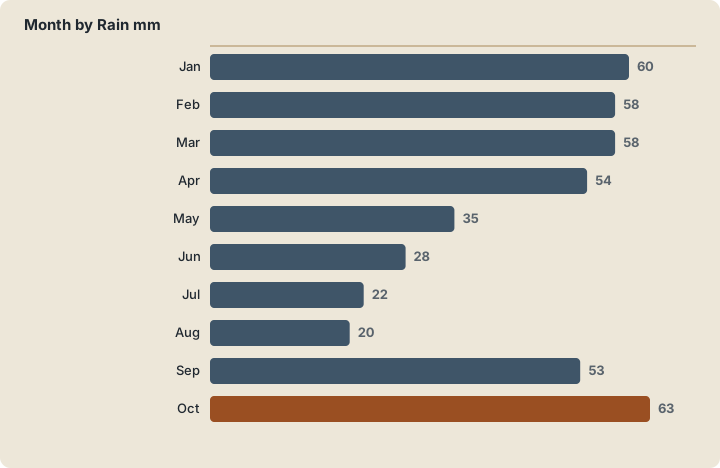
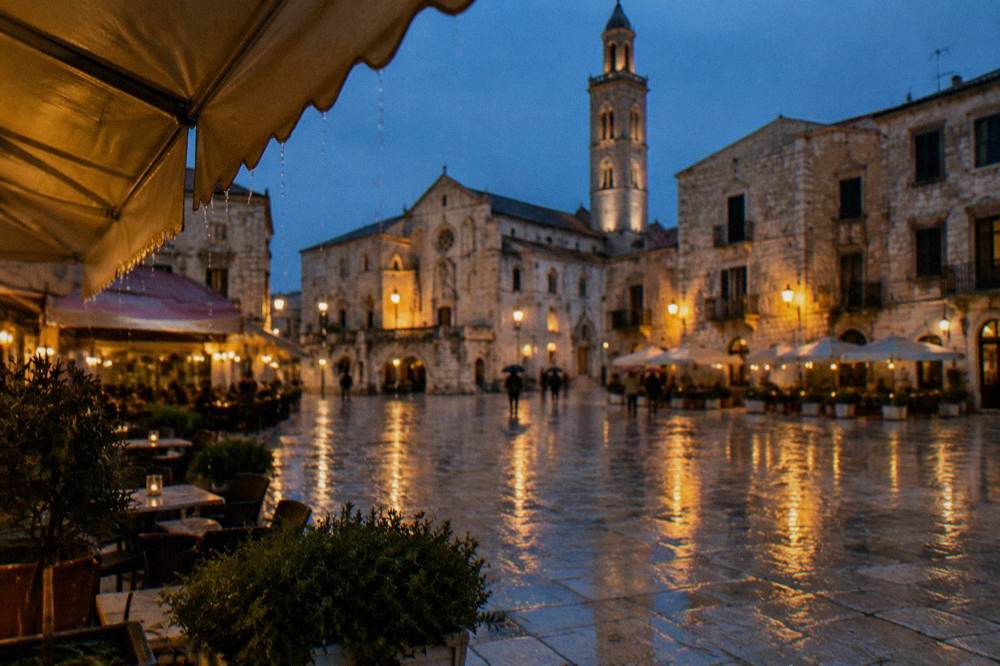
The climate table shows Bari with July and August mean daily maxima of 28.6 C and 29.1 C and January and February highs of about 12 C, with about 587 mm of rain a year concentrated from October onwards (November 73 mm, August 20 mm), typical values from modelled ERA5 data, 1991 to 2020, so the shoulder months of April, May, September and October combine mild daytime highs with far fewer rain days than winter, and early May adds the Festa di San Nicola.
Bari Vecchia is a district of stone lanes that hold heat. August has the highest mean daily high at 29.1 C but also the lowest monthly rainfall at 20 mm and about 4 rain days, so it trades heat for reliability; November carries 73 mm of rain across about 9 rain days, which is the month where an indoor plan matters. The Bari weather and best time to visit Bari pages unpack the full table.
| Month | Mean daily high C | Mean daily low C | Rain mm | Rain days |
|---|---|---|---|---|
| Jan | 12.1 | 7.3 | 60.0 | 9.5 |
| Feb | 12.5 | 7.2 | 58.0 | 9.4 |
| Mar | 14.7 | 8.8 | 58.0 | 9.4 |
| Apr | 17.5 | 11.2 | 54.0 | 9.0 |
| May | 21.6 | 15.3 | 35.0 | 6.9 |
| Jun | 25.9 | 19.5 | 28.0 | 4.8 |
| Jul | 28.6 | 22.0 | 22.0 | 4.1 |
| Aug | 29.1 | 22.4 | 20.0 | 4.3 |
| Sep | 25.1 | 19.1 | 53.0 | 7.6 |
| Oct | 21.1 | 15.6 | 63.0 | 7.9 |
| Nov | 16.9 | 12.0 | 73.0 | 8.9 |
| Dec | 13.2 | 8.7 | 63.0 | 9.6 |
The sea completes the picture for anyone combining the old town with the beaches. The modelled sea temperature range is about 27 C in July and August, about 22 C in October and about 14 C in February, from modelled 2023 to 2025 means. Bari itself has no Blue Flag beach in 2026; the Blue Flags in the Province of Bari are at Polignano a Mare and Monopoli, and ARPA Puglia reports Puglia first in Italy for the sixth year with 99.9 percent of bathing waters rated excellent and 78 bathing waters monitored in the province of Bari.
Early May deserves the last word on timing. The Festa di San Nicola runs 7 to 9 May by tradition, with the 2026 edition's historical procession setting off from piazza Federico II di Svevia at 20:00 on Thursday 7 May; the sea procession on 8 May and the manna on 9 May are reported elements of the programme. The old town fills for those days, and the Bari San Nicola festival page covers what the feast involves.
What Else Is Within Walking Distance Of The Bari Cathedral?
Everything of central Bari is within walking distance of the cathedral, because the Cattedrale di San Sabino sits at the centre of a compact headland: the Piazza Mercantile, the Swabian castle, the Basilica di San Nicola, the old port, the Lungomare Nazario Sauro, the Teatro Petruzzelli and the Murat shopping streets are all on foot, the Stazione Marittima ferry terminal is about 0.5 km from Piazza Mercantile, and even the city beaches sit only 2.1 to 4.3 km away along the seafront.
The near set needs no transport at all. South of the cathedral square the lanes drop to the Piazza Mercantile and the Piazza del Ferrarese, the civic squares of the old town, with the Fortino di Sant'Antonio on the seafront beyond them. West lie the basilica and the old port. East of the walls the Murat district begins, with its shopping streets and the Teatro Petruzzelli, whose guided tours cost 7 EUR full and 2 EUR reduced with dated slots published monthly; press reports record the theatre's fire on the night of 26 to 27 October 1991 and its reopening on 4 October 2009. The Murat district shopping streets page covers the retail side.
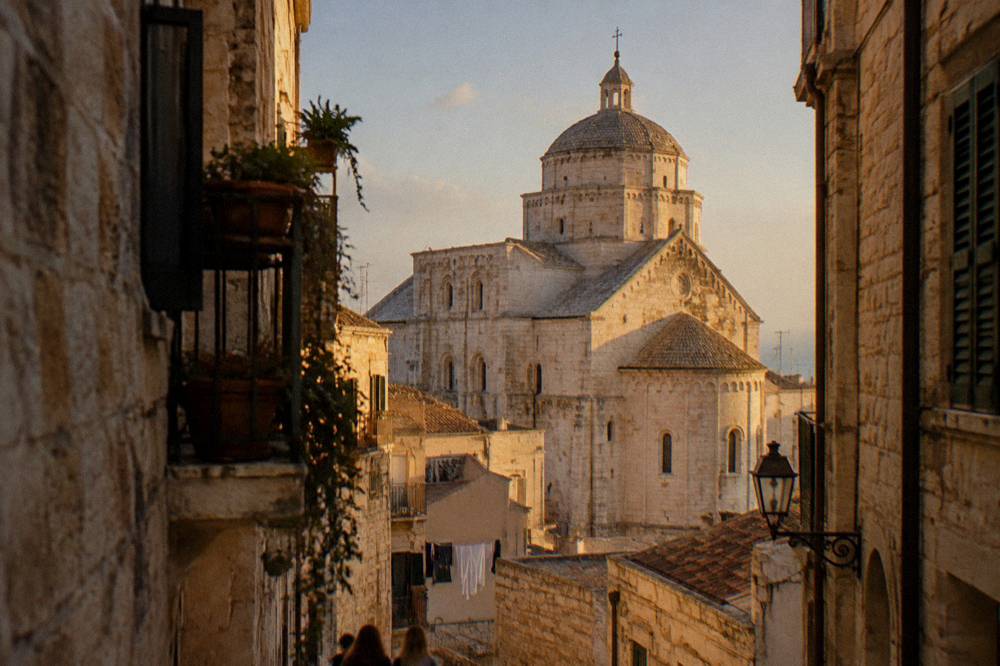
The seafront set is the afternoon half of the day. The Lungomare Nazario Sauro runs along the headland past the Teatro Margherita and the Fortino, and continues south past Madonnella towards the city beaches: Pane e Pomodoro about 2.1 km from Piazza Mercantile, Torre Quetta about 3.9 km, and San Girolamo about 4.3 km to the north-west. Facilities and charges at those beaches vary by season and should be confirmed locally. The Torre Quetta page carries what is known.
| Place from Piazza Mercantile | Road distance | Free-flow drive time |
|---|---|---|
| Pane e Pomodoro beach | 2.1 km | on foot or short ride |
| Torre Quetta beach | 3.9 km | about 10 minutes |
| San Girolamo beach | 4.3 km | about 12 minutes |
| Trani | 47.2 km | about 45 minutes |
| Castel del Monte | 62.0 km | about 59 minutes |
| Matera, Sassi | 70.8 km | about 69 minutes |
| Lecce | 151.1 km | about 115 minutes |
How Does The Bari Cathedral Fit Into A Day Trip From Bari?
The Cattedrale di San Sabino is the fixed centre of any day in Bari itself, and the day trips that pair with it split cleanly by direction: Polignano a Mare at 33 km and Monopoli at 41 km on the Trenitalia Bari-Lecce line, the Trulli Link service to Locorotondo, Alberobello and Martina Franca in the Valle d'Itria, the FAL line towards Matera in Basilicata, and the ticketed sights of Castel del Monte and the Grotte di Castellana, all reachable from the city by train or bus.
The rail facts are these, and only these. The Trulli Link service links Trenitalia and FSE trains to Locorotondo, Alberobello and Martina Franca, with the FSE leg reported at 5.90 EUR on top of the rail fare. FAL runs the Bari-Modugno-Altamura-Gravina-Matera line towards the Sassi, and Matera is in Basilicata, so that trip crosses the regional border.
Admissions for the bigger day-trip sights are published and worth planning around. Castel del Monte, an octagonal castle inscribed by UNESCO in 1996, costs 10 EUR full and 2 EUR reduced, open daily 10:00 to 18:45 from 1 April to 30 September and 09:00 to 17:45 from 1 October to 31 March, with last entry 45 minutes before closing. The Grotte di Castellana full route, 3 km and about 100 minutes, costs 25 EUR for ages 15 and over, and the partial route, 1 km and about 50 minutes, costs 22 EUR. The Castel del Monte, Trani, Castellana Grotte and Altamura pages carry the rest.
| Day-trip sight | Full price | Reduced | Hours summary |
|---|---|---|---|
| Castel del Monte | 10 EUR | 2 EUR | Daily 10:00 to 18:45 Apr to Sep, 09:00 to 17:45 Oct to Mar |
| Grotte di Castellana, full route | 25 EUR ages 15 and over | 22 EUR ages 6 to 14 | 3 km, about 100 minutes |
| Grotte di Castellana, partial route | 22 EUR | 19 EUR | 1 km, about 50 minutes |
| Egnazia museum and park | 10 EUR | 2 EUR | Mon to Sat and first Sunday 08:30 to 19:30 |
| Swabian castle of Trani | 8 EUR | 2 EUR | Mon to Sat 08:30 to 19:30, Sun 08:30 to 13:30 |
| Altamura National Archaeological Museum | 5 EUR | 2 EUR | Mon to Fri 08:30 to 19:00, Sat and Sun 08:30 to 13:30 |
The practical shape of a combined day is simple: the cathedral quarter in the morning, when the lanes are quiet, then a train out after lunch. Polignano and Monopoli both work as half-day trips on the same rail line, Alberobello and the Valle d'Itria towns fill a full day, and Castel del Monte or the caves pair well with Trani or Altamura by car or tour. The trio of tours placed earlier in this guide covers the Valle d'Itria version of that day.
What Practical Rules Apply Around The Bari Cathedral Quarter?
The tourist tax runs 1.50 to 4.00 EUR per person per night by category, for a maximum of 4 consecutive nights, and the emergency number throughout Italy is 112. A ZTL with plate-reading cameras covers the old town, perimeter parking is paid on working days 08:30 to 20:30, so anyone driving should park outside and walk in. City buses cost 1.00 EUR single.
The ZTL is the rule that bites visitors. Plate-reading cameras monitor the gate, parking on the perimeter is paid on working days 08:30 to 20:30, and the rules are set by the comune, so anyone with a rental car should park outside the old town and walk in; the Bari parking and driving page covers the detail. For arrivals, the airport options are the 17-minute, 5.30 EUR Ferrotramviaria train, the 5 EUR Tempesta coach taking about 30 minutes as reported, AMTAB line 16 between the station and the airport, or the 25 EUR predetermined taxi to a city-centre hotel. City buses cost 1.00 EUR single, 1.20 EUR for 90 minutes or 2.50 EUR for a day ticket.
The tax detail is worth knowing at booking time. The comune's schedule runs 4.00 EUR for 5-star and luxury hotels, 3.00 EUR for 4-star hotels, 2.00 EUR for 3-star hotels, 1.50 EUR for 1-star and 2-star hotels, and 2.00 EUR for B&Bs, affittacamere, short lets, holiday homes, hostels and agriturismi, collected by the accommodation. Each neighbouring comune sets its own rates, so a stay in Polignano or Matera follows those towns' rules and the host will say what applies. The Bari hotels and where to stay in Bari pages carry the accommodation picture.
Common Questions About The Bari Cathedral
What are the opening hours of the Cattedrale di San Sabino in Bari?
The working churches of Bari Vecchia generally follow the basilica's model, which publishes Monday to Saturday 06:30 to 20:30 and Sunday 06:30 to 22:00.
Is there an entrance fee for the Bari cathedral?
The Basilica di San Nicola nearby mentions no admission fee on its page, while the state and municipal monuments around it charge, from the castle's 10 EUR ticket to the Pinacoteca's 5 EUR.
How far is the Bari cathedral from the Basilica di San Nicola?
The two churches stand a few lanes apart in the same quarter of Bari Vecchia, a walk of a few minutes along the old town's lanes. Both sit inside the compact loop that runs from the Castello Normanno-Svevo past the Piazza Mercantile to the Lungomare Nazario Sauro.
Can you visit the crypt of the Bari cathedral?
The crypt that draws visitors in Bari Vecchia is the one under the Basilica di San Nicola, where the relics of Saint Nicholas were placed in 1089.
What is the difference between the Bari cathedral and the Basilica di San Nicola?
The Cattedrale di San Sabino is the seat of the archdiocese of Bari; the Basilica di San Nicola is the pilgrimage church built to house the relics of Saint Nicholas, brought from Myra by sailors in 1087 and placed in the crypt in 1089. The basilica publishes its hours.
Is the Bari cathedral area walkable?
Yes. The cathedral stands at the centre of Bari Vecchia, and the basilica, the Piazza Mercantile, the Swabian castle, the old port, the Lungomare Nazario Sauro and the Murat shopping streets are all reached on foot through the old town's lanes.
The Cattedrale di San Sabino rewards the visitor who treats it as the hinge of Bari Vecchia rather than a standalone stop: surrounded by sights set out above, and sitting at the midpoint of the walk every guide to Bari begins with.
