Raw Seafood In Bari: Ricci, Frutti Di Mare And Where Locals Go
Bari, the coastal capital of Puglia on the Adriatic Sea, is one of the Italian cities where raw seafood is a normal part of eating: ricci, frutti di mare and crudo at the counter by the old port. This guide explains what each dish is, where the tradition sits in the city, and how to approach it as a visitor.
Short answer
Raw seafood in Bari means ricci (sea urchin), frutti di mare (mixed raw shellfish) and crudo (raw fish and shellfish served plain with lemon and oil). The habit belongs to the city's position on the Adriatic and to the fish trade around the old port, Molo San Nicola, beside Bari Vecchia.
Bari, the capital of Puglia on the Adriatic coast of southern Italy, eats raw seafood the way coastal cities with a working fish trade always have: plainly, at the counter, with lemon and olive oil and very little else. The habit is tied to the old port, Molo San Nicola, where the day's catch comes ashore beside the old town of Bari Vecchia, and to the wider Adriatic kitchen of the region. This guide, from the Bari Italy Travel Guide editorial desk, sets out what ricci and frutti di mare actually are, where the raw seafood habit sits in the city, what a first-time visitor should check before ordering, and how the calendar of the sea shapes what is on the plate.
What Is Raw Seafood In Bari And Why Does The City Eat It?
Raw seafood in Bari means a small family of dishes served uncooked: ricci (sea urchin), frutti di mare (mixed raw shellfish such as mussels, clams and other molluscs) and crudo (raw fish and shellfish prepared at the counter). The habit comes from the city's position on the Adriatic Sea and from the fish trade around the old port, Molo San Nicola, beside the old town of Bari Vecchia.
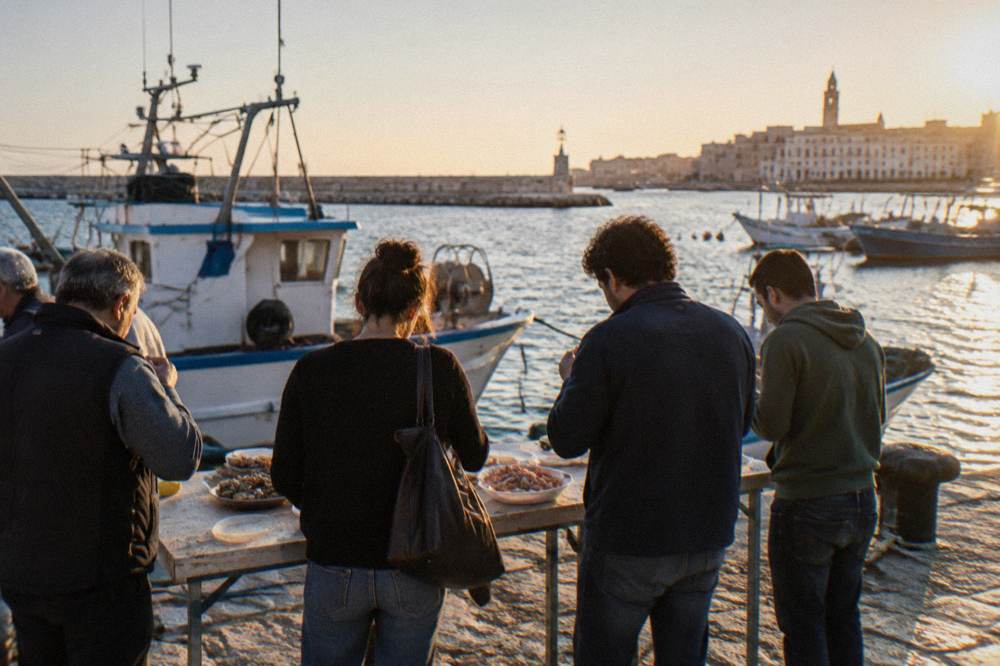
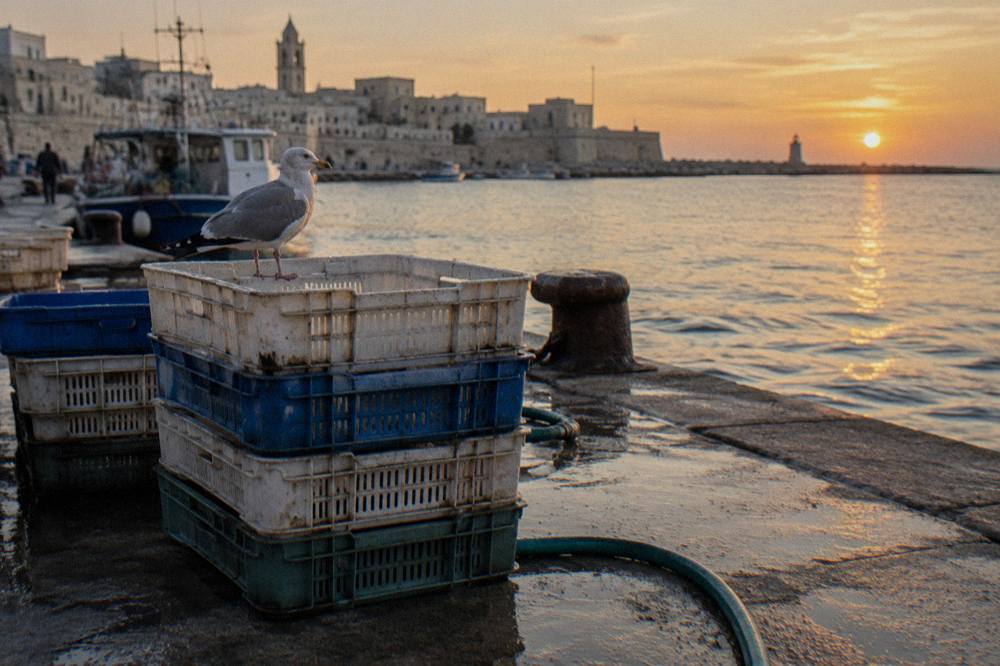
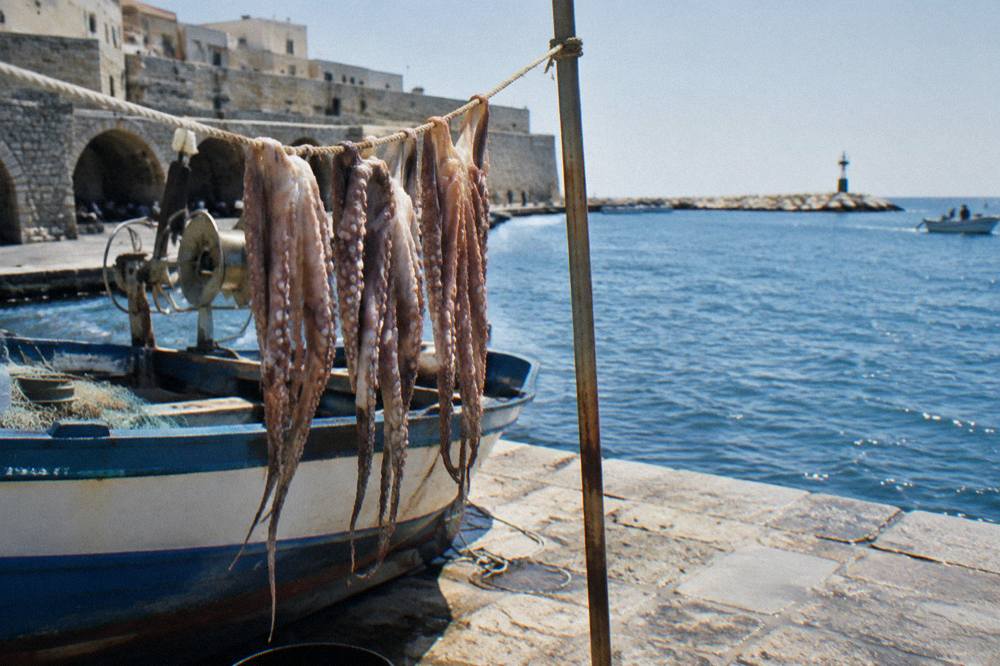
Bari is a coastal city with a working harbour, and the fish trade around Molo San Nicola has shaped how the city eats. The old port sits a short walk from Piazza Mercantile and Piazza del Ferrarese, and the streets behind it hold the kitchens, counters and stalls that turn the morning catch into lunch. None of that is staged for tourism: the boats, the market trade and the raw-bar habit run alongside each other, and a visitor standing at a counter is standing in an ordinary line of city life.
The raw side of the kitchen coexists with the cooked one. Orecchiette is the pasta shape of Puglia, panzerotti are fried filled pockets, focaccia barese is the city's flat bread, and sgagliozze are fried polenta squares. The street food of Bari covers all of those. Raw seafood is the branch of that same eating culture that never sees a flame, and it is the branch this page is about.
There is a practical logic behind the plainness. Raw dishes cannot hide behind sauce or long cooking, so they live or die by the freshness of the seafood and the speed of the journey from boat to counter. A city with the fish market inside the old town, a few hundred metres from the tables, is exactly the city where that style holds on. It also explains why the raw repertoire stays small: three or four words cover it, and the counter changes with the catch rather than with a menu rewrite.
Ricci, Frutti Di Mare And The Bari Crudo Vocabulary
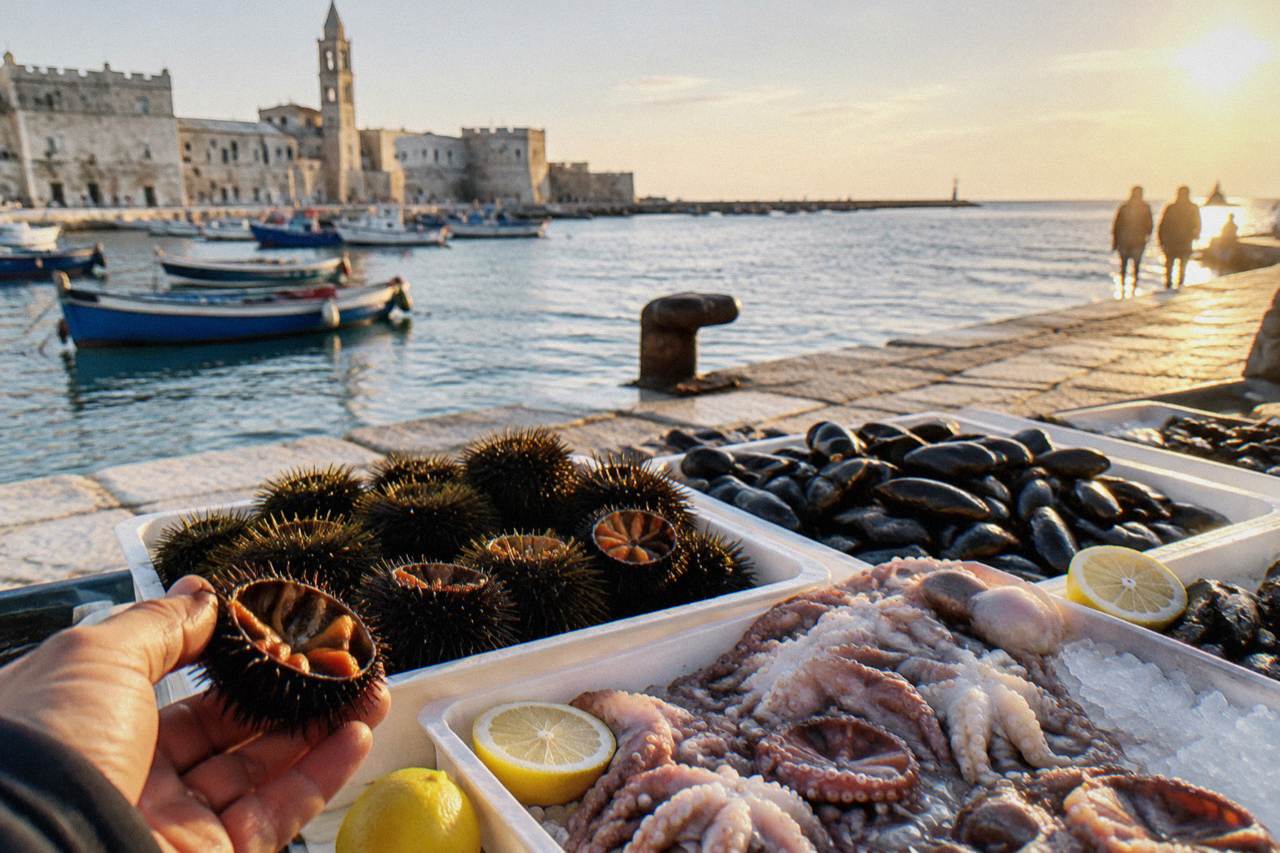
Ricci are sea urchins, opened and eaten raw from the shell; frutti di mare is the mixed plate of raw shellfish; crudo is the general word for raw fish and shellfish sliced or shucked to order. Each is served plain in Bari, with lemon, olive oil and bread, because the point of the dish is the state of the seafood itself, not what is done to it.
The vocabulary matters when you order, because the three words point at different things on the counter. Ricci is the plural of riccio, the sea urchin, and the edible part is the orange roe inside the shell. Frutti di mare, literally fruits of the sea, is the mixed raw shellfish plate. Crudo covers everything raw, from fish to shellfish, and is the safest word to use when you want the counter to choose for you. The table below gives the working glossary.
| Term | What It Is | How It Is Served In Bari |
|---|---|---|
| Ricci | Sea urchins, opened from the shell | Raw, plain, eaten from the shell |
| Frutti di mare | A mixed plate of raw shellfish such as mussels and clams | Raw, on ice, with lemon and oil |
| Crudo | Raw fish and shellfish generally | Sliced or shucked to order at the counter |
| Orecchiette | The pasta shape of Puglia, often served with seafood | Cooked, the pasta course beside the raw one |
| Sgagliozze | Fried polenta squares | Cooked street food, one of the city's standard snacks |
One plain sentence per dish is all any honest guide can give, because the rest belongs to the kitchen and the counter. What a visitor can do is learn the three words, watch what is coming off the ice, and let the person behind the counter say what arrived that morning. Ordering by pointing, in a mix of Italian and gesture, is completely normal at a Bari counter, and the phrase "cosa c'e di fresco oggi", what is fresh today, does most of the work by itself.
A guided walk shortens that learning curve: the Original Street Food Tour with Focaccia & Gelato moves through Bari Vecchia with a guide who can translate the counter in real time, and you can Check availability on the operator's live listing.
Where To Eat Raw Seafood In Bari Vecchia?
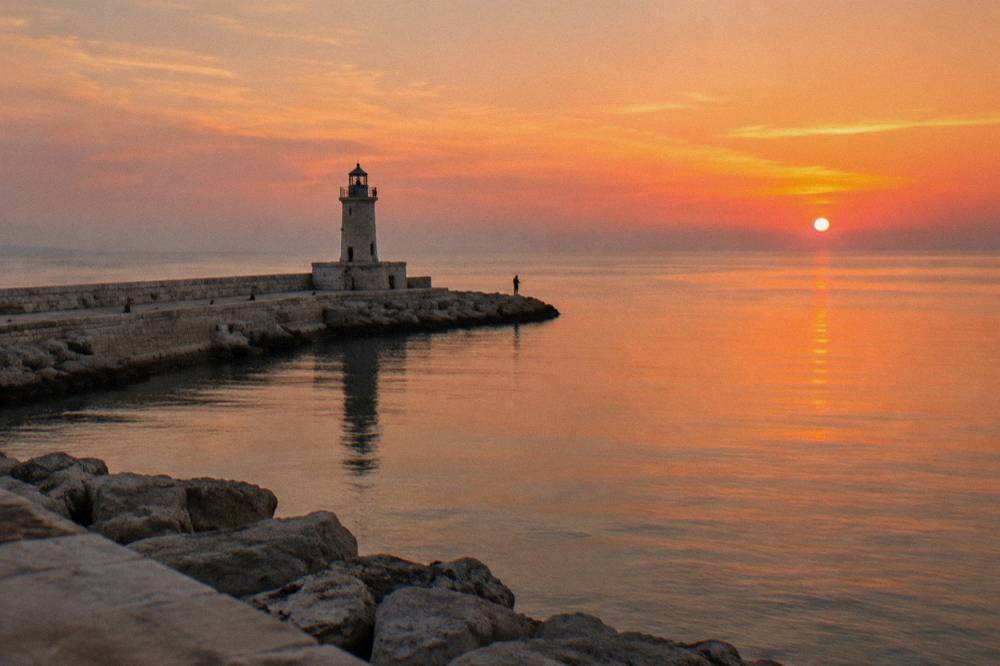
The raw seafood trade in Bari clusters around the old port, Molo San Nicola, and the streets of Bari Vecchia between the water, Piazza Mercantile and the Basilica di San Nicola. The fish market at the old port is the centre of gravity, and the counters and kitchens of the old town are within a ten-minute walk of it, so the seafood travels the shortest distance from boat to plate.
Bari Vecchia is the old town on the headland, and its street plan puts the fish trade and the eating counters in the same few blocks. The Molo San Nicola is the old port quay; the fish market there is the traditional place where the catch is sold. Describe it in general terms and check it on the day: no official page carries its days, hours or prices, so confirm locally what is running when you go. Around it, the lanes climbing toward the Basilica di San Nicola and the Cattedrale di San Sabino hold small kitchens and counters, and that is where the raw plates are served.
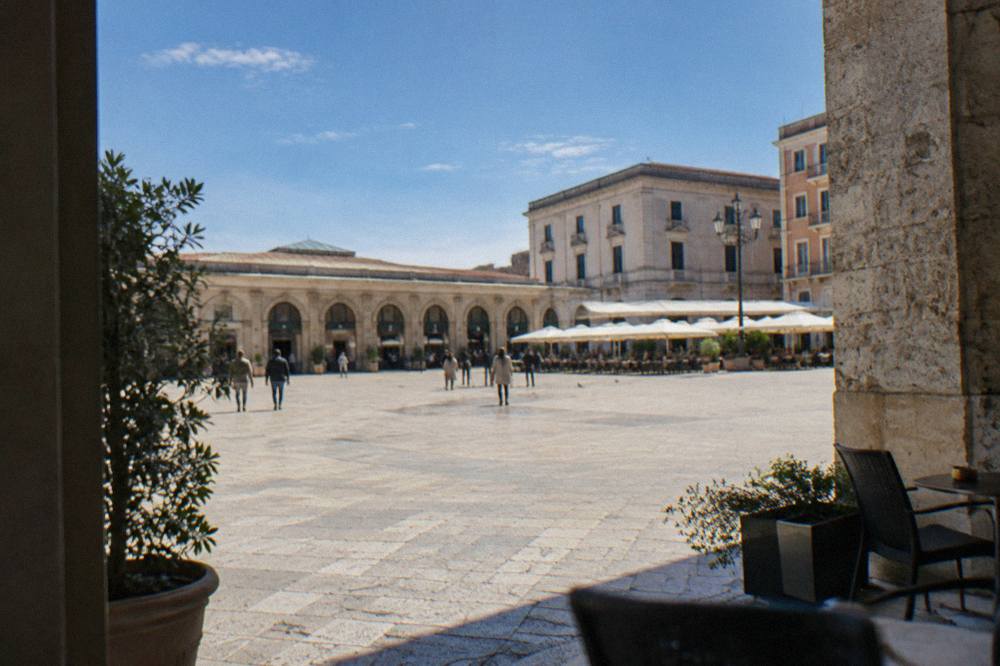
The old town rewards being walked slowly. The basilica, whose crypt has held the relics of Saint Nicholas since 1089, the Swabian castle at the inland gate and the two squares, Piazza Mercantile and Piazza del Ferrarese, form a compact loop, and the seafood counters sit on the seaward side of it. Walking that loop first, then choosing a counter, gives you a feel for how close the fish trade sits to everything else in the district.
The wider city gives you more options once you leave the old town. The Murat district, the grid of streets inland around Via Sparano, holds the city's larger restaurants, covered in the guide to restaurants in Bari. For the raw counter specifically, the old town remains the natural place to start.
Is Raw Seafood In Bari Safe To Eat?
Raw seafood in Bari is safe to approach the way you would approach it anywhere on the Adriatic: order at a counter with a fast turnover, look at the ice and the shucking, and check that posted prices are visible before you sit down. The water quality picture is good, since ARPA Puglia reports the region first in Italy for bathing water with 99.9 percent excellent, and 78 bathing waters are monitored in the province of Bari.
What you can control is where and how you order. Raw shellfish should be alive until they are opened or cooked; a counter that shucks to order is showing you that. Ice should be heaped around the seafood, not puddled under it. Posted prices, in Italy, are a legal requirement, and an itemised bill at the end is normal: check both, and read the bill before paying. None of this is a warning about Bari specifically; it is the standard practice for eating raw seafood in any coastal city.
Anyone with a compromised immune system, a liver condition or a pregnancy should talk to a doctor before eating raw shellfish anywhere, Bari included. That is general medical advice rather than a local hazard, and it applies equally to oysters in France or clams in Puglia. For everyone else, the turnover rule does the work: a busy counter sells its stock the same day it opens it.
The general safety habits of a crowded old town apply at the counter too. Keep valuables out of back pockets and zip bags in front of you on crowded buses and in packed lanes, and call 112 in a genuine emergency, the EU standard number. Bari Vecchia is a limited traffic zone with a camera gate at the Castello since 1 July 2026, so if you arrive by rental car, park outside the old town and walk in rather than driving through the gate.
What Does The Adriatic Serve Around Bari Through The Year?
The sea around Bari is warmest in July and August at about 27 C, about 22 C in October and about 14 C in February, on modelled 2023 to 2025 means, and the land climate follows the same arc with a July mean daily maximum of 28.6 C and 29.1 C in August, typical values from modelled ERA5 data, 1991 to 2020. Rain is scarce in midsummer, about 4 rain days in July and August, and heavier in late autumn.
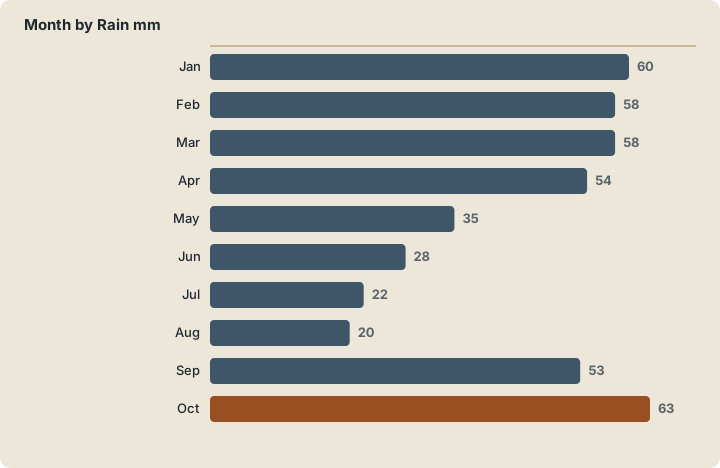
Season shapes the raw counter, because what comes off a boat depends on the water. Summer brings the warmest sea and the fullest tourist calendar, including the Festa di San Nicola in early May (7 to 9 May) that opens the season. Autumn cools the water and changes the catch. The table below gives the monthly picture; use it to plan when a raw seafood visit fits your trip, and pair it with the fuller guides to Bari weather and the best time to visit Bari.
| Month | Mean Daily High C | Mean Daily Low C | Rain mm | Rain Days |
|---|---|---|---|---|
| Jan | 12.1 | 7.3 | 60.0 | 9.5 |
| Feb | 12.5 | 7.2 | 58.0 | 9.4 |
| Mar | 14.7 | 8.8 | 58.0 | 9.4 |
| Apr | 17.5 | 11.2 | 54.0 | 9.0 |
| May | 21.6 | 15.3 | 35.0 | 6.9 |
| Jun | 25.9 | 19.5 | 28.0 | 4.8 |
| Jul | 28.6 | 22.0 | 22.0 | 4.1 |
| Aug | 29.1 | 22.4 | 20.0 | 4.3 |
| Sep | 25.1 | 19.1 | 53.0 | 7.6 |
| Oct | 21.1 | 15.6 | 63.0 | 7.9 |
| Nov | 16.9 | 12.0 | 73.0 | 8.9 |
| Dec | 13.2 | 8.7 | 63.0 | 9.6 |
November carries 73 mm of rain and August 20 mm, and the year totals about 587 mm. Those are typical values from modelled ERA5 data, 1991 to 2020, and they describe the land station point at the city centre, not any named weather station.
For a food-centred visit, shoulder months have a practical edge. May and June, and again September and October, sit between 21 and 26 C in the daytime mean high, carry between 4.8 and 7.9 rain days, and avoid the August peak both in the water and in the streets. The sea is still about 22 C in October, which keeps the coastal day trips pleasant even as the raw counter moves into its autumn catch.
Which Raw Seafood Day Trips Work From Bari?
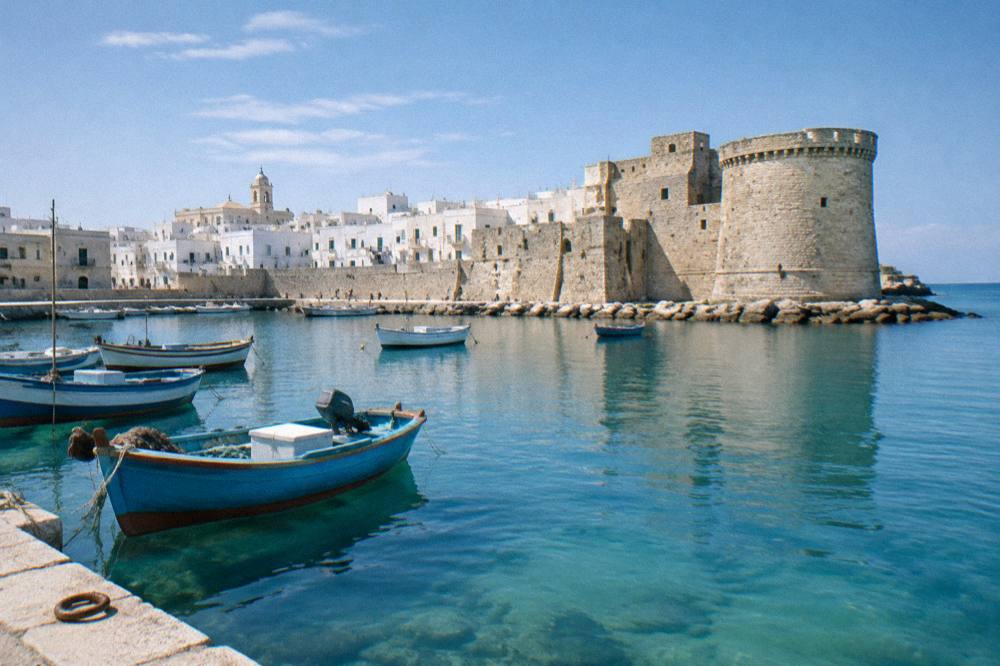
The strongest raw seafood day trips from Bari are Polignano a Mare and Monopoli, both on the Adriatic south of the city, 37.4 km and 47.3 km by road from Piazza Mercantile, about 36 and 43 minutes in free-flow traffic. Both hold 2026 Blue Flags, which Bari itself does not, and both sit on the Trenitalia Bari-Lecce regional line at 33 km and 41 km by rail respectively.
The two towns give you the same raw kitchen in a smaller setting, with harbours that still land fish. Polignano a Mare, perched above its coves, is the classic short trip; whether it rewards the journey has its own answer on the page is it worth going to Polignano a Mare, and the full guide sits at Polignano a Mare. Monopoli, flatter and harbour-centred, is the quieter of the two. Boats along the Polignano coast leave from Polignano, not from the Bari waterfront, so plan the cave trip as part of the same day out, not as a departure from Bari.
| Destination | Km By Road From Piazza Mercantile | Minutes, Free Flow | Rail Distance From Bari Centrale |
|---|---|---|---|
| Polignano a Mare | 37.4 | 36 | 33 km, Trenitalia Bari-Lecce line |
| Monopoli | 47.3 | 43 | 41 km, Trenitalia Bari-Lecce line |
| Trani | 47.2 | 45 | Trenitalia line, north of Bari |
| Molfetta | 29.3 | 29 | North of Bari by rail and road |
| Giovinazzo | 21.7 | 23 | North of Bari by rail and road |
Polignano is typically 25 to 35 minutes by regional train, per secondary timetable aggregators, so confirm the timetable on the operator's page before you travel. Farther afield, Trani and Molfetta to the north are working harbour towns on the same sea, and Grotte di Castellana, the cave system 43.1 km and about 47 minutes by road from Piazza Mercantile, pairs with a Polignano day if caves appeal; the page is Grotte di Castellana worth visiting covers it.
The same logic extends along the whole coast if you have a car. Alberobello and Locorotondo in the Valle d'Itria are inland, so they feed the cooked and baked side of a food trip rather than the raw one, while the harbour towns north and south of the city keep the seafood thread going. Whichever direction you choose, the raw counter rule travels with you: busy, iced, prices posted.
How Can A Visitor Taste Bari Seafood With A Guide?
Guided food walks in Bari are the simplest way into the raw counter, because a local guide translates the vocabulary, walks you through Bari Vecchia and points to what is fresh that day; cooking classes cover the cooked side of the same kitchen, from orecchiette to focaccia barese.
Three formats suit a seafood-focused visit. A general street food walk through the old town reaches the counters alongside the panzerotti and focaccia stops. A cooking class teaches the cooked side, the pasta and the bread, which balances a raw-heavy day. And a history walk through Bari Vecchia places the fish trade in the city that grew around it, from the Basilica di San Nicola down to the water at the Lungomare Nazario Sauro. The markets and shopping guide adds the non-food side of the same streets.
For a visit built around food, base yourself inside the old town or on its edge; the guides to where to stay in Bari and Bari hotels work through the districts, and the tourist tax runs 1.50 to 4.00 euro per person per night by category, maximum 4 consecutive nights, collected by the accommodation.
Common Questions About Raw Seafood In Bari
Can you eat raw seafood in Bari?
Yes. Raw seafood is a normal part of eating in Bari, from ricci to frutti di mare, served plain with lemon and oil at counters around the old port and Bari Vecchia. Order at a busy counter, check the ice and the posted prices, and read the itemised bill.
What are ricci in Bari?
Ricci are sea urchins, opened and eaten raw from the shell, with the orange roe as the edible part. They are one of the standard raw items at a Bari seafood counter.
What does frutti di mare mean on a Bari menu?
It means fruits of the sea, a mixed plate of raw shellfish such as mussels and clams served on ice. In its raw form it is a counter dish; the same phrase can also describe a cooked mixed seafood pasta, so ask which version is on offer.
Where is the fish market in Bari?
The traditional fish trade sits at Molo San Nicola, the old port beside Bari Vecchia, within a short walk of Piazza Mercantile and the Basilica di San Nicola. Market days and hours are not published on an official page, so confirm locally what is running on the day you go.
Is the seafood in Bari fresh from the Adriatic?
Bari is a working Adriatic port city and the counters around the old port buy from the local fish trade. What any single plate is on any day depends on the catch, which is why the honest order is the one you place after asking what arrived that morning.
When is the best season for raw seafood in Bari?
The counter runs all year, but the sea is warmest at about 27 C in July and August and cools to about 14 C by February, on modelled means, so the catch changes with the water. May, June, September and October balance mild daytime highs of 21 to 26 C with fewer rain days than late autumn.
Raw seafood in Bari is a small vocabulary, a working harbour and a short walk between them, and a visitor who learns the three words, checks the ice and orders what came in that morning will eat exactly the way the city does.