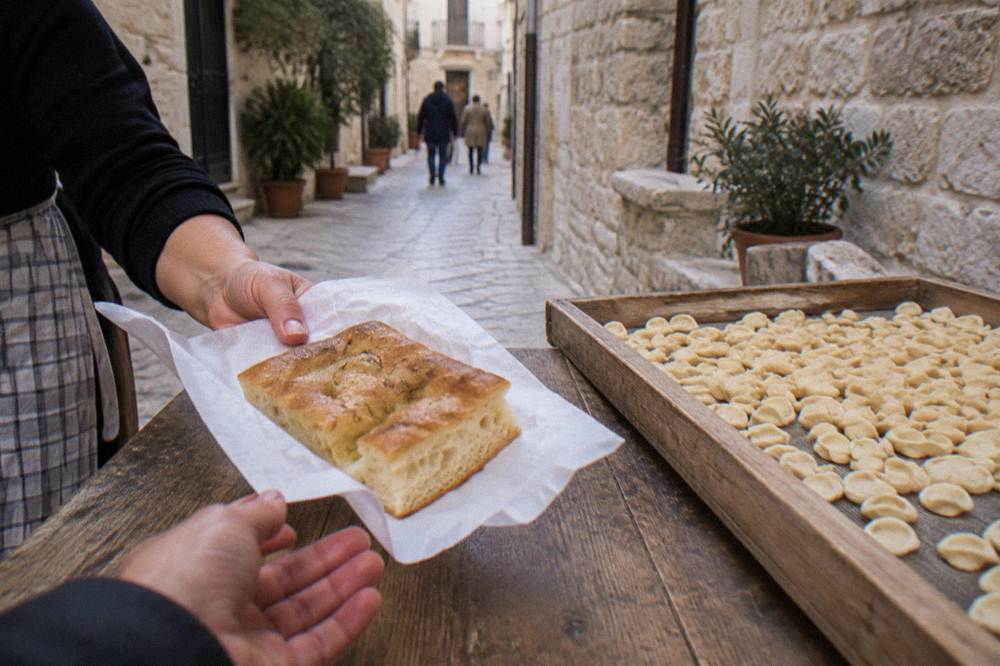
Bari Street Food: Panzerotti, Focaccia, Sgagliozze And Raw Seafood
Bari, the capital of Puglia on the Adriatic coast of southern Italy, eats as much in its streets as in its restaurants: panzerotti, focaccia barese, sgagliozze and raw seafood are the four pillars of street food in Bari Vecchia.
Short answer
Bari street food centres on Bari Vecchia, the old town around the Basilica di San Nicola: panzerotti (fried stuffed dough), focaccia barese, sgagliozze (fried polenta) and raw seafood near the old port. A guided food walk covers the ground efficiently, and AMTAB buses cost 1.00 euro a ride.
Bari, the capital of the Puglia region on the Adriatic coast of southern Italy, is a city where a meal can cost the price of a paper tray and still be the thing you remember. The street food of Bari Vecchia, the old town wrapped around the Basilica di San Nicola, runs on four pillars: panzerotti, focaccia barese, sgagliozze and raw seafood, with orecchiette being rolled a few streets away. None of it needs a reservation. This guide sets out what each dish is, where in the city each one belongs, and how a visitor strings them into a day, including guided walks that do the routing for you. For the wider restaurant scene, see the companion pages on Bari restaurants and raw fish in Bari.
What Is Bari Street Food And Where Do You Eat It?
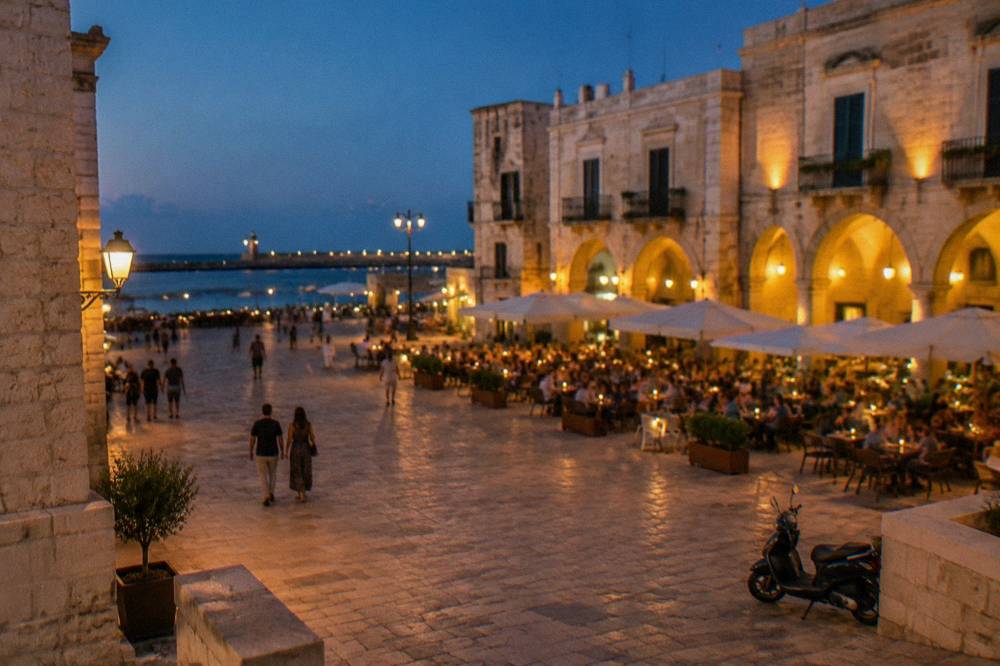
Bari street food is a set of cheap, handheld or counter-served dishes eaten standing or walking, concentrated in Bari Vecchia, the old town beside the old port, with panzerotti, focaccia barese, sgagliozze and raw seafood as the core four. The old town sits on the headland between Piazza Mercantile and Molo San Nicola, and everything in this guide is reachable on foot inside it.
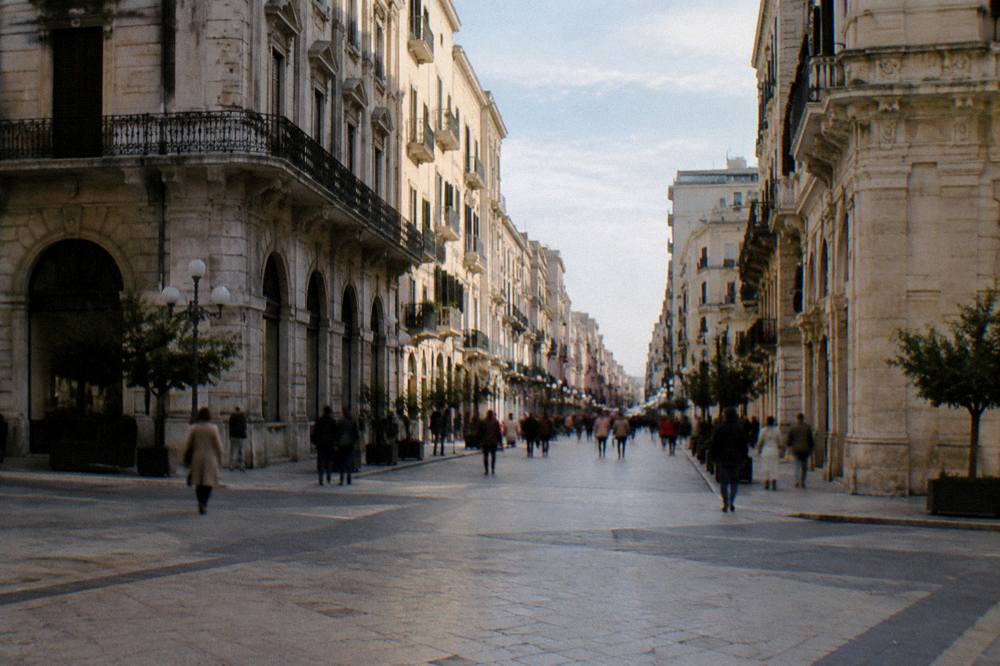
The geography matters more than the dishes do. Bari Vecchia is a tight knot of lanes around the Basilica di San Nicola and the Cattedrale di San Sabino, bounded by the Swabian castle at piazza Federico II di Svevia and by the sea at the old port. Bakeries, fryers and fish counters sit on these lanes, and the walking distances between them are short, a few minutes from one square to the next. South of the old town, the Murat district around Via Sparano is the shopping grid: it has its own cafés and pastry counters, and it is where the shopping streets carry the afternoon crowd.
Two practical notes before the eating starts. Bari Vecchia is a limited traffic zone (ZTL) with a camera gate at the Castello since 1 July 2026, so a rental car stays outside the old town, parked in the paid perimeter spots or left at the hotel. And the city buses, run by AMTAB, cost 1.00 euro for a single ride, 1.20 euro for a 90-minute ticket and 2.50 euro for a day ticket, which is enough to connect the Murat district, the station and the seafront without a car.
| Dish | What it is | Where it belongs |
|---|---|---|
| Panzerotti | Fried pockets of dough with a savoury filling | Bakeries and fry counters, Bari Vecchia and Murat |
| Focaccia barese | Baked flatbread with tomatoes and olives | Bakeries, sold by the slice from mid-morning |
| Sgagliozze | Fried polenta squares, salty | Old town fry counters |
| Raw seafood | Sea urchins (ricci) and raw shellfish | Fish counters at the old port, Molo San Nicola |
| Orecchiette | The pasta shape of Puglia, ear-shaped | Home kitchens and pasta lessons on Strada Arco Basso |
What Exactly Is A Panzerotto In Bari?
A panzerotto is a small half-moon of dough, sealed around a filling and deep-fried, eaten hot from a paper bag or tray; the classic filling is tomato and mozzarella, and in Bari it is a counter food sold by the piece rather than a restaurant course. It is the single dish a first-time visitor to Bari is asked about.
The panzerotto is to Bari what the arancino is to Palermo: cheap, fried, and consumed within a minute or two of leaving the fryer. It is smaller and softer than a calzone, and the seal on the edge is what keeps the filling from escaping. Tomato and mozzarella is the standard; other fillings appear on counter boards and change from shop to shop, so the board in front of you is the menu. No bakery name appears on this page, and none is needed: the fry counters cluster in Bari Vecchia and around the edge of the Murat district, and the way to judge one is the queue at the counter and the turnover of the fryer.
Timing is the only real skill. Panzerotti come out of the fryer in waves, and a batch just out is a different object from one sitting under a lamp. Counter food in Italy runs through the late morning and the early evening, when the city eats between meals. The dedicated page on panzerotti in Bari goes deeper on the dish itself, including how it differs from the baked versions found further north in Puglia.
A guided walk removes the guesswork of which counter and which hour. The Original Street Food Tour with Focaccia and Gelato runs from Bari and strings the fried, baked and frozen stops of the old town into one route, and the tours overview compares it against the cooking-class options. You can also Check availability on the operator's live listing.
What Makes Focaccia Barese Different From Other Focaccia?
Focaccia barese is a tall, soft flatbread baked with cherry tomatoes, olives and oil on top, sold by weight or by the slice and eaten warm rather than at table; in Bari it comes out of the oven from late morning and is a street food, not a restaurant starter. The tomatoes and the oil are part of the dough's identity, not a topping chosen on the side.
The difference from the Genoese version is in the structure. Focaccia barese is higher, wetter and richer, its surface dimpled and dark at the edges, and the tomatoes roast into it during the bake. It is bought at a bakery counter in a paper sleeve, torn or cut, and eaten within the hour. The dedicated guide to focaccia barese covers the dish in detail, including how it sits beside panzerotti in the same display case in many bakeries of Bari Vecchia.
The practical rule for a visitor: buy the focaccia where you smell the oven. Bakeries in the old town and in the Murat district bake through the morning, and a slice from a busy counter beats a whole tray from an empty one. Pair it with a walk along the seafront, or fold it into a rainy-day plan, since a bakery hop is one of the few food routes that works in any weather, as the rainy day itinerary notes.
What Are Sgagliozze And Where Did They Come From?
Sgagliozze are thick squares of fried polenta, salted and served in paper, sold at fry counters in the lanes of Bari Vecchia; polenta is set, cut and deep-fried to order, and the result is a crunchy, salty street snack that exists alongside panzerotti rather than instead of it. It is the least known of the city's four street foods outside Puglia.
The dish is frugal by origin, in the way that a great deal of southern Italian street food is: a cheap staple, transformed by hot oil and salt. A square of set polenta goes into the fryer and comes out gold, and it is eaten within minutes, because sgagliozze do not keep their crunch. The fry counters that sell them sit in the old town lanes, and they tend to be the same counters that sell panzerotti, which makes a mixed paper tray the obvious move.
No shop is named here, and no hours are claimed: counters open and close with the rhythm of the neighbourhood, and the way to find the good ones is the same as for panzerotti, follow the frying smell and the locals at the window. What can be said plainly is where to look: the lanes between Piazza Mercantile, Piazza del Ferrarese and the castle gate hold the densest run of them, and the walk between those squares is a few minutes on flat ground.
The three walks above all involve eating in the streets rather than at a table. The first two run from Bari itself; the Polignano walk departs from Polignano a Mare, the cliff town 33 km down the coast by rail, and pairs the same instinct with a seaside setting.
Where Do You Eat Raw Seafood In Bari?
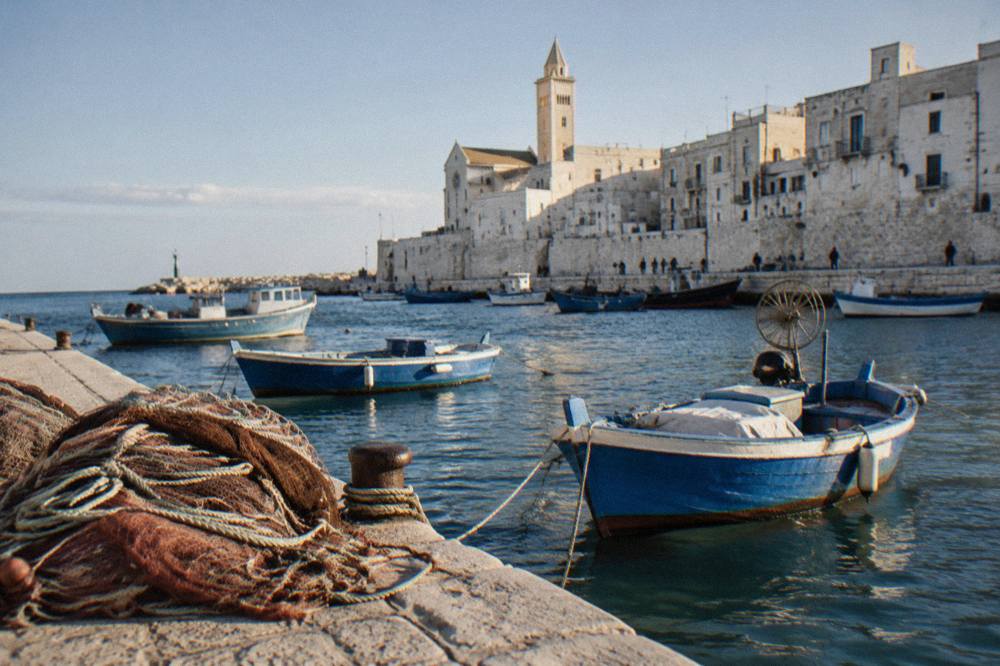
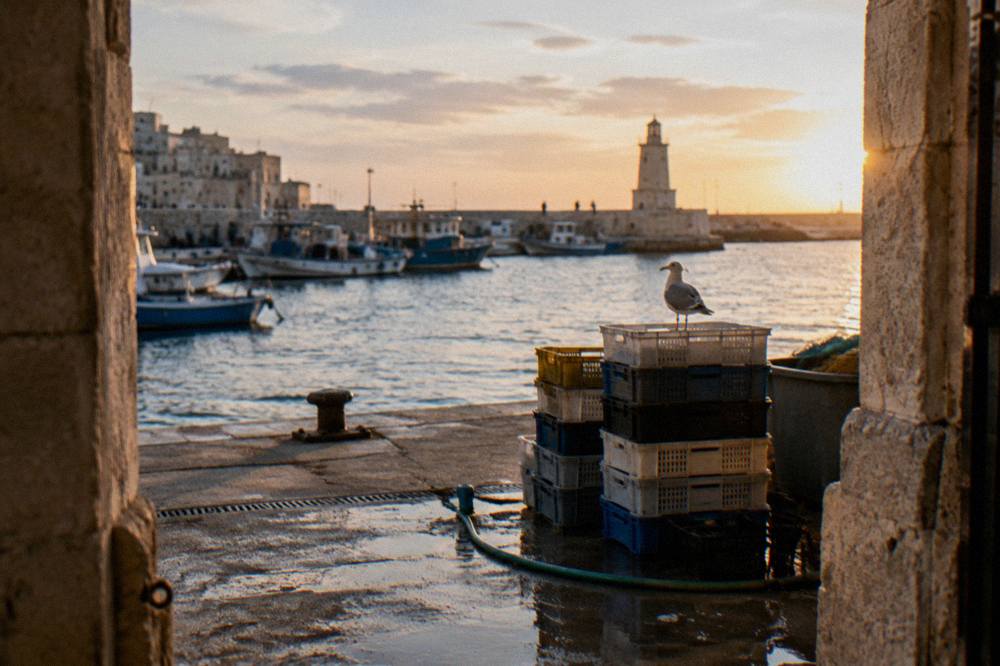
Raw seafood in Bari means sea urchins (ricci) and raw shellfish served at the fish counters of the old port around Molo San Nicola, eaten standing at the counter within sight of the boats that landed the catch; it is the fourth pillar of Bari street food and the one that most surprises visitors who expect fried food only.
The setting is the point. The old port, Molo San Nicola, is the working quay beside Bari Vecchia where the fishing boats tie up, and the fish trade there is a real one, not a display for tourists. Sea urchins are opened to order, and the roe is eaten with bread or with a fork straight from the shell. Raw shellfish, frutti di mare, sit on ice at the same counters. Prices vary with the catch and the season, and the counter board in front of you is the price list: check it before you order, the same as at any Italian counter.
Two cautions carry weight here. Raw shellfish is not for every constitution, and a visitor with doubts should stick to the cooked side of the counter. The fish market follows the landing days, which are not printed in any guide, so a counter visit is a matter of confirming locally. The companion page on Bari seafood and raw fish covers the table-side version of the same tradition.
Why Is Strada Arco Basso Called The Strada Delle Orecchiette?
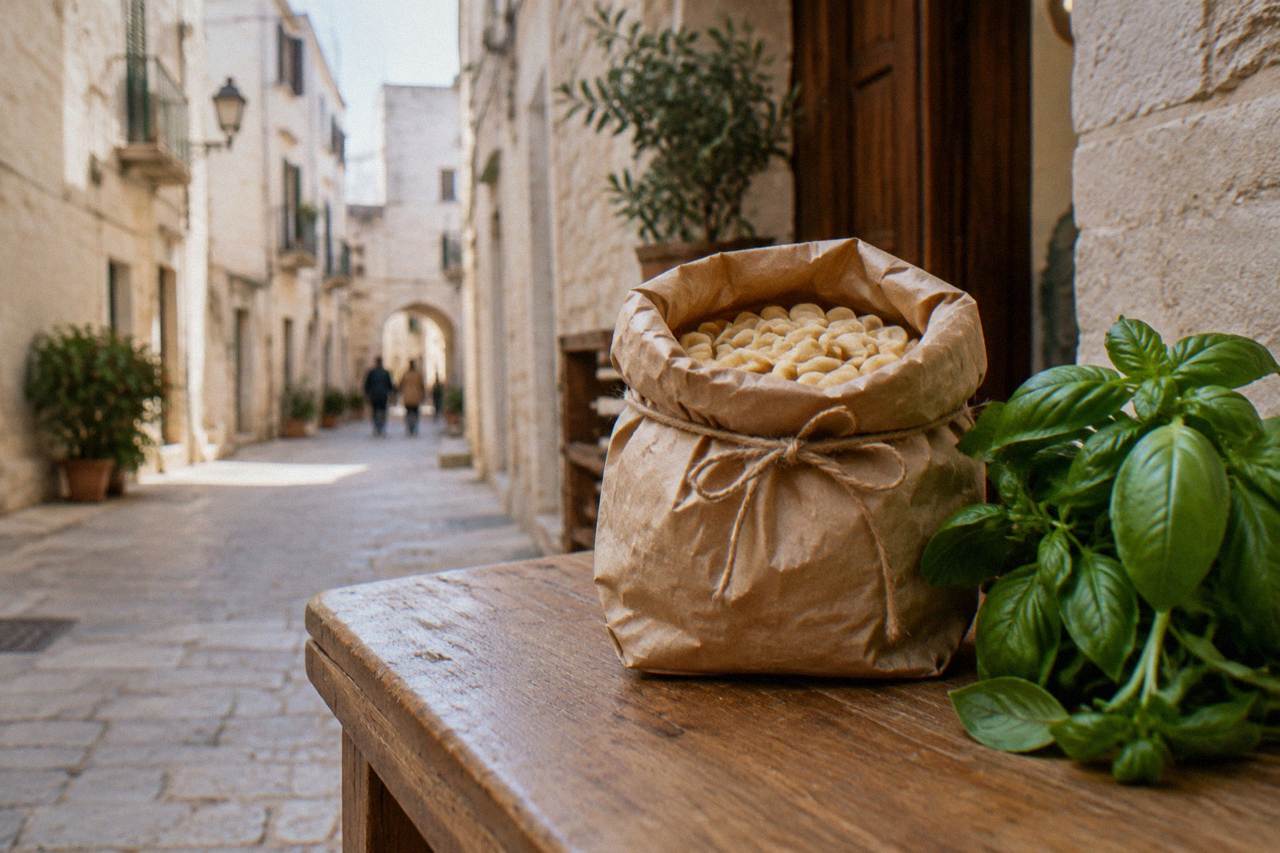
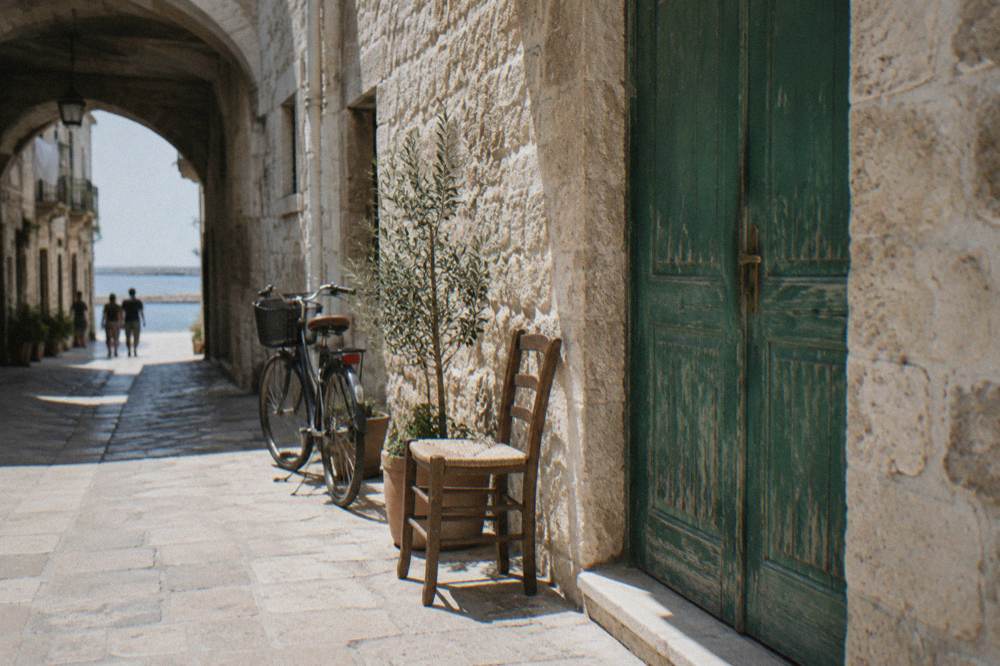
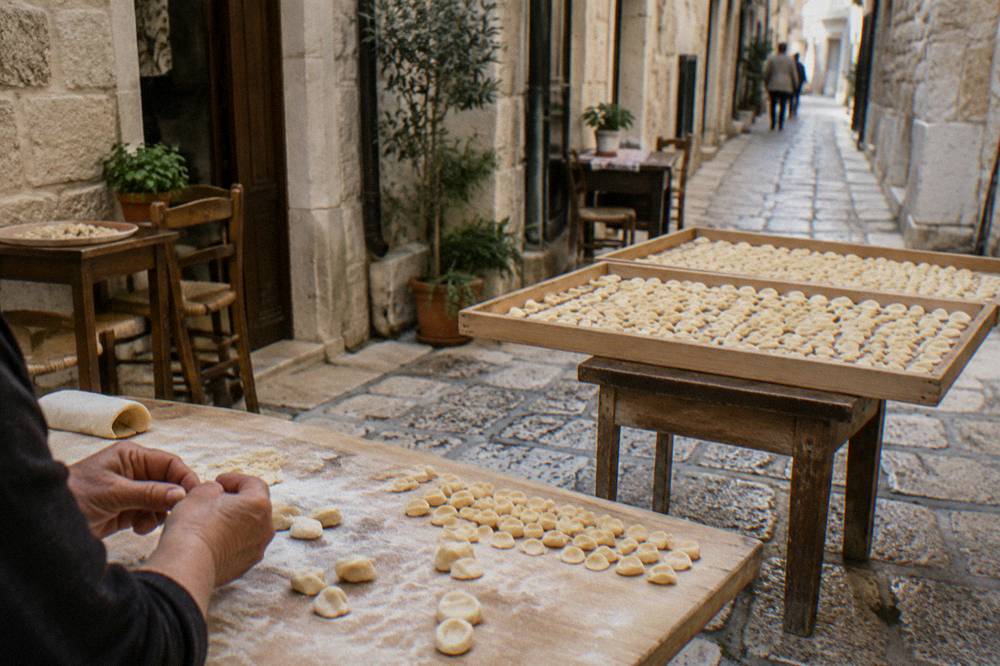
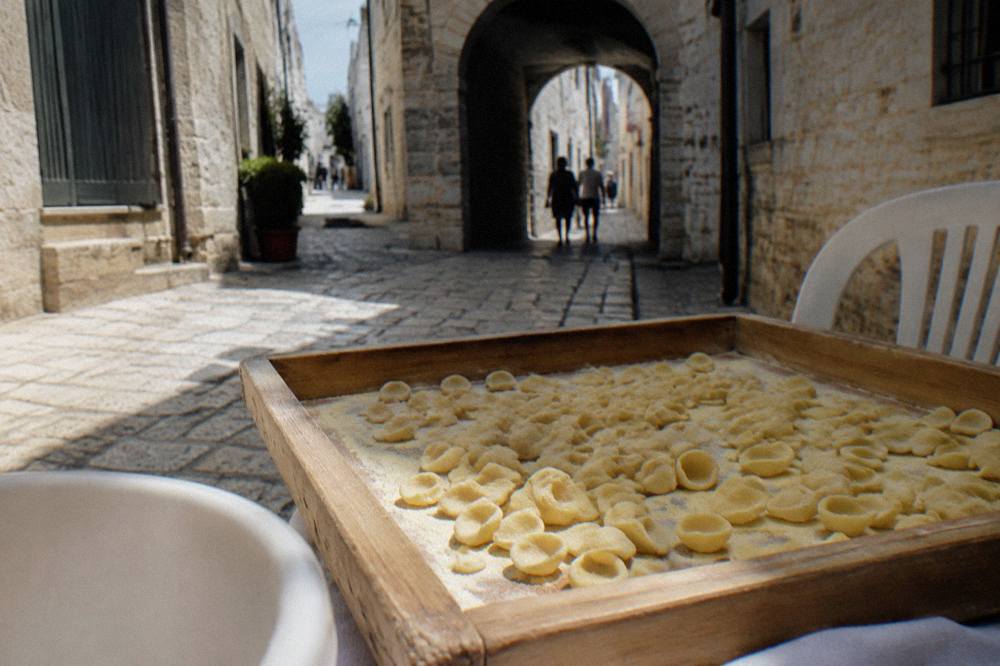
Strada Arco Basso is a narrow lane in Bari Vecchia nicknamed the Strada Delle Orecchiette because pasta makers there roll orecchiette, the ear-shaped pasta of Puglia, at tables and doorways along the street, and the fresh pasta is sold by weight to passers-by; orecchiette is the pasta shape of Puglia, full stop, and this street is where it is seen being made.
What the street offers a visitor is the sight of the making, which no restaurant dining room provides. Boards, a knife or the tip of a knife, and hands that repeat the same motion thousands of times: that is the whole show, and it happens in the open air when it happens. No claim is made here about set hours or days, because the makers set their own rhythm, and the honest framing is that the street is worth walking whether the tables are out or not, since it is two minutes from the Basilica di San Nicola. More of these guides are collected on Bari Italy Travel Guide.
Eating orecchiette in Bari is normally a table affair, with the classic dressing of turnip tops (cime di rapa), and the dedicated page on orecchiette in Bari handles that side. But the street also feeds the lesson economy: several cooking classes in the city teach the rolling, and the food tours and cooking classes guide compares the ones that include a pasta-making stop. Buying a paper bag of fresh orecchiette on Arco Basso to cook later is the street-food version, and it travels as well as any souvenir in the city.
A class of that kind, run from Bari, combines the old-town ride with a pasta lesson in a home kitchen, which is the closest a short visit gets to the Arco Basso tables.
Which Streets And Squares Hold The Best Street Food Walk In Bari?
The densest street food walk in Bari is a loop inside Bari Vecchia from Piazza del Ferrarese through Piazza Mercantile, past the Swabian castle gate, down to Molo San Nicola and back up through Strada Arco Basso, a route of a few hundred metres on flat ground that touches the fry counters, the focaccia bakeries, the fish counters and the orecchiette lane in one circuit.
The loop works because the old town is small. Piazza del Ferrarese and Piazza Mercantile are the two linked squares at its southern edge, and the tourist information point sits at Piazza del Ferrarese 29, which makes it the natural start. From there the lanes narrow toward the Basilica di San Nicola, the castle closes the western side at piazza Federico II di Svevia, and the port lanes run along the north. Nothing on the loop needs transport, and the only climb is a short rise from the quay back into the lanes.
The extension, for a longer afternoon, runs south into the Murat district, where the grid streets around Via Sparano hold the pastry counters and the ice cream shops, and out along the Lungomare Nazario Sauro, the seafront promenade, for the walk back. A full circuit of old town, Murat and seafront is a comfortable half day at eating pace, and it slots neatly into the plans on the one day in Bari itinerary.
| Stop on the loop | What you eat there | Notes |
|---|---|---|
| Piazza del Ferrarese | Panzerotti, coffee | Information point at number 29 |
| Piazza Mercantile | Panzerotti, sgagliozze | Historic square, counters on the flanks |
| Castello gate (piazza Federico II di Svevia) | Mixed fry, ice cream | ZTL camera gate, no driving through |
| Molo San Nicola | Ricci, raw shellfish | Working quay, prices on the counter board |
| Strada Arco Basso | Fresh orecchiette to take away | Two minutes from the basilica |
| Murat district (Via Sparano) | Pastries, gelato | Grid streets south of the old town |
Do You Need A Food Tour In Bari Or Can You Walk It Yourself?
You can walk the Bari street food loop yourself, since Bari Vecchia is compact and the counters are visible from the street, but a guided food walk adds the counter selection, the ordering in Italian and the pacing, and several such walks run from Bari, from short standing tours to a bike version that covers more ground; the choice is about depth versus independence, not access.
The case for a guide is the same as in any market city: the person who walks these lanes daily knows which fryer turns its stock and how to order a mixed tray at a fish counter. The case against is also real: the loop described above needs no booking, the dishes cost a few euro each, and the old town rewards wandering. A reasonable split is one guided walk on the first day to calibrate, then independent returns to whatever the walk surfaced.
One origin detail matters when comparing products. Walks that include Polignano a Mare depart from or around Polignano, the cliff town 33 km from Bari Centrale on the Trenitalia regional line, not from the Bari waterfront. They pair well with a coast day, and Polignano has its own fried-and-raw counter culture, as the Polignano a Mare guide sets out. The site's full comparison of walks, classes and rides lives on the food tours page.
When Is The Best Season For Eating Your Way Through Bari?
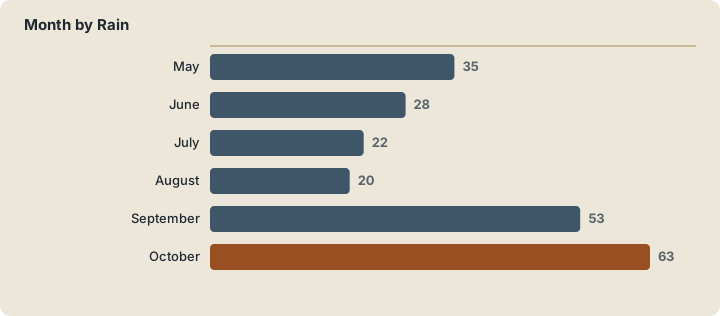
The best months for a street food visit to Bari are May, June, September and October, when typical values from modelled ERA5 data, 1991 to 2020, put daily highs at 21.6 C in May, 25.9 C in June, 25.1 C in September and 21.1 C in October, warm enough for the port counters and cool enough for the fried food, with 35 mm of rain in May against 73 mm in November.
July and August are the heavy months, with mean daily maxima of 28.6 C and 29.1 C, and the modelled sea temperature sits at about 27 C, which pulls the day toward the beach at Pane e Pomodoro and away from hot oil. The rain figures matter less than they look, since a counter hop is an indoor activity by nature, but the shoulder months give the best mix of eating weather and comfortable walking. Winter street food exists too, and the Bari in winter guide covers the cooler-season version of the city.
| Month | Mean daily high | Mean daily low | Rain |
|---|---|---|---|
| May | 21.6 C | 15.3 C | 35 mm |
| June | 25.9 C | 19.5 C | 28 mm |
| July | 28.6 C | 22.0 C | 22 mm |
| August | 29.1 C | 22.4 C | 20 mm |
| September | 25.1 C | 19.1 C | 53 mm |
| October | 21.1 C | 15.6 C | 63 mm |
Typical values from modelled ERA5 data, 1991 to 2020. The full monthly table, including the winter figures and rain-day counts, sits on the Bari weather page, and the seasonal trade-offs are weighed on the best time to visit Bari.
How Much Does A Street Food Day In Bari Cost?
A self-guided street food day in Bari costs the sum of a few counter items, with the fixed costs around it: 1.00 euro per AMTAB bus ride, 5.30 euro for the Ferrotramviaria airport train single, and 25 euro for the airport taxi.
What can be said honestly: street food in Bari is sold by the piece and by weight, the price is on the board or the counter scale in front of you, and the whole point of the format is that it is the cheap end of eating in Italy. The Bari on a budget guide builds the fuller arithmetic around it.
The airport train takes 17 minutes from inside the terminal to Bari Centrale and a contactless card can be tapped at the gate, and from Bari Centrale the old town is a flat walk of roughly fifteen minutes or one bus ride. The airport to city centre guide carries the detail.
| Item | Figure | Notes |
|---|---|---|
| AMTAB single bus ticket | 1.00 EUR | One ride, city network |
| AMTAB 90-minute ticket | 1.20 EUR | Valid 90 minutes |
| AMTAB day ticket | 2.50 EUR | Until end of service |
| Airport train single | 5.30 EUR | 17 minutes, 2026 tariff |
| Airport taxi to a city-centre hotel | 25 EUR | Predetermined fare |
| Tourist tax | 1.50 to 4.00 EUR per person per night | By category, maximum 4 nights |
Can You Build A Bari Street Food Day Trip Around Polignano Or Monopoli?
Yes: Polignano a Mare sits 33 km and Monopoli 41 km down the coast on the Trenitalia regional line from Bari Centrale, both close enough for a half-day side trip that pairs old-town counters with a swim, and Polignano holds one of the 2026 Blue Flags in the Province of Bari, an award no Bari city beach holds.
Monopoli, further down the same line, adds a fishing-port version of the raw-fish counter culture. Both towns eat the same vocabulary as Bari, fried, baked and raw, and the cliff setting at Polignano's Lama Monachile gives the day a second act the city cannot match. The caveat on boats: cave cruises and coastal trips depart from Polignano's own harbour or from San Vito, never from the Bari waterfront.
For a longer food-motivated reach, the Itria Valley towns hold their own counter cultures: Alberobello, 56.7 km and about 61 minutes by road from Piazza Mercantile, and Locorotondo, 68.8 km and about 58 minutes. The Puglia week from Bari itinerary strings the coast and the valley into a full circuit.
| Town | Road distance from Piazza Mercantile | Drive time, free-flow | Rail distance |
|---|---|---|---|
| Polignano a Mare | 37.4 km | about 36 min | 33 km |
| Monopoli | 47.3 km | about 43 min | 41 km |
| Alberobello | 56.7 km | about 61 min | FSE network |
| Locorotondo | 68.8 km | about 58 min | FSE network |
| Conversano | 31.3 km | about 36 min | FSE network |
Which Bari Street Food Tour Should You Book?
The short answer is the one that matches your pace: the Original Street Food Tour with Focaccia and Gelato is the classic standing-and-eating walk from Bari, the bike version covers more ground between the old town and the seafront, and the Polignano walk suits a coast day, with the Polignano product departing from Polignano a Mare rather than from Bari.
What differs in kind is the format: a walk, a ride, or a coast transfer. A visitor with one afternoon picks the walk; a visitor with a full day and energy picks the bike; a visitor already planning Polignano folds the third into that day. Every listing shows its own current price, rating and inclusions, and every one can be checked against the same free-cancellation norm that applies across the site's listings.
Whichever format wins, the underlying logic of eating in Bari does not change: the old town is small, the counter is the restaurant, and the paper tray is the plate. For the wider question of what the city is famous for at the table, the companion answer page on what food Bari is famous for rounds out the picture beyond the four street dishes.
Common Questions About Bari Street Food
What food is Bari famous for?
Bari is famous for panzerotti, focaccia barese, sgagliozze, raw seafood such as ricci at the old port, and orecchiette, the ear-shaped pasta of Puglia rolled on Strada Arco Basso. The full answer, including the table-side dishes, is on the page about what food Bari is famous for.
Is Bari street food safe to eat?
Fried and baked street food in Bari carries the same risks as anywhere in Italy, which is to say few. Raw shellfish is the one category to treat with respect if your stomach is unused to it. Emergency number 112 applies across Italy.
Where is the best place to eat panzerotti in Bari?
The fry counters cluster in Bari Vecchia between Piazza del Ferrarese, Piazza Mercantile and the castle gate, and a busy counter with a fast turnover is the practical test.
Can you eat vegetarian on a Bari street food walk?
Yes, easily. Focaccia barese, panzerotti with tomato and mozzarella or vegetable fillings, and sgagliozze are all meat-free; only the raw seafood counters are off the vegetarian route.
Do you need to book a Bari food tour in advance?
The popular walks fill on weekends and in the shoulder months of May, June and September, so booking a day or two ahead is sensible. Every listing on this site shows current availability and free-cancellation terms on the operator's live listing.
How much time do you need for street food in Bari?
Half a day covers the old-town loop of fry counters, bakeries, the port and Strada Arco Basso at eating pace. A full day adds the Murat district and the seafront, and a second day opens the coast trips to Polignano a Mare and Monopoli.
The dishes change with the counter, the boats set the raw-fish calendar, and the lanes of Bari Vecchia hold all of it inside a few hundred metres, which is the whole argument for eating this city on foot.