A Rainy Day In Bari: Churches, Galleries And Covered Food Stops
Rain in Bari is a plan-B city: the basilica is open until 20:30, the Swabian castle until 19:00, and the old town's covered arcades and food stops keep a full day moving.
Short answer
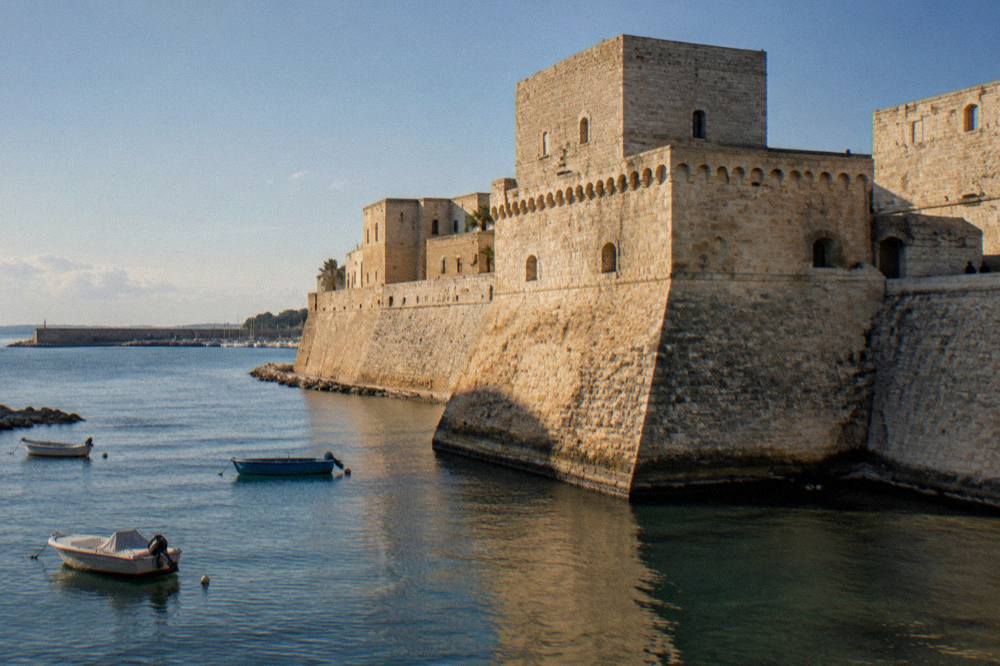
Spend a rainy day in Bari Vecchia around the Basilica di San Nicola and the crypt of Saint Nicholas, the Castello Normanno-Svevo, the Pinacoteca and the Museo Archeologico di Santa Scolastica, and covered food stops from focaccia to orecchiette.
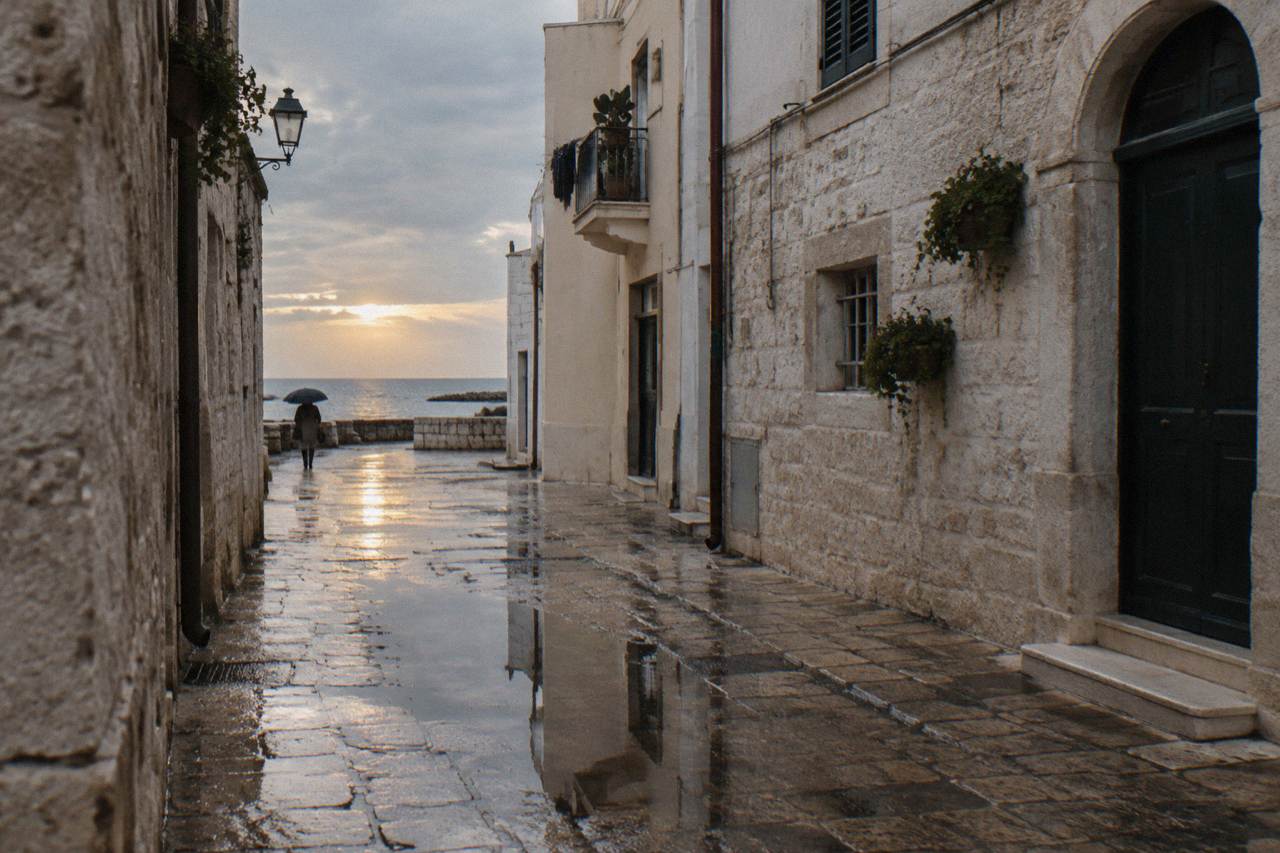
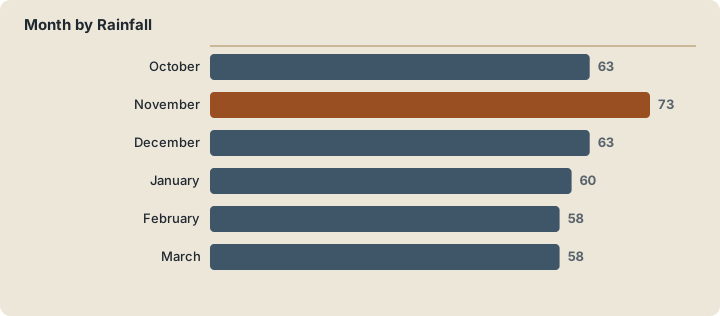
Rain changes the rhythm of Bari, the capital of Puglia on the Adriatic coast of southern Italy, more than it stops it. Typical values from modelled ERA5 data, 1991 to 2020, put November rainfall at 73 mm and October at 63 mm, with about 9 rain days a month in each, so a wet day is a real planning case from autumn through early spring rather than a rare accident. The good news is structural: the Basilica di San Nicola is open daily until 20:30, the Swabian castle and three major museums run on fixed Tuesday-to-Sunday schedules, and Bari Vecchia packs its churches, food stops and covered corners into a walkable headland where nothing needs a car.
How Rainy Is Bari, Really, Month By Month?
Bari averages about 587 mm of rain a year, spread across roughly 80 to 95 rain days, and the figures matter month by month: July and August see only 22 mm and 20 mm with about 4 rain days each, while October and November see 63 mm and 73 mm with about 8 to 9 rain days, per typical values from modelled ERA5 data, 1991 to 2020. A summer shower is a half-hour interruption. A November day is a coin flip, and a two-day wet spell is normal. Winter highs still average 12.1 C in January and 12.5 C in February, so rain in Bari is rarely a cold rain by northern European standards, but an umbrella and a museum list both belong in the bag from October to March.
| Month | Mean daily high | Mean daily low | Rainfall | Rain days |
|---|---|---|---|---|
| October | 21.1 C | 15.6 C | 63 mm | 7.9 |
| November | 16.9 C | 12.0 C | 73 mm | 8.9 |
| December | 13.2 C | 8.7 C | 63 mm | 9.6 |
| January | 12.1 C | 7.3 C | 60 mm | 9.5 |
| February | 12.5 C | 7.2 C | 58 mm | 9.4 |
| March | 14.7 C | 8.8 C | 58 mm | 9.4 |
Those are modelled normals, not forecasts: check a live forecast the evening before, because a dry November week and a soaked one look identical in a 30-year average. If you are building a longer trip around the odds, the best time to visit question has the full monthly breakdown, and the Bari weather guide covers what each season actually feels like.
What Is The Best Rain-Day Route Through Bari Vecchia?
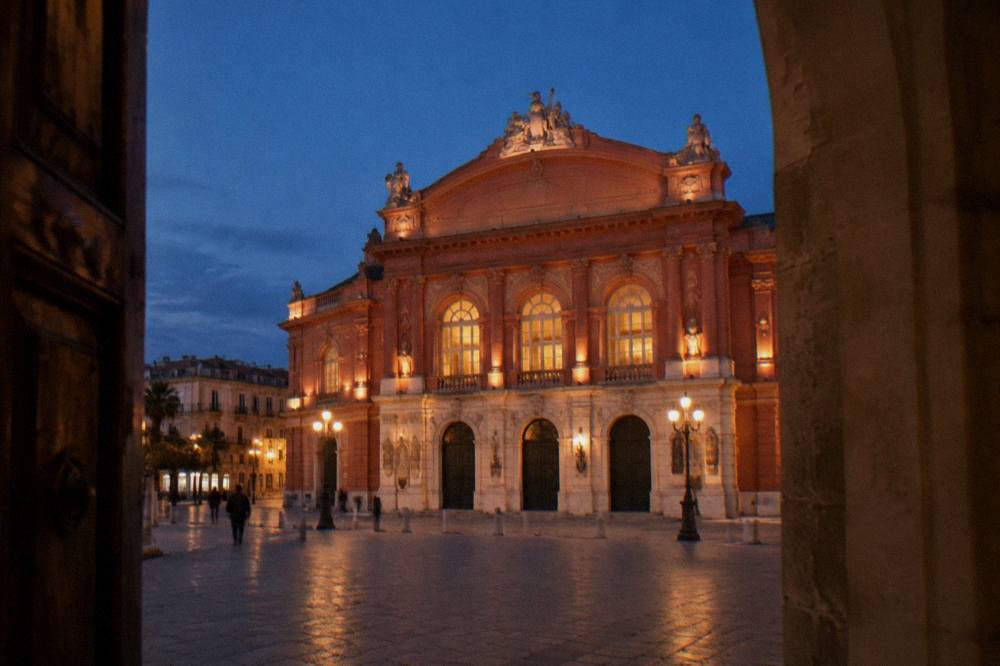
Start at the Basilica di San Nicola, open Monday to Saturday 06:30 to 20:30 and Sunday 06:30 to 22:00 with no admission fee mentioned on its page, then walk the covered streets of Bari Vecchia to the Cattedrale di San Sabino, Piazza Mercantile and Piazza del Ferrarese, and finish at the Castello Normanno-Svevo, open Tuesday to Sunday 09:00 to 19:00 at 10 euro full and 2 euro reduced. The whole route is under two kilometres of old-town lanes, and every stop except the squares between them has a roof. The basilica's crypt holds the relics of Saint Nicholas, which the basilica's own history page says rested at Myra about 750 years before sailors brought them to Bari in 1087, with placement in the crypt in 1089.
Bari Vecchia is compact enough that rain barely slows you down between doors. The old town cuts the wind; the two squares, Piazza Mercantile and Piazza del Ferrarese, are the exposed minutes, worth crossing fast and returning to later. The Bari Vecchia guide maps the full district, the basilica guide covers the church and crypt in depth, and the castle guide explains the seasonal Sunday hours that matter from October to March: on those Sundays the castle opens 09:00 to 13:30, except the first Sunday of the month, when it runs to 19:00.
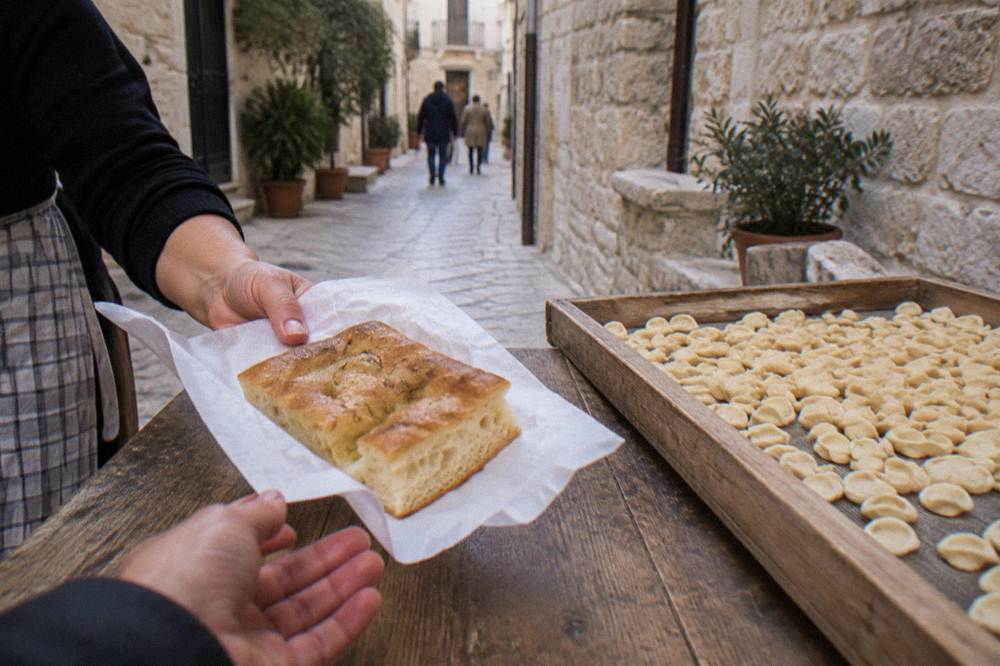
A guided walk is a sound rain-day move for a practical reason: a local guide reroutes around puddles and closures without you noticing, and the old town's food stops double as rain shelters. The street-food walk with focaccia and gelato above is this site's featured pick for the day, and the orecchiette-making class is the strongest indoor pivot, because pasta is made at a table, under a roof, with a rolling boil nearby. The history walk keeps you moving between churches that would otherwise be a self-guided puzzle in the rain.
Which Bari Museums Stay Open On A Wet Day, And What Do They Cost?
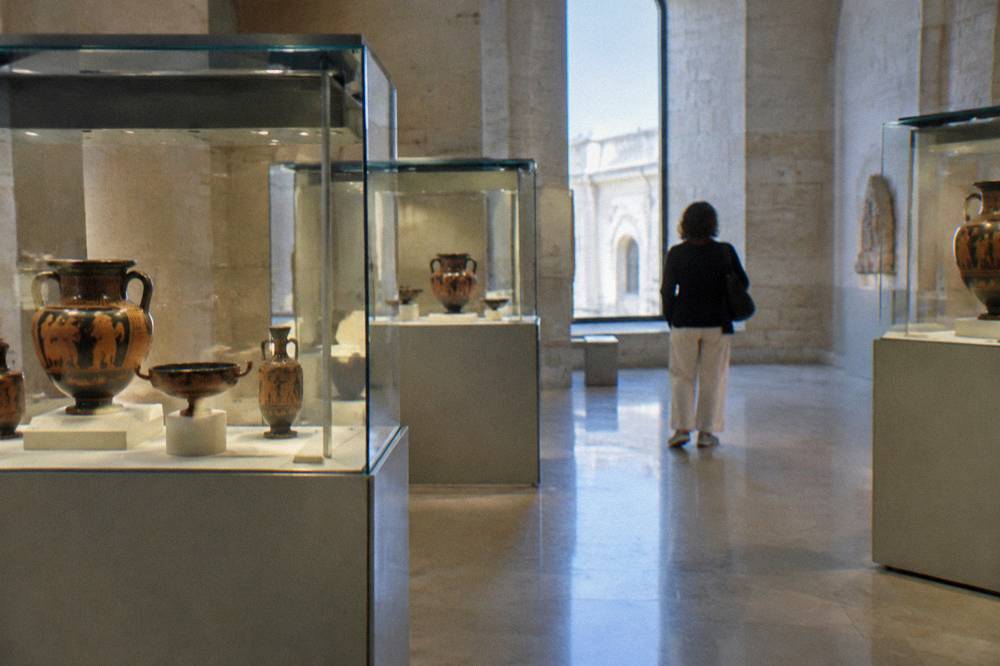
The Castello Normanno-Svevo costs 10 euro full and 2 euro reduced, open Tuesday to Sunday 09:00 to 19:00; the Pinacoteca Metropolitana Corrado Giaquinto costs 5 euro, open Tuesday to Saturday 09:00 to 19:00 and Sunday 09:00 to 13:00; the Museo Archeologico di Santa Scolastica costs 5 euro, on the same weekly schedule, with an 8 euro combined ticket for both. All three close on Mondays, which makes Monday the day to lean on the basilica, the old town and food stops instead. The Puglia Musei Card at 20 euro covers all the regional state museums in Puglia for six months, worth it only if your trip continues to Castel del Monte or Trani.
| Museum | Full ticket | Reduced | Hours |
|---|---|---|---|
| Castello Normanno-Svevo | 10 EUR | 2 EUR | Tue-Sun 09:00-19:00; Oct-Mar Sundays 09:00-13:30 except first Sunday |
| Pinacoteca Metropolitana Corrado Giaquinto | 5 EUR | 2 EUR | Tue-Sat 09:00-19:00, last entry 18:30; Sun 09:00-13:00 |
| Museo Archeologico di Santa Scolastica | 5 EUR | 2 EUR (18-25) | Tue-Sat 09:00-19:00, last entry 18:30; Sun from 09:00 |
| Combined Pinacoteca plus Santa Scolastica | 8 EUR | 2 EUR each | Both sites, valid two days |
| Teatro Petruzzelli guided tours | 7 EUR | 2 EUR | Dated slots published monthly |
| Puglia Musei Card | 20 EUR | 2 EUR | All Musei Puglia sites, six months |
Two of these pair naturally with rain. The castle is a roofed medieval building with interior halls, so weather is irrelevant inside. The Pinacoteca and Santa Scolastica sit a short distance apart on the Lungomare Nazario Sauro side, and the combined ticket makes a half-day of the two. Teatro Petruzzelli runs guided tours at 7 euro full and 2 euro reduced, with slots published monthly on the foundation's page, and a theatre interior is about as rain-proof as a building gets; the Petruzzelli guide has the detail.
One caution on timing: the castle's Sunday hours shrink from October to March, so a wet Sunday in November means a morning castle visit or a shifted plan, not an afternoon one. The free first Sunday of the month applies to the state museums, including the castle, per the Domenica al Museo listings, and it draws crowds, so a rainy first Sunday can mean a line under umbrellas. Check the current price on the official ticket page before booking, then pick your slot.
Where Do You Eat In Bari When It Pours?
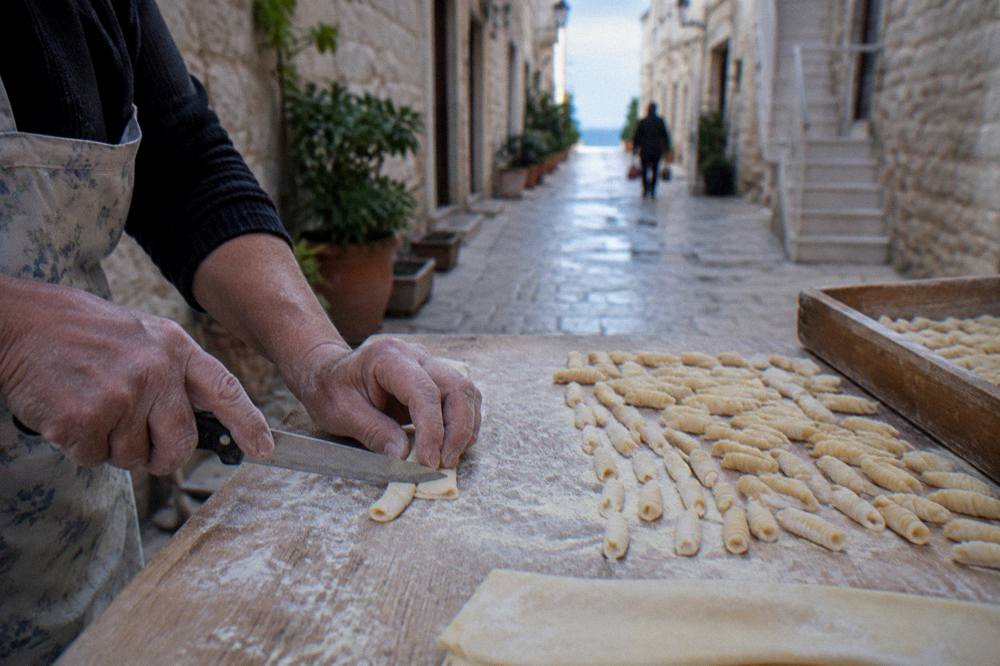
Bari's rainy-day food stops are the covered ones: focaccia barese is the city's flat olive-oil bread, panzerotti are fried filled pockets, orecchiette is the pasta shape of Puglia, sgagliozze are fried polenta squares, and raw seafood such as ricci and frutti di mare anchors the old-port counters, with the bakeries, counters and home kitchens of Bari Vecchia and the Murat district all indoors. Rain barely touches eating in this city. Strada Arco Basso, the street known for its pasta makers, is a lane of house doors and work tables, and the food stops of Bari Vecchia sit one behind another between the basilica and the old port at Molo San Nicola.
The dish-level detail, what each of these foods is and how they differ, is in the street food guide and the longer what food is Bari famous for answer. For structure, a guided food walk does the routing for you, as below.
A cooking class is the most weather-proof half-day in Bari: a table, a board, flour and a teacher. The orecchiette class above pairs a walk with the pasta lesson, so the outdoor stretch is short and the indoor stretch is the point. The food tours and cooking classes guide compares the formats, and the Bari restaurants guide covers sit-down meals when the rain turns to a downpour.
Can You Still See Saint Nicholas's Crypt On A Wet Day?
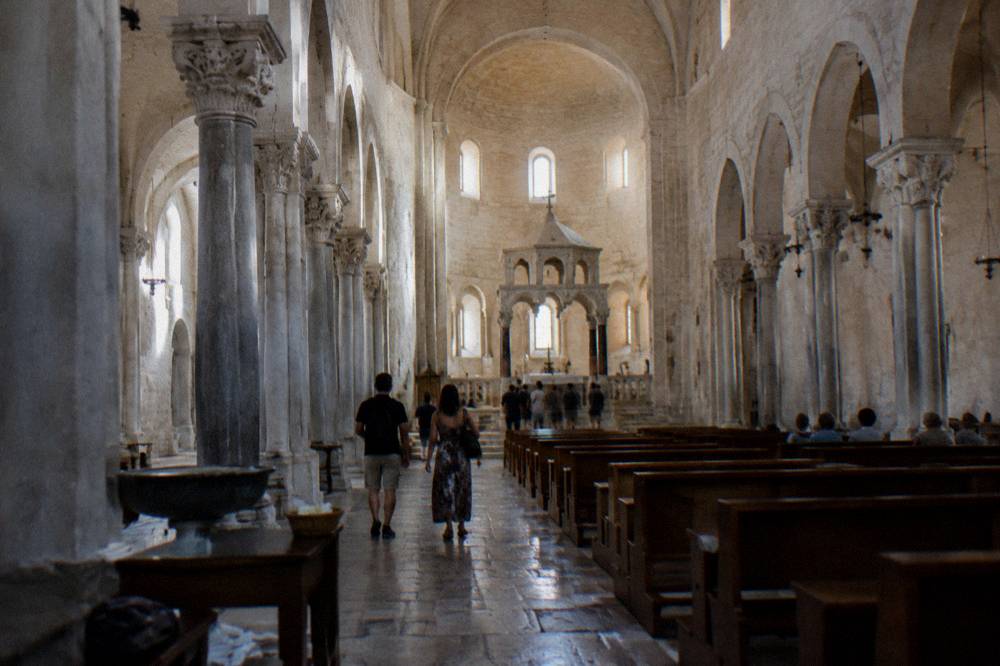
Yes, and rain is irrelevant to it: the Basilica di San Nicola is open Monday to Saturday 06:30 to 20:30 and Sunday 06:30 to 22:00, its page mentions no admission fee, and the crypt where the relics of Saint Nicholas were placed in 1089 is part of the same building, so the only weather exposure is the walk between the door and the street. The relics were brought from Myra by sailors in 1087 after resting there about 750 years, per the basilica's own history page, and the crypt has been their site ever since. It is the single most rain-proofed major sight in the city.
The practical notes are short. The church interior and the crypt are both enclosed; the walk from Piazza del Ferrarese or the old port is a few minutes of open street. The Museo Nicolaiano, the basilica's museum, is reported at about 10:30 to 18:00 with one bulletin listing a Wednesday closure, so treat that as reported and confirm before you go. The crypt of San Nicola guide and the Museo Nicolaiano guide carry the full detail, and the Bari churches guide places the Cattedrale di San Sabino, a landmark of Bari Vecchia near the basilica, in the same walk.
Is A Guided Tour Worth It On A Rainy Day In Bari?
As editorial judgement, yes, for one reason: a rainy day compresses your options toward indoor and covered stops, and a guide who knows which bakery, church hall and museum slot is dry right now saves the standing-around time that rain punishes hardest. The judgement, not a measured fact, is that a wet self-guided day in Bari loses more time to improvising than a dry one does. The tours below are the ones this site carries that fit a rainy day: a food walk, a pasta class and a history walk, all of them built around stops that are indoors or nearly so.
The history walk above is the pick for a rain day that is also your only day in the city, because it threads the old town's covered lanes and church interiors into one narrative. The one day in Bari itinerary shows the dry-day version of the same ground, and the two days in Bari plan lets you swap a washed-out beach afternoon for the museum half-day described above. If rain is forecast for your whole stay, the rainy-versus-any-weather question is really a museum-scheduling question, and the table further up answers it.
What If The Rain Lasts All Day: A Full Wet-Weather Schedule?
A full rainy day in Bari runs basilica and crypt in the morning while the light is low, the Swabian castle or the museum pair in the middle hours when rain peaks, an indoor lunch and a pasta class or food walk in the afternoon, and the basilica again or a Petruzzelli tour slot toward evening, all inside current opening hours and without a car at any point. The schedule below assumes a November-type day, highs near 17 C, rain on and off, and every stop reachable on foot from anywhere in Bari Vecchia or the Murat district.
| Time | Stop | Why it works in rain |
|---|---|---|
| 09:00-10:30 | Basilica di San Nicola and crypt | Open from 06:30, fully enclosed |
| 10:30-11:00 | Coffee stop, Bari Vecchia lanes | Covered counters, short dashes |
| 11:00-13:00 | Castello Normanno-Svevo | Roofed halls, 10 EUR, opens 09:00 |
| 13:00-14:30 | Indoor lunch, old town or Murat | Full sit-down meal |
| 14:30-16:30 | Orecchiette class or food walk | Table-based, under roofs |
| 16:30-18:30 | Pinacoteca or Santa Scolastica | Last entry 18:30, both enclosed |
| 18:30-20:30 | Basilica or Piazza Mercantile supper | Basilica open to 20:30 weekdays |
Two rules keep the day honest. First, Monday breaks the museum half: the castle, the Pinacoteca and Santa Scolastica all close, so a Monday rain day leans harder on the basilica, the food stops and a class. Second, from October to March a Sunday castle visit must end by 13:30 unless it is the first Sunday of the month, so flip the castle to the morning slot and the basilica to the afternoon. The cruise port day itinerary solves the same constraints on a tighter clock.
Should You Leave Bari On A Rainy Day, Or Stay Put?
Stay put, unless the forecast is dry inland: Bari's best rainy-day assets are indoors in the city, while its day trips, Polignano a Mare at 33 km by rail, Monopoli at 41 km, the Grotte di Castellana caves at about 43 km by road, are open-air or semi-open experiences where the sea and the street are the point. The one clear exception is the Grotte di Castellana: the caves themselves are underground, the full route is 3 km and about 100 minutes at 25 euro for ages 15 and over, the partial route 1 km and about 50 minutes at 22 euro, and rain at the surface does not reach the itinerary. Matera's Sassi are about 71 km and 69 minutes by road, in Basilicata, and the Sassi are walked outdoors, so wet weather works against them.
| Day trip | Rain suitability | Key figure |
|---|---|---|
| Grotte di Castellana | Strong: underground route | 25 EUR full route, 3 km, about 100 min |
| Polignano a Mare | Weak: sea-cliff town, open air | 33 km by rail from Bari Centrale |
| Monopoli | Weak: harbour and lanes, open air | 41 km by rail from Bari Centrale |
| Matera, Sassi | Weak: outdoor walking district | About 71 km, 69 min by road, in Basilicata |
| Lecce | Mixed: baroque churches give cover, but the walk is outdoor | 150 km by rail |
The good day trips answer and the Puglia week itinerary cover the dry-day versions.
What Should You Pack For A Wet Day In Bari?
Pack for about 12 to 17 C and on-and-off rain from October to March: the modelled ERA5 normals, 1991 to 2020, give October a mean daily high of 21.1 C dropping to 16.9 C in November and 12.1 C in January, with 8 to 9 rain days a month in that stretch, so a real rain layer, shoes that survive wet cobbles and one warm mid-layer cover every case the table shows. Summer rain, 22 mm in July and 20 mm in August over about 4 rain days, is a light-jacket problem that dries in an hour. The old town's limestone lanes hold surface water, so sole grip matters more than the umbrella's rating.
Nothing else needs special kit. The basilica asks no fee and has no dress rule this page can state; a church visit in Italy generally means covered shoulders, but print no rule the sources do not give. The one genuinely Bari-specific packing note is logistical: keep the day's plan walkable, because buses hold no advantage when every stop is inside 15 minutes on foot, and the getting around Bari guide explains why a car is a liability in Bari Vecchia, a limited traffic zone with camera enforcement since 1 July 2026. Do not drive into Bari Vecchia; arrive by foot from the Murat district or Bari Centrale and the rain question answers itself one umbrella at a time.
Common Questions About A Rainy Day In Bari
Is Bari worth visiting when it rains?
Yes: the basilica is open until 20:30 on weekdays, the castle and two major museums run Tuesday to Sunday, and the old town's food stops and church interiors fill a full day indoors. Rain in Bari removes the beaches and the seafront, not the core of the visit.
What is there to do in Bari on a rainy day?
Basilica di San Nicola and the crypt, the Castello Normanno-Svevo at 10 euro, the Pinacoteca Metropolitana Corrado Giaquinto and the Museo Archeologico di Santa Scolastica at 5 euro each or 8 euro combined, a pasta or cooking class, a guided food walk, and a Teatro Petruzzelli tour slot at 7 euro.
Is everything in Bari Vecchia walkable in the rain?
Yes: the squares, Piazza Mercantile and Piazza del Ferrarese, are the only genuinely exposed stretches on the standard route.
Are Bari museums open on Mondays?
No: the castle, the Pinacoteca and the Museo Archeologico di Santa Scolastica all close on Mondays. A Monday rain day belongs to the basilica, the crypt, the old town's food stops and a cooking class.
Does it rain a lot in Bari?
About 587 mm a year, per typical values from modelled ERA5 data, 1991 to 2020, with November at 73 mm and about 9 rain days, and July and August at 22 mm and 20 mm with about 4 rain days each. It is a dry-summer city with a wetter October-to-March half.
Is a food tour a good rainy-day activity in Bari?
It is one of the better ones: the stops are bakeries, counters and home kitchens under roofs, and a guide reroutes the walking between them. The featured pick on this site is the street food tour with focaccia and gelato, linked in the sections above.
A rainy day in Bari, planned around the basilica's long hours, the Tuesday-to-Sunday museums and the covered food stops of Bari Vecchia, holds up as a full day rather than a written-off one, and the wet months are exactly when the city's indoor core shows what it is made of. For everything the dry days add, the things to do in Bari page and the Bari Italy Travel Guide homepage carry the rest of the city.