Via Sparano Bari: The Shopping Street Of The Murat Grid
Via Sparano is the pedestrian shopping spine of the Murat district in Bari, the capital of Puglia on the Adriatic coast of southern Italy. This guide covers where it sits, how to reach it from the station and the old town, what to shop for, where to eat nearby, and how it fits into a day in the city.
Short answer
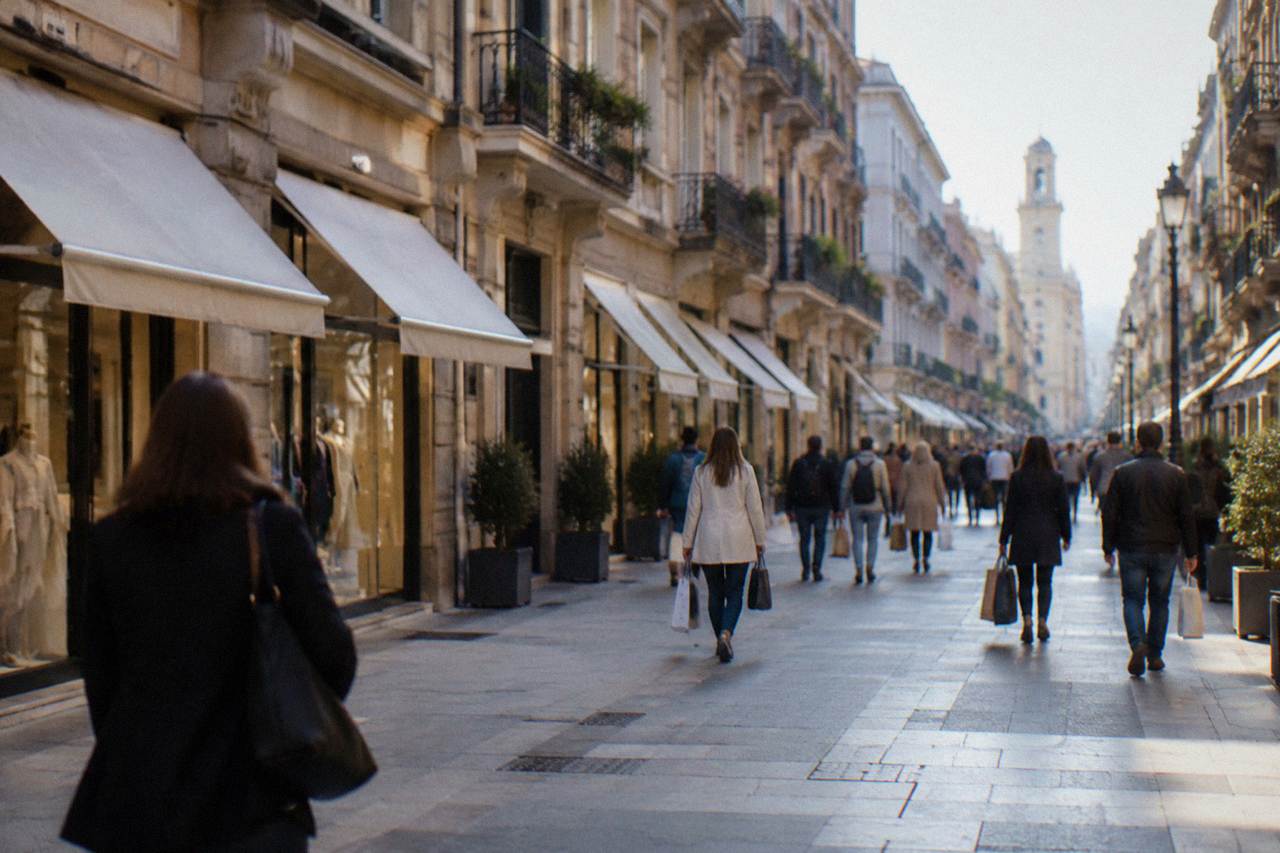
Via Sparano is the pedestrian shopping street at the heart of the Murat district, the grid of streets immediately south of Bari Vecchia in Bari, Puglia. It runs between the Bari Centrale station area and the Corso Vittorio Emanuele II edge of the old town, a few minutes on foot from Piazza Mercantile and the Lungomare Nazario Sauro.
Via Sparano is the pedestrian shopping street at the centre of the Murat district in Bari, the capital of the Puglia region on the Adriatic coast of southern Italy. The street cuts through the regular grid of blocks that separates Bari Vecchia, the old town on the headland, from the Bari Centrale railway station, and it gives the modern city its retail heart. Shoppers, commuters and cruise visitors all pass along it, because it is the most direct pleasant route between the station and the seafront. This guide from the Bari Italy Travel Guide sets out what the street is, how to reach it, what surrounds it and how to plan a day around it, using only figures the official sources publish.
What Is Via Sparano In Bari And Where Does It Sit?
Via Sparano is the pedestrian shopping street that forms the retail core of the Murat district, the grid of straight streets laid out south of Bari Vecchia in Bari, Puglia. It links the area around Bari Centrale station with the edge of the old town near the Corso Vittorio Emanuele II, and the whole grid sits a short walk from Piazza Mercantile and the Lungomare Nazario Sauro seafront.
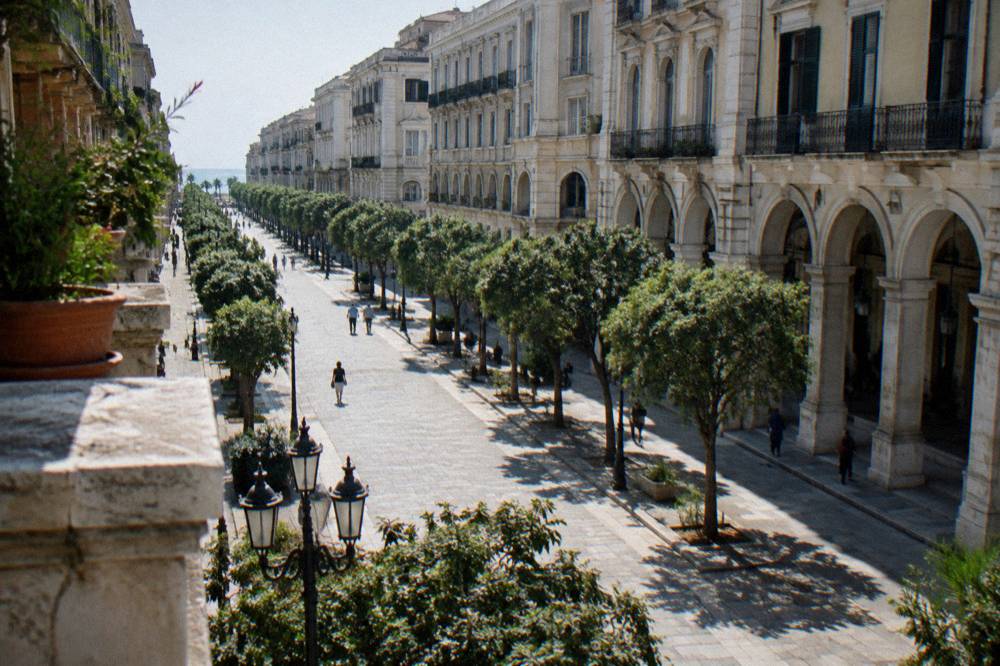
The Murat district gives Bari its regular grid, and it is the part of the city where the streets cross at right angles instead of winding. Via Sparano is the piece of that grid reserved for pedestrians and lined with shops, from chain stores to local jewellers and bookshops. The street is closed to traffic along its pedestrian length, which is what makes it function as a promenade as much as a retail address. For a fuller picture of the district as a whole, see the site's Murat district area guide.
Around it, the grid continues with parallel and perpendicular streets carrying traffic, buses and the ordinary working life of a regional capital of about 316,000 residents in the comune. The Teatro Petruzzelli, one of the city's principal theatres, sits within easy reach of the grid, and the Teatro Petruzzelli guide covers its guided tours. The old town begins where the grid ends, so a shopping walk can become an old-town walk within minutes.
A useful way to picture the area is by the landmarks that frame it.
| Place | What It Is | Position Relative To The Murat Grid |
|---|---|---|
| Bari Vecchia | The old town on the headland | Immediately north, past Corso Vittorio Emanuele II |
| Piazza Mercantile | Historic square of the old town | A short walk north of the grid |
| Piazza del Ferrarese | Square linking old town and modern city | Between the grid and Bari Vecchia |
| Teatro Petruzzelli | Principal opera house of the city | Within the modern district near the grid |
| Lungomare Nazario Sauro | The seafront promenade | South-east, past the end of the grid |
| Bari Centrale | The main railway station | At the inland end of the grid |
The district also marks the border of the old town's traffic rules. Bari Vecchia is a limited traffic zone with a camera gate at the Castello since 1 July 2026, with weekday access windows for authorised vehicles, so anyone driving should leave the car outside the old town entirely and walk in. The Murat grid is ordinary city driving, but its paid perimeter parking and the convenience of the station make walking the easier choice.
How Do You Reach The Murat Shopping Streets From Bari Centrale Or The Old Town?
The Murat shopping streets are reached on foot from Bari Centrale station by walking straight down the grid toward the sea, and from Bari Vecchia by crossing at Piazza del Ferrarese or along Corso Vittorio Emanuele II. An AMTAB city bus costs 1.00 EUR for a single ride or 1.20 EUR for a 90-minute ticket, per the operator's fares page.
Arriving by train, the walk out of Bari Centrale puts you at the inland edge of the grid, and the pedestrian street runs toward the sea from there. Arriving from the airport, the Ferrotramviaria airport train takes 17 minutes to Bari Centrale and costs 5.30 EUR for a single, per the operator's 2026 tariff, with a contactless card tap accepted at the gate under the "Paga e Via" system. The Tempesta airport coach costs 5 EUR bought on board or in the Cotrap app, and a taxi from the airport to a city-centre hotel is a predetermined 25 EUR fare. The site's Bari street food guide picks up the eating side of the same walk.
Once inside the grid, the whole district is a walking environment. The pedestrian section needs no ticket and no planning, and the parallel streets carry the buses if the weather turns. The transport figures below are the ones the operators publish.
| Journey | Fare Or Time | Notes |
|---|---|---|
| Airport train to Bari Centrale | 5.30 EUR single, 17 minutes | Station inside the terminal, per Ferrotramviaria's 2026 tariff |
| Tempesta airport coach | 5 EUR, about 30 minutes | Bought on board or in the Cotrap app, per the operator |
| Airport taxi to a city-centre hotel | 25 EUR predetermined | The regulated airport fare |
| AMTAB single bus ticket | 1.00 EUR | One ride, per the AMTAB fares page |
| AMTAB 90-minute ticket | 1.20 EUR | Per the AMTAB fares page |
| AMTAB day ticket | 2.50 EUR | Valid until end of service |
Service changes during works are posted by the operator, so a bus stop that existed last year may be suspended this year. That is worth a check before relying on any single line along the seafront. For the station itself and its surroundings, the site's guide to the area around Bari Centrale covers the old-town side of the arrival, and the Bari markets and shopping guide covers the retail landscape beyond Via Sparano.
A guided walk is one way to anchor the geography on a first day, since the route from the station through the grid into Bari Vecchia covers three distinct characters of city in under a kilometre. The operator's live listing shows what each departure includes.
What Can You Actually Shop For Around Via Sparano Bari?
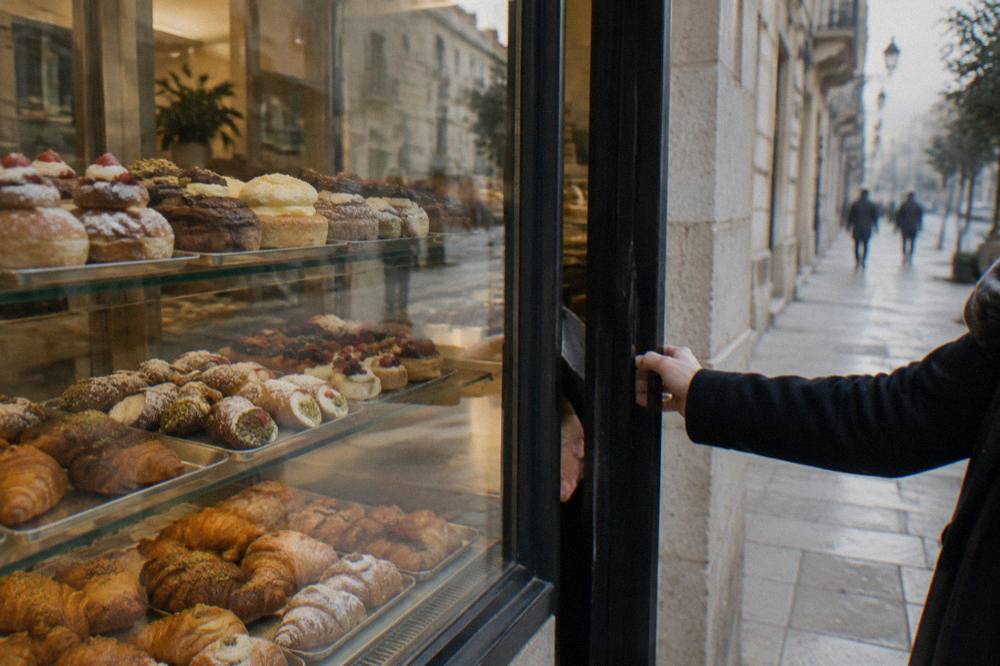
Via Sparano Bari carries the city's main concentration of clothing chains, shoe shops, jewellers, bookshops and department-style stores, set on a pedestrian street with awnings and storefronts along its full length. The surrounding Murat grid adds banks, phone shops and smaller local retailers, and the covered market and old-town lanes sit a short walk away for food shopping.
The street is the closest thing Bari has to a national high street. The mix runs from international clothing brands to Italian chains and independent shops, and because the street is pedestrianised, window-shopping is the default activity rather than the by-product of dodging traffic. No shop names are listed here, because shop detail changes faster than any guide can track, and the Bari markets and shopping guide covers the shopping landscape in more depth.
Via Sparano is the shopping street of the Murat grid. The old town holds the smaller specialist shops and the lanes around Strada Arco Basso, where orecchiette is the pasta shape of Puglia and pasta makers have traditionally worked. The seafront holds no shopping of note but connects the grid to the beach at Pane e Pomodoro, about 2.1 km from Piazza Mercantile by the computed distance.
| Shopping Area | Character | Direction From Via Sparano |
|---|---|---|
| Via Sparano and the Murat grid | Pedestrian high street, chains and independents | The street itself |
| Bari Vecchia lanes | Small specialist shops and food shops | North, past the Corso |
| Strada Arco Basso | Old-town lane associated with fresh pasta | Inside Bari Vecchia |
| Piazza Mercantile and Piazza del Ferrarese | Squares with cafes at the old-town edge | North of the grid |
| Lungomare Nazario Sauro | Seafront promenade, no retail core | South-east of the grid |
What can be said is that the pedestrian street is a public space with no gates or hours of its own, so the walk itself is always available even when the shops are shut.
Where Do You Eat Near Via Sparano Bari?
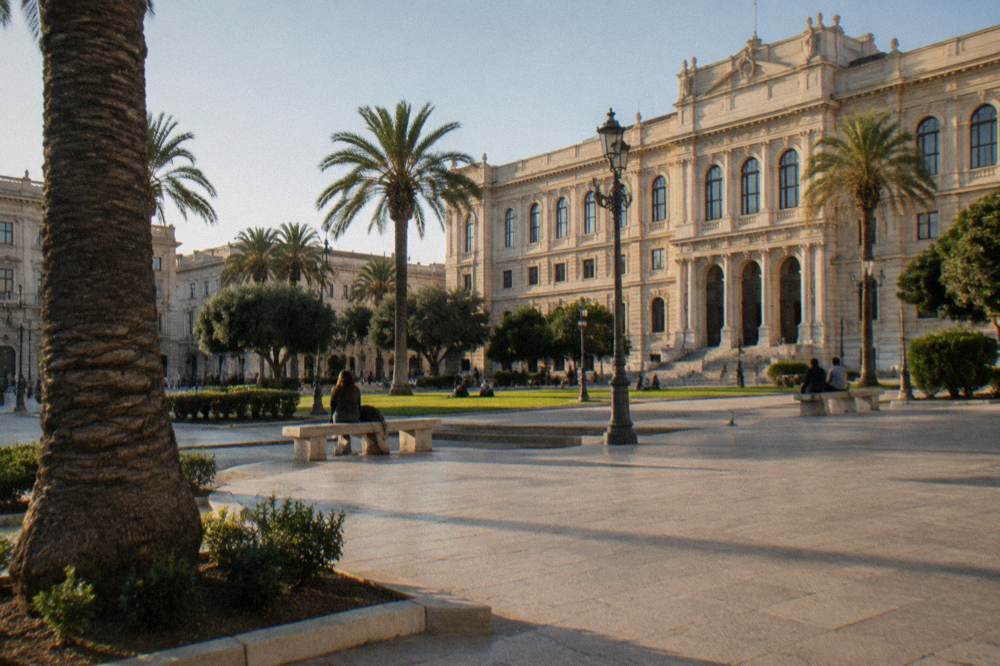
Eating near Via Sparano Bari means the cafes and restaurants of the Murat grid, the historic squares at Piazza Mercantile and Piazza del Ferrarese on the edge of Bari Vecchia, and the old-town lanes behind them, all within a short walk of one another. The city's street-food staples, panzerotti and focaccia barese, are one-line facts of the local diet: a panzerotto is a fried filled pocket of dough and focaccia barese is the local flatbread.
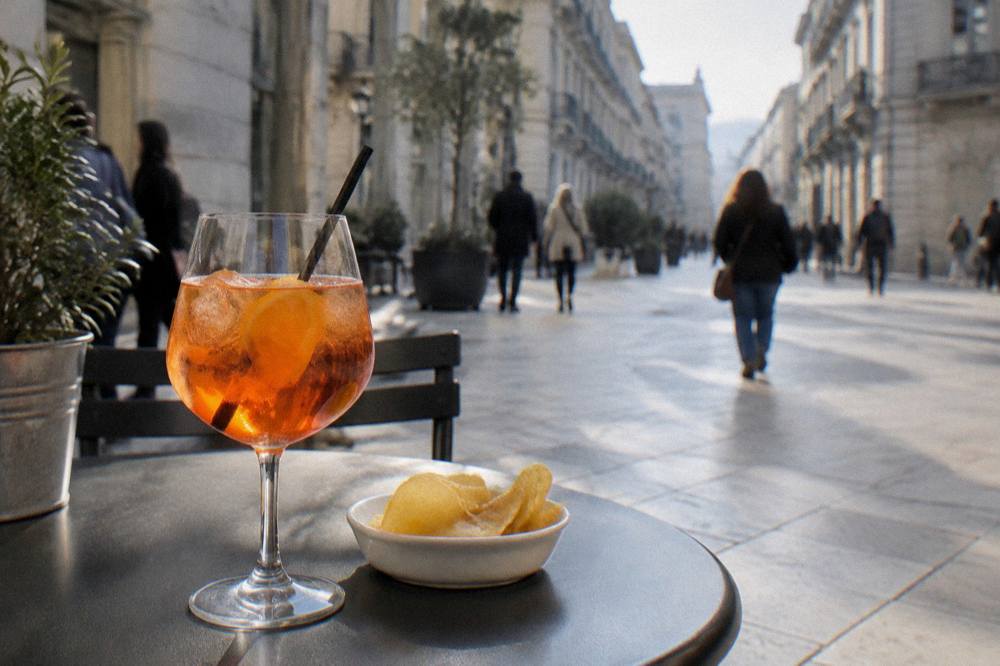
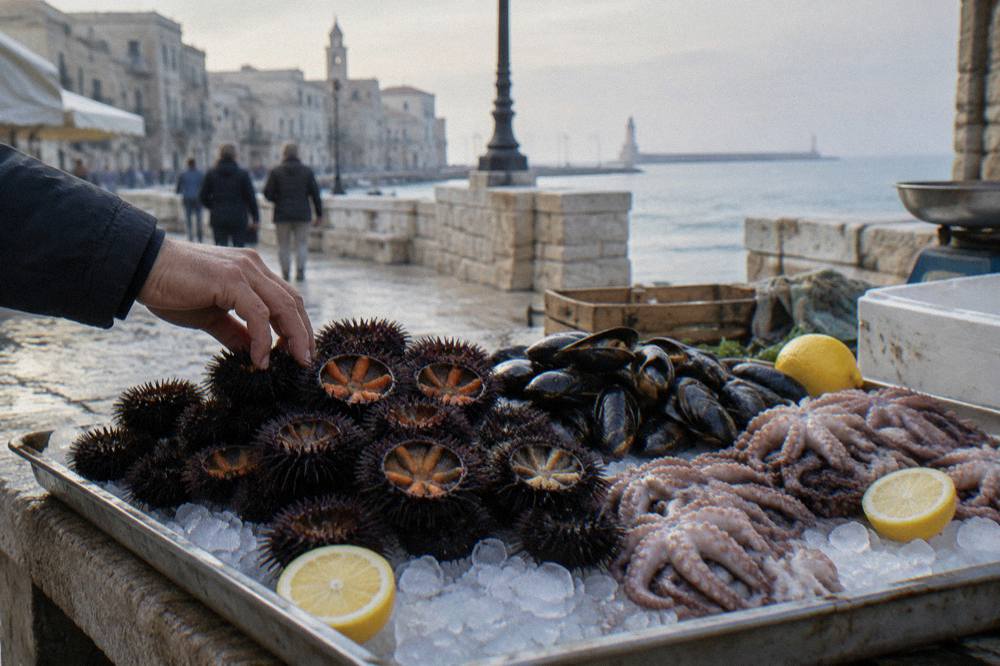
The eating geography clusters in three rings. The grid itself holds the daytime cafes and the aperitivo spots that serve the shopping crowd. The squares at the old-town edge hold the terrace seating, close enough that a table at Piazza del Ferrarese is a five-minute stroll from the middle of the grid. And Bari Vecchia behind them holds the tighter, older rooms where the raw-seafood tradition of the city's kitchen, including ricci and other frutti di mare, sits beside the pasta dishes. The site's guide to where the food traditions of the city come from ties the rings together for a first visit.
Dish names can be described plainly and no further: orecchiette is the pasta shape of Puglia, sgagliozze is fried polenta, and panzerotti are the fried pockets already named. Posted prices and the itemised bill are the reader's check in any case.
A food walk is the structured alternative to finding these stops independently, and the operator's listing shows what each route tastes through.
The bicycle version covers more ground between the grid and the old town, which suits a first afternoon when the legs are still fresh.
What Else Is Within Walking Distance Of The Murat District?
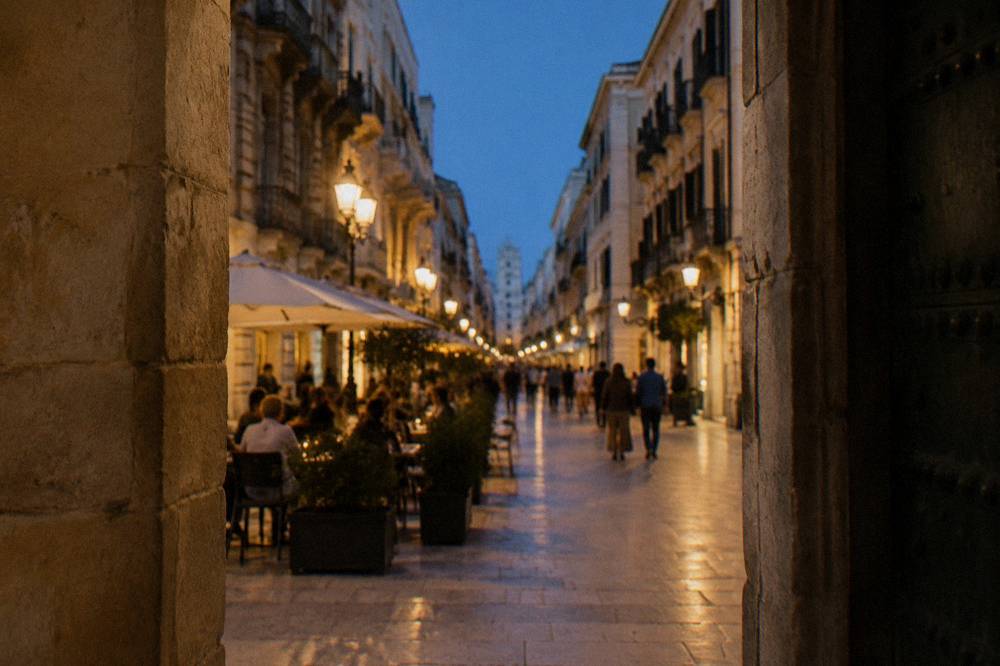
The Basilica di San Nicola, the Cattedrale di San Sabino, the Castello Normanno-Svevo, Piazza Mercantile and the Lungomare Nazario Sauro all sit within an easy walk of the Murat grid, because the old town and the seafront begin where the grid ends. The basilica is open Monday to Saturday 06:30 to 20:30 and Sunday 06:30 to 22:00, with no admission fee mentioned on its page.
This is the practical strength of the Murat district as a base: the shopping street is not an excursion, it is the corridor between the station and everything a visitor comes to Bari to see.
The seafront is the other direction. The Lungomare Nazario Sauro runs along the water from the old-town headland toward Madonnella and the city beaches, and its guide covers the walk. The table below gathers the nearby sights with the hours and fees the official pages actually publish.
| Sight | Hours | Admission |
|---|---|---|
| Basilica di San Nicola | Mon-Sat 06:30-20:30, Sun 06:30-22:00 | No fee mentioned on its page |
| Castello Normanno-Svevo | Tue-Sun 09:00-19:00; Oct-Mar Sundays 09:00-13:30 except first Sunday | 10 EUR full, 2 EUR reduced |
| Pinacoteca Metropolitana Corrado Giaquinto | Tue-Sat 09:00-19:00, Sun 09:00-13:00, closed Monday | 5 EUR full, 2 EUR reduced, 8 EUR combined |
| Teatro Petruzzelli guided tours | Dated slots published monthly | 7 EUR full, 2 EUR reduced |
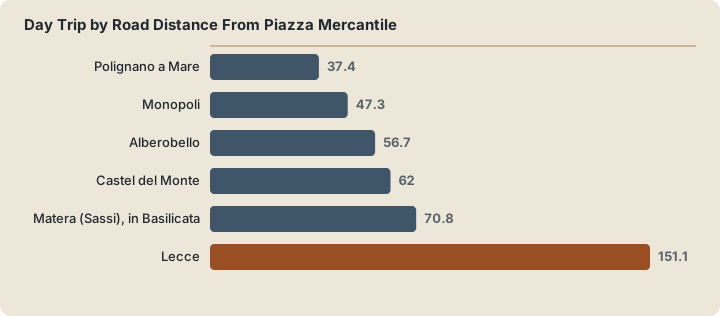
For visitors with more days, the day trips of Puglia and Basilicata all start from the same station at the end of the grid. The road distances below, computed from Piazza Mercantile in free-flow conditions, give a sense of scale.
| Day Trip | Road Distance From Piazza Mercantile | Drive Time, Free-Flow |
|---|---|---|
| Polignano a Mare | 37.4 km | About 36 minutes |
| Monopoli | 47.3 km | About 43 minutes |
| Alberobello | 56.7 km | About 61 minutes |
| Castel del Monte | 62.0 km | About 59 minutes |
| Matera (Sassi), in Basilicata | 70.8 km | About 69 minutes |
| Lecce | 151.1 km | About 115 minutes |
When Is The Best Time Of Day And Year To Walk Via Sparano Bari?
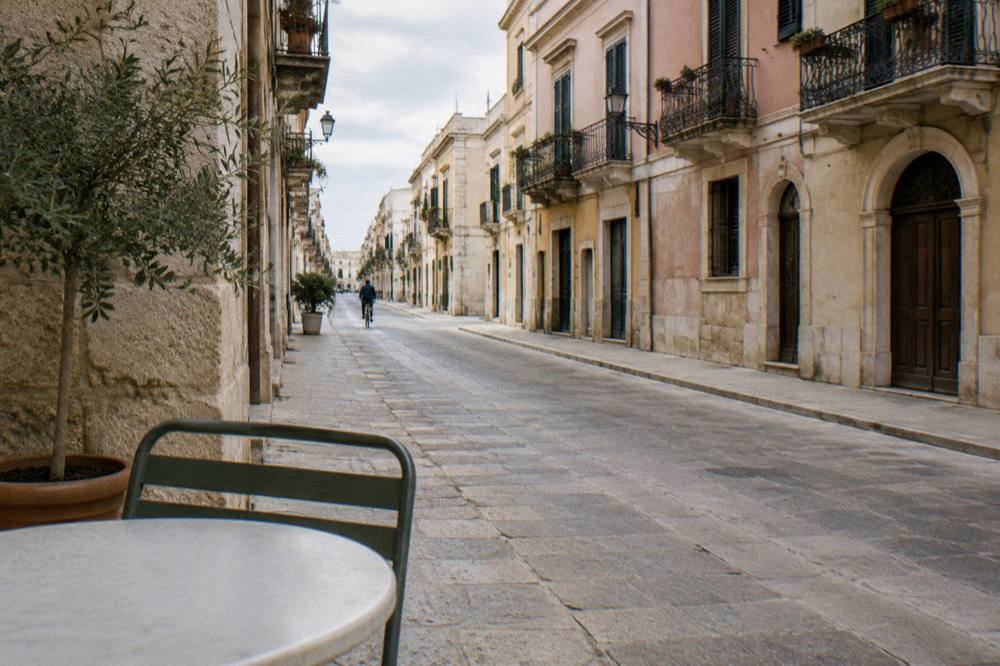
The comfortable months for walking Via Sparano Bari are May, June, September and October, when typical daytime highs from modelled ERA5 data, 1991 to 2020, run from about 21 C in May to about 29 C in July and August at the peak, and rain stays modest; July and August average about 4 rain days each, while November carries 73 mm of rain, the highest monthly figure.
The climate table behind those numbers gives the full picture. Winter walking is entirely feasible, with January and February highs of about 12 C, but the rain totals rise from September onward and the grid offers less shelter than the old-town lanes. Summer walking is hot in the middle of the day, with an August mean daily maximum of 29.1 C, so mornings and evenings are the natural shopping windows and the aperitivo hour does the rest. The site's best time to visit Bari guide links the seasons to the rest of the city.
| Month | Mean High C | Mean Low C | Rain Mm | Rain Days |
|---|---|---|---|---|
| January | 12.1 | 7.3 | 60.0 | 9.5 |
| April | 17.5 | 11.2 | 54.0 | 9.0 |
| July | 28.6 | 22.0 | 22.0 | 4.1 |
| August | 29.1 | 22.4 | 20.0 | 4.3 |
| October | 21.1 | 15.6 | 63.0 | 7.9 |
| November | 16.9 | 12.0 | 73.0 | 8.9 |
The figures are typical values from modelled ERA5 data, 1991 to 2020, and no weather station is named because none is used. Sea temperature, for anyone combining the grid with the beach, is about 27 C in July and August, about 22 C in October and about 14 C in February, as modelled 2023 to 2025 means.
Time of day matters as much as month. The pedestrian street is busiest in the late afternoon and evening, when the paseggiata impulse fills it after the shops reopen, and quietest in the early morning, when the grid belongs to delivery vans and the station commute. Neither pattern is a published statistic; both are the ordinary rhythm of an Italian high street, and the reader can check it in one evening.
What Should You Know About Prices, Tax And Getting Back?
Prices in the shops of the Murat grid are in euro, Italy being in the euro area and the Schengen area; the trip back to the airport costs 5.30 EUR by train, 5 EUR by coach or 25 EUR by the predetermined taxi fare.
Two practical notes round out the visit. First, the tourist tax is set by the comune of Bari and varies by category: 4.00 EUR at 5-star hotels, 3.00 EUR at 4-star hotels, 2.00 EUR at 3-star hotels and at B&Bs and short lets, and 1.50 EUR at 1-star and 2-star hotels. The host collects it, so it appears on the bill rather than in any shop on Via Sparano.
Second, the way back. The grid ends at Bari Centrale, and the airport train leaves from the station inside the terminal at the airport end, with the 17-minute journey and the 5.30 EUR fare already noted. Service changes during works are posted by the operator, and the airport's own page carries the live picture. Anyone with luggage should prefer the train or the predetermined taxi over walking the grid with bags, since the pedestrian street is smooth but long.
Common Questions About Shopping On Via Sparano Bari
Is Via Sparano in Bari pedestrianised?
Yes, Via Sparano is the pedestrian shopping street of the Murat district, closed to traffic along its retail length and linking the Bari Centrale station area with the edge of Bari Vecchia.
How far is Via Sparano from Bari Centrale station?
The pedestrian street begins at the station end of the Murat grid, so the walk from Bari Centrale to the shopping street is the direct walk down the grid toward the sea.
Is Via Sparano near the old town of Bari?
Yes. Bari Vecchia begins where the Murat grid ends, past Corso Vittorio Emanuele II, and Piazza del Ferrarese and Piazza Mercantile sit a short walk from the shopping street.
Can you eat near Via Sparano?
Yes. The grid holds cafes and aperitivo spots, the squares at the old-town edge hold terrace seating, and the lanes of Bari Vecchia hold the older trattorias where the raw-seafood and pasta traditions of the city are served.
What is the best month to walk Via Sparano Bari?
May, June, September and October combine comfortable temperatures with modest rain, per the modelled climate values. July and August are the warm months, with August averaging a mean daily high of 29.1 C, so mornings and evenings work best then.
Do you need a ticket or tour for Via Sparano?
No. The street is a public pedestrian space with no gate and no admission. A guided walking tour of the city covers the grid and the old town in one route if you want the context, and the operator's listing shows what is included.
Via Sparano earns its place on a Bari itinerary precisely because it asks nothing of the visitor: no ticket, no timetable, no planning beyond comfortable shoes. Walk it on the way from the station to the sea, detour into the old town at Piazza del Ferrarese, eat in whichever ring of the city suits the hour, and the grid will have quietly organised your first day in Bari without your noticing it do so.
