Bari Markets And Shopping: Where Locals Buy
Bari, the capital of Puglia on the Adriatic coast of southern Italy, splits its shopping life between the market lanes of Bari Vecchia and the shopfronts of the Murat district around Via Sparano. This guide sets out where locals buy, what the food streets hold, how the transport fares work and which nearby towns reward a shopping detour.
Short answer
Locals in Bari buy food in the old town lanes around Piazza Mercantile and Piazza del Ferrarese and shop for clothes and goods in the Murat district around Via Sparano, with city buses at 1.00 euro a ride and the main sights within walking distance.
Shopping in Bari, the coastal capital of Puglia on the Adriatic Sea in southern Italy, runs along two separate axes. The old town, Bari Vecchia, holds the food trade: market lanes around Piazza Mercantile and Piazza del Ferrarese, the fish trade at Molo San Nicola by the old port, and the pasta makers of Strada Arco Basso. The Murat district, the grid of streets immediately south of the old town, holds the retail trade, with Via Sparano as its main shopping street. This guide walks through both, then covers the food worth carrying home, the day-trip towns that double as shopping stops, and the fares and seasons that shape a shopping day. For the wider sightseeing picture, start with the site's overview at things to do in Bari.
Where Do Locals Shop In Bari?
Locals in Bari shop in two distinct districts: the lanes of Bari Vecchia around Piazza Mercantile and Piazza del Ferrarese for food, fish and everyday market goods, and the Murat district around Via Sparano for clothing, chains and department-style retail. The two areas sit side by side, so a single walking loop covers both, and the whole stretch is flat and compact.
The split is practical rather than formal. Bari Vecchia is the headland old town between the Swabian castle and the sea, and its lanes have always carried the food trade. Piazza Mercantile and Piazza del Ferrarese, two joined squares at the southern edge of the old town, anchor that trade: the squares themselves and the streets running off them hold the greengrocers, the cheese and bread sellers and the small shops that supply the neighbourhood. The Piazza Mercantile guide and the Piazza del Ferrarese guide on this site cover each square in detail.
The Murat district is the grid south of the old town, and it is where the city's mainstream retail sits. Via Sparano is the pedestrianised spine: the site's Murat district shopping streets guide covers the layout. Around Bari Centrale, the main railway station, the retail thins into offices and transport, but the station area is useful as the terminus of a shopping loop and as the departure point for day trips. The Bari Centrale area guide maps that end of the city.
What Can You Find In The Markets Of Bari Vecchia?
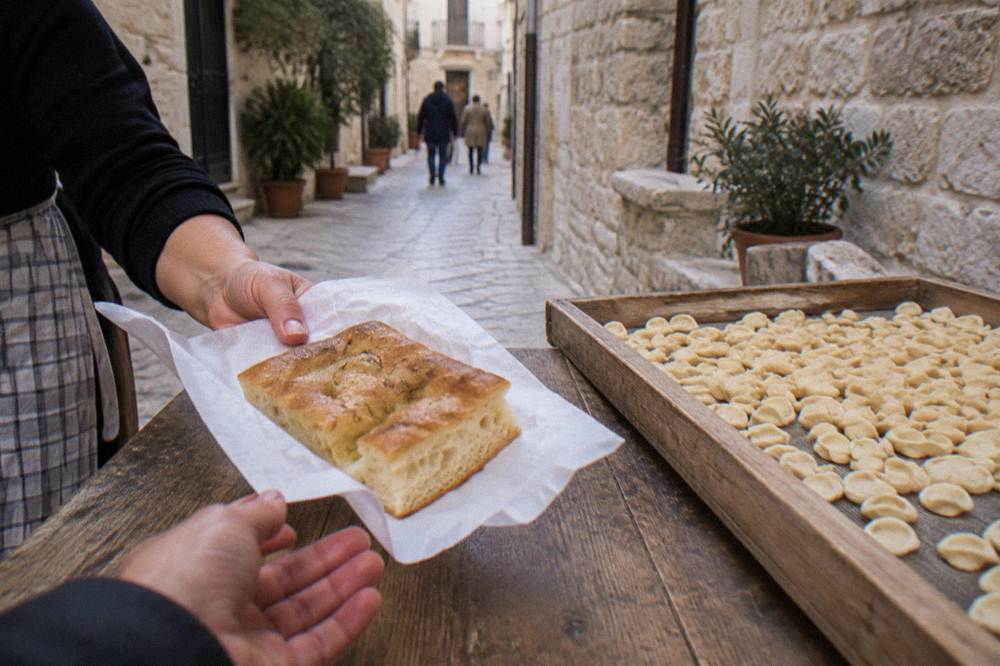
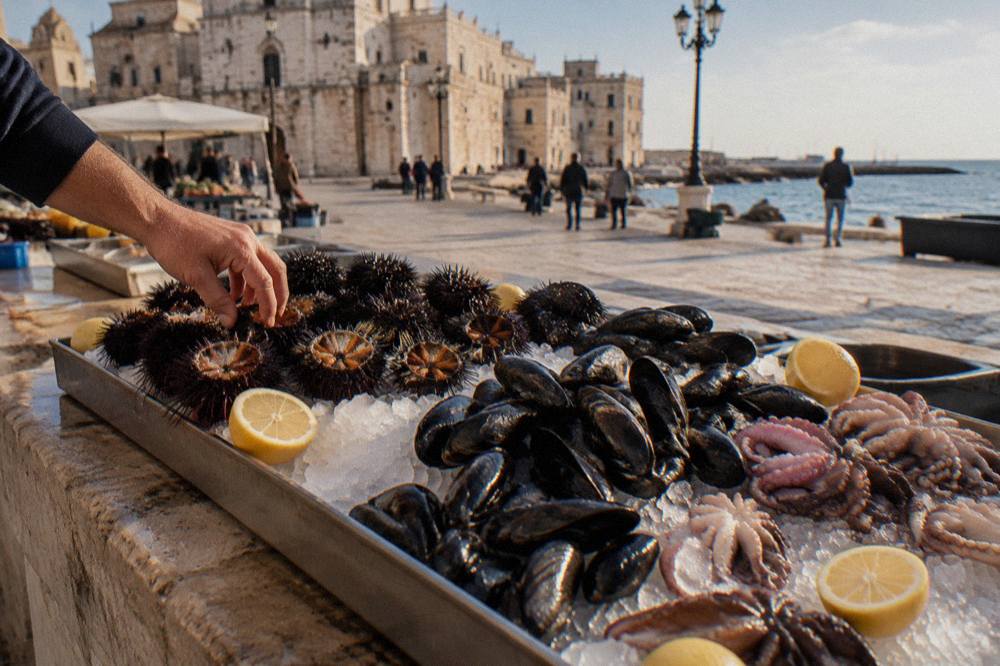
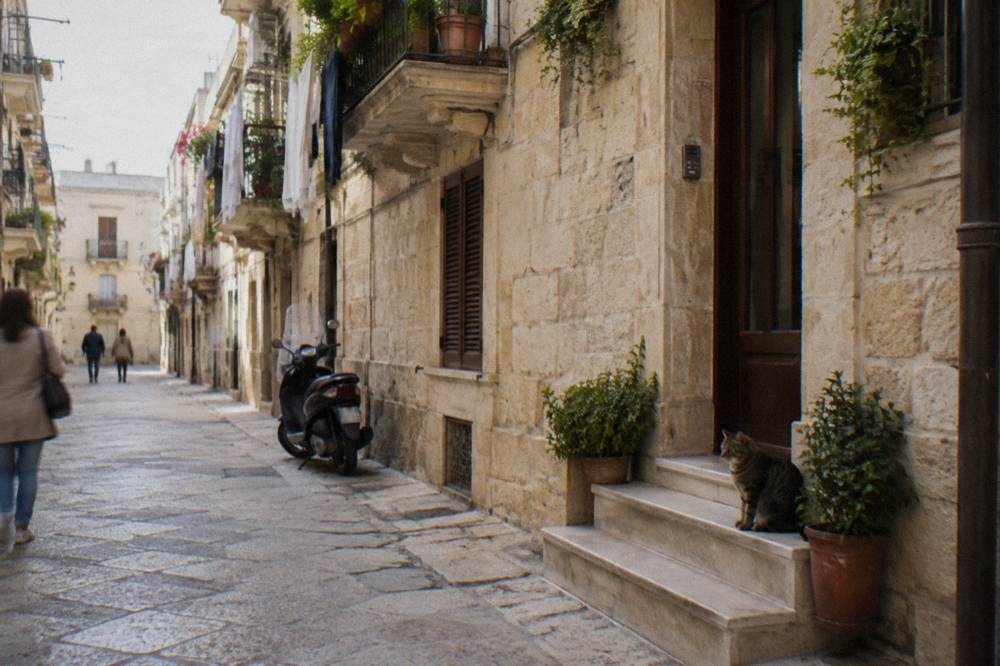
The markets of Bari Vecchia concentrate on food: fresh fish at the old port of Molo San Nicola, vegetables, cheese and bread in the lanes around Piazza Mercantile, and handmade pasta, above all orecchiette, along Strada Arco Basso. Household goods and clothing shops sit on the fringes, but the old town's trade is overwhelmingly edible.
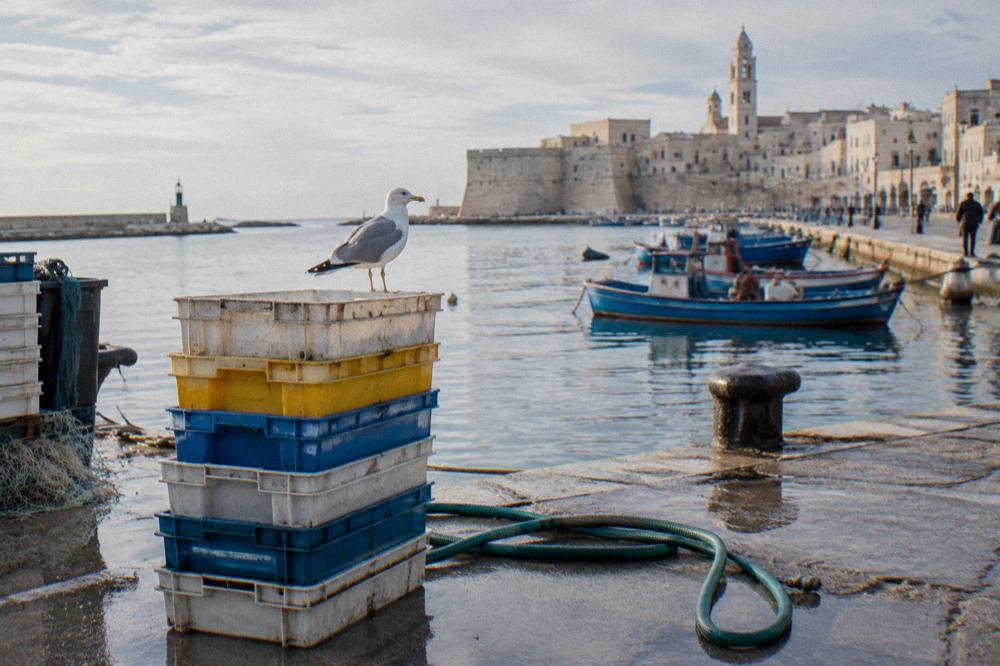
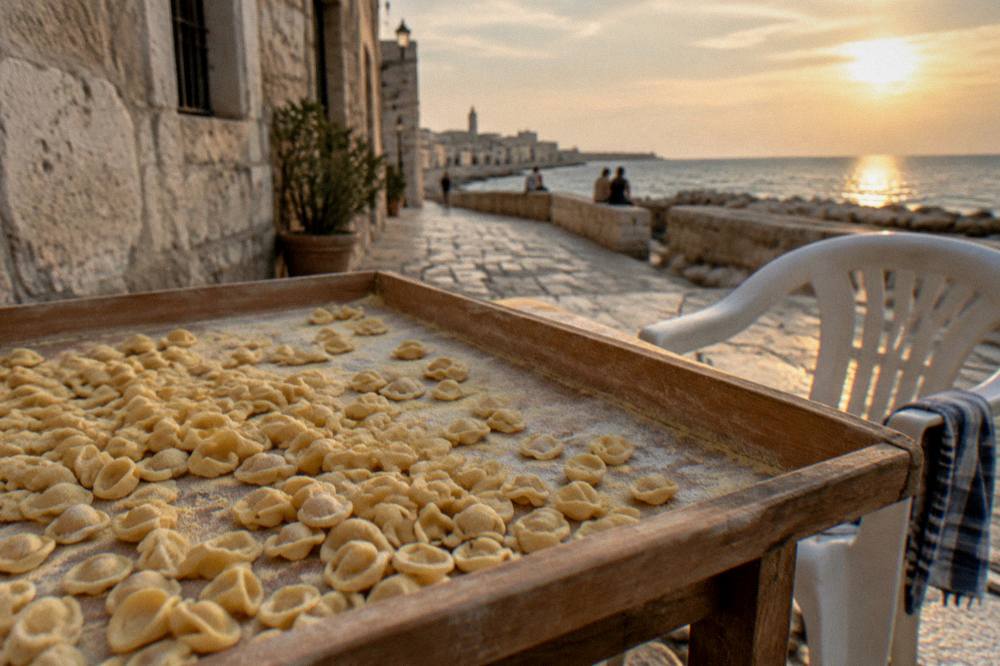
Orecchiette is the pasta shape of Puglia, and Strada Arco Basso is the street long associated with its handmade sale. The site's Strada delle Orecchiette guide covers the street and the dish; the makers work to their own rhythms, so treat any visit as a walk past open doorways rather than a scheduled stop. At the old port, Molo San Nicola holds the fish trade of the city, and the old port guide describes the quayside. Raw seafood, including ricci and frutti di mare, is a Bari speciality served in the restaurants around the old town, and the Bari seafood and raw fish guide explains what the stalls and counters hold.
A guided walk is the efficient way to read these lanes, because the food streets do not announce themselves with signage. The old town street food walk listed below moves through Bari Vecchia with tastings along the route, and a pasta-making session shows how the orecchiette sold on Strada Arco Basso is actually made.
The underground option in that band is worth a note here: Bari Vecchia sits on layers of its own past, and an archaeologist-led walk beneath the lanes puts the market streets into a longer frame. The old town itself has its own dedicated guide at Bari Vecchia.
Is Via Sparano The Main Shopping Street In Bari?
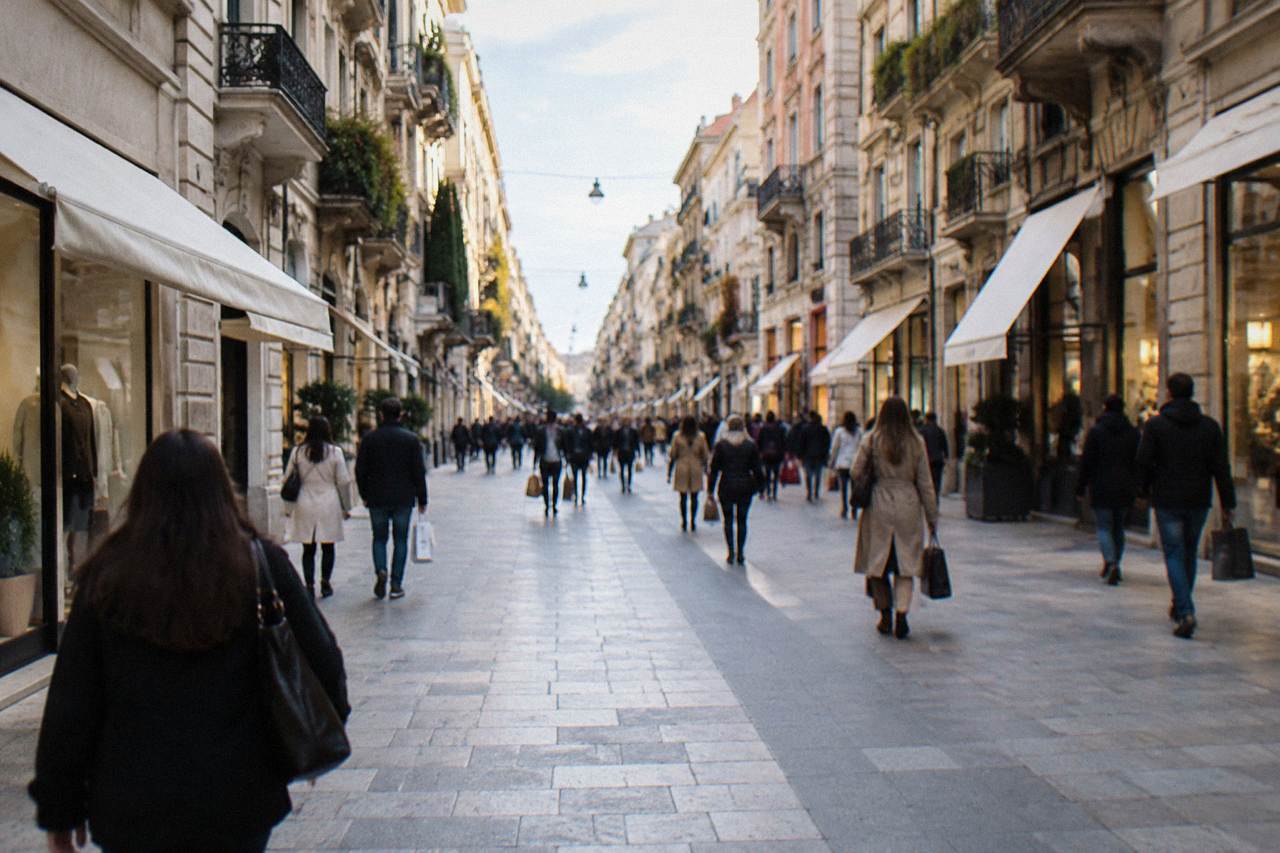
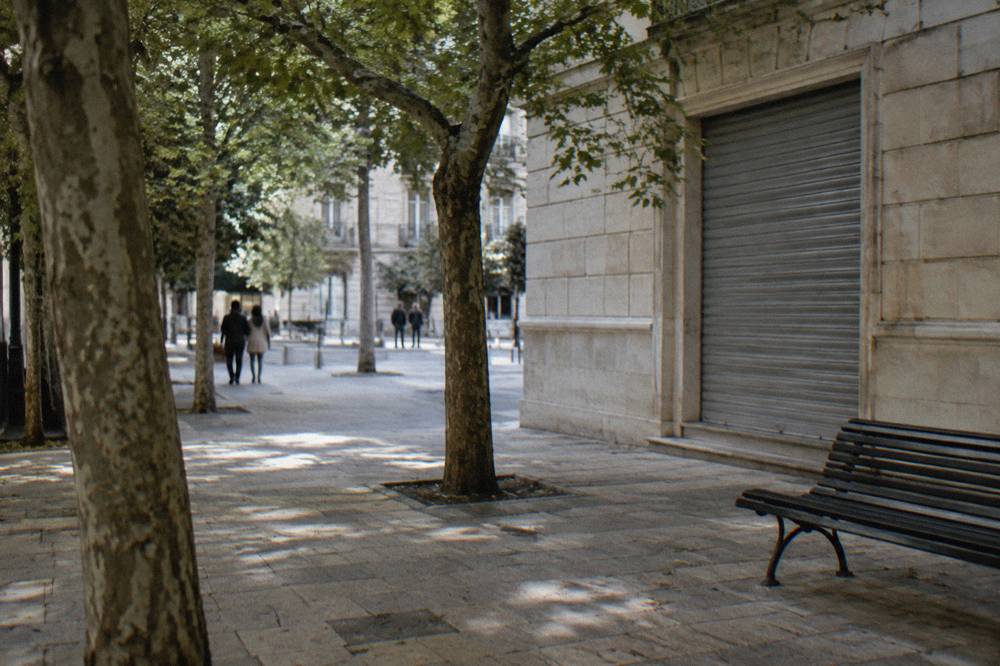
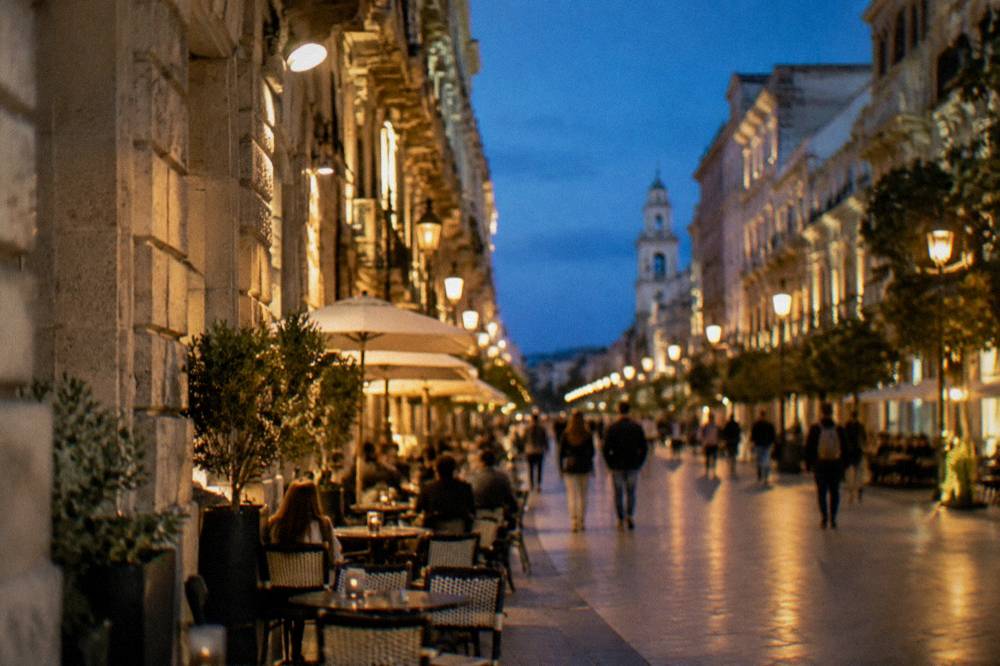
Via Sparano is the main shopping street in Bari: a pedestrianised street in the Murat district lined with clothing chains, shoe shops and department-style retail, running between the edge of the old town and Bari Centrale. The streets around it broaden the choice, and the whole district is walkable in under an hour at a steady pace.
The Murat grid is regular and flat, which makes it easy to work: cross streets lead back toward the sea on one side and toward the station on the other. Shopping here is city-centre retail in the ordinary sense, window to window, and it contrasts with the food lanes of Bari Vecchia a few minutes' walk north. The site's Murat district guide covers the district's layout and character, and the Murat district shopping streets guide covers the retail streets specifically.
Two practical notes shape a Murat shopping day. First, the district sits within the ordinary paid-parking and ZTL rules of the city centre: Bari Vecchia is a limited traffic zone with a camera gate at the castle since 1 July 2026, and rental-car drivers should simply not drive into the old town. The site's Bari parking and driving guide and getting around Bari guide cover the options, and Bari taxis and ride-hailing covers the licensed taxi ranks. Second, if you are arriving by air with shopping bags in mind, the Bari airport guide and the airport to city centre guide set out the transfers, including the Ferrotramviaria airport train at 5.30 euro a single and the fixed 25 euro airport taxi fare to a city-centre hotel.
What Food Should You Buy In Bari?
The food worth buying in Bari is the food the region is known for: orecchiette and other handmade pasta, focaccia barese, olive oil and wine from Puglia, and fresh fish and raw seafood from the old port trade. Two of those, the pasta and the focaccia, are also the two dishes most tied to the city's own streets, and both travel badly, so buy them to eat on the spot.
One plain sentence each, at the level of the plate: orecchiette is the ear-shaped pasta of Puglia; focaccia barese is the city's tomato-topped flatbread; panzerotti are small fried filled pockets; sgagliozze are fried polenta squares sold by weight; ricci are sea urchins and frutti di mare the raw shellfish mix, both served in the seafood restaurants of the old town. The site carries dedicated guides for orecchiette in Bari, focaccia barese, Bari street food, Bari restaurants and the panzerotti guide. For the question of what to carry home rather than eat on the spot, the what should you buy in Bari answer page and the Bari souvenirs guide cover the take-home side, and the where do locals eat in Bari answer covers the eating side.
The same applies to restaurant bills: check the itemised bill against the posted prices, the ordinary habit anywhere in Italy.
A food walk or a cooking class is the alternative to shopping your own way through these dishes, because the classes source the ingredients for you and the walks buy the tastings as they go. The street food walk below is the city-centre option.
Which Day-Trip Towns Are Good For Shopping From Bari?
The day-trip towns that double as shopping stops from Bari are Polignano a Mare and Monopoli on the coast, Alberobello and Locorotondo in the Valle d'Itria, and Ostuni on the hill further south. All sit within roughly 40 to 90 minutes of the city by road, and each has a compact centre of small shops rather than a retail district.
The road distances below are computed free-flow figures from Piazza Mercantile, so treat them as planning numbers, not schedules. Alberobello is the UNESCO World Heritage town of trulli, the dry-stone conical-roofed houses, and its shop trade runs on that character; Locorotondo and Martina Franca share the valley. Polignano a Mare, 37.4 km and about 36 minutes by road, sits above the Lama Monachile cove; Monopoli, 47.3 km and about 43 minutes, is a walled port town. The site carries day-trip guides for Polignano a Mare, Monopoli, Alberobello, Locorotondo and Ostuni, plus route guides such as Bari to Polignano a Mare and Bari to Monopoli and Ostuni. Matera, in Basilicata rather than Puglia, is about 71 km away and its Sassi districts hold their own craft trade; the Matera guide covers it. More of these guides are collected on Bari Italy Travel Guide.
| Town | Distance from Piazza Mercantile | Drive time, free-flow | What the centre holds |
|---|---|---|---|
| Polignano a Mare | 37.4 km | about 36 min | Old-town lanes above the Lama Monachile cove, small shops and food sellers |
| Monopoli | 47.3 km | about 43 min | Walled port centre with food shops and small retail |
| Alberobello | 56.7 km | about 61 min | Trulli districts, a UNESCO World Heritage site, with craft and food shops |
| Locorotondo | 68.8 km | about 58 min | Circular old town in the Valle d'Itria, wine and food trade |
| Martina Franca | 74.9 km | about 68 min | Valle d'Itria town with a baroque-flavoured centre and food shops |
| Ostuni | 85.3 km | about 73 min | Hill town in the Province of Brindisi, whitewashed lanes with small shops |
| Matera | about 71 km | about 69 min | Sassi districts in Basilicata, craft and food trade |
One coastal note worth carrying: Bari itself has no Blue Flag beach in 2026, but Polignano a Mare and Monopoli, the two nearest coastal shopping stops, both hold Blue Flags this year per the Regione Puglia announcement. The Bari beaches guide covers the city's own strands, Pane e Pomodoro and Torre Quetta among them.
When Is The Best Time Of Year For Shopping In Bari?
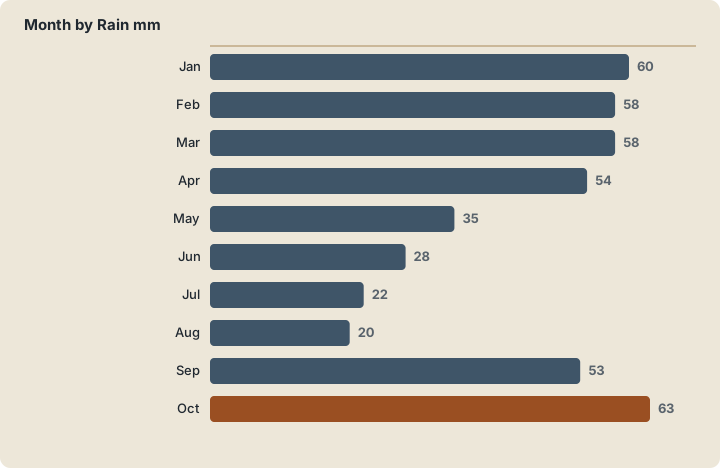
The comfortable months for a walking-and-shopping visit to Bari are April, May, June, September and October, when typical daily highs run from about 17 C to 25 C and rain stays moderate at 54 mm or less per month, per modelled ERA5 data for 1991 to 2020. July and August are the warmest, with mean daily highs of 28.6 C and 29.1 C and only about 4 rain days each.
The climate table below carries the full monthly picture, and the site's Bari weather guide and best time to visit Bari guide expand on it. For a shopping day specifically, the argument is simple: the trade is on foot, the old town lanes hold heat in summer, and the distances between the old town and the Murat district are short enough that weather rarely decides the plan, only the pace. November carries the highest monthly rainfall in the table at 73 mm and August the lowest at 20 mm, so a wet-day alternative is worth knowing; the rainy day in Bari guide lists the indoor options, including the museums.
| Month | Mean daily high C | Mean daily low C | Rain mm | Rain days (1 mm or more) |
|---|---|---|---|---|
| Jan | 12.1 | 7.3 | 60.0 | 9.5 |
| Feb | 12.5 | 7.2 | 58.0 | 9.4 |
| Mar | 14.7 | 8.8 | 58.0 | 9.4 |
| Apr | 17.5 | 11.2 | 54.0 | 9.0 |
| May | 21.6 | 15.3 | 35.0 | 6.9 |
| Jun | 25.9 | 19.5 | 28.0 | 4.8 |
| Jul | 28.6 | 22.0 | 22.0 | 4.1 |
| Aug | 29.1 | 22.4 | 20.0 | 4.3 |
| Sep | 25.1 | 19.1 | 53.0 | 7.6 |
| Oct | 21.1 | 15.6 | 63.0 | 7.9 |
| Nov | 16.9 | 12.0 | 73.0 | 8.9 |
| Dec | 13.2 | 8.7 | 63.0 | 9.6 |
The figures are typical values from modelled ERA5 data, 1991 to 2020. The city's calendar also matters: the Festa di San Nicola fills the old town in early May (7 to 9 May), and the Fiera del Levante trade fair ran into late September in 2026, both of which crowd the shopping streets and the roads around them.
How Do You Get Around Bari For A Shopping Day?
Bari is compact enough that a shopping day needs no vehicle: Bari Vecchia, the Murat district and Bari Centrale all sit within a flat walk of one another. For longer hops, an AMTAB city bus costs 1.00 euro for a single ride, 1.20 euro for a 90-minute ticket and 2.50 euro for a day ticket, and line 16 links Bari Centrale with the airport.
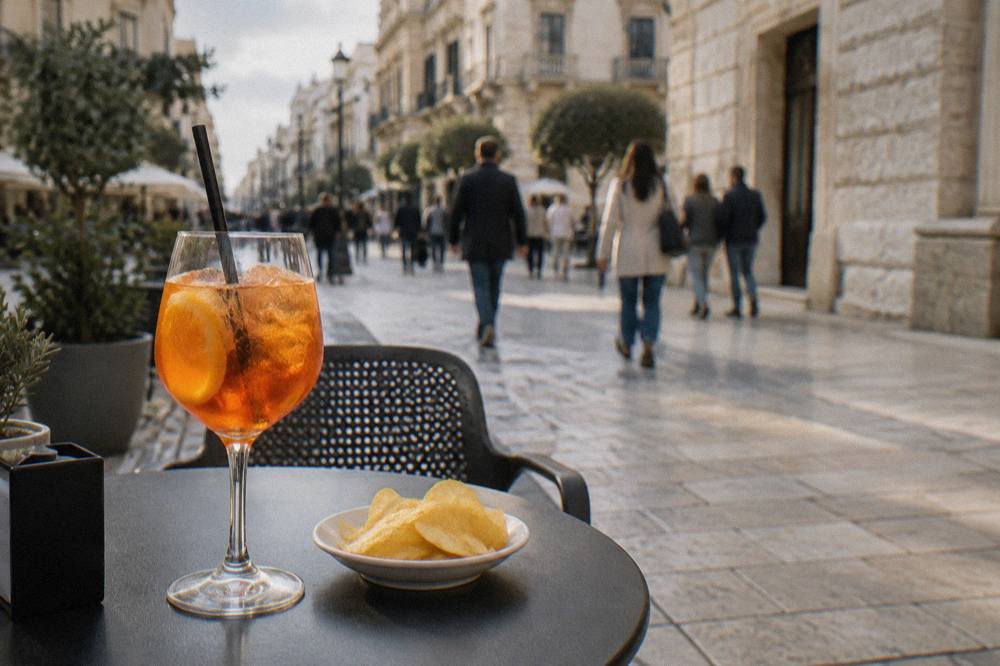
The airport leg is the one trip where the choice matters: the Ferrotramviaria airport train takes 17 minutes and costs 5.30 euro with a contactless card accepted at the gate, the Tempesta shuttle coach costs 5 euro and takes about 30 minutes, and a taxi to a city-centre hotel is a predetermined 25 euro. The Bari airport to city centre guide compares them properly.
| Ticket or fare | Price | Notes |
|---|---|---|
| AMTAB single bus ticket | 1.00 EUR | One ride |
| AMTAB 90-minute ticket | 1.20 EUR | Valid 90 minutes |
| AMTAB day ticket | 2.50 EUR | Until end of service |
| Ferrotramviaria airport train single | 5.30 EUR | 17 minutes, station inside the terminal, contactless accepted |
| Tempesta airport shuttle coach | 5 EUR | About 30 minutes, ticket on board or in the Cotrap app |
| Airport taxi to a city-centre hotel | 25 EUR | Predetermined municipal fare |
For drivers the rule is blunt: do not drive into Bari Vecchia. The old town is a limited traffic zone with a camera gate at the castle since 1 July 2026, and perimeter parking near the old town is paid on working days from 08:30 to 20:30. Service changes during works are posted by the operator, so check the AMTAB and operator pages on the day. The getting around Bari guide holds the fuller picture, including the suburban rail operators, FSE toward the Valle d'Itria and FAL toward Matera, whose timetables set the shape of any day trip that ends in a shopping bag.
What Does A Day In Bari Cost Beyond The Shopping?
The fixed, published costs of a Bari shopping day are modest: city buses at 1.00 to 2.50 euro, the castle at 10 euro full and 2 euro reduced per the Musei Puglia ticket page, and the Pinacoteca and the archaeological museum at 5 euro each or 8 euro combined.
The museum figures matter on a shopping day because the main museums sit inside the same walking loop as the shops: the Swabian castle on the edge of Bari Vecchia, the Pinacoteca Metropolitana Corrado Giaquinto on the Lungomare Nazario Sauro, and the Museo Archeologico di Santa Scolastica beside it.
| Site | Full ticket | Reduced | Hours |
|---|---|---|---|
| Castello Normanno-Svevo | 10 EUR | 2 EUR | Tuesday to Sunday 09:00 to 19:00; October to March Sundays 09:00 to 13:30 except the first Sunday |
| Pinacoteca Metropolitana Corrado Giaquinto | 5 EUR | 2 EUR | Tuesday to Saturday 09:00 to 19:00; Sunday 09:00 to 13:00; closed Monday |
| Museo Archeologico di Santa Scolastica | 5 EUR | 2 EUR (18 to 25) | Tuesday to Saturday 09:00 to 19:00; Sunday from 09:00; combined ticket with the Pinacoteca at 8 EUR |
| Teatro Petruzzelli guided tour | 7 EUR | 2 EUR | Dated slots published monthly |
| Basilica di San Nicola | no fee mentioned on its page | Monday to Saturday 06:30 to 20:30, Sunday 06:30 to 22:00 |
The tourist tax is charged by the accommodation, not the shops: 4.00 euro a night at five-star hotels, 3.00 at four-star, 2.00 at three-star and at B&Bs and short lets, 1.50 at one-star and two-star, always per person per night and for a maximum of four consecutive nights per calendar year. The where to stay in Bari guide and the Bari hotels guide cover the accommodation districts, and the Bari on a budget guide frames the whole spend.
The underground walk suits the culture half of a shopping day particularly well, since it starts inside the old town the market lanes run through.
Is Bari A Good City For A Shopping Break?
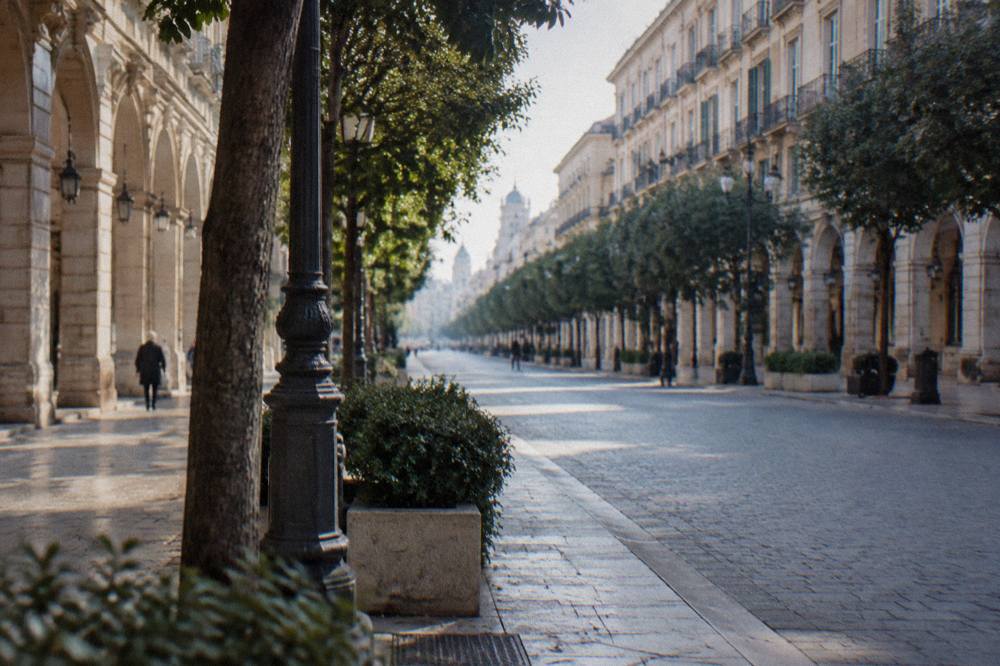
Bari works as a shopping break because everything sits close together: the food markets of Bari Vecchia, the retail of the Murat district around Via Sparano, the seafront and the museums all fit one flat walking area, with a railway station that feeds seven or more day-trip towns within about 90 minutes by road and a city of about 316,000 residents big enough to sustain a real retail trade rather than a tourist one.
That last point is the honest one. Bari is a working regional capital, so the markets supply kitchens rather than coach parties, and the retail on Via Sparano is retail locals actually use. The visitor economy sits on top of that, in the old town lanes and the port. The trade-off is that the city does not package itself: shop names, opening patterns and stall days are not centrally listed anywhere this site could find, so the workable plan is to walk the lanes and squares in the morning, take a guided food walk if you want the stalls decoded, and give the Murat district the late afternoon when the light comes off the streets. The one day in Bari guide sequences exactly that kind of day, and the is Bari worth visiting answer frames the wider decision. For families weighing the same trip, the Bari with kids guide notes what holds children's attention in the old town, and the pasta class below is the one bookable activity that combines the market culture with something a family can do together.
Common Questions About Shopping In Bari
Where do locals shop in Bari?
Locals buy food in the lanes of Bari Vecchia around Piazza Mercantile and Piazza del Ferrarese and at the fish trade by the old port, and shop for clothing and goods in the Murat district around Via Sparano. The two areas sit within one flat walk of each other.
What food should you buy in Bari?
Buy what the region is known for: orecchiette and other handmade pasta, focaccia barese, olive oil and wine from Puglia, and fresh fish and raw seafood from the old port trade. The pasta and the focaccia are best eaten on the spot rather than carried.
Is Via Sparano the main shopping street in Bari?
Yes. Via Sparano is the pedestrianised main shopping street of the Murat district, lined with clothing and shoe shops and department-style retail, running between the edge of the old town and Bari Centrale.
Can you visit the orecchiette makers in Bari?
Strada Arco Basso in Bari Vecchia is the street long associated with handmade orecchiette. The makers work to their own rhythms, so treat a visit as a walk past open doorways rather than a scheduled stop, and combine it with the surrounding market lanes.
Which towns near Bari are good for shopping?
Polignano a Mare and Monopoli on the coast, Alberobello and Locorotondo in the Valle d'Itria, and Ostuni to the south, all within about 36 to 73 minutes of Piazza Mercantile by road under free-flow conditions. Matera, in Basilicata, is about 69 minutes away.
How much does public transport cost in Bari?
An AMTAB city bus single costs 1.00 euro, a 90-minute ticket 1.20 euro and a day ticket 2.50 euro. The Ferrotramviaria airport train costs 5.30 euro and takes 17 minutes, and an airport taxi to a city-centre hotel is a predetermined 25 euro.
Shopping in Bari is really two short walks and a boatload of food: the lanes of the old town in the morning, the grid of the Murat district in the afternoon, and a bag of pasta, oil or wine to carry home at the end of it.