Best Time To Visit Bari: Season By Season
Bari, the capital of Puglia on the Adriatic coast of southern Italy, is a year-round city, but the seasons differ sharply. Here is what the climate data, festival calendar and sightseeing rhythm say about the best time to go.
Short answer
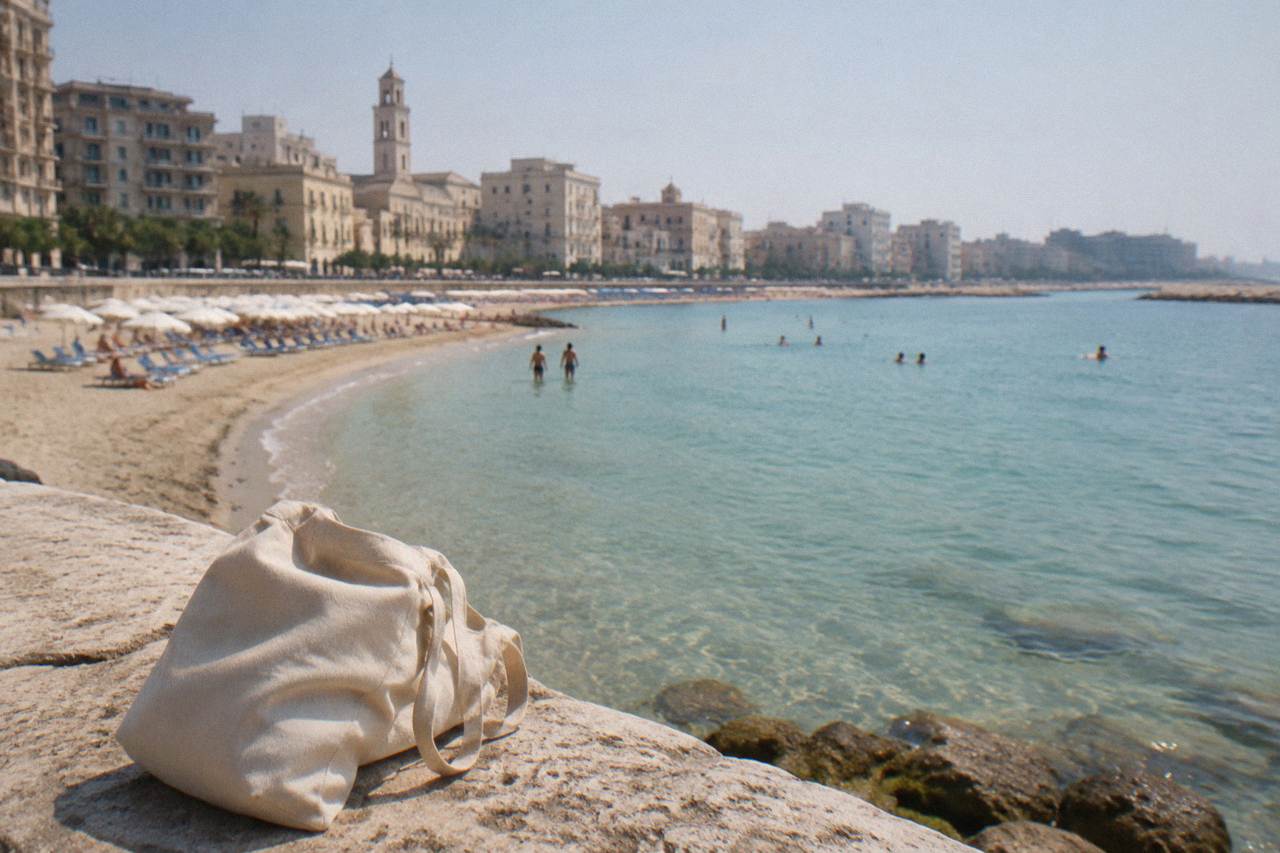
Late April to June and September to early October give Bari its balance of warm weather, walkable days and thin crowds; the sea is at about 27 C in July and August, and the Festa di San Nicola fills the old town in early May.
Bari, the capital of the Puglia region on the Adriatic coast of southern Italy, does not shut down in winter, and that is the first thing to understand when picking a date. The city has about 316,000 residents, a working port, a university and a daily rhythm that does not depend on tourism, so the basilica keeps its hours in January and the focaccia comes out of the oven in February. What changes across the year is the weather, the price of staying, the state of the beaches at Pane e Pomodoro and Torre Quetta, and the crowd levels in Bari Vecchia. The climate table below, with typical values from modelled ERA5 data, 1991 to 2020, shows the shape of the year: mild winters, warm dry summers and about 587 mm of rain spread across roughly ninety wet days.
For planning beyond the calendar, the overall guide to the city covers the sights in depth, and how many days to give the city sets the pace. This page sticks to the question of when.
What Is The Best Time To Visit Bari Overall?
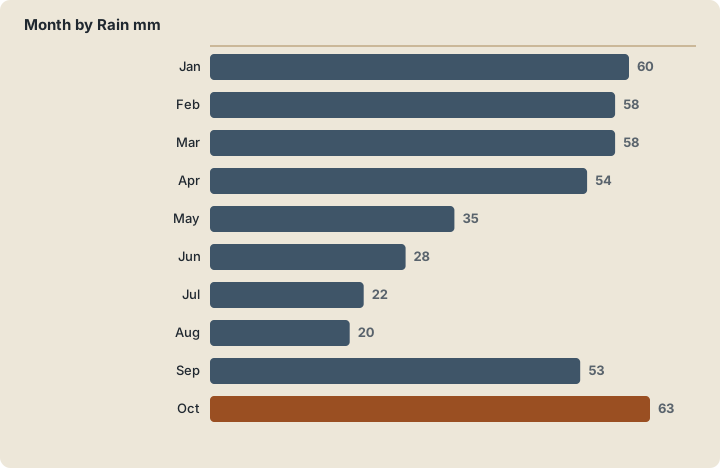
Late April to June, and again from September into early October, is the best time to visit Bari, because daytime highs run from about 17 C in April to 26 C in June and back down to about 21 C in October, with rain easing from 35 mm in May to 28 mm in June and bottoming out at 20 mm in August.
The sea reaches about 27 C in July and August and holds about 22 C in October, so the shoulder months carry warm days, thin crowds and a sea that is still swimmable in early autumn.
The reasoning sits in the rain-day column as much as the temperature column. July averages 4.1 rain days of at least 1 mm and August 4.3, which is the drier stretch of the year, but those same months push mean daily highs to 28.6 C and 29.1 C and draw the largest share of Italian and foreign holiday traffic to the Puglia coast. May averages 6.9 rain days and June 4.8, at temperatures that the climate table puts at 21.6 C and 25.9 C mean daily maximum, which is the whole argument for late spring in one line of data.
September is the quiet compromise. The mean daily maximum is 25.1 C, the sea has stored the summer's heat, and the 53 mm of rain for the month is concentrated in the second half as the first Atlantic systems arrive. Early September behaves like August with fewer people; late September starts to feel like October. The detailed weather page unpacks the monthly figures month by month.
Is Summer A Good Time To Visit Bari, Or Too Hot And Crowded?
Summer in Bari, meaning July and August, is genuinely hot: the mean daily maximum is 28.6 C in July and 29.1 C in August, with nights that stay near 22 C, and the sea sits at about 27 C. Rain almost disappears, 22 mm in July and 20 mm in August over about four rain days each. It is a good month for swimming and boat trips and a hard month for long walking circuits at midday.
The old town, Bari Vecchia, is dense stone with narrow lanes that hold the day's heat into the evening, so the practical summer pattern is to walk early, swim or boat in the afternoon, and eat late. The city beaches sit close in: Pane e Pomodoro is about 2.1 km from Piazza Mercantile, Torre Quetta about 3.9 km and San Girolamo about 4.3 km to the north-west, all computed road distances. Facilities and charges at those beaches vary by season and should be confirmed locally. One correction worth knowing: Bari itself has no Blue Flag beach in 2026. The Blue Flags in the province of Bari belong to Polignano a Mare and Monopoli, per the Regione Puglia announcement, and Puglia as a region ranked first in Italy for bathing water quality for the sixth year, with 99.9 percent of monitored waters rated excellent by ARPA Puglia.
For boat days, note the departure rule that trips many readers book from Bari: cave boats for the Polignano a Mare coast leave from Polignano a Mare or from San Vito, not from the Bari waterfront, and the Monopoli boat trips leave from Monopoli. The listings say where each one boards. Within Bari itself, the sea cruises that admire the city from the water, aperitivo in hand, do leave from the Bari port area, and they run through the warm months.
Is Spring The Best Season For Bari And Puglia?
Spring, taken as April and May, is arguably the best season for Bari: mean daily highs of 17.5 C in April and 21.6 C in May, nights of 11.2 C and 15.3 C, and rainfall falling from 54 mm to 35 mm across the two months. The Festa di San Nicola runs 7 to 9 May by tradition, so early May combines mild weather with the city's own patronal festival, its corteo storico and its sea procession.
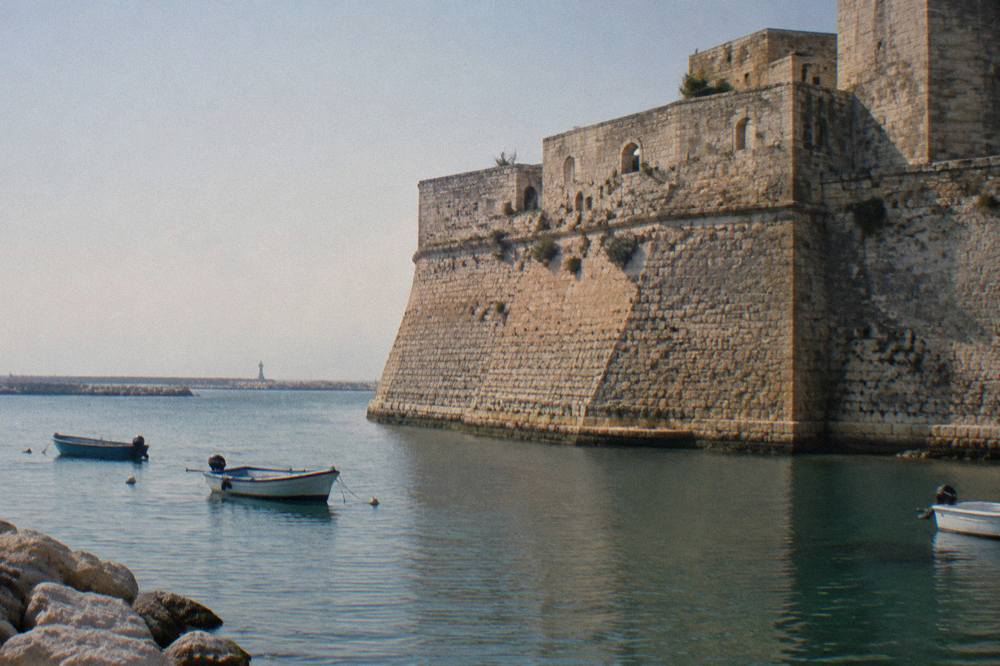
May is the month the calendar and the climate table agree on. The comune of Bari published the 2026 programme with the historical procession starting at 20:00 on 7 May from piazza Federico II di Svevia, next to the Swabian castle; the sea procession on 8 May and the manna ceremony on 9 May are the traditional follow-on events, reported by the comune's own notices. Write the dates into a plan as "early May (7 to 9 May)", because the 2027 programme had not been announced. The feast fills Bari Vecchia, Piazza Mercantile and Piazza del Ferrarese with lights and stalls, and it is the one moment when the city performs itself for its own sake rather than for visitors.
April is quieter and slightly wetter, with 9.0 rain days on average, but the day trips inland are at their greenest then. The Valle d'Itria towns, Alberobello, Locorotondo and Martina Franca, and the whitewashed hill of Ostuni are reachable by train and bus combinations; the Trulli Link service ties Trenitalia and FSE trains and buses together for the Alberobello leg, with the FSE portion reported at 5.90 EUR on top of the rail fare, so confirm current fares with the operator before travelling. The Bari to Alberobello guide covers the routes.
Is Autumn A Good Time To Visit Bari?
Autumn, from September to November, starts as one of the best windows of the year and cools steadily: mean daily highs of 25.1 C in September, 21.1 C in October and 16.9 C in November, with rain rising from 53 mm to 63 mm and then 73 mm, the highest monthly total of the year. The sea holds about 22 C in October, so early autumn still supports beach days at Pane e Pomodoro.
The trade through the autumn is simple: you exchange the near-certainty of dry weather for thinner crowds and a city back at its own rhythm. September keeps 7.6 rain days on the climate table, October 7.9, November 8.9, so the rain arrives roughly one day in three by November but rarely settles in for long. Daylight on the Lungomare Nazario Sauro stays generous into October, and the beaches guide tracks which stretches stay usable and which lifeguard services end with the season.
Late September also brings the Fiera del Levante, the trade fair on the seafront site north of the centre: the fair's own site carries each edition's dates. It is a working fair more than a tourist event, but it fills hotels in the surrounding districts for its run, which is worth knowing when a September price looks odd. Check the operator's dates before booking around it.
Is Winter In Bari Worth The Trip?
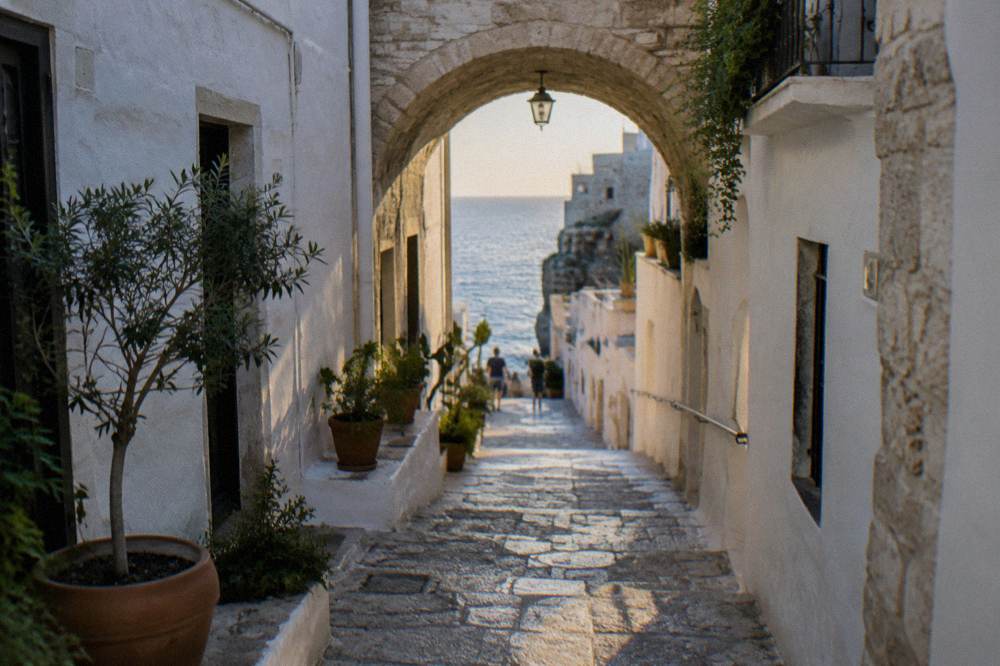
Winter in Bari is mild rather than warm: January and February mean daily highs sit at about 12 C, nights at 7.3 C and 7.2 C, and rain runs 60 mm and 58 mm over about 9.5 rain days each month. Nothing in the data suggests a frozen city; the basilica keeps its hours and the street food keeps its counters, so winter suits city breaks, cooking classes and indoor sights more than beach days.
The Basilica di San Nicola is open Monday to Saturday 06:30 to 20:30 and Sunday 06:30 to 22:00, with no admission fee mentioned on its page, and those hours do not shrink for the season. The Swabian castle, the Castello Normanno-Svevo, is open Tuesday to Sunday 09:00 to 19:00, with Sunday openings of 09:00 to 13:30 from October to March except the first Sunday of each month; a full ticket costs 10 EUR and a reduced ticket 2 EUR per the Musei Puglia ticket page. The Pinacoteca Metropolitana Corrado Giaquinto and the Museo Archeologico di Santa Scolastica keep their winter hours on the same municipal pages, and both are listed at 5 EUR full and 2 EUR reduced, with an 8 EUR combined ticket.
Winter is also the season of the theatre. The Teatro Petruzzelli runs its opera and concert calendar through the cold months, and guided tours of the theatre cost 7 EUR full and 2 EUR reduced, with dated slots published monthly on the foundation's page. Between a morning in the museums and an evening at the theatre, a winter short break in Bari holds together well, and the where to stay guide maps which districts put you within walking distance of both.
What Does The Monthly Climate Table Say For Bari?
The monthly figures for Bari, typical values from modelled ERA5 data, 1991 to 2020, run from a January mean of 9.6 C to an August mean of 25.9 C, with mean daily highs of 12.1 C in January rising to 29.1 C in August, and annual rainfall of about 587 mm spread across roughly ninety rain days, of which November carries 73 mm and August 20 mm. The table below is the whole year in one view.
| Month | Mean high C | Mean low C | Mean C | Rain mm | Rain days |
|---|---|---|---|---|---|
| Jan | 12.1 | 7.3 | 9.6 | 60 | 9.5 |
| Feb | 12.5 | 7.2 | 9.8 | 58 | 9.4 |
| Mar | 14.7 | 8.8 | 11.7 | 58 | 9.4 |
| Apr | 17.5 | 11.2 | 14.4 | 54 | 9.0 |
| May | 21.6 | 15.3 | 18.6 | 35 | 6.9 |
| Jun | 25.9 | 19.5 | 22.9 | 28 | 4.8 |
| Jul | 28.6 | 22.0 | 25.5 | 22 | 4.1 |
| Aug | 29.1 | 22.4 | 25.9 | 20 | 4.3 |
| Sep | 25.1 | 19.1 | 22.1 | 53 | 7.6 |
| Oct | 21.1 | 15.6 | 18.2 | 63 | 7.9 |
| Nov | 16.9 | 12.0 | 14.4 | 73 | 8.9 |
| Dec | 13.2 | 8.7 | 10.9 | 63 | 9.6 |
Read the table against your own plans rather than against a single verdict. A traveller whose day is a walking loop of Bari Vecchia, the Murat district and the Lungomare Nazario Sauro reads the rain-day column first. A traveller whose day is a boat cave trip or a beach afternoon at Pane e Pomodoro reads the high-temperature column and the sea figures. Both readers get their answer from the same rows.
The sea-temperature figures are modelled 2023 to 2025 means and only three months are released for them, which is enough to bracket the swimming season:
| Month | Sea temperature, modelled mean |
|---|---|
| February | about 14 C |
| July | about 27 C |
| August | about 27 C |
| October | about 22 C |
What Events Should Shape The Timing Of A Bari Trip?
Three fixed points anchor Bari's year: the Festa di San Nicola on 7 to 9 May, the Bif&st film festival in late March (its 17th edition began 21 March 2026), and the Fiera del Levante trade fair closing in late September. Time a trip around the May feast for the biggest spectacle, or around late March for a film-festival city at quiet spring prices.
The May feast deserves the emphasis. The relics of Saint Nicholas, which rested at Myra about 750 years before sailors brought them to Bari in 1087 and they were placed in the crypt in 1089, are the reason the festival exists, and the sea procession re-enacts the arrival by boat. The 2026 edition's historical procession left piazza Federico II di Svevia at 20:00 on the Thursday; the 2027 programme had not been announced, so plan on the traditional early-May window and confirm the details nearer the date.
Beyond those three, the calendar thins out in the sources. No December feast programme and no Christmas listing was confirmed on official pages, so this page prints none.
| Period | What the calendar holds | What the climate holds |
|---|---|---|
| Late March | Bif&st film festival, 17th edition from 21 March 2026 | Highs about 14.7 C, 9.4 rain days |
| Early May | Festa di San Nicola, 7 to 9 May | Highs about 21.6 C, 6.9 rain days |
| July and August | Peak beach and boat season | Highs 28.6 to 29.1 C, sea about 27 C |
| October to March | Teatro Petruzzelli season and guided tours | Highs 12.1 to 21.1 C |
When Is Bari At Its Quietest?
January, February and the working weeks of November and early December are the quietest periods in Bari, with rain days near 9.5 per month in the depths of winter and mean highs of 12.1 to 13.2 C from December through February. The trade is straightforward: thin streets and easy museum entry against shorter days and a real chance of rain on any given morning.
The museums make the quiet season easy. The Puglia Musei Card, at 20 EUR for six months of access to all the Direzione regionale Musei Puglia sites, covers the Swabian castle and pays for itself across a museum-heavy stay, and its winter use means no queue at the ticket desk. The state museums' free first Sunday of the month was reported for the castle in October 2026, so confirm the scheme applies to your dates before counting on it.
Day trips also run through winter, on thinner timetables. Castel del Monte, an octagonal castle inscribed by UNESCO in 1996, is open every day, 10:00 to 18:45 from 1 April to 30 September and 09:00 to 17:45 from 1 October to 31 March, with entry at 10 EUR full and 2 EUR reduced, and it is about 62 km and 59 minutes by road from Piazza Mercantile. The Grotte di Castellana keep a constant underground temperature year-round, which makes them a genuine winter option: the full 3 km route costs 25 EUR for visitors aged 15 and over and the partial 1 km route 22 EUR, per the site's own price page. Check the operator's timetable for winter frequencies before committing to a rail-and-bus chain.
| Winter day trip | Distance from Piazza Mercantile by road | Drive time, free-flow | Entry |
|---|---|---|---|
| Castel del Monte | 62.0 km | about 59 min | 10 EUR full, 2 EUR reduced |
| Grotte di Castellana | 43.1 km | about 47 min | 25 EUR full route, 22 EUR partial |
| Trani | 47.2 km | about 45 min | Swabian castle 8 EUR, 2 EUR reduced |
| Altamura | 50.7 km | about 50 min | Archaeological museum 5 EUR, 2 EUR reduced |
| Matera (Sassi), in Basilicata | 70.8 km | about 69 min | check the operator's site |
What Is The Best Month To Visit Bari For Food And Walking?
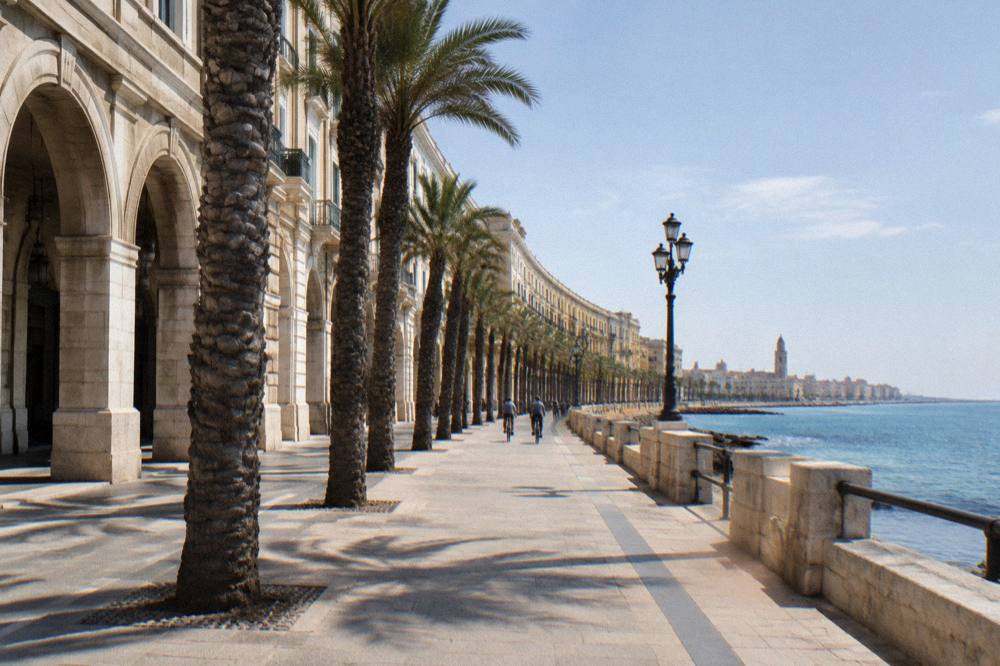
May, June, September and October are the months that best serve a food-and-walking trip to Bari, because the mean highs of 21.6 to 25.9 C across those four months keep a circuit of Bari Vecchia, the Murat district and the Strada Arco Basso pasta street comfortable on foot, while the food counters of the old town run all year regardless. Orecchiette is the pasta shape of Puglia, and it is made by hand in the old town in every season.
The food calendar in Bari barely has an off-season, which decouples it from the weather. Focaccia barese, panzerotti, sgagliozze and raw seafood at the fish market near Molo San Nicola are everyday staples, described plainly on the street food page and the orecchiette page; no market day or opening hour is confirmed in the sources, so treat each as something to find on the ground. What the seasons change is how those stops combine with the rest of a day: in June you walk the old town at 25.9 C mean highs and finish with a swim; in January you finish with a theatre curtain at the Petruzzelli.
Guided food and walking products run year-round and render their own prices and ratings from the listings. The street food guide compares the formats; the picks below are the ones this site features.
Does The Tourist Tax Or ZTL Change With The Season?
No: Bari's tourist tax runs at 1.50 to 4.00 EUR per person per night by accommodation category, for a maximum of 4 consecutive nights per calendar year, in every season. Neither the tax nor the zone takes a summer holiday.
The rates, set by the comune of Bari, are 4.00 EUR at 5-star hotels, 3.00 EUR at 4-star hotels, 2.00 EUR at 3-star hotels and at B&Bs, short lets and agriturismi, and 1.50 EUR at 1-star and 2-star hotels, collected by the accommodation at checkout or on arrival. Every other comune on your route, Polignano a Mare, Monopoli, Alberobello and Matera included, sets its own tax, so ask the host in each town rather than assuming the Bari table travels.
For drivers, the rule is season-blind: do not drive into Bari Vecchia. The camera gate reads plates at the Castello entrance at piazza Federico II di Svevia, an afternoon window of 16:00 to 18:00 is reported alongside the morning one, and perimeter parking near the old town is paid on working days 08:30 to 20:30. Park outside the zone and walk in; the getting around guide and the parking and driving page cover the details, and the Bari Italy Travel Guide homepage indexes both.
Common Questions About The Best Time To Visit Bari
What Is The Best Month To Visit Bari?
May and September. May averages a 21.6 C mean daily high with only 6.9 rain days and carries the Festa di San Nicola from 7 to 9 May; September averages 25.1 C with the sea still warm from the summer. Both sit in the shoulder season the climate table favours.
Is Bari Too Hot In August?
August has the highest mean daily high of the year at 29.1 C, with nights near 22.4 C, so midday walking is heavy going even though rain is at its lowest at 20 mm. The sea is about 27 C, which makes August a swimming month more than a sightseeing month.
Can You Swim In Bari In October?
Yes, early in the month. The modelled sea temperature for October is about 22 C, against about 27 C in July and August and about 14 C in February, and the mean daily high of 21.1 C keeps beach weather plausible through the first half of the month.
Does Bari Close In Winter?
No. The basilica keeps its Monday to Saturday 06:30 to 20:30 and Sunday 06:30 to 22:00 hours, the Swabian castle is open Tuesday to Sunday, and the Teatro Petruzzelli season runs through the cold months. January and February highs average about 12 C.
When Is The Festa Di San Nicola In Bari?
Early May, 7 to 9 May by tradition. The 2026 edition's historical procession left piazza Federico II di Svevia at 20:00 on 7 May, with the sea procession and the manna ceremony reported on 8 and 9 May. The 2027 programme had not been announced, so confirm before booking around it.
Is Bari Cheaper Outside Summer?
No nightly rate is printed on this site, but the demand logic holds: July and August are the peak months on the Puglia coast, and the November to February window, with 8.9 to 9.6 rain days per month and highs of 12 to 17 C, is the quietest. The tourist tax of 1.50 to 4.00 EUR per person per night applies in every season.
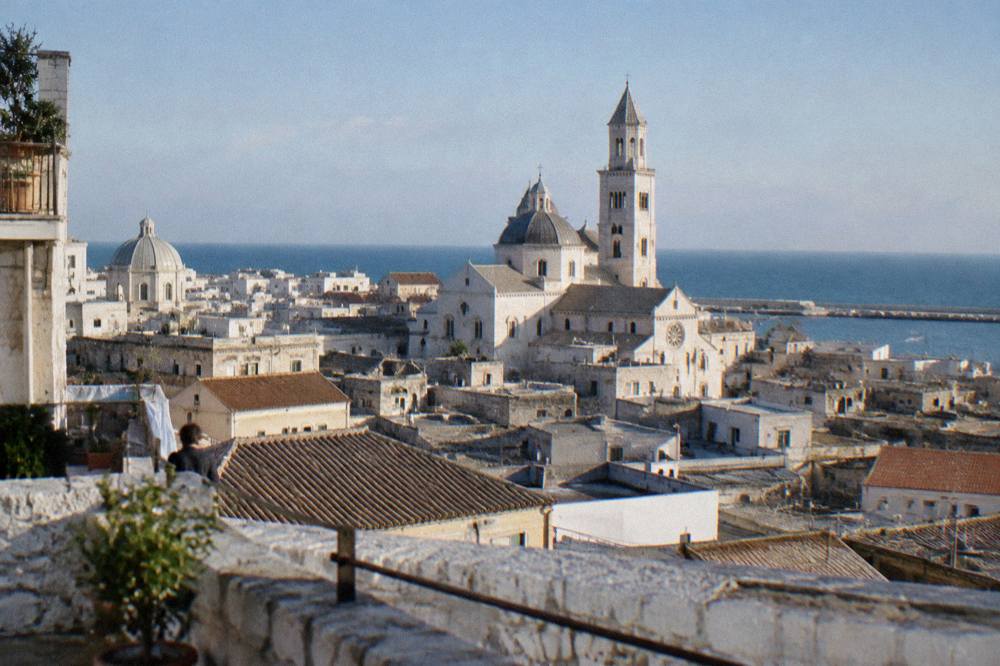
The short version of the whole page: go in May for the festival and the mild air, June or September for the balance of warmth and space, July and August if the sea at 27 C is the point of the trip, and any month from October to April if the plan is basilica, castle, pasta and theatre rather than the beach. Whatever the month, Check availability on the featured old town walk early, because its slots fill first in the festival week and the shoulder-season weekends.
