Castellana Caves From Bari: Grotte Di Castellana Tours And Tickets
The Grotte di Castellana lie about 43 km from Bari, and their ticket page lists a 3 km full route at 25 euro and a 1 km partial route at 22 euro. This guide sets out how to get there, what each route covers, and which guided tours run from Bari.
Short answer
The Grotte di Castellana sit in Castellana Grotte, about 43 km and 47 minutes by road from Bari's Piazza Mercantile. The official ticket page lists the full route (3 km, about 100 minutes) at 25 euro for ages 15 and over and the partial route (1 km, about 50 minutes) at 22 euro, with reduced fares for ages 6 to 14. Buses and guided day tours from Bari cover the trip.
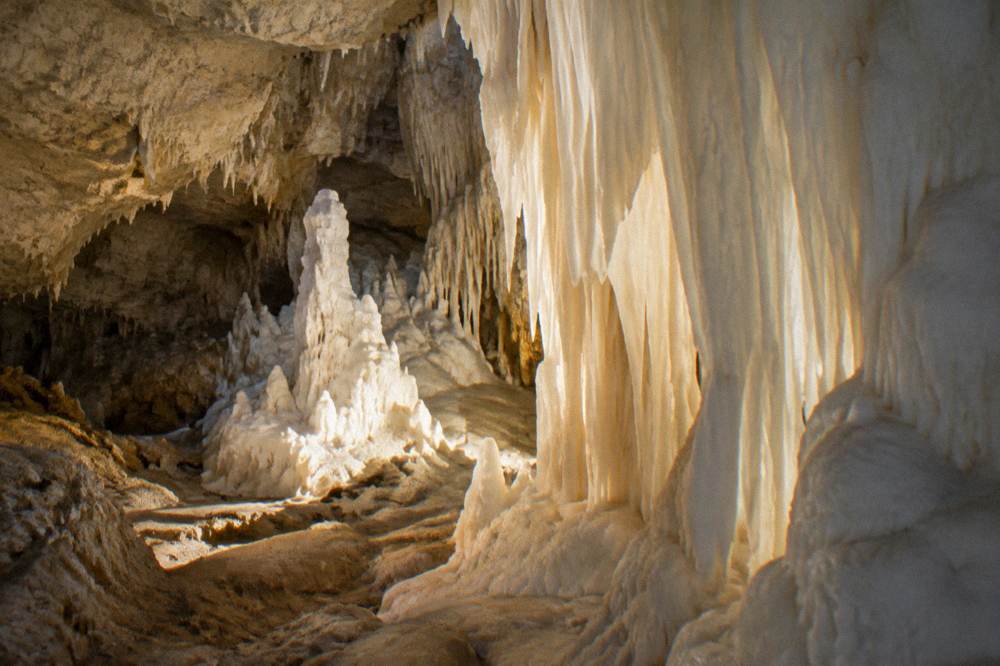
The Grotte di Castellana are one of the great underground sights of Puglia, the southern Italian region whose capital, Bari, sits on the Adriatic Sea about 43 km to the north-west. The cave system opens beneath the town of Castellana Grotte, and its official ticket page lists two visit routes: a full route of 3 km taking about 100 minutes, and a partial route of 1 km taking about 50 minutes.
What Are The Grotte Di Castellana And Where Exactly Are They?
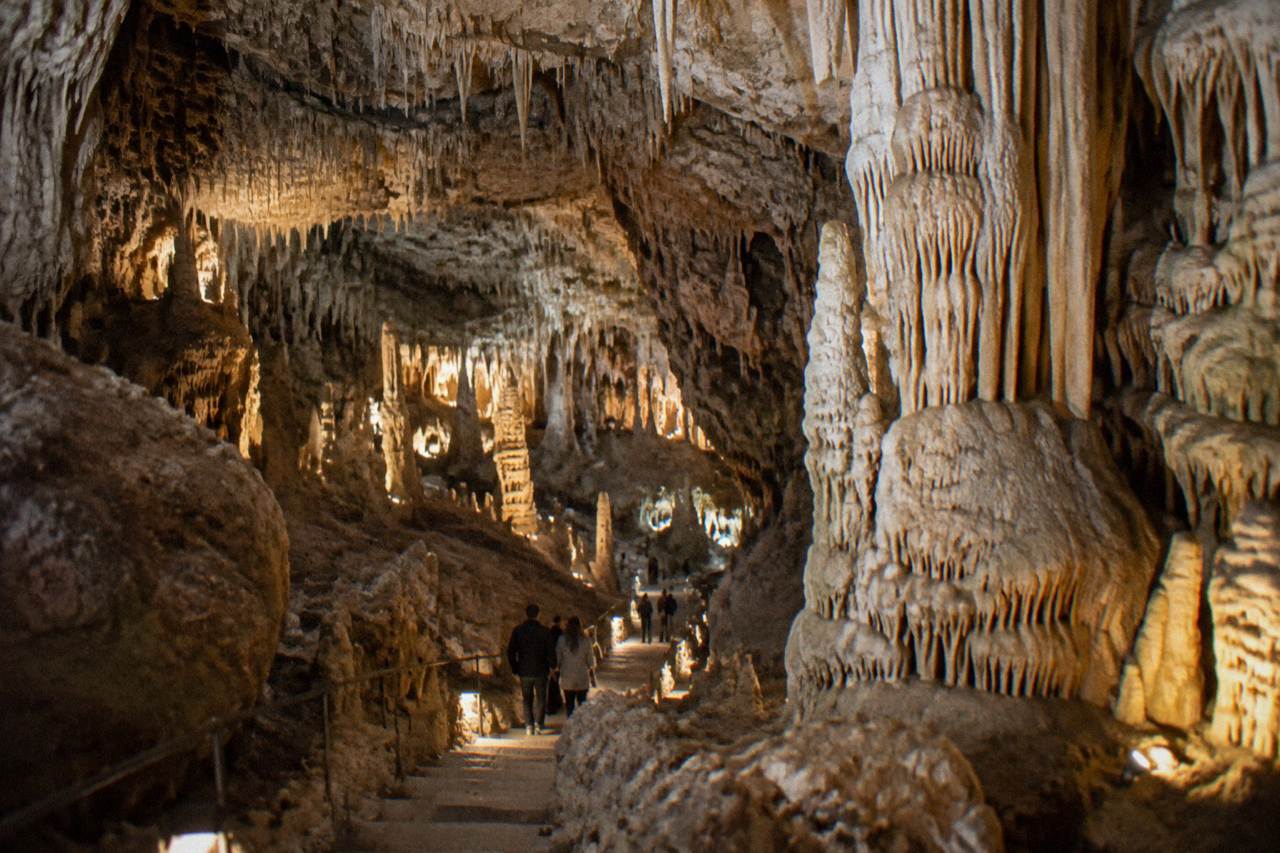
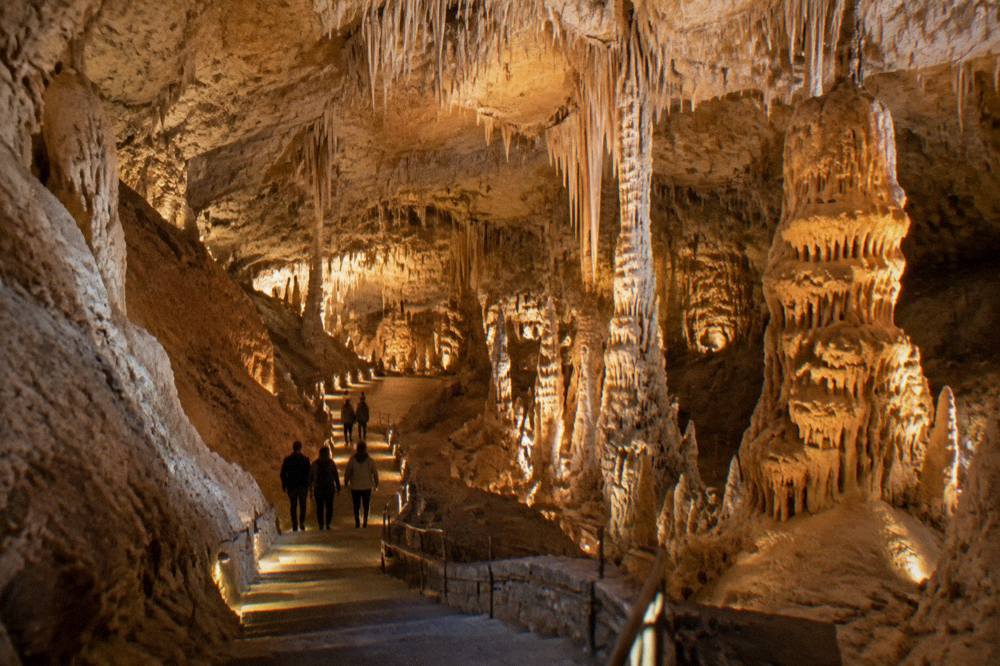
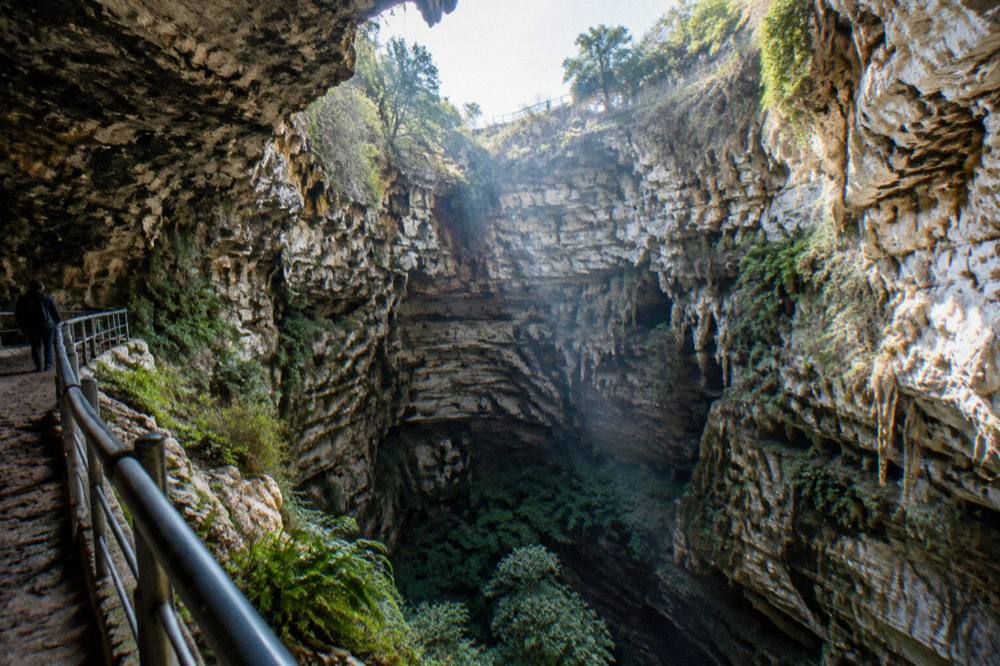
The Grotte di Castellana are a limestone cave system under the town of Castellana Grotte, about 43 km and 47 minutes by road from Piazza Mercantile in Bari, the capital of Puglia in southern Italy. The caves are a karst network of chambers and passages, and the site's own information pages describe a full visit route of 3 km and a shorter route of 1 km, both led along lit walkways.
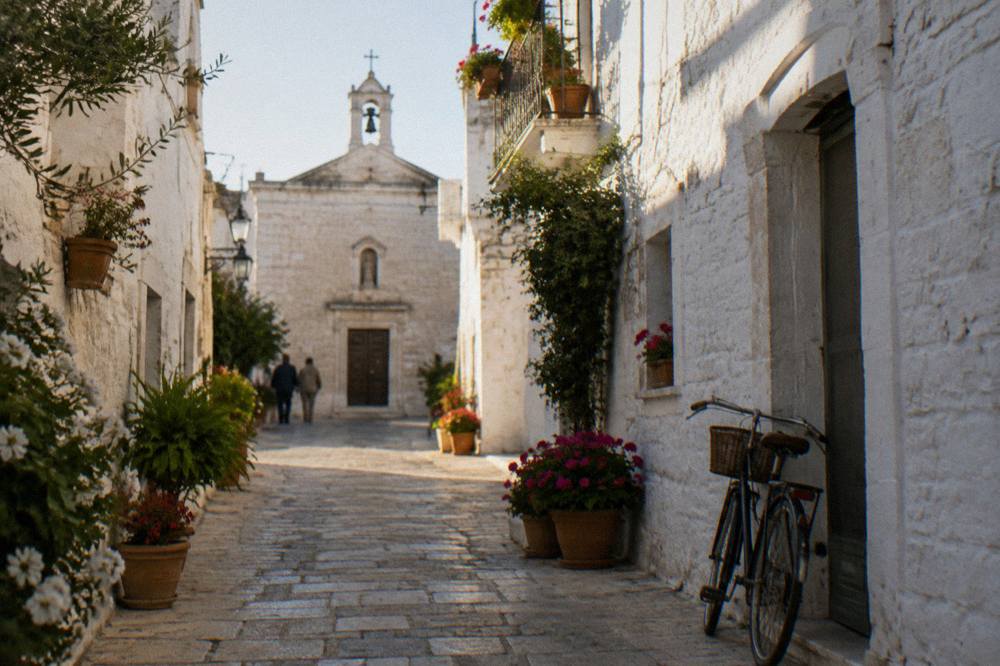
The town's name carries the word Grotte precisely because the caves sit underneath it. Bari is the natural base: the caves are closer to Bari than any other regional gateway, and the drive south-east runs through the Itria Valley countryside toward Alberobello and Locorotondo. The surrounding province is a limestone plateau, and the caves are part of that same geology that shapes the trulli districts and the gravina ravines further inland at Gravina in Puglia and Altamura.
The site is a managed attraction, not a wild caving trip. Visits follow fixed routes with a guide, on paths and staircases inside the system. The two routes and their prices come from the official pages, and nothing on this site adds a figure the operator does not publish.
For travellers weighing the caves against other underground or archaeological stops, the Castel del Monte day trip covers a very different sight, an octagonal hilltop castle listed by UNESCO in 1996.
How Do You Get To The Castellana Caves From Bari?
By road, the Grotte di Castellana are about 43 km and 47 minutes from Piazza Mercantile in Bari, measured as a free-flow driving distance. FSE, the regional operator, runs bus and train services that reach Castellana Grotte via lines through Conversano and Putignano. There is no direct Trenitalia service: the caves are off the Bari-Lecce rail line, so the journey is by road or by FSE connections.
Driving is the straightforward option. The distance figures in the table below are computed road distances from central Bari, and they give a realistic sense of how the caves sit relative to the other famous stops of the region. A rental car covers the trip in under an hour in normal traffic, and the same road continues south to Alberobello and Locorotondo, which is why the caves pair naturally with a Valle d'Itria loop.
| Destination from Piazza Mercantile, Bari | Road distance | Driving time (free-flow) |
|---|---|---|
| Grotte di Castellana | about 43 km | about 47 minutes |
| Polignano a Mare | about 37.4 km | about 36 minutes |
| Alberobello | about 57 km | about 61 minutes |
| Locorotondo | about 69 km | about 58 minutes |
| Ostuni | about 85 km | about 73 minutes |
| Conversano | about 31 km | about 36 minutes |
By public transport, FSE serves the area on its regional network, with lines running through Conversano and Putignano toward Castellana Grotte. Timetables are seasonal and the operator posts current schedules on its own site, so check the timetable before setting the day. Service changes during works are posted by the operator. Travellers starting from the station should read the guide to Bari Centrale and the city's transport hubs, which explains how the rail and bus networks meet.
The third option is a guided day tour, which removes the timetable question entirely. The most direct product on this site is an official guided tour of the grottoes with the entry ticket included, departing from Castellana itself rather than from Bari, so you make your own way to the town and the guided visit begins there.
This pick departs from Castellana, not from Bari: the guided visit and the included entry ticket start at the caves. For travellers who prefer a door-to-door day that bundles the caves with other towns, the bus day tours listed later in this guide leave from Bari itself.
What Do Castellana Caves Tickets Cost?
The official ticket page lists the full route at 25 euro for visitors aged 15 and over, and the partial route at 22 euro, with reduced fares for ages 6 to 14. The full route covers 3 km in about 100 minutes, and the partial route covers 1 km in about 50 minutes. Children under 6 enter free, per the operator's own fare table.
Those are walk-up figures from the operator's page. Two practical notes follow from the same source. First, the operator recommends buying online for busy periods, which reserves a timed slot. Second, the two routes are genuinely different products: the partial route is not a discount version of the full one but a shorter walk that turns back earlier in the system.
| Route | Distance | Duration | Full fare (15+) | Reduced (6 to 14) |
|---|---|---|---|---|
| Full route | 3 km | about 100 minutes | 25 euro | reduced |
| Partial route | 1 km | about 50 minutes | 22 euro | reduced |
Compared with the region's other paid sights, the caves sit mid-range. Castel del Monte costs 10 euro full and 2 euro reduced; the Swabian castle of Trani costs 8 euro and 2 euro; the Egnazia museum and park costs 10 euro and 2 euro. The caves charge more because the visit is longer and guided, and the comparison is worth knowing when budgeting a week of day trips.
| Puglia sight | Full ticket | Reduced | Hours (per official pages) |
|---|---|---|---|
| Grotte di Castellana, full route | 25 euro | reduced 6 to 14 | timed visits, check the operator |
| Castel del Monte | 10 euro | 2 euro | daily 10:00 to 18:45 (1 Apr to 30 Sep); 09:00 to 17:45 (1 Oct to 31 Mar) |
| Swabian castle of Trani | 8 euro | 2 euro | Mon to Sat 08:30 to 19:30; Sun 08:30 to 13:30 |
| Egnazia museum and park | 10 euro | 2 euro | Mon to Sat and first Sunday 08:30 to 19:30 |
| Altamura National Archaeological Museum | 5 euro | 2 euro | Mon to Fri 08:30 to 19:00; Sat, Sun and holidays 08:30 to 13:30 |
If the planning question is whether the caves justify the fare, the dedicated answer page on whether the Grotte di Castellana are worth visiting works through the route choice in detail.
The box above covers the Castellana-departing product alone. The trio below widens the comparison to the two other tours this site pairs with a caves day, the Bari-based pasta class for the city morning and the Monopoli-based boat trip for the coast afternoon.
Between the ticket options above, one departs from Castellana and the other two are Bari-based or Polignano-based products that pair well with a caves day, as set out below.
Full Route Or Partial Route: Which Castellana Caves Visit Should You Choose?
The full route runs 3 km and about 100 minutes and suits visitors comfortable with stairs and a long underground walk; the partial route runs 1 km and about 50 minutes and suits families with small children or anyone pairing the caves with a second stop the same day. Both carry a guide along lit paths, and the fare difference is 3 euro between the two adult tickets.
The choice is really about the rest of the day. A visitor driving out from Bari for the caves alone has time for the full route and lunch. A visitor combining the caves with Polignano a Mare, which is about 36 minutes further by road, will often prefer the shorter walk to keep the afternoon on the coast. The operator publishes both routes daily in season; the timetable page shows which slots run on which days.
Temperature inside the system is steady year-round, which is the standard property of deep caves, so the visit works in July and in January alike. Footwear with grip matters more than the season: the paths are paved but damp in places, and the routes include staircases. The operator's practical pages set out the current rules on access and photography, and those are worth a read before booking a slot.
One planning trap deserves a sentence. The caves are often described as being "near Bari", which is true by Puglia scale but not on foot: there is no rail link from Bari Centrale, and the trip is a drive, an FSE connection or a tour bus. Budget the travel both ways when deciding between the two routes.
Can You Take A Guided Caves Tour From Bari Itself?
Yes: several day tours sold from Bari include the Grotte di Castellana with transport, and one official product pairs a guided grottoes visit with the entry ticket, departing from Castellana. Tours that leave from Bari collect at a central point and travel by bus or van; the official grottoes tour with ticket starts at the caves, so the two serve different itineraries.
The distinction matters when reading listings. A Bari-based bus tour bundles travel, the caves and free time, usually with Polignano a Mare, because the two sit about 36 road minutes apart and the pairing makes a natural day. The official guided tour with entry ticket is for travellers already in Castellana Grotte, whether they drove or arrived by FSE, and it guarantees the guide and the admission in one booking.
For the rest of a Puglia week, Bari-based products cover the other big regional days. A walking tour with an orecchiette-making class, departing from Bari, is the classic city morning; orecchiette is the pasta shape of Puglia, and the class format teaches it in a home kitchen setting in the old town.
And on the coast, the boat trips to the Polignano caves depart from Polignano itself, not from the Bari waterfront. A Monopoli-based option runs a longer cruise to the Polignano a Mare caves, and Monopoli is itself a stop worth an afternoon.
When Is The Best Time Of Year To Visit The Castellana Caves?
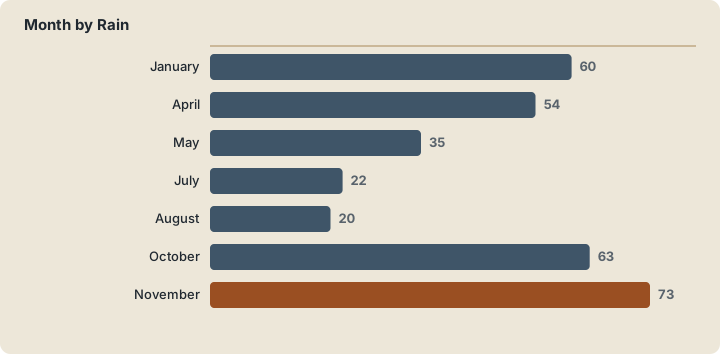
Any month works, because the cave interior holds a steady temperature whatever the season outside. For the surrounding itinerary, May, June, September and October are the comfortable middle ground: the climate table shows May highs around 21.6 C and September around 25.1 C, against 29.1 C in August, with about 587 mm of rain a year across the region.
Those climate figures are typical values from modelled ERA5 data, 1991 to 2020, and they describe Bari and its hinterland, not the cave interior. The table below samples the year.
| Month | Mean daily high | Mean daily low | Rain |
|---|---|---|---|
| January | 12.1 C | 7.3 C | 60 mm |
| April | 17.5 C | 11.2 C | 54 mm |
| May | 21.6 C | 15.3 C | 35 mm |
| July | 28.6 C | 22.0 C | 22 mm |
| August | 29.1 C | 22.4 C | 20 mm |
| October | 21.1 C | 15.6 C | 63 mm |
| November | 16.9 C | 12.0 C | 73 mm |
November carries the largest monthly rain total in the table at 73 mm and August the smallest at 20 mm, with about 4 rain days in July and August. Rain matters little for the caves themselves, an underground visit is dry by definition, but it matters for the pairing: a wet November day ruins a Polignano cliff walk while leaving a cave visit untouched. That makes the Grotte di Castellana one of the reliable wet-weather days of the region, a point worth remembering for autumn and winter trips. The same logic applies to Bari's museums, such as the Pinacoteca Metropolitana Corrado Giaquinto, open Tuesday to Saturday 09:00 to 19:00 with a 5 euro full ticket.
Summer brings the crowds of July and August to the surface towns, and the operator recommends online booking in that period. A timed slot bought ahead fixes the entry and removes the risk of a full departure, which is the one operational limit the caves page itself flags.
How Do You Combine The Castellana Caves With Polignano A Mare Or Alberobello?
The caves, Polignano a Mare and Alberobello form a triangle of short drives: Polignano a Mare is about 37.4 km from Bari and about 36 minutes from the caves by road, Alberobello about 61 minutes from Bari and roughly half an hour inland from the caves, and Locorotondo a few minutes beyond Alberobello. A one-day loop from Bari covering two of the three is realistic; all three in one day is tight.
The geography explains the standard itineraries. The caves lie inland at Castellana Grotte; Polignano a Mare sits on the coast about 37.4 km from Bari; Alberobello and Locorotondo lie further south in the Valle d'Itria. Driving from Bari, the efficient order is Bari to the caves, then south to Alberobello or Locorotondo, then back north-west through the interior, or the reverse with a morning on the coast before the caves.
| Day-trip combination from Bari | What the day holds | Best suited to |
|---|---|---|
| Caves plus Polignano a Mare | Guided cave route in the morning, coast and Lama Monachile in the afternoon | First-time visitors, summer days |
| Caves plus Alberobello | Cave route, then the trulli districts of the Valle d'Itria | Visitors who want two headline sights |
| Caves plus Locorotondo and Martina Franca | Cave route, then the Valle d'Itria towns by Trulli Link or car | Slow travellers with two nights |
| Caves only, with Castellana Grotte town | Full 3 km route and lunch in the town | Rainy days, relaxed pacing |
By public transport, the Trulli Link service links Trenitalia and FSE trains to Locorotondo, Alberobello and Martina Franca, with the FSE leg reported at 5.90 euro on top of the rail fare, so confirm the current fare and timetable with the operator before planning. The trulli of Alberobello are a UNESCO World Heritage site, and the Sassi of Matera likewise, though Matera lies in Basilicata, the neighbouring region, and is a separate day entirely at about 69 road minutes from Bari.
For the coast side of the day, the Polignano a Mare guide covers the town and its boat trips, and the Alberobello guide the trulli side of the valley.
What Should You Bring And Know Before A Caves Visit From Bari?
Bring closed shoes with grip, a light layer for the constant underground cool, and a booked slot if visiting in July or August. The full route covers 3 km and about 100 minutes on paths and stairs, the partial route 1 km and about 50 minutes, and the operator's own pages set the current rules on bags, photography and access. Confirm the timetable on the official site before setting out.
A few practicalities round out the day. If you drive, do not plan to drive into Bari Vecchia at either end of the trip: the old town is a limited traffic zone with a camera gate at the Castello since 1 July 2026, so leave the car in a peripheral car park. Back in the city, the Swabian castle costs 10 euro full and 2 euro reduced and opens Tuesday to Sunday 09:00 to 19:00, a solid finale if the day ends early.
Food is the other constant of any Puglia day trip. In Bari the street-food staples are orecchiette, panzerotti and focaccia barese, each a plain, local classic; around Castellana and the Valle d'Itria the trattorias serve the same regional cooking. Check posted prices and the itemised bill anywhere busy, the standard traveller's discipline in any Italian resort town, and keep bags zipped and in front on crowded summer buses.
Emergency services across Italy answer on 112. The country uses the euro, is a Schengen member, and Italian is the language of the caves' guided visits, with English-language tours running where the listing says so; the products on this site state their language on each listing.
How Does A Caves Day Fit Into A Wider Puglia Itinerary From Bari?
The Grotte di Castellana slot most naturally into days two or three of a Bari-based week, after the city itself and alongside one or two Valle d'Itria towns. Bari's own headline sights, the Basilica di San Nicola, the Swabian castle and the old town, fill a first day; the caves, Alberobello and the coast fill the second and third; Matera, Trani and Lecce each take a further day.
Bari rewards the base role. The basilica opens Monday to Saturday 06:30 to 20:30 and Sunday 06:30 to 22:00 with no admission fee mentioned on its page, the Lungomare Nazario Sauro runs the seafront, and the full rundown of sights sits on the things-to-do page. From that base the day-trip ladder runs outward: Giovinazzo and Trani north, Polignano and Monopoli south on the coast, the caves and the Valle d'Itria inland, Matera across the regional border into Basilicata.
The caves earn their place in that ladder because they are the region's one deep-underground sight, and because they are weather-proof in a way no beach or piazza is. On a week that splits between coast, valley and city, one morning underground balances the itinerary, and the 47-minute drive keeps the day easy from Bari.
For a full week's plan that sequences all of these, the pairing guides to Monopoli and the other day trips carry the detail. Whatever the sequence, book the cave slot first and build the day around it: the timed entries are the one fixed point in an otherwise flexible itinerary.
The second set of options below gathers the three products this page features: the official grottoes visit with entry ticket, the Bari walking and orecchiette class for the city day, and the Monopoli boat tour for the coast day.
Each listing shows its own departure point, inclusions and cancellation terms, so read the product page for the details that matter to your dates.
Common Questions About The Castellana Caves From Bari
How far are the Castellana caves from Bari?
The Grotte di Castellana are about 43 km from Piazza Mercantile in Bari, about 47 minutes by road in free-flow conditions. There is no direct rail link; the trip is by car, by FSE regional connections or by a guided day tour.
How much do Grotte di Castellana tickets cost?
The official ticket page lists the full route at 25 euro for ages 15 and over and the partial route at 22 euro, with reduced fares for ages 6 to 14. The operator recommends booking online for busy periods.
Which Castellana caves route should I take?
The full route covers 3 km in about 100 minutes; the partial route covers 1 km in about 50 minutes. Take the full route if the caves are your only stop, and the partial route if you are pairing them with Polignano a Mare or Alberobello the same day.
Can you visit the Castellana caves on a tour from Bari?
Yes. Day tours from Bari include the caves with transport, usually combined with Polignano a Mare, and an official guided tour with the entry ticket included departs from Castellana itself. Check each listing for its departure point.
Are the Castellana caves worth it if you are short on time?
If your Bari stay is two days or less, the city and Polignano a Mare usually come first. From three days onward, the caves are a strong half-day addition and a reliable option in rain or heat, since the visit is underground and unaffected by weather.
Can you combine the Castellana caves with Alberobello in one day?
Yes. The caves and Alberobello sit within about half an hour of each other by road, and both fit one driving day from Bari with an early start. By public transport the Trulli Link reaches Alberobello and Locorotondo, with the FSE leg reported at 5.90 euro on top of the rail fare, so confirm times with the operator.
However you build the day, the sequence that works for most Bari-based travellers is a booked cave slot in the morning, one valley or coast town in the afternoon, and the drive back to the city before dinner. Book the slot, check the operator's timetable for your date, and the rest of the day arranges itself around the caves.