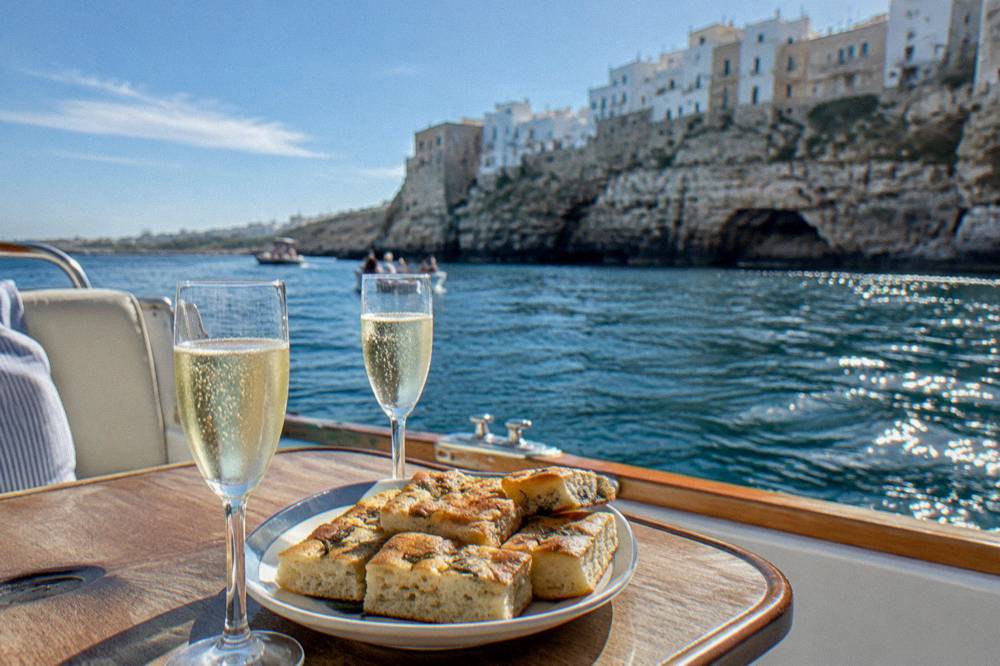
Is It Worth Going To Polignano A Mare?
Polignano a Mare sits about 36 minutes south of Bari by road and holds a 2026 Blue Flag. An editorial look at what the town offers, how to get there and when it earns its place on a Puglia itinerary.
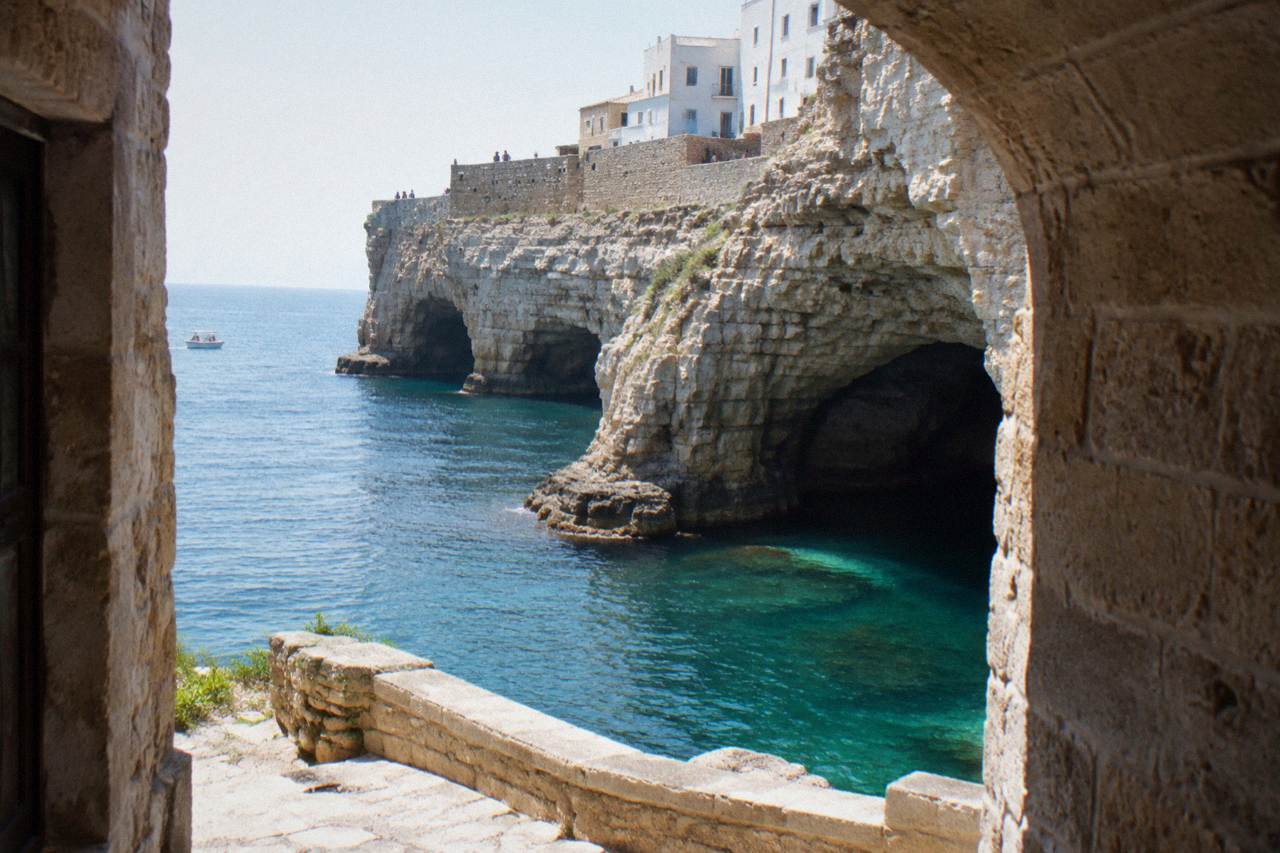
Polignano a Mare is a clifftown on the Adriatic coast of Puglia, the southern Italian region whose capital is Bari, and it sits about 37 km and 36 minutes by road from Piazza Mercantile in the centre of Bari. The town is known for houses built straight on limestone cliffs above the sea, for the cove of Lama Monachile at its foot, and for sea caves that small boats visit from the local harbour. It holds a 2026 Blue Flag, one of only two awarded in the Province of Bari that year, alongside Monopoli. For a traveller based in Bari, the honest question is not whether the town is attractive but whether it deserves a day compared with Alberobello, Matera or Lecce, and this page works through that with the figures the sources give.
Is It Worth Going To Polignano A Mare?
Yes, by editorial judgement, Polignano a Mare earns a day trip from Bari for its cliffs, the Lama Monachile cove, the sea caves and a 2026 Blue Flag coastline, and the journey is short: about 37 km and 36 minutes by road, or roughly 25 to 35 minutes on the regional rail line that runs 33 km from Bari toward Lecce. The reason, not the postcard, is what carries the verdict: the town combines in one walkable spot three things Bari itself does not offer together, a cliff setting, cave boats departing on the spot, and an internationally recognisable old centre. The Blue Flag is the objective marker: Polignano a Mare and Monopoli are the only two 2026 Blue Flag towns in the Province of Bari, per the Regione Puglia announcement, while Bari itself holds none. The full argument for the town, including its caves and how to fit it into a wider Puglia route, is laid out in the Polignano a Mare day trip guide.
That verdict needs two qualifications. The first is time: the town is small, and the centre, the cove and the cliff walk can fill half a day without a boat. Adding a cave cruise or a swim stop is what turns a quick look into a full day, and the boats leave from Polignano itself, not from Bari. The second is season. Typical values from modelled ERA5 data, 1991 to 2020, put the July mean daily maximum at 28.6 C and August at 29.1 C in Bari, with the sea at about 27 C in July and August, so summer suits the water but brings the crowds; November averages 73 mm of rain against 20 mm in August, which favours the quiet months for walking but not for swimming.
The town also works as a pair with Monopoli, about 47 km and 43 minutes by road from Bari, and the comparison between the two is worth a decision before you travel, covered in detail in Is It Better To Stay In Monopoli Or Polignano?.
How Do You Get From Bari To Polignano A Mare?
The fastest options from Bari are the regional train on the Bari-Lecce line, typically 25 to 35 minutes over 33 km according to timetable reports, or the road route of about 37 km and 36 minutes from Piazza Mercantile, both short enough for a half-day or a spontaneous afternoon. The rail figure is reported by secondary timetable services rather than printed on an official point-to-point page, so confirm the departure on the operator's site before you travel; no official rail fare for the journey exists in print, and tickets are bought at Bari Centrale or on the operator's app. The road figure is a free-flow calculation from mapped routing, so allow more in the August evening traffic.
Driving needs one warning that applies to the whole region and to Bari in particular: Bari Vecchia is a limited traffic zone with a camera gate at the Castello, and the advice to anyone in a rental car is simple, do not drive into it. Park outside the old town and walk in. For the train traveller, the practical route from Bari Centrale is the regional service toward Lecce, which also serves Monopoli at 41 km and Ostuni at 75 km, so Polignano can share a day with either. The dedicated transport detail, including how the Trulli Link connects to the Valle d'Itria towns, is in How To Get From Bari To Polignano A Mare.
The related tour on this page is a speedboat cruise to the caves that departs from Polignano a Mare, not from the Bari waterfront, and it fits a train arrival well because the departure point is in the town you have come to see: Check availability.
All three picks above start from Polignano or from towns nearby on the same stretch of coast and inland plateau, so none of them is a Bari-based tour and each is planned around your own arrival in the south. The rest of the planning pages sit on Bari Italy Travel Guide.
What Makes The Polignano Coast Different From Bari's Beaches?
The difference is geometry: Bari's city beaches, Pane e Pomodoro about 2.1 km, Torre Quetta about 3.9 km and San Girolamo about 4.3 km from Piazza Mercantile, are shore beaches on a low coast, while Polignano a Mare sits on cliffs above caves that boats enter directly from the harbour, and its waters carry a 2026 Blue Flag that no Bari beach holds. The Blue Flag point is the one hard, sourced distinction: the Regione Puglia announcement for 2026 names Polignano a Mare and Monopoli in the Province of Bari, and Puglia's bathing waters as a whole rank first in Italy for the sixth consecutive year with 99.9 percent rated excellent by ARPA Puglia, with 78 bathing waters monitored in the province of Bari. Facilities and charges at the city beaches and at Polignano vary by season and should be confirmed locally.
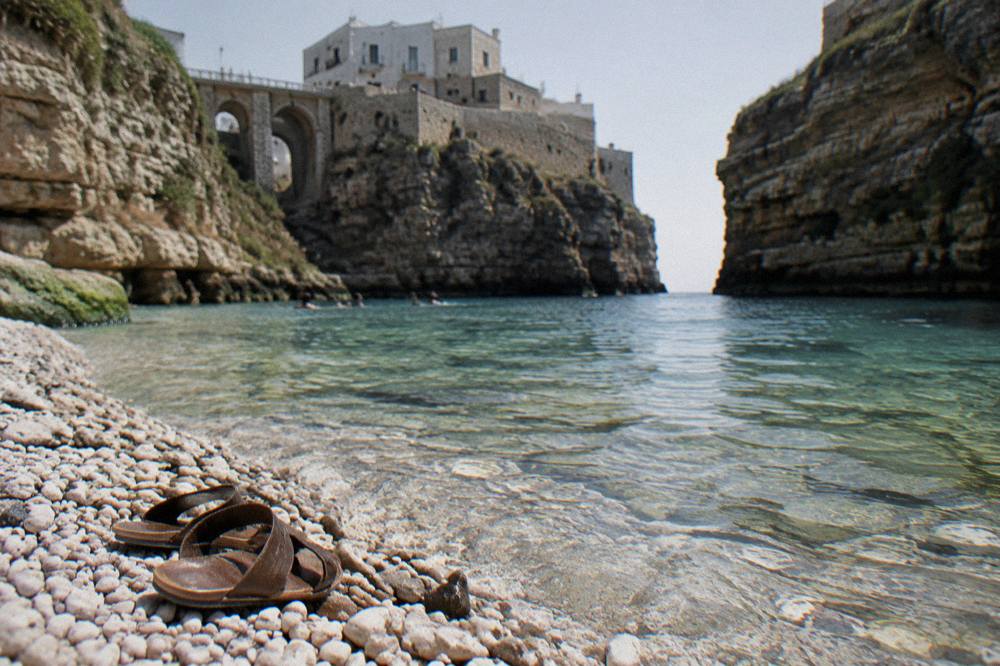
The caves are the second distinction. The limestone under the town is hollowed into sea grottoes that small boats and speedboats visit on short cruises from the Polignano harbour, with swim stops in summer, and the town's own cove, Lama Monachile, sits in a ravine between the cliffs at the foot of the old centre. No entry fee or access limit for the cove appears in any official source, so treat it as open public space and check locally for any seasonal restriction. Bari's sea offerings, by contrast, are the city cruises that leave from the Bari port area for the waterfront, a different product for a different day, described in What Not To Miss In Bari.
Still undecided about the whole region as a base? The wider case for the city is made in Is Bari Italy Worth Visiting?.
Is Polignano A Mare Too Crowded To Enjoy?
Crowding is real in July and August, when the sea is about 27 C and rain days fall to about 4 per month, so the editorial judgement is to go early in the morning or in the shoulder months, when May averages 21.6 C as a daily high with 35 mm of rain and September 25.1 C with 53 mm, figures from modelled ERA5 data, 1991 to 2020. The climate table makes the trade-off plain: the same months that give the warmest water, July and August with mean daily highs of 28.6 C and 29.1 C, give the town its full summer traffic, while October still averages a 21.1 C high and the sea about 22 C. Choose by what you want from the water, then time the day around it.
| Month | Mean daily high | Rain | Notes for Polignano |
|---|---|---|---|
| May | 21.6 C | 35 mm | Feast week in Bari 7 to 9 May, quiet coast |
| July | 28.6 C | 22 mm | Sea about 27 C, peak crowds |
| August | 29.1 C | 20 mm | Warmest water, busiest month |
| September | 25.1 C | 53 mm | Sea still mild, thinner traffic |
| October | 21.1 C | 63 mm | Sea about 22 C, walking weather |
A practical pattern for a summer day: take an early train from Bari Centrale, walk the old centre and the cliff terrace before late morning, take a boat in the middle of the day when the caves are the most attractive place to be, and be back in Bari for the evening passeggiata on the Lungomare Nazario Sauro. In the shoulder months the same day works without the early start. The town has no timed entry system or ticketed old centre in any source, so "crowded" is a comfort judgement, not an access problem, and the off-season version of the coast is covered from the Bari side in Is Bari A Walkable City?.
How Does Polignano Fit Into A Puglia Itinerary?
Polignano a Mare works as one stop on a southern loop from Bari: Monopoli is about 47 km and 43 minutes by road, the Grotte di Castellana are about 43 km and 47 minutes inland, and Alberobello, Locorotondo and Ostuni all sit within the same day's driving radius, so a four to five day trip can pair the coast with the Valle d'Itria without repeating ground. Those numbers make Castellana the one inland stop on this loop with a printed price you can plan against.
The pairing logic is simple. Polignano gives you cliffs, caves and water; Alberobello gives you the UNESCO trulli town; Castellana gives you the underground caves; Monopoli gives you a working port town with its own Blue Flag. Doing all four in one day is possible by road but rushed, and the sample routing in Four To Five Days In Bari splits them across two days instead. If the trip is shorter, the choice is between coast and trulli, and the honest editorial answer is that Polignano plus Monopoli makes a better single coastal day than Polignano alone, because the two towns are 10 km of coast apart.
The pick above departs from Polignano a Mare, so it slots into the coastal day rather than the trulli day, and its live listing carries the current price, dates and cancellation terms.
One further note on the region's geography, because it shapes the itinerary: Matera, the famous Sassi town, is in Basilicata, not Puglia, and the drive from Piazza Mercantile is about 71 km and 69 minutes, a different direction from Polignano. A day trip to Matera and a day on the Polignano coast are separate days, and squeezing both into one is the planning error the itineraries page exists to prevent. For the balance of time in the city itself, see How Many Days In Bari Is Enough?, and for the wider food reasons to stay, What Food Is Bari Famous For?.
Common Questions About Polignano A Mare
Is it worth going to Polignano a Mare?
By editorial judgement yes: the cliffs, the Lama Monachile cove, the cave boats and a 2026 Blue Flag coastline justify the short trip from Bari, about 36 minutes by road or roughly 25 to 35 minutes by reported regional train times.
Can you swim at Polignano a Mare?
The cove of Lama Monachile sits at the foot of the old town and the town holds a 2026 Blue Flag. The sea reaches about 27 C in July and August and about 22 C in October, modelled 2023 to 2025 means. Facilities and any seasonal rules at the cove should be confirmed locally.
Do the cave boats leave from Bari?
No. Boats for the Polignano coast caves depart from Polignano a Mare or from Monopoli, not from the Bari waterfront. Bari's own port cruises are a separate city product on the Bari seafront.
How long do you need in Polignano a Mare?
Half a day covers the old centre, the cove and the cliff walk. A full day adds a cave cruise and a swim stop, or a combined trip with Monopoli or the Grotte di Castellana, each within an hour by road.
When is the best time to visit Polignano a Mare?
May, June and September balance warmth and space: May averages a 21.6 C daily high and September 25.1 C, typical values from modelled ERA5 data, 1991 to 2020, against July and August highs of 28.6 C and 29.1 C with the year's thinnest rain.
Polignano a Mare rewards the traveller who treats it as the coastal half of a Puglia loop rather than a checkbox: arrive by train from Bari Centrale, spend the middle of the day on the water among the caves, and let the clifftop evening close the day before the short ride home.