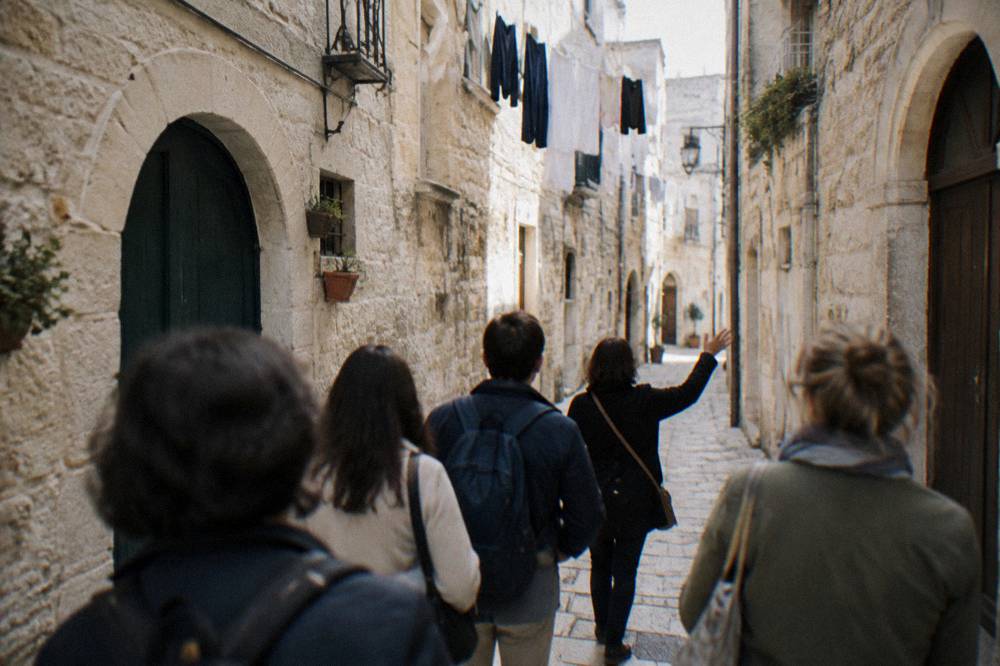
Two Days In Bari: Old Town, Crypt And A Coastal Afternoon
Bari, the capital of Puglia on the Adriatic coast of southern Italy, rewards a two-day visit with a walkable old town, a basilica crypt that holds the relics of Saint Nicholas, and an easy hop to the coast and the hill towns of the Valle d'Itria.
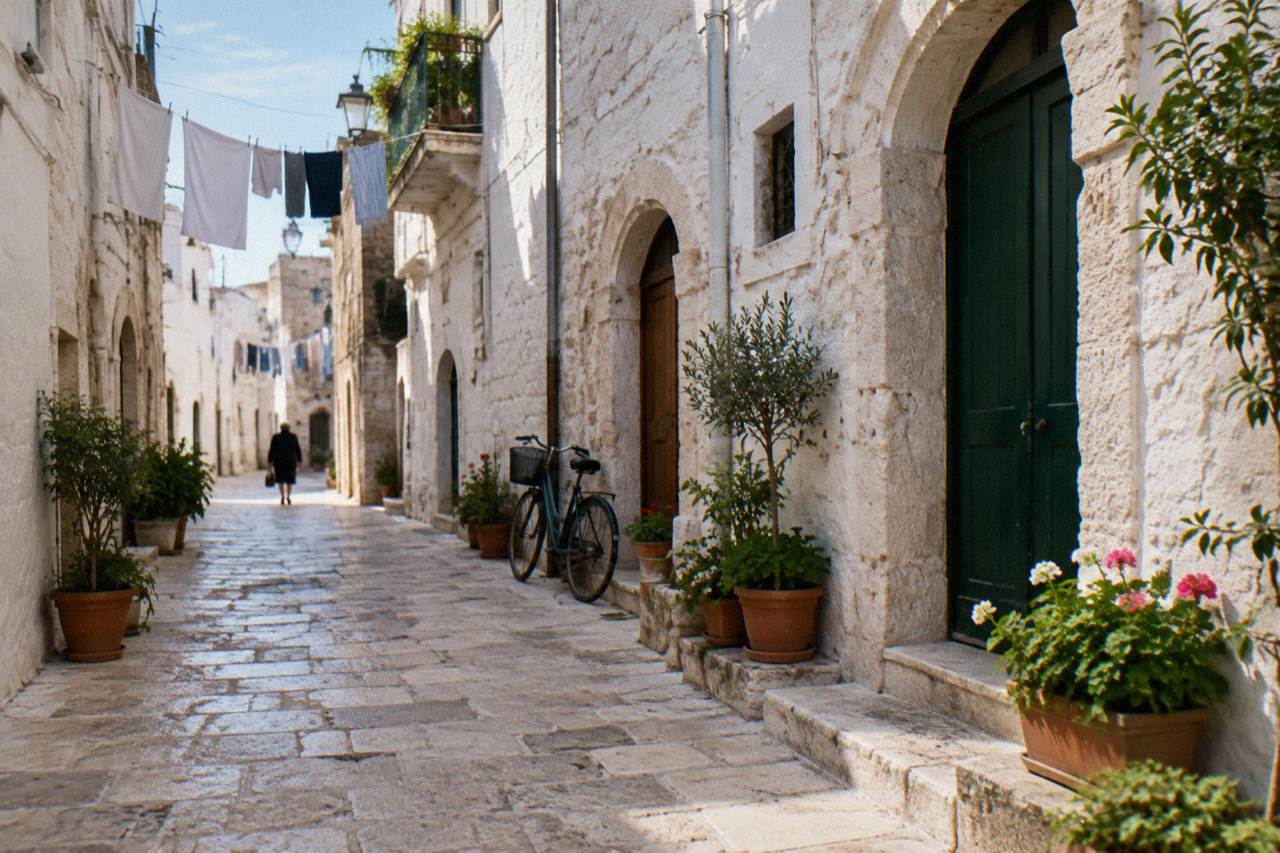
Short answer
Yes, two days cover Bari Vecchia, the crypt of the Basilica di San Nicola, the Castello Normanno-Svevo, the Murat district and the Lungomare Nazario Sauro, with a second afternoon free for Polignano a Mare or Monopoli, both about 33 to 47 km away by road.
Bari, the capital of the Puglia region on the Adriatic coast of southern Italy, packs its main sights into a compact strip between the old port and the Murat district, which makes two days a realistic frame for the city itself plus one coastal or hill-town afternoon. The old town, Bari Vecchia, sits on a headland beside the old port, holding the Basilica di San Nicola, the Cattedrale di San Sabino, Piazza Mercantile, Piazza del Ferrarese and the Castello Normanno-Svevo, while the seafront promenade, the Lungomare Nazario Sauro, runs south past the city beaches. Polignano a Mare, Monopoli, Alberobello, Matera and Lecce are all day trips from here, and Matera sits across the regional border in Basilicata, not Puglia.
Is Two Days In Bari Enough Time?
Two days is enough for Bari itself: the Basilica di San Nicola opens at 06:30 daily, the Castello Normanno-Svevo costs 10 EUR full and 2 EUR reduced, and the Murat district and the Lungomare Nazario Sauro need no ticket at all, so one full day covers the old town and one afternoon covers the seafront and shopping streets. A second half-day is best spent outside the city, with Polignano a Mare 37.4 km and Monopoli 47.3 km from Piazza Mercantile by road.
The honest framing is that Bari is a working regional capital of about 316,000 residents, not a museum piece, and its centre is small enough that a brisk walker crosses Bari Vecchia end to end in well under an hour. What fills two days is the layering: a morning of churches and a crypt, an afternoon of a castle and art galleries, an evening passeggiata on the seafront, and then the pull of the coast. Readers weighing one day against three can compare the one-day Bari itinerary and the three days in Bari itinerary, or the broader question of how many days in Bari is enough.
One planning note that matters for pacing: several key sights close on Mondays. The Castello Normanno-Svevo, the Pinacoteca Metropolitana Corrado Giaquinto and the Museo Archeologico di Santa Scolastica are all closed at the start of the week, and from October to March the castle also has short Sunday hours, 09:00 to 13:30, except on the first Sunday of the month. If your two days include a Monday, put the basilica, the old town lanes and the coast on that day.
| Sight | Closed | Standard hours | Ticket |
|---|---|---|---|
| Basilica di San Nicola | None (open daily) | Mon-Sat 06:30-20:30, Sun 06:30-22:00 | No fee mentioned on its page |
| Castello Normanno-Svevo | Monday | Tue-Sun 09:00-19:00; Oct-Mar Sundays 09:00-13:30 except first Sunday | 10 EUR full, 2 EUR reduced |
| Pinacoteca Metropolitana Corrado Giaquinto | Monday, 1 Jan, 8 May | Tue-Sat 09:00-19:00, Sun 09:00-13:00 | 5 EUR full, 8 EUR combined |
| Museo Archeologico di Santa Scolastica | Monday | Tue-Sat 09:00-19:00, Sun from 09:00 | 5 EUR full, combined with Pinacoteca |
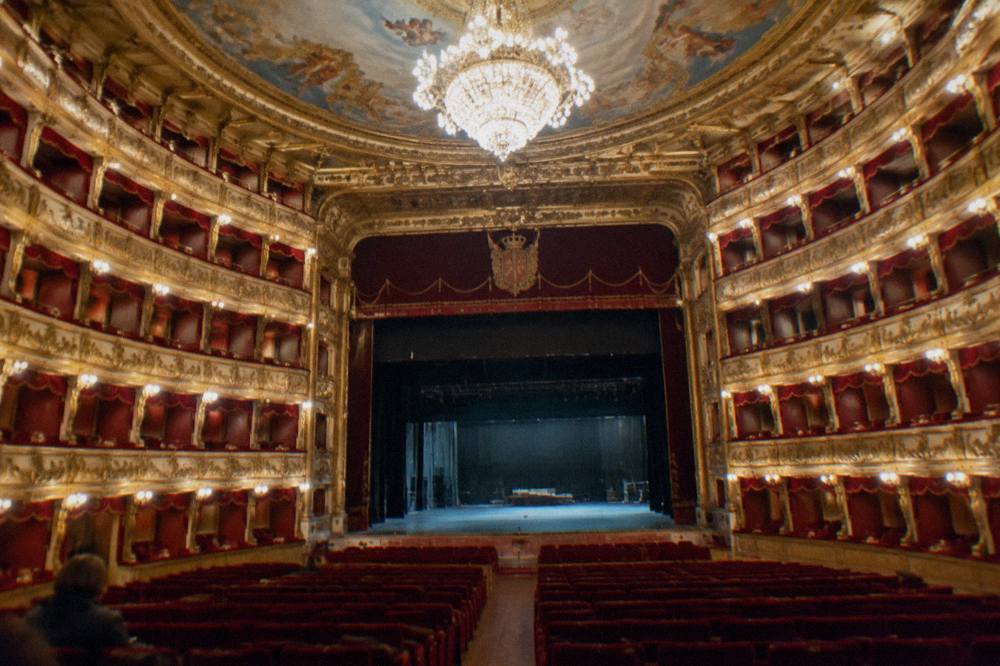
| Teatro Petruzzelli guided tours | Varies by monthly calendar | Dated slots published monthly | 7 EUR full, 2 EUR reduced |
What Should Day One Morning In Bari Look Like?
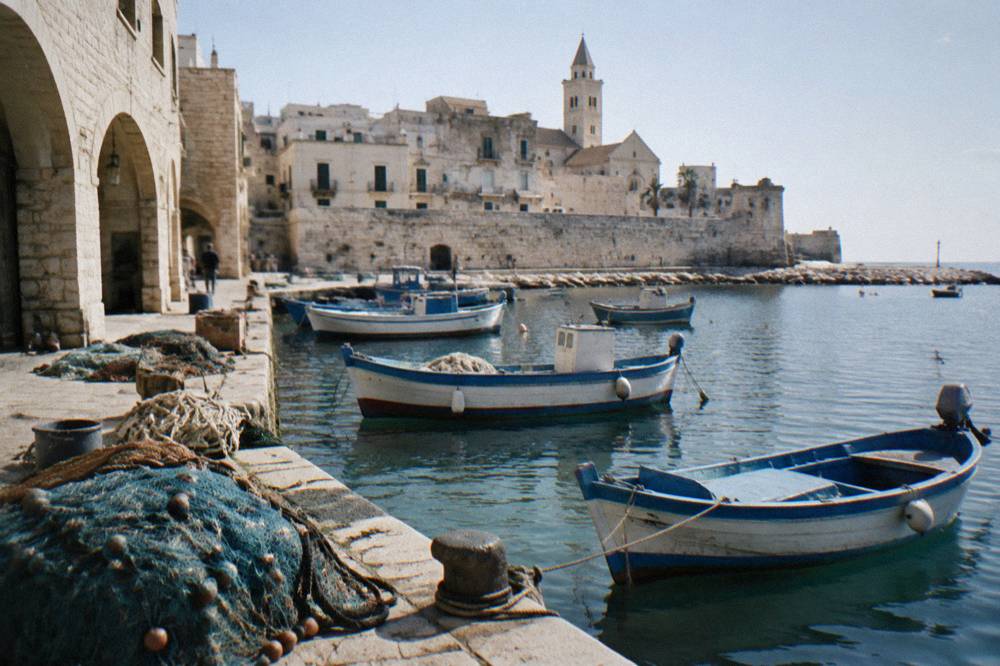
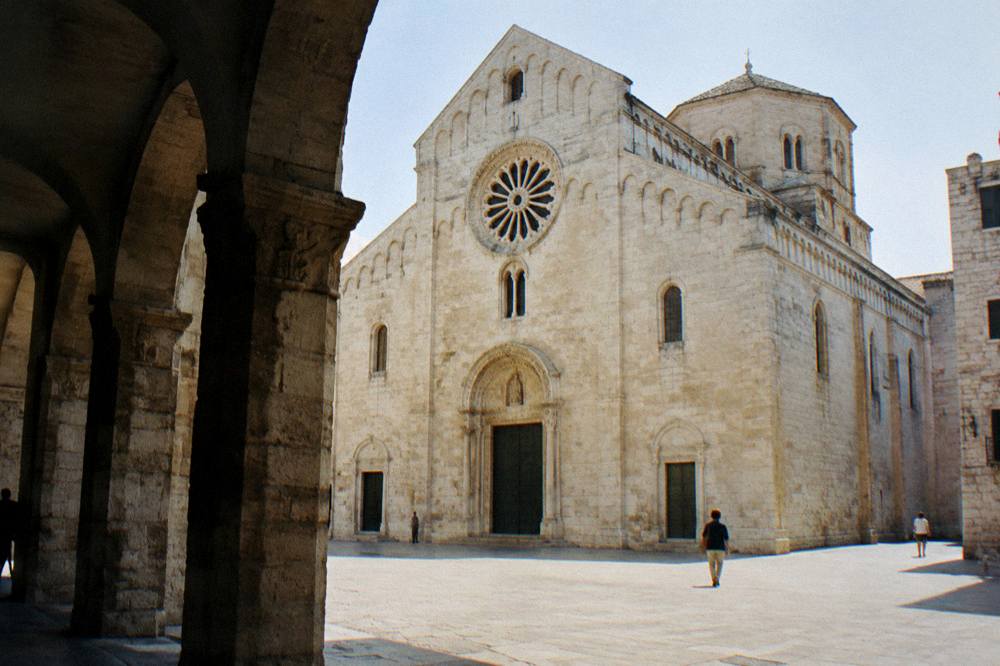
Start at the Basilica di San Nicola, which opens 06:30 Monday to Saturday and 06:30 on Sunday with a 22:00 close, and which mentions no admission fee on its own page. The relics of Saint Nicholas, brought to Bari by sailors in 1087 and placed in the crypt in 1089, lie below the church floor. From there the Cattedrale di San Sabino, Piazza Mercantile and the Muraglia sea wall are all within a short walk of each other in Bari Vecchia.
The basilica is the reason the city is on the pilgrimage map. According to the basilica's own history page, the relics rested at Myra for about 750 years, from 337 to 1087, before sailors carried them to Bari, and they were placed in the crypt two years later. The crypt is the quiet heart of the visit, and the full story of the crypt of San Nicola and of the Basilica di San Nicola is covered in dedicated pages on this site. There is no need to rush: the church's hours run from early morning to late evening, so a mid-morning arrival leaves the whole day intact.
After the basilica, work the lanes south. The Cattedrale di San Sabino stands as a landmark of the old town near the basilica, and Piazza Mercantile and Piazza del Ferrarese open out beside it, two squares that anchor old Bari's street life. The tourist information point is reported at Piazza del Ferrarese 29, though its hours vary, so confirm locally before relying on it. From Piazza Mercantile the Muraglia, the sea wall on the north side of the headland, runs toward Molo San Nicola, the old-port quay, with the Fortino di Sant'Antonio Abate, the little fort on the water, further along.
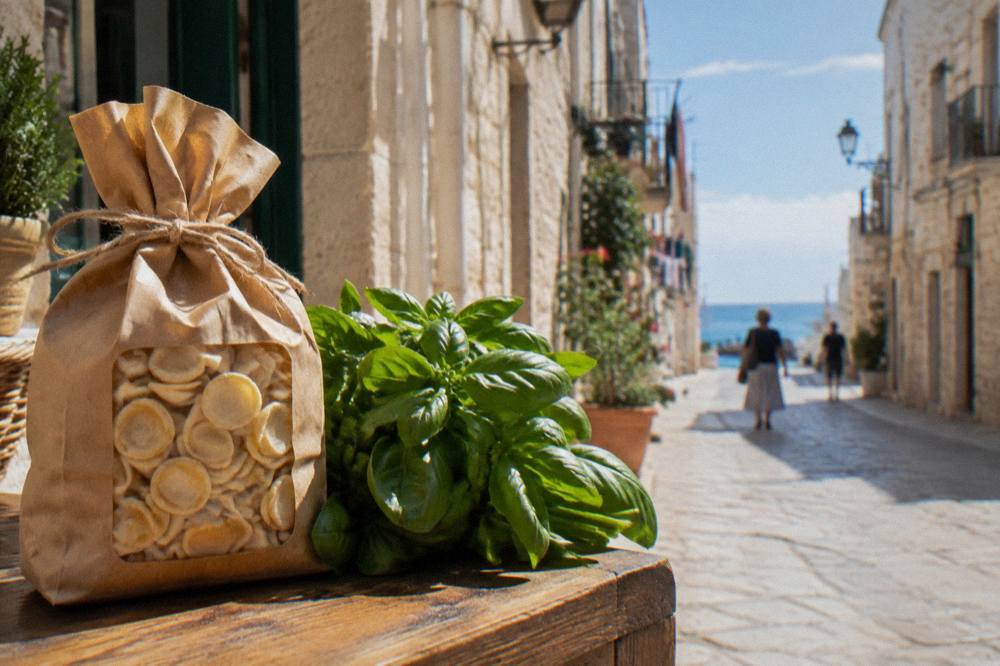
Two plain food notes belong to a morning in Bari Vecchia. Orecchiette is the pasta shape of Puglia, and in the old town this pasta is still made by hand, though no daily schedule for the pasta makers can be stated. The fish market at Molo San Nicola is part of the old port scene; its days and hours vary, so check locally. For a first evening alternative, a guided food walk covers the old town's street food stops with a local guide, and the listing carries its own price and availability.
For readers who prefer to structure the whole first day around food, the site's Bari street food guide and the wider overview of things to do in Bari list the other options, including cooking classes where fresh pasta and focaccia barese are made from scratch.
How Should Day One Afternoon Unfold Around The Castle And Murat?
Give the afternoon to the Castello Normanno-Svevo, open Tuesday to Sunday 09:00 to 19:00 with a 10 EUR full ticket and a 2 EUR reduced ticket per the Musei Puglia ticket page, then cross into the Murat district for the grid of shopping streets around Via Sparano. The Puglia Musei Card, at 20 EUR for six months of access to all regional state museum sites, pays off if you plan to visit the castle plus Castel del Monte or the Grotte di Castellana on day two.
The Swabian castle anchors the inland edge of Bari Vecchia at piazza Federico II di Svevia. Its schedule has a seasonal wrinkle worth repeating: from October to March, Sunday opening is 09:00 to 13:30, except the first Sunday of the month, when the full 09:00 to 19:00 hours apply. The castle has also appeared on press lists of state museums offering free entry on the first Sunday of the month under the Domenica al Museo scheme, which is worth checking against the Musei Puglia page before a first-Sunday visit.
After the castle, the day shifts register entirely. Murat is the grid district south of the old town, planned around straight streets with Via Sparano as its shopping spine, and it takes less than half a day to wander.
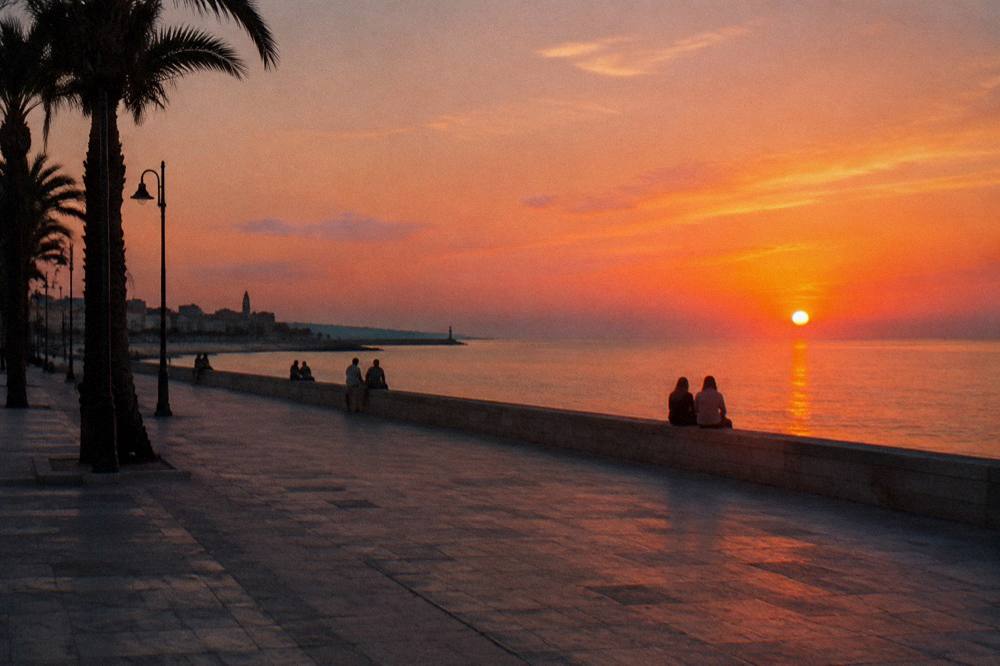
Close the day on the Lungomare Nazario Sauro, the seafront promenade that runs south from the theatre district past Madonnella toward the city beaches. In summer this is the evening walk; the climate table gives August a mean daily high of 29.1 C and July 28.6 C, typical values from modelled ERA5 data, 1991 to 2020, so the promenade after dinner is the comfortable hour. The Lungomare Nazario Sauro has its own page with the beaches that follow it.
Where Should The Second Day Go: Coast Or Hill Towns?
The strongest second-day move is a loop to Polignano a Mare, 37.4 km and about 36 minutes by road from Piazza Mercantile, and Monopoli, 47.3 km and about 43 minutes, with Alberobello at 56.7 km and about 61 minutes if the trulli town is the priority. Trenitalia regional trains on the Bari-Lecce line serve Polignano (33 km by rail) and Monopoli (41 km), typically reaching Polignano in 25 to 35 minutes, reported by secondary timetables, so a car is not required.
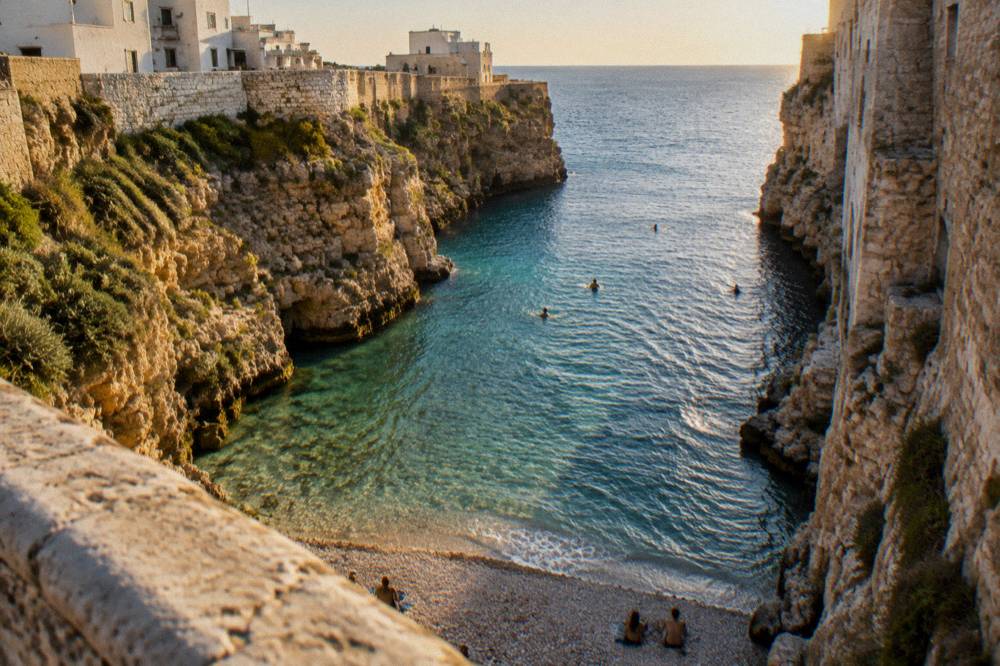
Polignano a Mare is the cliff town: buildings stand above the sea, with the Lama Monachile cove below the centre, and no entry fee or access limit for the town was found for 2026. Boats to the sea caves along the Polignano coast depart from Polignano itself, not from Bari, and one seafront-based option is covered below in the tour picks. Monopoli, 10 km further south by road, is a harbour town with a walled centre beside the water. Polignano a Mare and Monopoli are also the two 2026 Blue Flag sites in the Province of Bari, per the Regione Puglia announcement; Bari itself has none, so do not expect a flag at Pane e Pomodoro or Torre Quetta.
Alberobello, in the Valle d'Itria, is the trulli town and a UNESCO World Heritage site, reachable by the Trulli Link service that connects Trenitalia and FSE trains to Locorotondo, Alberobello and Martina Franca, with the FSE leg reported at 5.90 EUR on top of the rail fare. No admission price or hours exist for the trulli districts as such: the town is the sight. A guided van option that covers all three towns in one loop, departing from Bari, is the featured tour of this page, and the Monopoli day-trip guide gives the town its own treatment.
| Day trip from Piazza Mercantile | Road distance | Free-flow drive time | Rail distance |
|---|---|---|---|
| Polignano a Mare | 37.4 km | about 36 min | 33 km, Trenitalia Bari-Lecce line |
| Monopoli | 47.3 km | about 43 min | 41 km, Trenitalia Bari-Lecce line |
| Alberobello | 56.7 km | about 61 min | Trulli Link intermodal service |
| Locorotondo | 68.8 km | about 58 min | Trulli Link intermodal service |
| Ostuni | 85.3 km | about 73 min | 75 km, Trenitalia Bari-Lecce line |
| Matera (Sassi), in Basilicata | 70.8 km | about 69 min | FAL line via Altamura |
Matera deserves its own flag: the Sassi, the old stone districts, are a UNESCO World Heritage site, but the town is in Basilicata, so the day trip crosses the regional border out of Puglia. Matera is 70.8 km and about 69 minutes by road from Piazza Mercantile, and FAL runs the Bari-Modugno-Altamura-Gravina-Matera rail line; check the operator's timetable for current connections. Readers with three or more days can fold in the four to five days in Bari itinerary or the Puglia week from Bari itinerary.
If the second day stays in Bari instead, the realistic pattern is museums in the morning and a beach afternoon. The Museo Archeologico di Santa Scolastica and the Pinacoteca Metropolitana Corrado Giaquinto share a combined 8 EUR ticket over two days, and both close on Mondays. Then the city beaches: Pane e Pomodoro is about 2.1 km from Piazza Mercantile, Torre Quetta about 3.9 km, and San Girolamo about 4.3 km to the north-west.
What Does A Two-Day Bari Budget Look Like?
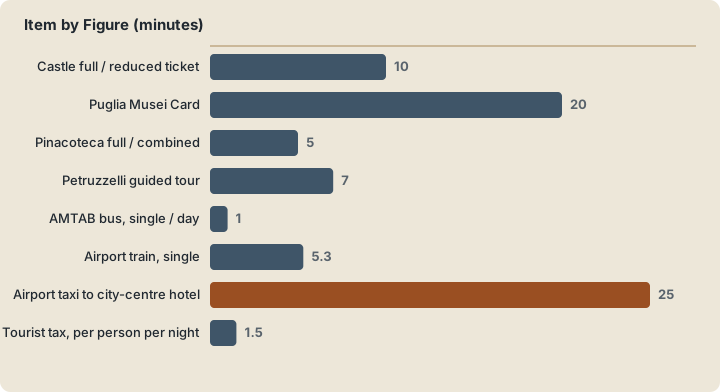
The fixed sightseeing costs are small: the castle at 10 EUR, the Pinacoteca or Santa Scolastica at 5 EUR each or 8 EUR combined, the basilica with no fee mentioned, and the Petruzzelli tour at 7 EUR. The tourist tax adds 1.50 to 4.00 EUR per person per night by accommodation category, for a maximum of 4 consecutive nights per calendar year, collected by your accommodation.
That tax range comes from the comune of Bari's own page: 5-star and luxury hotels charge 4.00 EUR, 4-star hotels 3.00 EUR, 3-star hotels 2.00 EUR, 1-star and 2-star hotels 1.50 EUR, and B&Bs, affittacamere, short lets, holiday homes, hostels and agriturismi 2.00 EUR per person per night. Every other comune in the region, including Polignano a Mare, Monopoli and Alberobello, sets its own tax if you sleep there instead, so ask the host what applies. Other pages covering the same trip are gathered on Bari Italy Travel Guide.
Getting around costs little if you stay central. AMTAB city buses charge 1.00 EUR for a single ride, 1.20 EUR for a 90-minute ticket and 2.50 EUR for a day ticket until end of service. The airport connection, if your two days start at Karol Wojtyla airport (BRI) at Palese, is the Ferrotramviaria train: 17 minutes to Bari Centrale from the station inside the terminal, 5.30 EUR single on the 2026 tariff, with a contactless card tap accepted at the gate. The Tempesta shuttle coach costs 5 EUR, and a taxi to a city-centre hotel is a predetermined 25 EUR.
| Item | Figure | Source basis |
|---|---|---|
| Castle full / reduced ticket | 10 EUR / 2 EUR | Musei Puglia ticket page |
| Puglia Musei Card | 20 EUR, 6 months, all regional state sites | Musei Puglia ticket page |
| Pinacoteca full / combined | 5 EUR / 8 EUR with Santa Scolastica | Pinacoteca visiting page |
| Petruzzelli guided tour | 7 EUR / 2 EUR reduced | Fondazione Petruzzelli page |
| AMTAB bus, single / day | 1.00 EUR / 2.50 EUR | AMTAB fares page |
| Airport train, single | 5.30 EUR, 17 minutes | Ferrotramviaria 2026 tariff |
| Airport taxi to city-centre hotel | 25 EUR predetermined | Comune di Bari notice |
| Tourist tax, per person per night | 1.50 to 4.00 EUR by category | Comune di Bari page |
When Is The Best Season For A Two-Day Bari Trip?
Late spring and early autumn fit two days best: May averages a 21.6 C daily high with 35 mm of rain and about 7 rain days, while September averages 25.1 C with 53 mm, typical values from modelled ERA5 data, 1991 to 2020. July and August are the warm months, with mean daily highs of 28.6 C and 29.1 C and about 4 rain days each, and the modelled sea sits at about 27 C in July and August if swimming matters.
The trade-off is crowds and heat against water temperature. August carries the year's highest mean daily high at 29.1 C and its lowest monthly rainfall at 20 mm; November carries the highest monthly rainfall at 73 mm. Winter two-day trips work too: January and February highs sit about 12 C, and the modelled sea is about 14 C in February, cold for swimming but irrelevant for the basilica, the castle and the museums, several of which have shorter Sunday hours from October to March. The site's best time to visit Bari coverage and the rainy day in Bari itinerary handle the wet-day case.
| Month | Mean daily high | Rain | Rain days (1 mm or more) |
|---|---|---|---|
| May | 21.6 C | 35 mm | 6.9 |
| June | 25.9 C | 28 mm | 4.8 |
| July | 28.6 C | 22 mm | 4.1 |
| August | 29.1 C | 20 mm | 4.3 |
| September | 25.1 C | 53 mm | 7.6 |
| October | 21.1 C | 63 mm | 7.9 |
| November | 16.9 C | 73 mm | 8.9 |
What Are The Best Guided Options During Two Days In Bari?
For a two-day stay, the three formats that fit are a street food walk in Bari itself on the first evening, a small-group van loop to Alberobello, Monopoli and Polignano a Mare on the second day, and a coastal cruise out of Polignano if you travel there independently. The van tour departs from Bari; the cave and coast cruises depart from Polignano's own waterfront, not from Bari, so plan the second day around where the tour starts.
The featured option on this page is the small-group van tour to Alberobello, Monopoli and Polignano a Mare, which compresses the three-town loop into one day and leaves the driving to someone who knows the Valle d'Itria roads. It suits the second day exactly: the first day stays in the city, and the van covers every leg, from the 37.4 km run to Polignano a Mare up to the 56.7 km to Alberobello. Check availability on the operator's live listing.
If you reach Polignano under your own steam, on the train, the coast cruises become the afternoon. A cruise along the Polignano coast with drinks, a swim stop and music departs from Polignano, and the listing carries its own price, duration and availability. It pairs naturally with a morning of independent wandering above Lama Monachile.
Back in Bari, the guided formats concentrate on food and on the old town. A guided tour of the old town with street food stops is the budget end, and the more elaborated food walks add focaccia, gelato and raw-fish stops. For readers who want the general orientation first, the site's Bari walking tours overview lists the formats, and the Bari Vecchia area guide covers the lanes in detail.
Where Should You Stay For A Two-Day Visit?
Stay inside or beside Bari Vecchia, or in the Murat district immediately south of it: the basilica, the castle, Piazza Mercantile and Piazza del Ferrarese, the Petruzzelli and the start of the Lungomare Nazario Sauro are all within a short walk of that seam, and Bari Centrale sits just beyond the Murat grid on foot. With only two days, a base reachable on foot saves both bus fares and the one thing you cannot buy, which is time.
The practical anchor for day-train days is Bari Centrale, from which the Trenitalia Bari-Lecce line, the FSE services and the Ferrotramviaria airport link all run.
Two driving warnings apply even to a short stay. Bari Vecchia is a limited traffic zone, with a camera gate at the Castello, at piazza Federico II di Svevia at piazza Massari, since 1 July 2026, and weekday entry windows of 09:00 to 11:00 for authorised vehicles, with an afternoon window of 16:00 to 18:00 reported. The advice to rental-car drivers is plain: do not drive into Bari Vecchia. Perimeter parking near the old town is paid on working days from 08:30 to 20:30; check the posted tariff at the meter.
What If It Rained Or Your Plans Shrink To One Day?
A wet day in Bari still holds the basilica (open daily 06:30 to 20:30, Sunday to 22:00), the Castello Normanno-Svevo, the Pinacoteca Metropolitana Corrado Giaquinto and the Museo Archeologico di Santa Scolastica, all indoor and all closed Monday except the basilica, plus the Petruzzelli guided tour at 7 EUR on its monthly calendar. If the trip compresses to one day, keep the morning old-town circuit and the afternoon castle-plus-Murat walk, and drop the coast.
The site carries a full rainy day in Bari itinerary and a cruise port day in Bari for shore-excursion readers, where the hard limit is the ship's all-aboard time and the Stazione Marittima, the ferry and cruise terminal at Molo San Vito, sits about 0.5 km from Piazza Mercantile, close enough to walk. Luggage between check-out and a late train can go into a storage service; the Bari luggage storage guide lists the options near the station.
Two days also leaves small margins. If the airport runs late on arrival day, the evening is recoverable because the basilica closes at 20:30 on weekdays; if it runs late on departure day, the reverse is not true, so keep the last morning free of timed entries. The emergency number in Italy is 112.
What Should You Not Miss In Two Days In Bari?
The five fixed points that define a successful two-day stay are the crypt of the Basilica di San Nicola, the lanes of Bari Vecchia between Piazza Mercantile and the Muraglia, the Castello Normanno-Svevo at 10 EUR, the Lungomare Nazario Sauro at sunset, and one half-day outside the city, with the Polignano a Mare clifftop the single most distinctive option at 37.4 km and about 36 minutes by road. Everything else on this page is adjustment around that core.
Judged as editorial preference rather than fact, the crypt outranks everything else in the city, for a simple reason: the relics of Saint Nicholas have been there since 1089, and no other city on the Adriatic has an equivalent. The old port at Molo San Nicola and the Fortino on the sea wall cost nothing and take minutes. The Teatro Petruzzelli tour is worth its 7 EUR only for readers who care about theatre buildings, and the Teatro Petruzzelli guide on this site explains why in detail. What to skip with two days: Lecce, at 151 km and about 115 minutes by road each way, is a long day or an overnight, not an afternoon, and the Lecce day-trip guide says so plainly.
Common Questions About Two Days In Bari
Is 2 days in Bari enough?
Yes, for the city itself. Two days cover the basilica and crypt, the Castello Normanno-Svevo, Bari Vecchia, the Murat district and the Lungomare Nazario Sauro, with a second afternoon free for Polignano a Mare or Monopoli. Three days adds a second day trip, such as Alberobello or Matera.
Can you visit Polignano a Mare and Alberobello in one day from Bari?
Yes. Polignano a Mare is 37.4 km from Piazza Mercantile and Alberobello 56.7 km, about 36 and 61 minutes by road respectively, so a loop of both is a full but feasible day. A guided small-group van tour from Bari covers Alberobello, Monopoli and Polignano a Mare in one loop.
What is closed on Mondays in Bari?
The Castello Normanno-Svevo, the Pinacoteca Metropolitana Corrado Giaquinto and the Museo Archeologico di Santa Scolastica are all closed on Mondays. The Basilica di San Nicola is open every day. Plan the coast or the old town lanes for a Monday.
How much are the main sights in Bari?
The Castello Normanno-Svevo costs 10 EUR full and 2 EUR reduced, the Pinacoteca and Santa Scolastica cost 5 EUR each or 8 EUR combined, the Petruzzelli guided tour costs 7 EUR, and the Basilica di San Nicola mentions no admission fee on its page.
Do you need a car for two days in Bari?
No, if the second day goes to Polignano a Mare or Monopoli: Trenitalia regional trains on the Bari-Lecce line serve both, with Polignano typically 25 to 35 minutes from Bari Centrale, reported by secondary timetables. A car helps for Alberobello and the Valle d'Itria, though the Trulli Link service also reaches Alberobello, Locorotondo and Martina Franca.
Is Bari walkable in two days?
The historic centre is compact: Bari Vecchia, the Murat grid and the start of the Lungomare Nazario Sauro form a walkable strip, and AMTAB buses at 1.00 EUR a ride fill the gaps. The city beaches sit 2.1 to 4.3 km from Piazza Mercantile, a bus or a longer walk.
Two days in Bari, spent this way, delivers the crypt, the castle, the seafront and one genuinely spectacular stretch of Adriatic coast, and it leaves a third day easy to justify.