Fortino Sant Antonio Bari: The Little Fort On The Sea
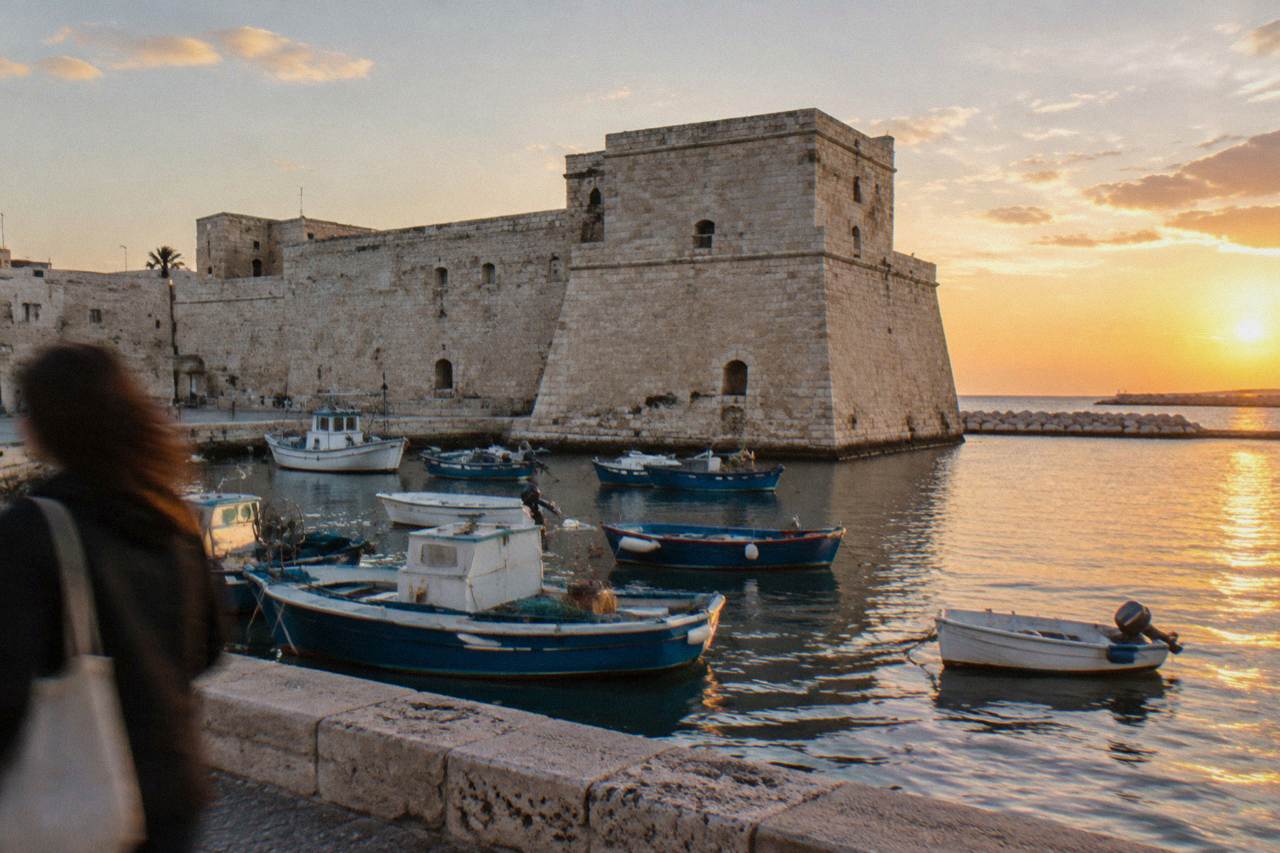
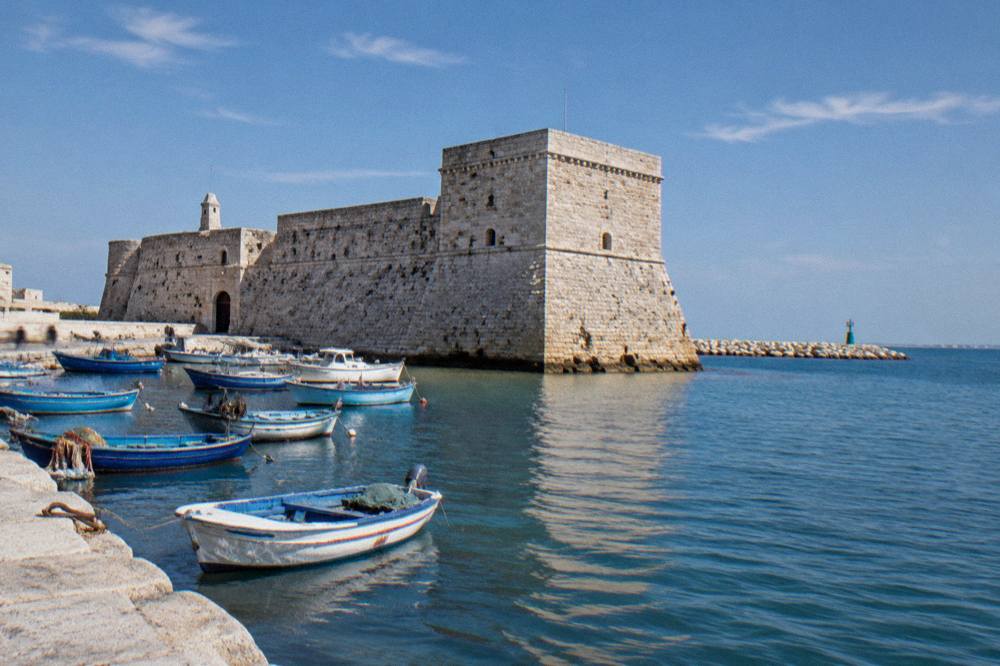
The Fortino Sant Antonio, properly the Fortino di Sant'Antonio Abate, is a small fort standing on the Muraglia, the sea wall that shields Bari Vecchia, the old town of Bari on the Adriatic coast of Puglia in southern Italy.
Short answer
The Fortino Sant Antonio is a small fortified building on the sea wall of Bari Vecchia, at the point where the old town of Bari meets the Adriatic. It has no ticket, no published opening schedule and no museum inside: it is a landmark on the Muraglia, reached on foot along the Lungomare Nazario Sauro or through the lanes of the old town.
The Fortino Sant Antonio, formally the Fortino di Sant'Antonio Abate, is a small fort standing on the Muraglia, the sea wall that closes Bari Vecchia, the old town of Bari, on its Adriatic side. Bari is the capital of the Puglia region of southern Italy, a coastal city of about 316,000 residents in the comune, with Polignano a Mare, Monopoli, Alberobello, Matera and Lecce all reachable as day trips. The Fortino is not a museum and sells no ticket: it is a landmark of the waterfront, one of the fixed points of any walk that links the old port, the sea wall and the Lungomare Nazario Sauro. This guide sets out where it sits, what you can see from it, and how to fold it into a day in the city, with the transport and climate figures you need to plan the walk.
What Is The Fortino Sant Antonio In Bari?
The Fortino Sant Antonio is a small fortified building on the Muraglia, the sea wall that runs along the seaward edge of Bari Vecchia, the old town of Bari on the Adriatic coast of Puglia. It is a landmark rather than an attraction with a ticket desk: there is no published admission price, no published opening schedule and no museum inside, and its value to a visitor is the position, at the meeting point of the old town, the water and the promenade.
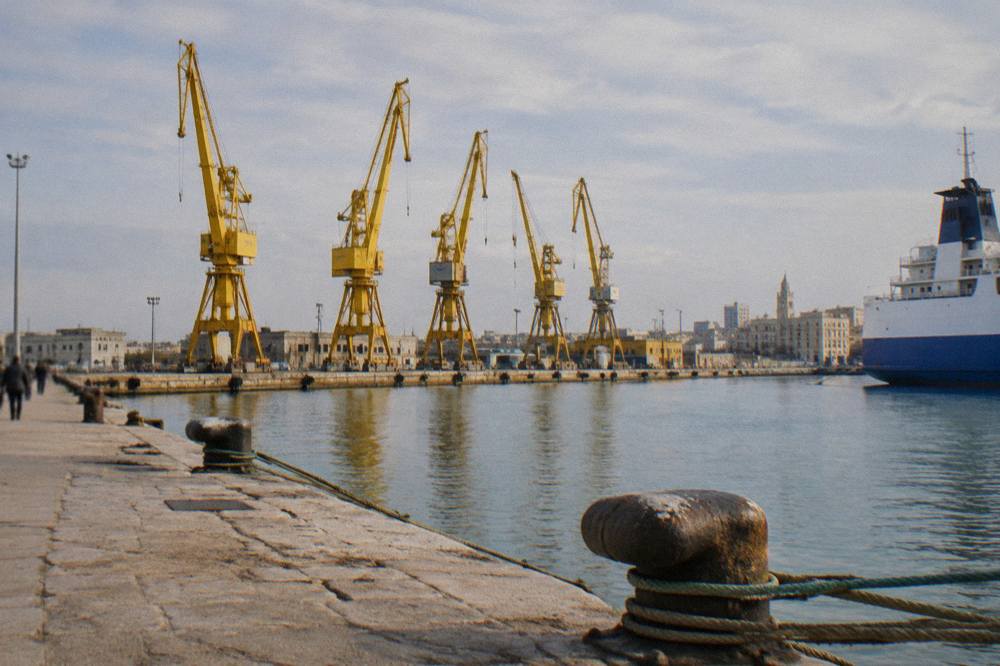
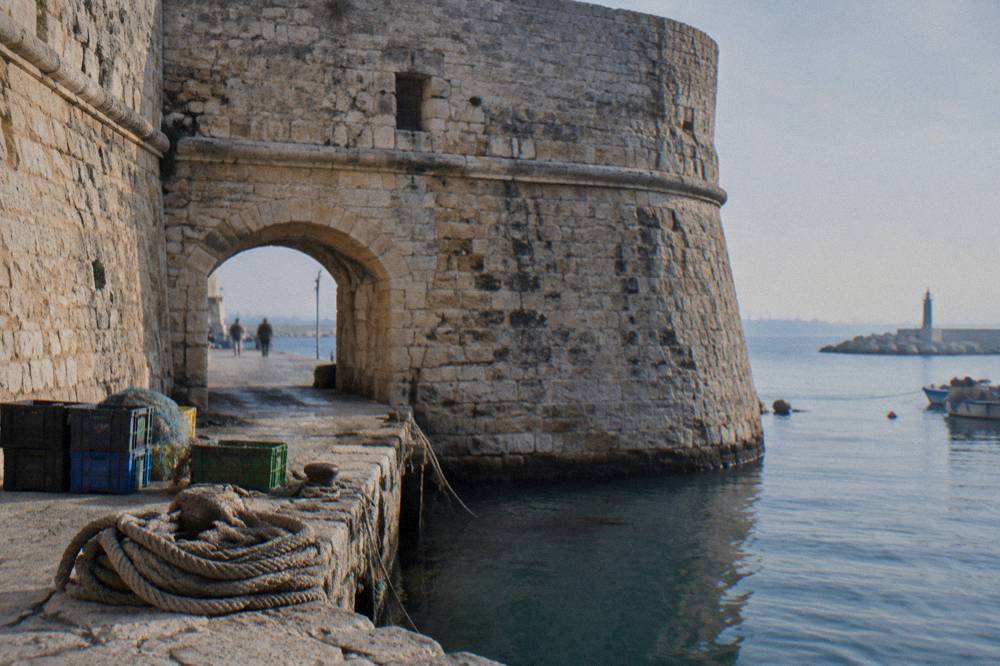
Think of it as one end of a sequence. The old port quay, the Molo San Nicola, runs along the north side of the headland where Bari Vecchia sits. The squares of the old town, Piazza Mercantile and Piazza del Ferrarese, sit inside the walls a short walk from the water. The Muraglia is the defensive wall that faces the open sea, and the Fortino is the small fort at its edge, the point where the stone of the old town meets the Adriatic with nothing between. The name, Fortino di Sant'Antonio Abate, is the one used in the city's own place records, and Fortino Sant Antonio is the short form that travellers use.
What the fort offers is scale and setting rather than an interior programme. It is small, as the Italian word fortino says outright. Visitors come for the view back along the sea wall, for the outlook over the water toward the horizon of the Adriatic, and for the sense of the old town as a working piece of coast defence geometry rather than a collection of postcard lanes. The Bari Italy Travel Guide covers the old town in depth elsewhere; this page stays with the fort, the wall and the water.
Because nothing here is ticketed, planning is simple. You walk to it, you look, you photograph, and you carry on. The decisions that matter are about the route you take to reach it and the light you want when you arrive, and both are covered in the sections below.
Where Is The Fortino Sant Antonio And How Do You Reach It From Central Bari?
The Fortino Sant Antonio stands at the seaward edge of Bari Vecchia, the old town of Bari, on the Muraglia sea wall, a short walk from Piazza Mercantile and Piazza del Ferrarese at the heart of the old town. There is no ticket and no gate: you reach it on foot, either through the lanes of Bari Vecchia or along the Lungomare Nazario Sauro, the seafront promenade that begins beside it.
Two walking routes work, and they suit different moods. The first runs through the old town: from Piazza Mercantile you drop toward the water on the eastern lanes, and the wall appears in front of you with the Fortino at its edge. The second is the promenade route: the Lungomare Nazario Sauro runs south from the old town along the water past Madonnella toward the city beaches, and its northern end meets the old town at the Muraglia. Many walkers do one route out and the other back, so the old town and the sea are both on the loop.
If you are arriving by public transport within the city, AMTAB buses use a single ticket at 1.00 euro, a 90-minute ticket at 1.20 euro and a day ticket at 2.50 euro, per the operator's fares page. The old town itself is pedestrian in character and compact, so once you are near Bari Centrale or the Murat district the simplest answer is to walk. One rule matters for drivers: Bari Vecchia is a limited traffic zone, with a camera gate at the Castello side active since 1 July 2026, and the advice to anyone in a rental car is plain, do not drive into Bari Vecchia. Park outside the old town and walk in.
For travellers who prefer a guide for the lanes rather than finding the wall alone, the old town walks and rides below all pass through Bari Vecchia and its waterfront.
The distances in the table below are road distances from Piazza Mercantile, the central square of the old town, computed on free-flow routes, and they give a sense of how tight the whole waterfront circuit is.
| Place | Direction from Piazza Mercantile | Road distance |
|---|---|---|
| Molo San Nicola, old port quay | North, along the headland | Within the old town |
| The Muraglia sea wall | East edge of the old town | Within the old town |
| Lungomare Nazario Sauro | South along the water | Adjoins the old town |
| Pane e Pomodoro beach | South-east along the coast | about 2.1 km |
| Torre Quetta beach | South-east | about 3.9 km |
| San Girolamo beach | North-west | about 4.3 km |
The three city beaches in that table are the free-access strands of the Bari coast. Bari itself holds no Blue Flag in 2026; in the Province of Bari the flags fly at Polignano a Mare and Monopoli, and Puglia as a region has 27, per the regional announcement. That says nothing against the water off the city: ARPA Puglia reports the region first in Italy for bathing water quality for the sixth year, with 99.9 percent of waters classed excellent and 78 bathing waters monitored in the province of Bari. No individual rating attaches to any named Bari beach.
What Can You See From The Fortino Sant Antonio And The Muraglia?
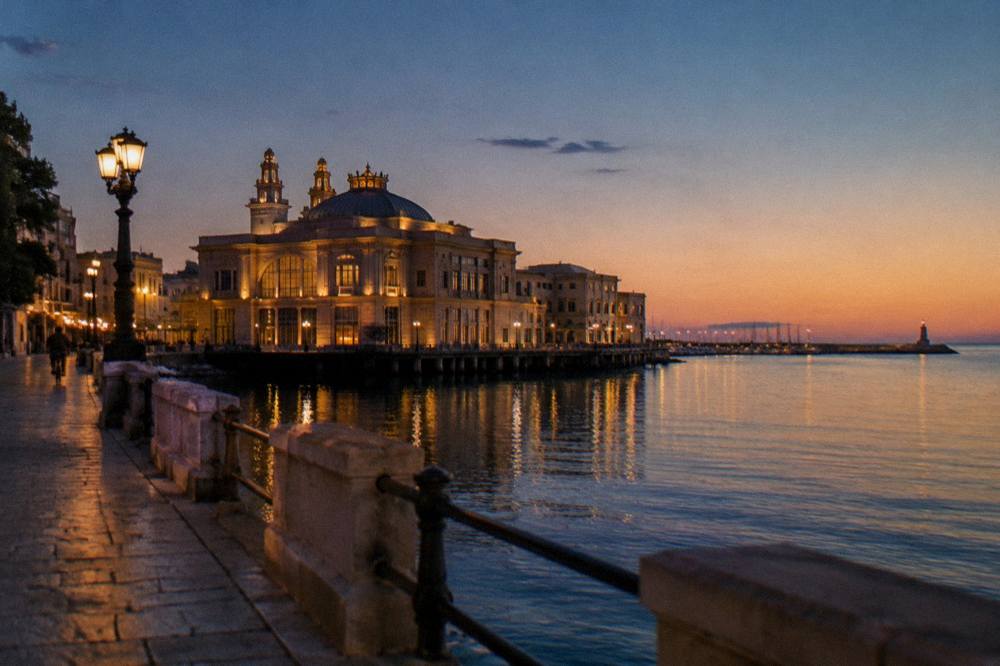
From the Fortino Sant Antonio you look in three directions at once: out over the open Adriatic, north along the Muraglia sea wall toward the old port and the Molo San Nicola quay, and south along the Lungomare Nazario Sauro toward the Teatro Margherita, the theatre that stands over the water, and the modern seafront beyond it. The view is the reason to come.
To the north and west the old town fills the frame: the tight lanes of Bari Vecchia, the mass of the Basilica di San Nicola a few streets inland, and the boats and quays of the old port. The old port at Molo San Nicola is the working corner of the headland, and the Basilica di San Nicola opens Monday to Saturday 06:30 to 20:30 and Sunday 06:30 to 22:00, with no admission fee mentioned on its page, so the fort and the basilica combine easily on one walk.
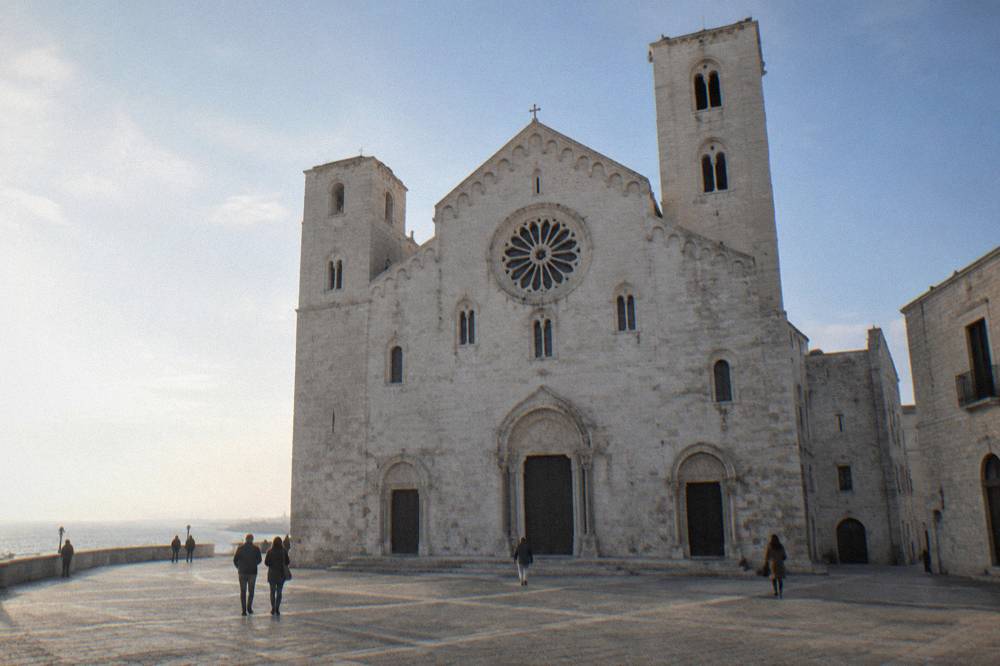
To the south the promenade takes over. The Teatro Margherita stands on piles over the water at the junction where the old town hands over to the modern seafront, and the Lungomare Nazario Sauro runs on from there past Madonnella toward the beaches. The waterfront district around the promenade is the natural extension of any walk that starts at the Fortino. On the water itself, small boats pass close inshore through the warmer months, and the city cruise boats that leave from the Bari seafront pass the wall on their way out, which is the seaward view of the fort, the theatre and the old town stacked along one line. The listing for the city cruise with aperitivo covers exactly that stretch of coast.
Seeing the wall from the water and from the land are different experiences and neither replaces the other. From the Fortino you read the old town as a fortified headland; from a boat you read the same stone as a continuous sea face, with the theatre and the fort set against it. If a boat trip is on your list, the cruise and the wall walk slot together in an afternoon.
When Is The Best Time Of Day And Year To Visit The Bari Seafront?
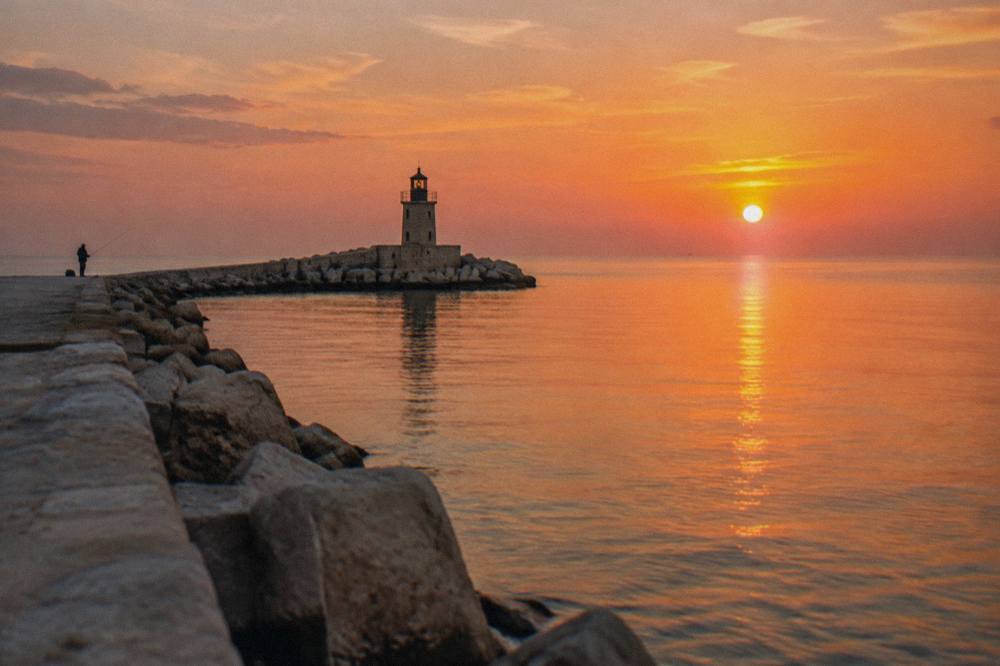
The seafront around the Fortino Sant Antonio is at its calmest in the early morning and at its most atmospheric in the evening, when the sun sets over the city behind the old town and the stone of the Muraglia catches low light. By season, May, June, September and October give the comfortable middle ground: the climate table shows July and August mean daily maxima of 28.6 C and 29.1 C, while May and October sit at 21.6 C and 21.1 C.
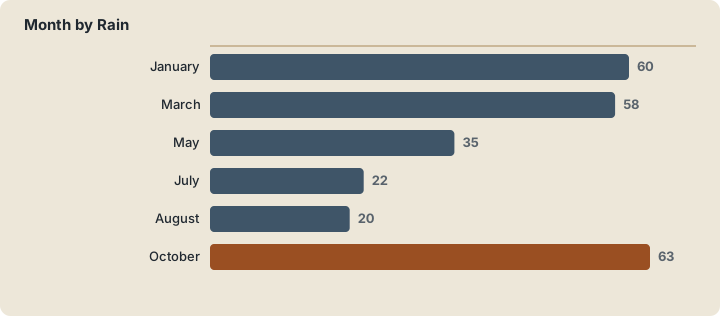
Those figures are typical values from modelled ERA5 data, 1991 to 2020, and the same table shapes the whole year of a Bari visit. Rain is modest by Italian standards, about 587 mm a year, with November the high month at 73 mm and August the low at 20 mm. July and August average about 4 rain days each, while November carries 8.9, so the shoulder months are dry without the peak summer heat. The Bari weather guide works through the months in detail.
| Month | Mean daily high | Mean daily low | Rain |
|---|---|---|---|
| January | 12.1 C | 7.3 C | 60 mm |
| March | 14.7 C | 8.8 C | 58 mm |
| May | 21.6 C | 15.3 C | 35 mm |
| July | 28.6 C | 22.0 C | 22 mm |
| August | 29.1 C | 22.4 C | 20 mm |
| October | 21.1 C | 15.6 C | 63 mm |
Typical values from modelled ERA5 data, 1991 to 2020.
Sea temperature, as modelled means from 2023 to 2025, runs about 27 C in July and August, about 22 C in October and about 14 C in February, so the water beside the wall is warmest at the height of summer and fresh but not forbidding well into autumn. No swimming claim attaches to the wall itself: the promenade is a walk, not a bathing spot, and the city's beaches lie south along the coast.
One date shapes the old town more than any other. The Festa di San Nicola runs 7 to 9 May each year by tradition, and the 2026 edition put the historical procession on Thursday 7 May at 20:00 from piazza Federico II di Svevia, on the castle side of the old town, with the sea procession on 8 May and the manna ceremony on 9 May reported in the traditional programme. Early May therefore fills Bari Vecchia and the waterfront with the feast. The San Nicola festival guide covers it; the 2027 programme had not been announced, so confirm before you build a trip around it.
How Does The Fortino Fit Into A Walking Loop Of Bari Vecchia?
A loop that includes the Fortino Sant Antonio runs from the Castello Normanno-Svevo at the landward gate of Bari Vecchia, through the lanes past the Basilica di San Nicola and the Cattedrale di San Sabino to Piazza Mercantile and Piazza del Ferrarese, then down to the Muraglia and the Fortino, and back along the sea wall to the Molo San Nicola and the old port. Every step of it is inside or beside the old town.
Start at the castle, which anchors the landward edge. The Castello Normanno-Svevo charges 10 euro full and 2 euro reduced, per the regional museums ticket page, and opens Tuesday to Sunday 09:00 to 19:00, with Sunday hours of 09:00 to 13:30 from October to March except the first Sunday of the month. From there the lanes run southeast through the old town. The Cattedrale di San Sabino stands near the basilica as the other great church of the headland, and the two squares, Piazza Mercantile and Piazza del Ferrarese, sit at the commercial heart of the old town, with the tourist information point reported at Piazza del Ferrarese 29.
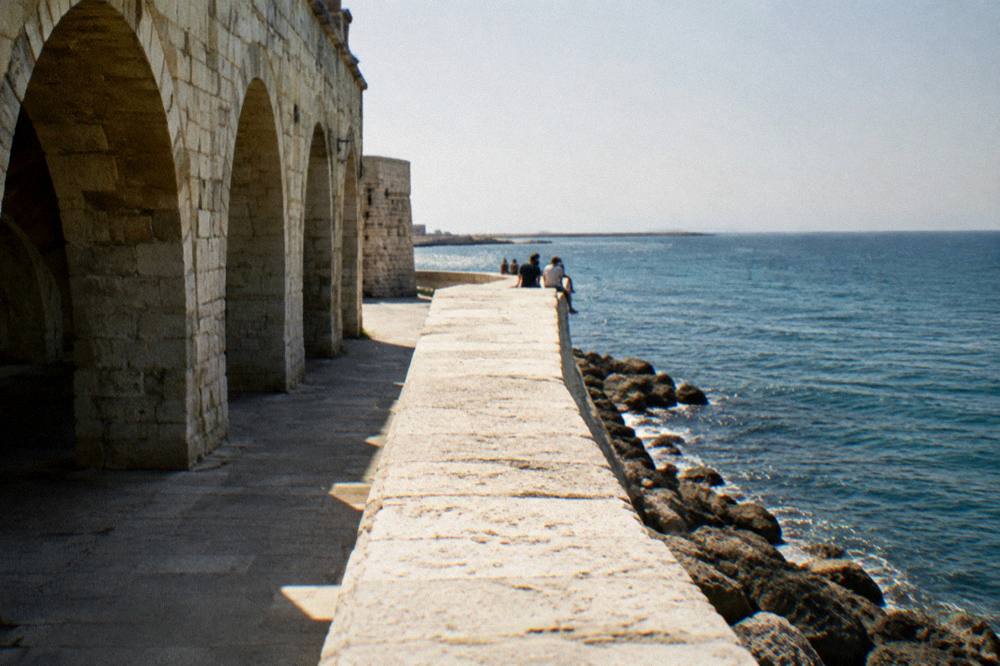
From the squares the ground falls away toward the sea, and the wall walk begins. This is the stretch the Fortino belongs to: the Muraglia underfoot, the Adriatic on one side, the backs of the old town houses on the other. Strada Arco Basso, the lane known for its pasta makers, lies a few streets inland; orecchiette is the pasta shape of Puglia, and the Strada delle Orecchiette guide covers the street. Whether the makers are at their doors on any given day is not something to plan around, so treat it as a lane you pass through rather than a scheduled stop.
The full Bari Vecchia area guide maps the lanes, and the wider set of options is in things to do in Bari. For a first visit, the loop above takes in every headline landmark of the old town and puts the Fortino and the wall in the middle of the walk rather than at the end of it, which is the right place for them: by the time you reach the water you have the context, and the view reads as the payoff.
Food stops slot into the same circuit. Orecchiette is the pasta shape of Puglia; panzerotti are fried filled pockets of dough; focaccia barese is the local flatbread; sgagliozze are fried polenta squares; and raw seafood, including sea urchins, is a Bari tradition. One plain sentence each is all any of them needs, and any of the old town food walks will introduce them with a guide alongside.
What Can You Do On The Water Near The Fortino Sant Antonio In Bari?
The water off the Fortino Sant Antonio is the working ground of Bari's city cruises, which leave from the Bari seafront and pass the Muraglia, the Teatro Margherita and the old town sea face before running along the coast, with the city beaches and the wider shoreline to the south. These are Bari departures, from the city's own waterfront, not the cave boats of Polignano a Mare or Monopoli, which leave from those towns.
That origin distinction matters and is worth repeating plainly, because it is a common confusion. The famous cave and swim boats of the Polignano coast leave from Polignano a Mare, and the Monopoli boats leave from Monopoli, both of them day trips down the coast. What leaves from Bari itself is the short city cruise: the seaward look at the old town, the wall and the Fortino, usually with a drink served on board. The operator's live listing carries the current times and inclusions.
If you would rather stay on dry land but still want the water view, the promenade does the job. The Lungomare Nazario Sauro is one of the long seafront walks of southern Italy, and the Fortino sits at its northern end where it meets the old town, so a promenade walk and a Fortino visit are the same outing. Runners and walkers use it at dawn, families in the late afternoon, and the whole stretch faces the sunrise over the Adriatic.
A second water option is the ferry port. Bari is one of the ferry gateways of the Adriatic: Adria Ferries sails Bari to Durres every day all year, about 8 hours per the operator, and Superfast's 2026 brochure lists the Bari, Corfu, Igoumenitsa, Patras route. The Stazione Marittima at Molo San Vito is about 0.5 km from Piazza Mercantile, so the ferry terminal is close to the old town walk, though a sailing is a trip of its own rather than an add-on. The Dubrovnik line was reported interrupted for technical reasons in autumn 2026, so confirm it is operating before planning around it.
Is The Fortino Sant Antonio Worth Visiting, And What Else Is Near It In Bari?
The Fortino Sant Antonio is worth visiting as part of the sea wall walk, not as a destination in itself: there is no interior programme, no ticket and no schedule to plan around, so its value is the position on the Muraglia and the view it frames of the old town, the Adriatic and the promenade. Budget the time it takes to walk the wall and look, and spend the rest of the outing on what surrounds it.
What surrounds it is generous. The old town holds the basilica, the cathedral, the two squares and the castle, all within the same headland. The Murat district begins south of the old town, and its shopping streets, with Via Sparano at the centre, sit a few minutes inland from the promenade: the Murat district shopping guide covers them. The Teatro Petruzzelli, the city's opera house, stands at the edge of that district, and its guided tours cost 7 euro full and 2 euro reduced, with dated slots published monthly, per the theatre foundation's page. The theatre burned on the night of 26 to 27 October 1991 and reopened on 4 October 2009, per the reported record.
| Nearby sight | Relation to the Fortino | Ticket figure |
|---|---|---|
| Basilica di San Nicola | A few lanes inland in Bari Vecchia | No admission fee mentioned on its page |
| Castello Normanno-Svevo | Landward edge of Bari Vecchia | 10 euro full, 2 euro reduced |
| Teatro Petruzzelli guided tours | North of the Murat district | 7 euro full, 2 euro reduced |
| Teatro Margherita | Over the water at the promenade junction | No published figure on this site |
| Cattedrale di San Sabino | In Bari Vecchia near the basilica | Check the current price on the official ticket page before booking |
Families manage this stretch of coast well. The wall walk is short and flat, the promenade beyond it is traffic-free along the water, and the beaches at Pane e Pomodoro, about 2.1 km from Piazza Mercantile, extend the outing for anyone who wants sand after stone. Facilities and charges at the beaches vary by season, so confirm locally on the day. Evening brings its own version of the same walk: the wall lit from the town side, the promenade busy, and the cruise boats in port.
Beyond the city, the same coastline carries the day trips. Polignano a Mare sits 33 km down the rail line from Bari Centrale, Monopoli 41 km and Ostuni 75 km, all on Trenitalia regional trains on the Bari-Lecce line, with Polignano typically 25 to 35 minutes away per secondary timetables. Trani, with its own Swabian castle open Monday to Saturday 08:30 to 19:30 and Sunday 08:30 to 13:30 at 8 euro full and 2 euro reduced, lies about 47 km by road; the Trani day trip guide covers it. Matera, about 71 km and 69 minutes by road, is in Basilicata, so that day trip crosses the regional border.
And if the lanes call for a slower, guided introduction, the old town walks above pass the same squares, walls and water as the loop described earlier in this guide, with a local voice over them.
Common Questions About The Fortino Sant Antonio In Bari
Is the Fortino Sant Antonio free to visit?
There is no ticket and no published admission charge for the Fortino Sant Antonio. It is a landmark on the Muraglia sea wall of Bari Vecchia rather than a ticketed attraction, so you simply walk to it. Check the current arrangements locally if a guided visit matters to you.
How do I get to the Fortino Sant Antonio from Bari Centrale?
Walk from Bari Centrale through or past the Murat district to Bari Vecchia, then cross the old town to the sea wall; the whole route is short and level. City buses run on AMTAB tickets at 1.00 euro single, 1.20 euro for 90 minutes or 2.50 euro for a day, per the operator's fares page. Do not drive into Bari Vecchia, which is a limited traffic zone.
Can you see the Fortino Sant Antonio from a boat?
Yes. The city cruises that leave from the Bari seafront pass the Muraglia and the Fortino, the Teatro Margherita and the whole sea face of the old town. The operator's live listing carries the current departure times and what is included on board.
What is near the Fortino Sant Antonio in Bari?
The whole of Bari Vecchia sits behind it: the Basilica di San Nicola, the Cattedrale di San Sabino, Piazza Mercantile, Piazza del Ferrarese and the Castello Normanno-Svevo. South along the water run the Lungomare Nazario Sauro and the city beaches, and the shopping streets of the Murat district begin a few minutes inland.
When is the best time to walk the sea wall in Bari?
Early morning and evening are the calm and atmospheric hours. By season, the climate table shows mean daily highs of 21.6 C in May and 21.1 C in October against 28.6 C in July and 29.1 C in August, typical values from modelled ERA5 data, 1991 to 2020, so the shoulder months give comfortable walking weather.
Is the Fortino Sant Antonio the same as the Castello Normanno-Svevo?
No. The Fortino Sant Antonio is the small fort on the Muraglia sea wall at the seaward edge of Bari Vecchia, with no ticket or interior programme. The Castello Normanno-Svevo is the large castle at the landward edge of the old town, open Tuesday to Sunday with a 10 euro full ticket and a 2 euro reduced ticket per the regional museums ticket page.
The Fortino Sant Antonio asks nothing of you but the walk along the wall, and it gives back the clearest view of what Bari Vecchia actually is: a fortified headland with the Adriatic on three sides. Put it between the squares and the promenade, give the wall its few minutes at whatever hour the light suits you, and let the rest of the old town fill the day around it.
