Bari History: From Greek Port To The Saint Nicholas Pilgrimage
Bari, the capital of Puglia in southern Italy, is a coastal city on the Adriatic whose story is written in its old town, its port and the pilgrimage that still fills the streets each May.
Short answer
Bari's defining story is the arrival of Saint Nicholas's relics by sea in 1087 and their placement in the crypt of the Basilica di San Nicola in 1089, an event that turned a port town into a pilgrimage destination whose feast still runs each 7 to 9 May.
Bari, the capital of the Puglia region on the Adriatic coast of southern Italy, is a city whose identity was decided by the sea. The old town, Bari Vecchia, sits on a headland between the old fishing port at Molo San Nicola and the modern Stazione Marittima, and almost everything a visitor comes to see sits inside that compact peninsula or along the seafront promenade of the Lungomare Nazario Sauro. The single event that made Bari known far beyond Puglia happened in 1087, when sailors brought the relics of Saint Nicholas to the city, and the pilgrimage that followed has shaped its streets, its feast calendar and its basilica ever since. This page follows that story through the places you can still stand in today, with the hours and admission figures the official pages give.
What Is The Story Of Bari Vecchia?
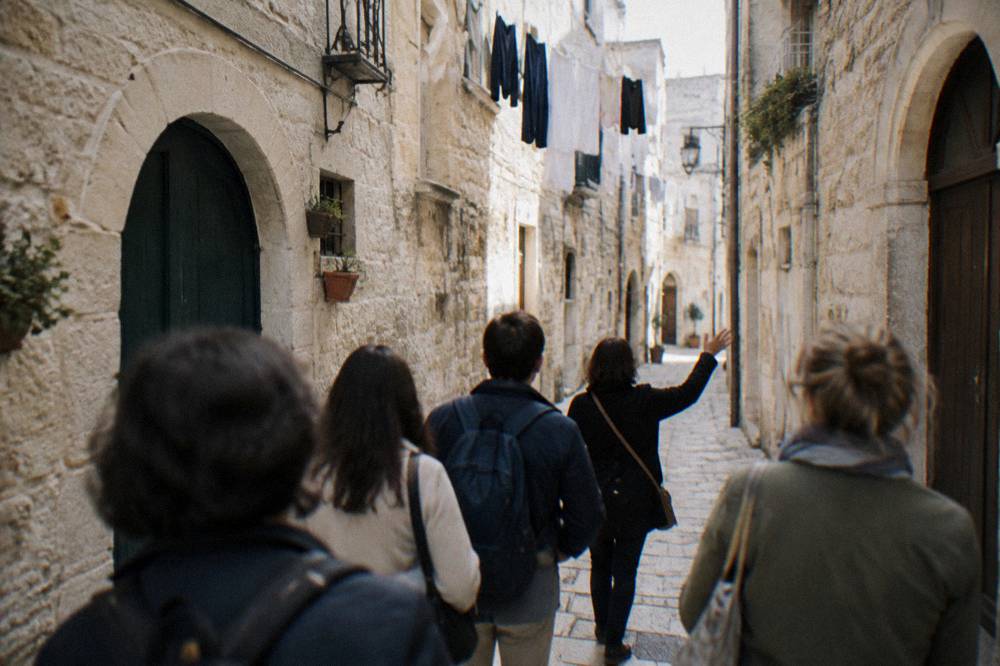
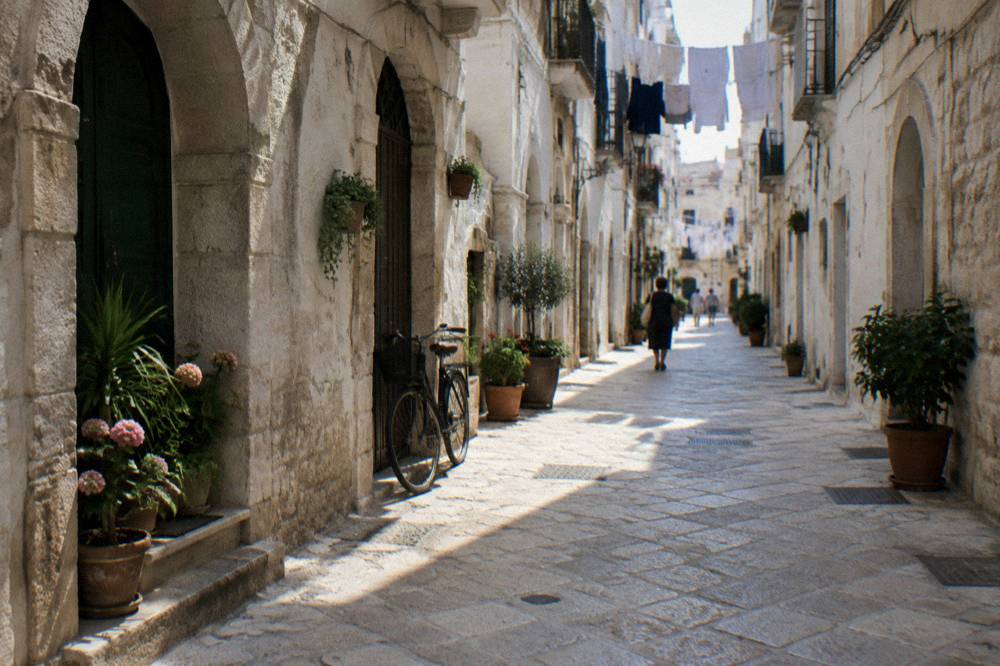
Bari Vecchia is the walled old town of Bari on the headland between the old port and the modern city, and it holds the Basilica di San Nicola, the Cattedrale di San Sabino, the Castello Normanno-Svevo, Piazza Mercantile and Piazza del Ferrarese within a few minutes' walk of each other. The district is a limited traffic zone, so it is visited on foot, and its street plan still follows the peninsula the port grew around.
The old town works as a single walkable circuit. Start at the Swabian castle on the edge of the district, continue through the lanes where orecchiette, the pasta shape of Puglia, is made on Strada Arco Basso, and finish at the two squares, Piazza Mercantile and Piazza del Ferrarese, where the old town opens toward the Murat district and the seafront. The Cattedrale di San Sabino stands a short walk from the basilica and is one of the landmarks of Bari Vecchia. The Basilica di San Nicola itself is open Monday to Saturday 06:30 to 20:30 and Sunday 06:30 to 22:00, with no admission fee mentioned on its page.
The old town's position on the water is not decoration. The headland faces the old port at Molo San Nicola, where the fish trade and the ferry piers sit, and the Stazione Marittima at Molo San Vito is about 0.5 km from Piazza Mercantile, a short flat walk from the heart of the old town. That closeness between port and pilgrimage is the whole logic of the city's history: goods, sailors and pilgrims all arrived at the same doorstep. The Bari Italy Travel Guide covers each of these places in its own page, from the basilica to the seafront.
Why Did Saint Nicholas's Relics Come To Bari?
The relics of Saint Nicholas rested at Myra for about 750 years, from 337 to 1087, and in 1087 sailors brought them to Bari, where they were placed in the crypt of the Basilica di San Nicola in 1089, according to the basilica's own account of the translation. That single sea crossing turned Bari into one of the major pilgrimage destinations of the Adriatic, and the relics remain in the crypt today.
The basilica's page sets out the sequence plainly. Saint Nicholas died in 337 and his relics stayed at Myra, on the coast of what is now Turkey, for roughly seven and a half centuries. In 1087 a crew of Bari sailors carried the relics away by sea, and two years later, in 1089, they were placed in the crypt built beneath the new basilica. Pilgrims have visited that crypt ever since, and the answer to the question of whether the saint still lies in Bari is yes, in the crypt, as the dedicated answer page explains in full.
The consequences of 1087 are visible all over the city. The basilica was built to receive and shelter the pilgrims, the old port grew around the traffic, and the annual feast in early May re-enacts the arrival with a historical procession that starts from the square beside the castle. A guided walk is an efficient way to hear this story in the places where it happened, and the History Walk of Bari covers the old town, the basilica and the castle quarter with a local guide.
When Is The Festa Di San Nicola Held In Bari?
The Festa di San Nicola runs 7 to 9 May each year by tradition, and the 2026 edition confirmed the pattern: the historical procession left piazza Federico II di Svevia at 20:00 on Thursday 7 May 2026, with the sea procession on 8 May and the manna ceremony on 9 May reported in the traditional programme. Write the dates in your diary as early May, 7 to 9 May.
The comune's pages for the 2026 edition give the structure. The corteo storico, the historical procession with re-enactment and music, sets off from the square by the castle on the evening of 7 May and ends at the basilica late at night. The sea procession on 8 May carries an icon of the saint out from the old port and back, recalling the arrival of 1087, and on 9 May the manna, the ritual drawing of a liquid from the tomb, closes the feast. The comune also approved a sagra, a street food fair, running 7 to 10 May 2026 alongside the religious programme. The programme for 2027 had not been announced, so check the comune's pages closer to the date.
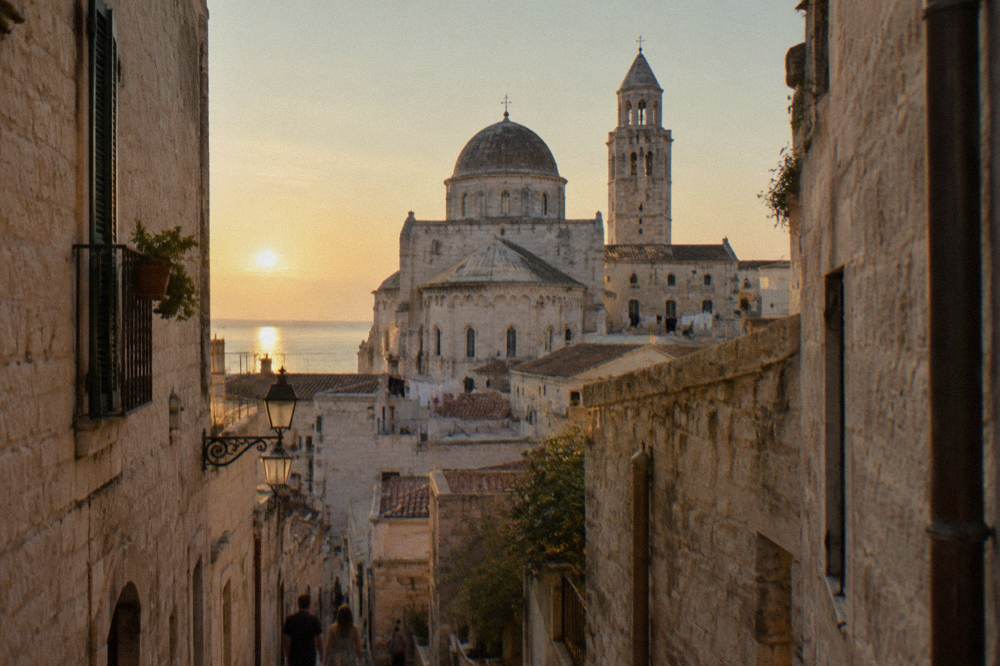
The feast is the one moment of the year when Bari's history stops being museum information and becomes a live event. Traffic restrictions and changed bus routes are posted by the comune for the feast days, and the streets between Piazza Mercantile and the basilica fill with processions, lights and food stalls. If your visit does not fall in early May, the basilica, the crypt and the castle tell the same story quietly on any ordinary day.
| Event | When | What happens |
|---|---|---|
| Corteo storico | 7 May, 20:00 from piazza Federico II di Svevia (2026 edition) | Historical procession with re-enactment and music, ending at the basilica |
| Sea procession | 8 May (reported in the traditional programme) | An icon of the saint is carried by boat from the old port |
| Manna | 9 May (reported) | Ritual drawing from the tomb closes the feast |
| Sagra | 7 to 10 May 2026 | Street food fair approved by the comune |
| Bif&st film festival | From 21 March 2026 (17th edition) | Film festival in the city, late March |
What Can You See At The Basilica Di San Nicola Today?
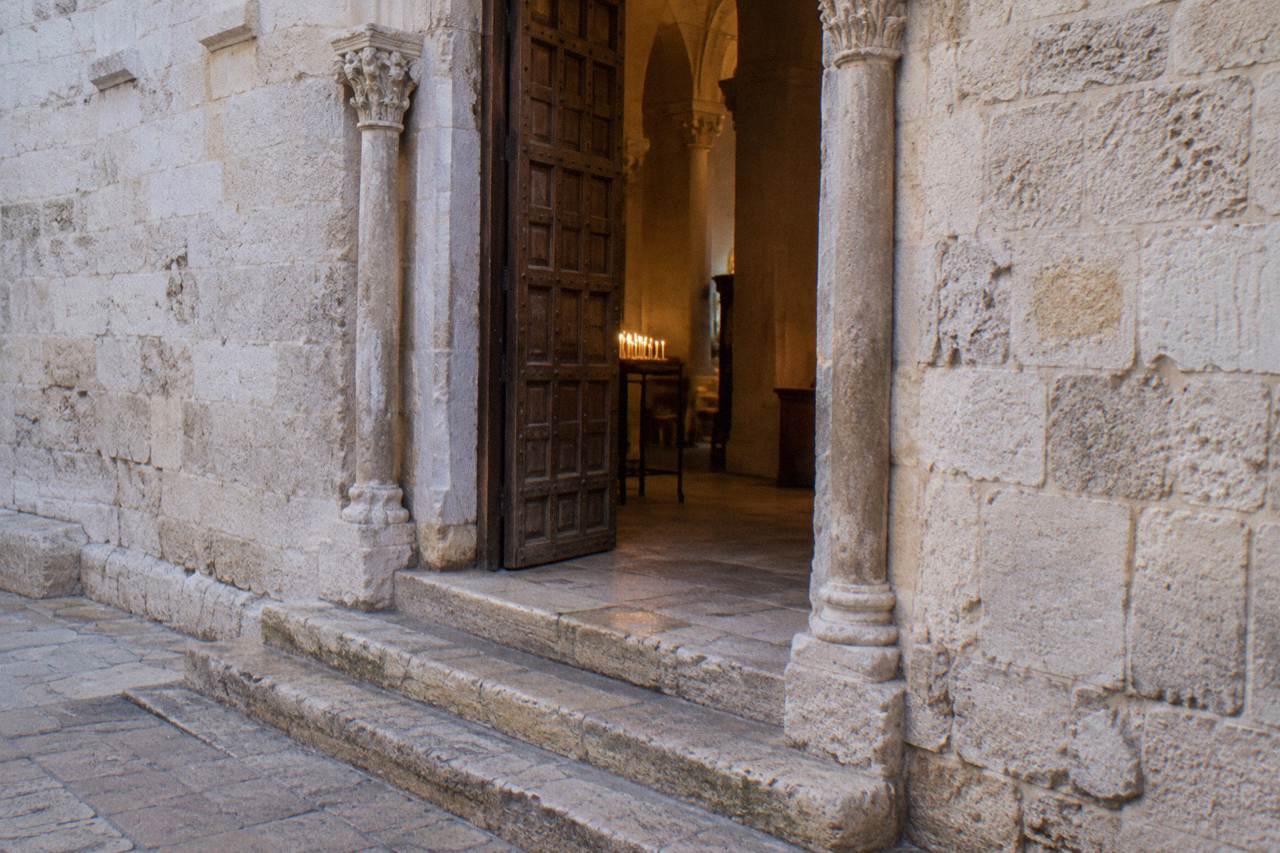
The Basilica di San Nicola is open Monday to Saturday 06:30 to 20:30 and Sunday 06:30 to 22:00, with no admission fee mentioned on its page, and the crypt holding the relics of Saint Nicholas is reached from inside the church. The Museo Nicolaiano nearby is reported at about 10:30 to 18:00, with one bulletin listing a Wednesday closure, so confirm before you go.
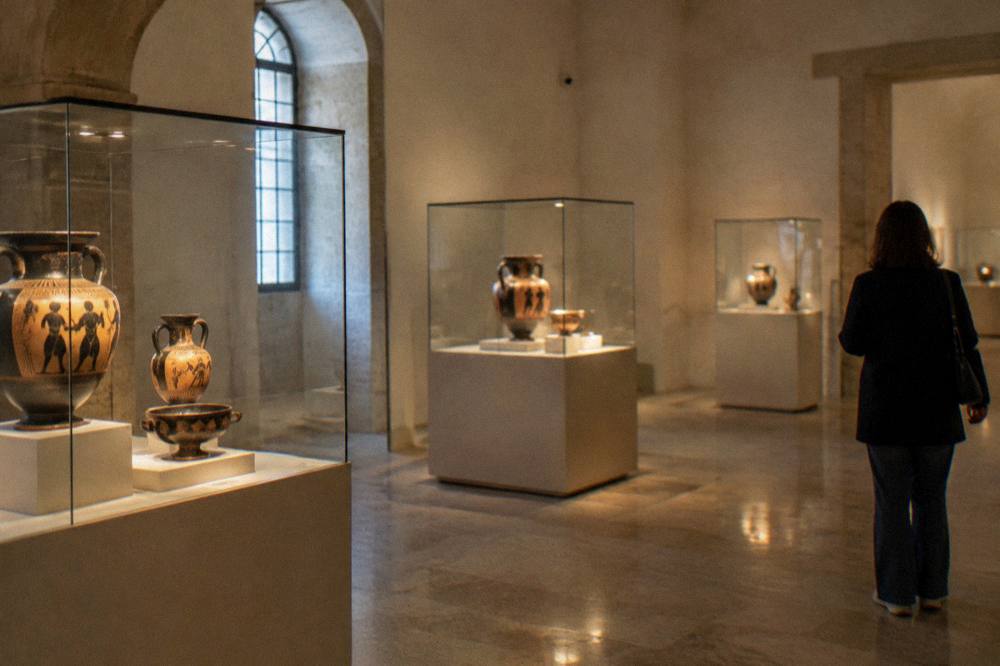
The basilica is the centre of the pilgrimage and the single most important building in the city's story. Its page gives the long opening hours above, which reflect its role as a working church rather than a ticketed monument. The crypt below holds the relics placed there in 1089, and an Orthodox liturgical life runs alongside the Catholic one, a living sign of the saint's following across the Christian traditions. The nearby Museo Nicolaiano tells the story of the translation and the pilgrimage; its hours are reported rather than fixed on a stable official page, so treat them as a guide and confirm locally.
A walk that pairs the basilica with the surrounding old town gives the history a frame: the lanes where the pasta makers work, the two squares, the sea wall and the castle gate are all within a few minutes. The solo pick below covers the history of the city on foot with a guide.
| Site in Bari Vecchia | Hours | Admission |
|---|---|---|
| Basilica di San Nicola | Mon to Sat 06:30 to 20:30, Sun 06:30 to 22:00 | No fee mentioned on its page |
| Crypt of San Nicola | Reached from inside the basilica during opening hours | Included with church access |
| Museo Nicolaiano | Reported about 10:30 to 18:00, one bulletin lists Wednesday closure | Confirm locally |
| Castello Normanno-Svevo | Tue to Sun 09:00 to 19:00, Oct to Mar Sundays 09:00 to 13:30 except first Sunday 09:00 to 19:00 | 10 EUR full, 2 EUR reduced |
| Pinacoteca Metropolitana Corrado Giaquinto | Tue to Sat 09:00 to 19:00, Sun 09:00 to 13:00, closed Monday | 5 EUR full, 2 EUR reduced, 8 EUR combined |
| Museo Archeologico di Santa Scolastica | Tue to Sat 09:00 to 19:00, Sun from 09:00 | 5 EUR full, 2 EUR reduced ages 18 to 25, combined ticket with the Pinacoteca |
What Role Did The Castello Normanno-Svevo Play In Bari?
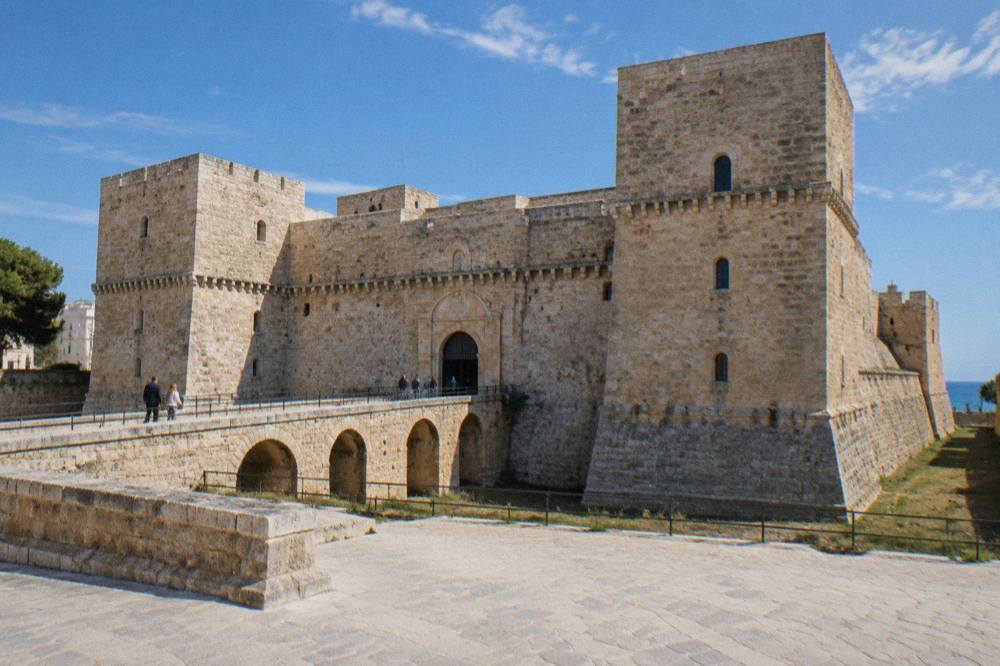
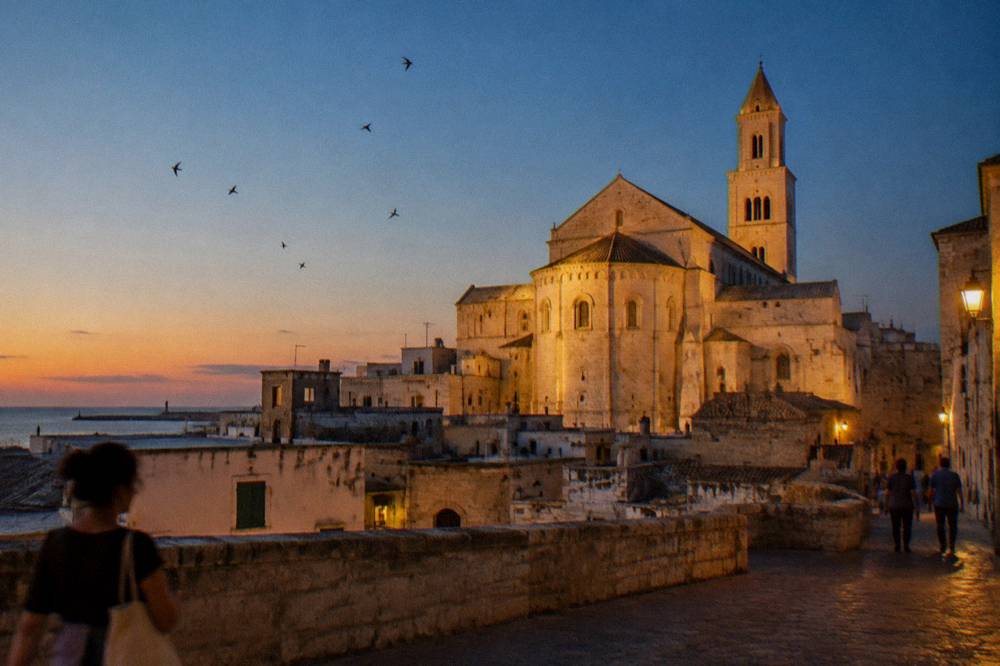
The Castello Normanno-Svevo, the Swabian castle at the edge of Bari Vecchia, is a museum site open Tuesday to Sunday 09:00 to 19:00, and from October to March Sunday hours shorten to 09:00 to 13:30 except the first Sunday of the month, when they return to 09:00 to 19:00. A full ticket costs 10 EUR and a reduced ticket 2 EUR, per the Musei Puglia ticket page.
The castle guards the landward gate of the old town, and since 1 July 2026 a camera-enforced limited traffic zone gate sits right at the castle, at piazza Federico II di Svevia at piazza Massari, with weekday entry windows of 09:00 to 11:00 for authorised vehicles and a reported afternoon window. If you arrive by rental car, do not drive into Bari Vecchia; park outside and walk in. The castle's rooms and courtyard now host exhibitions, and the Puglia Musei Card, at 20 EUR for six months of access to all the regional Musei Puglia sites, covers the state museums of the city if several are on your list. The castle is also listed among the state museums with free entry on the first Sunday of the month, a scheme the Italian culture ministry runs as Domenica al Museo.
The castle's position explains its history better than any plaque. It stands exactly where the old town meets the modern city, so every procession, market and invasion route passed its walls. Today the corteo storico of the May feast leaves from the square beside it, which tells you where the city believes its own centre of gravity sits.
How Did Modern Bari Grow Beyond The Old Town?
Modern Bari grew south of the old headland in the Murat district, a planned grid of streets around Via Sparano that now holds the city's shopping and business life, while the seafront promenade of the Lungomare Nazario Sauro and the Teatro Petruzzelli and Teatro Margherita connect the two halves along the water. The city counts about 316,000 residents, with about 1.2 million in the Metropolitan City of Bari.
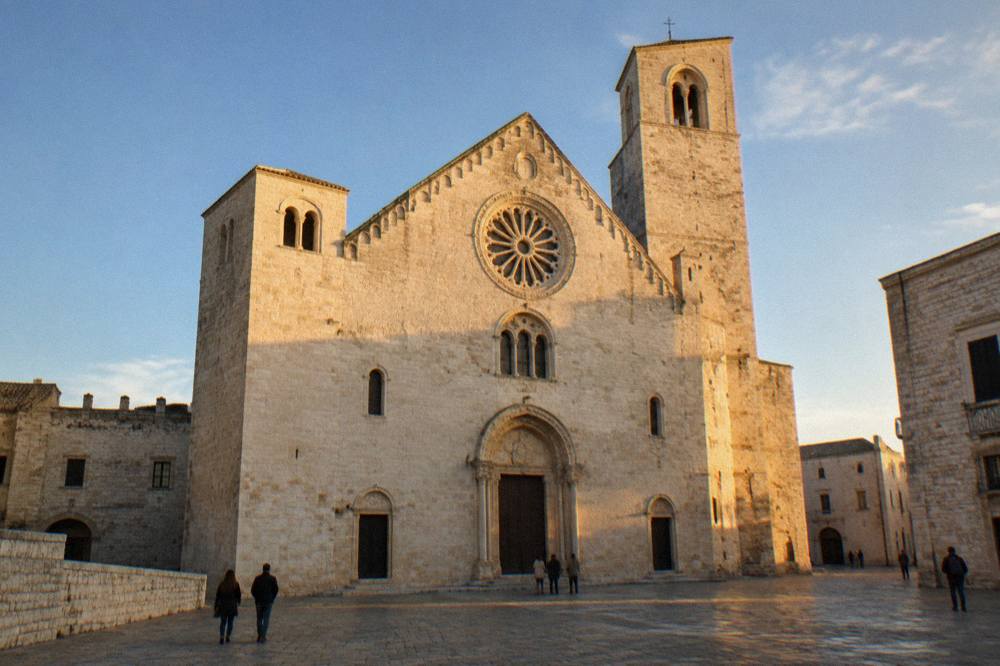
The contrast between the two halves of the city is the clearest lesson in its history. Bari Vecchia is a tangle of lanes that grew around the port and the pilgrimage; Murat is straight streets and regular blocks, laid out as a planned expansion. Between them runs the seafront, from the old port past the theatres toward the city beaches of Pane e Pomodoro, Torre Quetta and San Girolamo. The Teatro Petruzzelli, the opera house on the edge of this district, was destroyed by fire on the night of 26 to 27 October 1991 and reopened on 4 October 2009, dates reported in the theatre's own history; guided tours of its foyer and auditorium cost 7 EUR full and 2 EUR reduced, with dated slots published monthly on the foundation's page.
Transport ties the story together too. Bari Centrale, the main railway station, sits at the northern edge of Murat, and the Ferrotramviaria airport train covers the 12 km from Karol Wojtyla airport in 17 minutes, a journey the airport transfer guide covers in detail. The port on the other side of Murat still sends ferries to Durres and Greece every day of the year, a continuation of the sea-going habit that brought the relics in, as the ferries guide explains.
| District or landmark | Where it sits | What it tells of the city's story |
|---|---|---|
| Bari Vecchia | The headland between old port and seafront | The port town and pilgrimage centre |
| Murat | South of the old town, a grid around Via Sparano | The planned modern expansion, now shopping streets |
| Lungomare Nazario Sauro | The seafront promenade past Madonnella | The promenade linking port, theatres and beaches |
| Teatro Petruzzelli | Edge of Murat near the seafront | Fire 26 to 27 October 1991, reopening 4 October 2009, both reported |
| Bari Centrale | North edge of Murat | The rail hub for day trips across Puglia |
Which Day Trips From Bari Carry The Story Further?
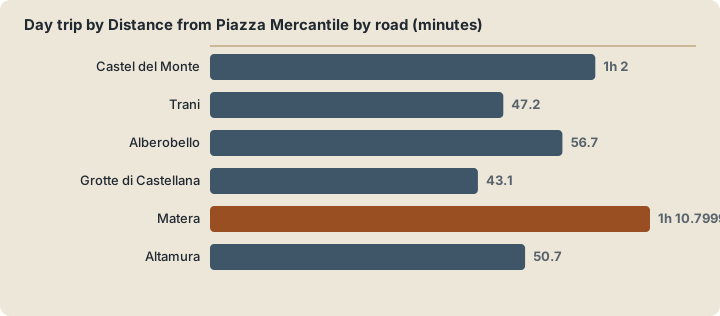
The strongest historical day trips from Bari are Castel del Monte, the octagonal UNESCO World Heritage castle about 62 km away by road and inscribed in 1996, the trulli town of Alberobello and the Sassi of Matera, both UNESCO World Heritage sites, and the Grotte di Castellana, whose full 3 km route costs 25 EUR for ages 15 and over. Matera lies in Basilicata, so that day trip crosses the regional border out of Puglia.
Castel del Monte stands alone on a hill above Andria, and the Musei Puglia ticket page gives its hours plainly: daily 10:00 to 18:45 from 1 April to 30 September and 09:00 to 17:45 from 1 October to 31 March, last entry 45 minutes before closing, at 10 EUR full and 2 EUR reduced. Alberobello and Locorotondo sit in the Valle d'Itria to the south-east, reached by the Trulli Link rail and bus connection, with the FSE leg reported at 5.90 EUR on top of the rail fare, so confirm current times with the operator. Matera's Sassi, the old stone districts of a city in Basilicata, are about 71 km by road from Piazza Mercantile, and the FAL railway line from Bari reaches Matera directly, though the operator's timetable should be checked before travelling.
| Day trip | Distance from Piazza Mercantile by road | Entry or connection |
|---|---|---|
| Castel del Monte | 62.0 km, about 59 minutes | 10 EUR full, 2 EUR reduced, daily opening |
| Trani | 47.2 km, about 45 minutes | Swabian castle 8 EUR full, 2 EUR reduced |
| Alberobello | 56.7 km, about 61 minutes | Trulli Link rail and bus connection |
| Grotte di Castellana | 43.1 km, about 47 minutes | Full route 3 km, 25 EUR ages 15 and over |
| Matera | 70.8 km, about 69 minutes | FAL rail line from Bari reaches Matera |
| Altamura | 50.7 km, about 50 minutes | Archaeological museum 5 EUR full, 2 EUR reduced |
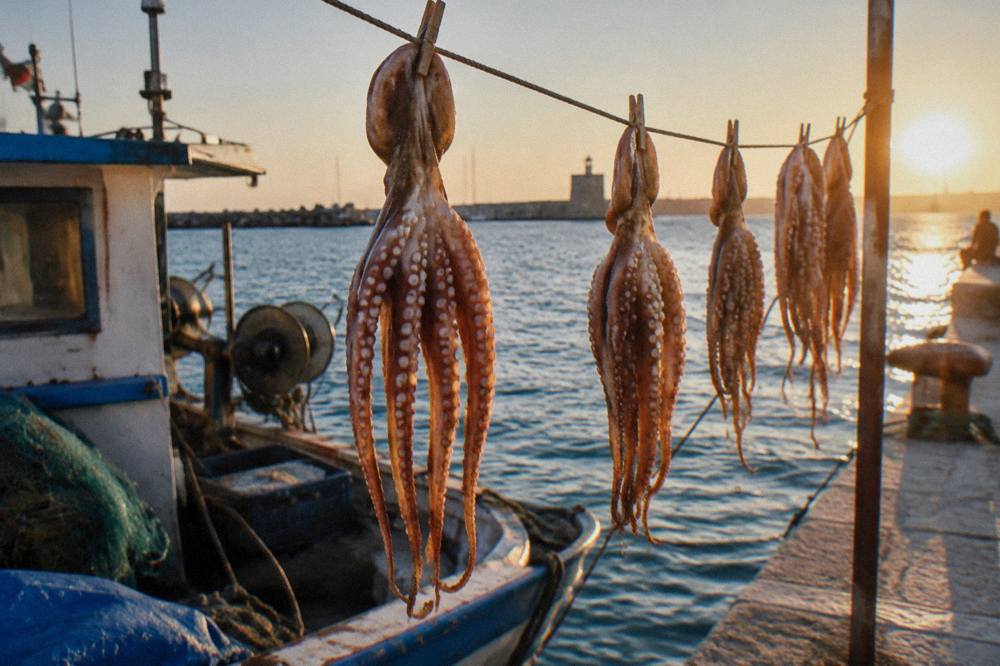
A single organised day can stitch several of these places together, and the pick below covers Castel del Monte with Altamura, Gravina in Puglia and Trani in one loop from Bari, which suits a visitor who wants the region's medieval story without renting a car.
How Do You Plan A History Visit To Bari?
Plan a history visit to Bari around two days on foot: one for Bari Vecchia with the basilica, the crypt, the cathedral as a landmark and the Swabian castle, and one for the seafront, the theatres and Murat, before adding a day trip to Castel del Monte, Alberobello or Matera. Book nothing but the day trips in advance, since the basilica needs no ticket and the castle sells its own.
Practicalities are simple. The old town is walkable from the station and from the cruise terminal alike, and the cruise port day guide shows the short route from the Stazione Marittima into Bari Vecchia for shore visitors. May combines the feast with mild weather, and even midsummer stays manageable on the seafront: typical values from modelled ERA5 data, 1991 to 2020, put the July mean daily maximum at 28.6 C and August at 29.1 C, with about 4 rain days in each of those months, figures the weather guide expands month by month. The tourist tax runs 1.50 to 4.00 EUR per person per night by accommodation category, for a maximum of 4 consecutive nights per calendar year, and is collected by your accommodation.
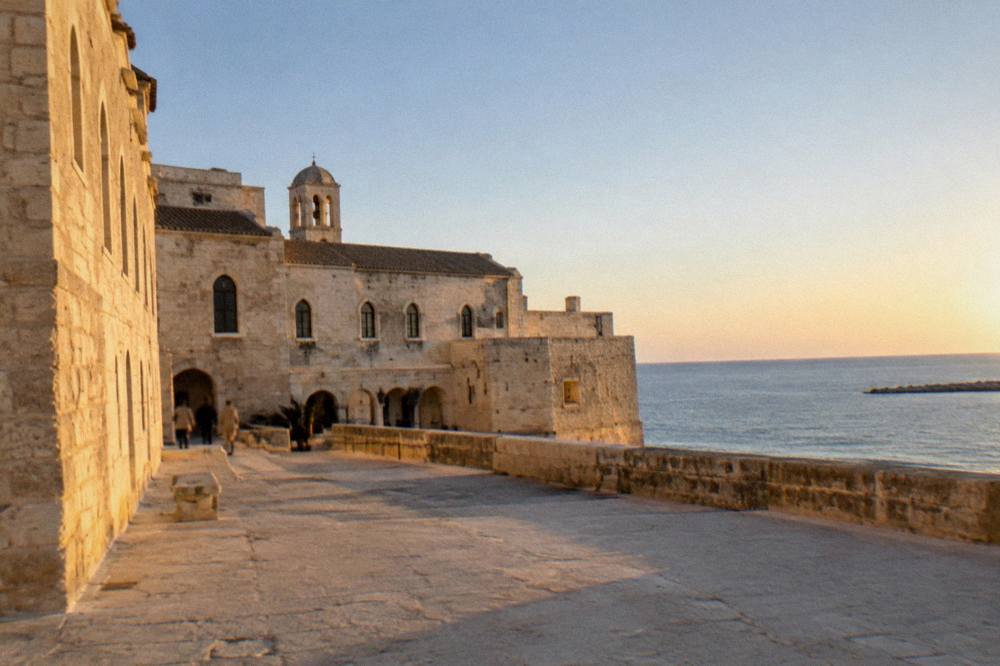
For the day-trip leg, the pick below covers the inland medieval circuit with a guide on board, which pairs well with the walking and food picks above for a full week built on the city's history rather than around it.
If your interests run wider than history, the things to do in Bari page gathers the full range of the city's attractions, from the seafront to the street food of the old town lanes.
Common Questions About Bari History
Are the relics of Saint Nicholas really in Bari?
Yes. The basilica's own account states the relics were brought from Myra by sailors in 1087 and placed in the crypt of the Basilica di San Nicola in 1089, and they remain in that crypt today.
When did Saint Nicholas's relics leave Myra?
The relics rested at Myra from 337 to 1087, about 750 years, before the sea crossing to Bari in 1087.
What are the dates of the Festa di San Nicola?
The feast runs early May, 7 to 9 May, by tradition. In 2026 the corteo storico left piazza Federico II di Svevia at 20:00 on 7 May, with the sea procession on 8 May and the manna on 9 May reported in the programme.
How much does the Castello Normanno-Svevo cost?
A full ticket costs 10 EUR and a reduced ticket 2 EUR, per the Musei Puglia ticket page. The castle is open Tuesday to Sunday 09:00 to 19:00, with Sunday hours of 09:00 to 13:30 from October to March except the first Sunday of the month.
Is the Basilica di San Nicola free to enter?
The basilica's page mentions no admission fee. It is open Monday to Saturday 06:30 to 20:30 and Sunday 06:30 to 22:00 as a working church.
Is Matera part of Puglia's history day trips from Bari?
Matera is in Basilicata, not Puglia, so a day trip there crosses the regional border. It is about 71 km by road from Piazza Mercantile, and the FAL railway line from Bari reaches it; check the operator's timetable before travelling.