Bari Walking Tours: Free Walks And Guided Options
Bari is a compact coastal city on the Adriatic where the old town, the seafront and the Murat district all sit within walking distance of each other, which makes a walking tour one of the most efficient ways to see it.
Short answer
A guided walking tour of Bari covers Bari Vecchia, the Basilica di San Nicola, the Swabian castle and the seafront; the city is compact enough that a self-guided walk between the same landmarks also works well.
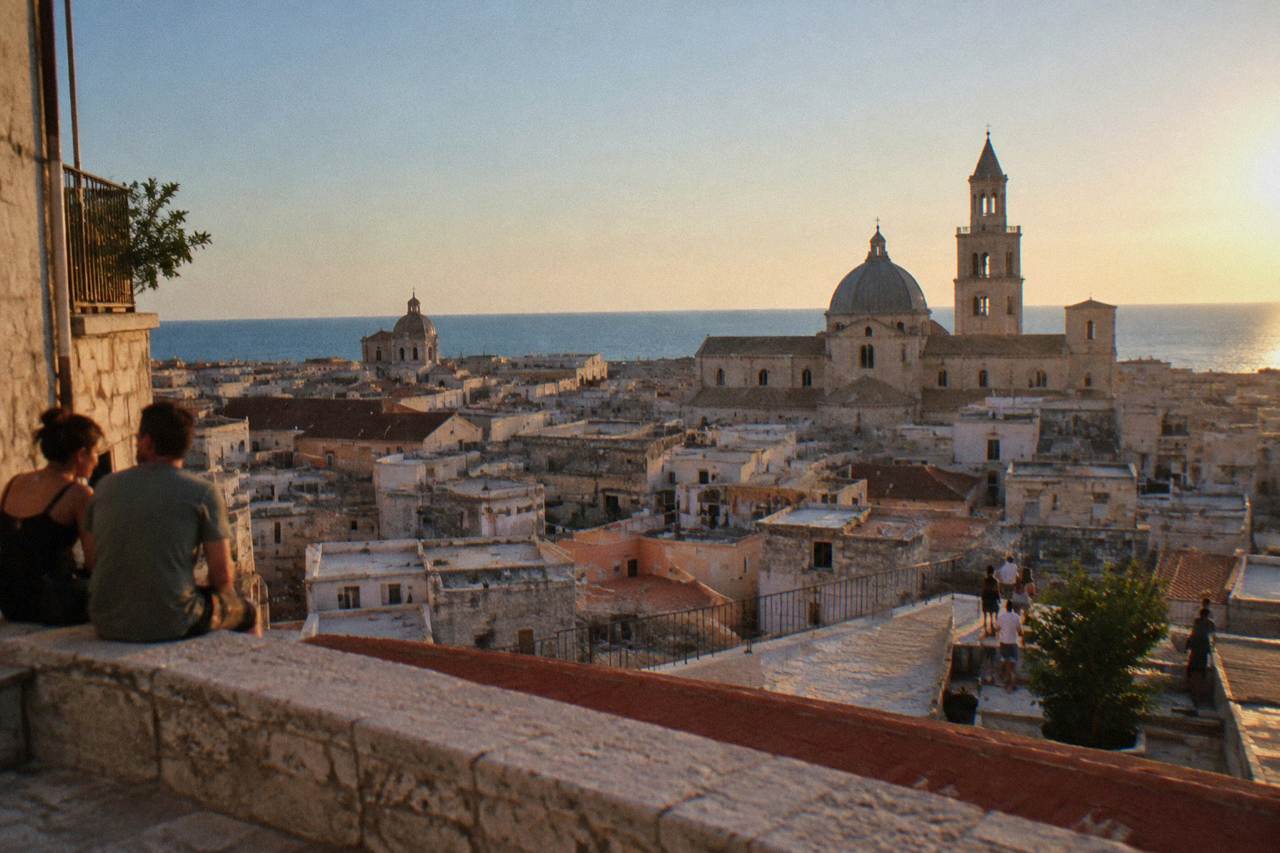
Bari, the capital of the Puglia region on the Adriatic coast of southern Italy, is a city built to be walked. The old town of Bari Vecchia sits on a headland beside the old port, the Murat district spreads south of it in a neat grid of shopping streets, and the Lungomare Nazario Sauro runs along the sea between the two worlds, so the distances between the Basilica di San Nicola, Piazza Mercantile and the seafront are short. This guide covers what a Bari walking tour includes, how to build your own route if you prefer to walk alone, what the museums along the way cost, and which tour styles fit which kind of visitor.
Why Bari Is A City Best Seen On Foot
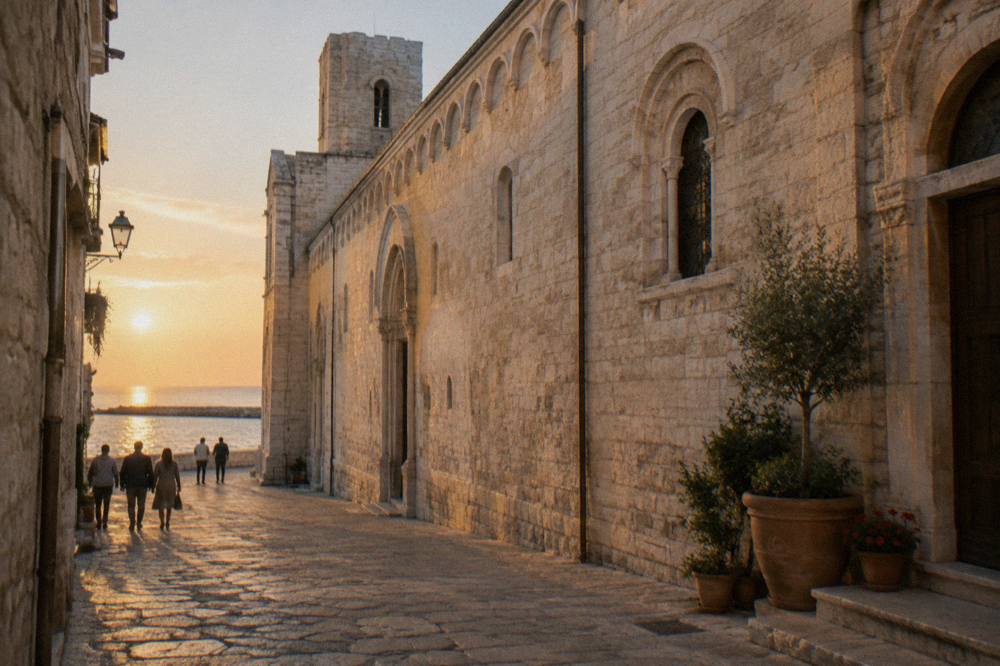
Bari Vecchia is a dense medieval street plan where cars are restricted and the landmarks sit a few hundred metres apart, so walking is the practical way through it. The Basilica di San Nicola is open Monday to Saturday 06:30 to 20:30 and Sunday 06:30 to 22:00, per its official hours page, and the Swabian castle lies a short stroll south, which puts the two anchor sights of the old town on one easy walking line.
The old town occupies the headland between the old port at Molo San Nicola and the modern city. Its lanes are narrow, many are pedestrianised for stretches of the day, and since 1 July 2026 a camera-controlled limited traffic zone gates vehicle entry at the Castello end. That restriction, detailed on the comune's mobility pages, means a car is close to useless inside Bari Vecchia anyway. Feet win by default.
South of the old town the scale changes. The Murat district is a grid of streets around Via Sparano, and its straight blocks make orientation simple once you leave the winding lanes behind. From Piazza Mercantile in the heart of Bari Vecchia the walk to Piazza del Ferrarese, and onward into the grid, takes only a few minutes at a relaxed pace.
The third piece is the sea. The Lungomare Nazario Sauro traces the water south from the old town past Madonnella toward the city beaches at Pane e Pomodoro and Torre Quetta. A full circuit of old town, Murat and a stretch of the seafront is a walk of a few kilometres, flat almost throughout, and shaded in stretches by the Lungomare's trees.
If you are deciding how long to spend in the city overall, the guide to how many days in Bari breaks the options down, and the Bari Italy Travel Guide homepage maps the full picture of the city and its day trips.
What A Guided Bari Walking Tour Includes
A guided walking tour of Bari typically covers Bari Vecchia as its core: the Basilica di San Nicola, the Cattedrale di San Sabino, Piazza Mercantile and Piazza del Ferrarese, with the Swabian castle and the seafront added on longer routes. The listings on this site carry the exact itinerary, duration and current price of each product, so the details render with the tour card rather than being summarized here.
The related tour on this page is the Bari: Guided Walking Tour, a guided walk of the city centre that you can also check live with Check availability. It departs from Bari itself, and it suits a first visit: the guide handles the geography of the old town, which saves time in lanes that all look equally inviting and equally lost.
Other walking formats exist in the roster. The Bari Walk Through History product digs into the city's past, and Bari Underground with archaeologist takes the walk below street level into the layers under the old town. Both are Bari-based products; their details again render from their cards.
What a guide adds, in practical terms, is context you cannot read off a facade. The story of Saint Nicholas's relics, brought from Myra by sailors in 1087 and placed in the basilica's crypt in 1089, is the founding story of the city's most famous church, and a guide tells it where it happened. The same goes for the fishing traditions at Molo San Nicola and the reason the Murat district's grid looks nothing like the old town beside it.
One note on origins: of the three products above, the walking tour departs from Bari, while the orecchiette class departs from a farm near Ostuni and the boat tour departs from San Vito, so plan the latter two as half-day or day excursions rather than city walks.
A Self-Guided Walk Route Through Bari Vecchia And The Seafront
A free self-guided walk can cover Bari Vecchia, the seafront and the Murat grid in a single loop of roughly three to four kilometres, starting at Piazza del Ferrarese, passing the Basilica di San Nicola and the Cattedrale di San Sabino, crossing to the Lungomare Nazario Sauro and returning through Via Sparano. The route is flat, and every landmark on it is publicly viewable from the street.
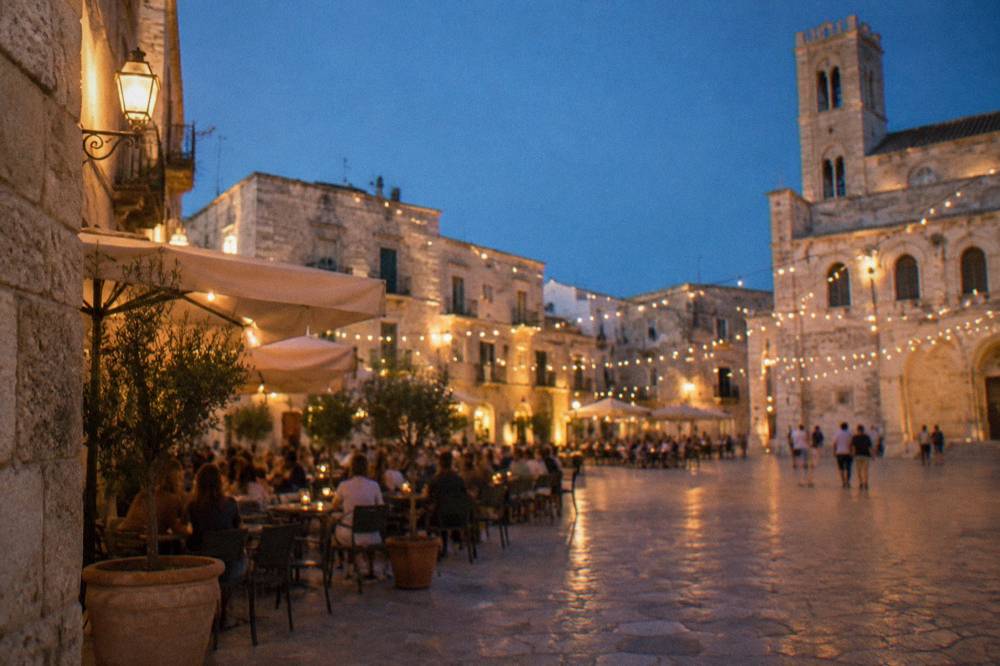
Start at Piazza del Ferrarese, the square where the old town meets the modern city. The tourist information point at Piazza del Ferrarese 29 is reported as the main infopoint; confirm its hours locally before relying on it. From the square, walk north into the lanes toward Piazza Mercantile, the old commercial heart of Bari Vecchia, then continue to the Basilica di San Nicola.
The basilica's official page gives hours of Monday to Saturday 06:30 to 20:30 and Sunday 06:30 to 22:00, with no admission fee mentioned. The crypt below holds the relics of Saint Nicholas, which rested at Myra for about 750 years before sailors brought them to Bari in 1087. A short walk east brings you to the Cattedrale di San Sabino, the other great church of the old town; check the current visiting arrangements on the spot.
From the cathedral, turn south toward the Castello Normanno-Svevo at the edge of the old town. The Musei Puglia ticket page lists the castle at 10 EUR full and 2 EUR reduced, open Tuesday to Sunday 09:00 to 19:00, with Sunday hours of 09:00 to 13:30 from October to March except the first Sunday of the month. The Puglia Musei Card at 20 EUR covers all regional Musei Puglia sites for six months, which pays off if the castle is one of several state museums on your list.
Finish along the water. Walk out to the Muraglia, the old sea wall on the north side of the old town, where the view runs across the old port, then follow the Lungomare Nazario Sauro south. The Teatro Margherita sits on the seafront near the start of the promenade, and the Teatro Petruzzelli stands a block inland. Guided tours of the Petruzzelli cost 7 EUR full and 2 EUR reduced, with dated slots published monthly by the foundation.
| Stop on the walk | Area | Key fact |
|---|---|---|
| Piazza del Ferrarese | Bari Vecchia edge | Tourist infopoint at number 29, reported |
| Basilica di San Nicola | Bari Vecchia | Mon-Sat 06:30-20:30, Sun 06:30-22:00, no fee listed |
| Cattedrale di San Sabino | Bari Vecchia | Hours not listed; check locally |
| Castello Normanno-Svevo | Bari Vecchia south | 10 EUR full, 2 EUR reduced, Tue-Sun 09:00-19:00 |
| Lungomare Nazario Sauro | Seafront | Promenade running south from the old town |
| Teatro Petruzzelli | Murat edge | Tours 7 EUR full, 2 EUR reduced, monthly slots |
Walking Tours With Street Food Through Bari
Several Bari walking products pair the old town route with food stops, covering the dishes Puglia is known for: orecchiette pasta, focaccia barese and panzerotti. The food walks on this site list their own stops, durations and prices on their product cards, and the street food of Bari has its own dedicated guide covering what each dish is.
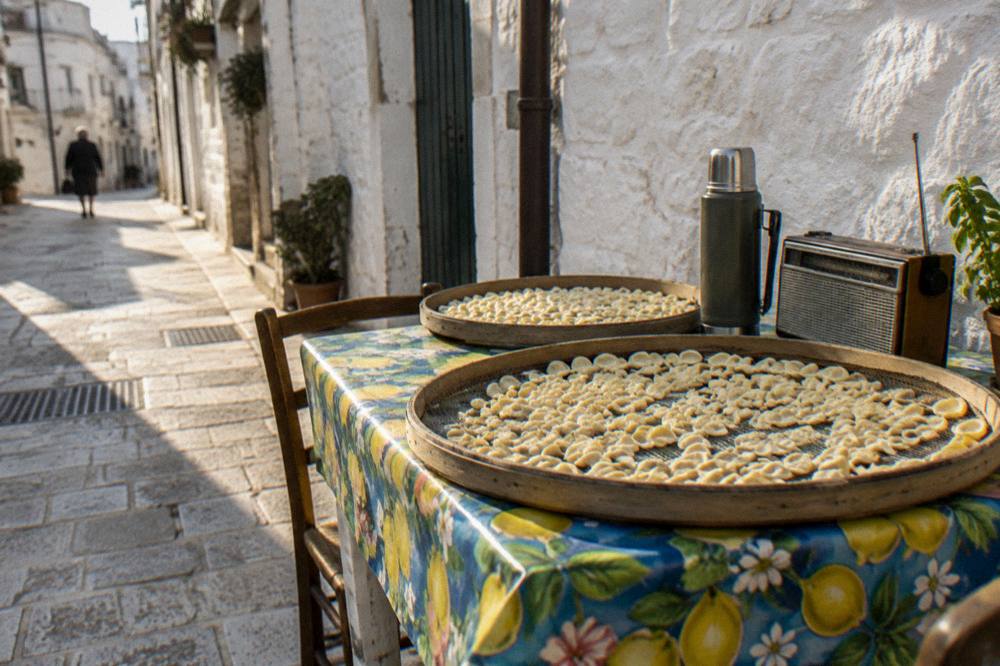
Orecchiette is the pasta shape of Puglia, and this site's research carries no confirmed schedule for pasta makers working at their doors, so treat the sight as something to pass through rather than a timed show. Focaccia barese is the city's tomato-topped flatbread, and panzerotti are small fried turnovers, typically filled with tomato and mozzarella.
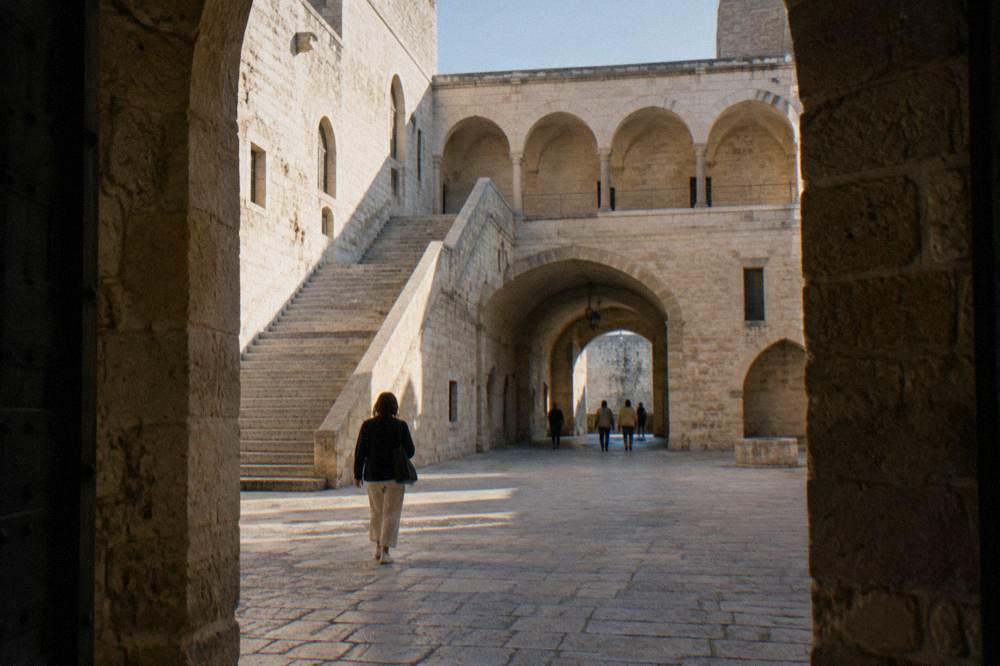
The roster includes several food-focused walks, from a street food walk with a local guide to a bike-based street food tour that covers more ground between tastings, plus a walking tour combined with an orecchiette-making class. Which one fits depends on whether you want a short tasting walk or a half-day with a sit-down class at the end. The guide to Bari street food and the guide to orecchiette in Bari describe the dishes in depth.
For a deeper version, a cooking class turns the walk into a lesson. One option departs not from Bari but from a farm near Ostuni, where an orecchiette class comes with wine tasting; Ostuni is about 85.3 km and 73 minutes by road from Piazza Mercantile, per the computed road-distance table in this site's research, so it is a day trip in itself.
That class is the Ostuni product shown above, and its details, including its price and duration, render from the card. It suits travellers who have already walked Bari Vecchia and want the countryside version of the same food culture.
| Food walk format | Departure | What it covers |
|---|---|---|
| Guided old town walk with street food | Bari | Landmarks of Bari Vecchia plus food stops |
| Street food walk with a local guide | Bari | Tasting-led route through the old town |
| Bike-based street food tour | Bari | Wider city coverage by bike with tastings |
| Walking tour plus orecchiette class | Bari | Old town walk followed by a pasta class |
| Farm orecchiette class with wine | Ostuni | Pasta class and wine tasting on a farm |
Adding A Boat Trip To A Polignano Walking Day
The most popular paired excursion from a Bari walking trip is a boat tour of the sea caves at Polignano a Mare, about 37.4 km and 36 minutes by road from Piazza Mercantile, with boats departing from Polignano's own harbour or from San Vito, not from the Bari waterfront. Polignano is also 33 km from Bari Centrale by rail on the Trenitalia Bari-Lecce line, so the day works by train or by tour bus.
The shared boat tour shown below departs from San Vito, a small harbour area south of Polignano a Mare, and includes an aperitif on board. Polignano itself is a walking town: the historic centre sits on limestone cliffs above the Adriatic, and the cove of Lama Monachile lies below the old streets. A morning boat trip and an afternoon walk through Polignano's lanes combine naturally.
Trenitalia regional trains on the Bari-Lecce line serve Polignano a Mare at 33 km from Bari Centrale, with the journey typically reported at 25 to 35 minutes; check the operator's timetable for the service you plan to take. The guide to Polignano a Mare covers the transport options in detail, and the guide to Bari beaches explains which beaches are in the city itself and which belong to the day-trip towns.
When To Walk In Bari: Weather And Timing
The climate table, from typical values from modelled ERA5 data 1991 to 2020, shows July and August mean daily highs of 28.6 C and 29.1 C with about 22 mm and 20 mm of rain, while January and February sit near 12 C highs with roughly 60 mm of rain each, so spring and autumn give the most comfortable walking temperatures and summer walks are best taken in the morning.
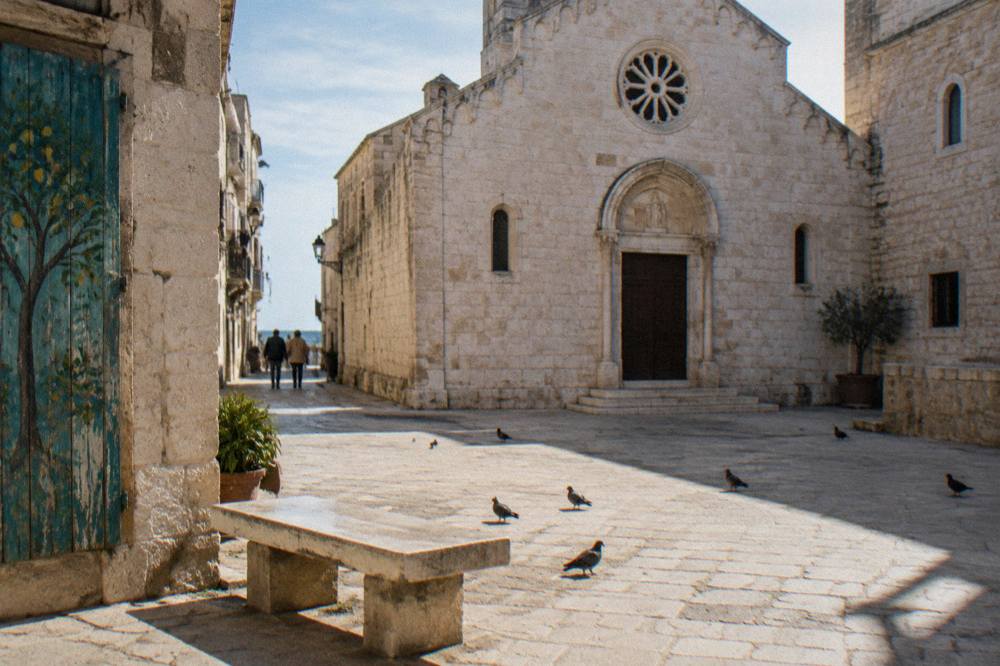
Timing matters inside the day as much as across the year. In July and August, with mean daily lows still at 22.0 C and 22.4 C, evenings stay warm enough for a night walk along the Lungomare, which is a common pattern for a city on the sea. In November, rainfall averages 73 mm against August's 20 mm, so a wet-weather plan matters more in autumn: the castle, the Pinacoteca Metropolitana Corrado Giaquinto and the Museo Archeologico di Santa Scolastica all work as indoor stops on a rainy route.
| Month | Mean daily high | Mean daily low | Rain |
|---|---|---|---|
| January | 12.1 C | 7.3 C | 60 mm |
| April | 17.5 C | 11.2 C | 54 mm |
| July | 28.6 C | 22.0 C | 22 mm |
| August | 29.1 C | 22.4 C | 20 mm |
| October | 21.1 C | 15.6 C | 63 mm |
| November | 16.9 C | 12.0 C | 73 mm |
Typical values from modelled ERA5 data, 1991 to 2020, are behind every figure in the table; the Bari weather guide and the guide to the best time to visit Bari extend the picture month by month.
Festa time changes the walking experience too. The Festa di San Nicola runs in early May, 7 to 9 May in the 2026 edition, with a historical procession leaving piazza Federico II di Svevia at 20:00 on 7 May, per the comune's programme. The old town is busy and traffic-restricted during the feast days, which is superb for atmosphere and slow for covering ground.
Practical Tips For Walking In Bari
Bari is flat, compact and served by cheap city buses, with AMTAB single tickets at 1.00 EUR, 90-minute tickets at 1.20 EUR and day tickets at 2.50 EUR per the operator's fares page, so a walking day needs no car and no plan beyond comfortable shoes. The emergency number in Italy is 112, and the tourist tax at your accommodation runs 1.50 to 4.00 EUR per person per night for a maximum of four nights.
A few specifics help. Do not drive into Bari Vecchia: the limited traffic zone is camera-enforced, and the perimeter parking near the old town is paid on working days from 08:30 to 20:30. If you arrive at Karol Wojtyla airport, the Ferrotramviaria train reaches Bari Centrale in 17 minutes for a 5.30 EUR single, the Tempesta coach costs 5 EUR and takes about 30 minutes, and a taxi to a city-centre hotel is a predetermined 25 EUR; the airport-to-centre guide compares them.
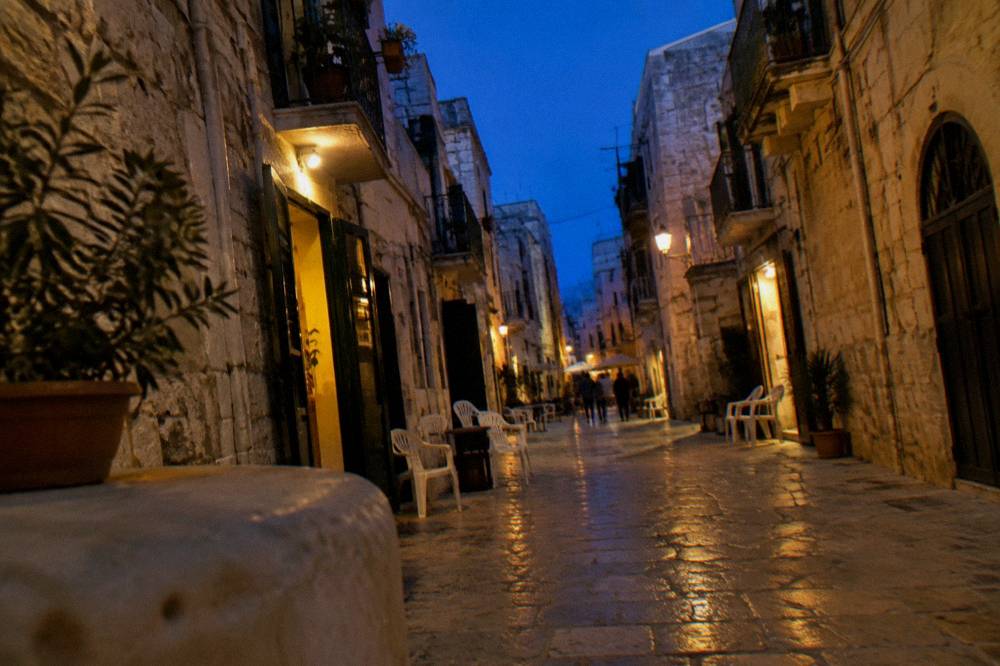
Keep valuables in a zipped bag held in front on crowded buses and in the busiest lanes, and check posted prices and the itemised bill at food stops. The guide to whether Bari is safe covers the same ground in more detail. For luggage between a morning walk and a later train, the Bari luggage storage guide lists the options.
| Airport transfer | Cost | Notes |
|---|---|---|
| Ferrotramviaria train | 5.30 EUR single | 17 minutes to Bari Centrale, station in the terminal |
| Tempesta shuttle coach | 5 EUR | About 30 minutes, reported |
| AMTAB line 16 | Pay the standard city ticket | Links Bari Centrale and the airport |
| Taxi to a city-centre hotel | 25 EUR fixed | Predetermined municipal fare |
Museums can anchor a walk too. The Pinacoteca Metropolitana Corrado Giaquinto is open Tuesday to Saturday 09:00 to 19:00 and Sunday 09:00 to 13:00, closed Monday, at 5 EUR full and 2 EUR reduced, with an 8 EUR combined ticket that also covers the Museo Archeologico di Santa Scolastica. The archaeology museum keeps the same weekday hours, is free on the first Sunday of the month, and its 2 EUR reduced rate applies to ages 18 to 25.
Combining A Bari Walk With Day Trips On Foot
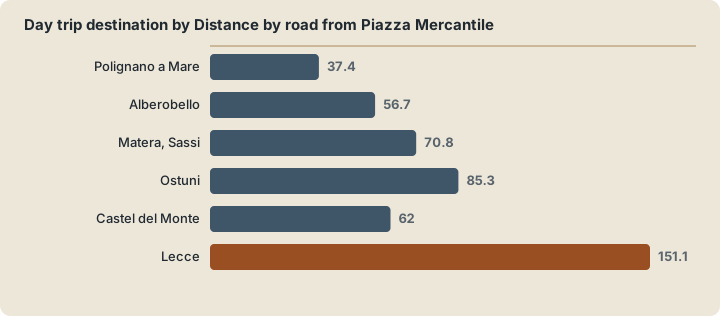
The towns around Bari reward walkers as much as the city does: Polignano a Mare lies 37.4 km away by road, Alberobello 56.7 km, Ostuni 85.3 km and Matera 70.8 km, with Matera across the regional border in Basilicata, so each pairs well with a Bari base once your city walking days are done. The trulli of Alberobello and the Sassi di Matera are both UNESCO World Heritage sites, and Castel del Monte, another UNESCO site since 1996, sits 62.0 km and 59 minutes by road from Piazza Mercantile.
Trains make several of these trips simple. The Trulli Link service connects Trenitalia and FSE trains to Locorotondo, Alberobello and Martina Franca in the Valle d'Itria, with the FSE leg reported at 5.90 EUR on top of the rail fare. The guide to Bari to Alberobello covers that route, and the getting around Bari guide explains the full transport picture.
| Day trip destination | Distance by road from Piazza Mercantile | Drive time, free flow |
|---|---|---|
| Polignano a Mare | 37.4 km | about 36 minutes |
| Alberobello | 56.7 km | about 61 minutes |
| Matera, Sassi | 70.8 km | about 69 minutes |
| Ostuni | 85.3 km | about 73 minutes |
| Castel del Monte | 62.0 km | about 59 minutes |
| Lecce | 151.1 km | about 115 minutes |
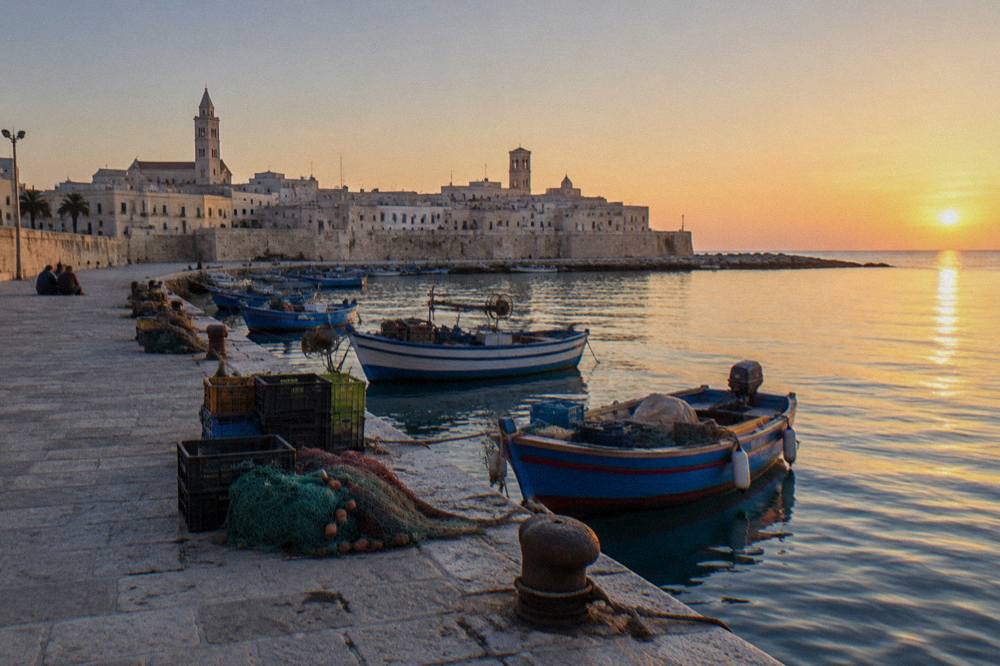
Choosing Between A Guided Walk And Walking Alone In Bari
A guided walk suits a first visit, a short stay or anyone who wants the stories behind the facades told in context, while a self-guided walk suits repeat visitors, tight budgets and slow travellers who want to linger, since all of Bari Vecchia's key exteriors are free to see from the street and the basilica lists no admission fee. Both approaches cover the same ground; the difference is depth against freedom.
Depth is the other axis: a guide unlocks the Petruzzelli's interior on a 7 EUR tour slot, explains the 1087 relic translation where it happened, and steers you through lanes that otherwise blur together.
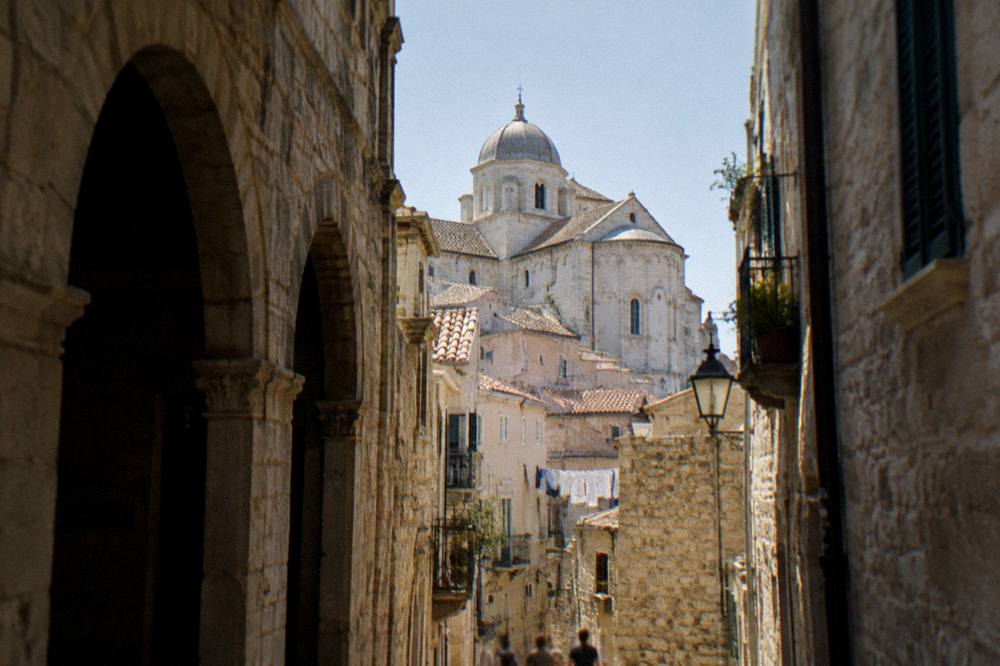
Of the three cards above, only the guided walking tour is a Bari city product: the orecchiette class departs from a farm near Ostuni and the boat tour departs from San Vito by Polignano a Mare, so treat those two as excursions booked around your walking days rather than parts of a single day in the city. For a fuller sense of what else the city holds beyond walking routes, the things to do in Bari page is the site's main overview.
Common Questions About Bari Walking Tours
How long is a walking tour of Bari?
Product durations render on each tour card on this site and are never typed in prose. The walkable core of the city covers a few flat kilometres that can be completed in a morning or an afternoon at a relaxed pace.
Do I need to book a Bari walking tour in advance?
Booking ahead is the safer choice in the busy months, when the mean daily high reaches 28.6 C in July and 29.1 C in August and walking tours run in the cooler hours. Every tour card on this site carries a live availability link, and the guided walking tour can be reserved with free cancellation before the start.
Can you visit the Basilica di San Nicola on a walking tour?
Yes. The basilica's official page lists Monday to Saturday 06:30 to 20:30 and Sunday 06:30 to 22:00, with no admission fee mentioned, so a walking route can pass through both the church and the crypt holding the relics of Saint Nicholas, brought to Bari in 1087.
Is Bari Vecchia walkable with a luggage bag or stroller?
The old town's lanes are narrow and some are cobbled, which makes large wheeled bags awkward. Several luggage storage options near the station and the old town are listed in the site's luggage storage guide, and dropping bags before a walk is the simpler plan.
What is the best month for walking in Bari?
By the climate table of typical values from modelled ERA5 data 1991 to 2020, April averages a 17.5 C high and October 21.1 C, against 29.1 C in August, so spring and autumn give the most comfortable walking temperatures. Early May also brings the Festa di San Nicola, held 7 to 9 May, with a historical procession through the old town.
Do Bari walking tours include the Castello Normanno-Svevo?
Tours vary, and each card lists its stops. If your route passes the castle, the Musei Puglia ticket page gives 10 EUR full and 2 EUR reduced, Tuesday to Sunday 09:00 to 19:00, with shorter Sunday hours from October to March, so you can budget the entry separately from the tour price.
Whether you walk with a guide through Bari Vecchia or trace the same lanes alone from Piazza del Ferrarese to the Lungomare, the city repays time on foot more than any other way of seeing it, and the tours collected here simply decide how much of the storytelling comes along for the stroll.
