How Many Days In Bari Is Enough?
Two days cover Bari Vecchia, the Murat district and the seafront; three days add a cave boat or a hill town. A practical answer with opening hours, prices and day-trip distances.
Bari, the capital of the Puglia region on the Adriatic coast of southern Italy, is compact enough that its core sights sit within walking distance of one another, and well connected enough that Polignano a Mare, Monopoli, Alberobello, Matera and Lecce all work as day trips. That combination is what makes the length question genuinely worth answering with numbers rather than impressions. The answer below draws on opening hours published by the museums themselves, drive times computed from Piazza Mercantile, and the timetables of the regional operators, and it is the same reasoning this Bari Italy Travel Guide applies across its itinerary pages.
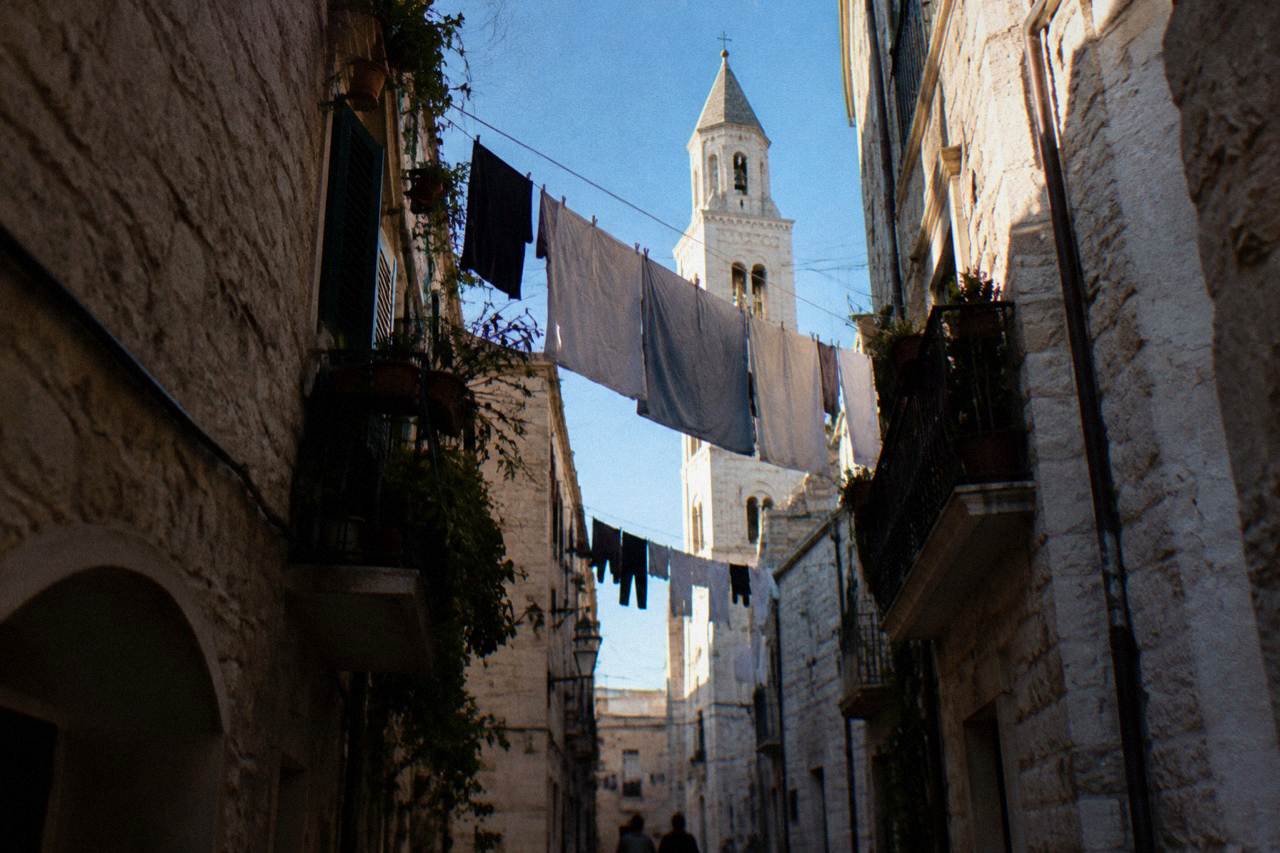
How Many Days In Bari Is Enough?
Two full days are enough for Bari itself, and three or four days are the better answer if day trips are part of the plan. In two days you can cover Bari Vecchia, the Basilica di San Nicola, the Swabian castle, the Murat district and the Lungomare Nazario Sauro at a normal pace; a third day adds one day trip, and a fourth or fifth adds the Valle d'Itria or Matera without rushing anything.
The reason two days work is geometry. Bari Vecchia sits on a headland beside the old port, the Murat district starts immediately south of it across Piazza del Ferrarese, and the seafront promenade runs the whole way along. Nothing in the historic centre is more than a short walk from anything else. The basilica is open Monday to Saturday 06:30 to 20:30 and Sunday 06:30 to 22:00, with no admission fee mentioned on its page, so it fits any morning. The Castello Normanno-Svevo costs 10 EUR full and 2 EUR reduced and opens Tuesday to Sunday 09:00 to 19:00, which means Monday is the one day the castle and the two big museums are all closed, and a two-day visit should not straddle a Monday if the indoor sights matter.
A useful reality check on pace: the Swabian castle, the Pinacoteca Metropolitana Corrado Giaquinto and the Museo Archeologico di Santa Scolastica each close on Mondays, and from October to March the castle keeps shorter Sunday hours, 09:00 to 13:30, except the first Sunday of the month. Anyone planning a weekend trip in winter should build around that. The full itinerary breakdowns live at two days in Bari and three days in Bari, and the longer comparison is at how many days in Bari.
What Does Two Days In Bari Actually Cover?
Two days cover the whole historic core and the seafront with room for food and museums: day one for Bari Vecchia, the basilica, the crypt of San Nicola, Piazza Mercantile and the Swabian castle, day two for the Murat district around Via Sparano, the Pinacoteca, the Lungomare Nazario Sauro and a city cruise or a long beach afternoon at Pane e Pomodoro.
Day one is the old town. The Basilica di San Nicola, the Cattedrale di San Sabino, Piazza Mercantile, Piazza del Ferrarese and the Castello Normanno-Svevo form a walkable loop of a few hundred metres, with Strada Arco Basso, the street known for its pasta makers, running through the middle of it. Orecchiette is the pasta shape of Puglia, and the street is named after it for a reason. The castle ticket at 10 EUR is the one fixed cost of the day; the basilica's page lists no admission fee. Teatro Petruzzelli sits just outside the old town, and its guided tours cost 7 EUR full and 2 EUR reduced, with dated slots published monthly, so a tour slot can anchor the late afternoon.
Day two is the Murat district and the sea. The Murat district is a grid of shopping streets around Via Sparano, a short walk south of Piazza del Ferrarese. The Pinacoteca Metropolitana Corrado Giaquinto, on the Lungomare Nazario Sauro, opens Tuesday to Saturday 09:00 to 19:00 and Sunday 09:00 to 13:00, closed Monday, at 5 EUR full and 2 EUR reduced, with an 8 EUR combined ticket that also covers the Museo Archeologico di Santa Scolastica. The seafront itself is the free half of the day, and Pane e Pomodoro, the nearest city beach, sits about 2.1 km from Piazza Mercantile in Japigia.
For the part of day one that needs a guide rather than a map, the underground walk led by an archaeologist reaches the layers under Bari Vecchia that no street-level plan can show, and the street food tour with focaccia and gelato turns the old town's food stops into the spine of an afternoon. Both are city products that depart in Bari, so neither steals time from the day-trip half of a longer stay.
Is Three Days In Bari The Sweet Spot?
Three days is the balanced answer for a first visit: two days for the city, as above, and a third day for one day trip, with Polignano a Mare the easiest fit at 33 km by rail on the Trenitalia Bari-Lecce line, typically 25 to 35 minutes each way, or Alberobello and Matera combined on a single guided coach day if the UNESCO sights are the priority.
The third-day choice is really a choice between coast and hills. Polignano a Mare and Monopoli are the coastal option, both on the same rail line, both reachable without a car, and both holders of 2026 Blue Flags, which Bari itself is not. The cave boats for the Polignano coast leave from Polignano, not from Bari, so the train and the boat connect in the town itself. The hill option is the Valle d'Itria: Alberobello, the town of trulli and a UNESCO World Heritage site, Locorotondo and Martina Franca, linked to the rail network by the Trulli Link intermodal service, with the FSE leg reported at 5.90 EUR on top of the rail fare, so confirm before you go. Matera, the third UNESCO draw, is in Basilicata, not Puglia, about 71 km by road from Piazza Mercantile, and the FAL railway line from Bari reaches it. More of these guides are collected on Bari Italy Travel Guide.
Wondering whether the underground tour deserves one of your city slots? The crypts and foundations beneath Bari Vecchia are the one part of the old town a self-guided walk cannot reach, and the archaeologist-led format is what turns them from a curiosity into an explanation. Cancellation terms are on the operator's live listing, so the slot can be moved if the weather pushes the seafront day around.
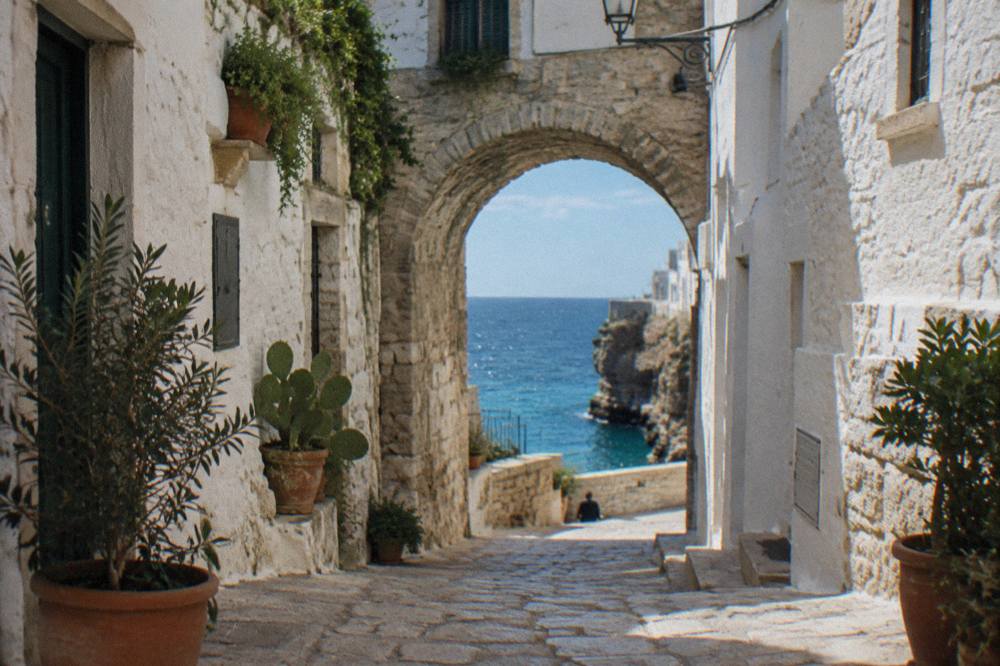
When Do Four Or Five Days In Bari Make Sense?
Four or five days make sense when at least two day trips matter: with four days you can pair the coast (Polignano a Mare and Monopoli) with one inland day (Alberobello and Matera, or Castel del Monte and Trani), and with five you can add the Grotte di Castellana at 25 EUR for the full 3 km route or a slower final day on the Bari seafront.
The distance table is what justifies the extra days. These are road distances and free-flow drive times computed from Piazza Mercantile, and they show why stacking two distant inland days back to back is a mistake:
| Day trip from Bari | Distance by road | Drive time (free-flow) |
|---|---|---|
| Polignano a Mare | 37.4 km | about 36 min |
| Monopoli | 47.3 km | about 43 min |
| Alberobello | 56.7 km | about 61 min |
| Castel del Monte | 62.0 km | about 59 min |
| Trani | 47.2 km | about 45 min |
| Matera (Sassi) | 70.8 km | about 69 min |
| Lecce | 151.1 km | about 115 min |
Lecce is the outlier: about 151 km by road, 150 km by rail on the Trenitalia Bari-Lecce line. It is doable as a day trip but it is the one destination on this list that works best as an overnight, and squeezing it into the last day of a four-day trip is the classic way to end a holiday exhausted. Castel del Monte, the octagonal UNESCO castle inscribed in 1996, costs 10 EUR full and 2 EUR reduced and opens daily, 10:00 to 18:45 from 1 April to 30 September and 09:00 to 17:45 from 1 October to 31 March, with last entry 45 minutes before closing, so it pairs naturally with Trani, whose Swabian castle costs 8 EUR and 2 EUR reduced. The four-to-five-day build, with the sequencing logic, is laid out at four to five days in Bari, and the week-long version at a Puglia week from Bari.
Season changes the arithmetic a little. The climate table, typical values from modelled ERA5 data, 1991 to 2020, gives July a mean daily maximum of 28.6 C and August 29.1 C, with about 4 rain days in each, so summer days start early and end late at the sea. November averages 73 mm of rain against August's 20 mm, roughly 587 mm across the year, which is why an off-season visit leans harder on the museums, the castle and the food stops, and why a rainy-day plan matters more than a beach slot. The month-by-month trade-offs are in the best month to visit Bari.
Can You See Bari In One Day?
One day is enough to see the core of Bari, but not enough to see it calmly: a single day can cover Bari Vecchia, the basilica, the Swabian castle at 10 EUR, a walk on the Murat grid and the Lungomare Nazario Sauro, but it rules out every museum that closes on Monday, every day trip, and any second evening, which is when the old town changes character.
The one-day version works, and for cruise passengers it is the only version: the Stazione Marittima at Molo San Vito sits about 0.5 km from Piazza Mercantile, so the old town starts essentially at the gangway. But a one-day visit should be honest about what it skips. The Pinacoteca and Santa Scolastica, at 5 EUR each or 8 EUR combined, need half a day between them on any day but Monday. The Grotte di Castellana, 43.1 km and about 47 minutes by road, needs a half-day trip of its own, with the full 3 km route at 25 EUR taking about 100 minutes and the 1 km partial route at 22 EUR about 50 minutes. None of that fits beside the old town in one day.
There is also a budget angle to length. The tourist tax in Bari runs 1.50 to 4.00 EUR per person per night by accommodation category, capped at 4 consecutive nights per calendar year, and each comune on the day-trip list sets its own, so the host is the one to ask. That cap does not reward stretching a city-only visit, but it comfortably covers the three-to-five-day stays this page recommends, and it is one more reason the four-day version, two city days plus two trips, is a better shape than four city days.
Common Questions About Days In Bari
How many days in Bari is enough?
Two days are enough for the city itself: Bari Vecchia, the basilica, the Swabian castle, the Murat district and the seafront. Three days add one day trip, typically Polignano a Mare, and four or five days allow the UNESCO pairing of Alberobello and Matera plus a coastal day without rushing.
Is one day in Bari enough?
One day covers Bari Vecchia, the Basilica di San Nicola, the Castello Normanno-Svevo and a walk on the Lungomare Nazario Sauro. It leaves no room for the Pinacoteca, the archaeological museum or any day trip, and on a Monday the castle and both museums are closed.
Can you day trip to Matera from Bari?
Yes. Matera is about 71 km by road from Piazza Mercantile, and the FAL railway line from Bari reaches it, crossing into Basilicata since Matera is in that region, not Puglia. Check the operator's timetable before planning, as service changes during works are posted by the operator.
Is Bari or Lecce the better base?
Bari is the better base for a trip that mixes the city with the northern and inland day trips, since Polignano, Monopoli, Alberobello, Matera, Trani and Castel del Monte all sit within about an hour by road. Lecce is about 151 km and 115 minutes away by road, so basing in Lecce makes the Bari-side trips the long ones.
Do you need a car for day trips from Bari?
No. Trenitalia regional trains on the Bari-Lecce line serve Polignano a Mare, Monopoli, Ostuni and Lecce, the Trulli Link intermodal service reaches Alberobello, Locorotondo and Martina Franca, and FAL runs the line toward Matera. A car helps for Castel del Monte and scattered rural stops, but the headline day trips all work by rail or coach. If you do drive, do not drive into Bari Vecchia: it is a limited traffic zone with a camera gate at the Castello.
For stays at the longer end, the question stops being about Bari and becomes one about Puglia as a region, and the answer to that is its own page at how many days in Puglia is enough. Whichever length you settle on, book the city days around the Monday closures and the season's castle hours, and let the day trips fill the days the museums cannot.
For a stay of any length, the three products above slot cleanly into the plan: the archaeologist-led underground walk for the first old-town day, the focaccia and gelato food tour for the second, and the guided Matera and Alberobello coach day for the inland day that would otherwise eat hours of timetable planning.
