Three Days In Bari: City Days Plus One Day Out
Three days in Bari, the capital of Puglia on the Adriatic coast of southern Italy, split into two city days and one day out among the towns of the region.
Short answer
Three days in Bari work as two city days, one covering Bari Vecchia and the Basilica di San Nicola, the second covering the Murat district, the museums and the Lungomare Nazario Sauro, plus one day trip, with Polignano a Mare, Monopoli, Alberobello and Matera all reachable from Bari Centrale or by road.
Bari, the capital of the Puglia region on the Adriatic coast of southern Italy, rewards a slow rhythm: an old town on a headland, a grid of shopping streets south of it, a long seafront, and a railway station that puts Polignano a Mare, Monopoli, Alberobello, Matera and Lecce within day-trip range. Three days is the natural shape for that. This itinerary splits the visit into two full city days and one day out, using opening hours and prices published by the museums themselves and travel times computed from the road network, so every plan below stays inside what the sources support. The fuller picture of the city sits on the site's things to do in Bari overview, and if you are still weighing length against time, the page on how many days in Bari is enough works through the trade-offs.
What Does Three Days In Bari Give You?
Three days in Bari give you the whole city at walking pace plus one day trip: day one covers Bari Vecchia from the Basilica di San Nicola to the Castello Normanno-Svevo, day two covers the Murat district, two museums and the Lungomare Nazario Sauro, and day three goes out to Polignano a Mare, Alberobello, Monopoli or Matera. The city itself is compact. Bari Vecchia, the Murat district and the seafront all sit within a walkable band between the old port and the city beaches, and Bari Centrale connects every day-trip line. Nothing in this plan requires a car inside the city.
The shape is deliberate. Bari Vecchia alone holds the basilica, the Cattedrale di San Sabino, Piazza Mercantile, Piazza del Ferrarese and the Swabian castle, and its museums, the Pinacoteca Metropolitana Corrado Giaquinto and the Museo Archeologico di Santa Scolastica, close on Mondays. Spreading the city across two days lets you set the castle and the museums on days they are open, keep the seafront for the afternoon light, and reserve a full day for the region.
Here is the plan at a glance:
| Day | Base | Focus | Key stops |
|---|---|---|---|
| Day 1 | Bari Vecchia | Old town and the basilica | Basilica di San Nicola, Cattedrale di San Sabino, Piazza Mercantile, Castello Normanno-Svevo, Strada Arco Basso |
| Day 2 | Murat and the seafront | Museums, shopping streets, Lungomare | Pinacoteca Metropolitana, Museo Archeologico di Santa Scolastica, Via Sparano, Lungomare Nazario Sauro, Pane e Pomodoro |
| Day 3 | Out of the city | One day trip | Polignano a Mare, Monopoli, Alberobello, or Matera |
If three days feels tight once you see the day-trip list, the two days in Bari itinerary compresses the city, and the Puglia week from Bari itinerary stretches outward. For a single compressed day, the one day in Bari plan exists too.
Day One In Bari: Bari Vecchia From The Basilica To The Castle?
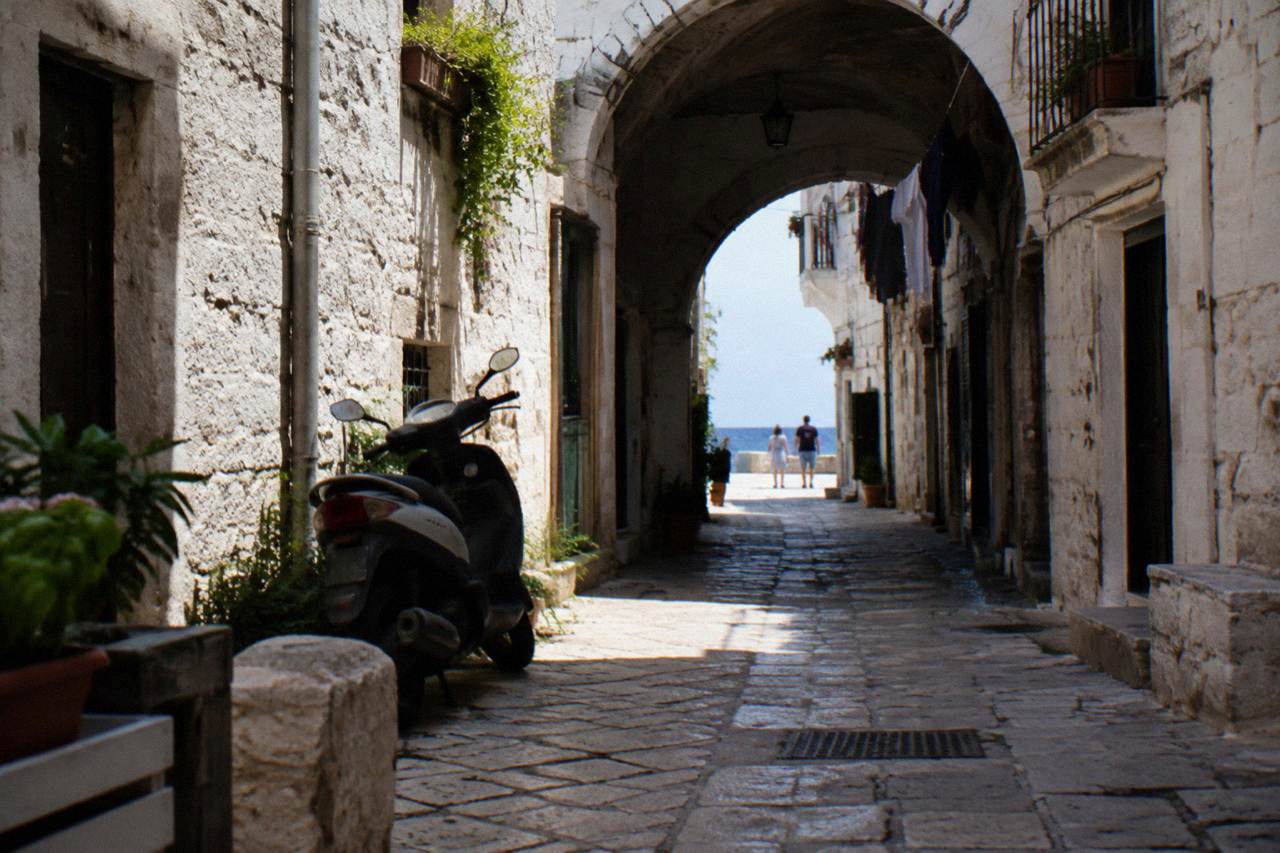
Day one belongs to Bari Vecchia, the old town on the headland: start at the Basilica di San Nicola, which the basilica's own page lists as open Monday to Saturday 06:30 to 20:30 and Sunday 06:30 to 22:00 with no admission fee mentioned, then walk to the Cattedrale di San Sabino, Piazza Mercantile and Piazza del Ferrarese, and finish at the Castello Normanno-Svevo, which costs 10 EUR full and 2 EUR reduced. The district is a grid of narrow streets no wider than a lane, and everything on this list sits within a few hundred metres of the others.
The basilica is the anchor, and the Basilica di San Nicola guide covers it in depth. The relics of Saint Nicholas rested at Myra for about 750 years, from 337 to 1087, were brought to Bari by sailors in 1087, and were placed in the crypt in 1089, per the basilica's own history page. The crypt is part of the same building; the basilica's page mentions no separate fee.
From the basilica, the walk south passes the Cattedrale di San Sabino, the second landmark of the old town, and reaches Piazza Mercantile and Piazza del Ferrarese, the two squares that have always been the old town's public rooms. The Piazza Mercantile guide and the Cattedrale di San Sabino guide give each square and church its own page. Strada Arco Basso, the street known for its pasta makers, runs nearby: orecchiette is the pasta shape of Puglia, and the Strada delle Orecchiette guide explains the street in general terms, since no official source publishes when the makers work.
The castle closes the day. Per the Musei Puglia ticket page, the Castello Normanno-Svevo is open Tuesday to Sunday 09:00 to 19:00, and from October to March the Sunday opening is 09:00 to 13:30, except the first Sunday of the month, when it is 09:00 to 19:00. It closes on Mondays, which is why this itinerary sets it on day one only if day one is not a Monday; if it is, swap the castle to day two. The Castello Normanno-Svevo guide carries the full detail.
The sights of day one, with the published figures:
| Sight | Hours | Ticket |
|---|---|---|
| Basilica di San Nicola | Monday to Saturday 06:30 to 20:30, Sunday 06:30 to 22:00 | No admission fee mentioned on its page |
| Castello Normanno-Svevo | Tuesday to Sunday 09:00 to 19:00; October to March Sundays 09:00 to 13:30, first Sunday 09:00 to 19:00 | 10 EUR full, 2 EUR reduced |
| Cattedrale di San Sabino | Landmark of Bari Vecchia near the basilica | Check locally before visiting |
| Piazza Mercantile and Piazza del Ferrarese | Open public squares | Free |
| Strada Arco Basso | Public street in Bari Vecchia | Free |
A walking tour compresses the whole district into one guided sweep, and a food walk adds the street food of the old town. These picks suit day one:
The three products above cover different ground: the first is the day trip that day three of this itinerary is built around, and the other two run from Polignano a Mare, not from Bari, so they belong to day three as well. For day one itself, a plain guided walk of the old town is the natural fit, and the site's Bari walking tours roundup compares them.
Day Two In Bari: Murat, Museums And The Lungomare?
Day two moves south into the Murat district, the grid of streets around Via Sparano, and pairs it with the two museums that publish their hours: the Pinacoteca Metropolitana Corrado Giaquinto, open Tuesday to Saturday 09:00 to 19:00 and Sunday 09:00 to 13:00 at 5 EUR full, and the Museo Archeologico di Santa Scolastica, Tuesday to Saturday 09:00 to 19:00 at 5 EUR full, with an 8 EUR combined ticket covering both. Both close on Mondays, so day two should not be a Monday either; with the castle also closed Mondays, a three-day visit that starts on a Monday should open with the Murat streets and the seafront instead.
The museums sit inside or beside Bari Vecchia and the Murat district, close enough to pair in one morning. The Pinacoteca's own page gives its calendar, including closures on 1 January and 8 May. The Museo Archeologico di Santa Scolastica, per the Citta Metropolitana di Bari page, is open Sunday and holidays from 09:00, sells a 2 EUR reduced ticket for ages 18 to 25, and is free on the first Sunday of the month. The Teatro Petruzzelli, close to the Murat grid, also runs guided tours at 7 EUR full and 2 EUR reduced, with dated slots published monthly on the foundation's visits page; the theatre burned on the night of 26 to 27 October 1991 and reopened on 4 October 2009, dates reported in the theatre's own history coverage. The Teatro Petruzzelli guide carries the full story.
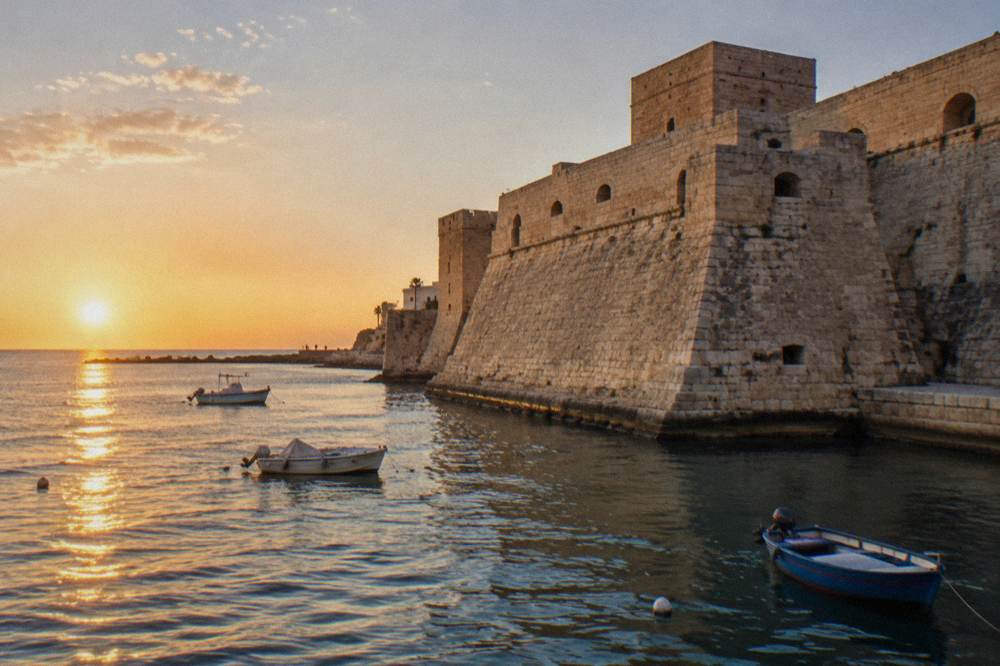
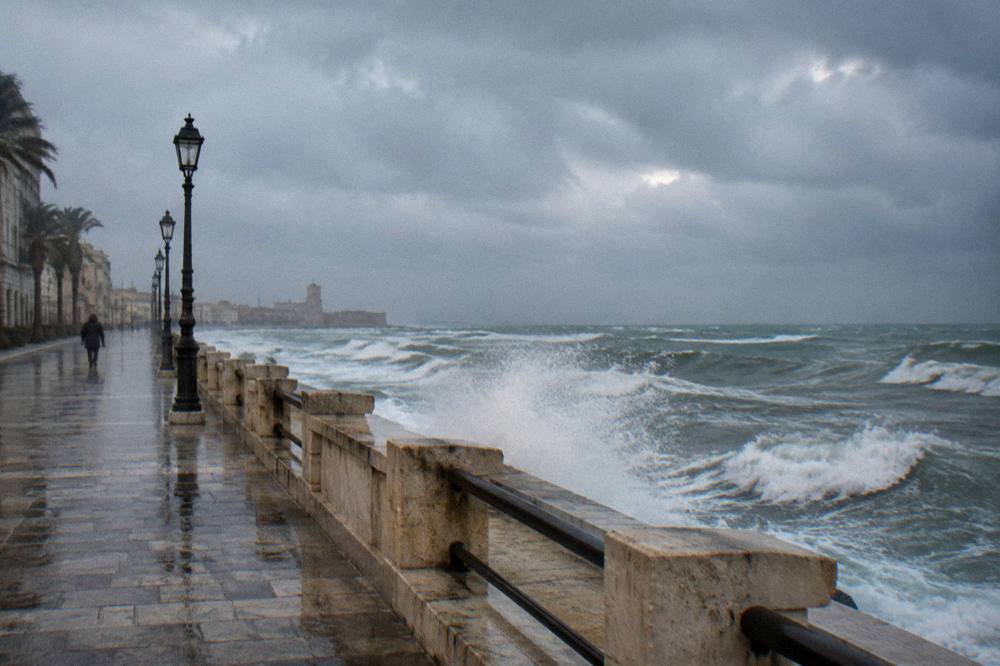
The afternoon belongs to the sea. The Lungomare Nazario Sauro runs along the Adriatic from the old port toward Madonnella, and the Lungomare Nazario Sauro guide maps the walk. At its southern end the city beaches begin: Pane e Pomodoro sits about 2.1 km from Piazza Mercantile, Torre Quetta about 3.9 km, and San Girolamo about 4.3 km to the north-west, all computed distances. Facilities and charges at the beaches vary by season and should be confirmed locally. Note that Bari itself holds no Blue Flag beach in 2026: the Blue Flags in the Province of Bari belong to Polignano a Mare and Monopoli, per the Regione Puglia announcement. The Pane e Pomodoro beach guide covers the closest one.
The Puglia Musei Card, at 20 EUR for six months of access to all Direzione regionale Musei Puglia sites, per the Musei Puglia ticket page, only pays off if you plan several state museums, the castle and Castel del Monte included; for two city museums plus the castle, single tickets cost less.
| Museum or tour | Hours | Ticket |
|---|---|---|
| Pinacoteca Metropolitana Corrado Giaquinto | Tuesday to Saturday 09:00 to 19:00, last entry 18:30; Sunday 09:00 to 13:00, last entry 12:30; closed Monday, 1 January, 8 May | 5 EUR full, 2 EUR reduced, 8 EUR combined |
| Museo Archeologico di Santa Scolastica | Tuesday to Saturday 09:00 to 19:00, last entry 18:30; Sunday and holidays from 09:00 | 5 EUR full, 2 EUR reduced for ages 18 to 25, 8 EUR combined, free first Sunday |
| Teatro Petruzzelli guided tours | Dated slots published monthly | 7 EUR full, 2 EUR reduced |
| Castello Normanno-Svevo | Tuesday to Sunday 09:00 to 19:00, seasonal Sunday hours | 10 EUR full, 2 EUR reduced |
If day two falls on a rainy day, the rainy day in Bari itinerary reshuffles the same museums and covered streets.
Day Three From Bari: Which Day Trip Should You Take?
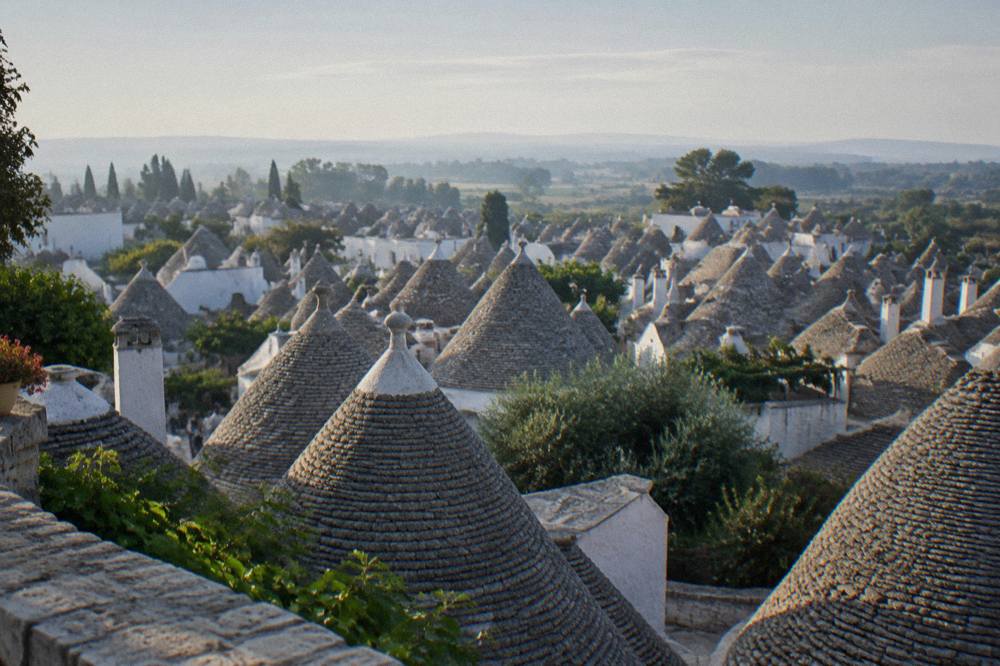
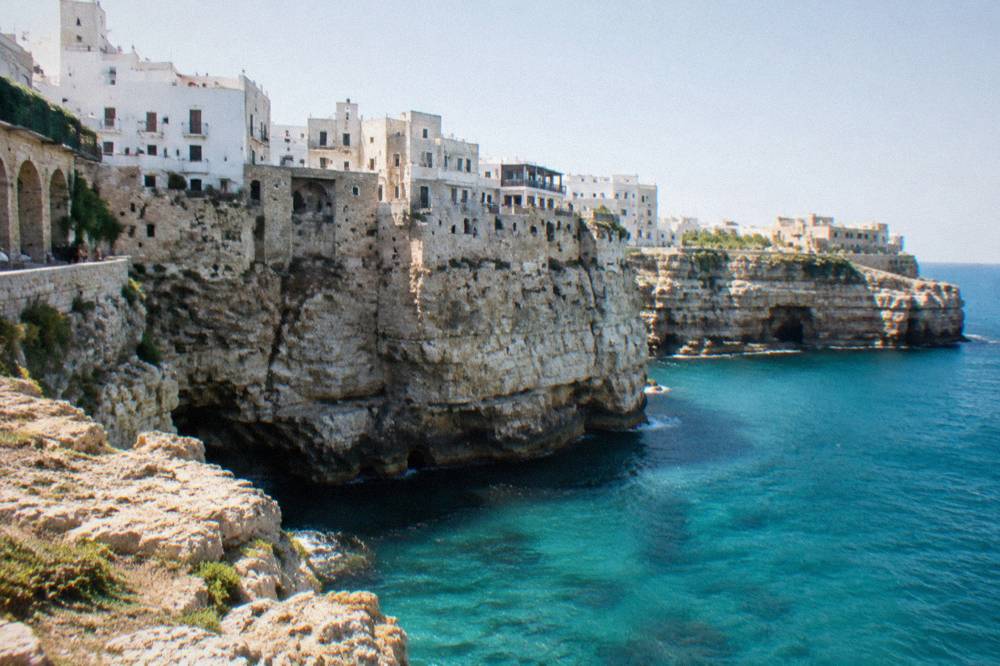
Day three should go to one of four places: Polignano a Mare, 33 km from Bari Centrale by rail on the Trenitalia Bari-Lecce line and about 37.4 km and 36 minutes by road from Piazza Mercantile; Monopoli, 41 km by rail; Alberobello, the trulli town in the Valle d'Itria, about 56.7 km and 61 minutes by road; or Matera, whose Sassi lie about 70.8 km and 69 minutes away by road in the neighbouring region of Basilicata. All four are realistic as same-day returns, and the choice is a matter of coast against inland stone.
Polignano a Mare is the shortest hop and the easiest by train, typically 25 to 35 minutes on regional services, a figure from secondary timetable aggregators, so check the operator's timetable before you travel. Monopoli sits further down the same Bari-Lecce line. Alberobello and Locorotondo, both in the Valle d'Itria, are served by the Trulli Link, the intermodal Trenitalia and FSE service, with the FSE leg reported at 5.90 EUR on top of the rail fare, so confirm before you go. Matera is reached on the FAL railway line from Bari, which runs via Modugno, Altamura and Gravina in Puglia; the FAL timetable boards are published on the operator's site. Matera is in Basilicata, not Puglia, and the Matera day trip guide covers the crossing of the regional border in full.
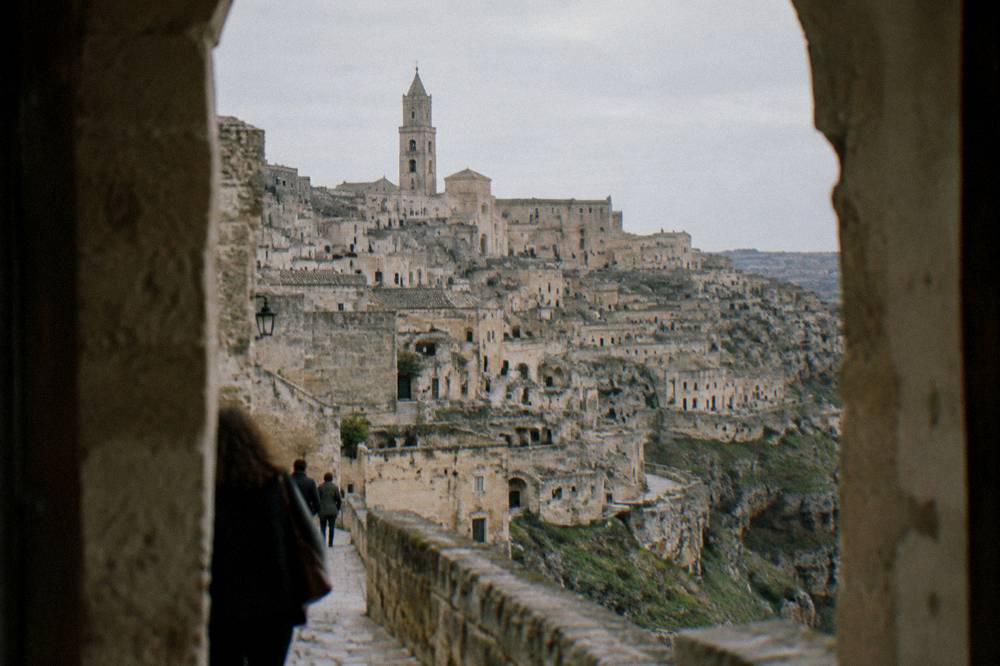
If you would rather not piece the day together yourself, a guided day tour from Bari by private bus covers Alberobello, Monopoli and Polignano a Mare in one loop, and it departs from Bari. You can read the full description on the site's Alberobello Monopoli Polignano day tour page or Check availability for the dates of your visit.
For the coast, the caveat that matters: boats for the Polignano caves leave from Polignano a Mare, not from the Bari waterfront. Two of the strongest options both start at Polignano, so plan the train out first and the boat second. More of these guides are collected on Bari Italy Travel Guide.
The Vespa option below also departs from Polignano a Mare and loops through Conversano and Monopoli, so it suits a day built around that coast rather than a return to the city.
For a fuller comparison of where each town sits and how the days differ, the site's answer page on good day trips from Bari lists the whole set.
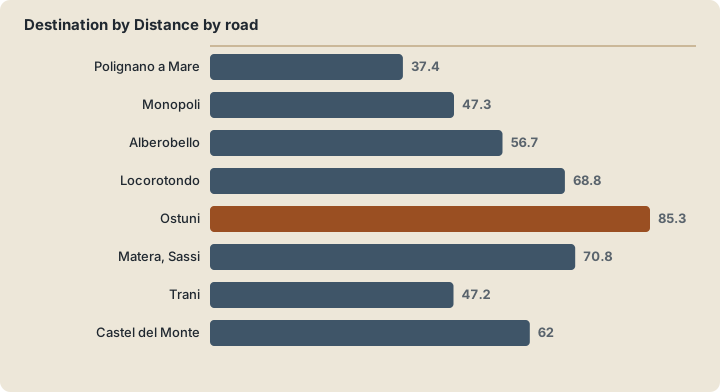
The distances and road times, computed from Piazza Mercantile on a free-flow network:
| Destination | Distance by road | Drive time, free flow | Rail option |
|---|---|---|---|
| Polignano a Mare | 37.4 km | about 36 min | Trenitalia Bari-Lecce line, 33 km from Bari Centrale |
| Monopoli | 47.3 km | about 43 min | Trenitalia Bari-Lecce line, 41 km from Bari Centrale |
| Alberobello | 56.7 km | about 61 min | Trulli Link, Trenitalia plus FSE |
| Locorotondo | 68.8 km | about 58 min | Trulli Link, Trenitalia plus FSE |
| Ostuni | 85.3 km | about 73 min | Trenitalia Bari-Lecce line, 75 km from Bari Centrale |
| Matera, Sassi | 70.8 km | about 69 min | FAL line via Altamura and Gravina in Puglia |
| Trani | 47.2 km | about 45 min | Check the operator's timetable |
| Castel del Monte | 62.0 km | about 59 min | Check the operator's timetable |
Two inland stops carry published admissions if you build your own loop: Castel del Monte, an octagonal castle inscribed by UNESCO in 1996, costs 10 EUR full and 2 EUR reduced and is open daily 10:00 to 18:45 from 1 April to 30 September and 09:00 to 17:45 from 1 October to 31 March, per the Musei Puglia ticket page; the Grotte di Castellana full route, 3 km and about 100 minutes, costs 25 EUR for ages 15 and over, with the 1 km partial route at 22 EUR, per the caves' own price page.
How Much Does Three Days In Bari Cost?
The tourist tax is set by the comune per category: 4.00 EUR at 5-star hotels, 3.00 EUR at 4-star hotels, 2.00 EUR at 3-star hotels and at B&Bs, short lets and agriturismi, 1.50 EUR at 1-star and 2-star hotels. For three nights in a 3-star hotel that is 6 EUR per person in tax; in a 4-star, 9 EUR. Each comune in Puglia sets its own tax, so the rate at Polignano a Mare or Alberobello is a different question for a different town, and your host will state what applies.
| Item | Figure | Notes |
|---|---|---|
| Castello Normanno-Svevo | 10 EUR full, 2 EUR reduced | Musei Puglia ticket page |
| Pinacoteca and Santa Scolastica combined | 8 EUR | Two days of validity |
| Basilica di San Nicola | No fee mentioned on its page | Open daily |
| Airport train, each way | 5.30 EUR | Ferrotramviaria 2026 tariff, 17 minutes |
| AMTAB city bus | 1.00 EUR single, 1.20 EUR for 90 minutes, 2.50 EUR for a day | AMTAB fares page |
| Tourist tax, per night | 1.50 to 4.00 EUR by category | Maximum 4 consecutive nights |
The same trio from earlier covers the main day-trip shapes, from the bus loop to the coast and the trulli to the boats and Vespas that run from Polignano a Mare.
Where Should You Stay For Three Days In Bari?
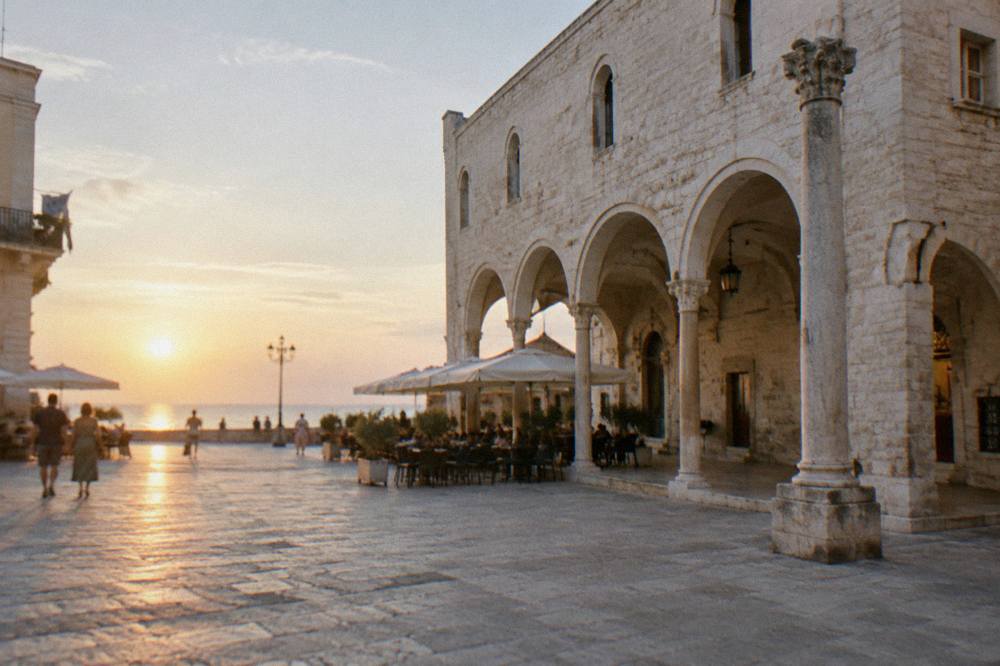
For three days, stay in or beside the Murat district or at the edge of Bari Vecchia: the Murat grid puts you between Bari Centrale, the old town and the seafront, while a room inside Bari Vecchia puts you amid the sights but inside a limited traffic zone that has had a camera gate at the Castello since 1 July 2026, so if you arrive by rental car, do not drive into the old town. Both bases put the whole of this itinerary on foot or on one bus.
The ZTL detail matters for drivers. The new gate sits at piazza Federico II di Svevia at piazza Massari, with weekday entry windows of 09:00 to 11:00 for authorised vehicles and an afternoon window reported at 16:00 to 18:00; perimeter parking near Bari Vecchia is paid on working days 08:30 to 20:30. The rules are on the comune's ZTL pages, and the Bari parking and driving guide works through them. Without a car, the question dissolves: the AMTAB network sells a 2.50 EUR day ticket, and everything in days one and two of this itinerary is walkable from either base.
What Is The Weather Like For Three Days In Bari?
Bari's climate is Mediterranean with mild winters and warm summers: typical values from modelled ERA5 data, 1991 to 2020, give a July mean daily maximum of 28.6 C and an August maximum of 29.1 C, January and February highs of about 12 C, and about 587 mm of rain a year, with November at 73 mm and August at 20 mm. July and August average about 4 rain days each; the cooler months run 8 to 10.
The sea follows the seasons: modelled 2023 to 2025 means give about 27 C in July and August, about 22 C in October and about 14 C in February. For a three-day visit built around day two's seafront walk, May, June, September and October sit in the comfortable band between the July and August peaks and the November rain. The Bari weather guide and the best time to visit Bari guide carry the full monthly picture.
| Month | Mean daily high | Mean daily low | Rain |
|---|---|---|---|
| May | 21.6 C | 15.3 C | 35 mm |
| June | 25.9 C | 19.5 C | 28 mm |
| July | 28.6 C | 22.0 C | 22 mm |
| August | 29.1 C | 22.4 C | 20 mm |
| September | 25.1 C | 19.1 C | 53 mm |
| October | 21.1 C | 15.6 C | 63 mm |
Common Questions About Three Days In Bari
Is 3 days in Bari enough?
Yes for the city itself and one day trip: two days cover Bari Vecchia, the Murat district, the museums and the Lungomare Nazario Sauro, and the third day reaches Polignano a Mare, Monopoli, Alberobello or Matera. A longer list of inland towns calls for more days, which the Puglia week itinerary covers.
What are the best day trips from Bari?
Polignano a Mare and Monopoli on the coast, Alberobello and Locorotondo in the Valle d'Itria, Matera across the border in Basilicata, and Castel del Monte and Trani inland. Each is reachable from Bari Centrale or by road within the times listed above.
Do you need a car for 3 days in Bari?
No. Days one and two are entirely walkable, and day three works by train to Polignano a Mare or Monopoli, by Trulli Link toward Alberobello, or by FAL toward Matera. If you do hire a car, do not drive into Bari Vecchia, which is a limited traffic zone with a camera gate since 1 July 2026.
How much does the Castello Normanno-Svevo cost?
10 EUR full and 2 EUR reduced, per the Musei Puglia ticket page, with hours of Tuesday to Sunday 09:00 to 19:00 and shorter Sunday hours from October to March except the first Sunday of the month. The castle is closed on Mondays.
What is the best month for three days in Bari?
May, June, September and October balance the figures: typical values from modelled ERA5 data, 1991 to 2020, put May at a 21.6 C mean daily high with 35 mm of rain and September at 25.1 C with 53 mm, against 29.1 C highs and 20 mm of rain in August.
Can you visit Matera as a day trip from Bari?
Yes. The Sassi of Matera lie about 70.8 km by road from Piazza Mercantile, and the FAL railway line from Bari reaches Matera via Altamura and Gravina in Puglia. Matera is in Basilicata, not Puglia, so the trip crosses the regional border.
Three days in Bari, spent as two city days and one day out, is the shape that fits both the city and its region, and every hour and price on this page comes from a published source you can check before you set the calendar.
