How Many Days In Bari: Whether One, Two Or Three Is Right
Bari, the coastal capital of Puglia on the Adriatic, rewards two full days for the city itself and three or more once the day trips to Polignano a Mare, Alberobello and Matera enter the plan.
Short answer
Two full days cover Bari Vecchia, the Murat district and the Lungomare Nazario Sauro; three days add one headline day trip such as Polignano a Mare or Alberobello; four to seven days let you reach Matera, Castel del Monte and the Valle d'Itria without rushing.
Bari, the capital of the Puglia region on the Adriatic coast of southern Italy, is a compact city where the answer to a stay's length depends almost entirely on one question: are you here for the city, or for the region it opens up? The comune holds about 316,000 residents, the old town of Bari Vecchia sits on a headland you can cross on foot in under half an hour, and the Murat district beside it is a walkable grid. Two full days are enough for the city itself.
For a full route day by day, the site's one day in Bari itinerary and the two days in Bari plan carry the hour-by-hour detail, and the broader rundown of things to do in Bari lists every sight named here.
How Many Days In Bari Is Enough?
Two full days are enough for Bari itself: day one for Bari Vecchia with the Basilica di San Nicola, the Cattedrale di San Sabino and the Swabian castle, day two for the Murat district, the Teatro Petruzzelli area and the Lungomare Nazario Sauro. Three days is the better fit when one day trip, typically Polignano a Mare 37.4 km away by road, joins the plan. Four to five days suit travellers adding Matera and the Valle d'Itria.
The reason two days work is geometry. Bari Vecchia is a peninsula of narrow streets between the old port at Molo San Nicola and the Murat grid, and Piazza Mercantile, its central square, sits about 0.5 km from the Stazione Marittima cruise terminal. A cruise passenger with six hours ashore can see the basilica, walk Strada Arco Basso and reach Piazza del Ferrarese on foot. A visitor with two nights can do all of that slowly, add the museums, and still have an evening for the seafront.
The mistake to avoid is treating Bari as only a transit point. The Basilica di San Nicola is open Monday to Saturday from 06:30 to 20:30 and on Sunday to 22:00, with no admission fee mentioned on its page, and the Castello Normanno-Svevo charges 10 EUR full and 2 EUR reduced, open Tuesday to Sunday from 09:00 to 19:00. Those two alone, plus the Pinacoteca Metropolitana Corrado Giaquinto at 5 EUR, fill a first day without a single train ticket.
What Can One Day In Bari Realistically Cover?
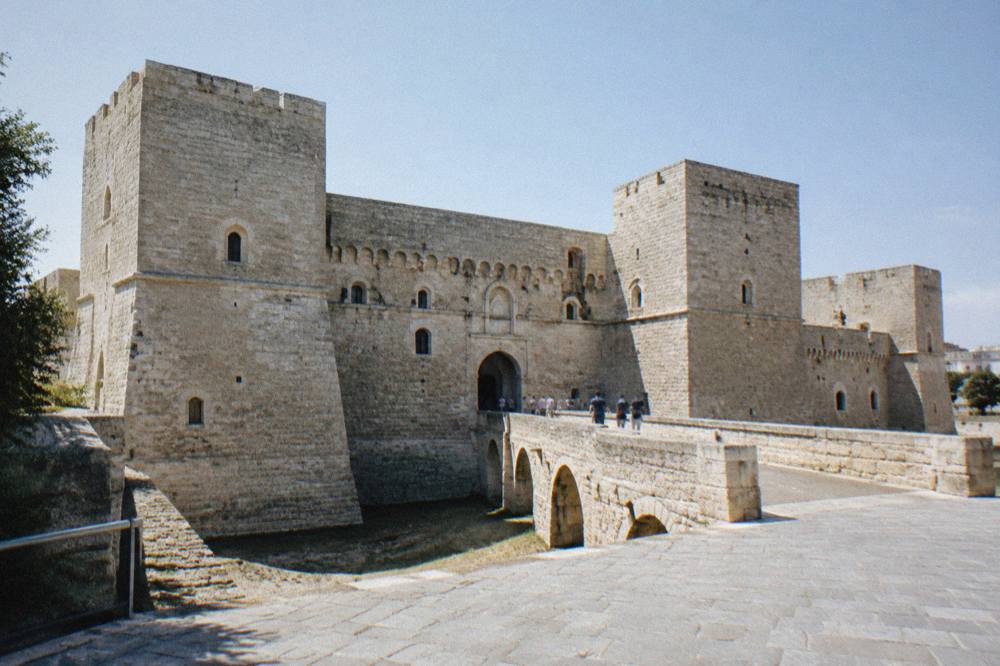
A single day in Bari covers Bari Vecchia end to end: the Basilica di San Nicola, the crypt, the Cattedrale di San Sabino, Piazza Mercantile, Piazza del Ferrarese, the Castello Normanno-Svevo and the start of the Lungomare Nazario Sauro, plus lunch on panzerotti or orecchiette. It does not cover the Murat museums, the city beaches or any day trip, and it leaves no slack for a Monday, when the castle and both major museums close.
The shape of a one-day plan follows the opening hours. Start at the basilica, which opens at 06:30 and has no admission fee mentioned on its page, then work south through the old town to the Swabian castle, which opens at 09:00 and charges 10 EUR full, 2 EUR reduced. The castle's Tuesday to Sunday schedule means a Monday visit sees the exterior only, and from October to March the Sunday opening shortens to 09:00 to 13:30. An afternoon on the Murat grid around Via Sparano and an evening walk along the Lungomare Nazario Sauro close the day.
One day also works for cruise passengers: the Stazione Marittima at Molo San Vito is about 0.5 km from Piazza Mercantile, and the ship's all-aboard time is the hard limit on how far the day stretches. For the hour-by-hour version, see the one day in Bari itinerary.
A guided walk front-loads a short stay efficiently. The two-hour guided walking tour of Bari covers the old town core with a local guide, and the site's guide to Bari walking tours compares the options.
A short stay still owes itself the food. Orecchiette is the pasta shape of Puglia, panzerotti are fried filled pockets, and focaccia barese is the city's flatbread: one plain sentence each, but a day that tastes all three has met Bari halfway. The Bari street food guide maps where each belongs in a day.
What Does A Second Day In Bari Add?
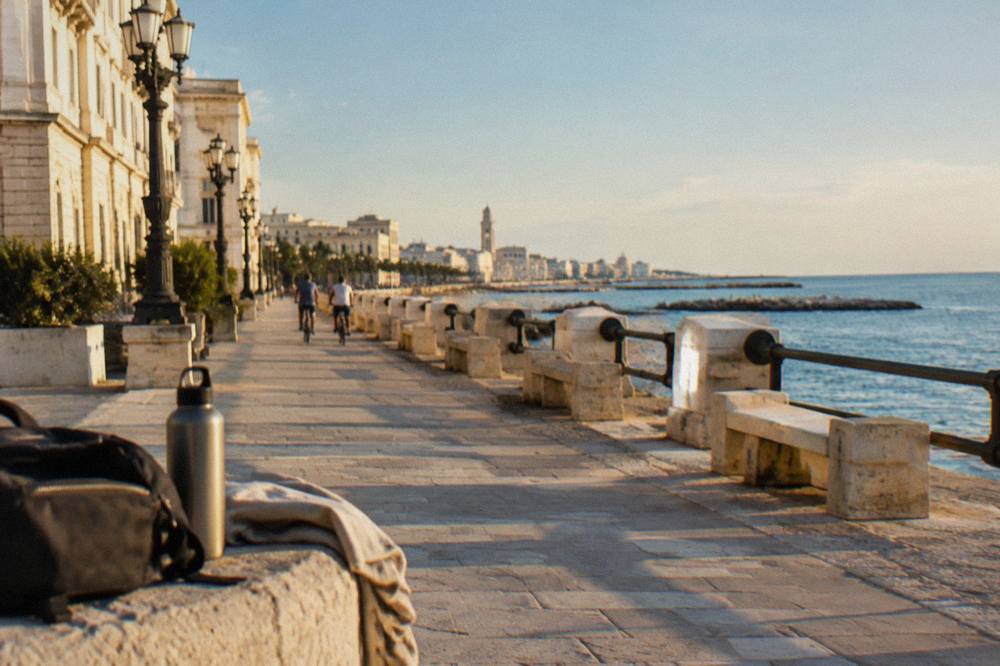
A second day adds the Murat district properly, the Pinacoteca Metropolitana Corrado Giaquinto at 5 EUR, the Museo Archeologico di Santa Scolastica at 5 EUR with a combined 8 EUR ticket, a Teatro Petruzzelli guided tour at 7 EUR, and the seafront out to the Pane e Pomodoro beach area about 2.1 km from Piazza Mercantile. It also converts a rushed first day into a relaxed one, which is the real argument for two nights over one.
Day two belongs to the grid. The Pinacoteca is open Tuesday to Saturday 09:00 to 19:00 with last entry at 18:30, Sunday 09:00 to 13:00, and closed Monday; the Museo Archeologico di Santa Scolastica runs the same weekday pattern, and the two sell an 8 EUR combined ticket. The Teatro Petruzzelli publishes dated guided-tour slots monthly at 7 EUR full and 2 EUR reduced. A second afternoon on the Lungomare Nazario Sauro toward Madonnella, and dinner back in Bari Vecchia, complete the city.
The climate table argues for the slack a second day provides. Typical values from modelled ERA5 data, 1991 to 2020, put August's mean daily maximum at 29.1 C and November's rainfall at 73 mm against August's 20 mm, so a heat afternoon or a rain morning costs a one-day visitor a third of the trip and a two-day visitor a sixth. The Bari weather guide carries the full monthly table.
A food walk is the strongest single add-on for a second evening: it moves dinner into the old town's lanes with a guide who knows the counters. The street food tour with focaccia and gelato is the trio's food pick, and free cancellation on the operator's live listing means a rainy evening costs nothing.
Is Three Days In Bari The Right Length For Most Trips?
Three days is the sweet spot for a first visit that includes one headline day trip: day one Bari Vecchia, day two Murat and the seafront, day three Polignano a Mare or Alberobello. Polignano a Mare is 37.4 km and about 36 minutes by road, Alberobello 56.7 km and about 61 minutes, and both sit comfortably inside a day. Three days is also where the Puglia Musei Card at 20 EUR starts earning its keep.
The third day is where the transport facts matter. Polignano a Mare, 33 km by rail on the Trenitalia Bari-Lecce line, is reached by train, though the exact fare and timings are best checked on the operator's timetable. Alberobello and Locorotondo in the Valle d'Itria are reached with the Trulli Link service, which links Trenitalia and FSE trains toward Alberobello, Locorotondo and Martina Franca, with the FSE leg reported at 5.90 EUR on top of the rail fare: confirm before you go.
Travellers who would rather not run the connections themselves can take a guided day tour: the small-group van tour to Alberobello, Monopoli and Polignano covers all three towns from Bari in one structured day, which is the practical way to see the Valle d'Itria fringe without a car.
What Does A Fourth And Fifth Day In Bari Unlock?
Four to five days unlock the two UNESCO headline trips: Matera, whose Sassi districts lie about 70.8 km and 69 minutes by road from Piazza Mercantile across the regional border into Basilicata, and Castel del Monte, the octagonal UNESCO castle 62.0 km and about 59 minutes away. Add the Grotte di Castellana, whose full 3 km route takes about 100 minutes and costs 25 EUR for ages 15 and over.
Matera needs the border fact stated plainly: it is in Basilicata, not Puglia. The FAL railway runs the Bari-Modugno-Altamura-Gravina-Matera line, and service changes during works are posted by the operator, so the timetable should be checked before the day. Castel del Monte, inscribed by UNESCO in 1996, is open daily 10:00 to 18:45 from 1 April to 30 September and 09:00 to 17:45 from 1 October to 31 March, last entry 45 minutes before closing, at 10 EUR full and 2 EUR reduced. A combined fourth and fifth day can pair Castel del Monte with Trani, whose Swabian castle is 8 EUR and open Monday to Saturday 08:30 to 19:30.
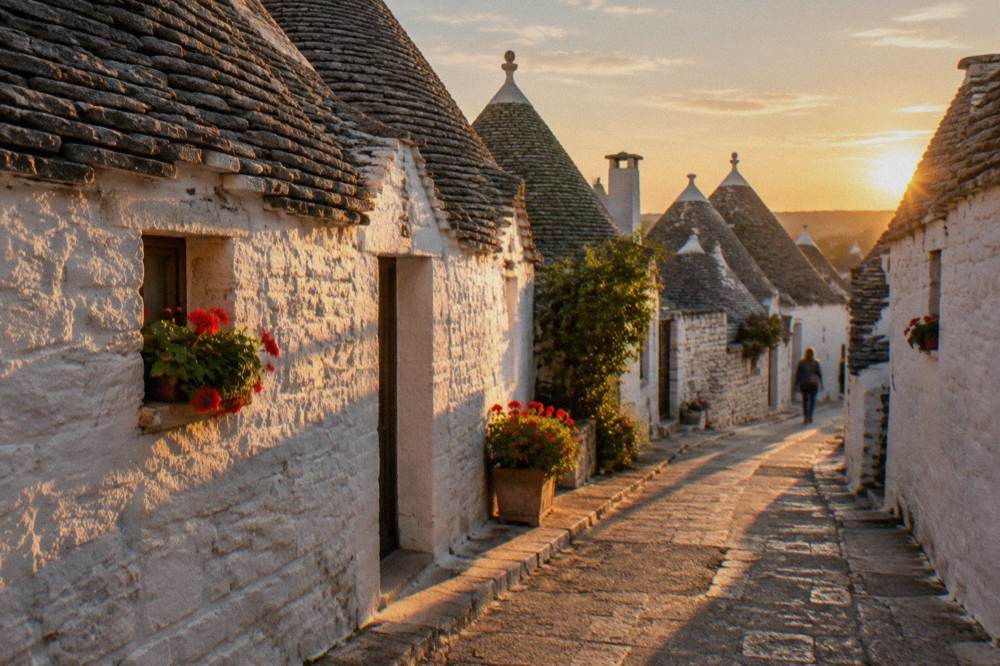
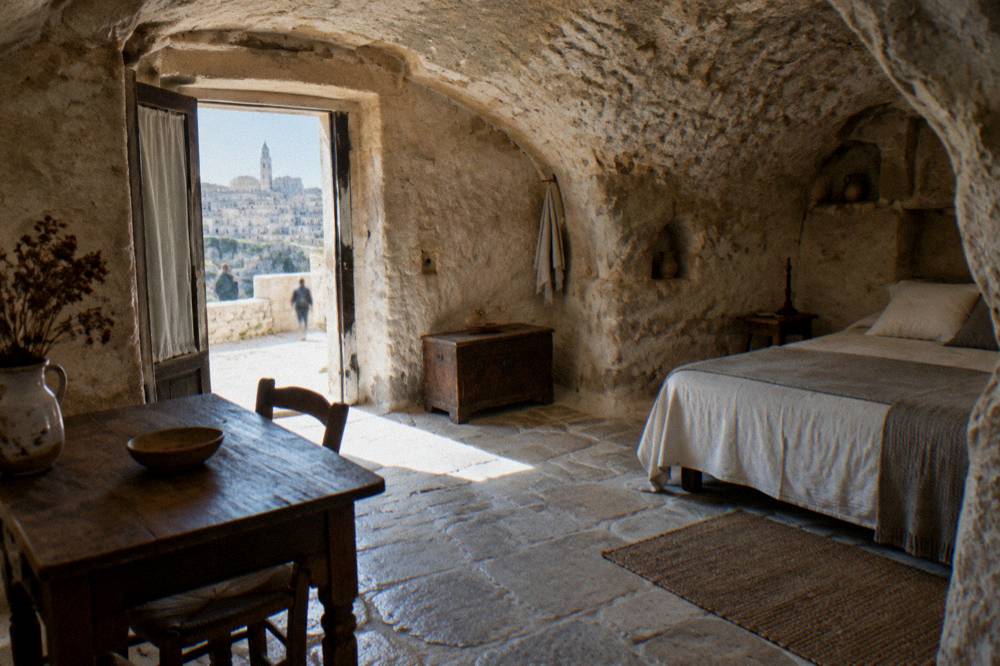
The four to five days in Bari itinerary sequences these, and the Matera guide, the Castel del Monte guide and the Castellana Grotte guide carry each destination in full.
When Does A Week In Bari And Puglia Make Sense?
A week makes sense when Bari is the base for the whole region: three days in the city, then Polignano a Mare, Monopoli, Alberobello and Locorotondo, Ostuni, Matera, Castel del Monte, Trani and Lecce, which is 151.1 km and about 115 minutes by road and reads better as a full day or an overnight. The answer to how many days Puglia needs overall scales the same logic up.
A week also absorbs the season's friction. The Festa di San Nicola runs 7 to 9 May by tradition, with the 2026 corteo storico departing piazza Federico II di Svevia at 20:00 on 7 May, and the Bif&st film festival began its 17th edition on 21 March 2026: either can claim a day of a short stay and justify a longer one. The Puglia week from Bari itinerary and the three days in Bari plan split the difference for mid-length stays.
Which Day Trips Fit Which Length Of Stay In Bari?
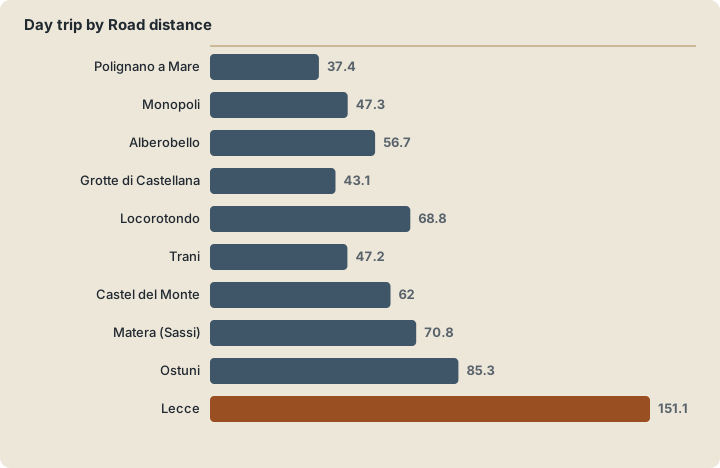
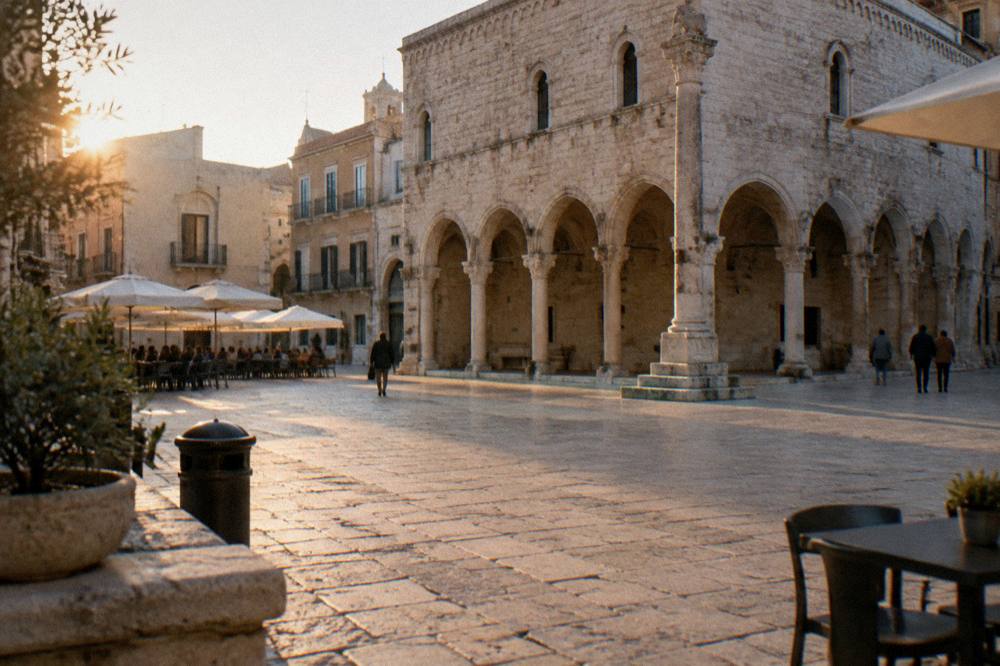
Polignano a Mare and Monopoli fit a three-day stay as a single combined day; Alberobello and Locorotondo fit three to four days; Matera, Castel del Monte, Trani and the Grotte di Castellana belong to four days and up; Lecce, at 151.1 km and about 115 minutes by road, is the one that argues for five days or an overnight. Each distance below is a road figure from Piazza Mercantile.
| Day trip | Road distance | Drive time | Best-fit stay |
|---|---|---|---|
| Polignano a Mare | 37.4 km | about 36 min | 3 days |
| Monopoli | 47.3 km | about 43 min | 3 days |
| Alberobello | 56.7 km | about 61 min | 3 to 4 days |
| Grotte di Castellana | 43.1 km | about 47 min | 4 days |
| Locorotondo | 68.8 km | about 58 min | 4 days |
| Trani | 47.2 km | about 45 min | 4 days |
| Castel del Monte | 62.0 km | about 59 min | 4 days |
| Matera (Sassi) | 70.8 km | about 69 min | 4 to 5 days |
| Ostuni | 85.3 km | about 73 min | 5 days |
| Lecce | 151.1 km | about 115 min | 5 days or overnight |
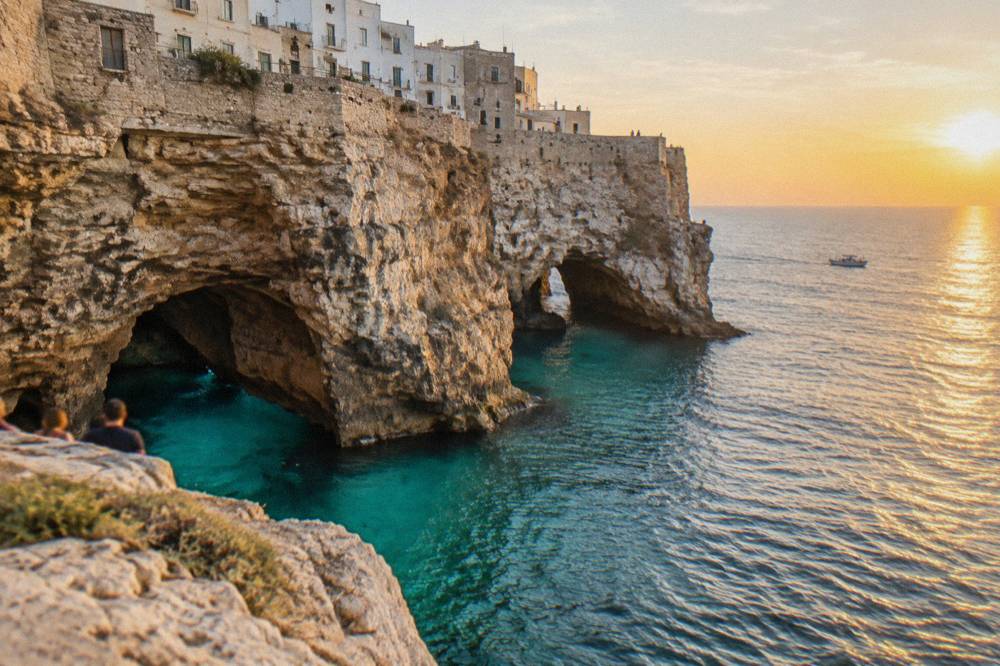
Boat tours of the Polignano caves depart from Polignano a Mare and the San Vito area, never from the Bari waterfront, so a cave-boat day is a Polignano day. The Polignano a Mare guide and the Monopoli and Ostuni guide cover the coastal pair, and the Bari to Alberobello guide handles the trulli run.
How Does The Season Change The Answer?
The season changes the length more than the sights: in July and August, when typical mean daily maxima run 28.6 C and 29.1 C on modelled ERA5 data, 1991 to 2020, a siesta-paced three days beats a packed two, while in November, with 73 mm of rain against August's 20 mm, an indoor-heavy two days plus a museum day is the stronger shape. Sea temperatures of about 27 C in July and August make a beach day trip worth counting.
| Month | Mean daily high | Mean daily low | Rain |
|---|---|---|---|
| January | 12.1 C | 7.3 C | 60 mm |
| April | 17.5 C | 11.2 C | 54 mm |
| July | 28.6 C | 22.0 C | 22 mm |
| August | 29.1 C | 22.4 C | 20 mm |
| October | 21.1 C | 15.6 C | 63 mm |
| November | 16.9 C | 12.0 C | 73 mm |
July and August average about 4 rain days each; January nearly 10. The figures are typical values from modelled ERA5 data, 1991 to 2020. Since Bari itself has no Blue Flag beach in 2026, a swimming day belongs to Polignano a Mare or Monopoli, both flagged in the Province of Bari, and the best time to visit Bari guide weighs the months in full.
Where Should You Stay For Each Length Of Stay In Bari?
For one to two days, stay in or beside Bari Vecchia or on the Murat grid so every walk starts at the door; for three days and up, Bari Centrale becomes the better anchor because day trips leave from there, with the Ferrotramviaria airport train just 17 minutes and 5.30 EUR from the terminal if arrival and departure days bracket the trip. The tourist tax runs 1.50 to 4.00 EUR per person per night by category, for a maximum of 4 consecutive nights.
| Stay length | Best base | Why |
|---|---|---|
| 1 day | Bari Vecchia | All headline sights on foot |
| 2 days | Bari Vecchia or Murat | Museums, theatre and seafront in walking range |
| 3 days | Murat near Bari Centrale | Day three departs by train or tour bus |
| 4 to 5 days | Bari Centrale area | FAL, FSE and Trenitalia day trips all leave nearby |
| A week | Bari or split with Matera | A split stay trims repeat rail legs |
| Accommodation category | Tourist tax per night |
|---|---|
| 5-star hotels | 4.00 EUR |
| 4-star hotels | 3.00 EUR |
| 3-star hotels | 2.00 EUR |
| 1-star and 2-star hotels | 1.50 EUR |
| B&B, short lets, hostels, agriturismi | 2.00 EUR |
The tax is collected by the accommodation and each comune in Puglia sets its own, so a split stay in Matera or Alberobello answers to a different table: ask the host what applies. The where to stay in Bari guide compares the districts street by street, and the Bari hotels guide lists the categories.
What Should A Short Stay In Bari Not Attempt?
A short stay in Bari should not attempt Lecce and Matera on the same day, should not drive into Bari Vecchia, whose limited traffic zone has had a camera gate at the Castello since 1 July 2026, and should not plan a Dubrovnik ferry hop as a half-day add-on, since Jadrolinija's seasonal Dubrovnik line was reported interrupted for technical reasons in autumn 2026 and must be confirmed before planning.
The ZTL point decides car itineraries: Bari Vecchia is a limited traffic zone with weekday entry windows for authorised vehicles, and the advice to rental-car drivers is simply not to drive into it. Perimeter parking near Bari Vecchia is paid on working days from 08:30 to 20:30. The Bari parking and driving guide and getting around Bari guide carry the detail, and the Bari to Dubrovnik ferry guide covers the Croatia question honestly.
For the money question that shadows every length of stay, the is Bari expensive answer and the regional length guide frame Puglia as a whole, while Bari Italy Travel Guide holds the full site. If the trip is still shaping up, the plain-language answer to how many days in Bari is enough restates the short version.
Common Questions About How Many Days To Spend In Bari
How many days in Bari is enough?
Two full days are enough for the city itself, covering Bari Vecchia, the Murat district and the Lungomare Nazario Sauro. Three days is the better fit when one day trip such as Polignano a Mare joins the plan, and four to five days suit Matera, Castel del Monte and the Valle d'Itria.
Can you see Bari in one day?
Yes, if the day is not a Monday. One day covers the Basilica di San Nicola, Piazza Mercantile, the Swabian castle and the start of the seafront, with the castle open Tuesday to Sunday from 09:00.
Is three days in Bari too much?
No. Two days belong to the city and the third belongs to Polignano a Mare, about 36 minutes by road, or Alberobello, about 61 minutes. A three-day stay only feels long if no day trip interests you.
Is Bari a good base for a week in Puglia?
Yes. Trains reach Polignano a Mare, Monopoli, Ostuni and Lecce on the Bari-Lecce line, the Trulli Link service reaches the Valle d'Itria, and FAL runs toward Matera, so a week based in Bari with day trips is a standard and workable plan.
Do you need a car in Bari to see Puglia?
Not for the headline trips. The city walks, the coast is on the Bari-Lecce rail line, the Trulli Link covers Alberobello and Locorotondo, and FAL reaches Matera. A car helps for Castel del Monte and scattered towns, but do not drive into Bari Vecchia, which is a limited traffic zone.
The length that fits, in the end, is the one that gives Bari Vecchia a full unhurried day and gives the region the days its distances demand: two for the city, three with a coast day, four to five with Matera and Castel del Monte, and a week when Puglia itself is the trip.
