Is Bari Safe? Honest Notes On Crime, Scams And Night Walks
Bari, the capital of Puglia on the Adriatic coast of southern Italy, is a working city of about 316,000 residents, and the safety question deserves a calmer answer than a yes or a no. Here is what the official pages say, what risks a city of this size actually carries, and the precautions that cover them.
Short answer
Bari is an ordinary southern Italian city, not a hazard. No list of areas to avoid exists on any official page. Use the standard city precautions you would use anywhere, keep valuables out of back pockets on crowded buses, and call 112 in an emergency.
Bari, the capital of the Puglia region on the Adriatic coast of southern Italy, is a city of about 316,000 residents in the comune, with a further population bringing the Metropolitan City to about 1.2 million. It is a port, a university town, a ferry gateway to Albania and Greece, and the transport hub for day trips to Polignano a Mare, Monopoli, Alberobello, Matera and Lecce. Cities of that size and that mix carry ordinary city risks, and the honest answer to "is Bari safe" is that no official page publishes a list of dangerous districts, a crime statistic or a travel warning for the city. What the sources do publish is practical: a fixed airport taxi fare enforced by the comune, a limited traffic zone with cameras in Bari Vecchia, a single EU emergency number, and posted prices for every museum and transport ticket. This page assembles those facts into a calm, usable safety brief, and it names no district as unsafe because no source supports such a verdict. The Bari Italy Travel Guide covers the city district by district elsewhere, starting with things to do in Bari.
Is Bari Safe For Tourists?
Bari is an ordinary regional capital, and no official source, from the comune to the regional tourism network, publishes a crime statistic, a district warning or an area to avoid. The emergency number is 112, the standard EU-wide number. What a visitor actually needs is the usual city discipline: watch bags in crowds, check posted prices, and keep your own government's travel advice open, since that is the document that rates countries and cities.
What can be said with a figure behind it is that Bari functions as a major tourist gateway: the port authority reported about 430,000 cruise passengers across 152 calls in the first nine months of 2025, a 21 percent rise, and the city absorbs them without any published advisory. The tourist information point is reported at Piazza del Ferrarese 29, right on the edge of Bari Vecchia, which is where to walk in with a question rather than a worry.
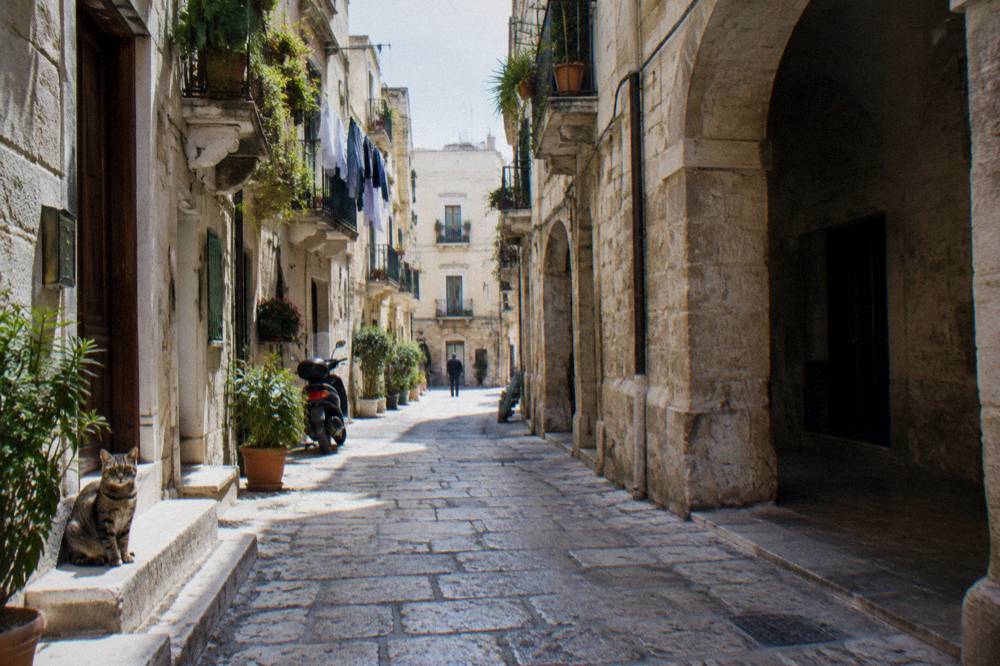
The structure of the city also matters for how safe it feels. Bari Vecchia, the old town on the headland, is compact and walkable, anchored by the Basilica di San Nicola, the Cattedrale di San Sabino and the Castello Normanno-Svevo. South of it, the Murat district is a regular grid of shopping streets around Via Sparano, and the Lungomare Nazario Sauro runs along the sea. Distances between these areas are short, which keeps visitors on foot and in view of other people rather than isolated. For orientation on a first day, the guided walking tours of Bari page lists the options, and the Check availability link beside the city's standard guided walk shows current dates and prices without any guesswork.
One more framing point. The questions this page answers, night safety, transport, driving, emergencies, are answered as process, not as folklore. Where a figure exists, such as the 25 euro fixed airport taxi fare, it is printed. Where no figure exists, the page says what to check instead of inventing a number.
What Are The Common Risks In Bari?
The realistic risks in Bari are the ones in any Mediterranean port city of its size: opportunistic theft in crowds, overcharging at the margins, and traffic. No source publishes a pickpocketing map of Bari, and this page will not fake one. The countermeasures are unglamorous and effective: zip your bag and hold it in front on crowded buses, keep phones and wallets out of back pockets, check posted prices before ordering, and read the itemised bill before paying.
Those four habits cover the kinds of complaints a visitor files in a city like this. Crowds in Bari gather in predictable places: the evening passeggiata along the Lungomare Nazario Sauro, the streets around Piazza Mercantile and Piazza del Ferrarese, the market atmosphere near the old port at Molo San Nicola, and the platforms of Bari Centrale at peak times. A zipped bag held in front of the body, rather than an open tote over one shoulder, removes the easy opportunity, and that is true in Bari exactly as it is in Rome or Barcelona.
Money questions deserve the same calm. The taxi fare from Karol Wojtyla airport to a city-centre hotel is a predetermined 25 euro, and the comune enforces it: a driver who charged a passenger 50 euro had his licence suspended for 15 days. That single enforcement case, published by the comune itself, tells you both that the fixed fare is real and that the city acts on breaches. Inside the city, use licensed taxis from a rank or by phone, because app availability changes and the licensed taxi is the regulated option.
Restaurant and bar bills follow the same check-the-paper rule. Posted prices outside, an itemised bill at the end, and a quick read of both before paying is all the protection a visitor needs. If you want the food culture explained rather than discovered by trial, the Bari street food guide covers the city's dishes, from orecchiette to panzerotti and focaccia barese, in plain terms.
| Airport transfer | Cost | Notes from the official pages |
|---|---|---|
| Ferrotramviaria airport train | 5.30 EUR single | 17 minutes to Bari Centrale, station inside the terminal, contactless "Paga e Via" accepted |
| Tempesta shuttle coach | 5 EUR | Bought on board or in the Cotrap app; about 30 minutes, reported |
| AMTAB line 16 bus | Standard city ticket | Links Bari Centrale and the airport |
| Taxi to a city-centre hotel | 25 EUR predetermined | Enforced by the comune |
The table above is the whole regulated picture of airport transfers, and every figure comes from an operator or municipal page. Anything a driver or a tout quotes above those numbers at the airport is a signal to walk to the rank, the station inside the terminal, or the coach stop.
Is Bari Vecchia Safe At Night?
Bari Vecchia in the evening is a lived-in neighbourhood, not an empty stage: the Basilica di San Nicola is open Monday to Saturday until 20:30 and on Sunday until 22:00, according to the basilica's own hours page, and the streets around Piazza Mercantile stay active after dark. No official source labels any part of the old town unsafe, and the practical advice is ordinary: stick to lit, populated streets, walk in pairs late, and keep your phone zipped away rather than in hand.
Night is when the old town is at its busiest, not its emptiest. Families come out, the passeggiata fills the Lungomare Nazario Sauro, and the area between Piazza del Ferrarese and Piazza Mercantile holds its evening trade. That density of people is itself the safety feature a visitor should plan around: the shortest walk back to your hotel will pass other pedestrians, and the seafront is a long, open, lit corridor from Madonnella toward the city beaches. For a fuller treatment of the hours after dark, the companion piece is Bari safe at night answers the question directly.
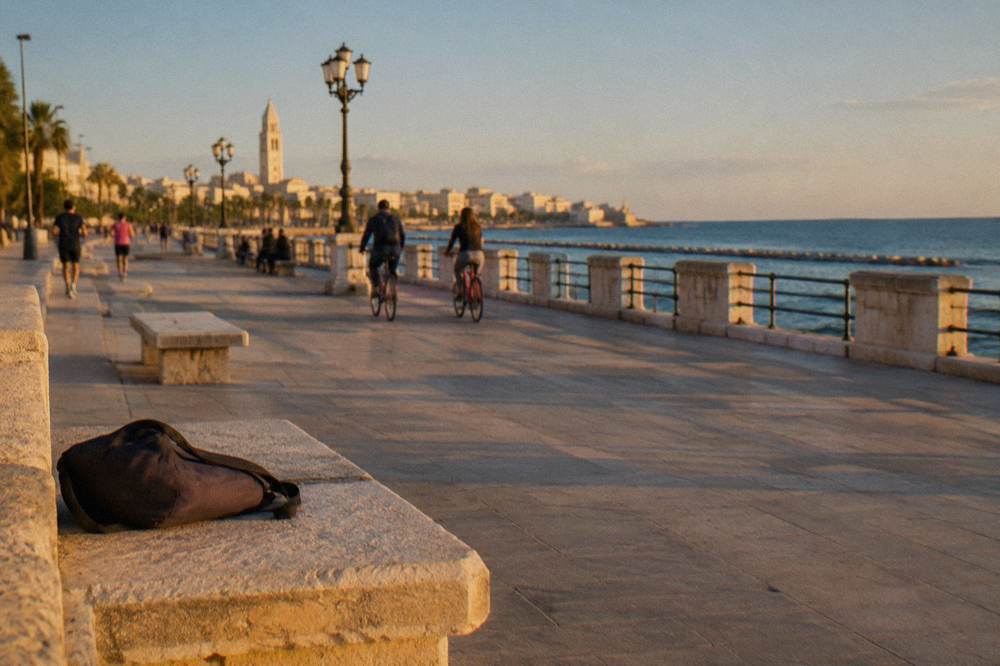
Two late-evening details are worth knowing because they are printed facts, not impressions. First, the Festa di San Nicola runs 7 to 9 May each year by tradition, and the 2026 edition filled the old town with the corteo storico, the sea procession and the manna, with traffic restrictions published by the comune for those days. A festival crowd is a dense crowd, so the zipped-bag rule matters more, not less, on feast nights. Second, the tourist information point reported at Piazza del Ferrarese 29 is the place to ask about anything that feels off, from a closed street to a strange charge.
A guided evening or daytime walk also solves the orientation problem cheaply. A guide who knows the lanes removes the hesitation that makes a visitor look lost, and looking lost is the one behaviour worth avoiding anywhere. The old town walking options on this site include the city's standard guided walk, and the Check availability link shows the live calendar before you commit.
How Safe Is Public Transport In Bari?
Public transport in Bari is cheap, simple and safe by the ordinary city standard: an AMTAB single ticket is 1.00 euro, a 90-minute ticket 1.20 euro and a day ticket 2.50 euro, per the operator's fares page. The precautions are the crowded-platform ones: bag zipped and in front, wallet out of the back pocket, and a check that your ticket is validated before the inspector boards.
The network is easy to describe. AMTAB runs the city buses; Ferrotramviaria runs the suburban trains that include the airport link; FSE and FAL run trains and buses to the south-east and to Matera; Trenitalia runs the regional line toward Polignano a Mare, Monopoli, Ostuni and Lecce. Bari Centrale is the hinge for all of them. Service changes during works are posted by the operator, so a timetable checked the evening before is the reliable one, and the getting around Bari page holds the full breakdown.
| Operator | What it runs | Ticket figures from the operator |
|---|---|---|
| AMTAB | City buses, including line 16 to the airport | Single 1.00 EUR, 90 minutes 1.20 EUR, day ticket 2.50 EUR |
| Ferrotramviaria | Suburban trains, airport link | Airport single 5.30 EUR, 2026 tariff |
| FSE | Trains and buses south-east, Trulli Link to the Valle d'Itria | FSE leg of the Trulli Link reported at 5.90 EUR on top of the rail fare |
| FAL | Bari to Altamura, Gravina in Puglia and Matera | Check the operator's timetable for fares |
| Trenitalia | Regional Bari-Lecce line | Polignano a Mare 33 km, Monopoli 41 km, Ostuni 75 km, Lecce 150 km |
Security on trains and buses is a habits question, not an equipment question. Keep the day's cash split between pockets, wear the bag across the body on packed buses, and put nothing on the seat beside you that you cannot afford to lose. On the airport train, the contactless "Paga e Via" tap at the gate removes the ticket-machine fumble that marks a newcomer, which is a small thing that quietly removes a small risk.
For late returns from a day trip, the Bari train station page explains the station layout and the works on the piazza Moro forecourt, and the climate table in the Bari weather guide tells you which months you will be walking back in the dark: typical values from modelled ERA5 data, 1991 to 2020, show a January mean daily maximum of 12.1 C against 29.1 C in August, so winter evenings are both dark by 18:00 and cool enough to plan an indoor finish.
Is It Safe To Drive And Park In Bari?
Driving in Bari is safe in the collision sense and risky only in the fine sense, and the single rule that matters is this: do not drive into Bari Vecchia. Since 1 July 2026 the old town's limited traffic zone has a camera gate at the Castello, at piazza Federico II di Svevia by piazza Massari, with weekday access windows of 09:00 to 11:00 for authorised vehicles only, per the comune's ZTL page.
A rental car that crosses that gate without authorisation is a fine looking for an address.
The ZTL is the one Bari "danger" that is fully documented, and it is a wallet danger. Perimeter parking near Bari Vecchia is paid on working days from 08:30 to 20:30, and the rules for residents and permit holders are on the comune page. For a visitor, the safe pattern is simple: park outside the old town, in the Murat district's garages or at your accommodation, and walk in. The full rules, including what to do with a rental car generally, are laid out in getting around Bari and in the airport car rental notes at Bari airport car rental.
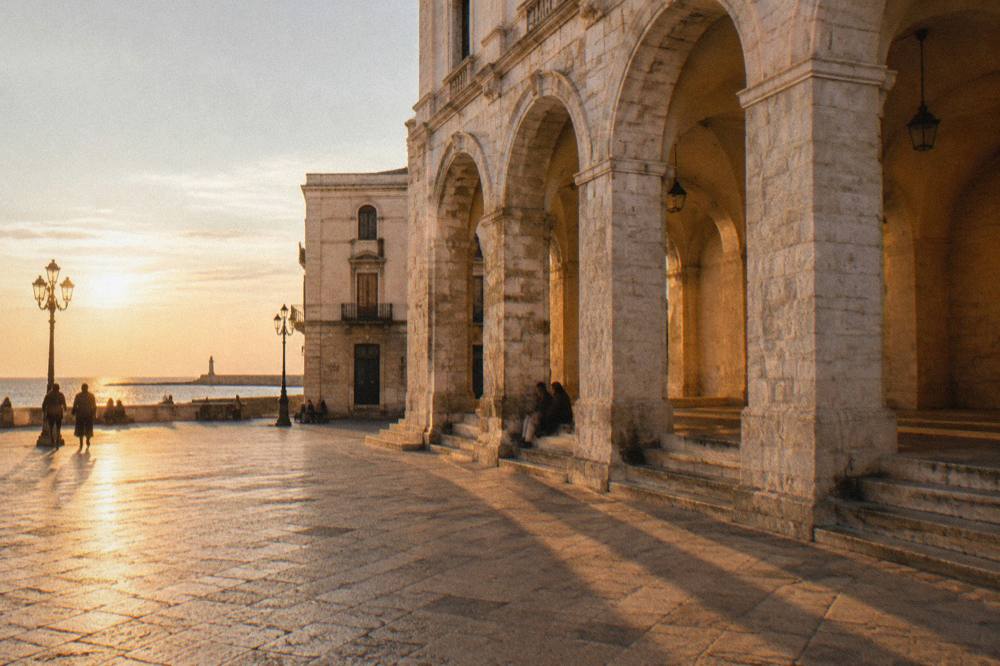
Beyond the ZTL, driving in Bari is southern-Italian city driving: scooters filter between lanes, streets in the grid of Murat are busy, and the seafront fills with the evening passeggiata, when pedestrians own the road edge. The airport is 12.0 km and about 21 minutes by road from Piazza Mercantile in free-flow traffic, computed from routing data, so arriving drivers have a short, signposted run. The licensed taxi remains the regulated door-to-door option, and app availability changes, so a rank or a phone booking is the dependable plan.
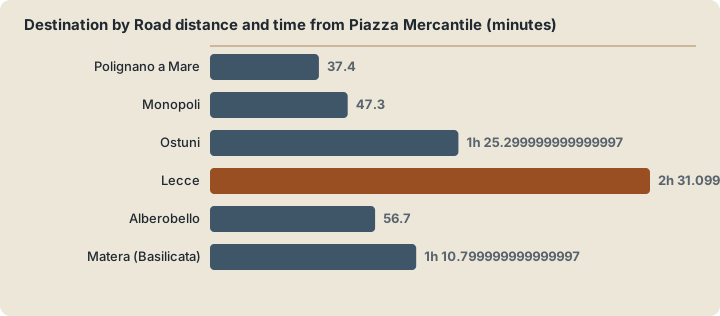
Day-trip driving adds distances, not dangers. From Piazza Mercantile, computed free-flow road figures give Polignano a Mare at 37.4 km and about 36 minutes, Alberobello at 56.7 km and about 61 minutes, Castel del Monte at 62.0 km and about 59 minutes, and Matera, across the regional border in Basilicata, at 70.8 km and about 69 minutes. Lecce is the long one at 151.1 km and about 115 minutes, which is a deliberate drive, not a spur-of-the-moment one.
Is Bari Safe For Solo Travellers And Families?
Solo travellers and families face the same ordinary Bari as everyone else, and the city's structure helps both: the sights are close together, the seafront is a lit, open walk, and the museums publish their prices, from the Castello Normanno-Svevo at 10 euro full and 2 euro reduced to the Puglia Musei Card at 20 euro covering all regional state museum sites for six months. The solo rules are the crowd rules; the family rules are the traffic rules.
For a solo traveller, the honest notes are these. Share your itinerary with someone at home, keep the phone charged, and use the evening hours in populated streets rather than empty ones. The two free hours of a first afternoon are best spent with a guide, because orientation is the solo traveller's main exposure; the guided walks on the Bari walking tours page, including the street food walk with a local guide, put a local beside you while you learn the lanes.
For families, the risks are physical, not criminal. The Lungomare Nazario Sauro is a promenade with traffic along it, the old town lanes have scooters, and the city beaches, Pane e Pomodoro about 2.1 km from Piazza Mercantile, Torre Quetta about 3.9 km and San Girolamo about 4.3 km, have facilities and charges that vary by season and should be confirmed locally. ARPA Puglia reports that the region ranked first in Italy for bathing water quality for the sixth year, with 99.9 percent of waters rated excellent and 78 bathing waters monitored in the province of Bari, though no individual rating is published for a named Bari beach. Family planning is easier with the Bari with kids notes, and the climate table helps too: July and August mean daily maxima of 28.6 C and 29.1 C, typical values from modelled ERA5 data, 1991 to 2020, are heat that needs shade and water for children, while the sea is about 27 C in those months, modelled 2023 to 2025 means.
| Situation | The figure that applies | Where it comes from |
|---|---|---|
| Airport taxi to a city hotel | 25 EUR predetermined | Comune di Bari enforcement notice |
| Castle admission | 10 EUR full, 2 EUR reduced | Musei Puglia ticket page |
| Puglia Musei Card | 20 EUR, 6 months, all regional state sites | Musei Puglia ticket page |
| Teatro Petruzzelli guided tour | 7 EUR full, 2 EUR reduced | Foundation's visits page |
| Tourist tax | 1.50 to 4.00 EUR per person per night by category, maximum 4 nights | Comune di Bari tourist tax page |
Knowing the posted price is the quiet half of travel safety, because an unexpected charge is the complaint that soured a trip. The tourist tax alone surprises visitors: it is collected by the accommodation, ranges from 1.50 euro in one and two star hotels to 4.00 euro in five star hotels, with bed and breakfasts and short lets at 2.00 euro, and it applies for a maximum of 4 consecutive nights per calendar year.
How Safe Are Day Trips From Bari?
Day trips from Bari are safe in the way scheduled transport is safe: trains and boats run on published timetables, the destinations are small towns geared to visitors, and the main risks are missed connections and sun, not crime. Alberobello and Matera are UNESCO World Heritage sites, and Castel del Monte, inscribed in 1996, costs 10 euro full and 2 euro reduced with daily opening from 10:00 to 18:45 between 1 April and 30 September.
The same rules travel with you. At Bari Centrale and at the smaller stations, the bag rule applies; on the cave boats from Polignano a Mare, the boats leave from Polignano, and a San Vito departure leaves from the Bari port area, so check the departure point before you travel. The Grotte di Castellana publish their prices plainly: the full 3 km route, about 100 minutes, is 25 euro for ages 15 and over, and the partial 1 km route, about 50 minutes, is 22 euro.
A guided day trip removes the connection risk entirely, because the operator owns the timetable. The Valle d'Itria circuit to Ostuni, Martina Franca and Alberobello is a well-trodden one, and Check availability on the day tour from Bari shows what the current calendar holds. Independent travellers should note the distances in the table below and plan the last train home rather than the first.
| Destination | Rail distance from Bari Centrale | Road distance and time from Piazza Mercantile |
|---|---|---|
| Polignano a Mare | 33 km | 37.4 km, about 36 minutes |
| Monopoli | 41 km | 47.3 km, about 43 minutes |
| Ostuni | 75 km | 85.3 km, about 73 minutes |
| Lecce | 150 km | 151.1 km, about 115 minutes |
| Alberobello | FSE services via the Trulli Link | 56.7 km, about 61 minutes |
| Matera (Basilicata) | FAL line via Altamura | 70.8 km, about 69 minutes |
Matera needs its own sentence: it is in Basilicata, not Puglia, so the day trip crosses a regional border, and the FAL line from Bari reaches it. Whether you go by train, bus or tour, the practical safety notes are the same: keep the return time written down, carry water in July and August, and hold the same zipped-bag habit at the stations as in the city.
What Should You Do In An Emergency In Bari?
The emergency number in Bari is 112, the EU-wide number that reaches police, medical services and fire brigade from any phone. Beyond that, the useful anchors are the tourist information point reported at Piazza del Ferrarese 29, the airport's own page for anything at Karol Wojtyla, and your own government's travel advice, which is the document that rates destinations and the only advisory worth quoting.
Process beats panic. For a lost passport, contact your consulate and file a report with the police through 112 or at a station. For a medical problem, 112 dispatches an ambulance, and pharmacies are the first stop for minor complaints, with the green cross sign on streets throughout Bari Vecchia and Murat. For a lost card, call the number on the card before anything else, then sort the paperwork. For a transport disruption, service changes are posted by the operator, so the operator's own page is the source, not a rumour at the ticket barrier.
Solo travellers should carry a charged power bank and know their accommodation's address written down, not only stored in a phone. Families should agree a meeting point in Piazza Mercantile or on the Lungomare Nazario Sauro, two open spaces that anyone can find again. And for the quietest safety measure of all, walk the old town once with a guide at the start of the trip, the city's standard guided walk among them, so that every later walk is a known street rather than a guess.
Common Questions About Safety In Bari
Is Bari safe at night?
No official source publishes a night safety verdict for any Bari district. In practice the old town and the seafront stay busy in the evening, the Basilica di San Nicola is open to 20:30 on weekdays and 22:00 on Sundays, and the usual rules apply: lit and populated streets, a zipped bag, and company for very late walks.
Is Bari safe for solo female travellers?
No source rates Bari differently for women than for anyone else. The advice is the standard city set: keep the phone charged, share your itinerary, stay on populated streets after dark, and use licensed taxis from a rank or by phone rather than informal offers.
Are there areas to avoid in Bari?
No official page lists any area of Bari to avoid, and this site will not invent a list. Keep to the normal precautions in crowds and on transport, and check your own government's travel advice for the country-level picture.
Is public transport in Bari safe?
Yes, by the ordinary city standard. An AMTAB single is 1.00 euro and the airport train 5.30 euro, both printed by the operators. Zip your bag on crowded buses and validate your ticket, and check the operator's page for any posted service changes before a late trip.
Can I drive into Bari Vecchia?
No. Bari Vecchia is a limited traffic zone with a camera gate at the Castello since 1 July 2026, and weekday access windows apply to authorised vehicles only. Park outside the old town and walk in; the rules are on the comune's ZTL page.
What is the emergency number in Bari?
112, the EU-wide emergency number, which connects police, medical services and fire brigade. The tourist information point is reported at Piazza del Ferrarese 29 for in-person questions.
The final word is a plain one. Bari asks of its visitors exactly what Barcelona, Naples or Lisbon ask: attention in crowds, prices checked before paying, a phone that works, and a plan for the walk home. Everything beyond that, from the 25 euro airport taxi to the cameras at the old town gate, is published by the comune and the operators, and knowing those figures in advance is the most effective safety measure this page can hand you.
