Bari Or Lecce: Which Apulian City To Choose
This comparison lays out what each city offers, with figures on trains, admissions and climate.
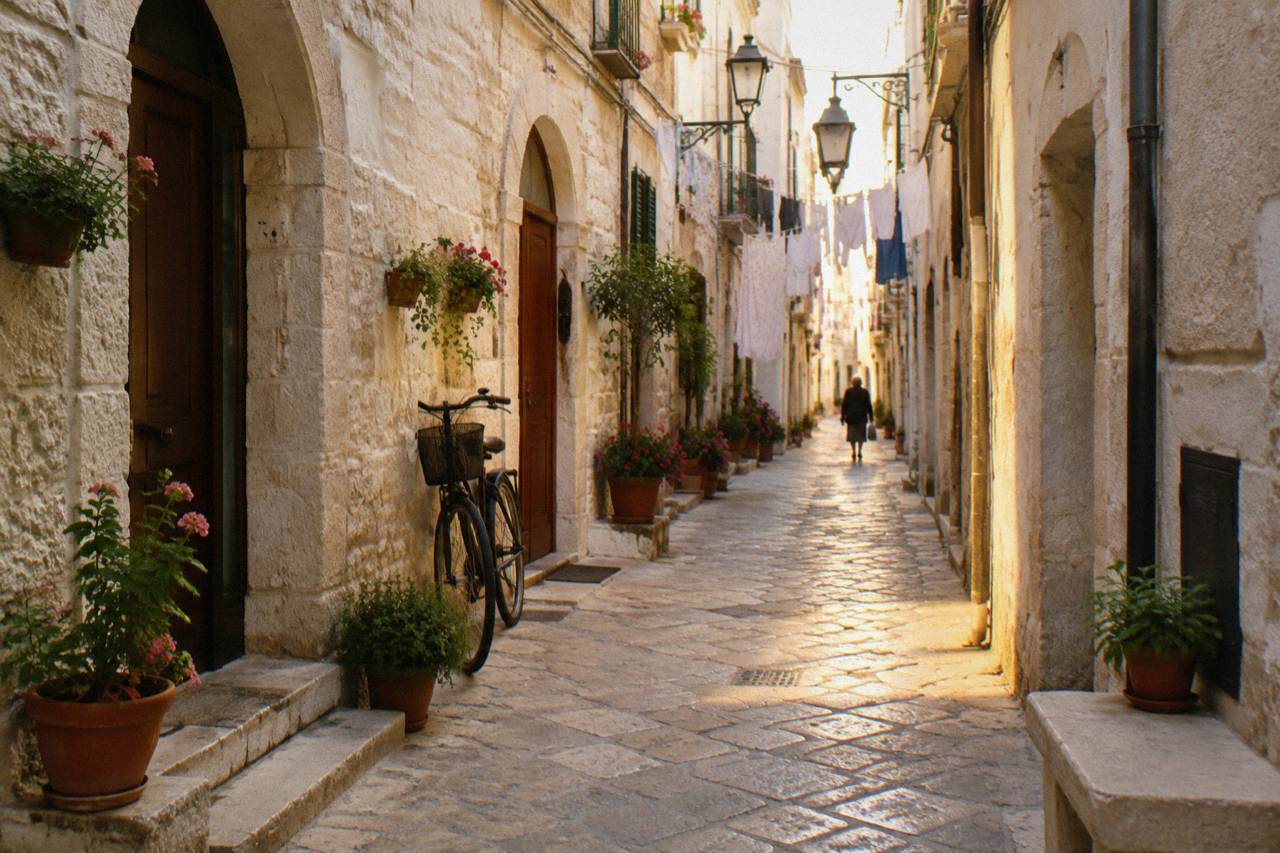
Short answer
Choose Bari as a base if you want the coast, the airport, the trains to Alberobello and Matera, and a working regional capital; choose Lecce for a compact baroque city at the southern end of the region, reached from Bari in about 115 minutes by road or on the 150 km Bari-Lecce rail line.
Bari and Lecce are the two cities travellers weigh against each other when a Puglia trip has room for only one base. Bari is the capital of the Puglia region in southern Italy, a coastal city on the Adriatic Sea with an airport, a ferry port and a rail hub; Lecce lies about 151 km to the south-east, about 115 minutes by road from Bari's Piazza Mercantile and 150 km along the Trenitalia Bari-Lecce rail line. The two are not interchangeable. One is a working regional capital of about 316,000 residents that sends trains and buses to every corner of Puglia; the other is a compact southern city whose fame rests on its baroque centre and its position as a gateway to Salento. This guide sets the two side by side with the figures that matter, from train distances to museum tickets to the rain that falls in November, and it closes with a plain recommendation logic you can apply to your own dates.
Where Are Bari And Lecce, And How Far Apart?
Bari sits on the Adriatic coast at the top of Puglia's heel, while Lecce lies about 151 km to the south-east by road, roughly 115 minutes of driving from Piazza Mercantile, and 150 km away along the Trenitalia Bari-Lecce rail line. Bari is the regional capital, with about 316,000 residents in the comune; the wider Metropolitan City holds about 1.2 million reported residents. Lecce is the Salento's principal city, close to the region's southern tip.
The distance shapes everything else in this comparison. Bari's position at the centre of the region's transport map means Polignano a Mare at 33 km, Monopoli at 41 km, Ostuni at 75 km and Lecce itself at 150 km all sit on one Trenitalia regional line out of Bari Centrale. South-east of Bari, the FSE network and the Trulli Link intermodal service reach Locorotondo, Alberobello and Martina Franca in the Valle d'Itria. Matera, in neighbouring Basilicata, is about 71 km and 69 minutes by road, and the FAL railway line from Bari reaches it too.
Lecce works the other way round. From there, the beaches and towns of the Salento are the near destinations, while the Valle d'Itria, Matera and the Grotte di Castellana become the long journeys. A traveller who wants both cities in one trip can do it: Trenitalia regional trains run the Bari-Lecce line all day, and the Bari to Lecce guide covers the route in detail. The where to base in Puglia guide extends the same question to the smaller towns.
| Journey | Distance from Bari | Road time, free-flow |
|---|---|---|
| Polignano a Mare | 37.4 km | about 36 min |
| Monopoli | 47.3 km | about 43 min |
| Alberobello | 56.7 km | about 61 min |
| Locorotondo | 68.8 km | about 58 min |
| Castel del Monte | 62.0 km | about 59 min |
| Matera (Sassi) | 70.8 km | about 69 min |
| Ostuni | 85.3 km | about 73 min |
| Lecce | 151.1 km | about 115 min |
Those drive times are free-flow estimates computed from the road network, so treat them as planning figures and add margin in summer. The rail distances on the Bari-Lecce line come from the Trenitalia regional timetable.
Which City Is Easier To Reach Without A Car?
Bari is the easier city to reach and the easier one to leave, because it holds the region's main airport and the rail hub. Karol Wojtyla airport (BRI) at Palese is 12.0 km and about 21 minutes by road from Piazza Mercantile, and the Ferrotramviaria train covers the airport-to-Bari Centrale run in 17 minutes for 5.30 euro, with the station inside the terminal. Lecce has no airport of its own.
The airport details are worth knowing precisely. The Ferrotramviaria single fare of 5.30 euro comes from the 2026 tariff table, and a contactless card can be tapped at the gate under the "Paga e Via" system. The Tempesta shuttle coach costs 5 euro, bought on board or in the Cotrap app, and takes about 30 minutes, per the operator. A taxi from the airport to a city-centre hotel is a predetermined 25 euro. AMTAB line 16 also links Bari Centrale and the airport. The Bari airport guide and the airport to city centre guide cover each option step by step.
Lecce arrivals almost always pass through Bari first, by train from Bari Centrale or by car down the SS16, unless they fly into an airport outside this comparison. Inside Bari, AMTAB city buses charge 1.00 euro for a single ride, 1.20 euro for a 90-minute ticket and 2.50 euro for a day ticket, per the AMTAB fares page. The getting around Bari guide covers buses, the ZTL in Bari Vecchia and the suburban rail operators.
One warning that belongs in any Bari-versus-Lecce decision: if you rent a car for the drive south, do not drive it into Bari Vecchia. The old town is a limited traffic zone with a camera gate at the Castello, at the corner of piazza Federico II di Svevia and piazza Massari, active since 1 July 2026, with weekday entry windows only for authorised vehicles. Park outside and walk in. The Bari parking and driving situation, and car hire at the airport, are covered on their own pages.
| Airport transfer, BRI to Bari Centrale | Cost | Time |
|---|---|---|
| Ferrotramviaria train | 5.30 EUR | 17 minutes |
| Tempesta shuttle coach | 5 EUR | about 30 minutes |
| Taxi to a city-centre hotel | 25 EUR fixed | about 21 minutes by road |
| AMTAB line 16 | Pay the standard city ticket | route runs station to airport |
What Does Each City Actually Offer Day To Day?
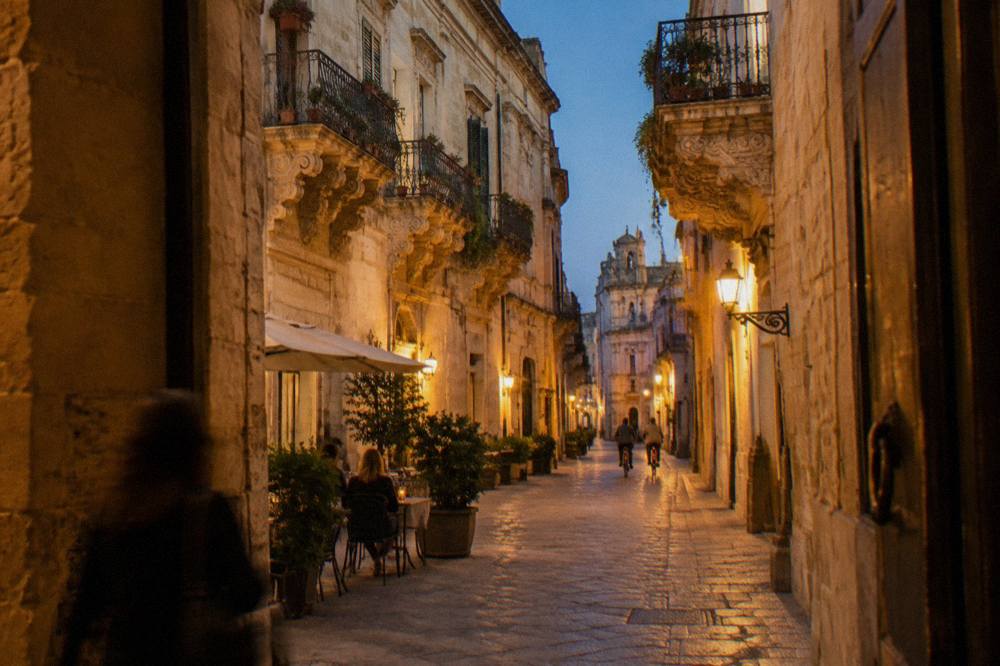
Bari stacks a walled old town, a seafront, working museums and a regional food culture into one walkable city: Bari Vecchia holds the Basilica di San Nicola, the Cattedrale di San Sabino, Piazza Mercantile, Piazza del Ferrarese and the Swabian castle, while the Murat district's grid and the Lungomare Nazario Sauro line the modern face of the city. Lecce's offer is concentrated in its baroque centre, a single compact ensemble of churches and squares best explored on foot.
The Basilica di San Nicola is open Monday to Saturday 06:30 to 20:30 and Sunday 06:30 to 22:00, with no admission fee mentioned on its page, and it holds the relics of Saint Nicholas, brought from Myra by sailors in 1087 and placed in the crypt in 1089. The Castello Normanno-Svevo, run by the Direzione regionale Musei Puglia, is open Tuesday to Sunday 09:00 to 19:00, with Sundays from October to March shortening to 09:00 to 13:30 except the first Sunday of the month; a full ticket costs 10 euro, a reduced ticket 2 euro. The Teatro Petruzzelli sells guided tours at 7 euro full and 2 euro reduced, with dated slots published monthly. The Bari museums guide gathers the Pinacoteca Metropolitana Corrado Giaquinto and the Museo Archeologico di Santa Scolastica, both at 5 euro full with an 8 euro combined ticket.
What can be said is structural: Lecce's centre is compact enough that the walking itself is the attraction, and the is Lecce worth visiting answer page treats the question on its own terms rather than as a subset of this one.
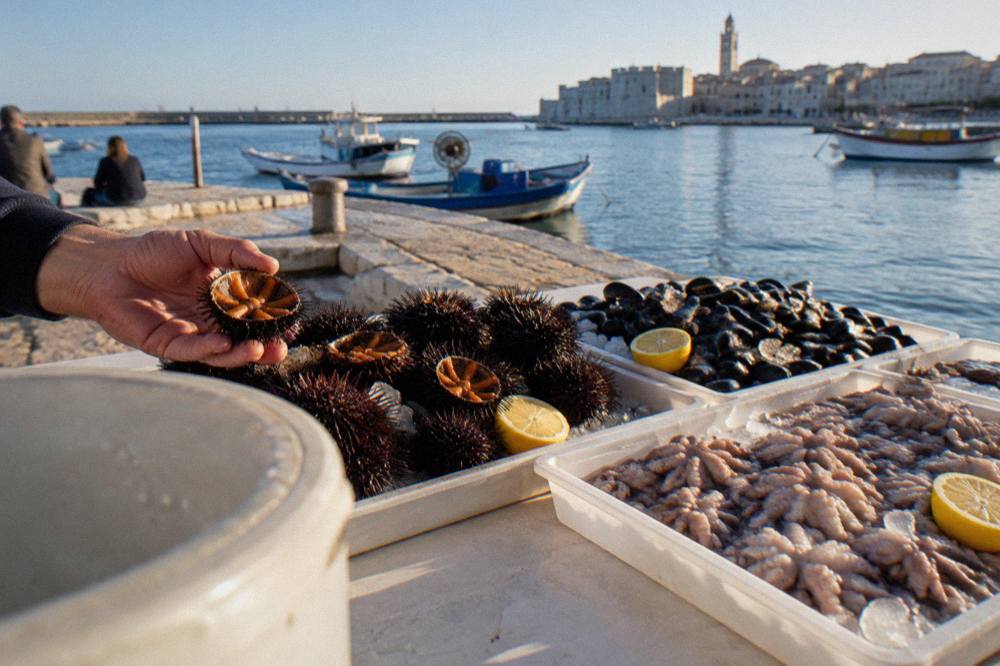
Food tilts the comparison back toward Bari for range, though the region's dishes travel. Orecchiette is the pasta shape of Puglia; panzerotti, focaccia barese, sgagliozze and raw seafood are the city's street-food staples, each describable in a plain sentence and each covered on its own page: Bari street food, orecchiette in Bari and the restaurant guide. Lecce eats from the same regional pantry with a Salento accent, and a sit-down comparison belongs to the food pages, not to a distance table.
Which City Works Better For Day Trips?
Bari wins the day-trip argument on geography: from Bari, Trenitalia regional trains run the Bari-Lecce line through Polignano a Mare, Monopoli and Ostuni to Lecce itself, the Trulli Link intermodal service reaches Alberobello, Locorotondo and Martina Franca in the Valle d'Itria, and the FAL line runs toward Matera in Basilicata. From Lecce, the Valle d'Itria, Matera and Castel del Monte are the far end of a long day.
The day-trip set around Bari, with the free-flow drive times computed from Piazza Mercantile, reads like a regional timetable. Polignano a Mare and Monopoli, the two Blue Flag towns of the Province of Bari in 2026, sit 36 and 43 minutes down the coast. Alberobello, the trulli town and a UNESCO World Heritage site, is about 61 minutes by road; the Trulli Link service links Trenitalia and FSE trains to it, with the FSE leg reported at 5.90 euro on top of the rail fare, so confirm before you go. Matera, about 69 minutes away, is in Basilicata, and its Sassi districts are also UNESCO-listed. Castel del Monte, the octagonal castle UNESCO inscribed in 1996, is 59 minutes north; a full ticket costs 10 euro, reduced 2 euro, and it opens daily 10:00 to 18:45 from 1 April to 30 September and 09:00 to 17:45 from 1 October to 31 March, last entry 45 minutes before closing.
The Grotte di Castellana charge 25 euro for the full route, 3 km and about 100 minutes, for ages 15 and over, and 22 euro for the partial route of 1 km and about 50 minutes. Trani's Swabian castle is 8 euro full, 2 euro reduced. These admissions are printed on the day-trip pages of this site; from Lecce, each of these destinations is a substantially longer journey, and several are simpler as organised day tours than as self-drive runs.
That is the practical case for Bari as a base. A one-day Alberobello and Matera bus tour from Bari bundles the two UNESCO-listed sites with transport and a guide, and Check availability if the dates fit, since these runs fill first in the shoulder months. The Puglia week from Bari itinerary shows how the day trips chain together without changing hotels.
How Do The Beaches Compare?
Bari has its own city beaches: Pane e Pomodoro about 2.1 km from Piazza Mercantile, Torre Quetta about 3.9 km and San Girolamo about 4.3 km to the north-west, all on the Adriatic; but Bari itself holds no Blue Flag in 2026, and the Province of Bari's Blue Flags are Polignano a Mare and Monopoli, both reachable from Bari by train. Lecce's coast, on both the Adriatic and Ionian sides of Salento, is the southern city's strongest card.
The Blue Flag list comes from Regione Puglia for 2026: Polignano a Mare and Monopoli carry the flag in the Province of Bari, while Fasano, Ostuni and Carovigno are in the Province of Brindisi. Bathing-water quality is a regional strength: ARPA Puglia reports Puglia first in Italy for the sixth year with 99.9 percent of waters rated excellent, and 78 bathing waters are monitored in the province of Bari. No rating for a named Bari beach is printed, and facilities and charges at the city beaches vary by season, so confirm locally. The Bari beaches page carries the detail.
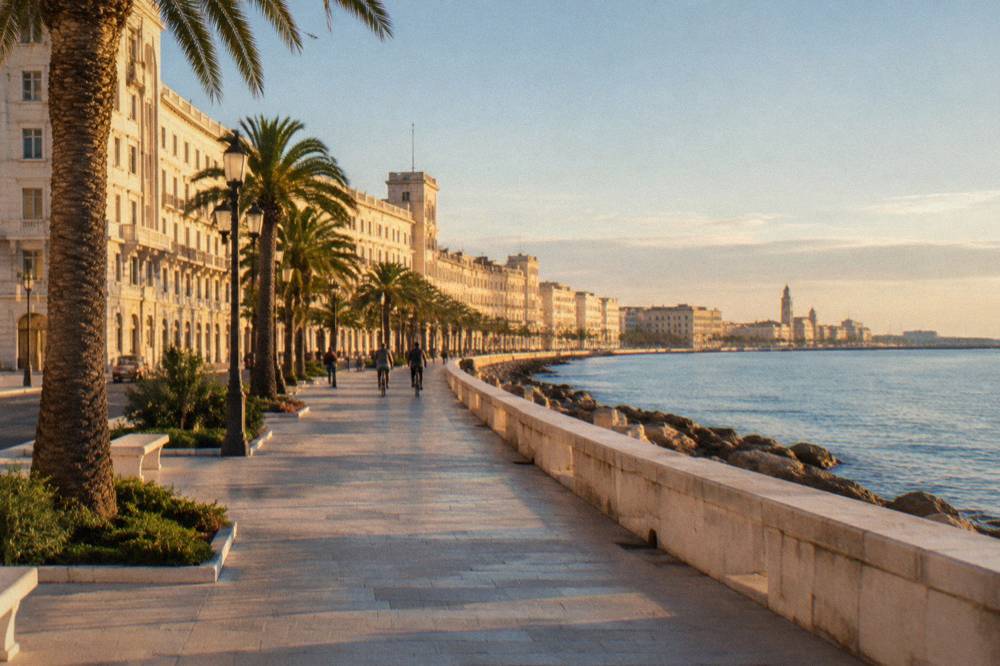
What Bari's coast offers that Lecce's does not is proximity by rail: a Trenitalia regional train from Bari Centrale covers the 33 km to Polignano a Mare typically in 25 to 35 minutes, per secondary timetable sources, so a beach morning needs no car. What Lecce offers is the Salento's two-sea geography, a coast within a short drive on each side. If beaches are the main purpose of the trip, that difference is decisive; if beaches are one ingredient among several, Bari's train-accessible coast holds up well.
How Does The Weather Differ Between Bari And Lecce?
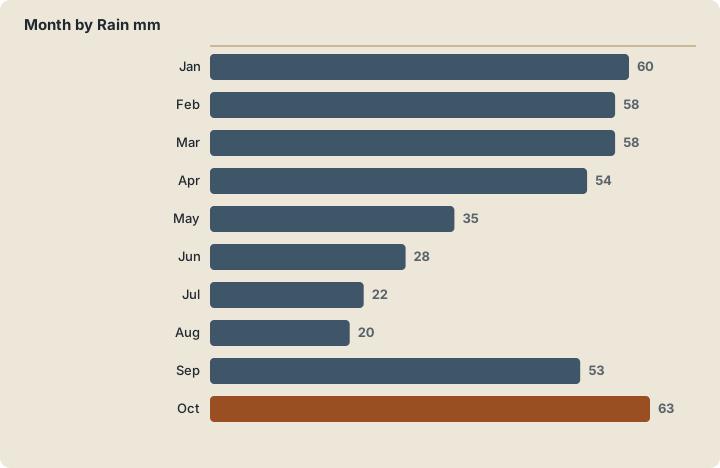
On the modelled climate table, Bari averages a July daily maximum of 28.6 C and an August maximum of 29.1 C, with January and February highs of about 12 C, about 587 mm of rain a year, November the rain heavier month at 73 mm and August the lighter at 20 mm; these are typical values from modelled ERA5 data, 1991 to 2020, and the two cities sit close enough on the same regional pattern that the same packing list serves both.
The monthly picture for Bari, from the climate table, runs as follows.
| Month | Daily high C | Daily low C | Rain mm | Rain days |
|---|---|---|---|---|
| Jan | 12.1 | 7.3 | 60.0 | 9.5 |
| Feb | 12.5 | 7.2 | 58.0 | 9.4 |
| Mar | 14.7 | 8.8 | 58.0 | 9.4 |
| Apr | 17.5 | 11.2 | 54.0 | 9.0 |
| May | 21.6 | 15.3 | 35.0 | 6.9 |
| Jun | 25.9 | 19.5 | 28.0 | 4.8 |
| Jul | 28.6 | 22.0 | 22.0 | 4.1 |
| Aug | 29.1 | 22.4 | 20.0 | 4.3 |
| Sep | 25.1 | 19.1 | 53.0 | 7.6 |
| Oct | 21.1 | 15.6 | 63.0 | 7.9 |
| Nov | 16.9 | 12.0 | 73.0 | 8.9 |
| Dec | 13.2 | 8.7 | 63.0 | 9.6 |
Two readings follow. Summer afternoons in either city run hot, with about 4 rain days in July and August, so sightseeing splits naturally into an early old-town walk, a beach or long lunch, and an evening passeggiata. The sea adds to the case: sea temperature sits at about 27 C in July and August, about 22 C in October and about 14 C in February, as modelled 2023 to 2025 means. And November's 73 mm against August's 20 mm tells the seasonal story without a superlative: the autumn months carry far more rain than midsummer. The Bari weather and best time to visit Bari pages unpack the table month by month.
Which City Costs More To Stay In?
The tourist tax is the one lodging figure this site's sources carry for Bari: 1.50 to 4.00 euro per person per night by accommodation category, charged for a maximum of 4 consecutive nights per calendar year and collected by the accommodation, with 5-star hotels at 4.00 euro, 4-star at 3.00 euro, 3-star at 2.00 euro and B&Bs, short lets and agriturismi at 2.00 euro. Each comune sets its own tax, so the host in either city will say what applies.
What can be compared honestly is structure. Bari's accommodation spread runs from the old town's guesthouses through the Murat district's hotels to the modern quarter by the station, and the where to stay in Bari and Bari hotels pages map the districts. Lecce's stock concentrates around the baroque centre.
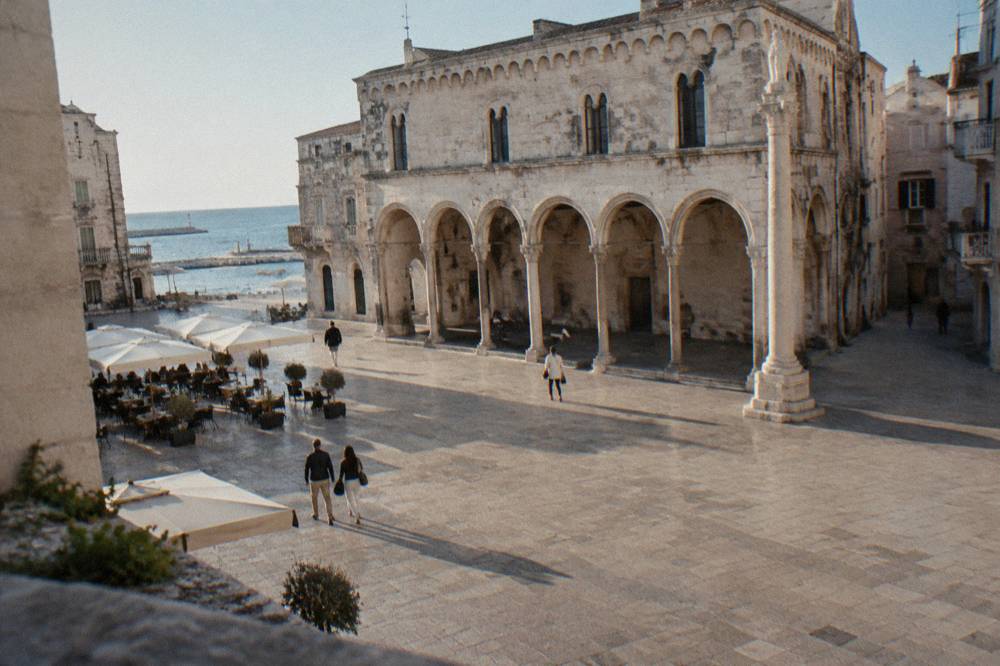
One cost difference is invisible in the room rate: the day trips. From Bari, the headline sights sit on regional trains and the admissions listed above; from Lecce, reaching the same sights means longer journeys or paid tours. A week in either city costs what the room and the table cost, but the excursions around it cost more from the southern base.
Which City Should A First-Time Visitor Choose?
Choose Bari if the trip is a first visit to Puglia and you want one base that reaches everything: Polignano a Mare is 33 km by rail, Alberobello and Matera are a bus tour away, and the city itself holds the Basilica di San Nicola, the Swabian castle at 10 euro and a seafront.
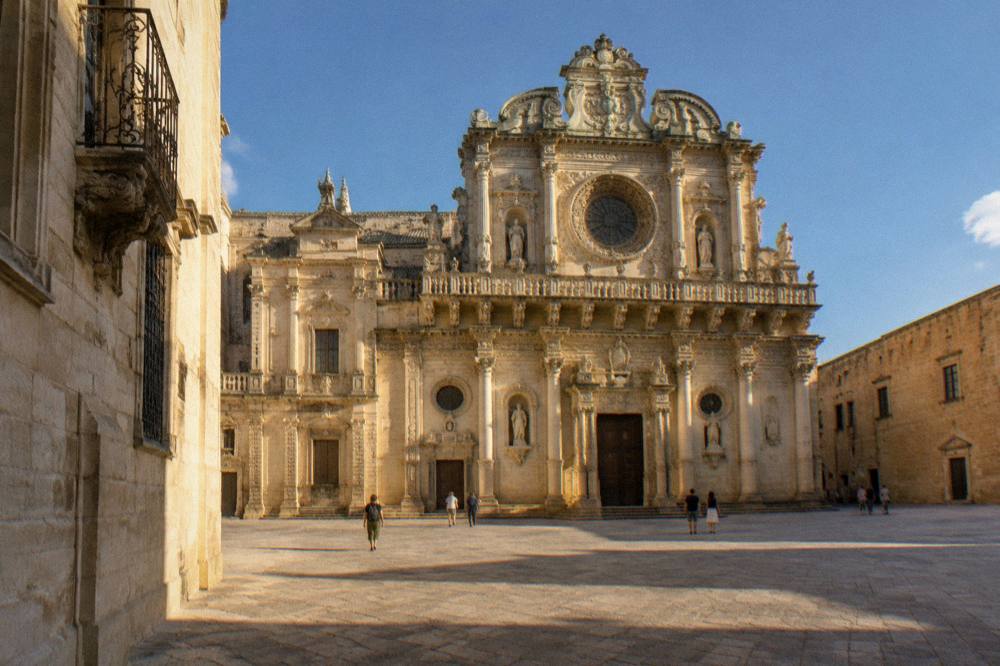
Choose Lecce if the trip is centred on the Salento, if baroque architecture is the draw, and if you accept that the rest of Puglia becomes a long day trip.
The honest framing is that this is not a beauty contest but a question of itinerary shape. A traveller with four or five days who wants Puglia's greatest hits, old town, trulli, caves, Matera, one Blue Flag beach, is better served by Bari, because every one of those sits inside the day-trip ring mapped above, and the things to do in Bari page shows the city's own share of the week. A traveller with a car and a fortnight can split the stay, Bari first, Lecce second, and let each city cover its own half of the region; the Puglia week from Bari itinerary shows the split logic even for shorter trips.
The which is better, Bari or Lecce answer page gives the short version of this verdict, and the Lecce day trip page covers the city as a destination from Bari rather than as a rival. The verdict in one line: Bari is the base, Lecce is the excursion or the second base, and the order matters less than accepting that a single-city trip sees only half the region.
How Do You Visit Both Cities In One Trip?
The standard pattern is to base in Bari and take the Trenitalia regional line 150 km south to Lecce for a day, or to split the stay, with the drive between the two running about 115 minutes by road in free-flow conditions; the Bari to Lecce guide covers train and car options.
A day trip from Bari works because the rail line is direct and Lecce's centre is compact once you arrive. Two cautions apply. First, check the operator's timetable for the last return train before you commit to a long dinner. Second, if you drive, remember that historic centres across Puglia, Bari Vecchia included, restrict car entry; park at the edge and walk. The works and service changes that affect specific lines are posted by the operators, so a quick check the day before saves a surprise.
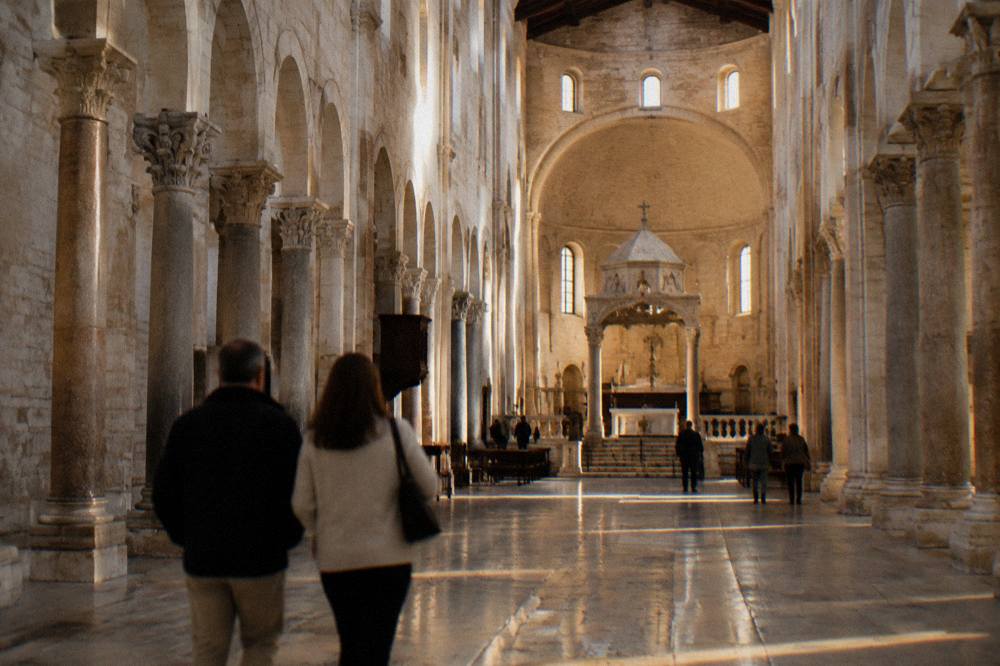
A split stay suits a week or more. The sequence that pairs with the day-trip table above is Bari first for the northern and inland sights, then Lecce for the Salento's coast and towns, returning to Bari airport by train at the end. Flights, car hire at the airport and the return logistics are covered on the flights to Bari and Bari train station pages.
What About Safety, Festivals And Timing?
Bari's calendar peaks with the Festa di San Nicola, which runs 7 to 9 May every year by tradition, with the 2026 corteo storico setting off at 20:00 on Thursday 7 May from piazza Federico II di Svevia; the sea procession on 8 May and the manna on 9 May are reported traditions, so confirm the programme before you go. The 2027 programme had not been announced.
Safety in either city comes down to ordinary care: emergency number 112 applies across Italy, and Puglia's bathing waters rank first in Italy for the sixth year.
Timing the visit around the feast changes the character of a Bari stay: the old town fills with processions, luminarie and the Sagra stalls that ran 7 to 10 May in 2026. Two further fixed points are the Bif&st film festival, whose 17th edition began on 21 March 2026, and the Fiera del Levante, whose Campionaria closed in late September 2026; both are written as late March and late September events, and neither has announced 2027 dates. The Bari San Nicola festival page carries the feast detail, and is Bari safe covers the safety question without inventing statistics: keep valuables out of back pockets, zip bags on crowded buses, check posted prices and the itemised bill.
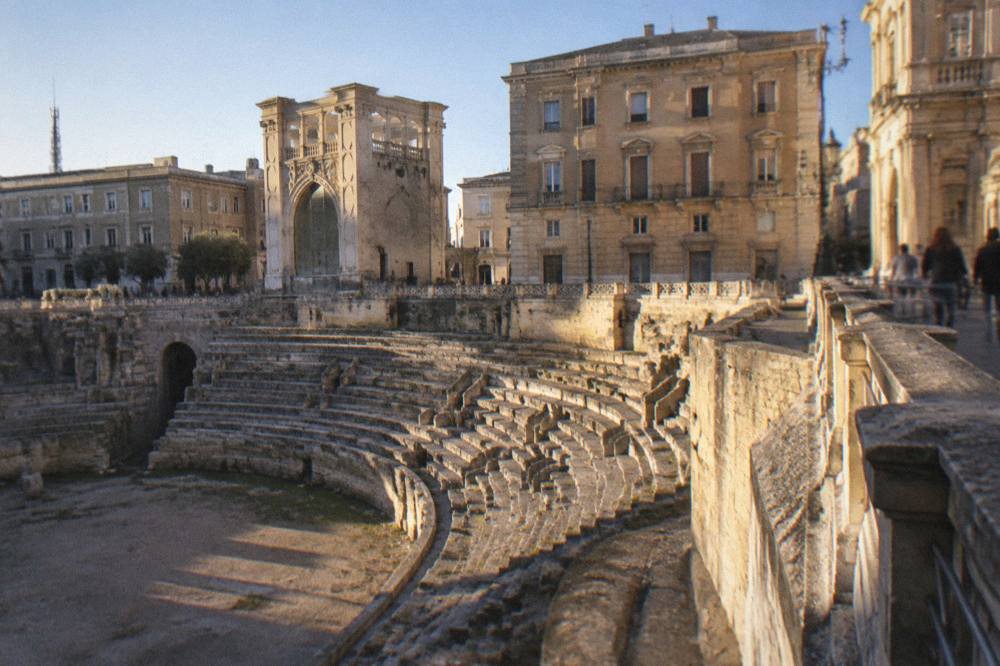
The final side-by-side table gathers the comparison into one view, using only the figures this site's sources carry.
| Question | Bari | Lecce |
|---|---|---|
| Position | Regional capital, Adriatic coast, north of the heel | Salento's principal city, about 151 km south-east of Bari by road |
| Airport | Karol Wojtyla (BRI), train 17 min to Bari Centrale, 5.30 EUR | None in this comparison; arrivals via Bari or other airports |
| Rail role | Hub: Bari-Lecce line, Trulli Link, FAL to Matera | Terminus of the Bari-Lecce line, 150 km by rail |
| Old town | Bari Vecchia, walled, on the headland | Compact baroque centre |
| Headline sight | Basilica di San Nicola, open Mon-Sat 06:30-20:30, Sun to 22:00, no fee mentioned | Baroque churches and squares; check official pages for hours |
| Castle | Castello Normanno-Svevo, 10 EUR full, 2 EUR reduced | Swabian castle of Trani is a day trip from Bari, not Lecce's |
| Blue Flag 2026 | Not in Bari; Polignano a Mare and Monopoli in the province | Salento coast towns; the 2026 provincial list favours neither city itself |
| Tourist tax | 1.50 to 4.00 EUR per person per night, max 4 nights | Each comune sets its own; the host will say |
A final practical note for whichever city wins your dates. In Lecce, build the budget from the room rate and the meals, and confirm each church or museum's entry terms on its own page before you go. Either choice lands you in the same region, under the same modelled sun, with the other city a rail ride away if the comparison ends in a draw.
Common Questions About Bari Or Lecce
Is Bari or Lecce better for a first trip to Puglia?
Bari is the better first base: it holds the region's airport and rail hub, and Polignano a Mare, Monopoli, Alberobello, Matera and Lecce itself all sit within the day-trip ring described above. Lecce suits a second visit centred on the Salento.
How far is Lecce from Bari?
About 151 km by road, roughly 115 minutes in free-flow conditions, and 150 km along the Trenitalia Bari-Lecce rail line. Check the operator's timetable for current departure times.
Can you visit Lecce as a day trip from Bari?
Yes. Trenitalia regional trains run the direct Bari-Lecce line, and Lecce's centre is compact once you arrive. Confirm the last return train with the operator before planning a long evening.
Which city has better beaches?
Bari's own city beaches are Pane e Pomodoro, Torre Quetta and San Girolamo, and Bari itself holds no Blue Flag in 2026; Polignano a Mare and Monopoli, both Blue Flag towns on the train line from Bari, are the coastal picks. Lecce's strength is the Salento coast on two seas.
Is the tourist tax different in Bari and Lecce?
Each comune sets its own tax. In Bari it is charged per person per night by category, for a maximum of 4 consecutive nights per calendar year, collected by the accommodation, which will tell you what applies.
Do you need a car in either city?
No. City buses are an affordable way to get around, and the main day trips run on Trenitalia, FSE and FAL services. A car helps for the Salento around Lecce; if you have one, never drive into Bari Vecchia, which is a camera-enforced limited traffic zone.
Choosing between the two cities comes down to what the trip is for, and the figures above make the trade-off explicit: Bari is the transport-rich capital with the coast and the day-trip ring, Lecce the compact baroque city at the region's southern end, and both sit on one rail line that connects them in a single morning. Whichever way you decide, the rest of the Bari Italy Travel Guide covers every street, beach and train ride in the comparison in its own page.
