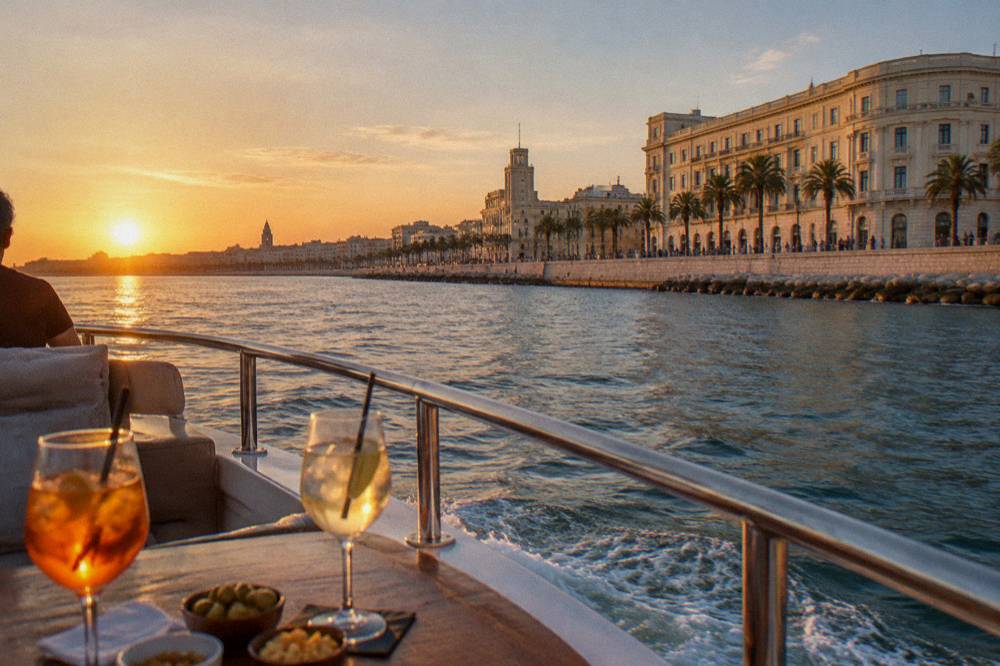
Bari In Summer: Heat, Beaches And Evening Life
Bari, the capital of Puglia on the Adriatic coast of southern Italy, runs hot in July and August, with modelled daily highs of 28.6 and 29.1 C, and lives much of its summer life in the evening. Here is what the climate data, the beach geography and the transport facts say about planning a summer visit.
Short answer
Summer in Bari means July and August highs around 28.6 and 29.1 C, sea temperatures around 27 C, about 20 to 22 mm of rain a month, and long evenings along the Lungomare Nazario Sauro. The city beaches are Pane e Pomodoro, Torre Quetta and San Girolamo.
Bari, the capital of the Puglia region on the Adriatic coast of southern Italy, moves outdoors in summer. The old town of Bari Vecchia sits on a headland between the old port and the Murat grid, the Lungomare Nazario Sauro fills in the evenings, and the question for a visitor is rarely whether the city is worth it, but how to arrange the day around the heat. Typical values from modelled ERA5 data, 1991 to 2020, put the July mean daily maximum at 28.6 C and the August figure at 29.1 C, with about 22 mm of rain in July and 20 mm in August. The sea, modelled 2023 to 2025, averages about 27 C in both months. This page sets out what that means in practice: which beaches sit where, what opens when, how the evenings work, and how to reach Polignano a Mare, Monopoli and the other summer day trips. For a broader view of the city across the year, the main Bari guide covers the full picture.
How Hot Does Bari Get In Summer?
Bari's summer heat peaks in August, with a mean daily maximum of 29.1 C, while July averages 28.6 C and June 25.9 C, according to typical values from modelled ERA5 data, 1991 to 2020. Nights stay warm too: July and August mean daily minimums are 22.0 and 22.4 C. Rainfall falls to about 22 mm in July and 20 mm in August, with roughly four rain days in each month.
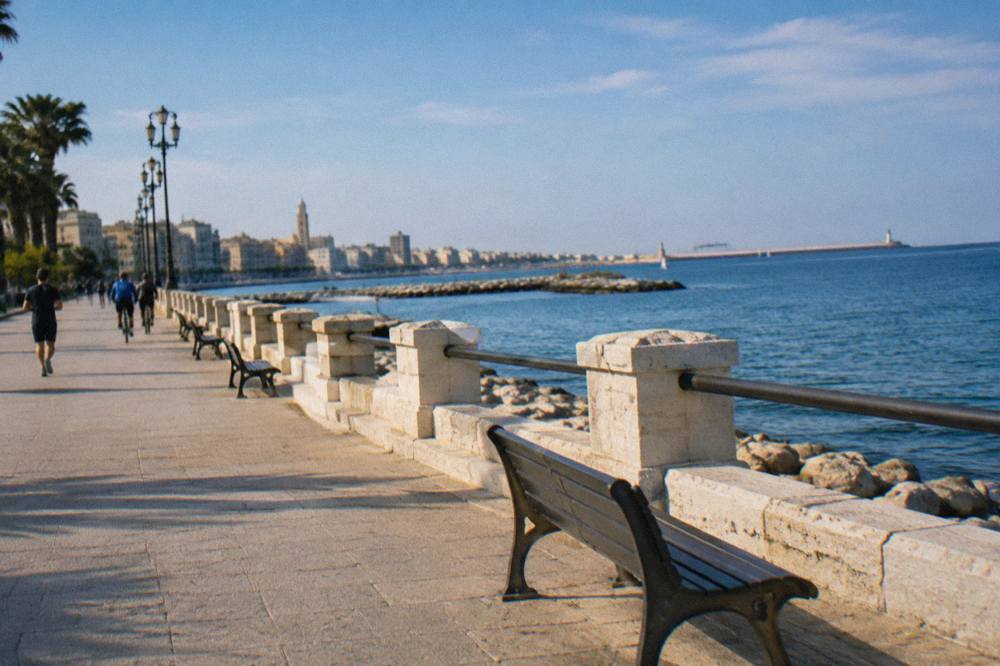
The figures matter because they shape the day. A city where the nights rarely drop below 22 C is a city built around the evening, and Bari is exactly that. The Lungomare Nazario Sauro, the seafront promenade that runs south from the old port past Madonnella, is the natural place for that late walk, and the streets of Bari Vecchia keep their shade in the narrow lanes between the Basilica di San Nicola and the Cattedrale di San Sabino. September eases off to a mean daily maximum of 25.1 C with about 53 mm of rain, and June sits at 25.9 C, so the shoulder months give a real alternative for anyone who reads those July and August numbers and hesitates.
| Month | Mean daily max C | Mean daily min C | Mean C | Rain mm | Rain days |
|---|---|---|---|---|---|
| June | 25.9 | 19.5 | 22.9 | 28 | 4.8 |
| July | 28.6 | 22.0 | 25.5 | 22 | 4.1 |
| August | 29.1 | 22.4 | 25.9 | 20 | 4.3 |
| September | 25.1 | 19.1 | 22.1 | 53 | 7.6 |
The rain day counts are small but not zero: about 4.1 days with at least 1 mm in July and 4.3 in August. A summer week in Bari can therefore include a wet hour or two, and the indoor options, from the Castello Normanno-Svevo to the Pinacoteca Metropolitana Corrado Giaquinto, are worth holding in reserve. The Bari weather guide carries the full monthly table, and the best time to visit Bari compares summer against spring and autumn in detail.
Where Can You Swim Near Bari In Summer?
Bari's own city beaches are Pane e Pomodoro, about 2.1 km from Piazza Mercantile, Torre Quetta at about 3.9 km, and San Girolamo at about 4.3 km to the north-west. Bari itself holds no Blue Flag in 2026; the Blue Flag beaches of the Province of Bari are Polignano a Mare and Monopoli. Puglia ranked first in Italy for bathing water quality for the sixth year, with 99.9 percent of sites rated excellent.
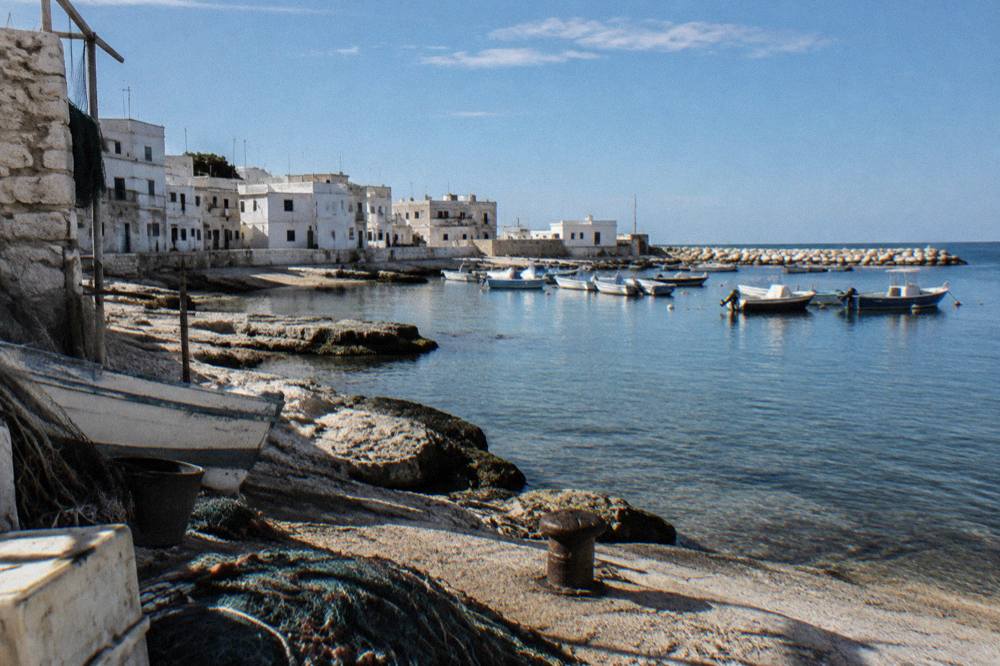
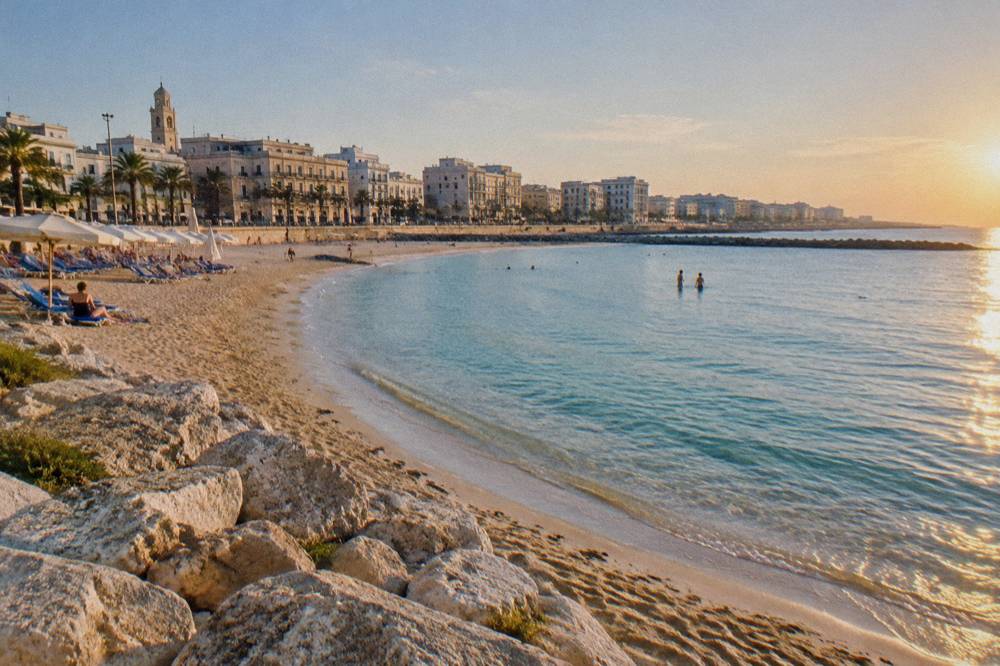
Pane e Pomodoro is the closest beach to the centre, a walkable distance along the seafront from the old town, which is why it fills first on summer afternoons. Torre Quetta and San Girolamo sit further out in Japigia and to the north-west respectively, and facilities and lido charges vary by season, so confirm locally what is open and what a sunbed costs before you commit to the walk. The ARPA Puglia monitoring network covers 78 bathing waters in the province of Bari, which is the context behind those quality figures, though no individual rating is printed for a named Bari beach. For the full beach picture, including how the three city beaches compare, see the Bari beaches guide.
| Beach | Distance from Piazza Mercantile | Direction |
|---|---|---|
| Pane e Pomodoro | about 2.1 km | south, along the seafront |
| Torre Quetta | about 3.9 km | south, Japigia |
| San Girolamo | about 4.3 km | north-west |
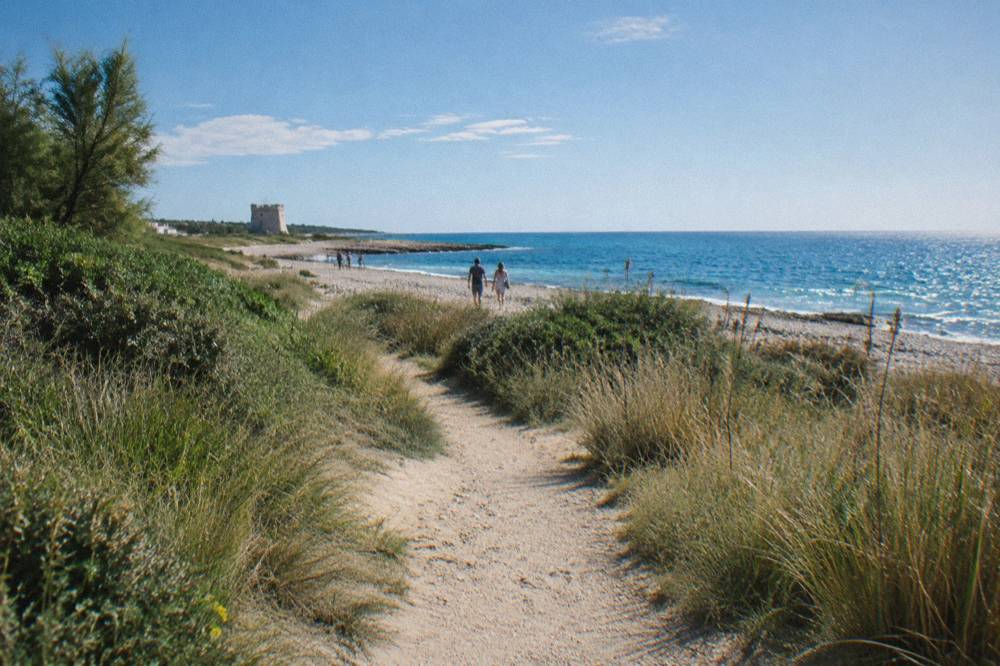
The sea itself is the other half of the question. Modelled 2023 to 2025 means give a sea temperature of about 27 C in July and August, falling to about 22 C by October. That is warm water by any standard, and it explains why the coast south of Bari, particularly the stretch around Polignano a Mare and Monopoli, draws so much of the summer traffic. Polignano a Mare sits on cliffs above coves such as Lama Monachile, and the Monopoli guide covers the other Blue Flag town of the province.
Boat trips are the other way to meet the water. The caves below Polignano a Mare are reached by boat from Polignano itself, not from Bari, and the roster on this site includes a catamaran tour with aperitif and local food that departs from Polignano a Mare. For something that stays in the city, a walk along the Lungomare at sunset costs nothing.
What Should A Summer Day In Bari Look Like?
A workable summer day in Bari splits into three blocks: shade and sights in Bari Vecchia in the morning, the beach or a boat from midday to late afternoon, and the seafront and old town again after sunset. The Basilica di San Nicola is open Monday to Saturday 06:30 to 20:30 and Sunday 06:30 to 22:00, so the early hours and the evening both work for it, and no admission fee is mentioned on its page.
The morning block is where the sightseeing belongs. Bari Vecchia is compact, and its lanes between Piazza Mercantile, Piazza del Ferrarese and the basilica hold their shade well into the day. The Swabian castle, the Castello Normanno-Svevo, is open Tuesday to Sunday 09:00 to 19:00, with Sunday hours of 09:00 to 13:30 from October to March except the first Sunday of the month; a full ticket costs 10 EUR and a reduced ticket 2 EUR per the Musei Puglia ticket page. Strada Arco Basso, the street associated with orecchiette, the pasta shape of Puglia, is part of the same old town walk. The middle of the day belongs to the water: Pane e Pomodoro for a swim, or a train south. The evening returns to the Lungomare Nazario Sauro and dinner in the old town.
The catamaran trip above departs from Polignano a Mare, so it pairs naturally with a train ride down the coast rather than a morning in the city. If you would rather keep the whole day inside Bari, the segway option below covers the old town and the seafront in the cooler hours.
Which Museums In Bari Work On A Hot Afternoon?
Bari's main indoor options in summer are the Castello Normanno-Svevo at 10 EUR full and 2 EUR reduced, the Pinacoteca Metropolitana Corrado Giaquinto at 5 EUR full, 2 EUR reduced and 8 EUR combined with the archaeology museum, and the Museo Archeologico di Santa Scolastica at the same prices, all per the museums' own pages. The basilica needs no ticket. A Puglia Musei Card at 20 EUR covers all regional Musei Puglia sites for six months.
The details matter when the afternoon heat pushes you indoors. The Pinacoteca is open Tuesday to Saturday 09:00 to 19:00 with last entry at 18:30, and Sunday 09:00 to 13:00 with last entry at 12:30, closed Mondays. The Museo Archeologico di Santa Scolastica runs the same weekday hours and is free on the first Sunday of the month. The Teatro Petruzzelli sells guided tours at 7 EUR full and 2 EUR reduced, with dated slots published monthly, which makes it a good fit for a planned afternoon rather than a spontaneous one. The fire of the night of 26 to 27 October 1991 and the reopening on 4 October 2009 are part of the building's reported history.
| Site | Full ticket | Reduced | Summer hours |
|---|---|---|---|
| Castello Normanno-Svevo | 10 EUR | 2 EUR | Tue-Sun 09:00-19:00 |
| Pinacoteca Metropolitana Corrado Giaquinto | 5 EUR | 2 EUR | Tue-Sat 09:00-19:00, Sun 09:00-13:00 |
| Museo Archeologico di Santa Scolastica | 5 EUR | 2 EUR | Tue-Sat 09:00-19:00, Sun from 09:00 |
| Teatro Petruzzelli guided tour | 7 EUR | 2 EUR | dated slots published monthly |
| Puglia Musei Card | 20 EUR | - | all Musei Puglia sites, 6 months |
What Are The Best Summer Day Trips From Bari?
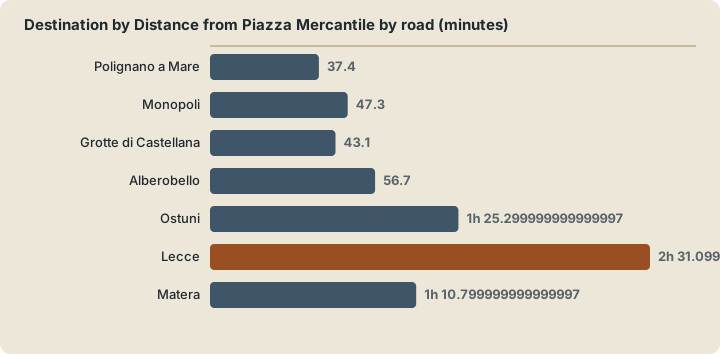
The classic summer day trips from Bari are Polignano a Mare at 33 km by rail, Monopoli at 41 km, both Blue Flag towns in 2026, Alberobello at about 57 km by road, the Grotte di Castellana at about 43 km, and Matera at about 71 km across the regional border into Basilicata. Trenitalia regional trains on the Bari-Lecce line serve Polignano, Monopoli, Ostuni at 75 km and Lecce at 150 km.
The coast comes first in summer. Polignano a Mare typically takes 25 to 35 minutes by regional train, per secondary timetable sources, and the town sits above coves that give the boat trips their route. Monopoli is 41 km along the same line. Alberobello and Locorotondo, the trulli and hill towns of the Valle d'Itria, are reached through the Trulli Link service that connects Trenitalia and FSE, with the FSE leg reported at 5.90 EUR on top of the rail fare. Matera is in Basilicata, not Puglia, and the FAL railway line runs from Bari towards it through Altamura and Gravina in Puglia. For the trulli town in detail, the Bari to Alberobello guide covers the routes.
| Destination | Distance from Piazza Mercantile by road | Rail distance | Notes |
|---|---|---|---|
| Polignano a Mare | 37.4 km, about 36 min | 33 km | Blue Flag 2026 |
| Monopoli | 47.3 km, about 43 min | 41 km | Blue Flag 2026 |
| Grotte di Castellana | 43.1 km, about 47 min | - | full route 25 EUR, partial 22 EUR |
| Alberobello | 56.7 km, about 61 min | - | UNESCO trulli town |
| Ostuni | 85.3 km, about 73 min | 75 km | Province of Brindisi |
| Lecce | 151.1 km, about 115 min | 150 km | a long day or an overnight |
| Matera | 70.8 km, about 69 min | - | in Basilicata |
The Grotte di Castellana, the karst cave system inland from Polignano, sells a full route of 3 km in about 100 minutes at 25 EUR for ages 15 and over and a partial route of 1 km in about 50 minutes at 22 EUR, per the cave's own price page. That full route is a genuinely cool 14 C or so underground in most seasons, though only the route lengths and prices are confirmed here, so treat the temperature as something to ask about. A guided day trip that strings several towns together is one way to skip the timetables entirely. The wider set of guides lives on Bari Italy Travel Guide.
The small-group van tour above departs from Bari itself and links Alberobello, Monopoli and Polignano a Mare in one loop, which suits a summer day when you would rather not watch three timetables. Boat trips, by contrast, leave from the coast: the Polignano cave boats depart from Polignano a Mare, and one operator on the roster uses the San Vito area south of the town, not the Bari waterfront.
Is Bari Evening Life Worth Staying Out For In Summer?
Bari's summer evening life runs along the Lungomare Nazario Sauro and through Bari Vecchia, and it peaks late, because July and August nights average minimums of 22.0 and 22.4 C, warm enough to keep the streets busy past midnight. The basilica stays open to 22:00 on Sundays, and the Festa di San Nicola fills the old town from 7 to 9 May, before the summer proper begins.
The evening walk is the city's summer institution. The promenade runs from the old port past Madonnella towards the city beaches, and the Teatro Margherita and the Teatro Petruzzelli sit close to its northern end as landmarks. Food is the other half of it: orecchiette is the pasta shape of Puglia, panzerotti are the fried filled pockets of the city, and focaccia barese is the local flatbread, each describable in one plain sentence and each best eaten warm. The street food of the old town gets its own treatment in the Bari street food guide, and the orecchiette tradition has a dedicated page in orecchiette in Bari.
One calendar note belongs here even though it falls in spring: the Festa di San Nicola, the city's patronal feast, runs 7 to 9 May by tradition, with the corteo storico on 7 May 2026 starting at 20:00 from piazza Federico II di Svevia, and the sea procession and the manna reported on 8 and 9 May. The 2027 programme had not been announced.
How Do You Get To Bari And Around In Summer?
Bari's airport is Karol Wojtyla at Palese, 12.0 km and about 21 minutes by road from Piazza Mercantile, and the Ferrotramviaria train covers the airport to Bari Centrale in 17 minutes at 5.30 EUR a single, per the operator's 2026 tariff. The Tempesta coach costs 5 EUR and takes about 30 minutes, and a taxi to a city-centre hotel is a predetermined 25 EUR. AMTAB city buses charge 1.00 EUR single, 1.20 EUR for 90 minutes, or 2.50 EUR a day.
The airport train station is inside the terminal, and a contactless card can be tapped at the gate under the "Paga e Via" system. Service changes during works are posted by the operator, so a quick check before you fly is worthwhile in a season of construction across the station area. Full transfer details, including the bus options, are in the Bari airport guide and the airport to city centre guide.
| Transfer | Cost | Time |
|---|---|---|
| Ferrotramviaria airport train | 5.30 EUR single | 17 minutes |
| Tempesta shuttle coach | 5 EUR | about 30 minutes |
| Taxi to city-centre hotel | 25 EUR fixed | about 21 minutes by road |
| AMTAB single ticket | 1.00 EUR | one ride |
| AMTAB 90-minute ticket | 1.20 EUR | 90 minutes |
| AMTAB day ticket | 2.50 EUR | until end of service |
Two rules matter for anyone driving. Bari Vecchia is a limited traffic zone, with a camera gate at the Castello operating since 1 July 2026 and weekday entry windows of 09:00 to 11:00 for authorised vehicles: do not drive into the old town in a rental car. And the tourist tax, the imposta di soggiorno, runs 1.50 to 4.00 EUR per person per night by accommodation category, for a maximum of 4 consecutive nights per calendar year, collected by the accommodation. Getting around the city without a car is covered in the getting around Bari guide, and the station itself in the Bari train station guide.
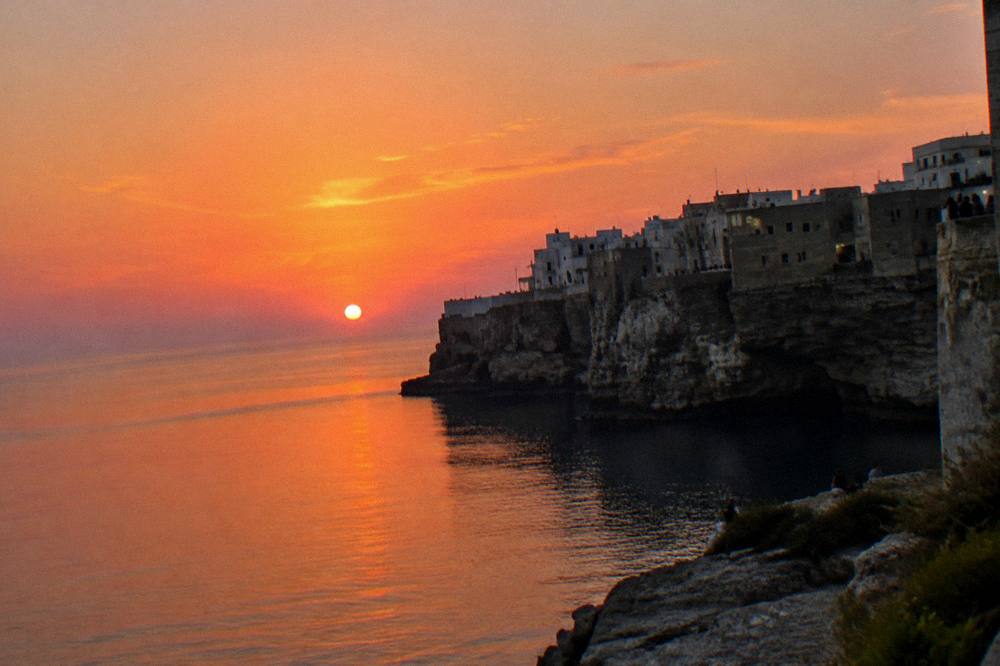
Can You Take A Ferry From Bari In Summer?
Ferries from Bari run across the Adriatic all year: Adria Ferries sails to Durres every day, taking about 8 hours, and GNV also sells Bari to Durres, reported at 10 hours 45 minutes, with its port address at Varco della Vittoria, Lungomare Starita 6. Superfast's 2026 brochure lists the route Bari, Corfu, Igoumenitsa, Patras. Jadrolinija's Dubrovnik line was reported interrupted for technical reasons in autumn 2026, so confirm that line is operating before planning around it.
The Stazione Marittima at Molo San Vito is about 0.5 km from Piazza Mercantile, which makes the ferry terminal an easy walk from the old town. Cruise traffic is a summer presence too: about 430,000 cruise passengers and 152 calls were reported by the port authority for the first nine months of 2025, up 21 percent, and the port authority publishes the 2026 cruise calendar as a PDF. No ferry fare is printable here, so check the operator's live listing for the crossing you want. The full port picture, including the Albania and Greece routes, is in the Bari ferries guide.
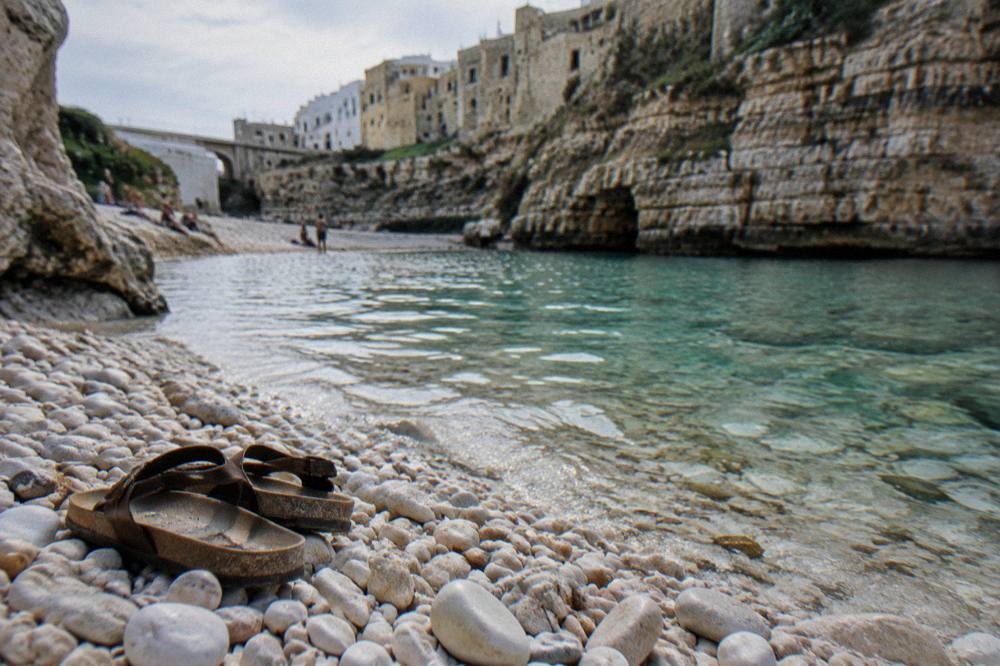
Where Should You Stay In Bari In Summer?
For a summer stay in Bari, the Murat district puts you between the station and the sea in a walkable grid, Bari Vecchia puts you inside the evening life but inside the limited traffic zone, and the seafront around Madonnella gives direct access to the Lungomare Nazario Sauro.
The tourist tax runs 1.50 EUR at one and two star hotels, 2.00 EUR at three star and at B&Bs and short lets, 3.00 EUR at four star and 4.00 EUR at five star, per person per night, capped at 4 consecutive nights.
The trade-off is heat against atmosphere. The old town holds its evening energy and its restaurant streets but is a ZTL, so a car is a liability there. The Murat grid, centred on the shopping streets around Via Sparano, is flat, shaded in parts and close to Bari Centrale for the day-trip trains. Staying near the seafront shortens the evening walk and the morning run to Pane e Pomodoro. The where to stay in Bari guide compares the districts district by district, and the Bari hotels guide covers the categories and their tax bands.
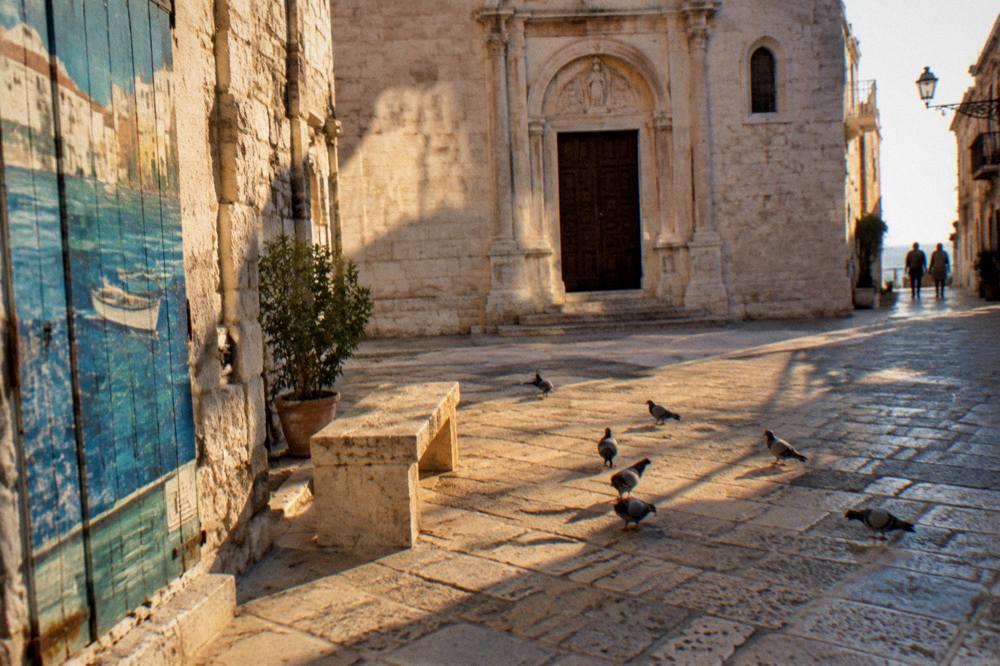
Summer in Bari rewards a slow rhythm: the basilica or the castle in the morning shade, water in the middle of the day wherever you find it, the Lungomare after dark. The climate table gives you August at 29.1 C and the sea at about 27 C, the trains give you Polignano a Mare and Monopoli within the hour, and the evening streets give the city back to you once the sun drops. Pack for the heat, book the indoor hours deliberately, and the summer version of Puglia's capital more than holds its own against the coast it feeds.
Common Questions About Bari In Summer
Is Bari too hot in summer?
Typical values from modelled ERA5 data, 1991 to 2020, give July a mean daily maximum of 28.6 C and August 29.1 C, with night minimums of 22.0 and 22.4 C. That is hot but manageable with a morning, beach, evening rhythm, and September eases to 25.1 C.
Can you swim in Bari in summer?
Yes. The city beaches are Pane e Pomodoro about 2.1 km from Piazza Mercantile, Torre Quetta about 3.9 km and San Girolamo about 4.3 km, and the modelled sea temperature is about 27 C in July and August.
Does Bari have a Blue Flag beach?
Not in 2026. The Blue Flag beaches of the Province of Bari are Polignano a Mare and Monopoli, per Regione Puglia; both are short day trips from Bari by regional train.
What is there to do in Bari in summer at night?
The evening centres on the Lungomare Nazario Sauro and the streets of Bari Vecchia, with the basilica open to 22:00 on Sundays and the restaurants serving late. July and August nights average minimums of 22.0 and 22.4 C, so the streets stay lively well past sunset.
Is August a good time to visit Bari?
August has the highest mean daily maximum of the year at 29.1 C, the lowest monthly rainfall at about 20 mm and about 4.3 rain days, and a sea temperature of about 27 C. It works well if you plan around the heat and the beach, and less well if you want long cool sightseeing days.
How do I get from Bari airport to the city in summer?
The Ferrotramviaria train takes 17 minutes from inside the terminal to Bari Centrale and costs 5.30 EUR single, the Tempesta coach costs 5 EUR and takes about 30 minutes, and a taxi to a city-centre hotel is a fixed 25 EUR.