What Is Bari In Italy Famous For?
Bari, the capital of Puglia in southern Italy, is known for the Basilica di San Nicola and the relics of Saint Nicholas, the old town of Bari Vecchia, the Swabian castle, orecchiette and street food, and its role as the gateway to Polignano a Mare, Alberobello and Matera.
Bari is the capital of the Puglia region in southern Italy, a coastal city of about 316,000 residents on the Adriatic Sea, and it is famous for four things above all: the relics of Saint Nicholas in the Basilica di San Nicola, the old town of Bari Vecchia, a street-food culture built around orecchiette and focaccia barese, and its role as the transport hub for the Puglia coast and hinterland. Polignano a Mare, Monopoli, Alberobello, Castel del Monte and Matera are all day trips from here. It is not on the Amalfi Coast and it is not in Sicily, two mix-ups that shape many searches about the city, and answering them is part of answering the fame question itself. This page sets out what the city is known for, landmark by landmark and plate by plate, with the figures the official pages carry.
What Is Bari In Italy Famous For?
Bari is famous for holding the relics of Saint Nicholas in the Basilica di San Nicola, for the old town of Bari Vecchia with the Castello Normanno-Svevo and the sea-facing old port, for orecchiette, focaccia barese and a strong street-food tradition, and for being the gateway to Polignano a Mare, Alberobello, Matera and the rest of Puglia. The comune counts about 316,000 residents, and the city is the region's capital.
Those four strands share one geography. Bari Vecchia, the old town, sits on a headland between the old port at Molo San Nicola and the modern Murat district, and everything the city is known for is within walking distance of it: the basilica, the Cattedrale di San Sabino, the Swabian castle, Piazza Mercantile and Piazza del Ferrarese, and the seafront promenade of the Lungomare Nazario Sauro. South of the old town, the Murat grid around Via Sparano is the shopping district, and Bari Centrale station and the ferry port sit on its edge. The Bari Italy Travel Guide covers each of these in its own depth; this page is the summary of what made the city's name.
The fame also has a practical edge. Bari is where the trains, the ferries to Albania and Greece, and the airport converge, so the city can be the first and last piece of Puglia that a trip through the region includes. The Karol Wojtyla airport is connected to Bari Centrale by a Ferrotramviaria train that the operator's page gives at 17 minutes for a 5.30 euro single, and the port's Stazione Marittima at Molo San Vito is about 0.5 km from Piazza Mercantile. A city that size, that well connected and that walkable rewards a short stay before the day trips begin; how many days in Bari is enough has the fuller answer.
The Basilica Di San Nicola And The Relics Of Saint Nicholas
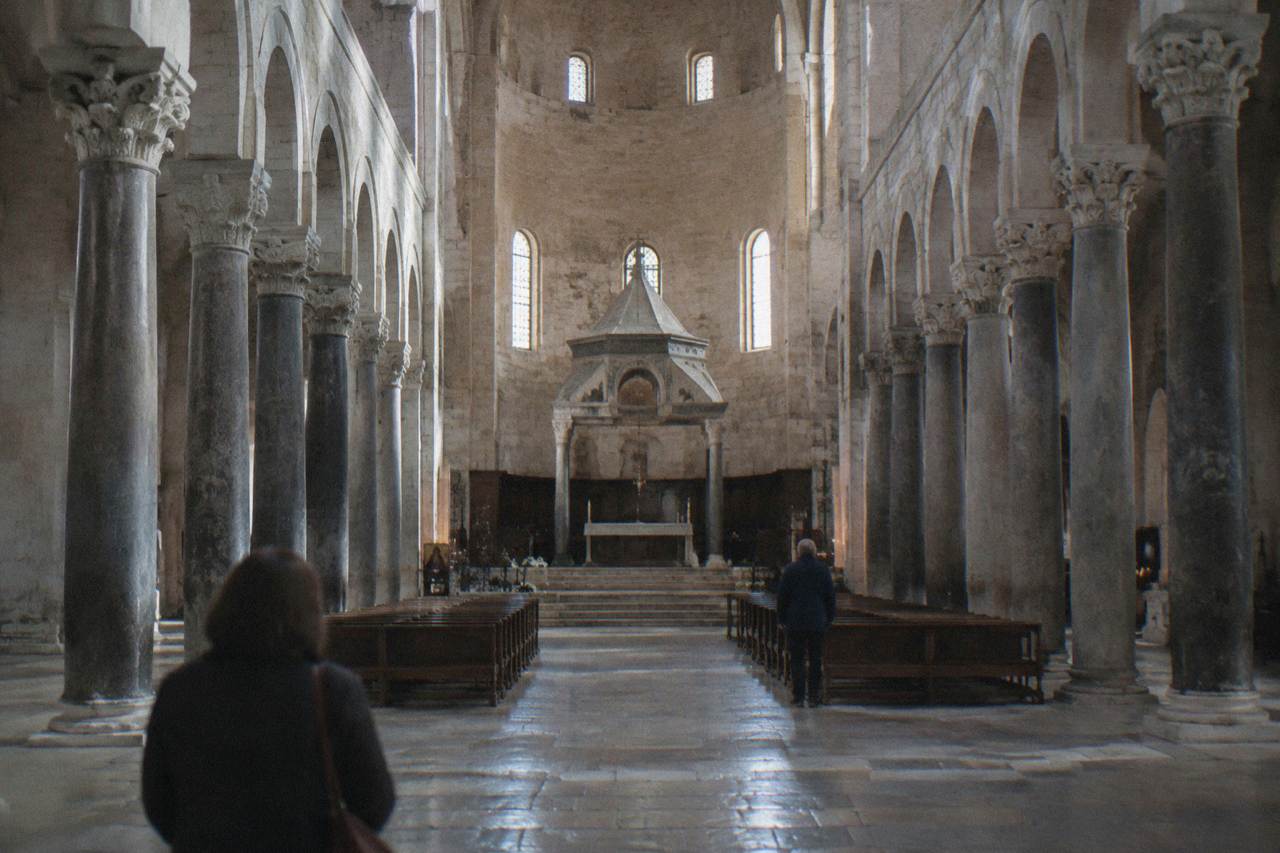
Bari is famous for the relics of Saint Nicholas, which rested at Myra for about 750 years before sailors brought them to Bari in 1087 and they were placed in the basilica's crypt in 1089. The Basilica di San Nicola is open Monday to Saturday 06:30 to 20:30 and Sunday 06:30 to 22:00, and its page mentions no admission fee.
That single story explains more of the city's fame than any other. Saint Nicholas, the bishop whose name attached itself to the figure behind Santa Claus, is the reason Bari became a pilgrimage destination, the reason the Russian Orthodox Church keeps a presence at the basilica, and the reason the city's patronal feast, the Festa di San Nicola, runs 7 to 9 May every year by tradition. The 2026 edition opened with the corteo storico at 20:00 on Thursday 7 May from piazza Federico II di Svevia, followed by the sea procession on 8 May and the manna ceremony on 9 May, as the traditional programme reports. The crypt where the relics rest can be visited from the basilica, and the question is Saint Nicholas buried in Bari gets its own treatment elsewhere on this site.
The basilica sits at the heart of Bari Vecchia, a short walk from the Cattedrale di San Sabino and Piazza del Ferrarese. The basilica's own page gives the hours above and lists no ticket, which places it among the free-to-enter landmarks of the old town; the adjoining Museo Nicolaiano is reported at opening hours of about 10:30 to 18:00 with a possible Wednesday closure, so confirm locally before planning a visit around it. Pilgrimage traffic still shapes the calendar: the feast days in early May fill the old town with processions, lights and the Sagra street stalls.
For travellers who want the story with the stones, a guided walk is the efficient format. The guided walking tour of Bari covers the basilica, the old town lanes and the seafront in one loop, and its listing carries the current price and availability. It departs from Bari itself, in the old town.
Bari Vecchia, The Swabian Castle And The Old Port
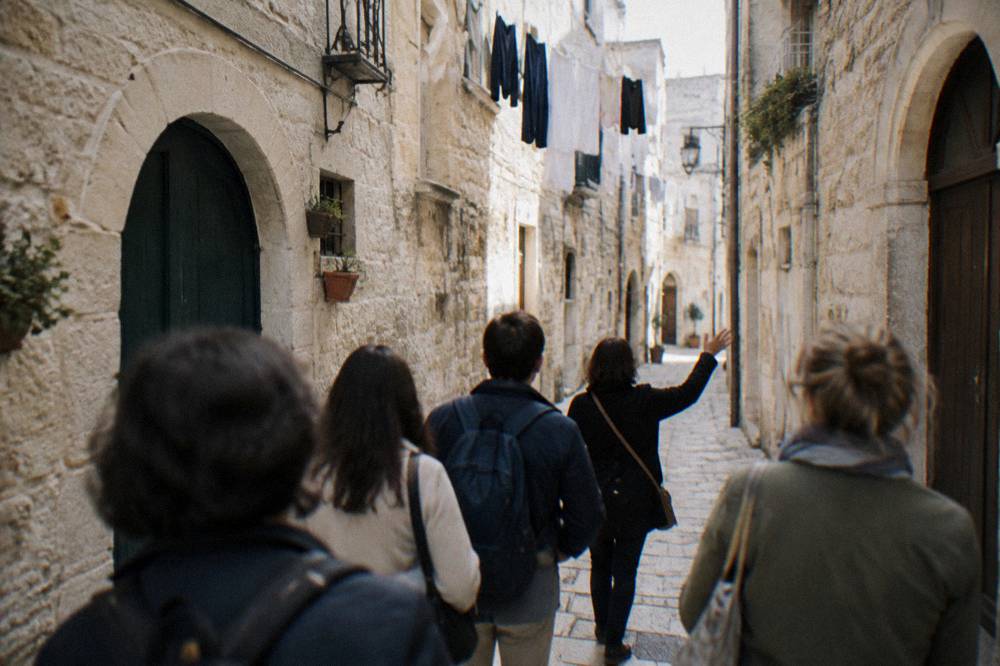
Bari Vecchia, the old town on the headland, is the city's second claim to fame, holding the Castello Normanno-Svevo, the Cattedrale di San Sabino, Piazza Mercantile and the fish market streets around Molo San Nicola. The Swabian castle is open Tuesday to Sunday 09:00 to 19:00 and costs 10 euro full, 2 euro reduced, per the Musei Puglia ticket page.
The castle's seasonal detail matters for planning: from October to March the Sunday opening shortens to 09:00 to 13:30, except the first Sunday of each month when it runs to 19:00. The same ticket page sells the Puglia Musei Card at 20 euro for all the region's state museum sites over six months, which pays off if the castle is one of several state sites on a Puglia itinerary. The castle is also listed among the state museums offering free entry on the first Sunday of the month in press coverage of the Domenica al Museo scheme, so check the current price on the official ticket page before booking around it.
Around the castle, the old town's fame is atmospheric rather than monumental: narrow lanes, the orecchiette makers of Strada Arco Basso, and the old port where the fish market sits at Molo San Nicola. The Teatro Petruzzelli and the Teatro Margherita sit just outside the walls at the top of the Murat district; the Petruzzelli, badly damaged by fire on the night of 26 to 27 October 1991 and reported to have reopened on 4 October 2009, sells guided tours at 7 euro full and 2 euro reduced, with dated slots published monthly.
Walking is genuinely the only sensible way to see this quarter, and the question is Bari a walkable city has the fuller argument. One warning repeats across every driving guide: since 1 July 2026 the Bari Vecchia limited traffic zone has a camera gate at the Castello, with plate-reading enforcement, so a rental car stays parked outside the old town.
Orecchiette, Focaccia Barese And The Street Food Of Bari
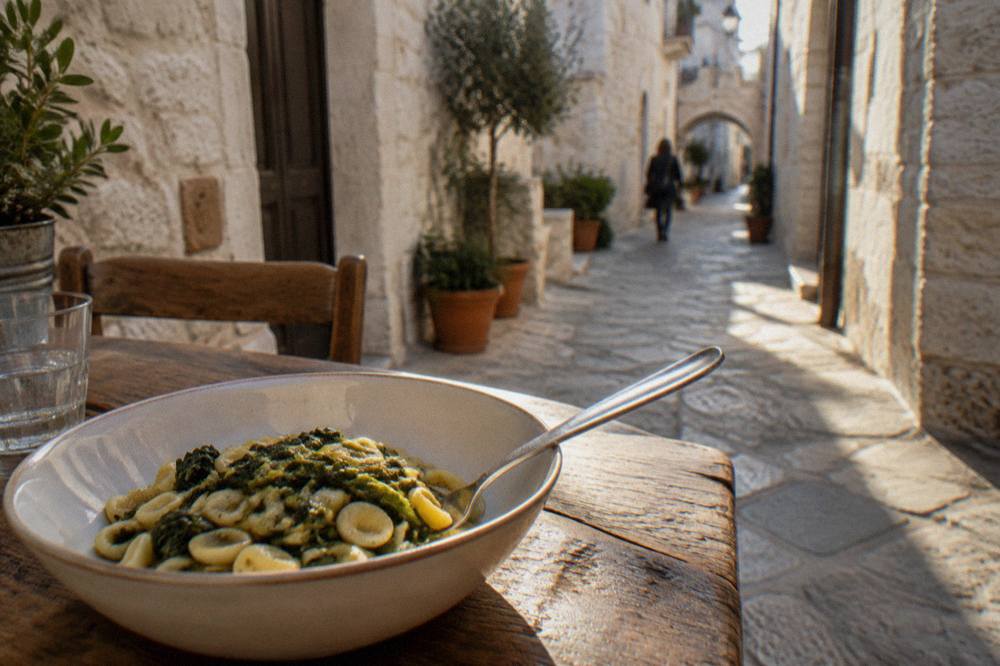
Bari is famous in Italy for its food: orecchiette, the ear-shaped pasta of Puglia, focaccia barese, panzerotti, sgagliozze and raw seafood at the fish market. These are street foods sold in the old town's lanes and the market streets near the port, and they are the reason food walks are among the city's most-booked products.
Each of those names earns one plain sentence. Orecchiette is the pasta shape of Puglia, traditionally made by hand and dried on Strada Arco Basso in Bari Vecchia. Focaccia barese is the city's tomato-and-olive-topped flatbread. Panzerotti are small fried turnovers, sgagliozze are fried polenta squares, and the raw seafood culture at the old port centres on sea urchins and shellfish. No shop, bakery or stall name carries an official source here, and no price does either, so the honest advice is to follow the queues in Bari Vecchia and check the posted prices, as with any market street.
The full answer to the food question, dish by dish, sits at what food is Bari famous for. What belongs on this page is the scale of it: the city's food walks and cooking classes are among the most-reviewed products on this site, and the cooking classes built around orecchiette and focaccia are a category of their own. A cooking class turns the street food into a sit-down lesson; a food walk keeps it on the street where it lives.
The table below gathers the famous things themselves, with the one official figure each permits.
| What Bari Is Famous For | Where It Sits | The Official Figure |
|---|---|---|
| Basilica di San Nicola and the relics of Saint Nicholas | Bari Vecchia | Open Mon to Sat 06:30 to 20:30, Sun 06:30 to 22:00, no fee mentioned |
| Castello Normanno-Svevo | Bari Vecchia, at the piazza Federico II di Svevia gate | 10 euro full, 2 euro reduced, Tue to Sun 09:00 to 19:00 |
| Festa di San Nicola | Old town and seafront | 7 to 9 May each year by tradition |
| Teatro Petruzzelli | Edge of the Murat district | Guided tours 7 euro full, 2 euro reduced |
| City beaches | Pane e Pomodoro about 2.1 km from Piazza Mercantile | Facilities and charges vary by season, confirm locally |
The Lungomare And The Adriatic Sea
Bari is famous for its seafront: the Lungomare Nazario Sauro runs along the Adriatic from the old port toward Madonnella and the city beaches, with Pane e Pomodoro about 2.1 km from Piazza Mercantile and Torre Quetta about 3.9 km. The sea reaches about 27 C in July and August, as modelled 2023 to 2025 means show, and about 14 C in February.
The promenade is the city's free showcase, and the climate table explains the season: typical values from modelled ERA5 data, 1991 to 2020, put the July mean daily maximum at 28.6 C and August at 29.1 C, with about 587 mm of rain across the year and only about 4 rain days in each of July and August. November averages 73 mm of rain and August 20 mm, so the seafront is a summer asset and a walking asset in every season. November through February, with highs of about 12 to 13 C, is when the Lungomare belongs to joggers and ferry watchers rather than swimmers.
One correction belongs here because it recurs in search results: Bari itself holds no Blue Flag beach in 2026. The 2026 Blue Flags in the Province of Bari went to Polignano a Mare and Monopoli, per the Regione Puglia announcement. That does not mean dirty water; ARPA Puglia reports Puglia first in Italy for bathing water quality for the sixth year, at 99.9 percent excellent, with 78 bathing waters monitored in the province of Bari. It means the flag question and the water question have different answers, and a beach day paired with a Blue Flag town is a short train ride away.
Bari As The Gateway To Puglia Day Trips
Bari is famous as the base for Puglia's day trips: Polignano a Mare is 33 km away by rail on the Trenitalia Bari-Lecce line and typically 25 to 35 minutes by train, Alberobello and its trulli are 56.7 km by road, Matera and its Sassi are 70.8 km across the regional border into Basilicata, and Lecce is 151.1 km, about 115 minutes by road.
That gateway role is why travellers sleep in Bari at all. The table below gathers the road distances and free-flow times computed from Piazza Mercantile. Matera needs its own note twice over: it is in Basilicata, not Puglia, and its two UNESCO-listed Sassi districts, like Alberobello's trulli, are UNESCO World Heritage sites; Castel del Monte, the octagonal UNESCO-listed castle 62.0 km away, carries a 10 euro full ticket, 2 euro reduced, open daily 10:00 to 18:45 from April to September.
| Day Trip | Distance By Road From Piazza Mercantile | Free-Flow Drive Time |
|---|---|---|
| Polignano a Mare | 37.4 km | about 36 minutes |
| Monopoli | 47.3 km | about 43 minutes |
| Alberobello | 56.7 km | about 61 minutes |
| Castel del Monte | 62.0 km | about 59 minutes |
| Matera (Sassi) | 70.8 km | about 69 minutes |
| Lecce | 151.1 km | about 115 minutes |
The rail spine matters as much as the roads: Trenitalia regional trains on the Bari-Lecce line serve Polignano a Mare, Monopoli, Ostuni and Lecce, and the Trulli Link service links Trenitalia and FSE trains toward Locorotondo, Alberobello and Martina Franca in the Valle d'Itria. Point-to-point fares sit on the operators' own tariff pages, so check the timetable and fare there before locking a plan. The fuller list of options, with the boat and bus tours that cover several towns in one day, is at good day trips from Bari.
For a first visit that pairs the city with one or two towns, the three days in Bari itinerary does exactly that, and what not to miss in Bari ranks the essentials for a shorter stay.
The walk above is the single best fit for the fame question, because it covers the basilica, the castle quarter and the old port, the three things the city's name rests on, with a local guide explaining the Saint Nicholas story on the ground.
Common Questions About What Bari Is Famous For
What is Bari in Italy famous for?
Bari, the capital of Puglia in southern Italy, is famous for the relics of Saint Nicholas in the Basilica di San Nicola, the old town of Bari Vecchia with the Castello Normanno-Svevo, its orecchiette and street food, and its role as the gateway to Polignano a Mare, Alberobello, Matera and the rest of the region.
Is Bari the city of Saint Nicholas?
Yes. The relics of Saint Nicholas were brought to Bari by sailors in 1087 and placed in the crypt of the Basilica di San Nicola in 1089, and the city celebrates its patron with the Festa di San Nicola every 7 to 9 May by tradition.
What food is Bari known for?
Orecchiette, the ear-shaped pasta of Puglia, focaccia barese, panzerotti, sgagliozze and raw seafood from the old port market. The old town's lanes around Strada Arco Basso are where the pasta is made and sold.
Is Bari worth visiting or just a transit city?
Bari is worth visiting in its own right: the basilica, the Swabian castle, the old port and the food streets sit within a walkable old town, and the city doubles as the transport hub for the coast. The fuller case is made at is Bari Italy worth visiting.
Is Bari near the Amalfi Coast or Sicily?
No. Bari is on the Adriatic coast of Puglia, in the heel of southern Italy, about 151 km by road from Lecce at the region's southern end. The Amalfi Coast is on the Tyrrhenian side, near Naples, and Sicily is a separate region further south.
Those three picks map onto the answer to this page's question: a walk through the old town the city is famous for, a food walk in Bari itself, and a street food tour in Polignano a Mare that departs from Polignano, not from Bari. Between them they cover the basilica quarter, the street food and the coast, which is most of what the city's name stands for.