Is Bari A Walkable City?
Bari is a city you can largely see on foot: Bari Vecchia, the Murat district and the Lungomare Nazario Sauro sit close together, with buses for the beaches and the airport. Here is what the distances and tickets actually say.
Bari, the capital of the Puglia region on the Adriatic coast of southern Italy, is a city built around a small headland. The old town of Bari Vecchia, the grid of the Murat district, the seafront Lungomare Nazario Sauro and the main railway station of Bari Centrale all sit within a short distance of one another, and the whole centre runs on foot traffic. The question of walkability matters here because the city rewards slow travel: the lanes of the old town are closed to most cars, the shopping streets are pedestrian in practice, and the seafront is a promenade. The honest answer is that the historic core is one of the more walkable city centres in southern Italy, while the beaches, the airport and the outer districts call for a bus, a train or a taxi. This Bari Italy Travel Guide page sets out what the measured distances and the official ticket pages say, so you can judge the walking for yourself.
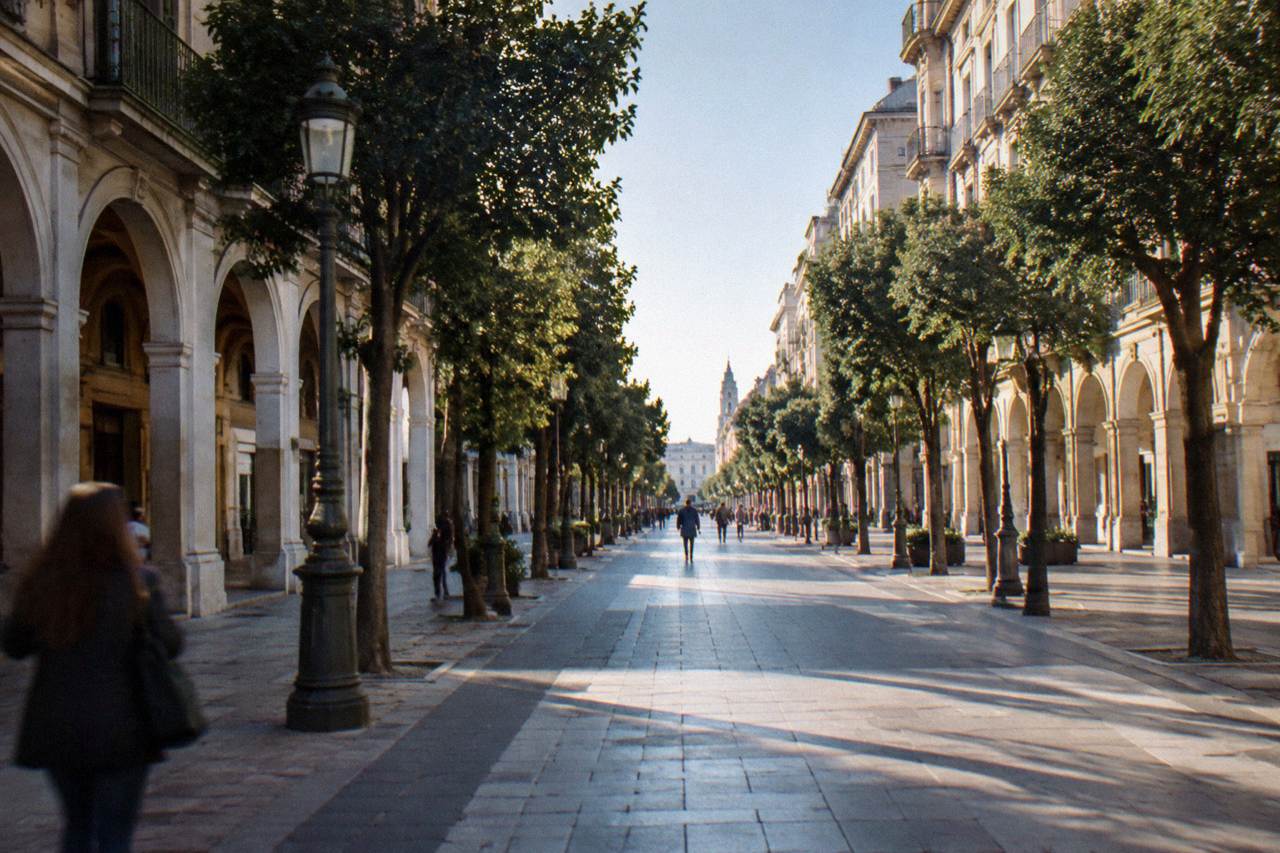
Is Bari A Walkable City?
Yes, Bari is a city whose central sights are comfortably covered on foot: Bari Vecchia, the Murat district around Via Sparano, the Lungomare Nazario Sauro and Bari Centrale station all lie within roughly a kilometre or two of Piazza Mercantile, the square at the edge of the old town. The catch is the edges: the city beaches start about 2.1 km away and the airport is 12.0 km out, so a walkable centre does not mean a walkable whole city.
The geography explains it. Bari Vecchia is a peninsula of narrow lanes between the old port at Molo San Nicola and the Swabian castle, and it has been a limited traffic zone since well before the current rules: since 1 July 2026 a camera gate at the Castello, at piazza Federico II di Svevia at piazza Massari, controls vehicle entry, with weekday windows of 09:00 to 11:00 for authorised vehicles. Cars are simply not how anyone moves through it. South of the old town, the Murat district is a grid of straight streets, with Via Sparano as the main shopping artery, and the two districts connect through Piazza del Ferrarese and Piazza Mercantile in a couple of minutes of walking. The Lungomare Nazario Sauro then runs along the sea from the old port towards Madonnella and the city beaches.
What this means in practice is a city where the classic sightseeing circuit, from the Basilica di San Nicola to the Cattedrale di San Sabino, down to Piazza Mercantile, across into the Murat grid and out onto the promenade, is a single continuous walk. The basilica's own page lists opening hours of Monday to Saturday 06:30 to 20:30 and Sunday 06:30 to 22:00, with no admission fee mentioned, and its position on the old town's highest point makes it the natural start. The Swabian castle, according to the Musei Puglia ticket page, is open Tuesday to Sunday 09:00 to 19:00 and costs 10 euro full or 2 euro reduced, and it stands at the western gate of the old town, minutes from Piazza Mercantile on foot.
Which Parts Of Bari Can You Cover On Foot?
Bari Vecchia, the Murat district, the seafront promenade and the area around Bari Centrale are all walkable from one another, with Piazza Mercantile as the natural pivot. Beyond that, Pane e Pomodoro beach lies about 2.1 km from Piazza Mercantile, Torre Quetta about 3.9 km and San Girolamo about 4.3 km to the north-west, and those distances are where walking gives way to the AMTAB bus or a taxi from a rank.
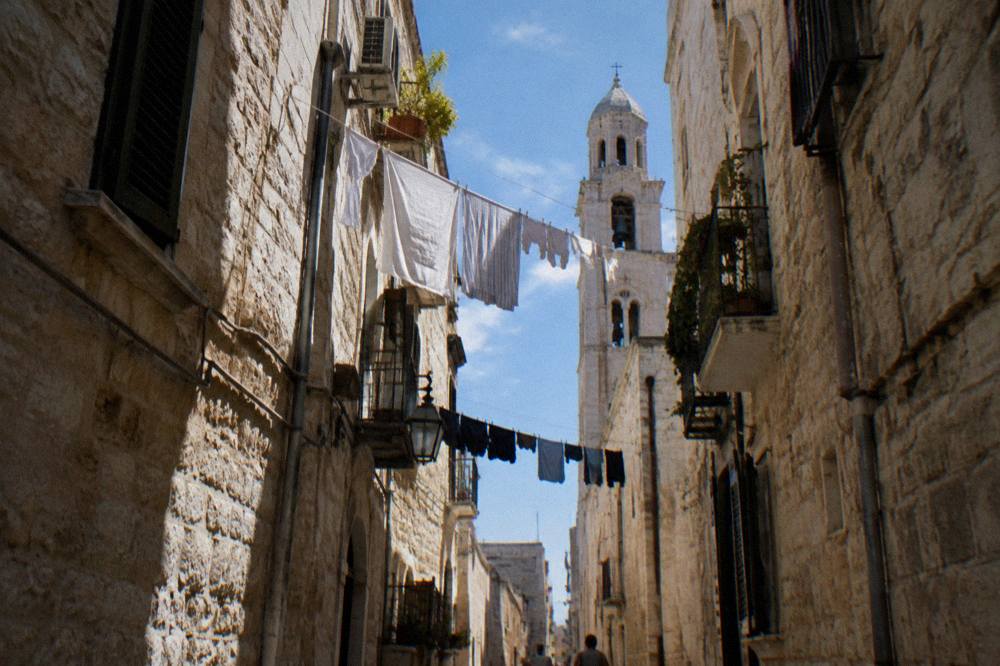
Start with the old town, because it is the part of Bari that simply cannot be seen any other way. The lanes between the basilica and the castle are a few metres wide in places, and the whole peninsula is roughly fifteen minutes from end to end. Piazza Mercantile and Piazza del Ferrarese sit on its southern edge, Strada Arco Basso, the street associated with orecchiette, the pasta shape of Puglia, runs through the middle, and the Muraglia, the old wall, looks out over the sea on the north side. A visitor who enjoys wandering could spend half a day inside these lanes without retracing a step.
The Murat district is the opposite kind of walking: straight, shaded, retail streets on a grid. Via Sparano and the streets around it connect Bari Centrale station to the edge of the old town in a walk of roughly fifteen to twenty minutes depending on pace and start point, passing the Teatro Petruzzelli on the way. The theatre offers guided tours at 7 euro full and 2 euro reduced, per the Fondazione Petruzzelli visits page, with dated slots published monthly. For a deeper look at the city's layout and history, the Bari Walk Through History tour covers the old town with a guide, and you can Check availability if a structured route appeals.
Then comes the promenade. The Lungomare Nazario Sauro runs along the Adriatic from the old port south towards Madonnella, and it is a purpose-built seafront walk with the sea on one side. Walking it end to end and back is a standard evening activity, and it links the old town to the beginning of the beach stretch towards Pane e Pomodoro. Visitors deciding how long to allow for all of this will find the how many days in Bari is enough breakdown useful, since a compact centre changes the arithmetic of trip length.
How Far Are The Main Sights From Each Other In Bari?
The central cluster is tight: the Stazione Marittima ferry terminal is about 0.5 km from Piazza Mercantile, the beaches lie between about 2.1 and 4.3 km out, and the airport is 12.0 km away by road, about 21 minutes in free-flow traffic. In other words, the old town, the Murat grid and the port all sit inside one walking zone, while everything past the promenade needs wheels.
| Place | Distance from Piazza Mercantile | How it fits a walking trip |
|---|---|---|
| Stazione Marittima (Molo San Vito) | about 0.5 km | An easy walk from the old town, useful for ferry arrivals |
| Pane e Pomodoro beach | about 2.1 km | Walkable along the seafront in under half an hour |
| Torre Quetta beach | about 3.9 km | Bus or taxi is the practical choice |
| San Girolamo beach | about 4.3 km to the north-west | Bus or taxi is the practical choice |
| Karol Wojtyla airport (BRI) | 12.0 km by road, about 21 minutes free-flow | Train, coach or taxi, never on foot |
The distances in the table are road distances computed from mapped coordinates, and they carry a caveat: free-flow traffic times are not rush-hour times. The airport row is the one that matters for arrivals. The Ferrotramviaria airport train takes 17 minutes to Bari Centrale and the single fare is 5.30 euro in the 2026 tariff, per the operator's tariff table, and the station is inside the terminal. The Tempesta shuttle coach costs 5 euro, and a taxi to a city-centre hotel is a predetermined 25 euro, per the municipal notice that suspended a driver's licence for charging double that. Once you are at Bari Centrale, you are already on the edge of the walking zone.
When Does Walking In Bari Beat The Bus?
Walking beats the bus inside the old town, the Murat district and the seafront, because those areas are close, traffic-restricted or pedestrian in character, and the AMTAB bus exists for the longer legs: the beaches, the outer districts and the airport link on line 16. An AMTAB single costs 1.00 euro, a 90-minute ticket 1.20 euro and a day ticket 2.50 euro, per the operator's fares page, so the bus is cheap, but the centre rarely needs it.
The bus earns its keep in three situations. The first is the beach run: Pane e Pomodoro is reachable on foot along the seafront, but Torre Quetta at about 3.9 km and San Girolamo at about 4.3 km are better by bus, especially in summer heat. Typical values from modelled ERA5 data, 1991 to 2020, put the July mean daily maximum at 28.6 C and August at 29.1 C, and those are averages, not peak afternoons, so a long walk back from a distant beach in August is a planning question, not a preference. The third is the arrival day with luggage, where the 25 euro fixed taxi fare from the airport to a city-centre hotel is the regulated option.
Inside the centre, the calculus reverses. Bari Vecchia is a ZTL with camera enforcement, and the perimeter parking near it is paid on working days 08:30 to 20:30, so a rental car is a liability there: the standard advice is to leave it outside the old town entirely. Anyone weighing a car against the alternatives should read the site's page on whether Bari is worth visiting alongside the practical details, and day trips are a separate question again: Polignano a Mare, Monopoli, Alberobello, Matera and Lecce all start from Bari Centrale or the bus terminal by train or coach, not on foot.
There is also a seasonal angle worth naming. Rain concentrates in the cooler months, about 73 mm in November against about 20 mm in August, typical values from modelled ERA5 data, 1991 to 2020, and rain days run near 9 a month in winter against about 4 in July and August. Winter walking is quiet and cool, with January and February highs around 12 C, so a walkable Bari is a year-round proposition, just a wetter one between November and February.
Do You Need A Car Inside Bari?
No, a car is a hindrance inside Bari: the old town is camera-controlled ZTL, the Murat district is a tight grid of narrow streets, and every central sight plus the beaches fits a combination of walking, the AMTAB bus and the 17-minute airport train at 5.30 euro. A car only pays for itself for day trips into the Valle d'Itria and Basilicata, and even those run on rail and coach alternatives from Bari Centrale.
The ZTL detail deserves emphasis for anyone renting at the airport. Since 1 July 2026 the gate at the Castello controls entry into Bari Vecchia, with weekday windows of 09:00 to 11:00 for authorised vehicles and an afternoon window of 16:00 to 18:00 reported, so a tourist in a rental car has no lawful way through in practice. The comune's own ZTL pages carry the current rules, and the safe rule of thumb is simple: park outside the old town, on the paid perimeter where charges apply on working days 08:30 to 20:30, and walk in.
For travellers who prefer a guided version of the same streets, the walking and food options below cover the centre in the company of a local guide, which suits visitors who want context with their kilometres.
A final word on footwear and timing. The old town's lanes are stone, the promenade is flat, and the Murat grid is pavement, so ordinary walking shoes serve. The classic Bari walking day moves through the old town in the morning, crosses to Via Sparano at midday, and takes the Lungomare Nazario Sauro in the evening when the promenade fills, and that whole arc fits inside the distances in the table above without a single ticket.
Common Questions About Walking In Bari
Is Bari a walkable city?
Yes. Bari Vecchia, the Murat district, the Lungomare Nazario Sauro and Bari Centrale all sit within roughly one to two kilometres of Piazza Mercantile, so the central sightseeing circuit works entirely on foot. The beaches start about 2.1 km out and the airport is 12.0 km away, and those legs are better by bus, train or taxi.
Can you walk from Bari Centrale station to the old town?
Yes. The station stands at the northern edge of the Murat grid, and the walk down Via Sparano and the surrounding streets to Piazza Mercantile and Bari Vecchia takes roughly fifteen to twenty minutes at a normal pace, all on city pavements.
Can you walk to the beaches from central Bari?
Pane e Pomodoro, about 2.1 km from Piazza Mercantile, is a realistic walk along the seafront. Torre Quetta at about 3.9 km and San Girolamo at about 4.3 km are usually better on the AMTAB bus, whose single ticket costs 1.00 euro per the operator's fares page.
Is Bari Vecchia pedestrianised?
Bari Vecchia is a limited traffic zone rather than a full pedestrian area. Since 1 July 2026 a camera gate at the Castello controls vehicle entry, with weekday windows of 09:00 to 11:00 for authorised vehicles, and the lanes are effectively a walking environment. Do not drive into it in a rental car.
Is Bari flat enough for easy walking?
Largely yes. The Murat district, the promenade and the seafront are flat, and Bari Vecchia is gently uneven stone lanes around one low rise where the Basilica di San Nicola stands. It is not a city of stairs or hills on the standard sightseeing route.
Do you need walking shoes for Bari?
Ordinary comfortable shoes are enough. The surfaces are stone lanes in the old town, pavements in the Murat grid and a flat promenade, and the standard walking day stays within a couple of kilometres of Piazza Mercantile.
