Is Bari, Italy Worth Visiting?
Yes, Bari is worth visiting: the capital of Puglia pairs an old town on the Adriatic with cheap food, real city life and easy day trips to Polignano a Mare, Alberobello and Matera.
Bari is the capital of the Puglia region of southern Italy, a coastal city of about 316,000 residents on the Adriatic Sea, and it sits on the rail and road routes that link the region's famous towns: Polignano a Mare, Monopoli, Alberobello, Locorotondo, Ostuni, Trani and Lecce are all reachable from here, and Matera, just across the regional border in Basilicata, is about 71 km away by road. It is not on the Amalfi Coast and it is not in Sicily, two mixups that still shape expectations. The honest answer to whether it is worth your time is yes, with a reason attached, and the rest of this page sets out what that reason is, using the opening hours, prices and distances the official pages publish.
Is Bari, Italy Worth Visiting?
Yes, Bari is worth visiting if you want a working southern Italian city with a genuinely old centre, cheap and excellent street food, a seafront promenade, and a transport hub position for day trips, rather than a resort. The basilica is free, the city airport is 17 minutes from the main station by train, and Trenitalia regional trains reach Polignano a Mare, 33 km away, in about 25 to 35 minutes.
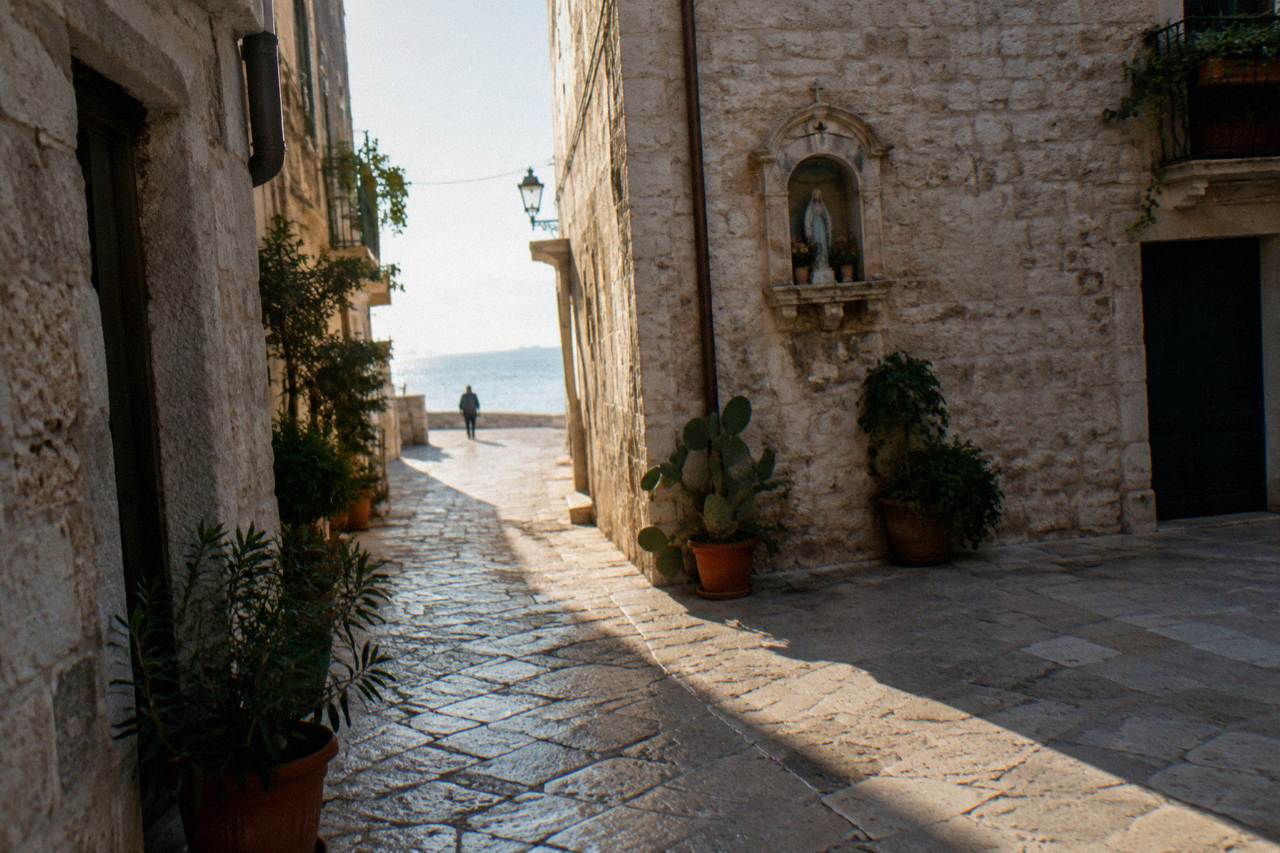
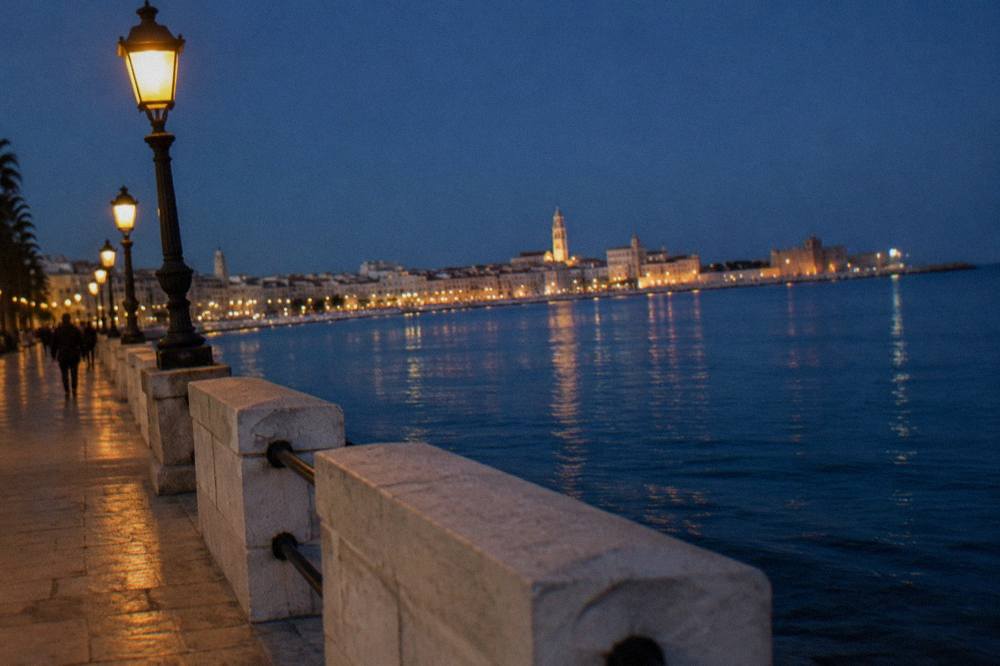
That is the editorial judgement, and the reason is structural. Bari gives you the two things the Puglia coast towns cannot: an old town that people actually live in, and a base. Bari Vecchia, the old town on the headland, holds the Basilica di San Nicola, the Cattedrale di San Sabino, the Castello Normanno-Svevo and the squares Piazza Mercantile and Piazza del Ferrarese, all within a short walk of each other. South of it the Murat district is a grid of shopping streets around Via Sparano, and the Lungomare Nazario Sauro runs along the sea. Every big name in the region is a day trip from Bari Centrale station or a coach ride away, which is why the question of how many days to give the city matters more than the question of whether to go: for that, see how many days in Bari is enough.
It helps to know what Bari is famous for before judging it: a saint's relics, orecchiette pasta, focaccia barese and a working port, as this guide to what Bari is famous for sets out. It is a city of churches, markets and sea air, not a curated museum piece, and the price level reflects ordinary Italy rather than a honeypot. For a fuller breakdown of costs, see is Bari in Italy expensive.
What Makes Bari Vecchia Worth The Trip?
Bari Vecchia is worth the trip because it concentrates a basilica open daily from 06:30, a castle that charges 10 EUR full and 2 EUR reduced, a street where orecchiette pasta is made by hand, and the old port, all inside a peninsula you can cross on foot in under half an hour. The basilica's own page lists Monday to Saturday 06:30 to 20:30 and Sunday 06:30 to 22:00, with no admission fee mentioned.
The Basilica di San Nicola holds the relics of Saint Nicholas, which the basilica's own history page says rested at Myra for about 750 years before sailors brought them to Bari in 1087, and they were placed in the crypt in 1089. That single fact explains both the church and the city's annual feast in early May, 7 to 9 May by tradition. The Castello Normanno-Svevo is open Tuesday to Sunday 09:00 to 19:00 per the Musei Puglia ticket page, with Sunday hours of 09:00 to 13:30 from October to March except the first Sunday of the month, and the same page sells the Puglia Musei Card at 20 EUR for all regional state museum sites for six months. Strada Arco Basso is the street associated with hand-made orecchiette, the pasta shape of Puglia; the makers work to their own rhythms, so treat the street as a stroll rather than a scheduled show.
A guided walk is the efficient way to absorb the old town's layers when your time is short. The history walk above departs from Bari and covers the old town's churches and squares with a licensed guide; the street food walk, also from Bari, pairs the lanes with the city's eating culture; and the Castellana caves trip, which departs from Polignano, combines the famous cave system with free time in that town. The basilica is free to enter, so a walk plus the castle ticket plus lunch from a focaccia counter is a complete and inexpensive day. If you would rather move at your own pace, the same ground works self-guided, and the Bari Vecchia guide maps the squares and churches in order.
How Easy Is It To Reach Bari And Get Around?
Bari is one of the easier Italian cities to reach and walk: the Karol Wojtyla airport (BRI) at Palese is 12.0 km and about 21 minutes by road from Piazza Mercantile, the Ferrotramviaria train covers the airport to Bari Centrale in 17 minutes for 5.30 EUR, and a taxi to a city-centre hotel is a predetermined 25 EUR. Once in the centre, the old town, the Murat district and the seafront are all walkable.
The airport station sits inside the terminal, and Ferrotramviaria lets you tap a contactless card at the gate under its "Paga e Via" scheme, still 5.30 EUR on the 2026 tariff. The Tempesta shuttle coach costs 5 EUR bought on board or in the Cotrap app, and AMTAB city buses charge 1.00 EUR for a single ride, 1.20 EUR for 90 minutes or 2.50 EUR for a day ticket. The city's position is the real asset: Trenitalia regional trains on the Bari-Lecce line serve Polignano a Mare at 33 km, Monopoli at 41 km, Ostuni at 75 km and Lecce at 150 km, and the Trulli Link service connects the railway to Locorotondo, Alberobello and Martina Franca in the Valle d'Itria. One warning for drivers: Bari Vecchia is a limited traffic zone with a camera gate at the Castello in force since 1 July 2026, so do not drive into it. Park outside and walk in.
Two practical facts complete the picture. The tourist tax runs 1.50 to 4.00 EUR per person per night by accommodation category, for a maximum of four consecutive nights per calendar year, collected by your host. And the climate, using typical values from modelled ERA5 data, 1991 to 2020, is mild in winter and warm in summer, which shapes when to come.
| Month | Typical daily high | Typical daily low | Rain |
|---|---|---|---|
| January | 12.1 C | 7.3 C | 60 mm |
| April | 17.5 C | 11.2 C | 54 mm |
| July | 28.6 C | 22.0 C | 22 mm |
| August | 29.1 C | 22.4 C | 20 mm |
| October | 21.1 C | 15.6 C | 63 mm |
| November | 16.9 C | 12.0 C | 73 mm |
November carries 73 mm of rain and August 20 mm, with about 4 rain days in July and August; the sea sits around 27 C in July and August, about 22 C in October. For a month-by-month verdict, see what is the best month to visit Bari.
Which Day Trips Work From Bari?
Polignano a Mare, Monopoli, Alberobello, Locorotondo, Ostuni, Trani, Castel del Monte, the Grotte di Castellana, Lecce and Matera all work as day trips from Bari, at road distances from Piazza Mercantile of roughly 37.4 km to 151.1 km and free-flow drive times from about 36 minutes to about 115 minutes. Alberobello and the Sassi di Matera are both UNESCO World Heritage sites, and Castel del Monte has been inscribed since 1996.
| Day trip | Road distance from Piazza Mercantile | Drive time (free-flow) | Verified entry cost |
|---|---|---|---|
| Polignano a Mare | 37.4 km | about 36 min | none found |
| Monopoli | 47.3 km | about 43 min | none found |
| Alberobello | 56.7 km | about 61 min | none found for the trulli districts |
| Trani (Swabian castle) | 47.2 km | about 45 min | 8 EUR full, 2 EUR reduced |
| Castel del Monte | 62.0 km | about 59 min | 10 EUR full, 2 EUR reduced |
| Grotte di Castellana | 43.1 km | about 47 min | full route 25 EUR, partial 22 EUR |
| Matera (Sassi), in Basilicata | 70.8 km | about 69 min | none found |
| Lecce | 151.1 km | about 115 min | none found |
The pattern is clear: the coastal pair and the cave towns sit within an hour of the city, while Lecce, at about 151 km, is a long day or an overnight. Trains beat driving for the coast, since the Bari-Lecce line stops at Polignano, Monopoli and Ostuni; the Trulli Link handles the Valle d'Itria; and FAL runs the rail line from Bari toward Matera via Altamura and Gravina in Puglia, with its own timetable boards to check. Castel del Monte is open daily, 10:00 to 18:45 from 1 April to 30 September and 09:00 to 17:45 from 1 October to 31 March, last entry 45 minutes before closing. The Grotte di Castellana's own page prices the full 3 km route at 25 EUR for ages 15 and over and the 1 km partial route at 22 EUR. For a fuller rundown, see good day trips from Bari, and for the two headliners compare is Alberobello Italy worth visiting against is Matera worth it, remembering Matera is in Basilicata.
Booked day trips trade a little independence for not thinking about timetables: the picks above cover an old town history walk from Bari, a street food walk from Bari, and a cave-and-Polignano combination that departs from Polignano itself. Ferries add another layer, since Adria Ferries sails Bari to Durres daily year-round in about 8 hours, though that is a journey in itself rather than a day trip.
Common Questions About Visiting Bari
Is Bari, Italy worth visiting?
Yes, as a city break with a real old town, strong food and a day-trip base. The basilica is free, the castle is 10 EUR, and Polignano a Mare is 33 km away by rail. If you want a beach resort only, the coast towns serve that better.
Is Bari walkable?
Yes. Bari Vecchia, the Murat district and the Lungomare Nazario Sauro are compact and connected on foot; the full answer is in the site's walkability page, and buses at 1.00 EUR a ride cover longer hops.
How many days does Bari need?
One day covers the old town, the castle and the seafront; two or three days let you add museums and a first day trip without rushing. The site's dedicated article breaks down one-, two- and three-day plans.
Is Bari safe at night?
No crime statistic for Bari is printed on this site. The practical advice is ordinary city sense: keep valuables out of back pockets, zip bags on crowded buses, check posted prices and the itemised bill. The emergency number in Italy is 112.
Does Bari have a beach?
Yes, city beaches: Pane e Pomodoro about 2.1 km from Piazza Mercantile, Torre Quetta about 3.9 km and San Girolamo about 4.3 km. Bari itself has no Blue Flag in 2026; the province's Blue Flags are Polignano a Mare and Monopoli. Facilities and charges vary by season, so confirm locally.
The verdict stands on the evidence: a free basilica open from early morning, a castle costing 10 EUR to enter, and half of Puglia's famous towns within an hour's radius. Bari rewards the traveller who wants a city with the region attached, and that, per Bari Italy Travel Guide's whole premise, is exactly what it delivers.
