What Is The Best Month To Visit Bari?
May and September are the strongest months to visit Bari, Puglia's coastal capital, with warm days, thin crowds and full day-trip access. Here is the month-by-month case.
Bari, the capital of Puglia on the Adriatic coast of southern Italy, has a Mediterranean climate with dry summers, mild winters and about 587 mm of rain a year, so the honest answer to the timing question is that the city rewards two windows more than any single month: May and September. May carries the Festa di San Nicola, the city's patronal feast, warm sea air without peak-season heat, and reliable train connections to Polignano a Mare, Monopoli and the Valle d'Itria. September brings sea temperatures still around 22 C in October's shoulder, thinner crowds after the August peak, and the Fiera del Levante trade fair. This page sets out the month-by-month evidence, using typical values from modelled ERA5 data, 1991 to 2020, plus the event calendar, so you can match the month to what you actually want from the city. For a broader city primer, see things to do in Bari.
What Is The Best Month To Visit Bari?
May is the single best month to visit Bari, and September is a close second. May pairs a mean daily maximum of 21.6 C with only 35 mm of rain across about seven rain days, and it carries the Festa di San Nicola, the city's patronal feast, from 7 to 9 May. September offers 25.1 C mean daily maximum and 53 mm of rain, warm sea for swimming, and thinner crowds than July and August, whose mean daily maxima reach 28.6 C and 29.1 C.
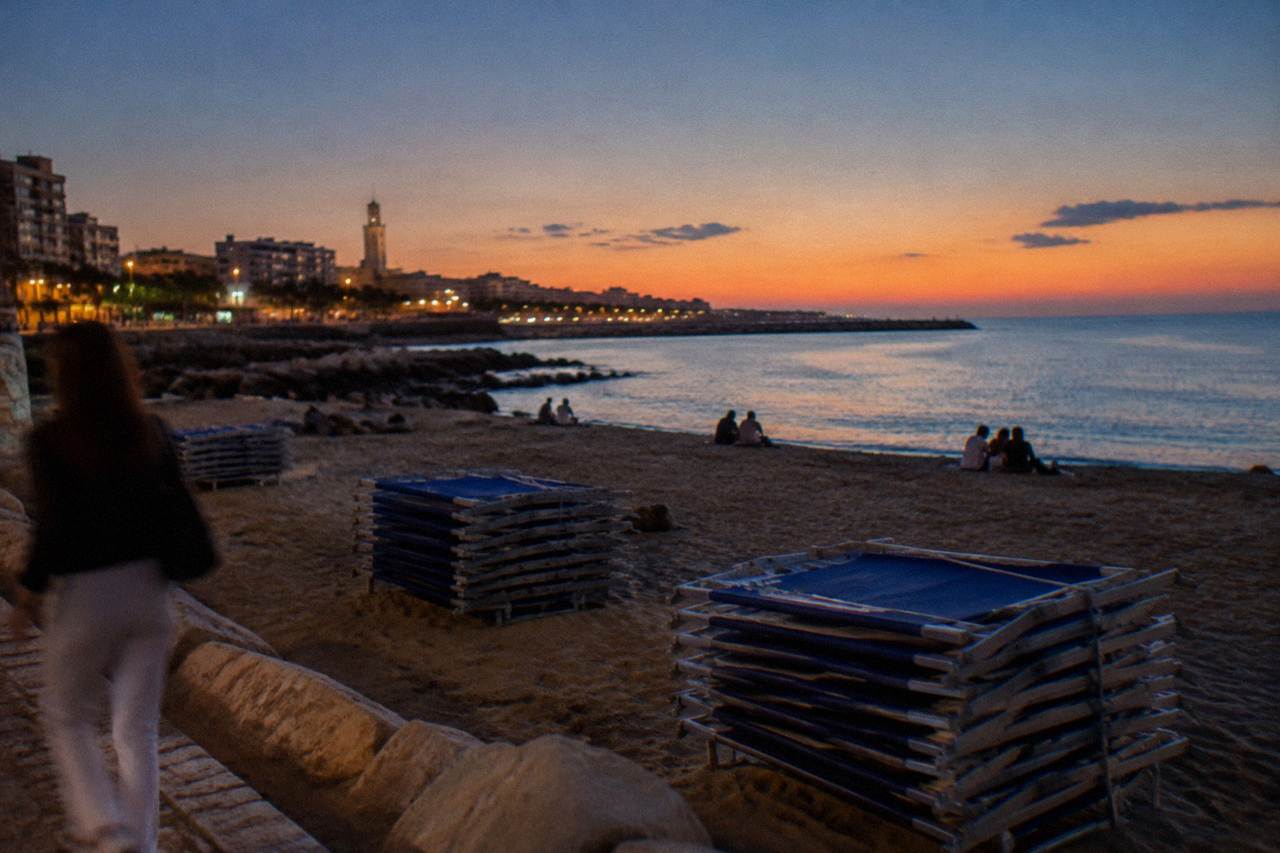
Both months sit in the shoulder season, which in Bari means something specific. The city beaches, Pane e Pomodoro about 2.1 km from Piazza Mercantile and Torre Quetta about 3.9 km, are usable but not yet at peak demand in May, and still swimmable in late September, when the sea holds roughly the warmth it will keep into October, about 22 C as a modelled mean. The old town, Bari Vecchia, is walkable in both months without the heat load of August, when the mean daily minimum itself stays at 22.4 C, which means nights that give little relief.
May also has the strongest single event of the Bari year. The Festa di San Nicola runs 7 to 9 May by tradition: in the 2026 edition the corteo storico left piazza Federico II di Svevia at 20:00 on Thursday 7 May, with the sea procession on 8 May and the manna ceremony on 9 May reported in the traditional programme. The feast fills Bari Vecchia with a historical procession, lights and stalls. It is the one moment when the calendar, the weather and the setting all point the same way, and it is why May edges September.
The trade-off to weigh: September has warmer sea and the Fiera del Levante, while May has the feast and slightly drier ground. If your trip is built around swimming, lean September. If it is built around the city itself, lean May.
How Does The Bari Climate Behave Month By Month?
Bari's climate, on typical values from modelled ERA5 data, 1991 to 2020, moves from mean daily maxima of 12.1 C in January and 12.5 C in February to 28.6 C in July and 29.1 C in August, with rainfall running from 20 mm in August to 73 mm in November. The rain-day count ranges from about 4 days in July and August to about 9.6 in December, so the year splits into a dry, warm half and a mild, wetter half.
| Month | Mean daily max C | Mean daily min C | Rain mm | Rain days (1 mm+) |
|---|---|---|---|---|
| Jan | 12.1 | 7.3 | 60 | 9.5 |
| Feb | 12.5 | 7.2 | 58 | 9.4 |
| Mar | 14.7 | 8.8 | 58 | 9.4 |
| Apr | 17.5 | 11.2 | 54 | 9.0 |
| May | 21.6 | 15.3 | 35 | 6.9 |
| Jun | 25.9 | 19.5 | 28 | 4.8 |
| Jul | 28.6 | 22.0 | 22 | 4.1 |
| Aug | 29.1 | 22.4 | 20 | 4.3 |
| Sep | 25.1 | 19.1 | 53 | 7.6 |
| Oct | 21.1 | 15.6 | 63 | 7.9 |
| Nov | 16.9 | 12.0 | 73 | 8.9 |
| Dec | 13.2 | 8.7 | 63 | 9.6 |
Read the table for what it actually says rather than for generalities. November carries 73 mm of rain against August's 20 mm, and October is wetter than April at 63 mm against 54 mm, which matters if you are choosing between the two shoulder seasons. The rain-day column is the planning column: about 7.9 rain days in October against 6.9 in May is the difference between a month that interrupts you and one that mostly does not. The full picture, including what the figures mean for packing, is in the Bari weather guide.
Winter is not a write-off. January and February highs average about 12 C, mild by northern European standards, and the museums keep full hours: the Castello Normanno-Svevo is open Tuesday to Sunday 09:00 to 19:00, and from October to March its Sunday opening is 09:00 to 13:30 except the first Sunday of the month, when it runs 09:00 to 19:00. A ticket costs 10 EUR full and 2 EUR reduced, per the Musei Puglia ticket page. Winter visitors get lower demand and shorter lines, at the price of cool evenings and a damper month.
For the shoulder months, a guided walk is the activity that carries the least weather risk, and one of the best fits is an underground archaeology tour of Bari Vecchia, which runs below street level and works in heat, drizzle or glare alike.
The three picks above cover the month-agnostic core of a Bari visit: the layers under the old town, the street food above it, and the two UNESCO day trips beyond it. Their dates and prices render on the operator's live listing, so check availability for your exact month rather than planning around fixed schedules.
What Is The Best Month For Swimming And The Beaches Near Bari?
For swimming, July and September are the strongest months: the sea temperature is about 27 C in July and August as a modelled 2023 to 2025 mean, and about 22 C in October, while the air temperature is more comfortable in September, at a 25.1 C mean daily maximum against August's 29.1 C. Bari's own city beaches have no Blue Flag in 2026; the province's Blue Flags are at Polignano a Mare and Monopoli, both easy day trips.
The honest sequence is this. June warms the air to a 25.9 C mean daily maximum but the sea lags behind. July and August give the warmest water and the heaviest demand, with August packing the calendar of Italians on holiday and pushing the old town to its summer density. September keeps a swimmable sea with 7.6 rain days, and October still offers about 22 C water before the season closes. Facilities and charges at the city beaches, Pane e Pomodoro, Torre Quetta and San Girolamo, about 4.3 km north-west of Piazza Mercantile, vary by season and should be confirmed locally.
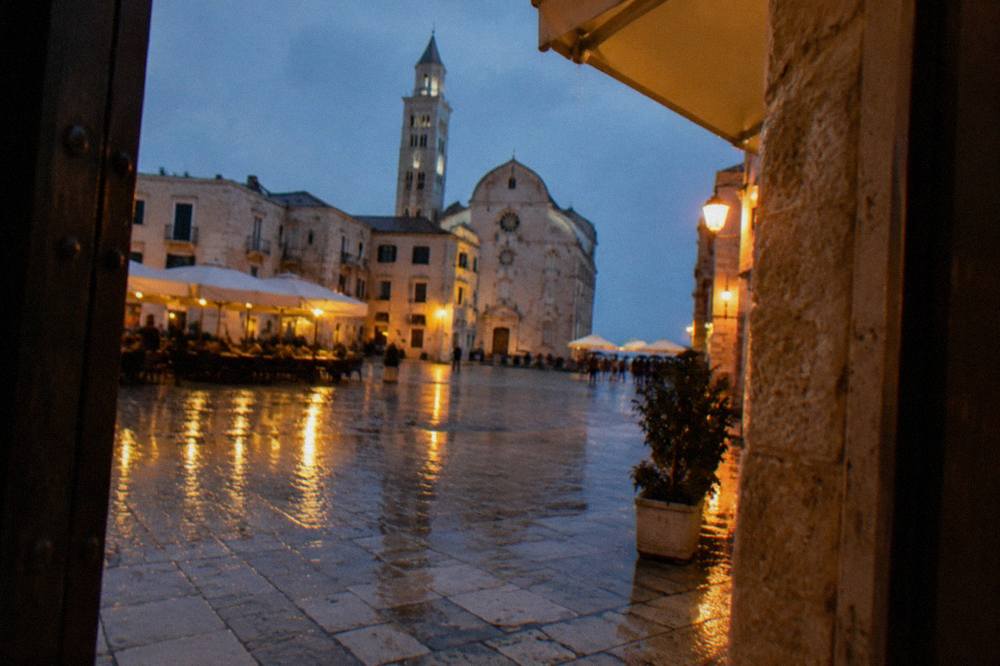
If Blue Flag water quality is your benchmark, plan a beach day around the trains: Trenitalia regional trains on the Bari-Lecce line serve Polignano a Mare at 33 km and Monopoli at 41 km, with the Polignano leg typically 25 to 35 minutes, reported by timetable aggregators. Boats along the Polignano cliffs leave from Polignano itself, not from Bari's waterfront, so a cave-boat morning pairs naturally with a beach afternoon there. Bathing water across the region is strong: ARPA Puglia reports Puglia first in Italy for the sixth year, with 99.9 percent of waters rated excellent and 78 bathing waters monitored in the province of Bari.
Which Months Have The Biggest Crowds And Events In Bari?
August is the peak month for crowds and heat, with a 29.1 C mean daily maximum and the Italian holiday season at full tilt, while May carries the city's signature event, the Festa di San Nicola from 7 to 9 May, and late March brings the Bif&st film festival, whose 17th edition opened on 21 March 2026. September adds the Fiera del Levante.
The event rhythm matters more in Bari than in towns with a single high season. Early May belongs to San Nicola: the relics were brought to Bari by sailors in 1087 and placed in the crypt in 1089, and the feast re-enacts that history with the corteo storico through Bari Vecchia. The Basilica di San Nicola is open Monday to Saturday 06:30 to 20:30 and Sunday 06:30 to 22:00, with no admission fee mentioned on its page, so a May visit can combine the feast with an unhurried look inside. The full index of guides sits on Bari Italy Travel Guide.
Late March belongs to Bif&st, the Bari International Film Festival, and late September to the Fiera del Levante, the trade fair on the seafront. Both pull visitors and both sit in months whose weather is workable: March averages a 14.7 C mean daily maximum, September 25.1 C. The Teatro Petruzzelli season adds an autumn layer, with guided tours at 7 EUR full and 2 EUR reduced on dated slots published monthly by the foundation.
Crowd logic follows the calendar in a straight line. July and August bring the density; the Swabian castle and the Basilica absorb it, but the lanes of Bari Vecchia feel it first. June is the quiet compromise: 25.9 C mean daily maximum, 28 mm of rain and only 4.8 rain days, before the August peak arrives. If you cannot do May or September, June is the month the table quietly recommends.
What Is The Best Month For Day Trips From Bari?
May, June and September are the best months for day trips from Bari, because the rail and bus network runs full service while the inland towns are not yet at summer temperatures; Polignano a Mare sits 33 km and Ostuni 75 km down the Bari-Lecce rail line, Alberobello and Locorotondo are reached through the Valle d'Itria, and Castel del Monte is about 62 km and 59 minutes by road from Piazza Mercantile.
The geography is generous. Trenitalia regional trains run the coastal line to Monopoli, Ostuni and Lecce, 150 km out. The Trulli Link service connects Trenitalia and FSE services toward Locorotondo, Alberobello and Martina Franca, with the FSE leg reported at 5.90 EUR on top of the rail fare. The line from Bari runs through Altamura and Gravina in Puglia to Matera, which is in Basilicata, about 71 km by road. Check each operator's timetable for the day you travel.
Two inland destinations justify the shoulder-season timing. Castel del Monte, the octagonal castle inscribed by UNESCO in 1996, costs 10 EUR full and 2 EUR reduced, open daily 10:00 to 18:45 from 1 April to 30 September and 09:00 to 17:45 from 1 October to 31 March, with last entry 45 minutes before closing: in July and August the inland drive and the unshaded terraces make the midday visit heavy going, and the same logic applies to the trulli lanes of Alberobello. The Grotte di Castellana, 43.1 km and about 47 minutes by road, charge 25 EUR for the full 3 km route, about 100 minutes, and 22 EUR for the partial 1 km route: the cave interior holds a constant temperature, but the queue for entry builds in peak summer.
Winter day trips still work, with shorter daylight and a damper skyline. The Swabian castle of Trani, 47.2 km away, is open Monday to Saturday 08:30 to 19:30 and Sunday 08:30 to 13:30, at 8 EUR full and 2 EUR reduced, and the Egnazia museum and park charges 10 EUR on the same weekday pattern. For a fuller survey of the options, see good day trips from Bari.
What Is The Best Month To Visit Bari For Value And Fewer Crowds?
April, October and the winter months from November to February are the quietest times in Bari: October averages a 21.1 C mean daily maximum with 63 mm of rain, November 16.9 C with 73 mm, and the city's museums, from the Swabian castle to the Pinacoteca Metropolitana Corrado Giaquinto, run their full schedules through the low season.
October is the strongest of the value months because it keeps sea warmth, about 22 C, alongside post-peak demand. The tourist tax, the imposta di soggiorno, does not change by season: it runs 1.50 to 4.00 EUR per person per night by accommodation category, for a maximum of 4 consecutive nights per calendar year, collected by your accommodation, so timing does not change that line of the budget. Seasonal pricing at hotels and apartments is set by each property, and rates are not published here.
The winter case is about the city rather than the coast. Bari Vecchia, the Murat district's shopping grid around Via Sparano, and the museums fill a two- or three-day stay comfortably, and the climate table shows why it works: December highs average 13.2 C, mild for sightseeing even with 63 mm of rain in the month. Whether two days or three is right is a separate question, answered in how many days in Bari is enough, and the wider case for the city in the off-season is made in is Bari worth visiting.
One caveat for the quiet months: the Dubrovnik ferry line, Jadrolinija's seasonal line 54, was reported interrupted for technical reasons in autumn 2026, so any Croatia plan needs confirmation that the line is operating before you build a trip on it. Ferry schedules to Albania and Greece, including Adria Ferries' daily Bari to Durres sailing of about 8 hours, run all year, but confirm sailing times before you book anything.
Whichever month you settle on, those three picks translate well across the calendar: the underground walk ignores the weather, the street food tour belongs to the evening lanes of Bari Vecchia, and the Alberobello and Matera coach trip from Bari does the long inland distances for you. Availability changes with the season, so the live listing is the authority on dates.
A final framing for the decision. Pick May for the feast and the balance of warmth and dry ground. Pick September for the sea and the softer light. Pick June if both are taken, and October if you would trade some rain days for empty lanes. Every other month still gives you a working city with its museum doors open and the trains running down the coast, which is the quiet argument for Bari as a year-round base in the first place.
Common Questions About The Best Month To Visit Bari
What is the best month to visit Bari?
May is the best single month: a 21.6 C mean daily maximum, 35 mm of rain, about seven rain days, and the Festa di San Nicola from 7 to 9 May. September is the close alternative, with warmer sea and thinner crowds after August.
Is August too hot for Bari?
August has a mean daily maximum of 29.1 C and a mean daily minimum of 22.4 C, with only 20 mm of rain in the month, so nights give little relief. Sightseeing is still possible, but July and August are the months to plan around water and shade.
Can you swim in Bari in October?
The sea temperature is about 22 C in October as a modelled 2023 to 2025 mean, so swimming is realistic early in the month. Air temperature averages a 21.1 C mean daily maximum, with 63 mm of rain across the month.
What is the rainiest month in Bari?
November carries 73 mm of rain and about 8.9 rain days of 1 mm or more, on typical values from modelled ERA5 data, 1991 to 2020. August carries the least, at 20 mm with about 4.3 rain days.
When is the Festa di San Nicola held?
The feast runs early May, 7 to 9 May, by tradition. In the 2026 edition the corteo storico left piazza Federico II di Svevia at 20:00 on Thursday 7 May, with the sea procession on 8 May and the manna on 9 May reported in the traditional programme.
Is winter a bad time to visit Bari?
No. January and February highs average about 12 C, museums such as the Swabian castle keep full winter schedules, and demand is low. Expect about 9.5 rain days in January and cooler evenings, and plan around the city rather than the beaches.
