Giovinazzo From Bari: A Quiet Old Town By The Train Line
Giovinazzo sits about 22 km north of Bari on the Adriatic coast, a walled old town of lanes and a harbour that makes an easy half-day escape from the Puglian capital. This guide covers how the trip works, what the town offers and how it compares with Molfetta, Trani and Polignano a Mare.
Short answer
Giovinazzo is about 22 km and 23 minutes by road from Piazza Mercantile in Bari, on the coast north of the city. The town centres on a compact walled old town beside a small harbour, and it works best as a half-day trip combined with another north-coast stop such as Molfetta or Trani.
Giovinazzo, the small coastal town about 22 km north of Bari on the Adriatic, is one of the quietest day-trip options on this stretch of the Puglian coast. Bari, the regional capital, holds the Basilica di San Nicola, the Castello Normanno-Svevo and the grid streets of the Murat district, while Polignano a Mare, Monopoli, Alberobello and Matera sit further afield to the south and inland. Giovinazzo belongs to the northern run of coast, the direction fewer itineraries take, and that is its main appeal for anyone based in Bari who wants a short, unhurried outing. The card in the Bari Italy Travel Guide day-trip series treats it as a half-day stop that pairs naturally with Molfetta or Trani rather than a destination that fills a full day on its own.
Where Is Giovinazzo And What Kind Of Town Is It?
Giovinazzo is a small seaside town on the Adriatic coast of Puglia, about 22 km and 23 minutes by road north of Piazza Mercantile in central Bari. It lies on the stretch of coast between Bari and Molfetta, facing east over the sea. The town centres on a walled old core of narrow lanes beside a small harbour, with a seafront promenade and a more modern spread of streets around it. Its scale is modest compared with Bari itself, which counts about 316,000 residents in the comune.
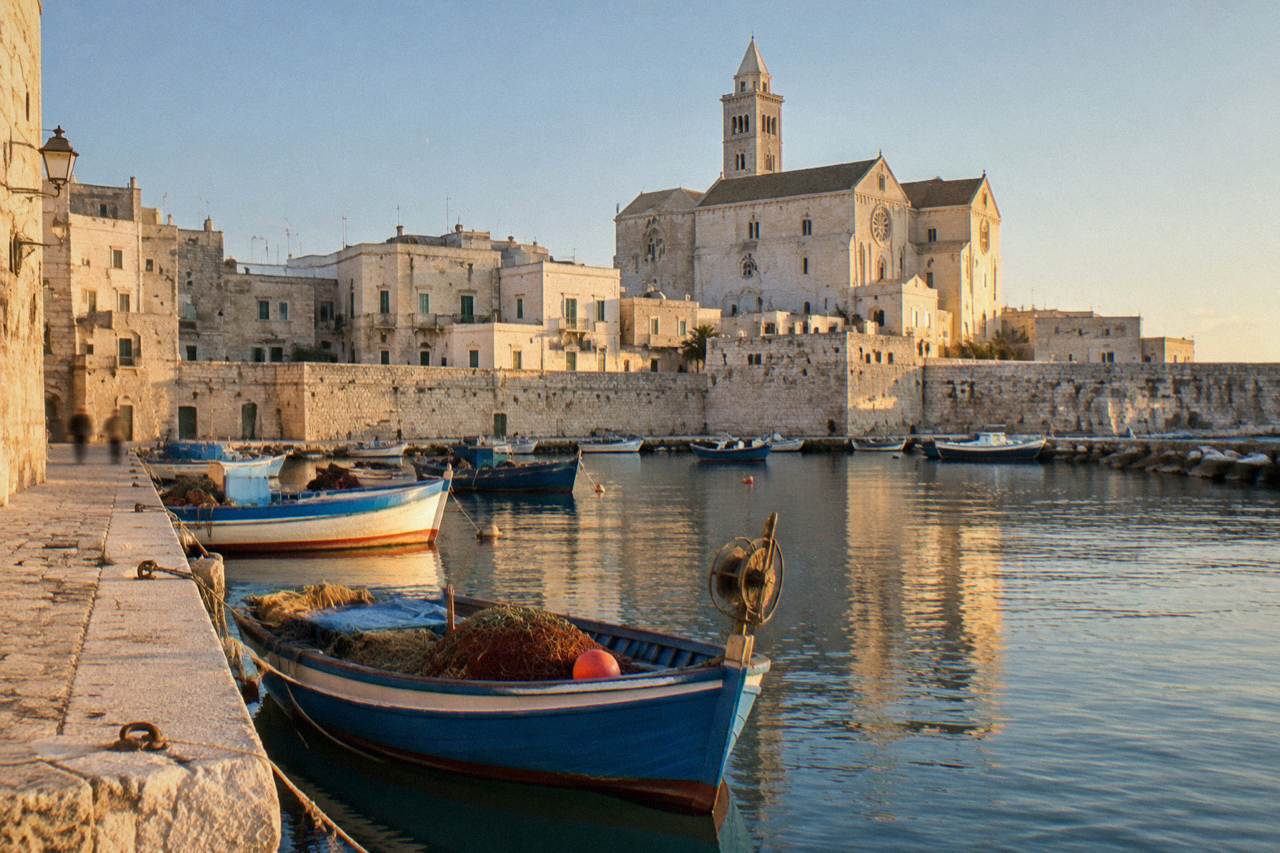
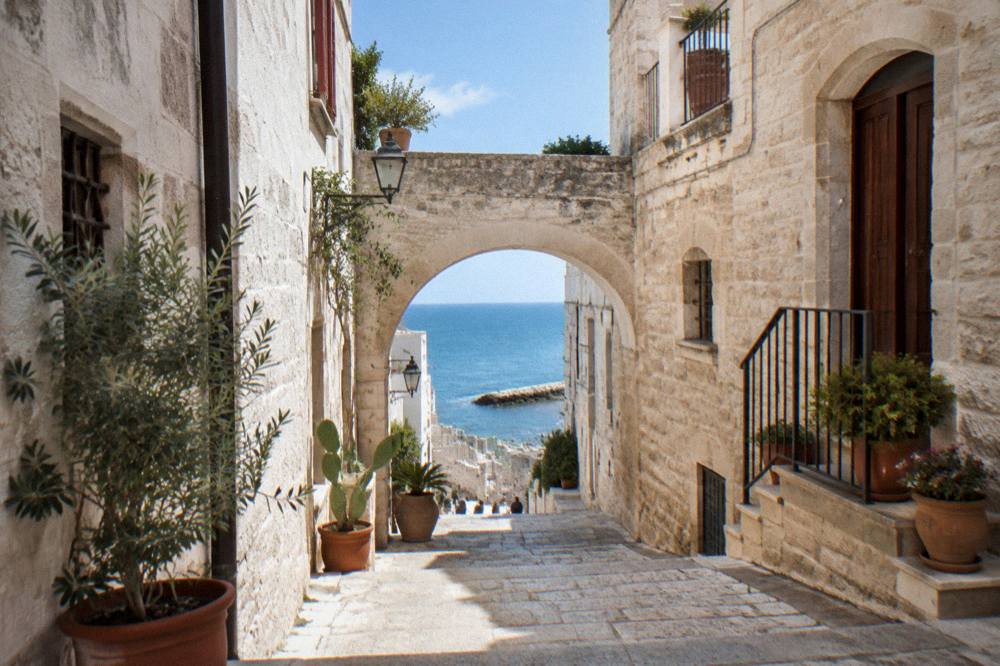
The old town is the reason to come. It is a compact nucleus you can cross on foot in well under an hour, built of pale stone, with lanes that open unexpectedly onto squares and sea views. The town cathedral stands at the heart of the old core, and the sea wall wraps the quarter with water on two sides. There is no castle here on the scale of the Castello Normanno-Svevo in Bari, no big museum, and no single ticketed monument: this is a place for walking, sitting and looking at the water rather than a checklist of sights. That character is exactly what separates it from the better-known southern day trips such as Polignano a Mare and Monopoli, both of which hold 2026 Blue Flags and draw the larger summer crowds.
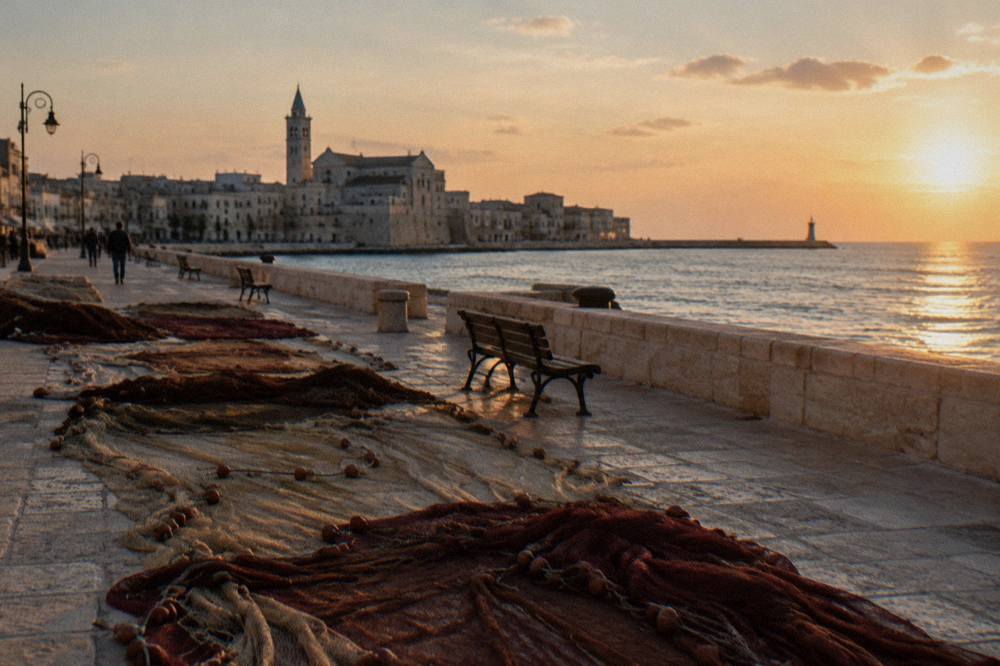
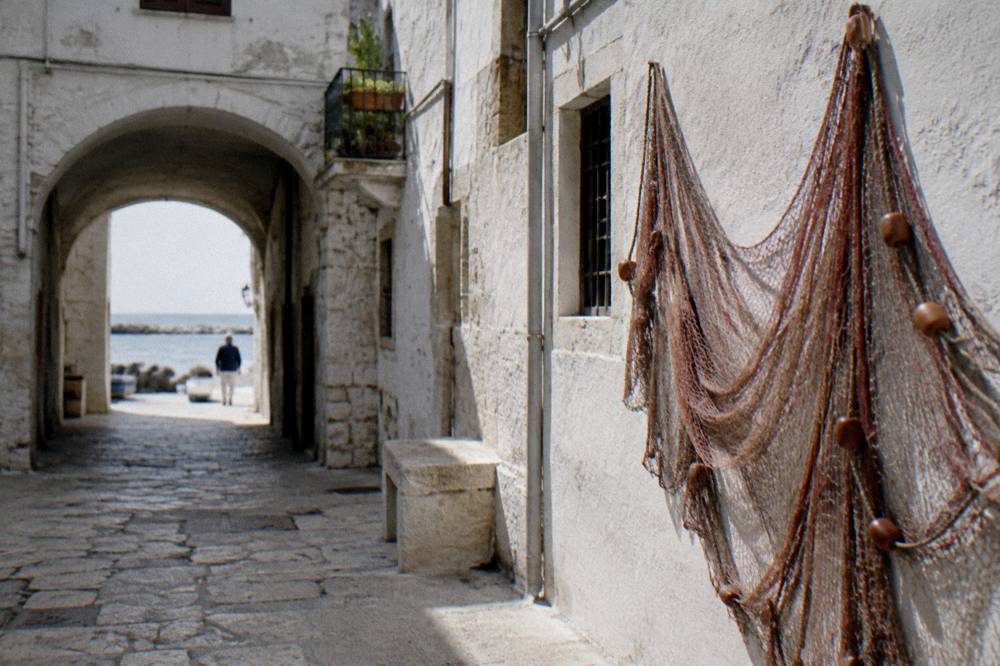
Giovinazzo also gives you a look at ordinary coastal Puglia, the working version, in a way the headline destinations do not. Fishing boats use the harbour, the seafront fills with locals in the early evening, and the pace slows as soon as you step inside the walls. For a traveller using Bari as a base, the short distance means you can go in the late afternoon, see the old town in the softer light, and be back in Bari Vecchia for dinner. If you are still shaping the Bari side of the trip, the things to do in and around Bari overview and the two-day Bari itinerary set out the city's own weight of sights first.
How Do You Get From Bari To Giovinazzo?
The drive from central Bari to Giovinazzo is about 22 km and takes about 23 minutes in free-flowing traffic, measured from Piazza Mercantile, and the town sits directly on the coastal road that continues north to Molfetta. That road distance is the one hard figure available for this route: the distance table runs from Piazza Mercantile, and it lists Giovinazzo at about 22 km, Molfetta at about 29 km and Trani at about 47 km along the same northern corridor. No rail journey time or rail fare for the Bari to Giovinazzo leg exists to print, so the operator's own timetable is the place to confirm train times before you travel.
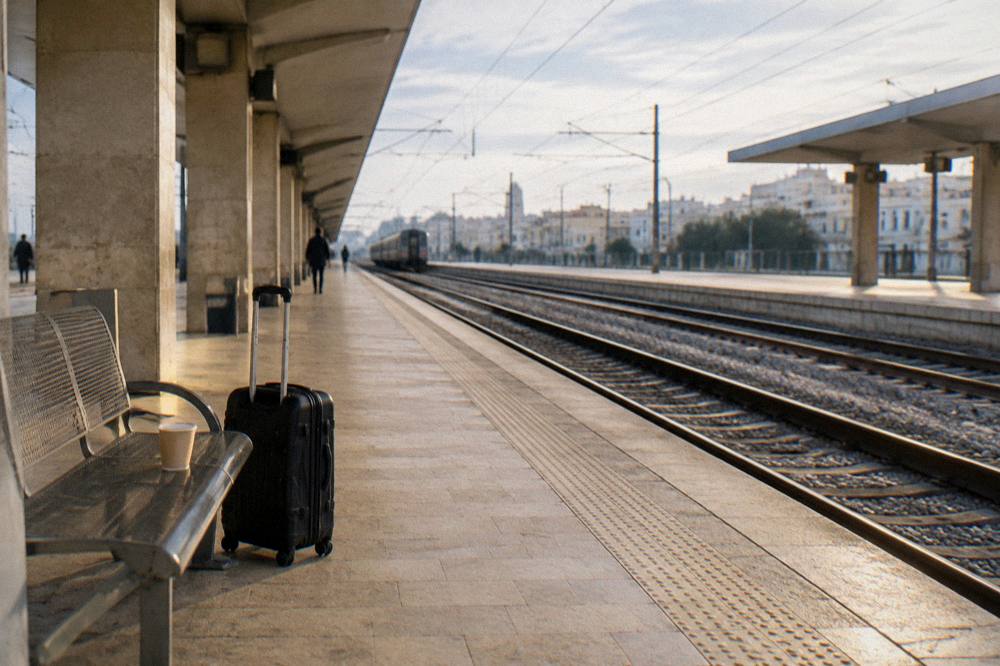
The rail line along this coast exists, and Giovinazzo has a station on it, but the specific journey time and fare sit outside what any source used by this site confirms. The practical planning approach is simple: check the operator's timetable for the Bari to Giovinazzo leg on the day you travel, and treat the road figure, about 23 minutes without traffic, as the benchmark. In summer the coastal road carries more traffic, so allow a margin. Parking is easiest outside the old core, where the lanes are narrow; the general rule that applies across this region is to leave the car at the edge and walk in, the same advice that holds for Bari Vecchia, which is a limited traffic zone with a camera gate at the castle.
For orientation, the drive leaves Bari northward past the airport direction and the coast flattens into a run of small towns: Giovinazzo first, then Molfetta, then Bisceglie and Trani beyond. If you are arriving at Bari's Karol Wojtyla airport, the transfer basics are covered in Bari airport to city centre and whether Bari airport has a train station, and the airport sits north of the city, so Giovinazzo is actually between the airport and the centre on the map. Travellers connecting through Rome can plan the long leg with the Rome to Bari train guide.
If a self-driven northern day does not appeal, a guided outing from Bari covers the region's headline sights instead, and the picks below show the range: a skip-the-line entry for Castel del Monte inland from Andria, a boat trip on the Polignano coast departing from Polignano, and an old-town street food walk based in Bari itself.
Each of those serves a different kind of day. The Castel del Monte entry departs from Andria, at the inland end of the octagonal UNESCO castle's own setting, and pairs well with a north-and-inland loop. The boat trip leaves from Polignano a Mare on the southern coast, not from the Bari waterfront, so it belongs to a southbound day. The street food walk stays in Bari.
What Should You Actually See And Do In Giovinazzo?
The core of a Giovinazzo visit is the walled old town itself: walk the lanes from the harbour and follow the sea wall around the old core to the open Adriatic views, all doable on foot in a couple of unhurried hours. There is no single ticketed monument to aim for, which is unusual among Bari day trips: Trani has its castle at 8 EUR full and 2 EUR reduced, Castel del Monte charges 10 EUR and 2 EUR, but Giovinazzo's old town is simply open to walk through.
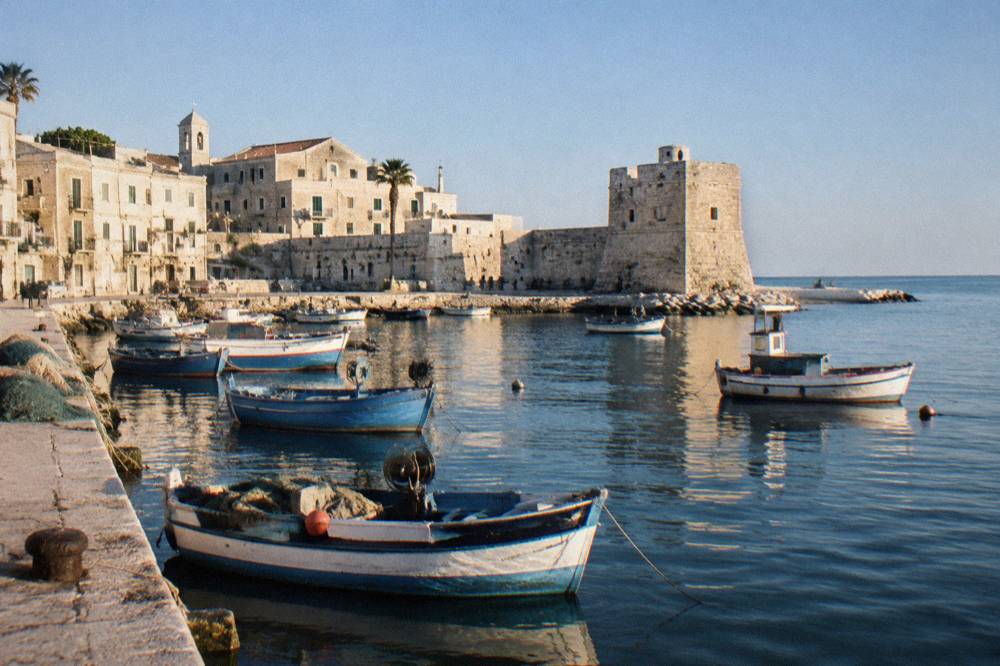
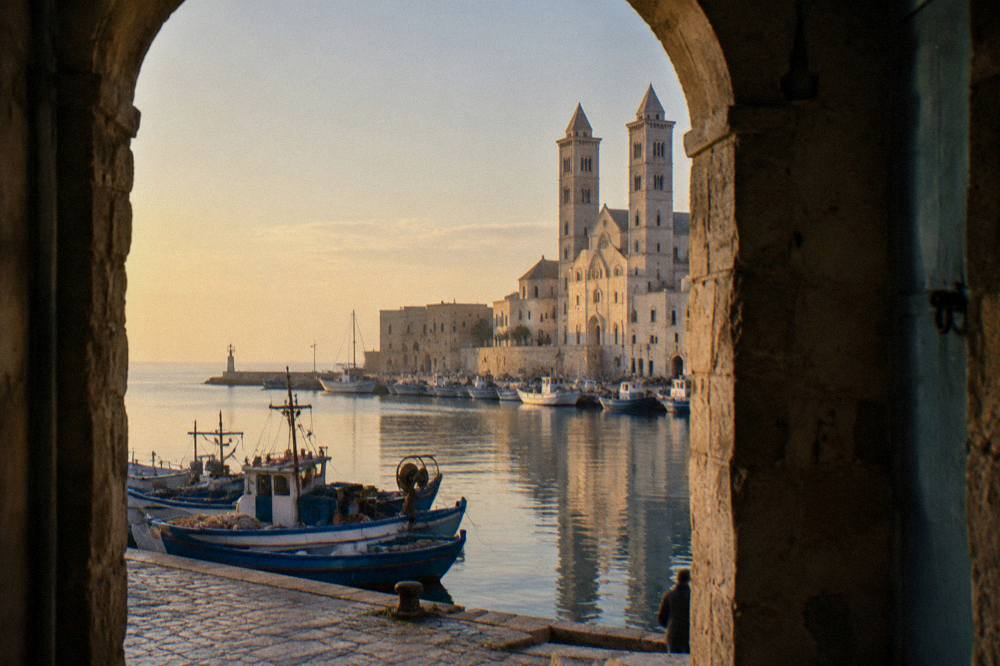
The harbour is the natural starting point. Boats sit in a small basin with the old quarter rising behind it, and the contrast between working waterfront and stone lanes is the town's signature scene. From the harbour the lanes climb gently toward the cathedral, which anchors the main square of the old town. Check locally on the day if you want to enter the cathedral. The sea wall walk comes next: the narrow finger of the old town is nearly surrounded by water, and the perimeter path delivers long views up and down the coast in both directions.
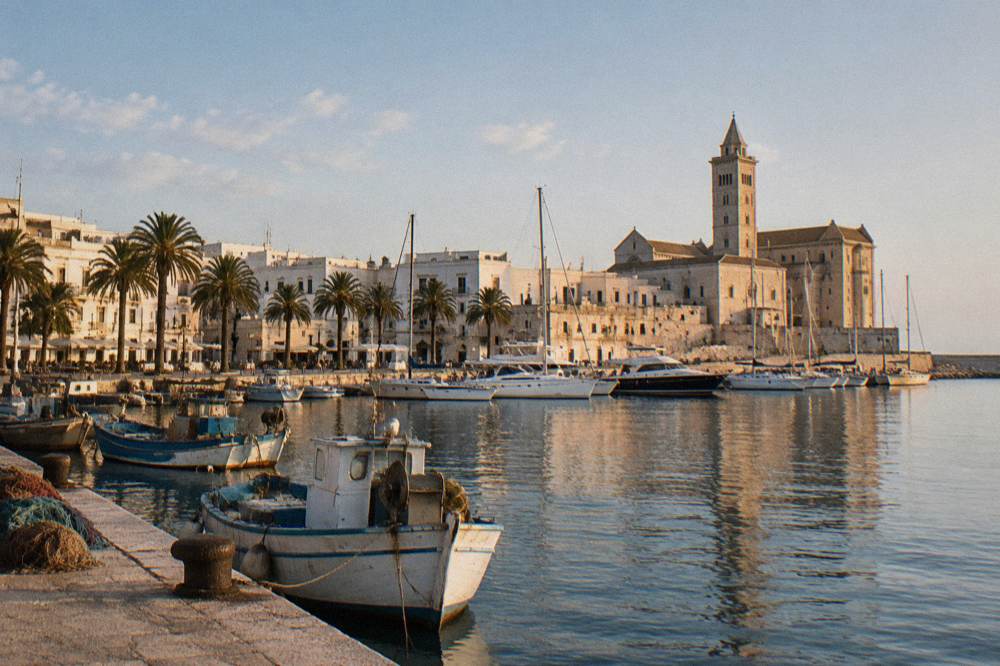
After the circuit, the seafront promenade and its cafes fill whatever time remains. This is where the half-day shape of the trip becomes clear: Giovinazzo rewards lingering, not racing. A sensible rhythm is a mid-afternoon arrival, the old-town walk before the light flattens, and a drink on the seafront while the town fills for the evening passeggiata. If you want the northern coast at its grandest, Trani adds a cathedral and harbour on a larger scale about 45 minutes further up the road, and the comparison table later in this guide sets the distances side by side.
For travellers who prefer a structured outing over an independent wander, the Bari-based old-town food walk below is the city-side counterpart to a coastal stroll, and it runs from Bari rather than from the coast.
How Long Should A Giovinazzo Trip Take From Bari?
Giovinazzo works as a half-day trip from Bari: the drive is about 23 minutes each way, and the old town, harbour and sea wall together need two to three unhurried hours, so a late afternoon out and back is realistic without cutting into a Bari evening. A full day in Giovinazzo alone would outlast the town's stock of sights, which is why the stronger itinerary pairs it with another stop on the same northern run.
The pairing logic is simple geography. Giovinazzo, Molfetta and Trani sit in a line up the coast, with road distances from Piazza Mercantile of about 22, 29 and 47 km respectively, and free-flow drive times of about 23, 29 and 45 minutes. A car-based day can chain all three: Giovinazzo first for the lanes, Molfetta for its larger harbour old town, Trani for the biggest sight of the three, then the drive back down the coast.
| Stop from Piazza Mercantile | Road distance | Free-flow drive time | What the stop gives you |
|---|---|---|---|
| Giovinazzo | about 22 km | about 23 minutes | Walled old town, small harbour, sea wall walk |
| Molfetta | about 29 km | about 29 minutes | Larger harbour old town on a headland |
| Trani | about 47 km | about 45 minutes | Cathedral, harbour and the Swabian castle of Trani, 8 EUR full, 2 EUR reduced |
| Polignano a Mare (south) | about 37 km | about 36 minutes | Clifftop old town, Lama Monachile cove, 2026 Blue Flag |
Note the direction split: Polignano is listed for contrast, but it lies south of Bari, so it belongs to a different day from the northern chain. The southern coastal run, with its rail links on the Bari-Lecce line, is covered in the guide to Polignano a Mare and the Monopoli day-trip guide. On luggage-free day trips out of Bari Centrale, the Bari train station guide explains the station layout, and Bari luggage storage covers the option of dropping bags before a coastal outing.
How Does Giovinazzo Compare With The Other Easy Day Trips From Bari?
Giovinazzo is the quietest and closest of the north-coast trips, about 23 minutes by road, and it trades the big sights of Trani, Alberobello or Matera for proximity and calm, which makes it the best fit for a short outing rather than a full-day excursion. The heavier hitters all sit further out: Castel del Monte about 59 minutes and 62 km inland, Matera about 69 minutes and 71 km away across the regional border into Basilicata, Lecce about 115 minutes and 151 km to the south.
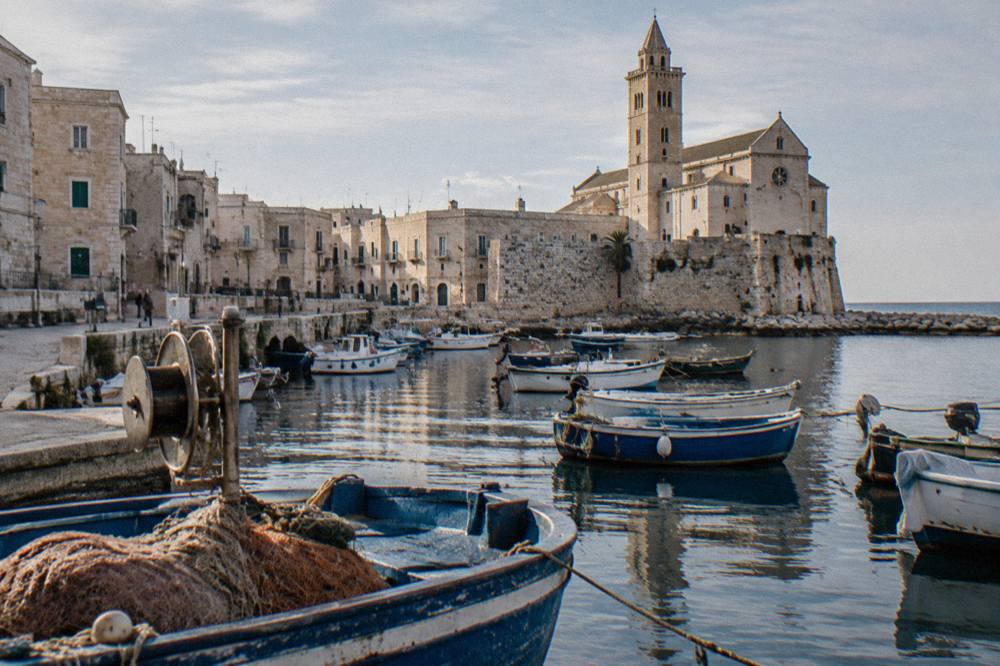
The choice really comes down to what a day from Bari is for. If the point is to see a major monument, the octagonal UNESCO castle inland from Andria or the Sassi districts of Matera justify their longer drives. If the point is sea air and a walk with no agenda, Giovinazzo wins on cost of time: under half an hour each way, and nothing in the town that needs booking or queueing. The middle case is Polignano a Mare, which combines a dramatic clifftop old town with the Lama Monachile cove and a Blue Flag beach scene, at about 36 minutes by road; its cave boat trips depart from Polignano itself, and one of the most-booked versions is below.
| Day trip from Bari | Road distance from Piazza Mercantile | Free-flow drive time | Best for |
|---|---|---|---|
| Giovinazzo | about 22 km | about 23 minutes | A calm half day, lanes and harbour |
| Polignano a Mare | about 37 km | about 36 minutes | Cliffs, cove swimming, cave boats |
| Monopoli | about 47 km | about 43 minutes | Walled old town and beaches, Blue Flag |
| Trani | about 47 km | about 45 minutes | Cathedral, castle, grand harbour |
| Castel del Monte | about 62 km | about 59 minutes | The UNESCO octagonal castle |
| Matera | about 71 km | about 69 minutes | The Sassi, in Basilicata, not Puglia |
| Lecce | about 151 km | about 115 minutes | Baroque city centre, a long day |
Two planning notes sit behind that table. First, Matera is in Basilicata, not Puglia, so the trip crosses a regional border even though the drive is short: the Bari to Matera guide covers the rail route and the Matera day-trip page the town itself. Second, Alberobello, the trulli town and a UNESCO site, is reached via the Trulli Link service that joins Trenitalia and FSE trains toward Locorotondo, Alberobello and Martina Franca, with the FSE leg reported at 5.90 EUR on top of the rail fare, a figure to confirm before you go: the Bari to Alberobello guide explains the mechanics, and the Alberobello day-trip page the destination.
When Is The Best Time Of Year To Visit Giovinazzo?
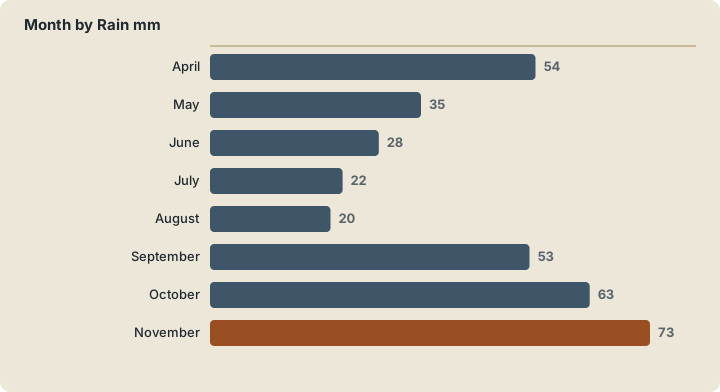
The coast around Bari is at its warmest in July and August, when the climate table shows mean daily maximum temperatures of 28.6 C and 29.1 C respectively, so spring and early autumn offer the same light on Giovinazzo's stone lanes with fewer degrees and fewer people, typical values from modelled ERA5 data, 1991 to 2020. August carries the highest mean daily high of the year at 29.1 C, and August is also the month with the lowest rainfall, about 20 mm, against November's 73 mm, the year's highest monthly total.
For a walking town like Giovinazzo, temperature matters more than it would for a beach day. The old-town circuit and the sea wall are entirely outdoors, and pale stone holds the afternoon heat. May and June, with mean daily highs of 21.6 C and 25.9 C, and September and October, at 25.1 C and 21.1 C, are the comfortable windows; rain days run about 6.9 in May, 7.6 in September and 7.9 in October, so a shower is possible but not the pattern. The sea itself reaches about 27 C in July and August and about 22 C in October, modelled means over 2023 to 2025, for anyone who wants a swim stop on the coast while out this way.
| Month | Mean daily high C | Mean daily low C | Rain mm | Rain days |
|---|---|---|---|---|
| April | 17.5 | 11.2 | 54.0 | 9.0 |
| May | 21.6 | 15.3 | 35.0 | 6.9 |
| June | 25.9 | 19.5 | 28.0 | 4.8 |
| July | 28.6 | 22.0 | 22.0 | 4.1 |
| August | 29.1 | 22.4 | 20.0 | 4.3 |
| September | 25.1 | 19.1 | 53.0 | 7.6 |
| October | 21.1 | 15.6 | 63.0 | 7.9 |
| November | 16.9 | 12.0 | 73.0 | 8.9 |
Winter is not off the table either. January and February highs sit about 12 C with lows near 7 C, cool but walkable, and the town keeps its shape in any season. What changes in the cold months is the rhythm of the seafront, which empties out between the lunch and dinner hours. Whatever the month, the day-trip timing rule holds: arrive after the midday peak if you want the lanes quiet, and time the sea wall walk for the hour before sunset, when the Adriatic light lands hardest on the stone.
Where Should You Eat On A Giovinazzo Day Trip?
Eating in Giovinazzo means the plain coastal cooking of northern Puglia, with seafood at the centre of the town's small repertoire, and the practical advice is to book nothing and simply take the first honest-looking place on the harbour or in the old-town lanes, then return to Bari for the heavier food experiences. No restaurant, bakery or shop name is confirmed by any source this site uses, so the honest guide describes the food culture, not a list of addresses.
The regional constants apply here as they do across Puglia. Orecchiette is the pasta shape of the region. Focaccia barese is the local flatbread of the city and its coast. Raw seafood, including sea urchins, is a Puglian habit on this stretch of the Adriatic, and panzerotti, the fried stuffed pockets, travel the whole province. In a harbour town the fish is the point: a simple grilled or raw seafood lunch by the water is the meal that matches the place. Prices vary by season and by table, so check the posted menu and the itemised bill, the same check that serves anywhere on this coast.
The deeper food experiences, though, cluster in Bari itself. Cooking classes in the city teach orecchiette and focaccia making, and the guided old-town walks pair the lanes of Bari Vecchia with street food stops; the trio below shows the three most useful bookings for a food-led trip, with the cave boats from Polignano thrown in for a full Puglia set.
One of those, the skip-the-line entry for Castel del Monte, departing from Andria inland, is worth a paragraph of its own because it answers the question every independent traveller eventually asks: whether the castle's ticket desk is worth queueing for on a summer day. The entry ticket covers the octagonal UNESCO site, inscribed in 1996, about 59 minutes and 62 km by road from Piazza Mercantile, and booking ahead settles that leg of an inland loop. The castle is open every day, 10:00 to 18:45 from 1 April to 30 September and 09:00 to 17:45 from 1 October to 31 March, with last entry 45 minutes before closing, per the regional museums' ticket page.
For the evening back in Bari, the old port at Molo San Nicola and the squares around Piazza Mercantile and Piazza del Ferrarese hold the city's own seafood and street-food scene, and the old port guide describes the quay that anchors it. Whether the old town is worth the walk after dinner is answered plainly in is Bari old town worth visiting.
What Does A Giovinazzo Day Look Like In Practice?
A practical Giovinazzo day runs: leave Bari mid-afternoon, drive about 23 minutes up the coast, walk the harbour and walled old town for two hours, drink something on the seafront at sunset, and be back in Bari for the evening, with the option to add Molfetta or Trani in the morning if you want a full northern loop. The single-day shape keeps the trip light, which suits a town with no timed entries and no transport complexity.
For a fuller version, start early and chain the coast. Morning in Trani, the furthest and grandest stop at about 45 minutes by road, with its cathedral and its castle open Monday to Saturday 08:30 to 19:30 and Sunday 08:30 to 13:30, at 8 EUR full and 2 EUR reduced. Lunch there or in Molfetta on the way back down. Reach Giovinazzo by mid-afternoon and give it the softer hours, which is when the sea wall and the lanes give the most back. This ordering front-loads the sightseeing and ends with the town that asks the least of you, a sequence that travels well with children or with anyone tired of ticket desks. Family-oriented planning for the whole region sits in the Bari with kids considerations covered by the main guide, and the city's own seafront stretch is described in the Lungomare Nazario Sauro guide.
Two cautions apply to any drive-based day out of Bari. First, do not drive into Bari Vecchia at either end of the day: the old town is a limited traffic zone with camera enforcement at the castle gate, so park outside the old core or in the Murat district and walk in. Second, if you are driving back from the north coast on a Sunday or holiday in summer, the coastal road into Bari carries returning beach traffic, so the 23-minute free-flow figure should be read with a margin. The general rule across the region's operators is that service changes during works are posted by the operator, so a glance at the relevant page before travel settles any doubt about the week you travel.
Common Questions About Giovinazzo From Bari
How far is Giovinazzo from Bari?
Giovinazzo is about 22 km from Piazza Mercantile in central Bari, and the drive takes about 23 minutes in free-flow traffic along the coast road heading north.
Is Giovinazzo worth a day trip from Bari?
Yes, as a half day. The walled old town, harbour and sea wall fill two to three unhurried hours, and the short distance, about 23 minutes by road, makes it the lightest day trip on Bari's northern coast.
What is the best time of year for a Giovinazzo trip?
May, June, September and October, when mean daily highs run between about 21 and 26 C, typical values from modelled ERA5 data, 1991 to 2020. July and August are warmer, at 28.6 C and 29.1 C mean daily highs, and busier along the whole coast.
Should you combine Giovinazzo with Molfetta or Trani?
Yes, that is the strongest use of the northern coast. Giovinazzo at about 23 minutes, Molfetta at about 29 minutes and Trani at about 45 minutes by road from Piazza Mercantile line up along one route, so a single driving day can take in all three.
Giovinazzo will never compete with the trulli of Alberobello or the Sassi of Matera for spectacle, and it does not try to. What it offers from Bari is the shortest possible exchange of city for sea, a walled old town you can know completely in an afternoon, and a place on the northern coast that keeps its own rhythm whether you arrive by car or by train. Plan it as a half day, pair it with Trani or Molfetta if the morning is free, and keep the evening for Bari Vecchia.