What Should I Buy In Bari?
Souvenirs, food gifts and crafts worth buying in Bari, Puglia: taralli, olive oil, orecchiette, ceramics and where to shop from Bari Vecchia to the Murat district.
Bari, the capital of Puglia in southern Italy, rewards shoppers who buy with their stomach. The city of about 316,000 residents sits on the Adriatic Sea, with its walled old town of Bari Vecchia on the headland and the grid of the Murat district just south of it, and between the two you can assemble a bag of souvenirs that tastes of the region: dried orecchiette pasta, taralli biscuits, olive oil, wine and hand-painted ceramics from the Valle d'Itria. This page lays out what is worth buying, which streets and markets to shop, and what survives the journey home, with more detail in the site's guide to Bari souvenirs and its companion on Bari markets and shopping.
What Should I Buy In Bari?
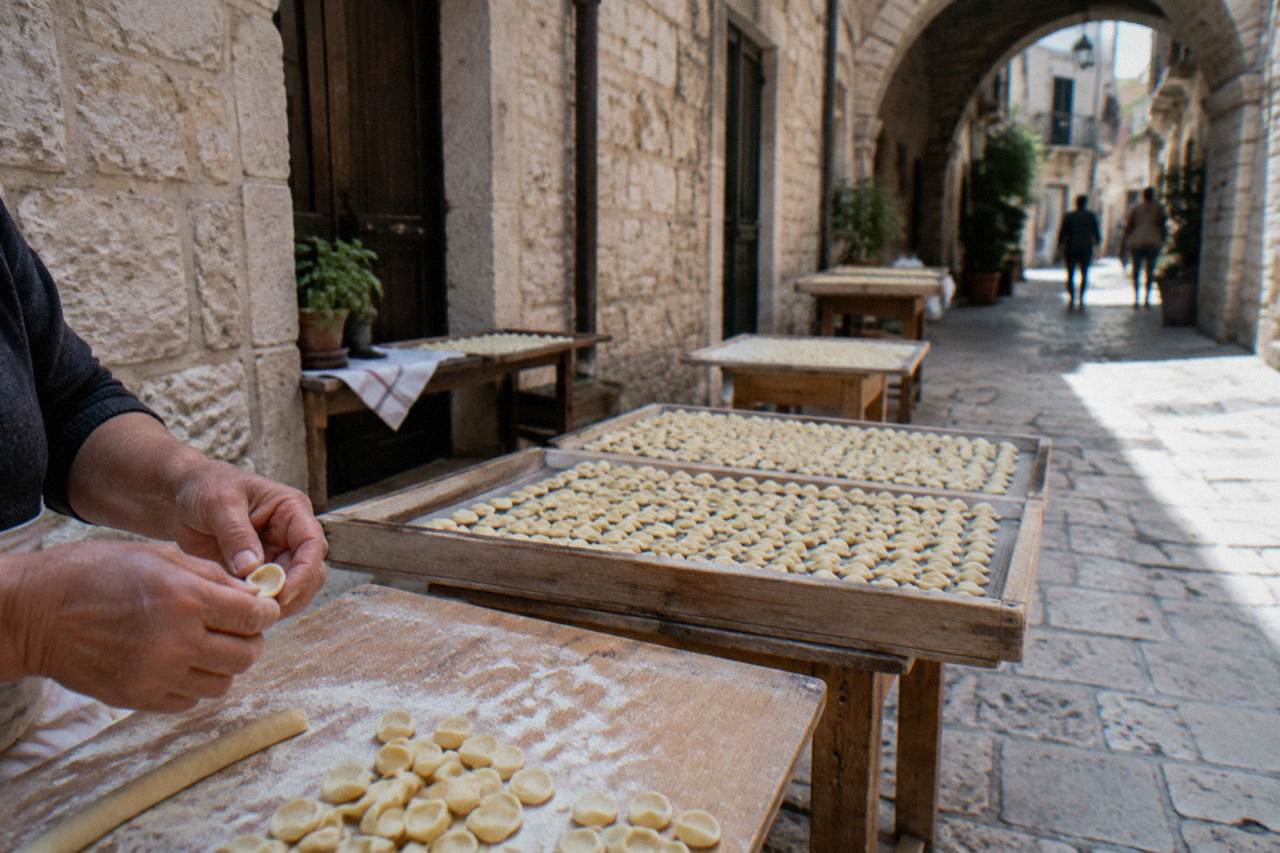
Buy the food of Puglia first: dried orecchiette and other pasta shapes, taralli ring biscuits, extra-virgin olive oil from the region, Primitivo and Negroamaro wines, and the sweet altamura-style bread products that keep for days. Add hand-painted ceramics from the Valle d'Itria towns and a small trulli-shaped keepsake if a day trip to Alberobello is on your plan. Shopping concentrates in two places: Bari Vecchia, above all Strada Arco Basso for pasta, and the Murat district for shops and food stores.
That shortlist works because almost everything on it is light, durable and impossible to fake. Orecchiette is the pasta shape of Puglia. Taralli are the region's ring-shaped biscuits, plain or flavoured, sold by weight in food shops across the city. Olive oil and wine carry the region with them, and the Valle d'Itria day-trip towns of Alberobello, Locorotondo and Martina Franca add ceramics and lace to the list.
What you should not bother with is the generic souvenir stall stock: miniature gondoliers, printed magnets and plastic trulli made far from Puglia. The real thing costs little more at a food counter, and it will still be talked about after the magnets are in a drawer.
Where Should You Shop In Bari?
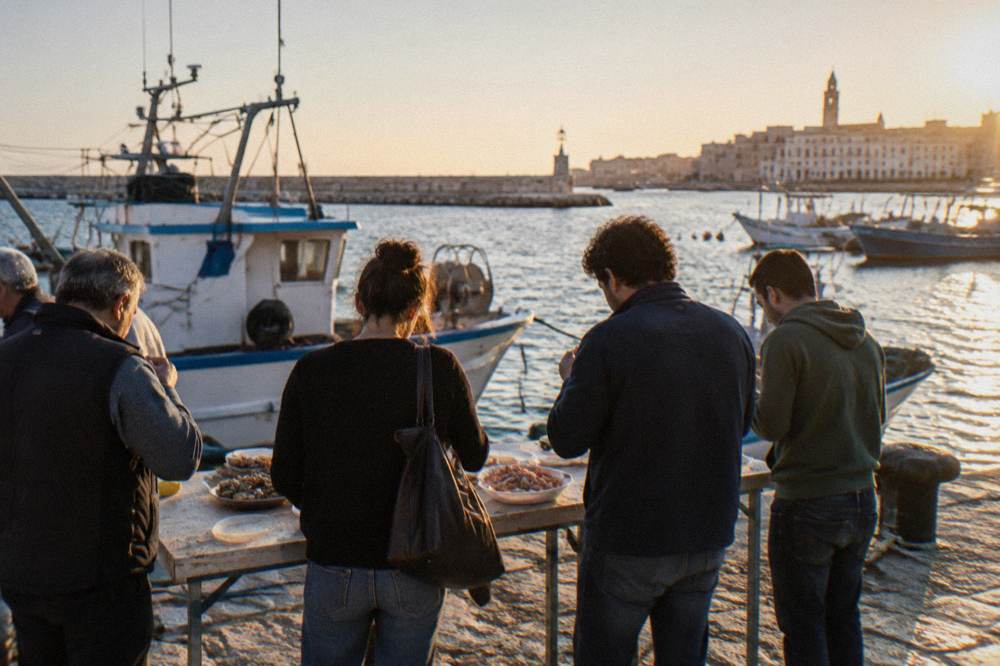
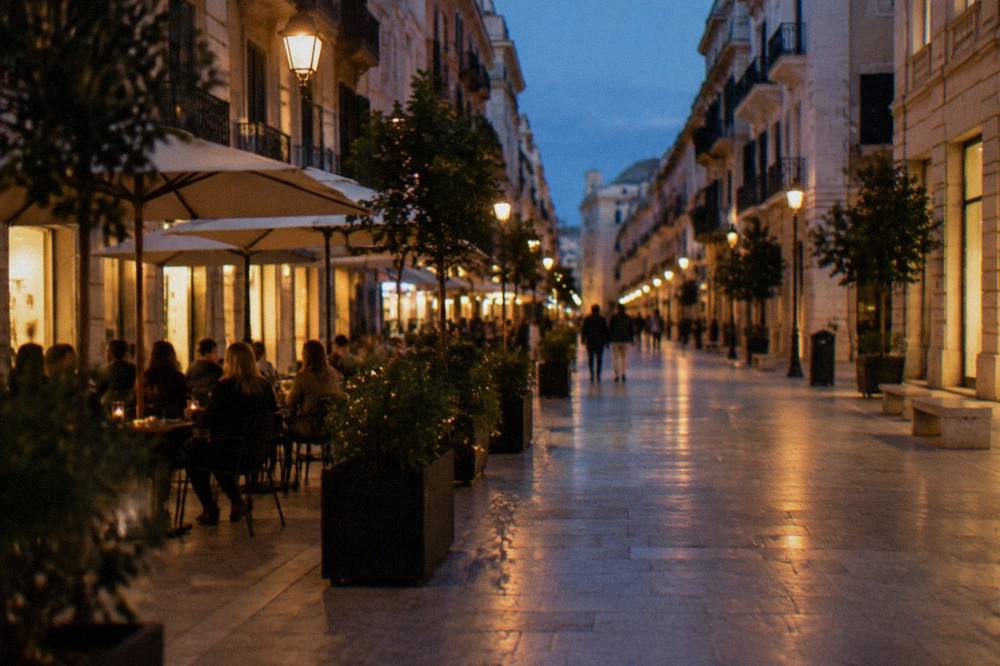
Shop two zones: Bari Vecchia for food, above all Strada Arco Basso for handmade pasta, and the Murat district around Via Sparano for bookshops, clothing and well-stocked food stores selling oil, wine and taralli. The fish market at Molo San Nicola sits at the old port beside Piazza Mercantile for looking and photographing rather than buying, and the tourist infopoint is at Piazza del Ferrarese 29 for maps and event listings. Sunday closes many shops.
Via Sparano is the spine of the Murat grid, a pedestrian shopping street a short walk from Bari Centrale, and the lanes around it hold the food shops where a bottle of local oil or a bag of taralli can be packed for travel on the spot. Bari Vecchia is the older, slower alternative: the lanes between Piazza Mercantile and Piazza del Ferrarese mix food counters, small workshops and stalls, and Strada Arco Basso is the street to walk with an empty bag.
| Area | What to buy there | Notes |
|---|---|---|
| Lanes around Piazza Mercantile and Piazza del Ferrarese | Taralli, olive oil, wine, small crafts | Old-town core, a short walk from the infopoint at Piazza del Ferrarese 29 |
| Murat district, Via Sparano | Food stores, clothing, books, gifts | Pedestrian grid south of the old town, walkable from Bari Centrale |
| Molo San Nicola, old port | Fresh fish and seafood to eat, not to fly | Market days and hours vary; look, photograph and eat nearby |
Before or between the shopping streets, a walk that explains what is under your feet changes how the old town reads. The Bari Underground tour with an archaeologist goes below Bari Vecchia with a guide trained to read the layers, and it pairs naturally with a pasta stop on Strada Arco Basso afterwards. Check availability
A street-food walk is another way to shop with guidance: a guided tasting route through the old town points at the counters worth returning to with a bag, which is exactly the decision a first-time visitor is trying to make. The site's page on what not to miss in Bari covers the non-shopping side of the same streets.
What Food Gifts Travel Best From Bari?
Dried pasta and taralli travel best of all: both are dry, light and unbreakable in a padded bag. Olive oil and wine travel well only in sealed, cushioned bottles, ideally checked luggage, and wines such as Primitivo and Negroamaro are the region's flagship bottles. Fresh focaccia barese and raw seafood do not travel at all; eat them in Bari. Liquids follow airline limits in hand luggage, so glass goes in a hold bag or a merchant's shipping service.
The practical split is simple. Anything dry goes in any bag. Anything liquid or glass needs protection and a hold bag, and food shops in the Murat district will usually wrap bottles for travel if you ask. Fresh cheese and cured meats are subject to the rules of your home country on importing animal products, so check your customs limits before you buy, not after. The classic Bari foods are described in one line each on the site's page about what food Bari is famous for: orecchiette the pasta shape of Puglia, panzerotti the fried folded pockets, focaccia barese the tomato-topped flatbread, and sgagliozze the fried polenna squares of the old town.
| Food gift | Travels | How to pack it |
|---|---|---|
| Dried orecchiette and cavatelli | Well | Any bag; cushion loose shapes so they do not crumble |
| Taralli, plain or flavoured | Well | Rigid box or the shop's sealed bag |
| Extra-virgin olive oil | Fair | Sealed bottle, cushioned, in hold luggage |
| Primitivo and Negroamaro wine | Fair | Bottle sleeve or clothing wrap, hold luggage |
| Focaccia barese, panzerotti, raw seafood | Poorly | Eat in Bari the day you buy it |
Olive oil is the one gift worth a moment of label reading. Puglia is Italy's largest olive-oil producing region, and a bottle labelled with a Puglian origin, harvested and pressed in the region, is the souvenir that keeps giving through the winter.
What Crafts And Ceramics Come From Puglia?
Hand-painted ceramics are Puglia's flagship craft, from plates and bowls to the whistling quail-shaped water jugs the region is known for, and they come from workshop towns reachable as day trips from Bari, above all in the Valle d'Itria around Alberobello, Locorotondo and Martina Franca. Add hand-embroidered linen and lace from the same towns, olive-wood kitchenware, and trulli models from Alberobello, whose trulli district is a UNESCO World Heritage site.
Ceramics are the gift for someone who does not cook. The pieces are fired, glazed and painted by hand, each town has its own recurring motifs, and a plate that has survived a kiln survives a suitcase if you wrap it in clothing and carry it on. Alberobello is the day trip that doubles as a shopping trip: the trulli district is a UNESCO World Heritage site, and the shops along its lanes sell ceramics, linen and miniature trulli at the source. It is about 57 km by road from Piazza Mercantile, and the site's page on how much time you need in Alberobello helps with planning the day. A guided bus day trip that pairs Alberobello with Matera, in the neighbouring region of Basilicata, covers two UNESCO-listed landscapes in one loop from Bari.
If a full shopping day out of the city is more appealing than hauling purchases back on a train, the Alberobello and Matera bus tour from Bari handles the transport, and the guide to good day trips from Bari lists the rest of the map: Polignano a Mare and Monopoli on the coast, both holders of Blue Flags for 2026 in the province of Bari, Castel del Monte inland and Lecce to the south, about 151 km by road.
For a shorter browse closer to the shops, the Bari Italy Travel Guide walking pages cover the same lanes street by street, and a first-time visitor working out the shape of the city can lean on the itinerary advice in how many days in Bari is enough.
Common Questions About Buying In Bari
The questions below cover the practical side of shopping in Bari: which day the shops close, how to get bottles and ceramics home, what customs allows, where the infopoint sits and whether cards are accepted. Each answer is short and each ends with the check you can make yourself on the spot, because prices and openings at individual stalls are set locally.
What should I buy in Bari?
Dried orecchiette from Strada Arco Basso, taralli, extra-virgin olive oil and Primitivo or Negroamaro wine, plus hand-painted ceramics if a Valle d'Itria day trip is planned. Eat panzerotti, focaccia barese and raw seafood in the city instead of packing them.
Are shops in Bari open on Sunday?
Many close on Sunday, especially outside the peak summer weeks. Food shops and market stalls set their own days, so confirm locally or ask at the tourist infopoint at Piazza del Ferrarese 29 before planning a Sunday shopping morning.
Can you take olive oil and wine from Bari on a plane?
Yes, in hold luggage: seal the bottles, cushion them and check your airline's baggage rules. In hand luggage, liquids are limited by standard airline security rules, so glass travels only in a checked bag or by a shop's shipping service.
Is shopping in Bari expensive?
The site's page on whether Bari is expensive covers the wider cost picture of the city.
What is the best month for shopping in Bari?
Any month works for food gifts and ceramics. The climate table shows typical values from modelled ERA5 data, 1991 to 2020, with July and August mean daily maxima of 28.6 and 29.1 C and about four rain days, so summer shopping is about the heat rather than the rain; the site's page on the best month to visit Bari weighs the seasons.
Whatever goes in the bag, the rule of thumb that holds across Bari is to buy what the region actually makes: pasta shaped by hand a street from the sea, oil and wine from Puglian groves and vines, and ceramics painted in the hills an hour south. Everything else is just weight.