What Does Bari Mean In Italian?
Bari is the name of the capital city of Puglia on the Adriatic coast of southern Italy, not a word with an everyday Italian meaning. Here is what the name refers to and what the city actually is.
Bari is the name of the capital of the Puglia region in southern Italy, a coastal city of about 316,000 residents on the Adriatic Sea, and in Italian the word carries no separate everyday meaning that would help a traveller order food, find a beach or greet anyone. That is the short, honest answer, and it is more useful than it sounds, because the question behind the question is usually a different one: is this the Bari of the old town and the Basilica di San Nicola, the port with ferries to Albania and Greece, or some other place entirely. It is that Bari, on the heel of the Italian boot, with Polignano a Mare, Monopoli, Alberobello, Matera and Lecce within day-trip range. The Bari Italy Travel Guide covers that city from every angle, and this page settles the name question first.
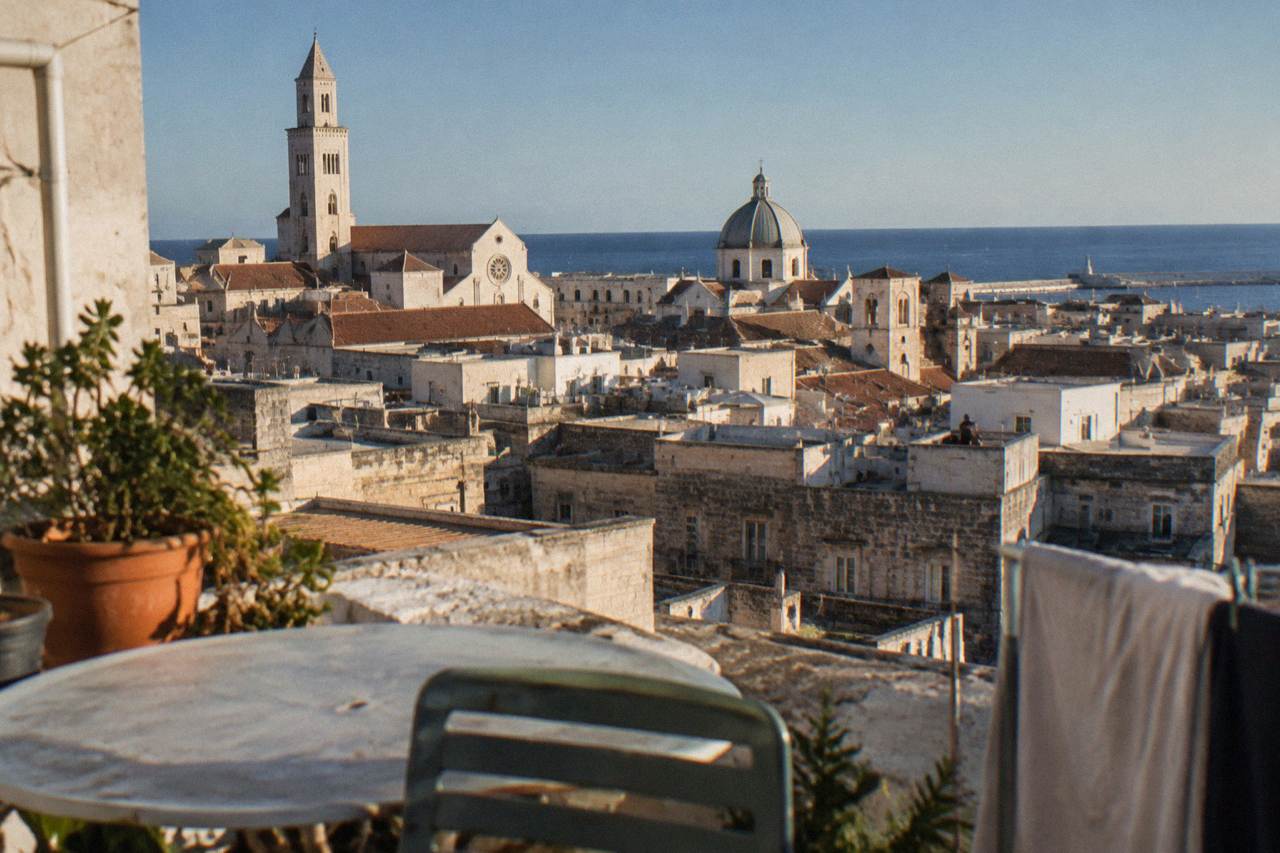
What Does Bari Mean In Italian?
In Italian, Bari is a proper noun: the name of the capital city of the Puglia region, and nothing in an Italian dictionary attaches an everyday meaning to it that a visitor could put to use. An Italian hearing the word thinks of the city on the Adriatic, home to about 316,000 residents in the comune, with its old town of Bari Vecchia and its port. The useful answer is therefore not a definition but a location and a description.
A word like "Roma" or "Napoli" works the same way: the name points to a place, and Italians use it without unpacking it. Nobody orders a coffee "in Bari" expecting the word to do more work than naming the city. Where confusion creeps in is with pronunciation and context. In Italian the name is pronounced with two syllables, BAR-ee, with the stress on the first, and it is plural in form in the local usage of some phrases but singular when it names the city in a sentence: "Bari e una citta", Bari is a city.
The name also travels badly in one specific way. Search for Bari and you can land on places far from Puglia, which is why the first fact worth pinning is the regional one: this Bari is the capital of Puglia, also written Apulia, the region that forms the heel of the Italian boot. The city faces the Adriatic Sea, and its old town, Bari Vecchia, sits on a headland beside the old port at Molo San Nicola. That is the whole meaning that matters.
What And Where Is The City Of Bari?
Bari is the regional capital of Puglia in southern Italy, a coastal city on the Adriatic Sea with about 316,000 residents in the comune and about 1.2 million in the Metropolitan City of Bari, which groups the comune with its surrounding towns. Its landmarks are the Basilica di San Nicola, the Cattedrale di San Sabino, the Castello Normanno-Svevo and the seafront Lungomare Nazario Sauro, and its main rail hub is Bari Centrale.
The city divides into two readable halves. Bari Vecchia is the old town on the headland: a knot of streets around the Basilica di San Nicola, the Piazza Mercantile, the Piazza del Ferrarese and the Swabian castle, with the fish market area at Molo San Nicola beside the old port. South of it, the Murat district is a grid of straight streets laid out around the shopping street Via Sparano, and the Lungomare Nazario Sauro runs along the sea toward the city beaches of Pane e Pomodoro, Torre Quetta and San Girolamo. Walkability between these halves is one of the city's practical strengths, and it is covered in detail in Is Bari A Walkable City.
Practical facts anchor the place as firmly as the name does. Italy is in the euro area and in the Schengen area, the emergency number is 112, and the local airport is Karol Wojtyla airport (BRI) at Palese, 12.0 km and about 21 minutes by road from the Piazza Mercantile. The Ferrotramviaria airport train covers the distance to Bari Centrale in 17 minutes and the single ticket costs 5.30 euro per the 2026 tariff, and a taxi to a city-centre hotel is a predetermined 25 euro fare.
| Fact | Figure |
|---|---|
| Country and region | Italy, Puglia (also written Apulia) |
| Residents in the comune | about 316,000 |
| Metropolitan City of Bari | about 1.2 million |
| Coastline | Adriatic Sea |
| Main station | Bari Centrale |
| Airport | Karol Wojtyla (BRI), 12.0 km by road from the Piazza Mercantile |
| Currency | euro |
| Emergency number | 112 |
For travellers weighing the city against its regional rival, the comparison in Which Is Better Bari Or Lecce breaks down what each one does best, and Is Bari Italy Worth Visiting answers the broader question for anyone still deciding.
A guided walk is the quickest way to turn the name into a real place, and the city has a strong one in the Bari: Guided Walking Tour, offered in English per the product card; Check availability if a walk fits your first day.
Why Do People Ask What Bari Means?
People ask because the name arrives with no context: it appears on ferry tickets to Albania and Greece, on cruise itineraries, on airport lists for Puglia, and on food pages about orecchiette and focaccia, and each of those mentions assumes the reader already knows it names a city rather than a word with a definition. The question is really a request for orientation, and the orientation is simple: regional capital, Adriatic coast, southern Italy.
The port explains much of the curiosity. Adria Ferries sails from Bari to Durres every day all year, a crossing of about 8 hours, and GNV sells the same route with a reported crossing time of 10 hours 45 minutes. Superfast's 2026 brochure lists the route Bari, Corfu, Igoumenitsa, Patras. These are practical, bookable services, and they put the city's name in front of travellers who have never seen a map of Puglia. The port authority reported about 430,000 cruise passengers and 152 calls in the first nine months of 2025, up 21 percent, so the name also travels on the side of cruise ships.
The name then bounces against other names and loses. People planning an Italian beach trip meet Bari beside the Amalfi Coast and Sicily in search results, though the city is on neither: it is a separate Adriatic coast hundreds of kilometres from both, as Is Bari Italy On The Amalfi Coast sets out. Others meet it through Saint Nicholas, whose relics were brought to the city by sailors in 1087 and placed in the crypt of the basilica in 1089, a story told in Is Saint Nicholas Buried In Bari.
None of this changes the linguistic answer. The name stays a name, and the city behind it supplies everything else: the food answer lives in What Food Is Bari Famous For, and the broader fame question in What Is Bari In Italy Famous For.
How Does Bari Compare With The Places It Gets Confused With?
Bari is the capital of Puglia on the Adriatic, in southern Italy but not in Sicily and not on the Amalfi Coast, and it is distinct from every place it shares a coastline or a search page with. Matera, one of its famous day trips, is not even in Puglia: it sits in the neighboring region of Basilicata, about 71 km and 69 minutes by road from the Piazza Mercantile.
The day-trip ring is where the geography gets tested. Per the Trenitalia regional timetable, Polignano a Mare sits 33 km down the Bari-Lecce line, Monopoli 41 km, Ostuni 75 km and Lecce 150 km, and each of those names carries its own weight in guidebooks. Alberobello and Locorotondo lie inland in the Valle d'Itria, reached by the Trulli Link service that connects Trenitalia and FSE trains with buses, with the FSE leg reported at 5.90 euro on top of the rail fare. Castel del Monte, an octagonal castle inscribed by UNESCO in 1996, stands about 62 km and 59 minutes by road away, near Andria.
| Destination | Distance from Bari | How it fits a trip |
|---|---|---|
| Polignano a Mare | 33 km by rail on the Bari-Lecce line | Cliffs and the Lama Monachile cove |
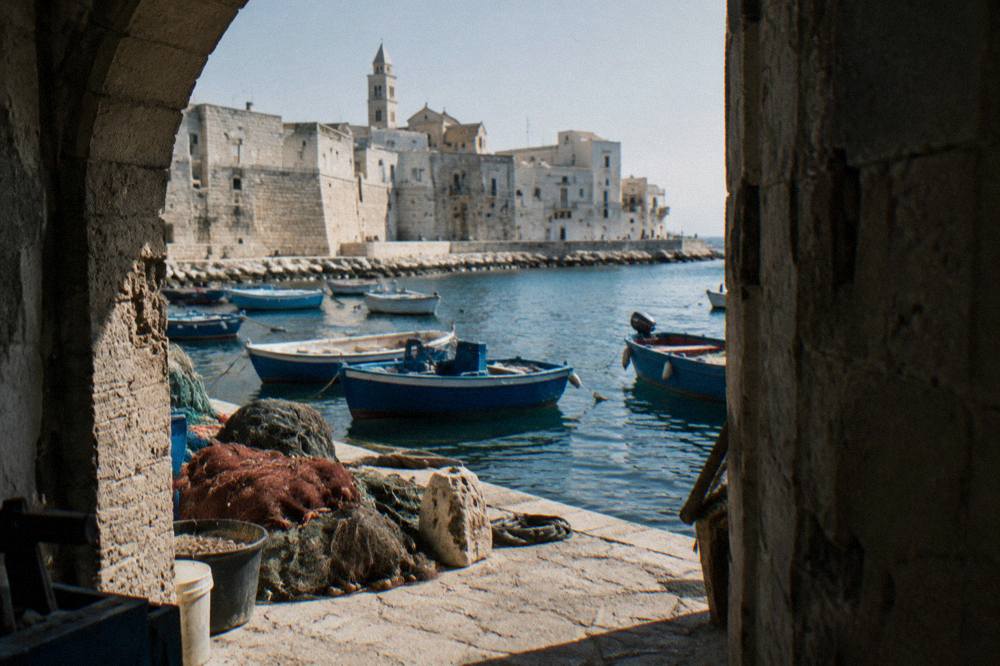
| Monopoli | 41 km by rail on the Bari-Lecce line | Walled old town and harbour |
| Alberobello | about 57 km by road | Trulli houses, UNESCO World Heritage |
| Matera | about 71 km by road | Sassi districts, in Basilicata not Puglia |
| Lecce | 150 km by rail | Baroque city, a long day or overnight |
The Blue Flag question lands here too, because beach-bound visitors often assume the capital itself holds one. Bari has no Blue Flag beach in 2026. In the Province of Bari the flags went to Polignano a Mare and Monopoli, while Ostuni, Fasano and Carovigno are in the Province of Brindisi. The city's own beaches, Pane e Pomodoro about 2.1 km from the Piazza Mercantile and Torre Quetta about 3.9 km, remain city beaches with facilities that vary by season, and ARPA Puglia reports 78 monitored bathing waters in the province.
Climate belongs to the same orientation. Typical values from modelled ERA5 data, 1991 to 2020, put the July mean daily maximum at 28.6 C and August at 29.1 C, with January and February highs around 12 C and about 587 mm of rain across the year, of which November carries 73 mm and August 20 mm. The modelled sea runs about 27 C in July and August and about 14 C in February.
What Should You Actually Do Once You Know What Bari Is?
Once the name is settled, the practical question takes over, and the answer runs from an old town you can walk in a morning to a food scene built on orecchiette, panzerotti and focaccia barese, followed by day trips by train along the coast and inland to the Valle d'Itria. Two or three days is the range this site recommends for the city itself, with the itinerary guides for one day through five laying out the hours in order.
Start with Bari Vecchia, where the Basilica di San Nicola is open Monday to Saturday 06:30 to 20:30 and Sunday 06:30 to 22:00, with no admission fee mentioned on its page, and the Castello Normanno-Svevo costs 10 euro full and 2 euro reduced, open Tuesday to Sunday 09:00 to 19:00 with shorter Sunday hours from October to March. Then cross into the Murat district for Via Sparano, and finish on the Lungomare Nazario Sauro. The length-of-stay math is done in How Many Days In Bari Is Enough, and the highlights are listed in What Not To Miss In Bari.
The food deserves its own block of the day. Orecchiette is the pasta shape of Puglia, panzerotti are fried filled pockets, focaccia barese is the local flatbread, and the raw seafood tradition includes ricci and frutti di mare. Each of those is a plain description, and the eating is best organised through a tour: the walking tour above covers the streets, and the trio below adds the food angles from Bari and from the Ostuni countryside.
The practical odds and ends close the planning. The tourist tax runs 1.50 to 4.00 euro per person per night by accommodation category, for a maximum of 4 consecutive nights, collected by the accommodation. Bari Vecchia is a limited traffic zone with a camera gate at the Castello, so a rental car stays parked outside the old town. And on the question of where to sleep, Which Part Of Bari Is Best To Stay In and Where Not To Stay In Bari give the two sides of the same decision.
Common Questions About The Name Bari
What does Bari mean in Italian?
In Italian, Bari is simply the proper name of the capital city of Puglia on the Adriatic Sea. It is not an everyday Italian word with a dictionary meaning a traveller would use; it points to the place and stops there, which is why the useful answer is about the city itself.
Is Bari a word in the Italian language?
It is a proper noun. An Italian speaker uses it to name the city the way English speakers use the names of cities, and no separate common meaning attaches to it in daily speech.
Where is Bari in Italy?
Bari is the capital of the Puglia region, also written Apulia, in southern Italy, on the Adriatic coast at the top of the heel of the Italian boot. Its main station is Bari Centrale and its airport is Karol Wojtyla (BRI) at Palese, 12.0 km by road from the Piazza Mercantile.
Is Bari in Puglia or somewhere else?
Bari is the capital of Puglia. The one common mix-up runs the other way: Matera, one of the classic day trips from Bari, lies in the neighboring region of Basilicata, not in Puglia.
How do you pronounce Bari?
In Italian the name has two syllables with the stress on the first: BAR-ee. The A is open as in "father" and the final vowel is a clear "ee".
Why does the name Bari show up on ferry and cruise bookings?
Because the port is a working Adriatic hub. Adria Ferries sails Bari to Durres every day all year in about 8 hours, GNV sells the same route, and Superfast's 2026 brochure lists Bari, Corfu, Igoumenitsa, Patras. The port authority reported about 430,000 cruise passengers and 152 calls in the first nine months of 2025.
The name, in the end, is the least interesting thing about the place. Bari is a regional capital with a walkable old town, a working port, a seafront promenade and a food tradition that travels under its own names, and every one of those is worth more of your planning time than the four letters on the sign at the station.
