Which Part Of Bari Is Best To Stay In?
Bari Vecchia, Murat, Madonnella or Japigia: which part of Bari is best to stay in depends on what you want from the old town, the shopping grid and the seafront, with the tourist tax that applies in every district.
Bari, the capital of the Puglia region on the Adriatic coast of southern Italy, gives a visitor three real lodging choices: the headland old town of Bari Vecchia, the grid-plan Murat district inland of it, and the quieter quarters along and behind the Lungomare Nazario Sauro such as Madonnella and Japigia. The city is compact, walkable in its centre, and every district named above sits within a few kilometres of the others, so the decision is less about distance than about character.
Which Part Of Bari Is Best To Stay In?
For a first visit, Bari Vecchia and the Murat district are the two parts of Bari that answer the question, and the choice between them is simple: Bari Vecchia puts you inside the old town beside the Basilica di San Nicola and the Swabian castle, while Murat puts you on the flat grid around Via Sparano, closest to the shops, the Teatro Petruzzelli and Bari Centrale. Madonnella and Japigia suit longer, calmer stays near the sea.
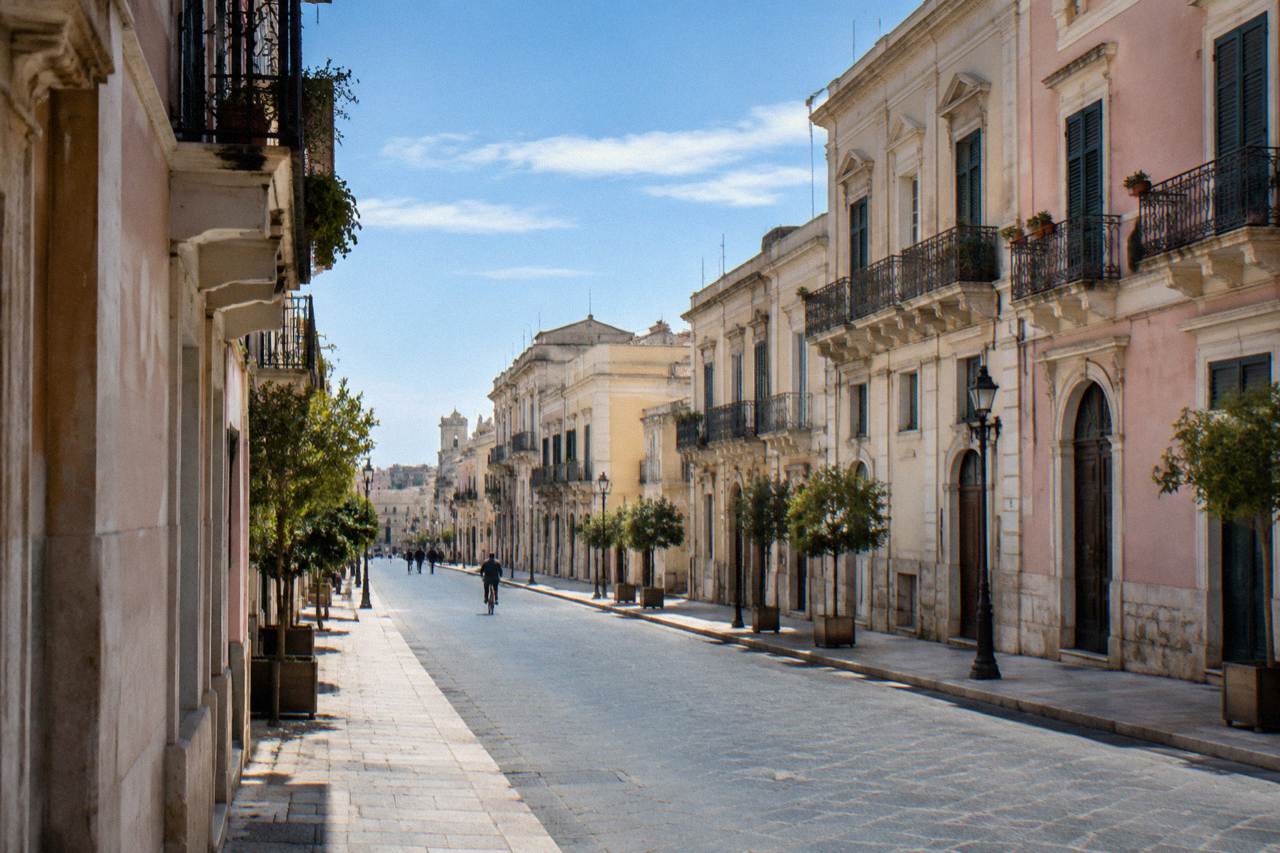
The old town occupies the headland between the old port at Molo San Nicola and the modern harbour works. Murat lies immediately south of it, a regular grid of streets laid out around Via Sparano, the city's main shopping street. The two are contiguous: the boundary runs at Piazza del Ferrarese and Piazza Mercantile, where the grid meets the medieval street plan. A visitor sleeping in either can walk into the other in minutes.
That walkability is the reason the question resolves so quickly. This site's walkability answer covers the detail, but the short version is that the historic centre, the shopping grid, the seafront promenade and the main station all sit close enough together that no district in central Bari cuts you off from the rest. The choice becomes one of noise tolerance, budget shape and whether stepping out of the door into an old lane or onto a shop-lined street matters more. For a fuller area-by-area treatment, see the Bari Where To Stay guide, and for the districts this page does not recommend, the companion piece on where not to stay in Bari.
What Is It Like To Stay In Bari Vecchia?
Staying in Bari Vecchia means sleeping inside the historic headland, within a short walk of the Basilica di San Nicola, the Cattedrale di San Sabino, the Swabian castle, Piazza Mercantile and Piazza del Ferrarese, with the fish market area at Molo San Nicola below. The basilica is open Monday to Saturday 06:30 to 20:30 and Sunday 06:30 to 22:00, with no admission fee mentioned on its page.
The old town is the part of Bari that photographs arrive from: narrow lanes, the basilica holding the relics of Saint Nicholas, brought from Myra by sailors in 1087 and placed in the crypt in 1089, and the street of pasta makers around Strada Arco Basso, where orecchiette, the pasta shape of Puglia, is made by hand. The castle, the Castello Normanno-Svevo, sits at the landward edge of the district and costs 10 EUR full and 2 EUR reduced, per the Musei Puglia ticket page.
The castle, the Castello Normanno-Svevo, sits at the landward edge of the district and costs 10 EUR full and 2 EUR reduced, per the Musei Puglia ticket page.
Two practical cautions come with an old-town stay. First, Bari Vecchia is a limited traffic zone: a camera gate has operated at the Castello end of the district since 1 July 2026, with weekday entry windows for authorised vehicles only, and perimeter parking near the district is paid on working days 08:30 to 20:30. Anyone in a rental car should park outside the zone and walk in, not drive to a door. Second, the street plan is medieval: luggage rolls better on the Murat grid than on old paving.
A guided walk on the first morning fixes the geography fast. The Bari Walk Through History covers the old town and its landmarks, and the same tour appears in the picks below.
Is The Murat District The Best Base For A City Break?
The Murat district is the best base for a short city break built around shopping, eating and rail day trips, because it is the flat grid that runs from Piazza del Ferrarese inland around Via Sparano, with the Teatro Petruzzelli and Teatro Margherita on its edges and Bari Centrale, the main railway station, at its back. Trains to Polignano a Mare and beyond leave from there.
Murat is where the city behaves like a modern regional capital. The grid holds the main retail streets, the theatres, and the largest concentration of accommodation within walking distance of both the old town and the station. For day-trip planning this matters more than anything else: Trenitalia regional trains on the Bari-Lecce line serve Polignano a Mare at 33 km, Monopoli at 41 km, Ostuni at 75 km and Lecce at 150 km, and the intermodal Trulli Link service connects the rail network to Locorotondo, Alberobello and Martina Franca in the Valle d'Itria, with the FSE bus leg reported at 5.90 EUR on top of the rail fare.
Sleeping a few blocks deeper into the grid keeps the station's usefulness without the works at the door. Fares within the city are fixed and low: an AMTAB single costs 1.00 EUR, a 90-minute ticket 1.20 EUR and a day ticket 2.50 EUR, so no district in central Bari is expensive to move around.
Where Should You Stay In Bari Near The Sea?
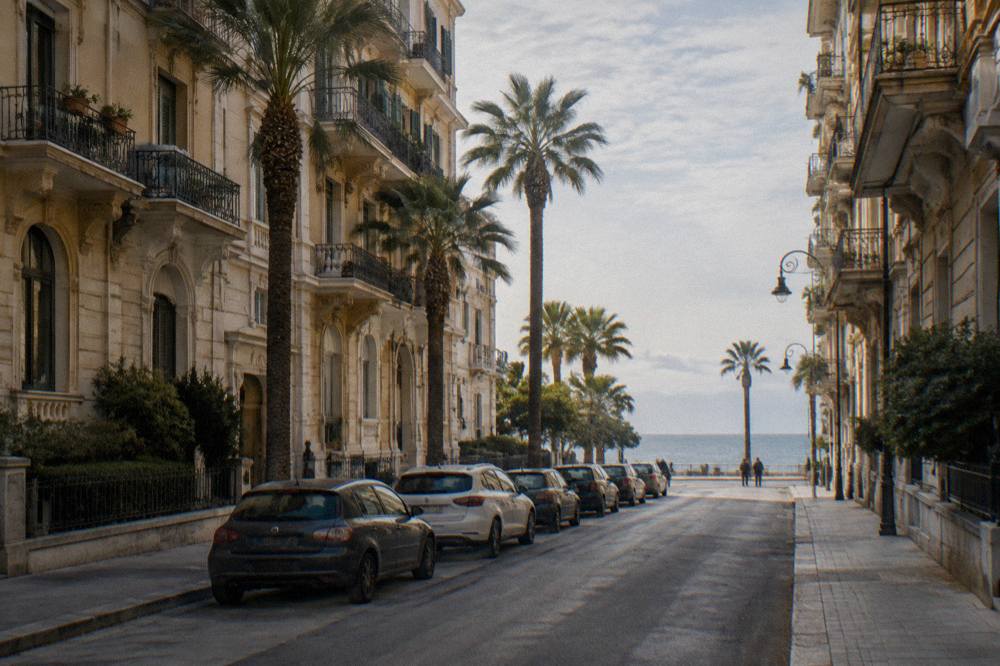
For a seafront stay, Madonnella and the streets behind the Lungomare Nazario Sauro are the parts of Bari to choose: the promenade runs along the Adriatic from the old port toward the city beaches, with Pane e Pomodoro about 2.1 km from Piazza Mercantile, Torre Quetta about 3.9 km and San Girolamo about 4.3 km to the north-west. Facilities and charges at the beaches vary by season and should be confirmed locally.
Madonnella, between the Murat grid and the sea, trades retail energy for a calmer street scale while keeping the centre in walking range. Japigia lies further south along the coast toward the city beaches and suits a longer, slower stay. The wider set of guides lives on Bari Italy Travel Guide.
One correction is worth making plainly: Bari itself has no Blue Flag beach in 2026. The Blue Flags in the Province of Bari sit at Polignano a Mare and Monopoli. The sea itself runs about 27 C in July and August, about 22 C in October and about 14 C in February, as modelled 2023 to 2025 means.
How Does The Tourist Tax Differ Across The Districts Of Bari?
The tourist tax (imposta di soggiorno) is a citywide Bari charge, not a district-by-district one, and it runs 1.50 to 4.00 EUR per person per night by accommodation category, for a maximum of 4 consecutive nights per calendar year, collected by the accommodation itself. Where you sleep changes the rate only through the category of property, never through the neighbourhood.
The rates, per the Comune di Bari:
| Accommodation category | Tourist tax per person per night |
|---|---|
| 5-star and luxury hotels | 4.00 EUR |
| 4-star hotels | 3.00 EUR |
| 3-star hotels | 2.00 EUR |
| 1-star and 2-star hotels | 1.50 EUR |
| B&Bs, affittacamere, short lets, holiday homes, hostels, agriturismi | 2.00 EUR |
| 4-star campsites and villages | 3.00 EUR |
The same table applies in Bari Vecchia, Murat, Madonnella and Japigia alike. What does differ by town, not by district, is the rate once you leave Bari: if the plan is to sleep in Polignano a Mare, Monopoli or Alberobello instead, each comune sets its own tax and the host will state what applies. The broader question of which town in Puglia is the best to stay in is a separate one from the district question inside Bari.
Which Part Of Bari Suits Your Trip Best?
A first-time visitor with two or three nights should sleep in Bari Vecchia for atmosphere or in Murat for convenience; a visitor building the stay around day trips to Polignano a Mare, Alberobello, Matera or Lecce should lean Murat for station access; and a visitor prioritising the seafront and longer, quieter days should choose Madonnella or Japigia. All four sit inside one compact city, and none is far from the others.
Arrival logistics barely separate the districts. The Ferrotramviaria airport train covers the distance to Bari Centrale in 17 minutes for 5.30 EUR, the Tempesta coach costs 5 EUR, and a taxi to a city-centre hotel is a predetermined 25 EUR. Whichever district you choose, the transfer cost and time are the same.
For travellers weighing Bari against a single coastal base, the Bari or Lecce comparison and the piece on how many days in Bari is enough cover that trade-off directly. For everything within the city, the root things to do in Bari page lists the sights each district puts on your doorstep.
Food is the one thread that runs through every district, and the tours below fit a first stay: an old-town walk, a street-food tour of Bari, and a Vespa ride that departs from Polignano a Mare, not from Bari.
Common Questions About Where To Stay In Bari
Which part of Bari is best to stay in?
For a first visit, Bari Vecchia for the old-town atmosphere or the Murat district for shops, theatres and station access; Madonnella and Japigia suit quieter seafront stays. All are within one compact, walkable centre.
Is Bari Vecchia a good place to stay with a car?
No. Bari Vecchia is a limited traffic zone with a camera gate in operation since 1 July 2026, and access windows are for authorised vehicles. Park outside the zone and walk in; perimeter parking near the district is paid on working days 08:30 to 20:30.
Is it expensive to stay in Bari?
Nightly room rates vary and are best checked at booking. The fixed extra is the tourist tax: 1.50 to 4.00 EUR per person per night by category, for a maximum of 4 consecutive nights, collected by the accommodation.
Which district is closest to the station?
The Murat grid. Bari Centrale sits at its inland edge, from which Trenitalia regional trains run on the Bari-Lecce line toward Polignano a Mare, Monopoli, Ostuni and Lecce, and the Trulli Link connects toward Alberobello and Locorotondo.
Can you walk from Murat to Bari Vecchia?
Yes. The two districts meet at Piazza del Ferrarese and Piazza Mercantile, and the whole stretch from the station to the basilica is a walk through central Bari. City buses, at 1.00 EUR a single, cover anything further out.
Are Bari's beaches close to the city centre?
Pane e Pomodoro is about 2.1 km from Piazza Mercantile, Torre Quetta about 3.9 km and San Girolamo about 4.3 km to the north-west. Facilities and charges vary by season, so confirm locally. Bari holds no Blue Flag in 2026; Polignano a Mare and Monopoli, both reachable by train, do.