How To Dress In Bari, Italy?
What to wear in Bari through the year, from the modelled climate figures to shoes that survive Bari Vecchia's stone lanes, with seasonal packing guidance for Puglia's coastal capital.
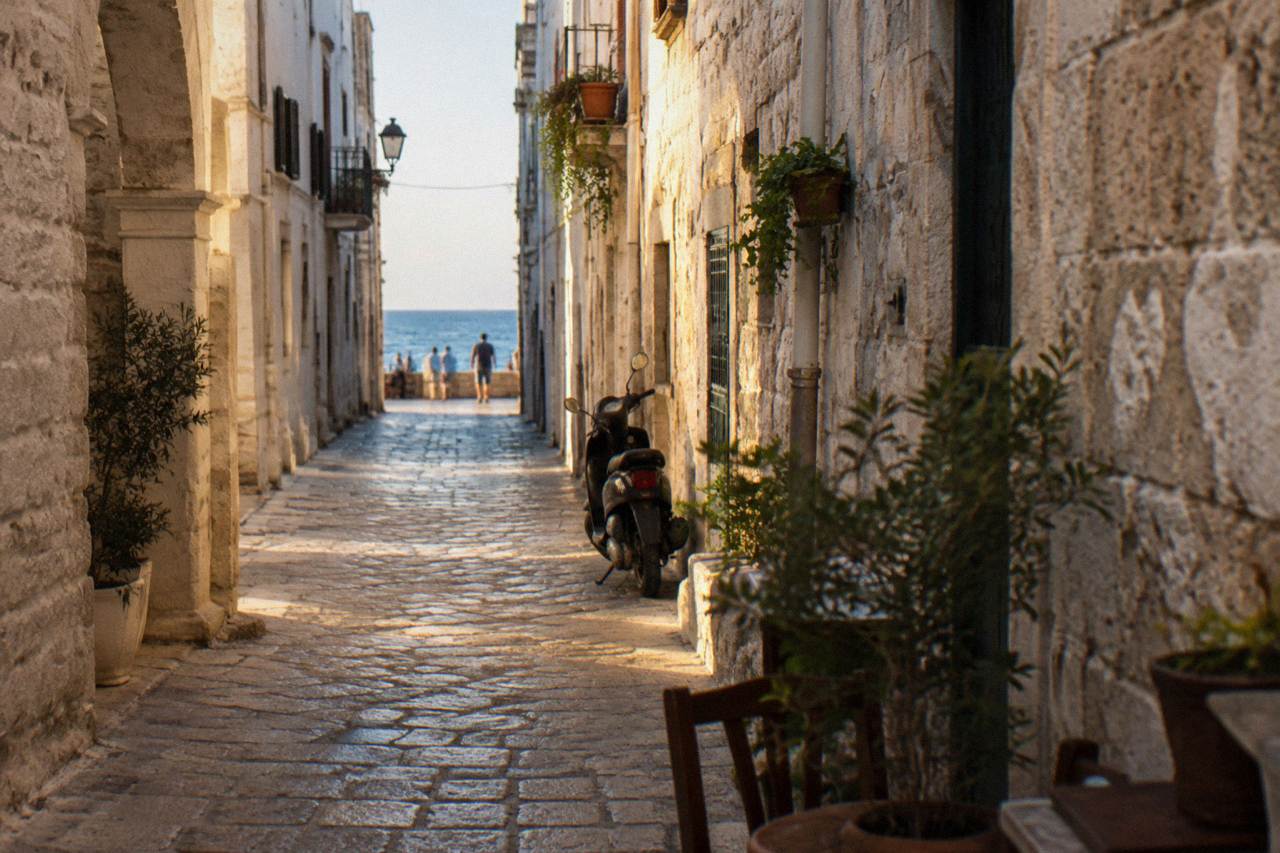
Bari, the capital of the Puglia region in southern Italy, sits on the Adriatic Sea at the top of the country's heel, and its weather shapes its wardrobe more than any dress convention does. Typical values from modelled ERA5 data, 1991 to 2020, put the July mean daily maximum at 28.6 C and August at 29.1 C, while January and February highs sit near 12 C, and roughly 587 mm of rain falls across the year, concentrated between October and March. The city is compact and walkable, as the is Bari a walkable city page explains, but Bari Vecchia is paved in old stone and the Lungomare Nazario Sauro is a long open seafront, so footwear matters as much as fabric. This guide from the Bari Italy Travel Guide desk breaks the question down by season, by surface and by the kind of day you have planned, whether that is churches and museums in the morning or a day trip to Polignano a Mare.
How To Dress In Bari, Italy?
Dress for a warm, dry summer and a mild, occasionally rainy winter: light breathable clothing from June to August, layers and a light jacket for spring and autumn, and a warm coat for December to February when lows average 7.2 to 8.7 C. Bring comfortable closed walking shoes with grip whatever the month, because Bari Vecchia's stone paving and the long Lungomare Nazario Sauro seafront punish thin soles, and carry a compact umbrella from October onwards.
That is the short version. The longer version depends on when you land and what your days look like, and the monthly table below gives you the numbers to plan against. The figures are typical values from modelled ERA5 data, 1991 to 2020, which is the climate dataset this site uses for every weather question.
There is no dress code specific to Bari that any official source sets out, so the honest answer is a climate-and-comfort answer. Italy is in the euro area and the Schengen area, the emergency number is 112, and beyond that the practical questions are all about heat, rain, sea breeze and cobbles.
| Month | Mean daily high C | Mean daily low C | Rain mm |
|---|---|---|---|
| Jan | 12.1 | 7.3 | 60.0 |
| Feb | 12.5 | 7.2 | 58.0 |
| Mar | 14.7 | 8.8 | 58.0 |
| Apr | 17.5 | 11.2 | 54.0 |
| May | 21.6 | 15.3 | 35.0 |
| Jun | 25.9 | 19.5 | 28.0 |
| Jul | 28.6 | 22.0 | 22.0 |
| Aug | 29.1 | 22.4 | 20.0 |
| Sep | 25.1 | 19.1 | 53.0 |
| Oct | 21.1 | 15.6 | 63.0 |
| Nov | 16.9 | 12.0 | 73.0 |
| Dec | 13.2 | 8.7 | 63.0 |
What Should You Wear In Bari In Summer?
Plan around the two figures that define a Bari summer: a mean daily maximum of 28.6 C in July and 29.1 C in August, with lows that barely dip below 22 C, so lightweight, loose, light-coloured clothing works and a heavy jumper is dead weight. Rain is rare, at 22 mm in July and 20 mm in August across about four rain days each, so an umbrella is optional while sun protection is not. Pack a hat, sunglasses and a water bottle.
The sea is part of the summer plan too: modelled sea surface temperatures for recent years average about 27 C in July and August, so swimwear, a quick-dry cover-up and reef-safe sunscreen earn their place. The city beaches, Pane e Pomodoro about 2.1 km from Piazza Mercantile, Torre Quetta about 3.9 km and San Girolamo about 4.3 km to the north-west, are reached on foot or by city bus, which means your beach day still involves walking on pavement and stone.
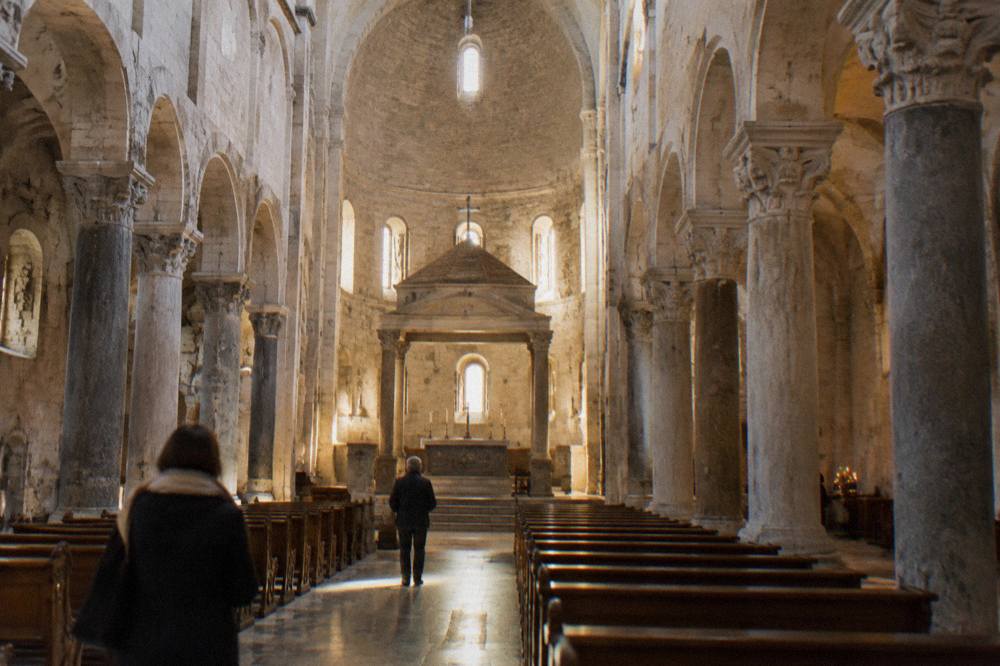
Two practical notes temper the light wardrobe. First, the sea breeze along the Lungomare Nazario Sauro can feel cool in the evening even after a 29 C afternoon, so a light shirt layer or a thin overshirt for dinner is worth having. Second, stone buildings, museums and the Basilica di San Nicola, open Monday to Saturday 06:30 to 20:30 and Sunday 06:30 to 22:00 per its official hours page, are cooler inside than out, and the same applies to the Castello Normanno-Svevo with its thick walls. A layer you can tie around your waist solves both.
If a guided walk is part of your plan, the underground archaeology tour below spends time both in the streets and below them, and the same summer kit works for both halves of it.
The Castel del Monte entry ticket in that set is for the site at Andria, about 62 km from Bari, so a day built around it means travel time in the sun as well as stone halls, and the street food tour is a Bari-based walk that mixes outdoor lanes with covered food stops.
What Should You Pack For Bari In Spring And Autumn?
Spring and autumn are the layering seasons: April averages a high of 17.5 C and a low of 11.2 C, May 21.6 C and 15.3 C, October 21.1 C and 15.6 C, so a t-shirt, a warm mid-layer and a light jacket covers the whole day. Rain rises in these shoulder months, with 54 to 63 mm in April, October and November, so a packable rain layer or umbrella belongs in the bag rather than left at the hotel.
May deserves a special note. The Festa di San Nicola runs early May, 7 to 9 May by tradition, and the 2026 edition's historical procession left piazza Federico II di Svevia at 20:00, which means spectators stand outdoors into the night in air that has usually cooled from the afternoon high. An extra layer for evening events in early May is the single most useful packing adjustment of that week. The feast draws crowds into Bari Vecchia's narrow streets, so again, shoes first.
September and October are quiet, warm and increasingly showery: 53 mm and 63 mm respectively, with rain days rising from 7.6 in September to 7.9 in October. The best month to visit Bari question is really a weather question, and the same climate table answers it: May and September combine warm highs with the lower end of the rainfall range.
| Season | Typical day | Typical evening | Base layers | Extras |
|---|---|---|---|---|
| Jun to Aug | 25.9 to 29.1 C high | 19.5 to 22.4 C low | Light cotton or linen, t-shirts, shorts | Hat, sunglasses, swimwear, thin evening layer |
| Apr to May | 17.5 to 21.6 C high | 11.2 to 15.3 C low | T-shirt plus mid-layer | Light jacket, packable rain layer |
| Sep to Oct | 21.1 to 25.1 C high | 15.6 to 19.1 C low | T-shirt plus mid-layer | Umbrella, water-resistant outer layer |
| Nov to Mar | 12.1 to 16.9 C high | 7.2 to 12.0 C low | Warm layers, long trousers | Coat, scarf, umbrella, shoes with grip |
A street food walk is a good example of why the autumn column matters: it moves between open-air lanes and warm, busy food counters, so a mid-layer you can shed and carry beats a single heavy coat on those days.
What Shoes Work Best For Bari?
Closed walking shoes with real grip and cushioning are the single most important item you pack, because Bari Vecchia is paved in worn stone, the Murat district's grid involves long flat blocks, and the Lungomare Nazario Sauro is a lengthy exposed seafront. Thin-soled sandals work for the beach and dinner, but they will not carry you through a day that mixes the old town, the seafront and a museum or two. Bring one broken-in pair plus one light alternative.
Consider the shape of a typical day. A morning in Bari Vecchia around the Basilica di San Nicola, Piazza Mercantile and Piazza del Ferrarese is on stone throughout. An afternoon along the Lungomare Nazario Sauro past Madonnella to Pane e Pomodoro adds about 2 km of promenade. Add the Swabian castle, which the Musei Puglia ticket page lists at 10 EUR full and 2 EUR reduced, open Tuesday to Sunday, and you have covered several kilometres without noticing. The what not to miss in Bari page lays out that kind of day in full.
Rain changes the shoe question. November averages 73 mm of rain, the highest monthly total in the table, and December and January follow at 63 mm and 60 mm, so from late autumn through winter a sole that grips wet stone is not a luxury. Smooth leather soles and worn trainers slide on the old town's polished lanes after rain.
What Should You Wear For A Day Trip From Bari?
Dress for the destination, not just for Bari: a Polignano a Mare or Monopoli day in summer needs swimwear under your clothes plus shoes that manage both clifftop lanes and a boat deck, while Alberobello, Matera and Castel del Monte add uneven stone surfaces and, for Matera, a regional border into Basilicata where the same season can run a degree or two different. Layers, sun cover and closed shoes cover all of these.
The boat tours along the Polignano coast depart from Polignano a Mare or from San Vito, not from the Bari waterfront, so a beach-ready outfit that dries quickly is the right base if a cave cruise is on the list. For Matera's Sassi districts, worn stone steps are the terrain, and for Castel del Monte, an octagonal UNESCO World Heritage site inscribed in 1996, the site sits in open countryside about 62 km from Bari, where wind and sun replace the shelter of city streets. The day trips from Bari page maps the options, and every one of them rewards the same shoe choice as the city itself.
One planning note on timing: if your day trip coincides with one of Bari's event weeks, such as the Festa di San Nicola in early May or the Fiera del Levante, expect fuller buses and trains, and dress for standing and walking rather than for a slow café day.
How To Dress In Bari In Winter?
Winter in Bari is mild but damp rather than freezing: January and February mean daily highs reach only 12.1 C and 12.5 C with lows of 7.3 C and 7.2 C, and rain totals 60 mm, 58 mm and 63 mm across January, February and December, so a proper coat, warm layers and a sturdy umbrella are the core kit. Sea-facing stretches like the Lungomare Nazario Sauro feel the wind, so add a scarf and something wind-resistant.
The modelled sea temperature for February is about 14 C, which tells you the sea moderates the cold but does not remove it, and it explains why winter days often feel cooler on the water than the thermometer suggests. Snow is not part of this climate table's story, and the rain day counts, 9.5 in January and 9.6 in December, mean you should plan for a wet afternoon or two per week rather than for storms.
Winter is also museum season, and indoor hours call for the same sheddable layers: the Pinacoteca Metropolitana Corrado Giaquinto and the Museo Archeologico di Santa Scolastica are both heated interiors reached through cold streets. A mid-layer under the coat lets you settle into a gallery comfortably. The how many days in Bari is enough question interacts with this: a shorter winter visit can lean on indoor sights, while a longer one has room for seafront walks that need the full winter kit.
Of that set, the underground archaeology walk and the street food tour both start in Bari and work in any season, while the Castel del Monte ticket pairs with a trip to Andria, where winter wind across open ground makes the warm-coat column of the seasonal table the one to trust.
Common Questions About Dressing In Bari
How to dress in Bari, Italy?
Dress for the season: light breathable clothes from June to August when highs average 28.6 to 29.1 C, layered clothing and a light jacket in spring and autumn, and a warm coat plus umbrella from November to March when lows sit near 7 to 9 C and monthly rain reaches 58 to 73 mm. Closed walking shoes with grip suit every month because of the stone paving in Bari Vecchia.
Do I need an umbrella in Bari?
From October to March, yes: those months carry 53 to 73 mm of rain each in the modelled 1991 to 2020 data, with 7.6 to 9.6 rain days per month. July and August are much drier, about 20 to 22 mm with roughly four rain days, so an umbrella is optional there and sun protection matters more.
Can you wear sandals in Bari?
Sandals work for the beach, the seafront and warm evenings, but a day mixing Bari Vecchia's worn stone lanes, the Murat grid and a museum or castle is better served by closed walking shoes with cushioning and grip, especially after rain when polished stone becomes slippery.
Is Bari warm enough for the beach?
The modelled sea surface temperature averages about 27 C in July and August, which is the heart of the swimming season, and about 22 C in October. The city beaches Pane e Pomodoro, Torre Quetta and San Girolamo are within a few kilometres of the centre, so pack swimwear from June through September.
What should you wear on a boat trip from Bari?
Boat trips along the Polignano a Mare caves depart from Polignano a Mare, Monopoli or San Vito, not from Bari itself. Wear quick-dry clothing over swimwear, a hat, sunglasses and shoes that grip a deck, and take a light layer for the wind on the water even in summer.
Does it get cold in Bari in winter?
Mild rather than cold: January and February mean daily highs are 12.1 C and 12.5 C with lows of 7.3 C and 7.2 C in the modelled data, and the wind along the Lungomare Nazario Sauro can make it feel cooler. A proper winter coat, a scarf and waterproof shoes cover it.
The wardrobe rule that survives every season in Bari is simple: choose the shoes for the stone, choose the layers for the month, and let the climate table above settle any remaining argument between the suitcase and the closet.
