Can You Drink The Water In Bari?
A practical answer to the water question in Bari, the capital of Puglia in southern Italy, plus what to order instead, rain by month, and sea swimming off the city coast.
Bari, the capital of the Puglia region on the Adriatic coast of southern Italy, is a city of about 316,000 people, an old town on a headland, and a long seafront along the Lungomare Nazario Sauro. Visitors packing for it often land on the same small practical question, and this page takes it head on: can you drink the water in Bari? The honest answer starts with what official sources say, and it continues into everything the question touches, from what is poured at the table to the rain that fills the reservoirs and the sea that waits an easy walk or bus ride from the centre.
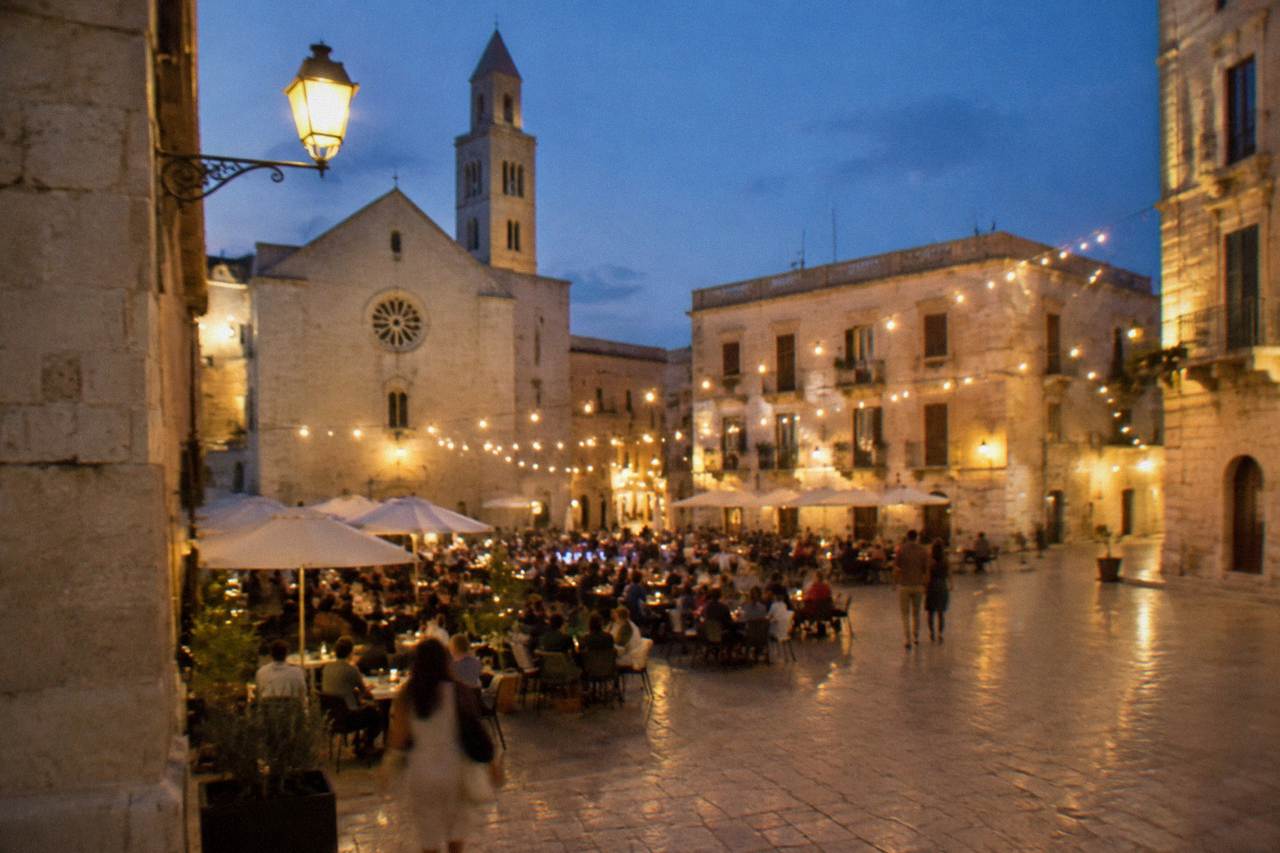
Can You Drink The Water In Bari?
For practical details, the direct answer is to confirm locally: ask at your accommodation, or check the official sources this guide reports. Italy applies European Union drinking water rules to its public supply, and bottled still and sparkling water is sold everywhere in the city.
That single sentence of advice is the load-bearing part. Beyond it, the practical picture is simple. Supermarkets, corner shops and station kiosks around Bari Centrale and across the Murat district stock bottled water at low cost, and visitors who prefer not to think about the question at all can simply buy it by the case for their stay. Anyone with a medical condition that makes water quality a live issue should raise it with their hotel or host on arrival, and with a pharmacist if needed, rather than relying on any travel page.
It is worth separating three different waters that get mixed together in this question. In the city, it is one thing. Water in the churches, fountains and ornamental basins of Bari Vecchia is another, and a decorative fountain is never a drinking source unless a sign says it is. None of the three answers substitutes for the others, and travelers who keep them apart avoid most of the confusion.
For a wider orientation on the city before the practical details, the Bari Italy Travel Guide homepage gathers the main sights, from the Basilica di San Nicola to the Swabian castle, and it is a better first stop than this single-topic page. If your planning is further along, the question of how many days in Bari is enough has its own answer page on this site.
What Do People Actually Order To Drink In Bari?
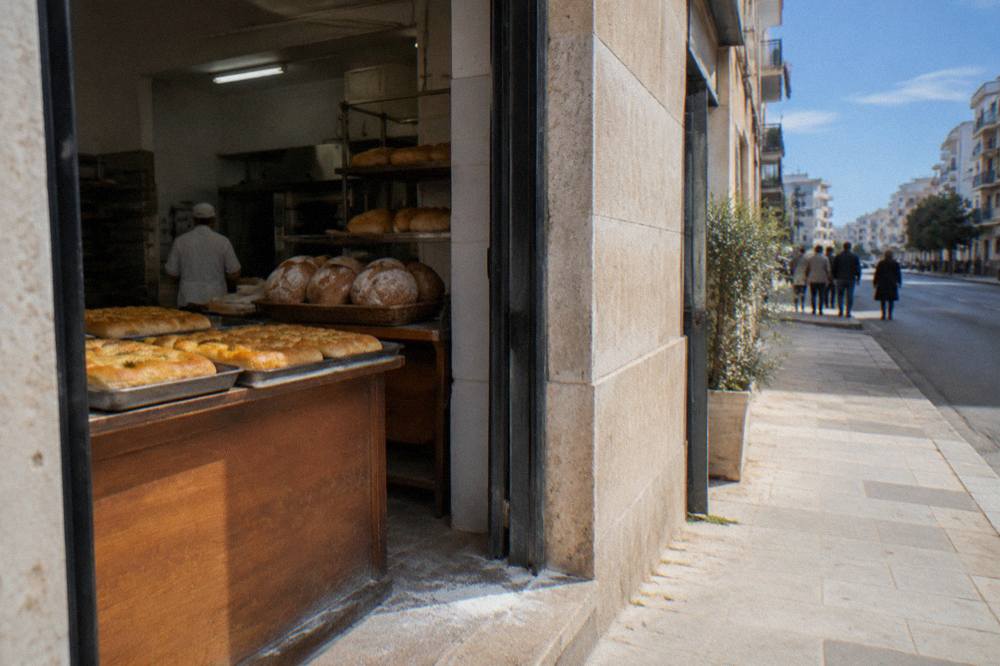
Whatever the tap question resolves to, the table in Bari runs on coffee and bottled water, and the city's food is the reason to sit down at one. Orecchiette is the pasta shape of Puglia, focaccia barese is the local flatbread baked with tomatoes and olives, and panzerotti are the fried pockets of dough and cheese the city is known for.
The drink order needs no research to place: espresso stands at the bar for a coin, bottled water on the table by the litre, wine from the region's vineyards at lunch and dinner. The food around those drinks is what brings people to the city's tables. Raw seafood, including ricci and frutti di mare, is part of the city's kitchen identity, and sgagliozze, fried squares of polenta, belong to the street-food canon of Bari Vecchia. Each of those names earns exactly one plain description here, because the eating itself is best encountered at the counter rather than on a page.
A short walk built around those flavours is one of the most reliable first evenings in the city. The street food walk listed below moves through the old town lanes around Strada Arco Basso and the squares at Piazza Mercantile and Piazza del Ferrarese, tasting as it goes, and the same tour has its own page on this site at the focaccia and gelato street food tour, where Check availability shows the live dates and price.
The food question stretches well past one tour, of course. There is a fuller answer to what food is Bari in Italy famous for elsewhere on this site, covering the raw-fish counters and the focaccia ovens in more depth than a water page needs. Water, in the end, is the supporting act; the plate in front of it is the reason the table exists.
When Does Rain Fall In Bari?
Bari receives about 587 mm of rain a year, with monthly totals ranging from 20 mm in August to 73 mm in November, according to typical values from modelled ERA5 data, 1991 to 2020. Rain days, days with at least 1 mm, run from about 4 in July and August to about 9.5 in January, so summer is dry and late autumn is when the umbrella earns its place.
The monthly pattern matters more than the annual total for a visitor, because the rain is not spread evenly. A July or August week can pass without a drop, with mean daily highs of 28.6 C and 29.1 C respectively, while October and November together account for 136 mm, close to a quarter of the year's rainfall in two months. Winter stays mild rather than harsh: January and February highs sit around 12 C, with overnight lows near 7 C, values from the same modelled 1991 to 2020 series.
| Month | Mean daily high C | Mean daily low C | Rain mm | Rain days (1 mm or more) |
|---|---|---|---|---|
| Jan | 12.1 | 7.3 | 60.0 | 9.5 |
| Feb | 12.5 | 7.2 | 58.0 | 9.4 |
| Mar | 14.7 | 8.8 | 58.0 | 9.4 |
| Apr | 17.5 | 11.2 | 54.0 | 9.0 |
| May | 21.6 | 15.3 | 35.0 | 6.9 |
| Jun | 25.9 | 19.5 | 28.0 | 4.8 |
| Jul | 28.6 | 22.0 | 22.0 | 4.1 |
| Aug | 29.1 | 22.4 | 20.0 | 4.3 |
| Sep | 25.1 | 19.1 | 53.0 | 7.6 |
| Oct | 21.1 | 15.6 | 63.0 | 7.9 |
| Nov | 16.9 | 12.0 | 73.0 | 8.9 |
| Dec | 13.2 | 8.7 | 63.0 | 9.6 |
Whether rain affects the trip depends on the month chosen, and the choice of month has its own page in what is the best month to visit Bari. May carries an extra draw beyond its 35 mm of rain and 21.6 C highs: the Festa di San Nicola runs 7 to 9 May by tradition, with the 2026 historical procession setting off at 20:00 on 7 May from piazza Federico II di Svevia, beside the Swabian castle. Early May is a good moment to want to be outdoors, and a rainy-day plan matters little that week.
Can You Swim In The Sea Off Bari?
ARPA Puglia reports that bathing waters in the province of Bari are 78 monitored sites, within a region ranked first in Italy for the sixth year with 99.9 percent of waters classed excellent. Sea temperature runs at about 27 C in July and August, about 22 C in October and about 14 C in February, as modelled 2023 to 2025 means.
The city beaches sit along the coast south and north of the old town. Pane e Pomodoro is the nearest, about 2.1 km from Piazza Mercantile, with Torre Quetta about 3.9 km out and San Girolamo about 4.3 km to the north-west. Facilities and charges at the beaches vary by season and should be confirmed locally. One correction worth making while the subject is open: Bari itself has no Blue Flag beach in 2026, and the province's Blue Flags are held by Polignano a Mare and Monopoli, two of the classic day trips down the coast.
| City beach | Distance from Piazza Mercantile | Direction |
|---|---|---|
| Pane e Pomodoro | about 2.1 km | south-east, in Japigia |
| Torre Quetta | about 3.9 km | south-east, in Japigia |
| San Girolamo | about 4.3 km | north-west |
Swimming and drinking are different questions, and the excellent bathing-water classifications say nothing about the taps, which is why the answer at the top of this page sends you to the local source. What the sea figures do give you is the shape of a water-centred day in the city: a morning on the sand or the Lungomare Nazario Sauro, an afternoon in the lanes of Bari Vecchia, and the sea again from a different angle in the evening. A short cruise from the city harbour covers that last part, with an aperitivo poured on board.
Boats based in the city leave from the Bari port area, while the cave boats of the Polignano coast leave from Polignano a Mare itself, an important distinction when comparing listings. The city is compact between these points, and the walkability question is answered in full at is Bari a walkable city.
How Many Days Do You Need In Bari Once The Practicalities Are Settled?
Two days cover Bari Vecchia, the Murat district, the seafront and one beach, with a third day free for a first day trip; the rail distances make the arithmetic easy, since Polignano a Mare is 33 km and Monopoli 41 km down the Trenitalia Bari-Lecce line, with Polignano typically 25 to 35 minutes away.
The city centre itself asks little of the clock. The Basilica di San Nicola opens Monday to Saturday 06:30 to 20:30 and Sundays 06:30 to 22:00, with no admission fee mentioned on its page, and the Swabian castle is open Tuesday to Sunday 09:00 to 19:00, at 10 EUR full and 2 EUR reduced per the Musei Puglia ticket page. Add the two piazzas, the Lungomare and a long lunch, and a first day is full without a single ticket bought in advance. Anyone stacking several museums should price the Puglia Musei Card, 20 EUR for all regional Musei Puglia sites over six months, against individual entries.
The day trips change the arithmetic, because from Bari Centrale the region folds in on itself. Alberobello and Locorotondo sit in the Valle d'Itria, reached by the Trulli Link service that connects Trenitalia and FSE trains, with the FSE leg reported at 5.90 EUR on top of the rail fare. Matera, whose Sassi districts are a UNESCO World Heritage site, is about 71 km and 69 minutes by road, across the regional border into Basilicata. Castel del Monte, UNESCO-listed since 1996, is about 62 km and 59 minutes by road, and its entry costs 10 EUR full and 2 EUR reduced. A week based in Bari can spend its afternoons in a different town each day.
A few closing practicalities round out the planning. Italy is in the euro area and in the Schengen area, and the emergency number is 112. The Bari tourist tax runs 1.50 to 4.00 EUR per person per night by accommodation category, for a maximum of four consecutive nights per calendar year, collected by the accommodation itself. If you arrive at Karol Wojtyla airport, the Ferrotramviaria train covers the 12 km to Bari Centrale in 17 minutes for 5.30 EUR, or a taxi to a city-centre hotel is a predetermined 25 EUR. None of that changes the water answer, but all of it changes how smoothly the trip runs once the question is settled.
Common Questions About Drinking Water In Bari
Can you drink the water in Bari?
There is no official Bari-specific statement to report, so confirm locally: ask at your accommodation or check the Comune di Bari's water service pages before drinking from taps or public fountains. Bottled still and sparkling water is sold everywhere in the city.
Is the sea water around Bari clean?
ARPA Puglia reports 78 monitored bathing waters in the province of Bari, within a region ranked first in Italy for the sixth year with 99.9 percent of bathing waters classed excellent. Those figures cover swimming, not drinking.
Does it rain often in Bari?
It depends sharply on the season. Typical values from modelled ERA5 data, 1991 to 2020, give about 4 rain days in July and August against about 9.5 in January, with monthly rainfall from 20 mm in August to 73 mm in November.
Can you fill a bottle at public fountains in Bari Vecchia?
Treat any fountain without an explicit drinking-water sign as decorative. Confirm with your accommodation which local sources are drinking fountains before filling a bottle.
Is bottled water expensive in Bari?
No price for bottled water is printed on this page, but supermarkets and corner shops across the Murat district and around Bari Centrale stock it widely. Check the shelf price when you shop, as with anything else in the city.
