Altamura From Bari: Bread, Cathedral And The Murgia
Altamura sits about 51 km and 50 minutes by road from Piazza Mercantile in Bari, on the Murgia plateau, and it is known for its bread, its cathedral and its archaeological museum. This guide sets out how to get there, what a day there holds, and how to combine it with the other towns of the inland plateau.
Short answer
Altamura is about 51 km by road from Piazza Mercantile in Bari, on the FAL railway line through Modugno and Gravina in Puglia toward Matera. The day trip works for the bread and the Altamura National Archaeological Museum, which costs 5 euro full and 2 euro reduced.
Altamura is a town on the Murgia plateau in the interior of Puglia, the southern Italian region whose capital is Bari, a coastal city on the Adriatic Sea about 51 km away by road. The trip from Bari crosses the plain behind the coast and climbs onto the limestone plateau, and it rewards the traveller with a town built in the same warm stone as the region's farm walls and trulli. Bari is the natural base: Alberobello, Polignano a Mare, Monopoli, Matera and Lecce all sit within day-trip range, and Altamura belongs on that same list, but as an inland stop rather than a seaside one.
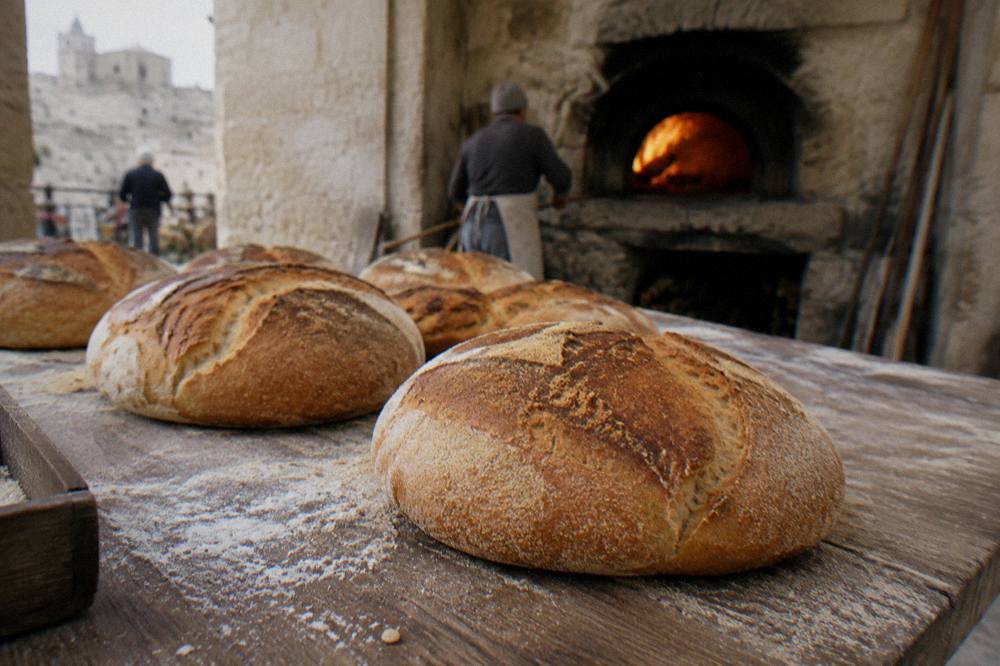
Two things anchor a visit: bread and stone. The bread of Altamura is famous across Italy and can be described in one plain sentence, a dense sourdough loaf with a hard crust, made from local durum wheat. The stone appears in the cathedral, in the lanes around it, and in the archaeological museum that holds finds from the surrounding plateau. Around Altamura the same plateau carries Castel del Monte, Gravina in Puglia and, over the regional border in Basilicata, the Sassi di Matera, stops that can be strung together into a single long day.
This guide, from the Bari Italy Travel Guide desk, sets out the road and rail links, the museum hours and tickets, what the town itself offers, and how to combine Altamura with its neighbours. Every figure here comes from the official pages of the museum network and the rail operator, or from computed road distances, and where a detail is not published the page says what to confirm and where.
Where Is Altamura And Why Go From Bari?
Altamura stands on the Murgia plateau in the Province of Bari, about 51 km and 50 minutes by road from Piazza Mercantile in Bari, in the interior of Puglia rather than on the coast. It sits between Gravina in Puglia, about 64 minutes further along the plateau, and Matera, about 69 minutes from Bari over the border into Basilicata. The town is the inland anchor of a day-trip chain that also includes Castel del Monte, about 59 minutes from Bari.
The Murgia is the limestone upland that fills the middle of Puglia between the Adriatic coast and the Ionian side. It is dry, stony country, bare in places and covered in olive groves and durum wheat fields in others, and its stone shapes everything built on it. Altamura grew as a market and bread town on this plateau, and its position made it a natural staging point on the routes that once linked the coast to the interior. Today the same position makes it a stop between Bari and Matera.
Why go? Three reasons carry the trip. First, the bread: the loaf of Altamura has a protected status in Italy and a reputation that reaches well beyond Puglia, and the town's bakeries are its plainest attraction. Second, the Altamura National Archaeological Museum, whose hours and ticket prices are published and modest, and whose collection covers the prehistory of the plateau, including the area's remarkable fossil finds. Third, convenience: from Altamura you can reach Gravina in Puglia, Castel del Monte or Matera within the same day, which turns a morning of bread and museum into a full circuit of the inland plateau.
Bari itself holds plenty for a longer stay, and the things to do in Bari page covers the old town, the seafront and the food streets. But the plateau is a different Puglia from the one around the Basilica di San Nicola and the Lungomare Nazario Sauro, and a day inland balances a coastal base well.
How To Get From Bari To Altamura?
By road, Altamura is about 51 km and 50 minutes from Piazza Mercantile in Bari, measured as a free-flow driving time. By rail, FAL, the Ferrovie Appulo Lucane operator, runs the line Bari, Modugno, Palo, Binetto, Grumo, Toritto, Altamura, Gravina and Matera, so Altamura is a station stop on a single direct route from Bari.
The road route leaves Bari on the inland highway and climbs onto the plateau; the distance figure above is a computed free-flow time, so allow more in the evening peak or on weekends when the plateau towns are busy. Drivers should note that the old centre of Altamura is a working town with narrow streets, and the usual advice applies: park at the edge and walk in. This is also good practice back in Bari, where Bari Vecchia is a limited traffic zone with a camera gate at the Castello, active since 1 July 2026, so a rental car should never be driven into the old town.
The FAL railway is the alternative. The route is confirmed as a line: it starts in Bari, passes Modugno, Palo, Binetto, Grumo and Toritto, reaches Altamura, continues to Gravina in Puglia and terminates across the regional border at Matera, in Basilicata. FAL publishes its timetables and fares on its own site, and service changes during works are posted by the operator, so confirm the day's trains before committing to a schedule. The line's great advantage for a plateau day is that it chains Altamura and Gravina in a single ride, with Matera as the extension.
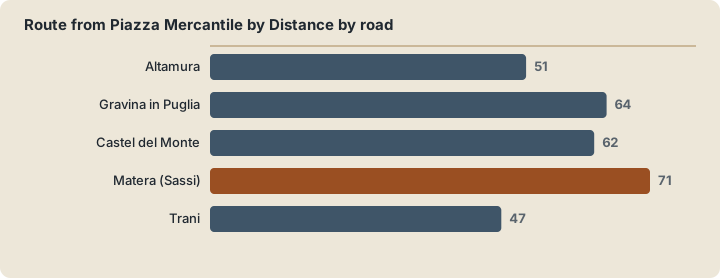
| Route from Piazza Mercantile | Distance by road | Free-flow time | Mode |
|---|---|---|---|
| Altamura | about 51 km | about 50 minutes | car or FAL train |
| Gravina in Puglia | about 64 km | about 64 minutes | car or FAL train |
| Castel del Monte | about 62 km | about 59 minutes | car |
| Matera (Sassi) | about 71 km | about 69 minutes | car or FAL train |
| Trani | about 47 km | about 45 minutes | car |
The table shows why a single inland day can carry two or three stops: Altamura, Gravina in Puglia and Castel del Monte sit within a quarter hour of each other by road, while Matera is the far point of the circuit. Trani, by contrast, is a coastal stop on the opposite side of Bari and pairs less naturally, though the Trani from Bari guide covers it for a separate day.
For travellers who would rather not drive the plateau or decode rural timetables, an organised day tour is the simpler route, and the operator's live listing carries the current schedule.
What To See In Altamura In A Day?
A day in Altamura divides into three parts: the lanes of the old town, the bakeries that give the town its name, and the Altamura National Archaeological Museum, which the official network lists at 5 euro full and 2 euro reduced, open Monday to Friday 08:30 to 19:00 and Saturday, Sunday and holidays 08:30 to 13:30. Allow a relaxed half-day for the town itself and keep the second half for the plateau.
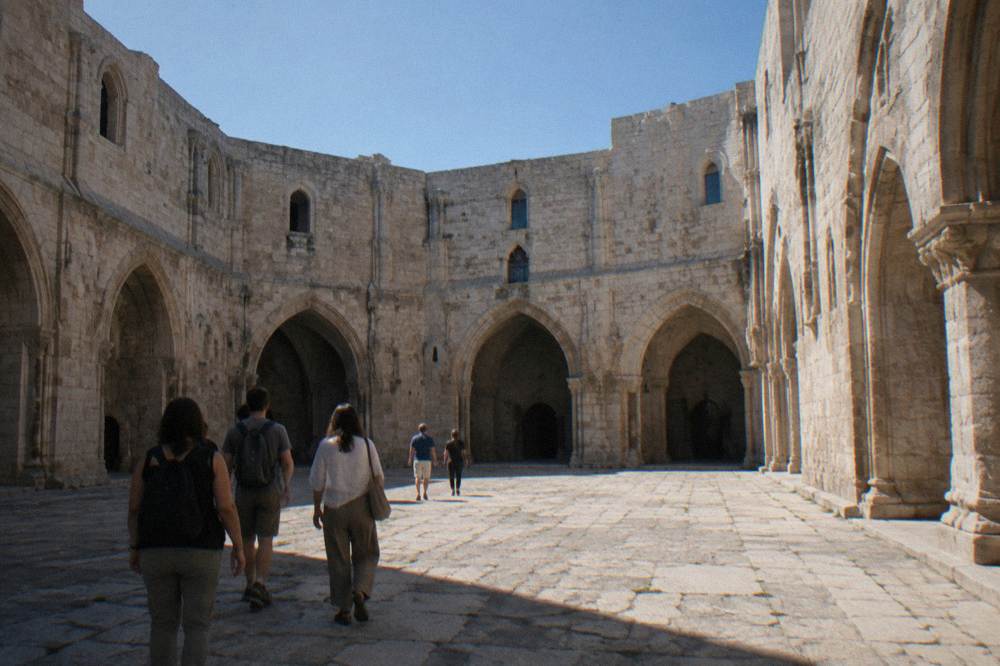
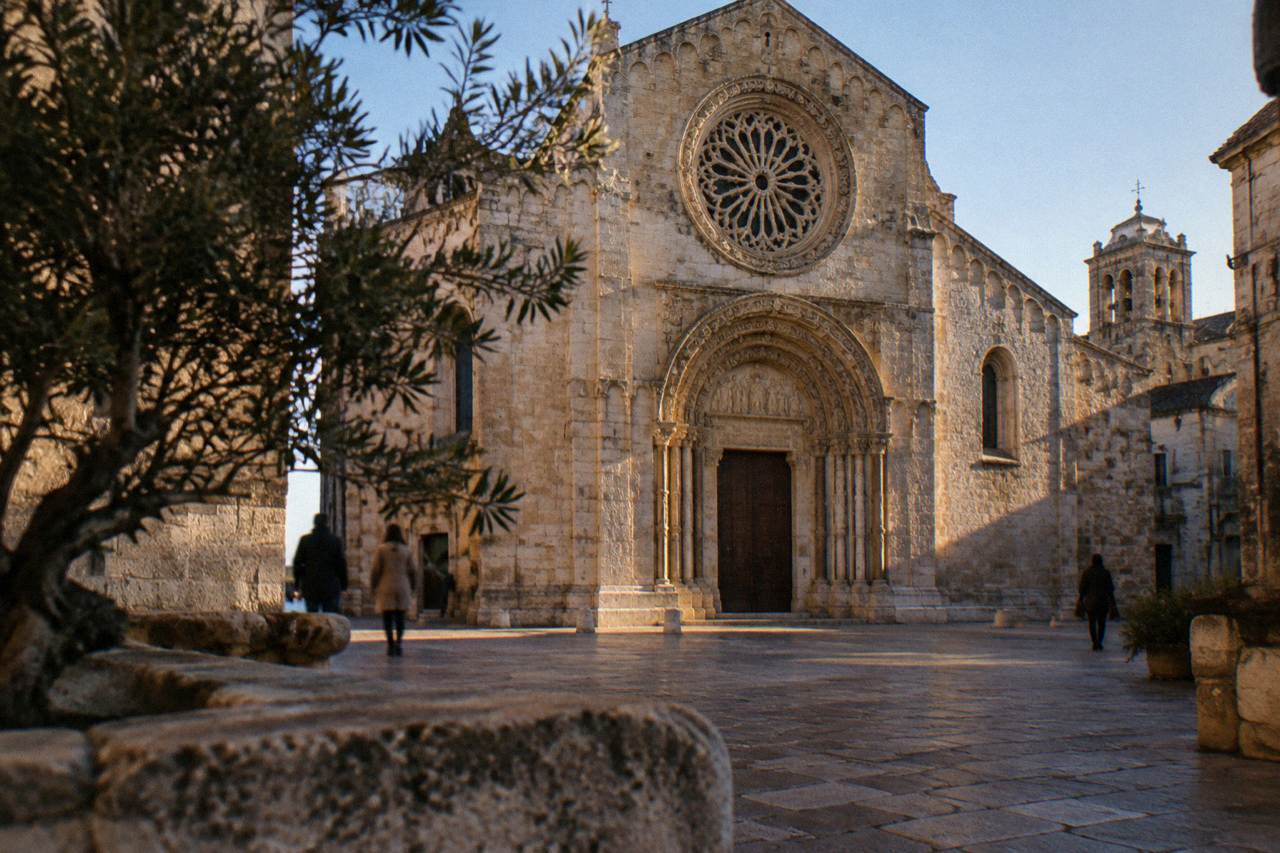
The cathedral of Altamura is the landmark at the centre of town, and this page deliberately prints no founding date, architect or style claim for it, because none of those details appears in the sources this site reports from. What can be said is simpler and still true: it is a large stone church on the main square, built of the same plateau limestone as the streets around it, and it is the visual anchor of the old centre. Approach it from the surrounding lanes, which rise and fall with the slope of the hill, and let the square open out in front of you.
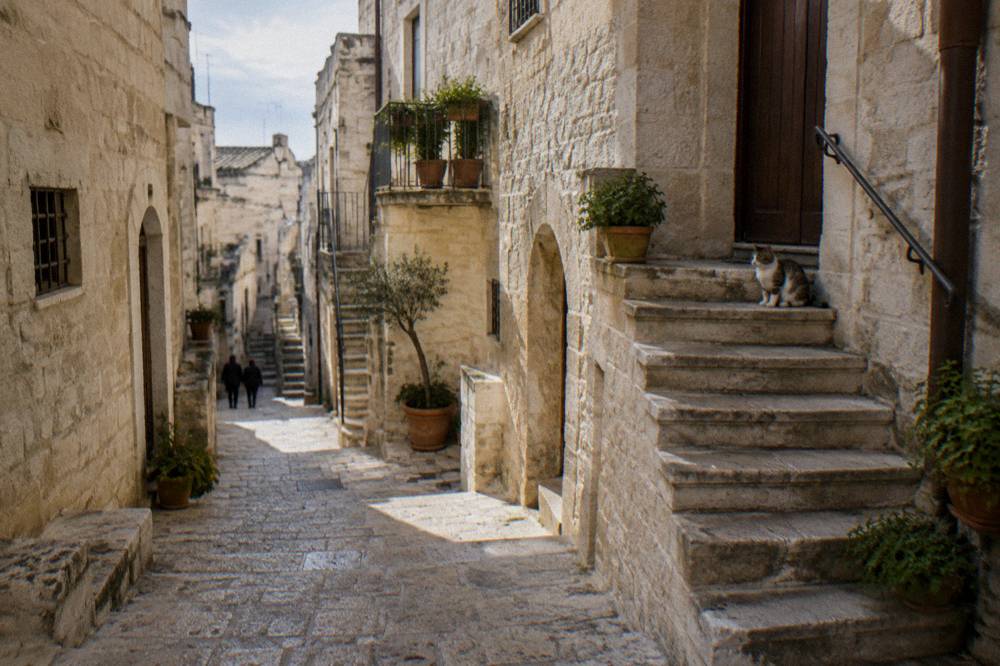
The lanes themselves are the second sight. Altamura is a working town, not a museum piece: shops, bakeries and ordinary life fill the centre, and the pleasure is in walking it rather than ticking monuments. The grid of streets in the centre holds most of what a visitor wants within a compact loop. Give the walk a slow hour or two.
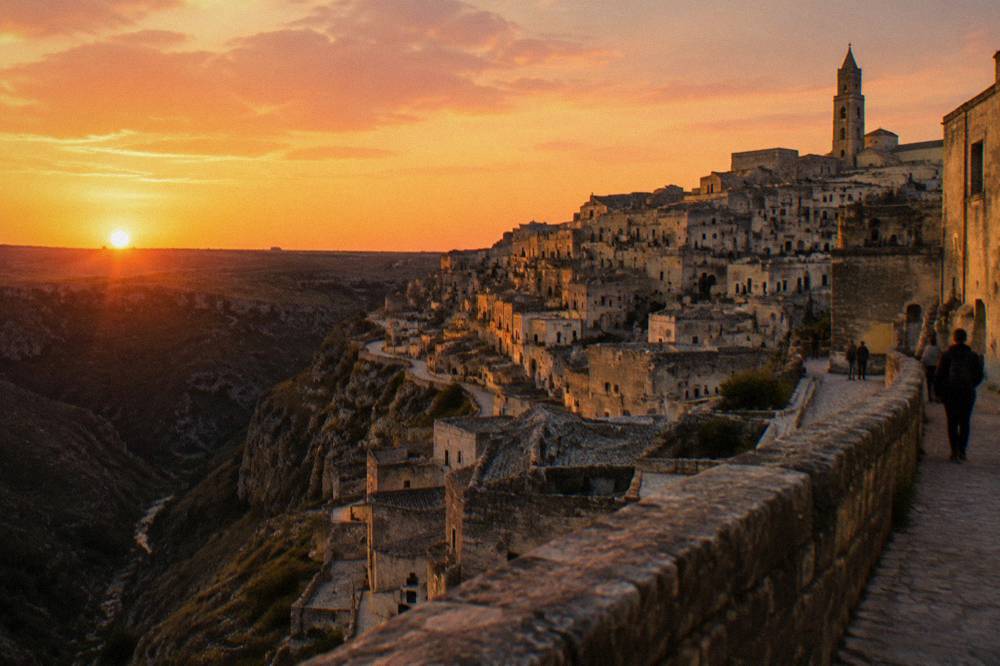
The museum is the third stop, and the hours matter: on weekdays it stays open into the early evening, but on Saturdays, Sundays and public holidays it closes at 13:30, so a weekend visitor should do the museum first and the town after. The collection covers the archaeology of the Murgia, and the plateau around Altamura has produced significant prehistoric finds, including human remains known internationally, which the museum displays. The full and reduced tickets are printed in the table below, straight from the museum network's own ticket page.
| Altamura National Archaeological Museum | Detail |
|---|---|
| Full ticket | 5 euro |
| Reduced ticket | 2 euro |
| Monday to Friday | 08:30 to 19:00 |
| Saturday, Sunday and holidays | 08:30 to 13:30 |
A short walk and a long lunch close the day well. The bread culture of the town is covered in the next section, and the plain advice is to build the afternoon around it: buy from a bakery, eat in the square or on a bench with a view over the plateau, and let the town's rhythm set the pace. If the day is running long, Gravina in Puglia, with its bridge and ravine, is the nearest second stop, covered in the Gravina in Puglia guide.
For travellers who prefer the town explained rather than discovered alone, a guided circuit of Bari's own old town is a different product, but the same logic of a local guide applies inland, and the listing below shows what a guided day covers.
Is Altamura Bread Worth The Trip From Bari?
The bread of Altamura is a dense durum-wheat sourdough loaf with a hard crust, and it is the single food most associated with the town, so yes, the bread alone justifies the drive. This page prints no bakery name, no queue claim and no price, because none of that is published in its sources; the practical answer is to buy from any busy bakery in the centre and eat it the same day, which is when the crust is at its best.
Bread in Altamura is not a museum exhibit but a daily production, tied to the durum wheat grown on the plateau around the town. The loaf is heavy, the crumb is pale and elastic, and the crust is thick and dark, and it keeps longer than an ordinary white loaf, which is why it travelled well in the centuries before modern transport. The protected status it holds in Italy refers to the method and the wheat, and the town treats it as an identity rather than a souvenir.
The companion food is focaccia, which in this region is a tomato-topped flatbread, and Altamura's version is one of several in Puglia; Bari has its own focaccia barese, a plain sentence is all either needs. A day trip can honestly be built as a bread itinerary: a loaf from one bakery, focaccia from another, and the town's other plain dishes in between. No bakery, shop or restaurant on this page is named, and no price is printed, because the sources carry none.
What the sources do support is the framing: Altamura is the bread town of the Murgia, the way Polignano a Mare is a cliff town and Monopoli a harbour town. The comparison matters for planning. If food is the reason you travel, Altamura pairs naturally with the street food of Bari itself, and a guided food walk in the old town, like the one below, makes a good warm-up or follow-up to a plateau day built on bread.
A bread day should start early. Bakeries work mornings, the museum closes early at weekends, and the plateau is hot in summer afternoons, so the shape of the day is bakery first, museum second, lunch third. Confirm opening arrangements for the cathedral locally, since this page prints none.
How To Pair Altamura With Castel Del Monte And Gravina In Puglia?
Altamura sits at the centre of an inland circuit: Castel del Monte is about 59 minutes by road from Bari, Gravina in Puglia about 64 minutes and Matera about 69 minutes, with Altamura itself about 50 minutes, so the four stops chain into one long day by car or an organised tour.
Castel del Monte costs 10 euro full and 2 euro reduced and is open every day, 10:00 to 18:45 from 1 April to 30 September and 09:00 to 17:45 from 1 October to 31 March, with last entry 45 minutes before closing.
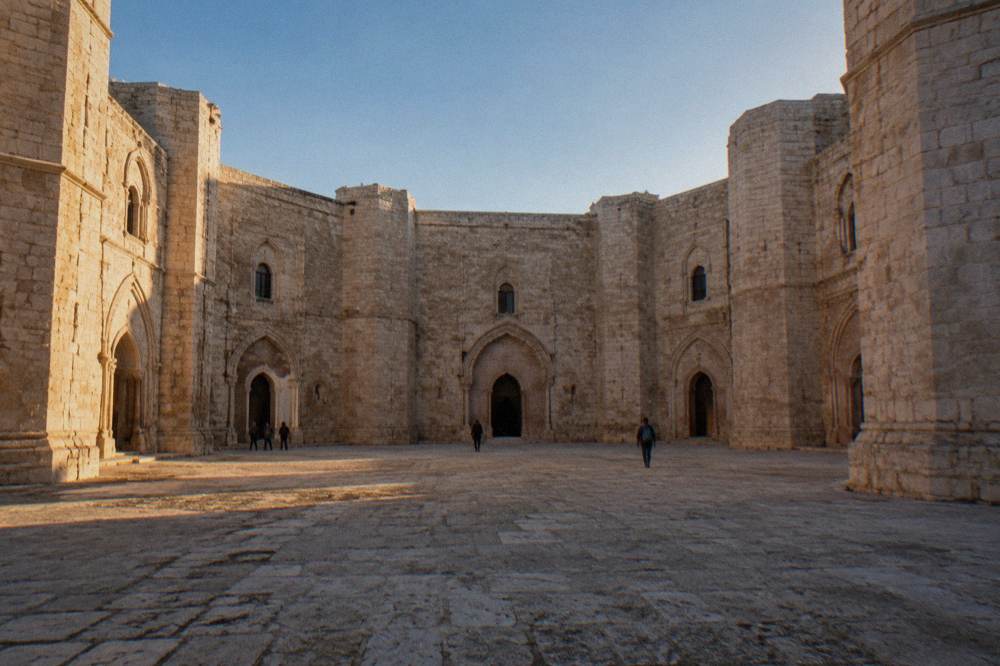
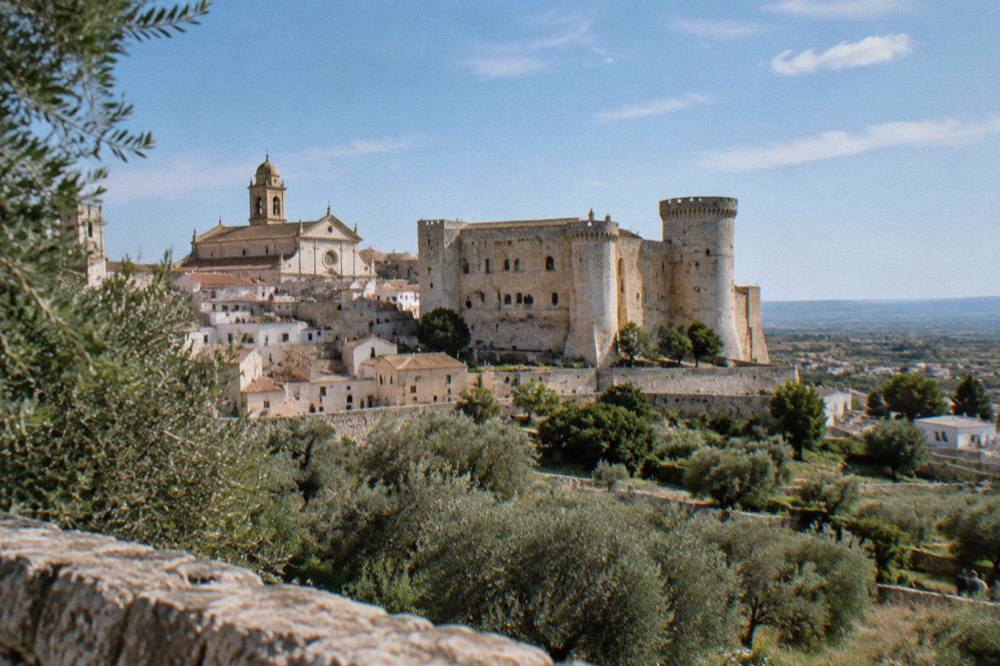
Castel del Monte is the octagonal castle that UNESCO inscribed on the World Heritage list in 1996, and it stands alone on a hill about 62 km from Bari. The published hours and ticket prices are firm, printed in the table below, and booking is optional according to the museum network's ticket page. The castle is the single most striking structure on the plateau, and its position between Bari and Altamura makes it the natural first stop of an inland day.
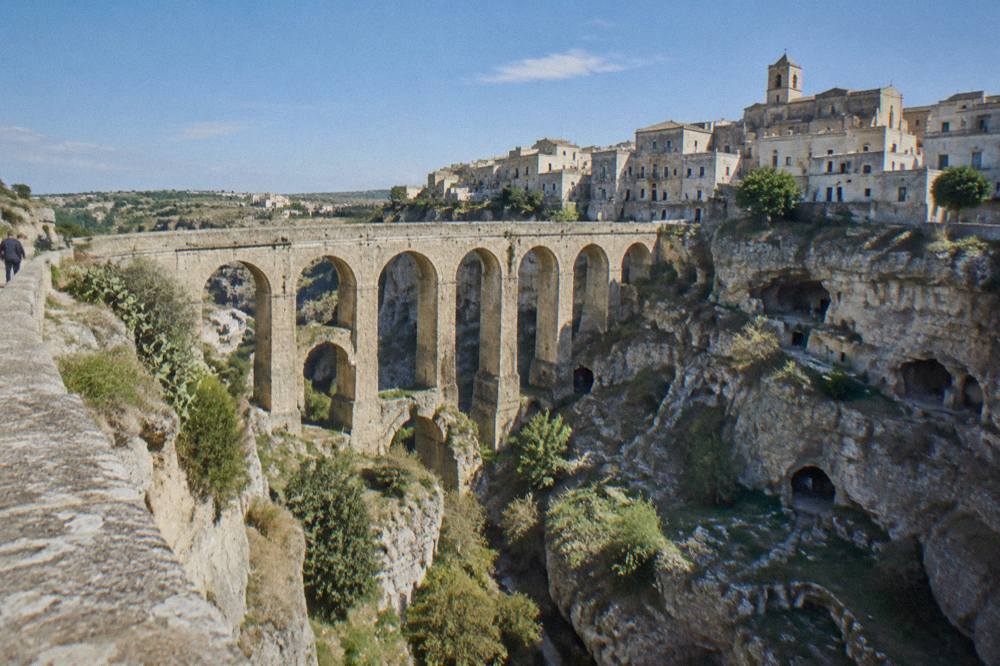
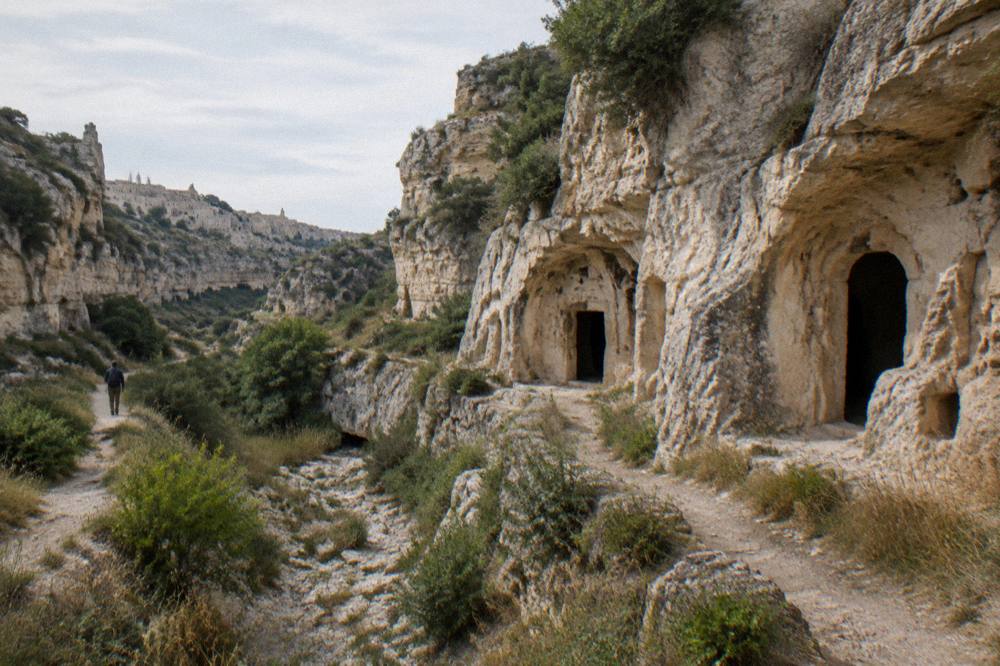
Gravina in Puglia is the town of the ravine: its old centre stands above a deep limestone gorge with a bridge crossing it, and its name appears in the FAL station list between Altamura and Matera. This page prints no entry fees, hours or bus details for Gravina, because the sources carry none, but the walk along the ravine edge is free and needs no ticket.
| Inland stop from Bari | Road distance | Free-flow time | Ticket (full / reduced) |
|---|---|---|---|
| Castel del Monte | about 62 km | about 59 minutes | 10 euro / 2 euro |
| Altamura museum | about 51 km | about 50 minutes | 5 euro / 2 euro |
| Gravina in Puglia | about 64 km | about 64 minutes | not covered by this page |
| Matera (Sassi) | about 71 km | about 69 minutes | not covered by this page |
Matera completes the circuit but changes its character. What is printed is the geography: Matera is in Basilicata, not Puglia, so the day trip crosses a regional border, and the road time of about 69 minutes from Bari is the only duration to rely on. A day that includes Matera should be a long day, planned around it rather than squeezed after Altamura; the Matera from Bari guide covers it in full.
The ordering that works is: Castel del Monte early, while the light is low and the crowds thinner; Altamura for late morning, the museum and the bread; Gravina in Puglia after lunch for the ravine; and Matera only if the day started early and the return is unhurried. Driving the whole chain in one day is ambitious, and the alternative is the organised bus tour, whose listing appears in the final section of this page. The Castel del Monte guide covers the castle stop in more detail.
What Does A Day Trip To Altamura From Bari Cost?
The published costs of an Altamura day are the museum at 5 euro full and 2 euro reduced, and, if the circuit is extended, Castel del Monte at 10 euro full and 2 euro reduced. No hotel, restaurant or parking tariff for Altamura was found on an official page.
The honest accounting for a day trip has three lines: admissions, transport and food. Admissions are cheap and published: the two museums in the table below cost less combined than a single castle ticket at many European sites.
| Published admission on the inland circuit | Full ticket | Reduced ticket | Hours |
|---|---|---|---|
| Altamura National Archaeological Museum | 5 euro | 2 euro | Mon-Fri 08:30-19:00; Sat-Sun-holidays 08:30-13:30 |
| Castel del Monte | 10 euro | 2 euro | 1 Apr-30 Sep 10:00-18:45; 1 Oct-31 Mar 09:00-17:45 |
| Swabian castle of Trani | 8 euro | 2 euro | Mon-Sat 08:30-19:30; Sun 08:30-13:30 |
| Grotte di Castellana, full route | 25 euro (15 and over) | 22 euro (ages 6 to 14) | check the operator's timetable |
| Egnazia museum and park | 10 euro | 2 euro | Mon-Sat and first Sunday 08:30-19:30 |
Two of those entries sit off the plateau but appear for comparison: Trani's castle is the coastal counterpart on the far side of Bari, and the Grotte di Castellana are the deep cave system near Castellana Grotte, whose full route is 3 km and about 100 minutes and whose partial route is 1 km and about 50 minutes. A combined plateau-and-caves day is possible but rushed.
Food is the flexible line. Bread and focaccia from a bakery are inexpensive by any Italian standard, and a trattoria lunch in the centre carries whatever the menu says, so check the posted prices, a habit worth keeping everywhere in Puglia. The tourist tax note that applies in Bari, 1.50 to 4.00 euro per person per night by accommodation category for a maximum of 4 consecutive nights, does not describe Altamura: each comune sets its own, and a host there will say what applies.
When Is The Best Time To Visit Altamura From Bari?
The plateau is warmest in July and August, when Bari's mean daily maximum runs 28.6 C and 29.1 C and the inland towns, away from the sea breeze, feel hotter still, so spring and autumn are the comfortable seasons for walking Altamura's lanes and the Castel del Monte grounds. Rain is concentrated from October onward, with November averaging 73 mm and August 20 mm, typical values from modelled ERA5 data, 1991 to 2020.
The climate figures this site prints are modelled values for Bari itself, on the coast, and the Murgia runs a degree or two warmer in summer and cooler in winter because it lacks the sea's moderation. April, May, June, September and October are the months when a walking day works without heat management: mornings are cool, the stone glows rather than bakes, and the plateau's wheat is green in spring or golden in June. October carries the first of the autumn rain, about 63 mm in the month, so a shoulder-season day should hold a fallback plan.
Winter is quiet and workable. January and February highs run about 12 C on the coast, and the plateau can be crisp, but the museum is open weekdays until 19:00, the bakeries work all year, and the towns are free of summer pressure. Summer, by contrast, demands the early start: do Castel del Monte or the Altamura lanes before midday, use the museum's weekday afternoon hours as the cool hours, and keep the middle of the day for bread, shade and a long lunch.
One seasonal note for event planners: if the trip falls in early May, Bari itself holds the Festa di San Nicola, 7 to 9 May by tradition, which fills the city and can raise demand for rooms and trains across the whole region. A plateau day trip during the feast is possible but should be booked and timed with the city's calendar in mind.
Should You Take A Guided Tour Or Go Alone To Altamura?
Going alone suits confident drivers and anyone happy to work from the museum hours and the FAL timetable, since the published admissions are small and the towns need no booking; a guided bus tour suits travellers who want the whole plateau chain, Castel del Monte, Altamura, Gravina in Puglia and Trani, handled in one day without a rental car or rural timetables, and it is the only realistic way to add every stop to a single itinerary.
The trade-off is control against coverage. Alone, you set the pace, linger at the bakery and skip what does not appeal, and the only fixed constraints are the museum's weekend closing at 13:30 and the castle's last entry 45 minutes before closing. Guided, you gain the drive, the sequencing and a commentary on a plateau whose history is not obvious from the street, and you trade the freedom to dawdle. For a first visit to the Murgia, with three or four towns in play and a border crossing to Matera as a stretch goal, the guided version earns its place.
The tour this page features covers exactly that chain, and its live listing carries the current dates, the meeting point and the price, none of which is typed into prose here. Where a pick leaves from Bari the card says so, and a day trip that starts elsewhere is joined there, not in Bari.
The wider selection below shows the same plateau day alongside the guided walks of Bari itself, for travellers splitting a week between the city and the interior.
Common Questions About Altamura From Bari
How Far Is Altamura From Bari?
Altamura is about 51 km from Piazza Mercantile in Bari, a free-flow drive of about 50 minutes. The FAL railway also links the two on its route through Modugno, Grumo and Toritto toward Gravina in Puglia and Matera; the journey time and fare are on the operator's timetable, so confirm them before travelling.
Is Altamura Worth Visiting?
Yes, for a traveller already based in Bari and curious about inland Puglia. The town holds a striking stone cathedral, a published and inexpensive archaeological museum, and the bread culture that made its name, and it chains naturally with Castel del Monte and Gravina in Puglia. It is not a coastal stop, so pair it with Polignano a Mare or Monopoli on another day.
Can You Get To Altamura By Train From Bari?
Yes. FAL, the Ferrovie Appulo Lucane operator, runs a line from Bari through Modugno, Palo, Binetto, Grumo and Toritto to Altamura, continuing to Gravina in Puglia and Matera. The route is confirmed; the timetable and fares are the operator's to confirm, and service changes during works are posted by the operator.
What Is Altamura Famous For?
Altamura is famous for its bread, a dense durum-wheat sourdough loaf with a hard crust made from the wheat of the Murgia plateau, and for the Altamura National Archaeological Museum, which holds the prehistoric finds of the surrounding area, including internationally known human remains. The cathedral is the town's visual landmark.
How Much Does The Altamura Museum Cost?
The Altamura National Archaeological Museum costs 5 euro full and 2 euro reduced, per the museum network's ticket page. It is open Monday to Friday 08:30 to 19:00 and Saturday, Sunday and holidays 08:30 to 13:30, so weekend visitors should plan the museum for the morning.
Is Matera Close To Altamura?
Matera is about 71 km by road from Bari, past Gravina in Puglia, and the FAL rail line continues from Altamura toward it. Matera is in Basilicata, not Puglia, so the trip crosses a regional border, and a day combining Altamura and Matera should be planned as a long one.